
lovethailand home >Central Travel Attractions >Phranakhon Si Ayutthaya Travel Attractions >Wang Noi >Lam Sai > Mahachulalongkornrajavidyalaya University
TL;DR: Mahachulalongkornrajavidyalaya University. (MCU), known in Thai as มหาวิทยาลัยมหาจุฬาลงกรณราชวิทยาลัย, is one of Thailand's historically significant Buddhist institutions of higher.
Mahachulalongkornrajavidyalaya University
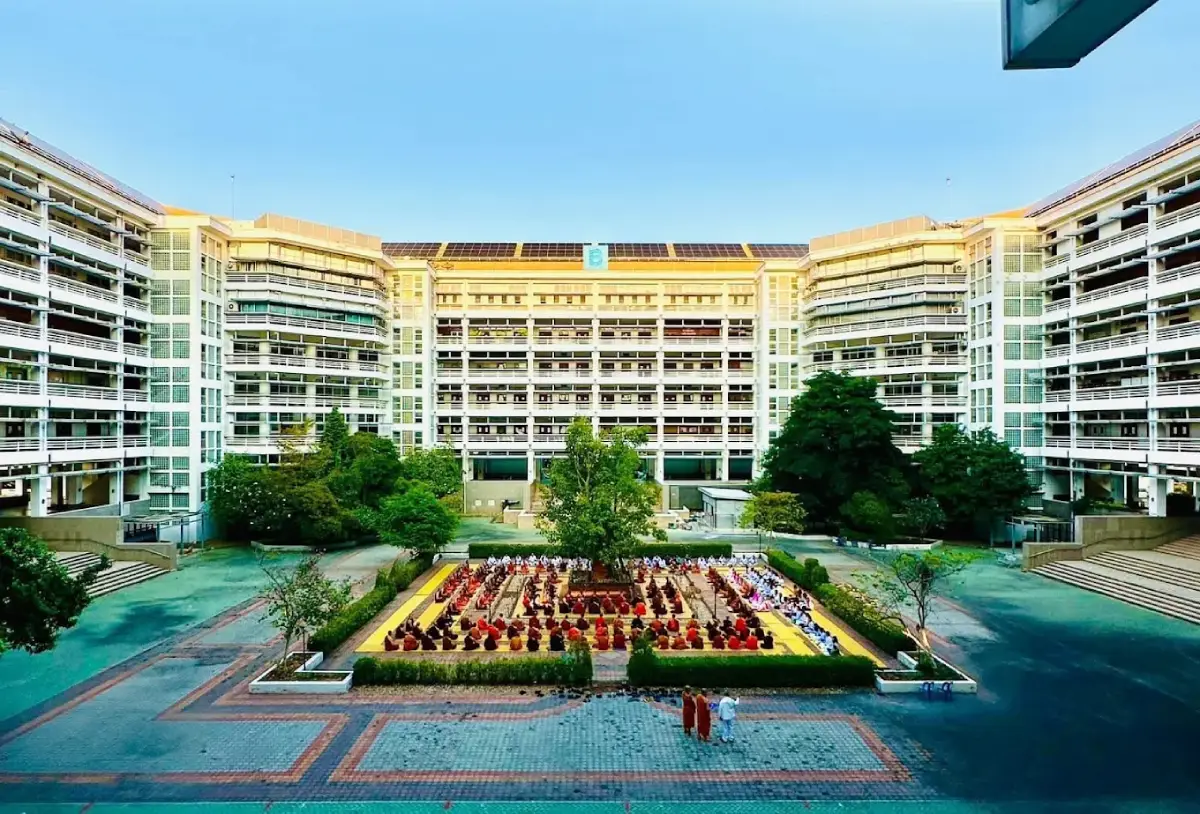
Admission Office Days: Monday – Saturday (Closed on Buddhist Observance Days and Sundays)
Admission Office Hours: 08:30 – 16:30
Mahachulalongkornrajavidyalaya University (MCU), known in Thai as มหาวิทยาลัยมหาจุฬาลงกรณราชวิทยาลัย, is one of Thailand's historically significant Buddhist institutions of higher education. Founded in 1887 by King Chulalongkorn (King Rama V), the institution was originally established as Mahathat Wittayalai, a center for the study of Buddhist scriptures and advanced academic knowledge. Today, MCU is a public autonomous university with its main administrative campus in Lam Sai Subdistrict, Wang Noi District, Phra Nakhon Si Ayutthaya Province. With a history spanning 139 years as of 2026, the university continues to play a major role in Buddhist education, academic research, cultural preservation, international Buddhist cooperation, and the integration of Buddhist knowledge with modern disciplines.
Mahachulalongkornrajavidyalaya University occupies a distinctive position in Thailand's higher education system. Unlike universities primarily established around secular academic disciplines, MCU developed from the traditional Buddhist monastic education system. Its educational mission combines the study of the Tipitaka, Buddhist philosophy, meditation, and religious scholarship with contemporary subjects such as education, psychology, languages, political science, public administration, law, and social development.
The university welcomes both members of the Buddhist monastic community and qualified lay students. This combination reflects its original royal purpose: to provide advanced learning opportunities for monks, novices, and laypeople while strengthening the intellectual foundations of Buddhism in Thai society.
The main campus is located along Phahonyothin Road near kilometer marker 55 in Wang Noi District, Ayutthaya Province. Its location provides access from Bangkok, Pathum Thani, and other parts of central Thailand. The grounds contain academic buildings, administrative offices, libraries, student residences, meeting facilities, and areas dedicated to Buddhist ceremonies and meditation-related activities.
One of the university's most recognizable characteristics is its architectural landscape. Buildings inspired by traditional Thai religious and institutional architecture stand alongside modern educational facilities. Ornamental roofs, landscaped grounds, open courtyards, and religious structures contribute to an environment that reflects the institution's Buddhist heritage.
The history of Mahachulalongkornrajavidyalaya University began during a period of major educational and administrative reforms in Siam. King Chulalongkorn, who reigned from 1868 to 1910, introduced important changes intended to modernize the country's institutions. The development of formal Buddhist education was part of this broader transformation.
In 1887 (B.E. 2430), King Chulalongkorn established Mahathat Wittayalai at Wat Mahathat Yuwaratrangsarit in Bangkok. The institution was created to strengthen the systematic study of Buddhist scriptures and provide higher learning for Buddhist monks and members of the wider community. Its creation represented an important stage in the modernization of Thai monastic education.
Formal teaching began on November 8, 1889 (B.E. 2432). The early curriculum focused primarily on traditional Buddhist studies and the Pali language, which is essential for understanding Theravada Buddhist canonical texts. Although the institution had not yet developed into a modern university, it established an educational foundation that would influence Buddhist scholarship in Thailand for generations.
On September 13, 1896 (B.E. 2439), King Chulalongkorn bestowed the name Mahachulalongkornrajavidyalaya upon the institution. The name honored the King and commemorated his commitment to the advancement of Buddhist education. Its royal association remains a central element of MCU's identity today.
For several decades, the institution continued to concentrate on traditional religious education, particularly the study of Pali and Buddhist doctrine. Its transformation into a university-level institution occurred much later, after Buddhist leaders renewed efforts to establish higher education within the Thai monastic community.
A major turning point came on January 9, 1947 (B.E. 2490), when a group of 57 senior monks from the Mahanikaya tradition met at Wat Mahathat under the leadership of Phra Phimontham (Choi Thanadatta Thera). Their objective was to develop the institution into a center of university-level Buddhist education, fulfilling the educational vision originally expressed by King Chulalongkorn.
The meeting established the direction for a curriculum that would combine traditional Buddhist studies with languages and other academic subjects useful for advanced scholarship and the communication of Buddhist teachings.
On July 18, 1947, Mahachulalongkornrajavidyalaya began offering university-level education. This date is particularly significant because it marks the development of the institution beyond traditional monastic instruction into a broader system of higher learning.
Phra Phimontham (Choi Thanadatta Thera) is therefore remembered as a central figure in the university's modern development. His role in organizing Buddhist higher education helped establish the academic model that later evolved into the present-day university.
Another important milestone came in 1984 (B.E. 2527), when legislation recognized the academic standing of the institution's bachelor's degree qualifications. The recognition strengthened the position of Buddhist university education within Thailand's national higher education system.
The university's legal status changed significantly in 1997 (B.E. 2540). The Mahachulalongkornrajavidyalaya University Act B.E. 2540, dated September 21, 1997 and published in the Royal Gazette on October 1, 1997, established MCU as a public autonomous university with legal personality.
This development allowed the university to expand its academic administration, degree programs, research activities, and educational networks while maintaining its specialized Buddhist educational mission. The institution subsequently strengthened its graduate programs and extended educational opportunities into different regions of Thailand.
The establishment of the present administrative campus at Wang Noi was another major stage in the university's history. On May 20, 1999, Dr. Rasmi and Khunying Sompong Wannissorn donated a substantial parcel of land in Lam Sai Subdistrict for the university's development. Additional land was later acquired to accommodate academic, administrative, residential, and public facilities.
On December 13, 1999, a foundation-stone-laying ceremony was held for the new university complex at Wang Noi, presided over by the then Crown Prince of Thailand. The event marked an important step toward the creation of a larger and more permanent administrative and educational center.
On October 1, 2008, major administrative offices and university departments moved from the original Wat Mahathat premises in Bangkok to the new campus in Ayutthaya. The relocation provided an expanded physical setting for teaching, academic services, research, administration, and major university activities.
The Wang Noi university complex was officially inaugurated on December 3, 2010. It has since developed into the principal administrative and educational center of Mahachulalongkornrajavidyalaya University.
The history of MCU can therefore be understood through several distinct stages: its royal foundation in 1887, its renaming in 1896, the introduction of university-level education in 1947, the legal recognition of degree qualifications in 1984, its establishment as a public autonomous university in 1997, and the development of its principal Wang Noi campus during the following decade.
In 2026, the university marks 139 years since its original foundation. Its current rector is Most Venerable Phra Brahmavajiradhirajarn, Professor Dr. (Somjin Sammapanno), who was appointed to serve a third consecutive term in July 2026, with the formal ceremony of receiving the appointment held in August 2026.
MCU's educational philosophy is closely connected with the Buddhist understanding of wisdom and moral development. Its official Pali motto, “Paññā Lokasmi Pajjoto,” means “Wisdom is the light of the world.” The phrase expresses the belief that wisdom provides guidance for individuals and contributes to the well-being of society.
The university's mission emphasizes the integration of Buddhist studies with modern academic knowledge, the development of Buddhist innovation, and the cultivation of graduates equipped with both intellectual skills and ethical awareness. This educational vision extends beyond the acquisition of academic qualifications to the development of character, social responsibility, and lifelong learning.
The university emblem combines the Phra Kiao, a royal crown symbol associated with King Chulalongkorn, and the Dhammachakra, or Wheel of Dhamma, an important symbol of Buddhist teaching. Together, these elements represent the university's royal foundation and its continuing responsibility to preserve and advance Buddhist learning.
Pink is the university's official color, reflecting the traditional color associated with the day of King Chulalongkorn's birth. The Ashoka tree is its symbolic tree, representing qualities such as strength, endurance, simplicity, and tranquility. These symbols connect institutional identity with the university's historical origins and Buddhist values.
Traditional ceremonies and commemorative events are important parts of student life at Mahachulalongkornrajavidyalaya University. The university's foundation anniversary is associated with September 13, while July 18 is observed as a day of remembrance for the institution's senior teachers and benefactors, known in Thai as Wan Buraphachan.
Wan Buraphachan is particularly meaningful because July 18 also marks the beginning of university-level education in 1947. The commemoration honors senior monks, teachers, administrators, and other individuals who contributed to the university's academic development. In 2026, the university organized its commemorative ceremony on July 18, marking 79 years since the introduction of university-level education and recognizing distinguished alumni and personnel.
The Wai Khru ceremony, a traditional Thai expression of respect and gratitude toward teachers, is another important feature of educational culture within MCU's academic network. Students honor their teachers and reflect on the importance of gratitude, learning, discipline, and ethical conduct. Such ceremonies also demonstrate how traditional Thai cultural practices remain closely integrated with Buddhist higher education.
The university is additionally involved in international Buddhist activities, including cooperation related to the United Nations Day of Vesak. These activities bring together members of the Buddhist monastic community, scholars, cultural representatives, and international partners to exchange perspectives on Buddhist teachings, peace, and sustainable social development.
Other university activities include Buddhist observances, meditation-related programs, cultural preservation projects, community service, and student volunteer activities. Through these experiences, students are encouraged to put Buddhist ethical principles into practice while participating in wider society.
Academically, Mahachulalongkornrajavidyalaya University has four principal faculties: the Faculty of Buddhism, Faculty of Education, Faculty of Humanities, and Faculty of Social Sciences. These are supported by the Graduate School, International Buddhist Studies College, and Dhammaduta College.
The Faculty of Buddhism represents the university's original academic mission. Its fields include Buddhist Studies, Comparative Religion, Religious Philosophy, Pali and Sanskrit, Tipitaka Studies, and Vipassana Meditation. These subjects allow students to investigate Buddhist teachings through textual study, philosophical analysis, religious comparison, and contemplative practice.
The Faculty of Education focuses on teacher education, educational administration, educational psychology, guidance, and teaching specializations. Its programs include Social Studies, Thai Language Teaching, English Language Teaching, Buddhist Education, and related fields. The faculty seeks to combine professional knowledge with Buddhist ethical perspectives in the preparation of educators and educational leaders.
The Faculty of Humanities offers disciplines concerned with language, human behavior, psychology, and communication. Its academic areas include Thai, English, Linguistics, Buddhist Psychology, and Psychology of Life and Death. These fields create opportunities to apply Buddhist insights to the study of human experience, communication, psychological well-being, and personal development.
The Faculty of Social Sciences provides education in Political Science, Public Administration, Law, Economics, Social Work, Buddhist Management, and Social Development. Its academic perspective encourages students to consider how ethical principles and social responsibility can contribute to governance, public administration, community development, and the resolution of contemporary social challenges.
The Graduate School plays a significant role in advanced academic research. Its graduate programs include Buddhism, Philosophy, Peace Studies, Buddhist Communication Innovation, and interdisciplinary fields related to society and human development. Research-oriented study allows students to develop specialized knowledge and contribute to scholarship through independent investigation and academic publication.
International Buddhist Studies College (IBSC) provides an international learning environment for students interested in Buddhist Studies, Mindfulness, and Peace Studies. Its programs include English-language and other international offerings, bringing students from different cultural and religious backgrounds into a shared academic setting.
Dhammaduta College focuses on academic education related to Buddhist missionary work. Its mission reflects the importance of preparing Buddhist religious personnel with knowledge of Buddhist doctrine, communication, cultural understanding, and the ability to engage with communities in different parts of the world.
MCU also maintains an extensive regional education network. Its 12 campuses are Nong Khai, Nakhon Si Thammarat, Chiang Mai, Khon Kaen, Nakhon Ratchasima, Ubon Ratchathani, Phrae, Surin, Phayao, Pali Sueksa Buddhaghos, Nakhon Sawan, and Nakhon Nan Chalerm Phrakiat. The university additionally operates Buddhist colleges and other regional educational units.
This network enables the university to serve Buddhist communities and lay students across Thailand. Regional academic units also provide opportunities for research and social engagement that respond to the cultural characteristics and educational needs of their local communities.
Research is another major responsibility of Mahachulalongkornrajavidyalaya University. The university supports scholarship in Buddhist texts, Buddhist philosophy, meditation, Buddhist psychology, peacebuilding, ethics, educational development, and the application of Buddhist principles to contemporary social issues.
The Buddhist Research Institute is one of the university's important research-support institutions. Through research administration, academic collaboration, and scholarly development, it contributes to the production and dissemination of knowledge across Buddhist and interdisciplinary fields.
The relationship between Buddhist scholarship and modern disciplines is particularly evident in research on peaceful conflict resolution, ethical leadership, mindfulness, education, and community development. These research directions demonstrate the potential of traditional Buddhist knowledge to contribute to discussions about present-day social and human challenges.
Digital learning and academic information systems have also become increasingly important to MCU's educational operations. Electronic learning resources, research databases, online academic journals, and university information systems support students and researchers who require access to academic materials beyond conventional classroom settings.
For visitors interested in the university's physical environment, the Central Classroom Building is one of the principal academic structures on the Wang Noi campus. It houses academic and administrative units, including faculty offices and student-related services. The Registrar and Evaluation Office is located on the third floor of Zone C, Room C300.
The M.V.K. 48th Birthday Building is another important facility. It is used for major institutional activities, including formal gatherings and university ceremonies. The official opening ceremony for the 2026 academic year took place there on June 23, 2026, demonstrating its role as a central venue for large university events.
The Library and Information Technology Building supports teaching, academic research, and access to information resources. Its functions reflect the university's commitment to connecting traditional Buddhist scholarship with modern research methods and digital information services.
Religious and meditation-related facilities form another important component of campus life. Buildings associated with Buddhist ceremonies, meditation, and religious instruction support the university's approach to education, which combines intellectual study with ethical and contemplative practice.
One of the distinctive architectural landmarks within the campus environment is the Uposatha Hall on the water. Its position within a landscaped setting offers an example of how Buddhist religious architecture can be incorporated into a modern university environment. The surrounding water and open space contribute to the peaceful atmosphere associated with the campus.
Wat Mahachulalongkornrachuthit, located in the Wang Noi area, is another religious landmark associated with the university's wider Buddhist environment. It contributes to the area's character as a center of religious education, reflection, and Buddhist cultural activity.
Additional facilities include a dining hall, student dormitories, meeting venues, and accommodation buildings. The 92-Year Panyananda Building, located within the university grounds, provides accommodation and hospitality-related services for university visitors and associated activities.
Mahachulalongkornrajavidyalaya University is also a meaningful destination for educational and cultural visits. People interested in Buddhist history, Thai monastic education, religious architecture, or the relationship between Buddhism and modern society can gain a broader understanding of these subjects through the university's institutional history and physical environment.
Visitors who wish to arrange an academic study visit, access the library, attend a specific activity, or visit restricted facilities should contact the relevant university office in advance. Academic buildings and religious spaces are working environments, and access arrangements may vary depending on scheduled activities and institutional regulations.
Appropriate clothing and respectful conduct are recommended when visiting the university, particularly when entering religious facilities or attending ceremonies. Visitors should avoid disturbing meditation sessions and observe any photography or access restrictions established by university staff.
Getting There: The main campus can be reached from Bangkok by traveling north along Phahonyothin Road through the Rangsit area toward Wang Noi District, Phra Nakhon Si Ayutthaya Province. The campus is situated near kilometer marker 55. Travelers using public transportation can travel toward Wang Noi and arrange local transport for the final part of the journey. It is advisable to check the current transport service and route before departure.
Visitors attending to admissions or registration matters should proceed to the Registrar and Evaluation Office, Room C300, on the third floor of Zone C in the Central Classroom Building. Those visiting other offices should confirm the building and office location in advance because the campus contains multiple academic and administrative facilities.
The university's location in Ayutthaya also allows educational visits to be combined with Buddhist and historical attractions elsewhere in the province. Wang Noi has several temples and local religious sites, while the wider Ayutthaya area offers a rich concentration of historic temples and cultural landmarks.
Mahachulalongkornrajavidyalaya University remains a significant institution in the history of Thai Buddhist education. From its origins at Wat Mahathat in 1887 to its present role as a public autonomous university, MCU has developed an educational system that preserves Buddhist learning while embracing contemporary scholarship. Its continuing importance lies not only in academic qualifications but also in its contribution to the preservation of Buddhist knowledge, the cultivation of wisdom and ethical responsibility, and the development of communities in Thailand and beyond.
| University Name | Mahachulalongkornrajavidyalaya University (มหาวิทยาลัยมหาจุฬาลงกรณราชวิทยาลัย) |
| Abbreviation | MCU / มจร. |
| University Type | Public autonomous university specializing in Buddhist higher education and interdisciplinary studies |
| Main Campus Address | 79 Moo 1, Phahonyothin Road, Km 55, Lam Sai Subdistrict, Wang Noi District, Phra Nakhon Si Ayutthaya 13170, Thailand |
| Original Foundation | 1887 (B.E. 2430) |
| First Formal Classes | November 8, 1889 |
| Royal Renaming | September 13, 1896 |
| Beginning of University-Level Education | July 18, 1947 |
| Legal University Status | Mahachulalongkornrajavidyalaya University Act B.E. 2540 (1997) |
| Institutional Age in 2026 | 139 years since the original foundation |
| Royal Founder | King Chulalongkorn (King Rama V) |
| Important Historical Figure | Phra Phimontham (Choi Thanadatta Thera), a key figure in the establishment of university-level Buddhist education in 1947 |
| Rector in 2026 | Most Venerable Phra Brahmavajiradhirajarn, Professor Dr. (Somjin Sammapanno) |
| University Motto | Paññā Lokasmi Pajjoto — Wisdom is the light of the world |
| University Color | Pink |
| University Tree | Ashoka Tree |
| University Emblem | Phra Kiao royal crown symbol and the Wheel of Dhamma |
| Main Faculties | 1. Faculty of Buddhism 2. Faculty of Education 3. Faculty of Humanities 4. Faculty of Social Sciences |
| Additional Academic Units | 1. Graduate School 2. International Buddhist Studies College 3. Dhammaduta College |
| Regional Campuses | 1. Nong Khai 2. Nakhon Si Thammarat 3. Chiang Mai 4. Khon Kaen 5. Nakhon Ratchasima 6. Ubon Ratchathani 7. Phrae 8. Surin 9. Phayao 10. Pali Sueksa Buddhaghos 11. Nakhon Sawan 12. Nakhon Nan Chalerm Phrakiat |
| Important Campus Facilities | Central Classroom Building, M.V.K. 48th Birthday Building, Library and Information Technology Building, Vipassana facilities, Uposatha Hall on the water, dining hall, and 92-Year Panyananda Building |
| Important Ceremonies | University Foundation Day on September 13, Wan Buraphachan on July 18, Wai Khru ceremonies, Vesak-related activities, and Buddhist cultural events |
| Academic Strengths | Buddhist Studies, Tipitaka Studies, Philosophy, Vipassana Meditation, Buddhist Psychology, Peace Studies, Education, and Social Development |
| Admission Office Days | Monday – Saturday, excluding Buddhist Observance Days and Sundays, according to the Faculty of Education's 2026 admission notice |
| Admission Office Hours | 08:30 – 16:30, according to the Faculty of Education's 2026 admission notice |
| Campus Visits | Contact the appropriate university office in advance, especially for academic study visits and access to restricted facilities |
| Facilities | Academic buildings, library, student dormitories, meeting facilities, accommodation buildings, and Buddhist activity spaces |
| Getting There | Travel north from Bangkok along Phahonyothin Road through Rangsit toward Wang Noi District, near kilometer marker 55 |
| Nearby Religious and Cultural Attractions | 1. Wat Mahachulalongkornrachuthit, Wang Noi 2. Uposatha Hall on the Water, MCU campus 3. Wat Chuchitthammaram, Wang Noi 4. Wat Nom Prachasan, Wang Noi 5. Wat Chaiwatthanaram, Ayutthaya Historical Area |
| Restaurants in the Wang Noi Area | 1. Lung Nuay Restaurant, Lam Sai 2. Ruen Kaew Restaurant, Lam Sai — Tel. 092-452-6616 3. Ton Khao Restaurant, Lam Sai — Tel. 089-495-6408 4. Krua Lung Ran, Sanap Thuep — Tel. 063-446-9465 5. Oshin Wang Noi Boat Noodles, Chamaep — Tel. 086-803-1566 |
| Accommodation in the Surrounding Area | 1. 92-Year Panyananda Building, MCU Campus — Tel. 035-248088 to 035-248089 2. Hiso Potato Resort, Lam Sai — Tel. 061-414-9444 3. Bang Pa-in Place, Bang Pa-in — Tel. 081-911-6293 4. Ice Inn & Resort, Wang Noi — Tel. 083-015-2708 5. Oomsub Resort, Wang Noi — Tel. 096-934-6528 |
| Main Telephone | +66 35 248 000 to +66 35 248 005 |
| Official Website | https://www.mcu.ac.th |
| Current Status | Operating as an active public autonomous university during the 2026 academic year |
Mahachulalongkornrajavidyalaya University Academic Programs and Fields of Study, Academic Year 2026 (Main Campus)
| Faculty / College | Degree Programs and Fields of Study |
| Faculty of Buddhism | Bachelor's Degree 1. Bachelor of Buddhist Studies — Buddhism 2. Bachelor of Buddhist Studies — Religion and Philosophy 3. Bachelor of Buddhist Studies — Pali and Sanskrit 4. Bachelor of Buddhist Studies — Vipassana Meditation 5. Bachelor of Arts in Buddhist Studies (English Program) 6. Bachelor of Arts in Religion and Philosophy (English Program) Master's Degree 1. Master of Buddhist Studies — Comparative Religion 2. Master of Buddhist Studies — Tipitaka Studies 3. Master of Buddhist Studies — Vipassana Meditation Studies Doctoral Degree 1. Doctor of Buddhist Studies — Comparative Religion 2. Doctor of Buddhist Studies — Tipitaka Studies |
| Faculty of Education | Bachelor's Degree 1. Bachelor of Education — Social Studies 2. Bachelor of Education — Thai Language Teaching 3. Bachelor of Education — English Language Teaching 4. Bachelor of Education — Teaching Buddhism 5. Bachelor of Education — Psychology and Guidance 6. Bachelor of Education — Information Technology 7. Bachelor of Education in Teaching English (International Program) Graduate Diploma 1. Graduate Diploma in Teaching Profession 2. Graduate Diploma in Educational Administration Master's Degree 1. Master of Education — Buddhist Educational Administration 2. Master of Education — Social Studies Teaching 3. Master of Education — Educational Psychology and Guidance 4. Master of Education — English Language Teaching 5. Master of Education — Thai Language Teaching 6. Master of Education — English Language Teaching (English Program) 7. Master of Education — Education and Artificial Intelligence 8. Master of Buddhist Studies — Buddhist Educational Administration Doctoral Degree 1. Doctor of Education — Buddhist Educational Administration 2. Doctor of Education — Social Studies Teaching 3. Doctor of Education — Educational Psychology and Guidance 4. Doctor of Education — English Language Teaching 5. Doctor of Education — Thai Language Teaching 6. Doctor of Education — English Language Teaching (English Program) |
| Faculty of Humanities | Bachelor's Degree 1. Bachelor of Arts — Thai Language 2. Bachelor of Arts — English Language 3. Bachelor of Arts — Psychology 4. Bachelor of Buddhist Studies — Buddhist Psychology 5. Bachelor of Arts in English (English Program) Master's Degree 1. Master of Buddhist Studies — Buddhist Psychology 2. Master of Buddhist Studies — Linguistics 3. Master of Arts — Psychology of Life and Death 4. Master of Arts — Thai Language 5. Master of Arts in English (English Program) Doctoral Degree 1. Doctor of Buddhist Studies — Buddhist Psychology 2. Doctor of Philosophy — Psychology of Life and Death 3. Doctor of Philosophy — Linguistics 4. Doctor of Philosophy in English (English Program) |
| Faculty of Social Sciences | Bachelor's Degree 1. Bachelor of Political Science 2. Bachelor of Public Administration 3. Bachelor of Buddhist Studies — Buddhist Management 4. Bachelor of Economics 5. Bachelor of Social Work 6. Bachelor of Buddhist Studies — Social Development 7. Bachelor of Social Work — Psychiatric Social Work 8. Bachelor of Laws (Regular and Graduate-Entry Study Tracks) Master's Degree 1. Master of Political Science 2. Master of Public Administration 3. Master of Laws 4. Master of Buddhist Studies — Buddhist Management 5. Master of Arts — Social Development 6. Master of Arts — Social Innovation and Creative Culture Doctoral Degree 1. Doctor of Philosophy — Political Science 2. Doctor of Philosophy — Public Administration 3. Doctor of Buddhist Studies — Buddhist Management 4. Doctor of Philosophy — Social Development 5. Doctor of Laws 6. Doctor of Philosophy — Law |
| Graduate School | Master's Degree 1. Master of Buddhist Studies — Buddhism 2. Master of Buddhist Studies — Philosophy 3. Master of Buddhist Studies — Buddhist Communication Innovation 4. Master of Buddhist Studies — Peace Studies 5. Master of Arts — Global Studies Doctoral Degree 1. Doctor of Buddhist Studies — Buddhism 2. Doctor of Buddhist Studies — Philosophy 3. Doctor of Buddhist Studies — Buddhist Communication Innovation 4. Doctor of Buddhist Studies — Innovative Mindfulness and Peace Studies |
| International Buddhist Studies College (IBSC) | Bachelor's Degree 1. Bachelor of Arts in Buddhist Studies (International Program) Master's Degree 1. Master of Arts in Buddhist Studies (International Program) 2. Master of Arts in Innovative Mindfulness and Peace Studies (International Program) 3. Master of Arts in Religion and Philosophy (International Program) 4. Master of Arts in Buddhist Studies (Chinese Program) Doctoral Degree 1. Doctor of Philosophy in Buddhist Studies (International Program) 2. Doctor of Philosophy in Innovative Mindfulness and Peace Studies (International Program) |
| Dhammaduta College | Master's Degree 1. Master of Buddhist Studies — Buddhist Missionary Studies |
Frequently Asked Questions (FAQ)
Q: Where is Mahachulalongkornrajavidyalaya University located?
A: Its main administrative campus is located at 79 Moo 1, Phahonyothin Road, Km 55, Lam Sai Subdistrict, Wang Noi District, Phra Nakhon Si Ayutthaya Province, Thailand.
Q: What are the opening days and hours of Mahachulalongkornrajavidyalaya University?
A: According to the Faculty of Education's 2026 admission announcement, admission services are available Monday through Saturday from 08:30 to 16:30, excluding Buddhist Observance Days and Sundays. Office schedules and access to other university facilities may differ.
Q: When was Mahachulalongkornrajavidyalaya University founded?
A: The university was originally founded in 1887 as Mahathat Wittayalai. University-level education began on July 18, 1947.
Q: Who founded Mahachulalongkornrajavidyalaya University?
A: King Chulalongkorn, also known as King Rama V, established the original institution as part of his educational reforms.
Q: What is Mahachulalongkornrajavidyalaya University famous for?
A: MCU is particularly well known for Buddhist Studies, Tipitaka Studies, Buddhist Philosophy, Meditation, Buddhist Psychology, Peace Studies, and the integration of Buddhist knowledge with modern academic disciplines.
Q: What faculties does Mahachulalongkornrajavidyalaya University have?
A: Its four principal faculties are the Faculty of Buddhism, Faculty of Education, Faculty of Humanities, and Faculty of Social Sciences. The university also has a Graduate School, International Buddhist Studies College, and Dhammaduta College.
Q: How many regional campuses does Mahachulalongkornrajavidyalaya University have?
A: The university lists 12 regional campuses, in addition to Buddhist colleges and other regional educational units.
Q: Can international and lay students study at Mahachulalongkornrajavidyalaya University?
A: Yes. MCU provides educational opportunities for both monastic and lay students, including international programs. Admission is subject to the requirements of each academic program.
Q: Can tourists visit Mahachulalongkornrajavidyalaya University?
A: Visitors interested in educational or cultural visits should contact the relevant university office in advance. Access to academic facilities, libraries, and religious activity areas is subject to university arrangements.
Q: Is Mahachulalongkornrajavidyalaya University the same institution as Mahamakut Buddhist University?
A: No. They are separate Buddhist universities with different institutional histories and organizational structures. Mahachulalongkornrajavidyalaya University originated from Mahathat Wittayalai at Wat Mahathat in Bangkok.
 Category: ●University
 Group: ●Autonomous Universities
Last Update : 4 DayAgo
 Last Update : 4 DayAgo
 Click to Access the Navigation Map GPS
Mahachulalongkornrajavidyalaya University Map
Recommend

 Art, Culture and Heritage
 Historical Sites and Monuments(7)
 Landmarks and Memorials(6)
 Royal Palace(4)
 Art, Craft Centres, Tradition(6)
 Museums(9)
 Educational Places
 Museum for Study(1)
 Educational Gardens, Farm(2)
 Training Center(1)
Autonomous Universities(2)
 Rajamangala University of Technology(2)
 Rajabhat University(1)
 Places of Worship
 Temple(133)
 Church(2)
 Mosque(2)
 Other Sacred Sites(15)
 Research and Development
 Royal Project(4)
 Suburban Living
 Village, Community(10)
 Local Market(7)
 Floating Market(3)
 Nature and Wildlife
 Dam, Reservoir, Lake(1)
 River, Canal(3)
 Islands(2)
 Other natural attractions(1)
 Entertainment and Agricultural
 Animal camps and shows(2)
 Farms, Parks and Ecotourism(4)
 Waterpark(1)
 Travel Articles, Recipes
 Travel Review, Food Review(2)


