
lovethailand home >North Travel Attractions >Chiang Mai Travel Attractions >Hang Dong >San Phak Wan > Far Eastern University (New Ring Road Campus)
TL;DR: Far Eastern University (New Ring Road Campus), Chiang Mai attractions : University, Private University.

Far Eastern University (New Ring Road Campus)
Open Days: Monday–Friday for Regular Campus Administrative Services
Opening Hours: 08:00–17:00 for Administrative Contact Services. Academic Activities, Sports Facilities, and Special Events Follow Their Respective Schedules.
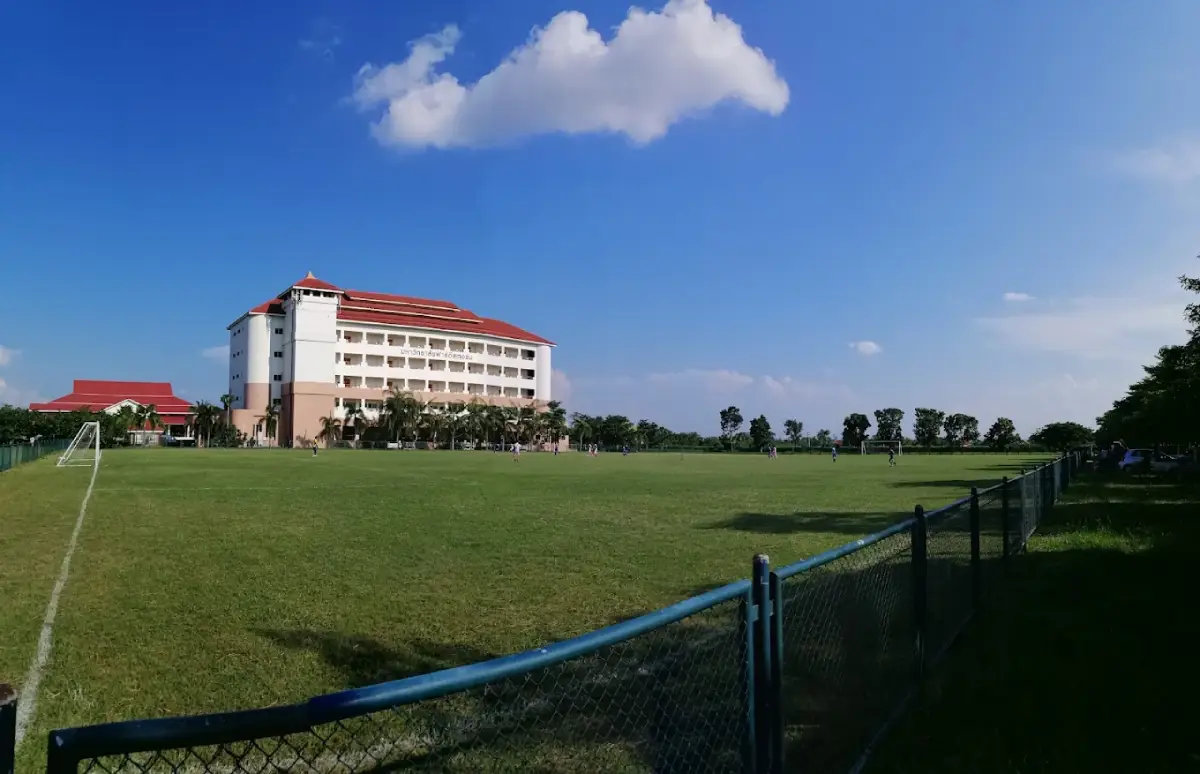
The Far Eastern University, New Ring Road Campus (U-FAR), located at 333 Moo 3, San Phak Wan Subdistrict, Hang Dong District, Chiang Mai 50230, Thailand, is an important educational and recreational campus of The Far Eastern University, a private higher education institution in northern Thailand. Covering approximately 104 rai, or 166,400 square meters, the campus was developed as part of the university's long-term expansion beyond its original Chiang Mai Airport Campus. Its facilities include a modern five-story academic building, sports grounds, areas supporting student activities, and residential facilities associated with the campus development. An important contemporary landmark is U-Far Next Arena, a football venue used for youth competitions and organized sporting events. The wider university was established as Far Eastern College on December 27, 1999, formally opened in 2000, and received university status on April 20, 2006. In 2026, the institution celebrates 26 years since its formal establishment and 20 years since becoming a university. U-FAR represents the university's continuing commitment to education, entrepreneurship, practical learning, and community participation in the expanding Hang Dong area of Chiang Mai.
The most distinctive characteristic of U-FAR Campus is its combination of educational facilities and extensive open spaces. While the original Chiang Mai Airport Campus occupies an urban location on Mahidol Road, the Ring Road Campus provides a larger setting in the suburban environment of San Phak Wan. This geographical difference is central to the identity of U-FAR. Its land area supports academic infrastructure, sports activities, and the university's long-term spatial development, creating opportunities for educational and community-oriented activities requiring more space than is readily available in central Chiang Mai.
U-FAR Campus is situated in San Phak Wan, a subdistrict of Hang Dong District immediately south of Chiang Mai's urban area. The neighborhood is connected to the city's outer road network, particularly the ring road system and the Chiang Mai–Hang Dong corridor. Residential developments, community temples, shops, cafés, restaurants, and small hospitality businesses form part of the surrounding environment. The campus is therefore closely connected with an area that combines established northern Thai communities with newer residential and commercial development.
Hang Dong has long been associated with local agriculture, traditional crafts, and village communities. During recent decades, the district has also developed into an important residential and commercial extension of Chiang Mai. The expansion of road infrastructure has encouraged new businesses, housing estates, leisure facilities, and educational services. The establishment of a large university campus in San Phak Wan reflects this broader transformation, demonstrating how educational development can become part of suburban growth while maintaining connections with local communities.
The Ring Road Campus occupies approximately 104 rai, a substantially larger site than the university's original campus near Chiang Mai International Airport. The additional land made it possible to develop educational buildings and provide space for sports and student facilities. The university's expansion strategy was intended to accommodate future growth in student numbers, academic activities, and supporting services. The resulting campus provides a different physical environment from the compact urban setting in which the institution originally developed.
The history of U-FAR Campus is inseparable from the history of The Far Eastern University. The institution was created during a period of major economic and technological change in Thailand, when demand was growing for graduates with professional knowledge, management abilities, technological competence, and international communication skills. The university's original educational direction emphasized the relationship between business knowledge and the practical application of modern technology.
On December 27, 1999, permission was granted to establish Far Eastern College, marking the formal beginning of the institution. The college was established to broaden access to private higher education in northern Thailand and prepare students for a rapidly changing economic environment. The growth of information technology, international business, and modern management created new demands for professional knowledge, making business and technology education important areas of institutional development.
The institution was formally established on February 4, 2000. Its founding philosophy emphasized preparing students for the challenges of the new millennium through academic knowledge, professional skills, ethical responsibility, and a practical understanding of technology. The college sought to develop graduates capable of working effectively in a competitive environment while remaining aware of their responsibilities toward Thai society and the wider international community.
Another important event took place on November 13, 2001, when Her Royal Highness Princess Galyani Vadhana, Princess of Naradhiwas, presided over the official opening ceremony of Far Eastern College. This milestone reflected the institution's progress in establishing its academic facilities, administrative organization, and teaching activities. It also became an important part of the university's institutional history.
During the early years, Far Eastern College concentrated on developing academic programs connected with business administration, management, information technology, and professional communication. These disciplines were particularly relevant to Chiang Mai's economy, where tourism, commerce, international services, and local entrepreneurship were becoming increasingly important. The institution's educational direction recognized that graduates needed to understand both organizational processes and the technologies changing the way businesses operated.
On April 20, 2006, Far Eastern College received permission to change its status to The Far Eastern University. A formal university establishment ceremony was held on May 8, 2006. The transition marked the institution's development into a university with broader responsibilities for undergraduate and postgraduate education, academic research, professional training, and services to society.
Becoming a university also created opportunities to develop additional academic disciplines and expand supporting infrastructure. The institution needed facilities capable of accommodating teaching, student activities, research, and a growing range of academic services. The development of U-FAR Campus formed part of this wider process of institutional expansion, providing additional space in Hang Dong District while the original campus continued to serve the university in central Chiang Mai.
The university's new Ring Road Campus was planned as an extension of its educational environment. The development concept involved academic buildings, sports facilities, student accommodation, and supporting infrastructure distributed across a much larger site. Rather than simply reproducing the compact buildings of the Airport Campus, the Ring Road Campus was intended to create room for educational activities that benefit from larger grounds and a less densely developed setting.
U-FAR is the campus designation used to distinguish the new Ring Road Campus from A-FAR, the original Chiang Mai Airport Campus. The distinction is important because the two locations are in different administrative districts. A-FAR is situated at 120 Mahidol Road in Haiya Subdistrict, Mueang Chiang Mai District, while U-FAR is at 333 Moo 3 in San Phak Wan Subdistrict, Hang Dong District. Students, parents, visitors, and event participants should select the campus specified in their appointment or activity announcement.
Although the two campuses have different physical characteristics, they belong to the same university and share its institutional philosophy, academic identity, and educational mission. The development of U-FAR therefore represents an extension of The Far Eastern University rather than the foundation of a separate institution. The university's original establishment dates and history apply to the university as a whole, while the Ring Road Campus has its own geographical and functional identity.
In 2026, The Far Eastern University has completed 26 years since its formal establishment in 2000 and 20 years since receiving university status in 2006. These anniversaries commemorate the institution as a whole, including its earlier history as Far Eastern College. The Ring Road Campus is a later development associated with the university's expansion and should not be assigned the same founding date as the original college.
One of the university's defining educational ideas is “Gateway to Entrepreneurship.” This philosophy emphasizes the preparation of graduates who can identify opportunities, develop creative ideas, use professional knowledge, and establish or improve businesses. Entrepreneurship is understood not only as starting a company but also as the ability to think independently, organize resources, solve practical problems, and contribute to innovation within established organizations.
The educational direction is especially relevant to northern Thailand, where small and medium-sized enterprises play an important role in the regional economy. Businesses in tourism, hospitality, food production, retail, logistics, technology, and creative industries require people who can combine technical competence with management skills. The Far Eastern University's emphasis on entrepreneurship addresses these needs through academic programs and learning activities connected with business and technology.
The institution also emphasizes the ideals of Ethics, Wisdom, and Wholeness. These principles represent an approach to education in which academic achievement is developed alongside personal responsibility and moral judgment. Ethics concerns the ability to act fairly and responsibly, wisdom involves the continuous pursuit and application of knowledge, and wholeness expresses the development of a well-rounded individual capable of making thoughtful decisions.
The university emblem expresses these educational values through a circular design. The outer circle represents the continuous development of knowledge and lifelong learning, while the inner structure resembles a traditional balance with three components symbolizing Ethics, Wisdom, and Wholeness. The image communicates the importance of maintaining balance among intellectual development, moral conduct, and the practical responsibilities of everyday life.
The official colors of The Far Eastern University are navy blue and yellow. Navy blue represents intellectual depth and thoughtful judgment, while yellow symbolizes morality, ethical values, and prosperity. Together, the colors form an important part of the university's visual identity and are associated with its students, employees, academic activities, and graduation traditions.
The physical environment of U-FAR Campus supports the university's broader identity as an institution that combines academic learning with opportunities for personal development. Its expansive grounds accommodate an academic building, outdoor activity spaces, and sports-related facilities. The campus setting is particularly suitable for activities that bring together students, teams, educators, and community participants in an environment extending beyond traditional classrooms.
The five-story academic building is an important component of the Ring Road Campus development. It provides an architectural focus for the educational side of the site and forms part of the university's investment in facilities designed to accommodate institutional growth. The building reflects the broader objective of creating additional capacity for academic activities and university services outside the original Airport Campus.
The campus sports grounds are among the most distinctive features of U-FAR. The availability of larger open areas supports football activities, physical exercise, and sporting events involving participants from the wider Chiang Mai community. Sport complements academic life by encouraging discipline, teamwork, resilience, leadership, and cooperation among people of different ages and backgrounds.
A particularly important modern landmark is U-Far Next Arena, a football venue associated with the Ring Road Campus. The arena has become a setting for organized youth football competitions in Chiang Mai. Its continued use demonstrates that the campus serves not only educational purposes but also contributes to local sporting activities and youth development.
In January 2022, the university's San Phak Wan campus hosted matches in the JSE-Thailand Youth League 2022, a youth football competition involving under-13 and under-16 age groups. The competition took place from January 15 through March 19, 2022, and was associated with the development of young footballers in northern Thailand. Organizing competitive matches within the university grounds reflected the campus's growing contribution to community sport.
The sporting role of U-FAR continued in 2026. The Chiang Mai Football Association organized the Chiangmai Football Association 7s Champion Cup at U-Far Next Arena, including youth competitions scheduled for May 23–24, 2026. The event brought together young players and emphasized the development of football skills, sporting experience, and opportunities to participate in structured competitions.
Another confirmed competition took place on September 19–20, 2026, when U-Far Next Arena hosted the second season of the Chiangmai Football Association 7s Champion Cup, including an under-11 youth category. The event further demonstrated the arena's role as a sports venue serving young athletes and football organizations in Chiang Mai.
Youth football competitions have value beyond identifying winning teams. They help players develop an understanding of discipline, teamwork, fair play, and responsibility. Young athletes gain experience in competitive situations, while parents and coaches participate in a shared environment supporting physical activity and youth development. By accommodating such events, U-FAR Campus contributes to the relationship between educational institutions and community sport.
The presence of a recognized football venue also gives U-FAR Campus an identity that differs from conventional academic campuses. The campus can accommodate activities involving schools, sports clubs, coaches, families, and local organizations, expanding its relationship with surrounding communities. Sports facilities of this kind can become important meeting places where young people develop confidence and acquire experiences that contribute to their personal growth.
Student accommodation was included among the facilities associated with the university's Ring Road Campus development. Providing residential accommodation within a university setting can support students who move to Chiang Mai from other provinces or who wish to live close to academic facilities. University residence arrangements also contribute to the broader educational experience by encouraging independence, responsibility, and cooperation with others.
Open spaces and landscaped grounds contribute to the physical character of the campus. Compared with densely developed central-city sites, the Ring Road Campus offers a broader setting where academic buildings and recreational facilities can be separated into different functional areas. This arrangement supports both organized activities and the everyday movement of students, staff, and visitors across the university grounds.
In the university's wider educational system, academic studies cover fields that support modern professional careers and entrepreneurship. The main academic areas include Business Administration, Accounting, Foreign Languages for Business, Digital Technology, Digital Media Innovation, Tourism and Services, Logistics Engineering, and Education. Postgraduate pathways are also available in Business Administration, Educational Administration, Learning Management, and Data Science and Digital Innovation.
The Faculty of Business Administration prepares students for professional careers involving organizational management, entrepreneurship, marketing, finance, and business communication. Academic options include Digital Marketing, Modern Entrepreneurship, Business Management, and Accounting. These fields support the development of practical business skills relevant to companies, startups, family enterprises, and organizations seeking to improve their operations.
Digital Marketing is especially important in an economy where businesses communicate with customers through websites, search engines, social media, and online marketplaces. Students studying marketing need to understand consumer behavior, brand communication, content planning, and the responsible use of business information. Such knowledge is applicable to the development of local enterprises as well as larger organizations serving national and international markets.
Modern Entrepreneurship focuses on recognizing business opportunities, turning ideas into viable products or services, and managing the resources required to operate an enterprise. Students learn to consider customer needs, commercial risks, financial planning, and business development. Entrepreneurship education also encourages creativity and adaptability, skills relevant to both independent business owners and employees working within innovative organizations.
Business Management and Accounting provide complementary knowledge. Management emphasizes planning, organization, staffing, operational control, and business decision-making, while Accounting involves recording, interpreting, and using financial information. Together, these disciplines support responsible organizational management and help students understand the relationship between strategy, operations, and financial performance.
Foreign Languages for Business provides academic options in Business English and Business Chinese. The study of foreign languages is particularly relevant to Chiang Mai because international tourism, trade, hospitality, and investment create frequent interactions among people from different countries. Language learning involves more than translation; it also develops cultural awareness, professional communication skills, and the ability to negotiate or cooperate across linguistic boundaries.
Tourism Business and Services is connected with one of northern Thailand's most important economic sectors. Chiang Mai attracts domestic and international visitors interested in its historic temples, handicrafts, natural landscapes, festivals, food, and regional culture. Education in tourism and service-related fields prepares students to understand visitor needs, business operations, customer experience, and the management of tourism activities.
The university's Digital Technology program contributes to the preparation of graduates who can work with information systems and technological applications. Knowledge in computing, digital systems, and information management is increasingly essential to business operations, education, public services, and everyday communication. Digital skills also support entrepreneurship by enabling the development of new platforms, services, and methods of working.
Digital Media Innovation and Creation combines communication studies with creative technology. The curriculum connects content production, digital storytelling, media development, and responsible communication. The university revised the curriculum in 2026, reflecting the importance of equipping graduates with skills suited to contemporary digital platforms and creative industries.
Logistics Engineering is another important technical discipline. It involves the analysis and improvement of transportation, warehousing, distribution, production planning, and supply chain systems. These activities are essential to businesses that need efficient movement of goods and materials. The field combines engineering knowledge with management and technology, preparing graduates to contribute to modern logistics and industrial operations.
Education and teacher professional development form another part of the university's academic activities. Programs include the Graduate Diploma in the Teaching Profession and postgraduate studies in Educational Administration and Research and Technology in Learning Management. These pathways support teachers, school administrators, and educational professionals seeking advanced knowledge in leadership, instructional design, and the use of technology in education.
The university also offers a Master of Business Administration focused on management and entrepreneurship in the digital economy. Advanced business education helps professionals strengthen their abilities in strategy, organization, innovation, and decision-making. The combination of academic theory and practical projects is particularly valuable for individuals already working in management or developing their own businesses.
The Master of Science in Data Science and Digital Innovation, with a curriculum revised in 2026, reflects the growing importance of data analysis in business and organizational development. Data science supports informed decisions by examining information, identifying patterns, and developing analytical approaches to complex problems. Its applications extend across commerce, technology, education, and many other professional fields.
At the doctoral level, Educational Administration provides opportunities for advanced research and the development of expertise in educational leadership. The university's broader academic offerings therefore address different stages of professional development, from undergraduate preparation to postgraduate specialization and research.
Professional short courses also form part of the university's commitment to lifelong learning. These include a 420-hour Elderly Caregiver program and a 130-hour program for operators involved in the care of older people or individuals requiring assistance. Such courses address the need for occupational skills in a society with an increasing elderly population and growing demand for care-related services.
All these academic disciplines belong to The Far Eastern University's wider educational system. Students choosing a program should pay attention to the designated location of their classes, examinations, interviews, and university activities. The existence of two campuses does not mean that every program is delivered at both locations. Academic arrangements are determined by the university and the responsible faculty or program.
The university also promotes innovation and entrepreneurship through initiatives such as FEU Sandbox, which encourages the development of new ideas and practical projects. Activities connecting business concepts with technological innovation help students develop a problem-solving mindset and gain experience transforming knowledge into useful applications. Entrepreneurship-oriented learning can also create opportunities for collaboration with businesses and community organizations.
Another important educational theme is digital commerce. Online marketplaces, digital marketing, business information systems, and customer communication are now essential components of many enterprises. The university's emphasis on business and technology contributes to the development of graduates who understand how digital tools can support competitiveness and organizational growth.
Research and academic services also connect the university with society. Fields such as management, digital technology, educational innovation, and applied professional training provide opportunities to share knowledge with local businesses, schools, and community organizations. Through academic cooperation and the development of practical skills, the institution contributes to the economic and social development of northern Thailand.
In April 2026, the Faculty of Business Administration entered into academic cooperation with Chom Thong Industrial and Community Education College to support educational opportunities, curriculum development, and research. The university also participated in activities connected with the development of silk products and business opportunities for Chiang Mai Women's Correctional Institution. These initiatives illustrate its wider commitment to linking professional knowledge with economic opportunity and community development.
Student activities are another important aspect of the university's identity. Student organizations, academic projects, training events, and institutional ceremonies complement classroom education by creating opportunities for leadership, cooperation, communication, and creative expression. Participation in such activities contributes to the development of graduates who can combine academic knowledge with practical social skills.
The university's graduation tradition is a significant moment for students and families. The 25th Commencement Ceremony was scheduled for November 8, 2026, at Chiang Mai Airport Campus (A-FAR). The event belongs to the university as a whole, but its designated venue is the Airport Campus rather than U-FAR. Understanding this distinction is important when attending major university events because participants must travel to the location specified in the official event schedule.
U-FAR's connection with community sporting activities creates a different type of engagement. Football competitions bring students, young athletes, coaches, organizers, and families into the campus environment. Such activities strengthen relationships between educational facilities and the communities they serve, contributing to the social value of the university's extensive grounds.
The Ring Road Campus also benefits from its location within a district known for traditional culture and rapidly developing suburban services. Nearby San Phak Wan communities retain Buddhist temples and local traditions, while the wider Hang Dong area offers cultural sites, botanical attractions, restaurants, and accommodation. This environment makes it possible to combine a university visit or sports event with other experiences in southern Chiang Mai.
Local community temples provide opportunities to understand the religious life and cultural heritage of San Phak Wan. Wat Thawon Tham and Wat Latthi Wanaram, also associated with the local name Wat Pa Tan, are examples of Buddhist temples serving communities in Hang Dong. These temples reflect the continuing importance of Buddhist institutions in neighborhood traditions and everyday life.
Wat Tha Mai-i, located in the Pa Daet area of Mueang Chiang Mai District near the outer ring road, is another cultural destination accessible from the wider U-FAR area. Its temple buildings, statues, and landscaped grounds provide opportunities to explore the diversity of Buddhist architecture and religious spaces in the southern part of Chiang Mai's urban region.
Wat Ton Kwen, also known as Wat Intharawat, is among the important examples of traditional Lanna religious architecture in Hang Dong District. Its preserved wooden buildings and distinctive architectural composition demonstrate the craftsmanship associated with northern Thai temple design. The temple is especially relevant to visitors interested in Lanna history, art, and the conservation of traditional architecture.
Royal Park Rajapruek is a major botanical and cultural attraction in the southern Chiang Mai area. The park features extensive gardens, plant collections, landscaped areas, and the Ho Kham Luang Royal Pavilion. It provides opportunities for learning about horticulture, environmental appreciation, and aspects of Thai cultural presentation. The park is a useful destination for families and visitors interested in nature, gardening, and landscape design.
Chiang Mai Night Safari, located in the Nong Khwai area of Hang Dong, is another major attraction in southern Chiang Mai. Its wildlife exhibits, tram-based safari experiences, and visitor activities make it a popular destination for families and people interested in animals and nature. The attraction can form part of a wider outing in Hang Dong when travelers have sufficient time beyond their university appointment.
Restaurants and cafés around San Phak Wan provide dining options for people visiting the university or attending sports activities. Garden-style cafés and local restaurants offer different experiences, from northern Thai food and noodles to grilled dishes and international-style meals. The surrounding food scene reflects the diversity of a residential area that serves local families as well as visitors traveling through Hang Dong.
Accommodation in the wider San Phak Wan area includes small resorts, local hotels, and holiday homes. Such properties provide options for parents attending university activities, sports teams participating in tournaments, and visitors who prefer to stay outside central Chiang Mai. Travelers should consider their transport arrangements when selecting accommodation because the campus and surrounding attractions are spread across a suburban road network rather than a compact pedestrian district.
For educational visits, the Ring Road Campus is particularly relevant to people interested in the development of private higher education, campus expansion, student recreation, and the relationship between universities and community sport. The campus illustrates how a university can respond to changing spatial requirements by creating a larger educational environment while continuing to operate an established campus in the city.
Visitors attending football tournaments should confirm the venue and event schedule with the organizer. The football grounds are active sports facilities, and access may depend on the type of event, training session, or reservation taking place. Visitors wishing to enter academic buildings, student accommodation, or other specialized areas should make arrangements with the appropriate university office.
Getting There: The Far Eastern University, New Ring Road Campus (U-FAR), is located at 333 Moo 3, San Phak Wan Subdistrict, Hang Dong District, Chiang Mai 50230. Travelers from central Chiang Mai can follow the city's southern road network toward Hang Dong and use the ring road connections serving San Phak Wan. The Chiang Mai–Hang Dong Road, Highway 108, and the surrounding ring road network provide important access routes to this part of the district.
Visitors traveling by private car should select “The Far Eastern University U-FAR Campus” or “The Far Eastern University Ring Road Campus” in their navigation application. The address at 333 Moo 3 is essential because the original university campus is located on Mahidol Road in a different part of Chiang Mai. The two campuses should not be treated as interchangeable destinations.
Those arriving at Chiang Mai International Airport, Chiang Mai Railway Station, or Chiang Mai Arcade Bus Terminal can continue to U-FAR by taxi, private transport, or an app-based ride-hailing service. Travelers using public transportation should check the available routes and convenient pick-up or drop-off locations in San Phak Wan. Anyone attending a specific academic event or sports competition should confirm the appropriate campus gate and meeting point beforehand.
For general inquiries about the Ring Road Campus, the university lists the telephone number +66 53 333 777. The university's original Chiang Mai Airport Campus can be contacted separately at +66 53 201 800 through +66 53 201 804. These numbers should be used according to the location and department relevant to the inquiry. The official university website is https://www.feu.ac.th/.
The Far Eastern University, New Ring Road Campus, represents an important stage in the institution's development from a small private college into a university with multiple educational locations. Its approximately 104-rai site provides additional space for academic infrastructure, sports facilities, student services, and institutional activities, supporting the university's long-term role in Chiang Mai.
In 2026, the continuing operation of U-Far Next Arena and its youth football competitions highlights an important part of the campus's community role. At the same time, the university's broader academic direction remains centered on entrepreneurship, technology, business knowledge, ethical development, and lifelong learning. U-FAR therefore serves as more than an extension of the university's physical facilities. It is a place where education, sport, and community participation come together within the growing suburban landscape of Hang Dong District.
| Campus Name | The Far Eastern University, New Ring Road Campus (U-FAR) |
| Institution | The Far Eastern University (FEU), Chiang Mai, Thailand |
| Institution Type | Private University Campus |
| Campus Abbreviation | U-FAR |
| Location | San Phak Wan Subdistrict, Hang Dong District, Chiang Mai Province, Thailand |
| Full Address | 333 Moo 3, San Phak Wan Subdistrict, Hang Dong District, Chiang Mai 50230, Thailand |
| Approximate Campus Area | 104 Rai (Approximately 166,400 Square Meters or 16.64 Hectares) |
| Original Institution Name | Far Eastern College |
| College Authorization Date | December 27, 1999 |
| Formal University Foundation Date | February 4, 2000 |
| Official Opening Ceremony | November 13, 2001, Presided Over by Her Royal Highness Princess Galyani Vadhana |
| University Status Date | April 20, 2006 |
| University Establishment Ceremony | May 8, 2006 |
| University Age in 2026 | 26 Years Since Formal Establishment in 2000 and 20 Years Since University Recognition in 2006 |
| Campus Development Purpose | Expansion of Academic Space, Student Facilities, Sports Grounds, and Long-Term University Infrastructure |
| Other Main Campus | Chiang Mai Airport Campus (A-FAR), 120 Mahidol Road, Haiya Subdistrict, Mueang Chiang Mai District, Chiang Mai 50100 |
| University Educational Direction | Gateway to Entrepreneurship |
| Educational Values | Ethics, Wisdom, and Wholeness |
| University Colors | Navy Blue and Yellow |
| University Emblem | Circular Symbol Representing Lifelong Knowledge, with a Balance Expressing Ethics, Wisdom, and Wholeness |
| Important Campus Facilities | 1. Five-Story Academic Building 2. U-Far Next Arena 3. Sports Grounds 4. Student Accommodation Facilities 5. Open Areas Supporting University Activities |
| Sports and Community Activities | 1. JSE-Thailand Youth League 2022 2. Chiangmai Football Association 7s Champion Cup, May 23–24, 2026 3. Chiangmai Football Association 7s Champion Cup, September 19–20, 2026 |
| University Academic Areas | Business Administration, Accounting, Foreign Languages for Business, Digital Technology, Digital Media Innovation, Tourism and Services, Logistics Engineering, Educational Studies, and Postgraduate Research |
| Academic and Research Initiatives | FEU Sandbox, Entrepreneurship Education, Digital Business Development, Academic Cooperation, and Community-Oriented Professional Training |
| Regular Administrative Days | Monday–Friday |
| Regular Administrative Contact Hours | 08:00–17:00 |
| Visitor Arrangements | Academic Visits and Access to Specialized University Facilities Should Be Arranged with the Responsible Office; Sporting Events Follow Organizer Schedules |
| Transport and Access | Chiang Mai's Southern Ring Road Network, Connecting Routes through San Phak Wan, and Highway 108 Toward Hang Dong |
| Nearby Attractions and Cultural Places | 1. Wat Thawon Tham, San Phak Wan 2. Wat Latthi Wanaram (Wat Pa Tan), San Phak Wan 3. Wat Tha Mai-i, Pa Daet 4. Wat Ton Kwen (Wat Intharawat), Hang Dong 5. Royal Park Rajapruek, Mae Hia 6. Chiang Mai Night Safari, Nong Khwai |
| Nearby Restaurants and Cafés | 1. Panmai Coffee Botanic Bistro, San Phak Wan, Tel. +66 93 285 3270 2. Pa Kum Baan Noy Noodles, San Phak Wan, Tel. +66 82 390 2819 3. BBQ Party, San Phak Wan, Tel. +66 65 526 9935 4. Wangtan Cafe, San Phak Wan, Tel. +66 53 234 123 5. Pankin Po Kum Coffee, San Phak Wan |
| Nearby Accommodations | 1. Teewana Resort, San Phak Wan, Tel. +66 61 959 4929 2. Baan Pondchanok Hotel, San Phak Wan, Tel. +66 89 191 5720 3. Ratri Resort, San Phak Wan, Tel. +66 96 697 5464 4. Hang Dong Hill, San Phak Wan, Tel. +66 81 827 2853 5. New Loft Modern Home, San Phak Wan, Tel. +66 86 195 7930 |
| U-FAR Campus Telephone | +66 53 333 777 |
| A-FAR Campus Telephone | +66 53 201 800 to +66 53 201 804 |
| Official University Website | https://www.feu.ac.th/ |
| Current Status | Active University Campus and Sports Venue in 2026 |
The Far Eastern University — Academic Programs and Fields of Study, Academic Year 2026 The Far Eastern University provides undergraduate, graduate diploma, master's, doctoral, and professional short-course education through its university-wide academic system. The following table presents the programs advertised for the 2026 academic year. It identifies qualifications and majors separately and describes the academic areas associated with the university. U-FAR and A-FAR are different campus locations; students should follow the designated teaching and examination venue for their particular program.
| Faculty / Academic Area | Academic Programs and Fields of Study, 2026 |
| 1. Faculty of Business Administration | Bachelor's Degree Programs and Majors 1. Bachelor of Business Administration in Business Administration – Digital Marketing Major 2. Bachelor of Business Administration in Business Administration – Modern Entrepreneurship Major 3. Bachelor of Business Administration in Business Administration – Business Management Major 4. Bachelor of Accountancy in Accounting 5. Bachelor of Arts in Foreign Languages for Business – Business English Major 6. Bachelor of Arts in Foreign Languages for Business – Business Chinese Major 7. Bachelor of Arts in Tourism Business and Services Master's Degree 1. Master of Business Administration (MBA) Academic Focus Entrepreneurship, Management, Accounting, Digital Marketing, Foreign-Language Communication, Tourism, and Business Innovation |
| 2. Faculty of Innovation, Technology and Creativity | Bachelor's Degrees 1. Bachelor of Science in Digital Technology 2. Bachelor of Communication Arts in Digital Media Innovation and Creation (2026 Revised Curriculum) 3. Bachelor of Engineering in Logistics Engineering Master's Degree 1. Master of Science in Data Science and Digital Innovation (2026 Revised Curriculum) Academic Focus Digital Systems, Communication Technology, Creative Media, Logistics, Data Analysis, and Applied Innovation |
| 3. Education and Teacher Professional Studies | Graduate Diploma 1. Graduate Diploma in the Teaching Profession Master's Degrees 1. Master of Education in Educational Administration 2. Master of Education in Research and Technology in Learning Management Doctoral Degree 1. Doctor of Philosophy in Educational Administration Academic Focus Teaching, Educational Leadership, School Administration, Learning Design, Research, and Educational Technology |
| 4. Professional Short Courses | Professional Education 1. Elderly Caregiver Certificate Program – 420 Hours 2. Care Facility Operator Program for Older People or People Requiring Assistance – 130 Hours Academic Focus Practical Care Skills, Occupational Training, and Lifelong Learning |
Frequently Asked Questions (FAQ)
Q: Where is The Far Eastern University, New Ring Road Campus (U-FAR), located?
A: U-FAR Campus is located at 333 Moo 3, San Phak Wan Subdistrict, Hang Dong District, Chiang Mai 50230, Thailand.
Q: What is the difference between U-FAR Campus and A-FAR Campus?
A: U-FAR is the university's larger Ring Road Campus in Hang Dong District, occupying approximately 104 rai and containing academic and sports facilities. A-FAR is the original Chiang Mai Airport Campus at 120 Mahidol Road in Mueang Chiang Mai District. The campuses are separate locations belonging to the same university.
Q: When was The Far Eastern University established?
A: The institution received permission to operate as Far Eastern College on December 27, 1999, was formally established on February 4, 2000, and received university status on April 20, 2006. U-FAR was developed subsequently as an expansion campus.
Q: How large is U-FAR Campus?
A: The campus occupies approximately 104 rai, equivalent to 166,400 square meters or 16.64 hectares.
Q: What facilities are available at U-FAR Campus?
A: The Ring Road Campus development includes a five-story academic building, sports grounds, and student accommodation facilities. U-Far Next Arena is an important football venue within the campus environment.
Q: What is U-Far Next Arena?
A: U-Far Next Arena is a football venue associated with the university's Ring Road Campus. It has hosted organized youth football competitions, including Chiangmai Football Association 7s Champion Cup events in 2026.
Q: What academic subjects does The Far Eastern University offer in 2026?
A: The university offers academic programs in Business Administration, Accounting, Foreign Languages for Business, Digital Technology, Digital Media Innovation and Creation, Tourism Business and Services, Logistics Engineering, Educational Administration, Learning Management, and Data Science and Digital Innovation. Teaching locations follow the arrangements of the individual programs.
Q: Are all university degree programs taught at U-FAR Campus?
A: The Far Eastern University operates both U-FAR and A-FAR. Students should follow the teaching location specified for their program, course, examination, or university activity rather than assuming that every degree is delivered at both campuses.
Q: What are the opening days and hours of U-FAR Campus?
A: Regular campus administrative contact hours are Monday through Friday from 08:00 to 17:00. Access to academic buildings, sports grounds, and organized events follows the relevant departmental or organizer schedules.
Q: Can visitors attend sports competitions at U-FAR?
A: U-FAR hosts organized sporting activities, particularly youth football competitions at U-Far Next Arena. Visitors should check event arrangements and spectator access with the organizer before attending.
Q: What attractions can visitors explore near U-FAR Campus?
A: Cultural and recreational destinations in the wider southern Chiang Mai area include Wat Thawon Tham, Wat Latthi Wanaram, Wat Tha Mai-i, Wat Ton Kwen, Royal Park Rajapruek, and Chiang Mai Night Safari.
Q: How can visitors get to U-FAR Campus?
A: Travel toward San Phak Wan in Hang Dong District using Chiang Mai's southern ring road network and connecting roads from Highway 108. Enter The Far Eastern University Ring Road Campus or U-FAR Campus in a navigation application and confirm the destination address as 333 Moo 3, San Phak Wan.
Q: What is the contact number for U-FAR Campus?
A: The Far Eastern University, New Ring Road Campus, can be contacted at +66 53 333 777. The university's official website is https://www.feu.ac.th/.
 Category: ●University
 Group: ●Private University
Last Update : 1 WeekAgo
 Last Update : 1 WeekAgo
 Click to Access the Navigation Map GPS
Far Eastern University (New Ring Road Campus) Map
Recommend

 Art, Culture and Heritage
 Historical Sites and Monuments(8)
 Landmarks and Memorials(5)
 Royal Palace(2)
 Art, Craft Centres, Tradition(43)
 Museums(24)
 Educational Places
 Museum for Study(2)
 Educational Gardens, Farm(5)
 Training Center(1)
 Public university(3)
 Autonomous Universities(3)
 Rajamangala University of Technology(1)
 Rajabhat University(1)
Private University(5)
 Places of Worship
 Temple(79)
 Mosque(2)
 Other Sacred Sites(17)
 Research and Development
 Royal Project(45)
 Suburban Living
 Village, Community(41)
 Local Market(14)
 Nature and Wildlife
 National Parks and Marine Reserves(18)
 Mountain (Doi)(21)
 Dam, Reservoir, Lake(26)
 Waterfalls(43)
 Hot Springs(12)
 Caves(11)
 River, Canal(6)
 Other natural attractions(14)
 Entertainment and Agricultural
 Zoos and Aquariums(3)
 Animal camps and shows(3)
 Stadium(1)
 Farms, Parks and Ecotourism(19)
 Waterpark(2)
 Theater(1)
 Outdoor and Adventure Activities(10)
 Shopping
 Shopping and Night Market(6)
 Restaurant
 Michelin Star(1)
 Michelin Guide(23)
 Call Customer Service in Tourism
 Call Customer Service in Tourism(1)
 Travel Articles, Recipes
 Travel Review, Food Review(26)
 Food Menu, North Recipes(30)
 Thai Desserts, North Recipes(17)


