
lovethailand home >North Travel Attractions >Uttaradit Travel Attractions >Lap Lae >Si Phanom Mat > Wat Mon Prang
TL;DR: Wat Mon Prang is located at Si Phanommat Subdistrict, Laplae District, Uttaradit Province, open Daily, hours 08.00 – 17.00.
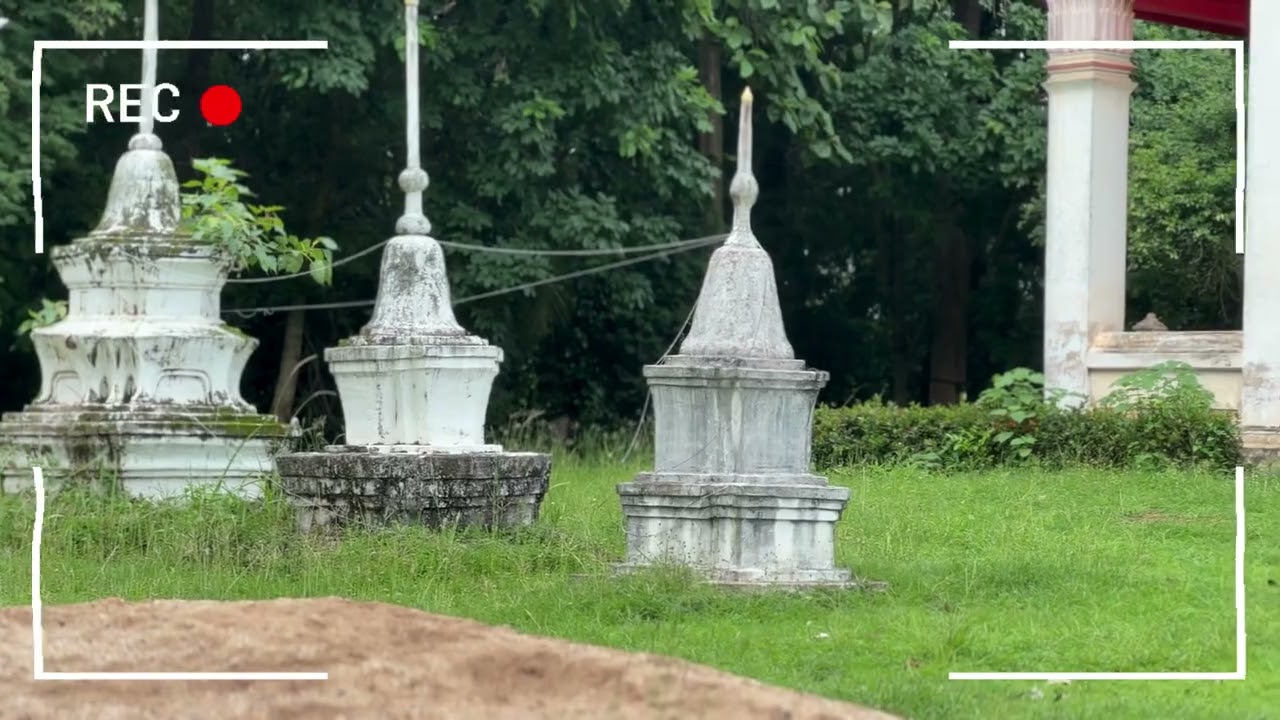
Wat Mon Prang

Open Days: Daily
Opening Hours: 08.00 – 17.00
Wat Mon Prang in Uttaradit Province is an old Buddhist temple in Si Phanommat Subdistrict, Laplae District. The temple was established in 1631 CE, or 2174 BE, during the late Sukhothai to early Ayutthaya period, and received its consecrated boundary in 1638 CE, or 2181 BE. Local people often call it simply “Wat Mon,” because it stands on elevated ground. In the northern Thai dialect, “mon” means a small hill or mound. This location gives the temple a quiet and distinctive atmosphere within the old cultural landscape of Laplae.
Wat Mon Prang is meaningful not only as an old community temple but also as a cultural site that preserves Lanna-style architecture and local Buddhist heritage. The temple’s main highlight is its compact yet elegant Lanna-style ordination hall. Inside and around the temple are artistic details such as a sacred Buddha image known as Phra Luea, khoang-style entrance elements, carved wooden doors, stucco decorations, wooden preaching furniture, and a traditional scripture hall. These features make the temple a valuable destination for travelers interested in Buddhist art, local history, and the quiet atmosphere of old Laplae.
The name of the temple is closely connected with its setting. The word “mon” refers to a small hill, while the full name “Wat Mon Prang” carries the sense of a religious place located on elevated ground. The temple’s hillside position gives visitors a sense of separation from the busier parts of the town. It is a place where the landscape itself supports the feeling of calmness, reflection, and reverence.
Historically, Wat Mon Prang is a private Buddhist temple under the Maha Nikaya order. Its establishment in 2174 BE and its consecrated boundary in 2181 BE show that the temple has long served as a complete Buddhist institution. A consecrated boundary is important because it allows formal monastic acts such as ordination and other Sangha ceremonies to be properly performed. This confirms the temple’s long-standing religious importance in the Laplae community.
The temple’s Lanna-style ordination hall is its most distinctive architectural feature. Although compact in size, the building contains refined proportions and decorative details. The multi-tiered roof reflects northern Thai temple architecture, while the overall form expresses simplicity, grace, and sacred dignity. The beauty of this temple lies not in large scale but in the careful balance of form, craftsmanship, and atmosphere.
The ordination hall is also significant because it houses Phra Luea, a sacred Buddha image respected by local people. Local tradition says that the image was originally called Phra Thong Luea, or “the remaining gold Buddha,” because it was associated with gold said to have remained after the casting of Phra Phuttha Chinnarat. Over time, the name was shortened to Phra Luea. This story connects Wat Mon Prang with one of the most revered Buddha images in Thailand and gives the temple added devotional meaning.
The khoang-style entrance elements and carved wooden doors are especially worth observing. In Lanna Buddhist architecture, gateways and doorways are not merely functional parts of a building. They mark the transition from the ordinary world into sacred space. Decorative patterns often carry auspicious meaning and reflect Buddhist symbolism. Walking through these elements encourages visitors to enter the temple space with mindfulness and respect.
The stucco patterns and wooden carvings at Wat Mon Prang reflect the skill of local artisans. These decorative details are not simply ornaments; they represent faith expressed through craftsmanship. Traditional temple art often combines beauty, symbolism, and devotion. At Wat Mon Prang, the carvings and stucco work help preserve the artistic language of the old Laplae community.
Other interesting elements within the temple include a wooden preaching seat, scripture hall, and old religious objects. These features show that the temple was not only a place for worship but also a place for learning, sermon-giving, and the preservation of Buddhist texts. In the past, temples served as centers of education, literacy, and moral instruction. Wat Mon Prang continues to reflect that older role of Thai temples as cultural and intellectual centers of the community.
The temple is currently under the care of Phra Samuh Saming Khunathammo, who serves as abbot. The temple remains active as a place for Buddhist ceremonies, merit-making, local traditions, and community gatherings. This living religious role is important. Wat Mon Prang is not only an old architectural site; it is still part of the spiritual life of local residents.
Wat Mon Prang is closely connected with the religious and cultural life of the Laplae community. Local activities include Buddhist Lent merit-making, the end of Buddhist Lent, northern Thai New Year traditions, tan khan khao merit-making, memorial rituals, and Mahachat sermons. These traditions help maintain the relationship between temple, family, ancestors, and community memory. The temple therefore remains a living cultural space rather than a silent monument.
For visitors, the best way to experience Wat Mon Prang is to move slowly. Begin by paying respect to Phra Luea inside the ordination hall, then observe the Lanna-style architecture, khoang-style entrance, carved wooden doors, stucco details, wooden preaching seat, scripture hall, and the temple grounds. A visit of at least 45 minutes to 1 hour is recommended for those who want to appreciate the temple’s details beyond a quick photo stop.
Wat Mon Prang can be included in a cultural route through old Laplae. Nearby places include Laplae Gate, Laplae Museum, Laplae Market, Wat Sao Hin, and Mae Phun Waterfall. This route allows travelers to combine old temples, local food, community history, and natural scenery in one trip. Local dishes such as khao phan phak, mee phan, and other Laplae specialties can also be enjoyed around the town.
Getting There is convenient by private car. From Uttaradit city, take Highway 102 toward Laplae District and continue on local roads to Si Phanommat Subdistrict. The temple is located on elevated ground in a quiet part of Laplae. Visitors can search for Wat Mon Prang on a navigation map. Those without a private vehicle can use local hired transport from Uttaradit city or Laplae, especially if planning to visit several places in one day.
The best time to visit is in the morning or late afternoon, when the weather is more comfortable and the temple atmosphere is calm. During the rainy season or after rainfall, the hillside surroundings can become especially green and pleasant. Visitors should still take care on sloped or damp surfaces.
Visitors should dress modestly, speak quietly, and treat the temple’s sacred objects and old artistic elements with respect. Do not touch Buddha images, old woodwork, or religious objects unnecessarily. Photography should be done carefully, especially when monks or local worshippers are present. A respectful visit helps preserve both the temple’s peaceful atmosphere and its cultural heritage.
Overall, Wat Mon Prang is one of the meaningful old temples to visit in Uttaradit Province. It offers a calm hilltop setting, Lanna-style Buddhist architecture, Phra Luea, carved woodwork, stucco details, and a close connection with the living traditions of Laplae. For travelers interested in old temples, local craftsmanship, and the cultural depth of northern lower Thailand, Wat Mon Prang is a worthwhile stop.
| Name | Wat Mon Prang |
| Location | Si Phanommat Subdistrict, Laplae District, Uttaradit Province |
| Address | Si Phanommat Subdistrict, Laplae District, Uttaradit 53130, Thailand |
| Coordinates | 17.6564177016, 100.040268747 |
| Highlights | Lanna-style ordination hall on a hill, Phra Luea, khoang-style entrance elements, carved wooden doors, stucco decoration, wooden preaching seat, and old Laplae temple atmosphere |
| History | Established in 1631 CE, or 2174 BE, during the late Sukhothai to early Ayutthaya period, and received its consecrated boundary in 1638 CE, or 2181 BE |
| Name Origin | Local people call it Wat Mon because it stands on elevated ground; in the northern Thai dialect, “mon” means a small hill or mound |
| Distinctive Features | A Maha Nikaya temple with compact Lanna-style architecture, refined decorative details, and a strong role in the religious life of the Laplae community |
| Travel Information | From Uttaradit city, take Highway 102 toward Laplae District and continue on local roads to Si Phanommat Subdistrict. The temple can be found by searching for Wat Mon Prang on a navigation map. |
| Current Status | Open as an active private Buddhist temple and important religious art site in Si Phanommat Subdistrict, Laplae District |
| Open Days | Daily |
| Opening Hours | 08.00 – 17.00 |
| Main Areas / Zones | Lanna-style ordination hall, Phra Luea, khoang-style entrance elements, carved wooden doors, stucco decorations, wooden preaching seat, scripture hall, and community worship areas |
| Abbot / Caretaker | Phra Samuh Saming Khunathammo |
| Important Traditions / Activities | Buddhist Lent merit-making, end of Buddhist Lent, northern Thai New Year, tan khan khao, Mahachat sermons, and local community merit-making activities |
| Nearby Tourist Attractions | 1. Laplae Gate, about 2 km 2. Laplae Museum, about 2 km 3. Laplae Market, about 2 km 4. Wat Sao Hin, about 2 km 5. Mae Phun Waterfall, about 8 km |
| Nearby Restaurants | 1. Jod Jib in Front of Wat Mon Prang, about 0 km, Tel. 093-332-3241 2. Mon Laplae, about 2 km, Tel. 055-431-439 3. Pizza Cafe de Lap Lae, about 5 km, Tel. 062-657-8354 4. Khao Phan Phak on Rat Uthit Road, about 2 km, Tel. 080-447-0345 5. Local Restaurants Around Laplae Market, about 2 km |
| Nearby Accommodations | 1. Local Accommodations in Laplae District, about 2 km 2. Na Laplae, about 3 km 3. Thung Yang House, about 8 km 4. Seeharaj Hotel Uttaradit, about 10 km, Tel. 055-832790 5. Friday Hotel Uttaradit, about 10 km |
Frequently Asked Questions (FAQ)
Q: Where is Wat Mon Prang located?
A: Wat Mon Prang is located in Si Phanommat Subdistrict, Laplae District, Uttaradit Province, Thailand.
Q: When was Wat Mon Prang established?
A: Wat Mon Prang was established in 1631 CE, or 2174 BE, and received its consecrated boundary in 1638 CE, or 2181 BE.
Q: Why do local people call it Wat Mon?
A: Local people call it Wat Mon because the temple stands on elevated ground. In the northern Thai dialect, “mon” means a small hill or mound.
Q: What are the main highlights of Wat Mon Prang?
A: The main highlights include the Lanna-style ordination hall, Phra Luea, khoang-style entrance elements, carved wooden doors, stucco decoration, wooden preaching seat, and old temple atmosphere.
Q: Why is Phra Luea important?
A: Phra Luea is the important Buddha image inside the ordination hall. Local tradition links it with gold said to have remained after the casting of Phra Phuttha Chinnarat.
Q: Who is the abbot of Wat Mon Prang?
A: The abbot of Wat Mon Prang is Phra Samuh Saming Khunathammo.
Q: What are the opening days and hours?
A: The temple is open daily from 08.00 to 17.00.
Q: What nearby places can be visited with Wat Mon Prang?
A: Nearby places include Laplae Gate, Laplae Museum, Laplae Market, Wat Sao Hin, and Mae Phun Waterfall.
 Category: ●Places of Worship
 Group: ●Temple
Last Update : 5 MonthAgo
 Last Update : 5 MonthAgo
 Click to Access the Navigation Map GPS
Wat Mon Prang Map
Recommend

 Art, Culture and Heritage
 Historical Sites and Monuments(2)
 Landmarks and Memorials(8)
 Art, Craft Centres, Tradition(3)
 Museums(1)
 Historic Homes and Cities(1)
Temple(42)
 Other Sacred Sites(6)
 Suburban Living
 Village, Community(4)
 Nature and Wildlife
 National Parks and Marine Reserves(5)
 Mountain (Doi)(3)
 Dam, Reservoir, Lake(3)
 Waterfalls(11)
 Caves(3)
 River, Canal(3)
 Other natural attractions(3)
 Entertainment and Agricultural
 Farms, Parks and Ecotourism(1)
 Travel Articles, Recipes
 Travel Review, Food Review(1)


