
lovethailand home >South Travel Attractions >Songkhla Travel Attractions >Na Thawi >Khlong Kwang > Khao Nam Khang Historical Tunnel
TL;DR: Khao Nam Khang Historical Tunnel is located at Moo 1, Khlong Kwang Subdistrict, Na Thawi District, Songkhla Province, open Daily, hours 07.00 – 17.00.
Khao Nam Khang Historical Tunnel
Open Days: Daily
Opening Hours: 07.00 – 17.00
Khao Nam Khang Historical Tunnel in Songkhla Province is one of the most important historical travel sites in southern Thailand. It is located at Moo 1, Khlong Kwang Subdistrict, Na Thawi District, inside Khao Nam Khang National Park, about 4 km from the national park office. The site is also known as Piyamit 5 Village. In the past, this area served as a settlement and operational base for communist groups active along the Thai–Malaysian border region. After decades of conflict, the fighting ended, and former members joined the Thai national development process in 1987. Today, the tunnel has been preserved and developed as a historical learning attraction open to visitors daily.
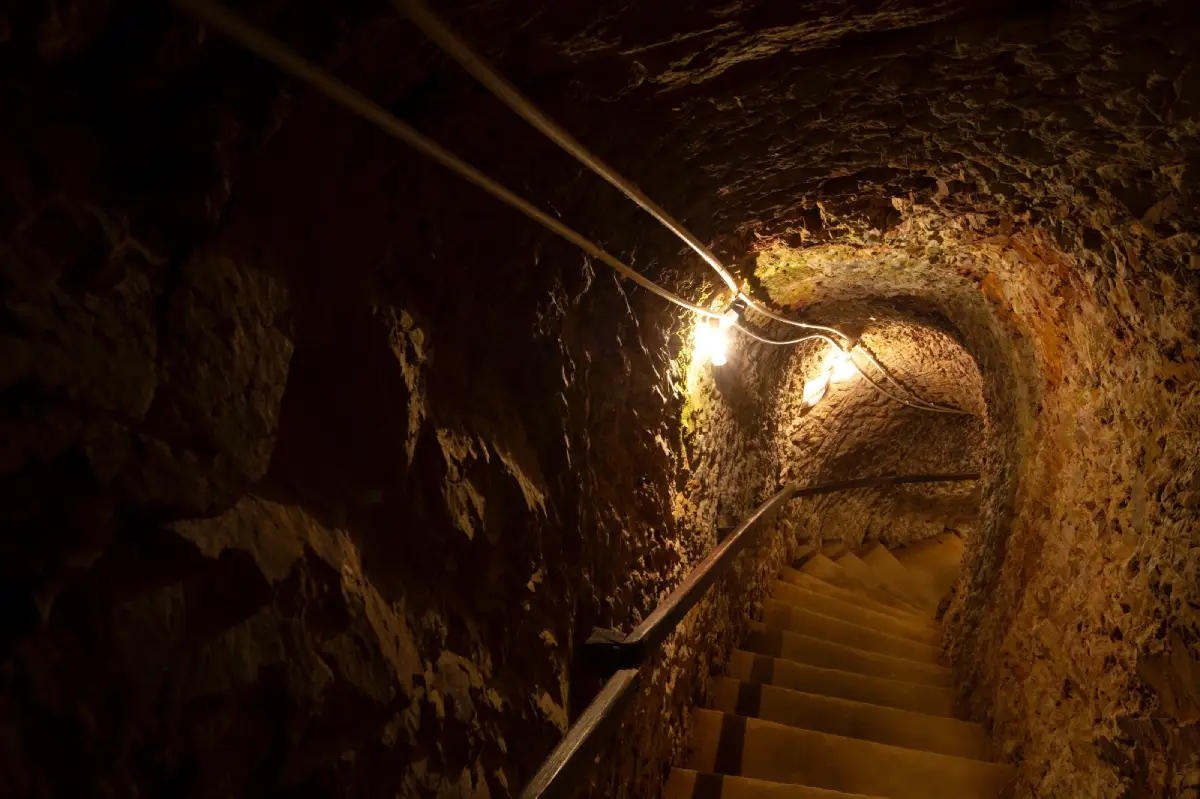
The main highlight of Khao Nam Khang Historical Tunnel is that it is widely presented as the largest and longest clay tunnel in Thailand. Construction began in 1972 and was carried out by human labor, taking about 2 years to complete. The tunnel runs in a winding route of about 1,000 meters, with 3 main passageways, 3 underground levels, stairways linking different floors, and multiple entrances and exits. Tourism information records 16 access points and a capacity of around 200 people. These details show not only the scale of the tunnel, but also the practical knowledge of terrain, survival, and underground space planning used during a difficult period of political and security conflict.
This tunnel is not just an underground passage. It was a structured living and operational system. Inside the tunnel are different functional rooms and areas, including a meeting room, administrative room, radio room, medical room, kitchen, leader’s room, wedding room, toilets, shooting practice area, and motorcycle training area. These spaces help visitors understand that life in the forest was not random or unorganized. The tunnel was arranged to support communication, medical care, food preparation, training, decision-making, and daily living under severe environmental and political constraints.
Khao Nam Khang was historically a dense forest and mountainous border zone. Its complex terrain, forest cover, and proximity to the Thai–Malaysian border made it suitable as a hidden operational base. The mountain landscape provided natural protection and made access difficult. At the same time, the area was rich in water sources, forest ecology, and humid tropical vegetation. Visiting the tunnel is therefore not only a study of conflict history, but also a way to understand how geography, forest, mountain routes, and border conditions shaped events in this part of southern Thailand.
The name Khao Nam Khang is associated with the cool and humid nature of the mountain. Local accounts describe dew forming on grass tips near the summit, sometimes appearing like fine threads or spiderwebs. This unusual mountain atmosphere led to the name Khao Nam Khang, meaning Dew Mountain. The name links the place directly with its natural environment and gives the destination a double identity: a site of modern political history and a forested mountain landscape inside a national park.
Historically, Khao Nam Khang Historical Tunnel is tied to a long period of unrest in the southern border region. The area was once a restricted and difficult-to-access stronghold. After nearly 40 years of conflict, communist groups in the area ended their armed struggle in 1987 and entered the status of national development participants. This transformation changed the meaning of the tunnel. What was once an underground base for survival and conflict became a place for public learning, memory, reconciliation, and reflection on the complexity of Thailand’s modern border history.
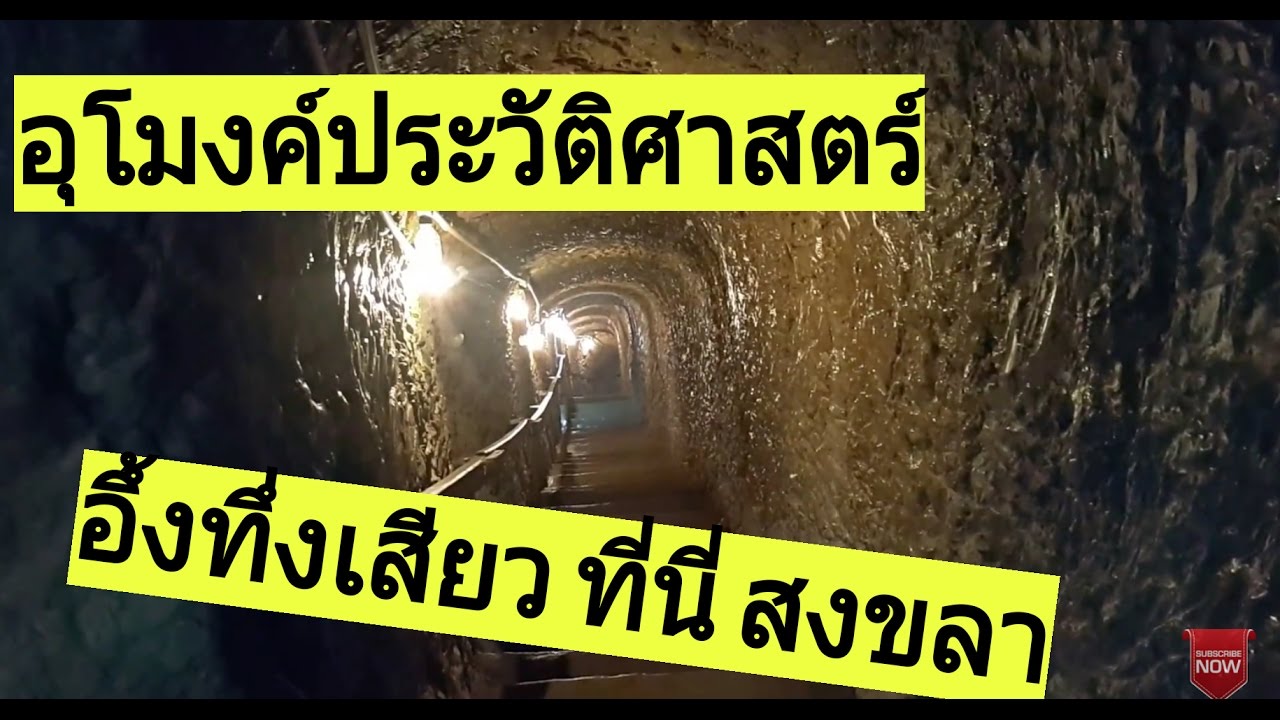
The experience inside the tunnel is very different from visiting a conventional museum. Visitors walk through real underground corridors that twist, descend, rise, and connect between levels. The earthen walls, narrow passageways, steps, and internal rooms still preserve the atmosphere of the original tunnel. The site tells history through physical space, not only through text panels. Walking through the tunnel allows visitors to understand the endurance, discipline, and difficulty of living in such an environment far more directly than reading a short historical summary.
Before entering the tunnel, visitors encounter an exhibition area with historical information, photographs, and introductory displays. This front section is important because it provides context before the underground walk begins. After learning the background, visitors can better understand how the tunnel corridors, rooms, tools, and living areas were connected with the real lives of people who once stayed there. This makes the visit more than a simple tunnel walk; it becomes a structured reading of place-based history.
The 3-level tunnel structure is a key reason why this site is so distinctive. Stairways connect different levels, creating a complex but functional underground route. The many entrances and exits allowed movement, safety planning, and flexible use of space. When visitors walk through the tunnel, the quoted length of about 1,000 meters becomes a physical experience. It is easy to understand why creating such a tunnel by hand required labor, organization, and determination over a long period.
Each room inside the tunnel reflects a different part of its former function. The meeting room suggests planning and decision-making. The radio room shows the importance of communication in a mountain area. The medical room reflects the need to treat illness and injury under limited conditions. The kitchen and toilets reveal the organization of daily life. The shooting practice and training areas show that the site functioned as a full operational base, not merely a shelter. These details make Khao Nam Khang Historical Tunnel far richer than a simple underground attraction.
Visitors should also observe the relationship between the tunnel and the surrounding forest. Today, the road to the tunnel is paved and convenient, but the surrounding landscape still shows the forested character of Khao Nam Khang National Park. This contrast between present-day access and past difficulty is part of the site’s meaning. A place that was once remote, restricted, and dangerous has become a public historical attraction that travelers can reach by road.
Khao Nam Khang National Park, where the tunnel is located, covers areas of Na Thawi and Sadao districts. The park contains humid evergreen forest, mountain ranges, watersheds, waterfalls, wildlife habitat, and nature trails. This natural setting adds depth to the tunnel visit because travelers can combine history with forest and waterfall experiences. Nearby places connected with the park include the national park office, Wang Luang Phrom Waterfall, Ton Lat Waterfall, Phru Ching Waterfall, and local nature routes.
Wang Luang Phrom Waterfall and Ton Lat Waterfall are useful additions to a Khao Nam Khang itinerary. Wang Luang Phrom is a smaller waterfall near the park office, while the route to Ton Lat Waterfall follows a stream through humid forest before reaching a long sloping rock surface where water flows across the stone. Combining the tunnel with waterfall stops gives travelers both historical content and natural scenery in a single trip.
For travelers interested in political and social history, Khao Nam Khang Historical Tunnel should be visited with respect and context. The story of the site involves conflict, hardship, loss, survival, adaptation, and a transition toward peace. It should not be reduced to a single-sided narrative. The tunnel is best understood as evidence of a complex era and as an example of how a former conflict zone can become a shared learning space.
The tunnel is also suitable for families, students, and educational groups. It introduces topics such as modern history, border geography, forest survival, underground engineering, community change, and reconciliation. Teachers and parents can use the site to discuss past conflict without emphasizing violence, focusing instead on context, human endurance, and the value of peace. Seeing the real place helps younger visitors understand history more deeply than classroom reading alone.
Photography is rewarding at the tunnel because the atmosphere is distinctive. The entrance signs, underground passages, lit corridors, earthen walls, connecting stairways, and exhibition area all create strong visual impressions. Visitors should take photos carefully, avoid blocking narrow routes, refrain from climbing or touching displays unnecessarily, and respect other visitors inside the confined space. Safe and respectful photography preserves both the experience and the historical setting.
Visitors should prepare properly before entering. The tunnel includes underground walking routes, stairs, uneven surfaces, and narrow sections. Practical shoes are strongly recommended. Elderly visitors, people with knee problems, visitors uncomfortable in enclosed spaces, and those with respiratory concerns should consider their condition before entering deeper sections. Groups should stay together, follow the marked route, and listen to instructions from local staff or site caretakers.
The best time to visit is from morning to early afternoon. This allows enough time to see the exhibition, walk through the tunnel, rest, eat, and continue to other parts of Khao Nam Khang National Park. Travelers who plan to visit waterfalls or nature trails should avoid arriving too late in the day because the site is in a forested mountain area. During the rainy season, humidity is high and some paths may be slippery, so suitable shoes and weather preparation are important.
Getting There can be done through 2 main routes. The first route starts from Songkhla city, follows the Songkhla–Na Thawi road through Chana District into Na Thawi District, then continues through Ban Sathon and Ban Na Prang toward Khao Nam Khang National Park. The tunnel is about 4 km from the park office. This route is suitable for travelers starting from Songkhla city, Chana, or the eastern side of the province.
The second route starts from Hat Yai or Sadao and travels through the Sadao side, passing Ban Muang, Ban Ko Mi, and Samnak Taeo Subdistrict toward Khao Nam Khang National Park. This route is suitable for travelers coming from Hat Yai, Sadao, or the border area. Some sections pass through hilly terrain, so careful driving is necessary, especially during rain or on wet roads.
A private car is the most convenient way to visit because the tunnel is inside a national park and nearby attractions are spread across a forested mountain landscape. Travelers without a car should start from Na Thawi or Sadao and arrange local transport in advance. Planning ahead helps visitors cover the tunnel, park office, waterfalls, local restaurants, and accommodation options without rushing.
A half-day itinerary can focus on the tunnel itself: start with the exhibition, walk through the underground route, and rest at the food or service area. A full-day itinerary can add the national park office, Wang Luang Phrom Waterfall, Ton Lat Waterfall, and Na Thawi town for food or accommodation. A full-day plan is better for travelers who want to understand both the historical and natural setting of Khao Nam Khang.
Visitors should follow basic preservation rules. Do not write on the walls, damage the earth or rock surfaces, litter, shout in narrow sections, leave the marked route, or handle displays without permission. Khao Nam Khang Historical Tunnel is both a tourist attraction and a historical learning site. Preserving it carefully allows future generations to continue learning from this remarkable place.
Khao Nam Khang Historical Tunnel brings together many layers of meaning: southern border history, life inside an underground operational base, hand-dug tunnel construction, forest geography, national park ecology, and the transformation from conflict toward public learning. Visitors do not come here only to see a large tunnel. They come to understand how one mountain landscape can hold hardship, memory, survival, and historical lessons in a deeply tangible form.
| Name | Khao Nam Khang Historical Tunnel / Piyamit 5 Village |
| Location | Moo 1, Khlong Kwang Subdistrict, Na Thawi District, Songkhla Province |
| Address | Khlong Kwang Subdistrict, Na Thawi District, Songkhla 90160, inside Khao Nam Khang National Park |
| Coordinates | 6.5647433, 100.5832956 |
| Highlights | Thailand’s largest and longest clay historical tunnel, about 1,000 meters long, with 3 underground levels, multiple entrances and exits, and a former role as an important border-area operational base |
| History / Period | Construction began in 1972 using human labor and took about 2 years. After the end of the armed struggle in 1987, the site was developed into a historical attraction |
| Name Origin | Khao Nam Khang refers to the cool, humid mountain where dew forms on grass tips; Piyamit 5 refers to the community associated with national development participants after the conflict ended |
| Distinctive Features | The tunnel has 3 main passageways, 3 levels, connecting stairs, 16 entrances and exits, and a capacity of about 200 people |
| Main Areas / Zones | Front exhibition area, tunnel corridors, meeting room, administrative room, radio room, medical room, kitchen, leader’s room, wedding room, toilets, shooting practice area, motorcycle training area, and restaurant area |
| Travel Information | From Songkhla city, travel via the Songkhla–Na Thawi route through Chana and Na Thawi, then continue to Khao Nam Khang National Park. From Hat Yai or Sadao, travel through Ban Muang, Ban Ko Mi, and Samnak Taeo toward the park |
| Current Status | Open as a historical attraction and learning site inside Khao Nam Khang National Park |
| Open Days | Daily |
| Opening Hours | 07.00 – 17.00 |
| Fees | Thai visitors 40 baht / Foreign visitors 150 baht |
| Facilities | Paved access road, exhibition area, restaurant, visitor service points, national park accommodation, camping area, and nearby natural attractions |
| Caretaker / Related Agency | Khao Nam Khang National Park and Khao Nam Khang Historical Tunnel tourism area |
| Main Contact Number | Tel. 0-7453-1840-1 |
| Nearby Tourist Attractions | 1. Khao Nam Khang National Park Office, 4 km 2. Wang Luang Phrom Waterfall, 4 km 3. Ton Lat Waterfall, 7 km 4. Phru Ching Waterfall, 8 km 5. Khao Nam Khang National Park Nature Trail, 4 km 6. Na Thawi District Market, 31 km |
| Nearby Restaurants | 1. Restaurant Area at Khao Nam Khang Historical Tunnel, 0 km 2. Nan Yuan Na Thawi, 31 km, Tel. 074-371-753 3. Zab Na Khai, 31 km, Tel. 094-314-1145 4. Khao Man Kai Na Thawi, 31 km, Tel. 074-371-341, 093-242-3224 5. Rong Khrua Na Thawi Khao Kaeng Por Phiang, 32 km, Tel. 088-784-8251 6. Phan Dao Made-to-Order Food Branch 1, 33 km, Tel. 093-603-1970 |
| Nearby Accommodations | 1. Khao Nam Khang National Park Lodging and Camping Area, 4 km, Tel. 0-7453-1840-1 2. Kampai Resort & Restaurant Natawee, 31 km, Tel. 074-373-074 3. Sampor Resort Nathawee, 31 km, Tel. 098-016-1072 4. Dintong Resort & Hotel, 32 km, Tel. 081-608-0610 5. Mee Sanae Resort Na Thawi, 32 km, Tel. 086-960-3474 6. Long Lae Resort, 36 km, Tel. 074-371-133 7. Chom View Resort, 36 km, Tel. 081-678-6644 |
Frequently Asked Questions (FAQ)
Q: Where is Khao Nam Khang Historical Tunnel located?
A: Khao Nam Khang Historical Tunnel is located at Moo 1, Khlong Kwang Subdistrict, Na Thawi District, Songkhla Province, inside Khao Nam Khang National Park, about 4 km from the national park office.
Q: Why is Khao Nam Khang Historical Tunnel important?
A: It is important because it is Thailand’s largest and longest clay historical tunnel, formerly used as an operational base in the southern border region and now preserved as a historical learning site.
Q: What are the opening hours?
A: The tunnel is open daily from 07.00 to 17.00.
Q: How much is the admission fee?
A: The listed admission fee is 40 baht for Thai visitors and 150 baht for foreign visitors.
Q: What can visitors see inside the tunnel?
A: Visitors can see the 3-level tunnel corridors, meeting room, administrative room, radio room, medical room, kitchen, leader’s room, wedding room, toilets, shooting practice area, motorcycle training area, and front exhibition area.
Q: Who should visit Khao Nam Khang Historical Tunnel?
A: The site is suitable for visitors interested in history, southern border studies, national parks, educational trips, forest landscapes, and meaningful cultural travel.
Q: How should visitors prepare before entering the tunnel?
A: Visitors should wear practical shoes, watch their steps on stairs and uneven surfaces, follow the designated route, stay with their group, and avoid touching walls or displays unnecessarily.
Q: Which nearby places can be combined with the tunnel?
A: Nearby places include Khao Nam Khang National Park Office, Wang Luang Phrom Waterfall, Ton Lat Waterfall, Phru Ching Waterfall, national park nature trails, and Na Thawi town.
 Category: ●Art, Culture and Heritage
 Group: ●Landmarks and Memorials
Last Update : 2 MonthAgo
 Last Update : 2 MonthAgo
 Click to Access the Navigation Map GPS
Khao Nam Khang Historical Tunnel Map
Recommend

 Historical Sites and Monuments(2)
Landmarks and Memorials(7)
 Royal Palace(1)
 Art, Craft Centres, Tradition(4)
 Museums(4)
 Art Gallery(1)
 Educational Places
 Library(1)
 Educational Gardens, Farm(3)
 Places of Worship
 Temple(52)
 Mosque(2)
 Other Sacred Sites(11)
 Suburban Living
 Village, Community(3)
 Local Market(3)
 Floating Market(2)
 Nature and Wildlife
 National Parks and Marine Reserves(5)
 Mountain (Doi)(6)
 Dam, Reservoir, Lake(5)
 Waterfalls(12)
 Caves(4)
 River, Canal(2)
 Bays and Beaches(13)
 Islands(3)
 Other natural attractions(2)
 Entertainment and Agricultural
 Zoos and Aquariums(2)
 Animal camps and shows(1)
 Farms, Parks and Ecotourism(6)
 Waterpark(1)
 Travel Articles, Recipes
 Travel Review, Food Review(1)
 Southern Food Menu, Southern Food Recipes(2)


