
lovethailand home >South Travel Attractions >Songkhla Travel Attractions >Muang Songkhla >Koh Yo > Institute for Southern Thai Studies
TL;DR: Institute for Southern Thai Studies, Songkhla attractions : Educational Places, Educational Gardens, Farm.
Institute for Southern Thai Studies
Open Days: Monday and Wednesday – Sunday
Opening Hours: Monday and Wednesday – Friday 08.30 – 17.00 / Saturday – Sunday 09.00 – 18.00 / Closed Every Tuesday
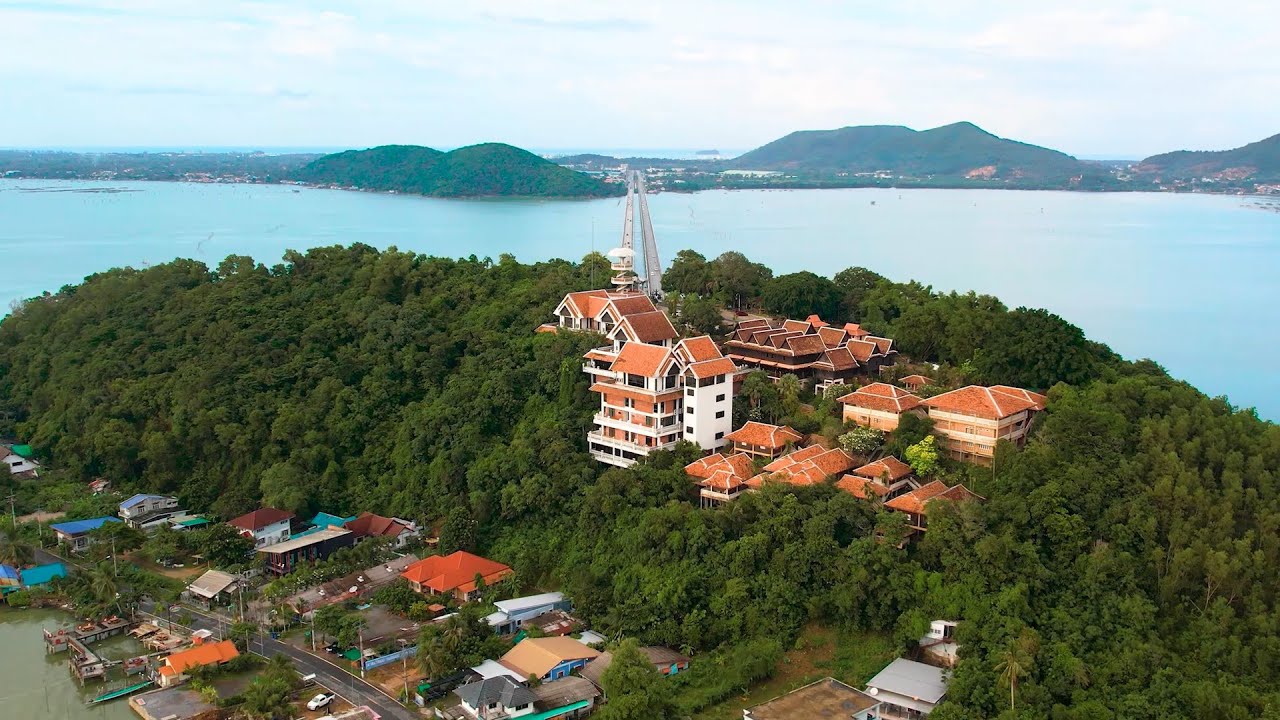
Institute for Southern Thai Studies, Thaksin University, is one of Songkhla’s most important centers for Southern Thai culture, local wisdom, history, folklore, and traditional lifeways. It is located at 53/2 Moo 1, Ban Ao Sai, Ko Yo Subdistrict, Mueang Songkhla District, Songkhla 90100, near the second section of the Tinsulanonda Bridge on Ko Yo Island. The institute is not simply a cultural attraction. It is a large learning space that brings together research, authentic objects, permanent exhibitions, the Folklore Museum, local archives, academic services, a Songkhla Lake viewpoint, and activities dedicated to preserving Southern Thai heritage.
The value of the institute lies in the way it gives depth to the meaning of “Southern Thailand.” Visitors do not only encounter beaches, food, or island scenery. They learn that the South is a region shaped by Songkhla Lake, the Malay Peninsula, maritime routes, religion, local beliefs, fishing communities, agricultural communities, craft traditions, folk performers, and many cultural groups. The institute functions as a cultural map that helps visitors understand the South as a living region of memory, belief, art, knowledge, and community life.
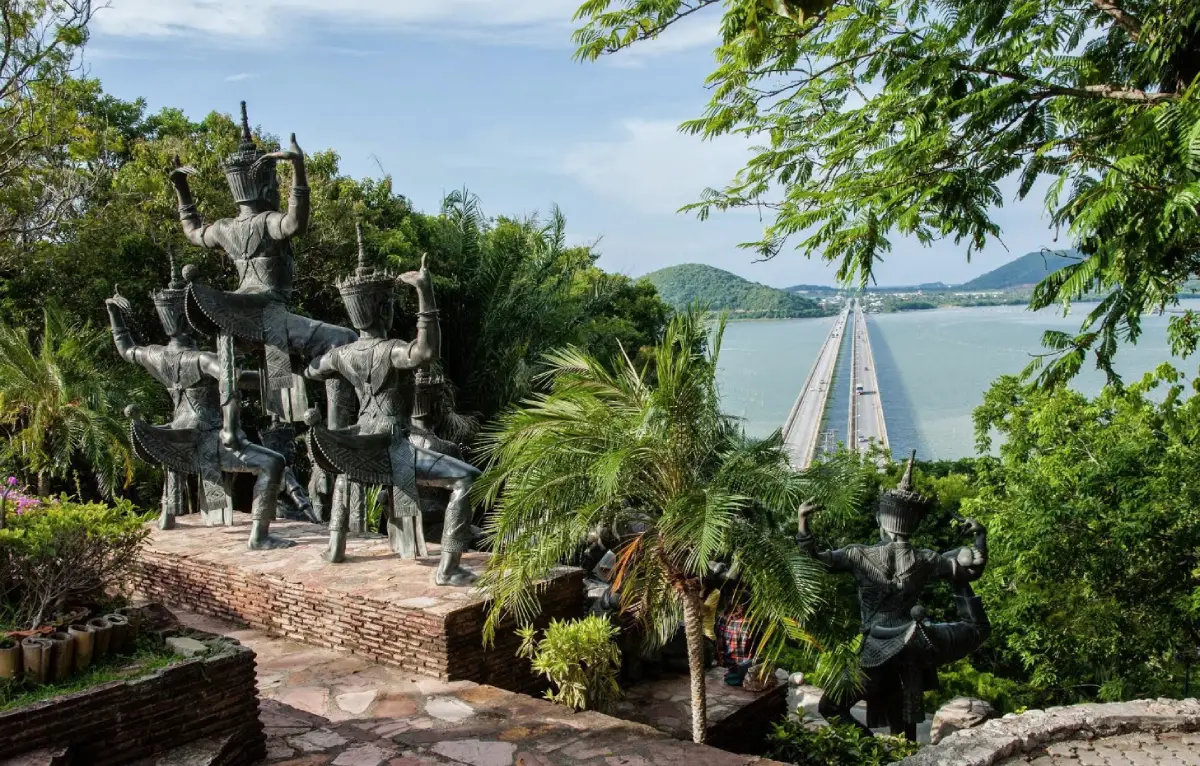
The institute covers about 23 rai of land on both hillside and elevated ground on Ko Yo Island. This setting gives it a character different from museums located in dense city areas. From the upper parts of the institute, visitors can see Songkhla Lake, Ko Yo, the Tinsulanonda Bridge, surrounding lakeside communities, and the wider landscape of Songkhla. This real view strengthens the exhibitions inside, because many objects and stories displayed in the institute are connected with water, islands, fishing, travel, and settlements around the Songkhla Lake Basin.
The Institute for Southern Thai Studies was established in 1978 to study and disseminate knowledge about Southern Thai arts and culture. It later developed into a major cultural learning center with the Folklore Museum, a cultural park, cultural resource services, promotion and dissemination work, and a demonstration cultural village. Its core purpose is to collect, preserve, study, interpret, and pass on the wisdom of Southern Thailand in a structured and accessible way.
The architecture of the institute is based on Southern Thai building forms. Its major building groups include the Nawamphumin Building, the Blanor-Roof House Group, the Panya-Roof House Group, and the Gable-Roof House Group. These buildings are not merely containers for exhibitions. They also teach visitors about southern architectural intelligence: roofs adapted to heavy rain, elevated floors, ventilation, verandas, shaded transitions, and the practical relationship between buildings and the humid tropical climate.
The heart of the site is the Folklore Museum, which presents southern lifeways, customs, traditions, crafts, history, archaeology, ethnicity, religion, beliefs, occupations, and community wisdom in organized exhibition rooms. The museum uses authentic objects together with models, sound, images, video, and display media. Visitors can understand southern life through objects that once belonged to homes, kitchens, temples, boats, orchards, fields, performance spaces, and community rituals.
The Nawamphumin Building introduces the broad historical and cultural picture of the South. The History and Ethnicity Room presents prehistoric evidence, archaeological sites, cave-dwelling groups, water-based communities, maritime routes, contacts with China, India, the Malay world, Arab traders, and Western powers, as well as ancient cultural centers such as Tambralinga, Langkasuka, Srivijaya, and Sathing Pura – Phatthalung around the Songkhla Lake Basin. This room helps visitors see Southern Thailand as a region of connection rather than isolation.
The Beads and Ornaments Room shows the South as a zone of trade and exchange. Beads, ornaments, and small objects are evidence of taste, status, belief, and maritime contact. Together with the displays on ancient kingdoms and archaeological finds, they reveal the role of the southern peninsula in wider Southeast Asian networks.
The Knives and Southern Weapons Room presents craft, belief, and daily life through objects such as the kris, ceremonial blades, and other local weapons. These objects are not only tools of defense. They are connected with status, ritual, decorative art, metalwork, and Malay cultural influence across the peninsula. The room helps visitors read the hidden cultural codes embedded in form, pattern, and material.
The Main Occupations Room and the Tool and Trapping Room explain how southern communities lived closely with natural resources. People worked with the sea, forests, fields, orchards, canals, lakes, and wetlands. Fishing tools, animal traps, farming tools, and occupational equipment were created through observation, experimentation, practical use, and long-term transmission. These displays make local wisdom visible as practical intelligence rather than abstract tradition.
The Pottery Room, Southern Textile Room, and Coconut Grater Room clearly reflect everyday community life. Pottery relates to cooking, storage, local trade, and ritual. Textiles such as Phum Riang cloth, Pattani woven cloth, and Ko Yo woven cloth reveal patterns, techniques, materials, and community taste. Coconut graters show the close relationship between southern kitchens and coconut, a key ingredient in local food and household life.
The Blanor-Roof House Group presents handicrafts, education, recreation, lamps, glassware, and everyday objects that reflect changes in local life. Some objects show the simplicity of rural society, some show outside influences, and others reveal the ability of local craftspeople to transform available materials into beautiful and useful objects. This area is especially interesting for visitors who care about design, craft, and object-based cultural learning.
The Panya-Roof House Group helps explain religious and cultural diversity in the lower South. Its rooms include metal culture, Islamic studies, local games, coins and currency, and religion. These themes show that Southern Thailand has long been home to Thai Buddhist, Thai Muslim, Chinese, Malay, and other communities. This diversity appears in language, clothing, belief, food, ritual, domestic objects, and shared landscapes.
The Gable-Roof House Group focuses on southern lifeways and life-cycle traditions, including birth and childcare, children’s games, sworn friendship, apprenticeship and learning customs, ordination, beliefs about fate and healing, communal labor, and the Benja ceremony. These displays show that southern communities developed cultural systems for birth, growth, education, social belonging, religious practice, healing, and mutual assistance.
Southern performing arts make the institute especially vivid. Displays on Nang Talung shadow puppetry, Nora, Likay Pa, local games, and children’s play show that entertainment in the South is also a medium of learning, ethics, language, teacher lineage, storytelling, music, rhythm, and community relationship. These art forms are not separate from life. They carry social memory and local knowledge.
The institute also preserves and promotes wisdom objects such as krajood handicrafts, panan handicrafts, yan lipao basketry, Ko Yo woven cloth, shell products, coconut-shell products, and silverwork. These items connect exhibitions with the cultural economy of local communities. Wisdom is not only a matter of the past. It can be extended into products, design, souvenirs, learning activities, and income for local people.
Beyond the museum, the institute works with research, databases, local documents, local literature, sound archives, video archives, photo archives, and academic services. These roles make the institute more than a place for old objects. It remains an active knowledge center that collects information, publishes articles, organizes activities, provides training, and connects cultural networks across the 14 southern provinces.
The viewpoint is one of the site’s most memorable experiences. From the elevated area, visitors can see Songkhla Lake surrounding Ko Yo, the Tinsulanonda Bridge linking the shores, lakeside communities, and the relationship between geography and livelihood. The landscape gives the museum content greater meaning because visitors can see the real environment that shaped much of the culture presented in the exhibitions.
The Institute for Southern Thai Studies received a Thailand Tourism Award in 2000 as an outstanding cultural and historical attraction, and it has been recognized as an important folk museum and cultural learning institution. These honors reflect its role as a learning site, tourist attraction, conservation center, and cultural-value creator for Southern Thailand.
For general travelers, the institute is best visited as a half-day cultural stop. It has several exhibition building groups, many rooms, a viewpoint, local products, and relaxing areas. Visitors who want to read exhibition information carefully should allow at least 2 to 3 hours. Those who wish to explore every building, take photographs of the lake view, and continue to other places on Ko Yo should plan for half a day.
Getting There is convenient from both Songkhla city and Hat Yai. From Songkhla city, cross toward Ko Yo via the Tinsulanonda Bridge and continue to Ban Ao Sai. The institute is near the second section of the bridge. From Hat Yai, travel toward Ban Nam Krachai and take Highway 4146 toward Ko Yo. Visitors using public transport can travel from central Songkhla to Ban Nam Krachai intersection, then continue by local transport or motorcycle taxi to Ko Yo.
A visit to the institute pairs well with nearby places on Ko Yo, including the Tinsulanonda Bridge, Wat Laem Pho, Wat Khao Bo, Wat Thai Yo, Ko Yo weaving communities, lakeside restaurants, and scenic viewpoints. With more time, visitors can continue to Songkhla National Museum, Songkhla Old Town, Tang Kuan Hill, and Samila Beach to experience Songkhla through lake culture, old-town history, folk heritage, and the coast.
Visitors should keep quiet, avoid touching display objects, avoid climbing or sitting on exhibition structures, avoid eating inside galleries, and follow staff instructions. Groups should contact the institute in advance so that visit scheduling, interpretation, and time management can be arranged properly, especially for schools, universities, organizations, and cultural study groups.
The Institute for Southern Thai Studies should be included in any cultural itinerary in Songkhla. It gathers Southern Thai knowledge across history, archaeology, ethnicity, religion, belief, performing arts, crafts, livelihoods, textiles, pottery, silverwork, local literature, and the Songkhla Lake landscape. A visit here is not only a museum visit. It is a way to read the life of Southern Thailand through place, objects, memory, and geography that remain closely connected with the present.
| Name | Institute for Southern Thai Studies, Thaksin University |
| Thai Name | สถาบันทักษิณคดีศึกษา มหาวิทยาลัยทักษิณ |
| Category | Southern Thai Cultural Research Institute, Folk Museum, Southern Studies Learning Center, and Cultural Attraction |
| Location | Moo 1, Ban Ao Sai, Ko Yo Subdistrict, Mueang Songkhla District, Songkhla Province, near the second section of the Tinsulanonda Bridge |
| Address | 53/2 Moo 1, Ban Ao Sai, Ko Yo Subdistrict, Mueang Songkhla District, Songkhla 90100, Thailand |
| Coordinates | 7.1810752, 100.5405061 |
| Area | About 23 rai on hillside and elevated ground on Ko Yo Island |
| Significance | A major center for learning, research, dissemination, and preservation of Southern Thai arts, local wisdom, history, and folklore |
| Caretaker / Responsible Agency | Institute for Southern Thai Studies, Thaksin University |
| Contact Number | 074-591611-2, 093-5758827 |
| folklore.ists@gmail.com | |
| Open Days | Monday and Wednesday – Sunday |
| Opening Hours | Monday and Wednesday – Friday 08.30 – 17.00 Saturday – Sunday 09.00 – 18.00 |
| Closed | Every Tuesday |
| Admission Fee | Children 10 Baht / Students 20 Baht / Adults 50 Baht / Foreign Visitors 100 Baht |
| Main Building Groups | Nawamphumin Building, Blanor-Roof House Group, Panya-Roof House Group, Gable-Roof House Group, and the upper terrace of the Nawamphumin Building |
| Main Areas / Exhibition Rooms | History and Ethnicity Room, Beads and Ornaments Room, Knives and Southern Weapons Room, Main Occupations Room, Tool and Trapping Room, Pottery Room, Southern Textile Room, Coconut Grater Room, Handicraft Room, Education Room, Recreation Room, Lamp Culture Room, Glassware Room, Islamic Studies Room, Local Games Room, Coins and Currency Room, Religion Room, Southern Lifeway Room, and Benja Ceremony Room |
| Key Displays | Authentic objects related to southern lifeways, history, archaeology, ethnicity, religion, belief, crafts, livelihoods, ornaments, weapons, textiles, pottery, coconut graters, Nang Talung, Nora, Likay Pa, and local children’s games |
| Services / Facilities | Folklore Museum, viewpoint, Asrom Silpakam Thaksin accommodation, seminar rooms, local product shop, cultural databases, local documents, local literature, sound museum, video museum, and photo museum |
| Related Local Products | Krajood handicrafts, panan handicrafts, yan lipao basketry, Ko Yo woven cloth, shell products, coconut-shell products, and silverwork |
| Awards | Thailand Tourism Award for outstanding cultural and historical attraction in 2000, along with several national-level museum and cultural recognitions |
| Special Highlight | Panoramic viewpoint over Songkhla Lake, Ko Yo Island, and the Tinsulanonda Bridge |
| Getting There | From Songkhla city, cross to Ko Yo via the Tinsulanonda Bridge and continue to Ban Ao Sai. From Hat Yai, travel via Ban Nam Krachai and Highway 4146 toward Ko Yo |
| Recommended Visit Duration | At least 2 – 3 hours, or half a day when exploring every building and continuing to other Ko Yo attractions |
| Visitor Etiquette | Keep quiet, do not touch display objects, do not climb or sit on exhibition structures, avoid eating inside galleries, and contact the institute in advance for group visits |
| Nearby Tourist Attractions | 1. Ko Yo Island, 1 km 2. Tinsulanonda Bridge, 2 km 3. Wat Laem Pho, 4 km 4. Wat Khao Bo, 5 km 5. General Prem Tinsulanonda Historical Park, 5 km 6. Wat Thai Yo, 6 km 7. Songkhla National Museum, 12 km, Tel. 074-311728 8. Songkhla Old Town, 12 km |
| Nearby Restaurants | 1. Sirada Restaurant Ko Yo, 3 km, Tel. 074-591-595, 074-450-235, 081-963-8135 2. Nam Kieng Din Ko Yo, 4 km, Tel. 082-179-9709 3. Mahadsajan Ko Yo Restaurant, 4 km, Tel. 095-632-4466 4. Charmed KohYo Songkhla, 5 km, Tel. 065-938-8282 5. I AM CAKE Ko Yo, 5 km, Tel. 086-368-4599 6. Khao Stu Kiat Fang, 12 km, Tel. 074-311-998 |
| Nearby Accommodations | 1. The Lake House Ko Yo, 3 km, Tel. 086-965-2382 2. Greenery Hill Resort @ Koyo, 5 km, Tel. 082-889-9941 3. Baanthaeraek Vintage Bungalow Ko Yo, 5 km, Tel. 081-326-5084 4. A List Hotel Songkhla, 13 km, Tel. 092-740-6600 5. The Singora Hotel, 14 km, Tel. 074-314-555 6. Montana Hotel Songkhla, 14 km, Tel. 074-300-614 |
Frequently Asked Questions (FAQ)
Q: Where is the Institute for Southern Thai Studies located?
A: It is located at 53/2 Moo 1, Ban Ao Sai, Ko Yo Subdistrict, Mueang Songkhla District, Songkhla 90100, near the second section of the Tinsulanonda Bridge.
Q: What days and hours is the institute open?
A: It is open on Monday and Wednesday to Sunday. Opening hours are 08.30 – 17.00 on Monday and Wednesday to Friday, and 09.00 – 18.00 on Saturday and Sunday. It is closed every Tuesday.
Q: How much is the admission fee?
A: Admission is 10 baht for children, 20 baht for students, 50 baht for adults, and 100 baht for foreign visitors.
Q: What can visitors see inside the institute?
A: Visitors can see the Folklore Museum, several exhibition building groups, rooms on history and ethnicity, beads, weapons, textiles, coconut graters, local games, southern lifeways, cultural databases, and a panoramic viewpoint over Songkhla Lake.
Q: Who should visit the Institute for Southern Thai Studies?
A: It is suitable for general travelers, families, students, teachers, researchers, and anyone interested in Southern Thai culture, history, folk crafts, performing arts, and local wisdom.
Q: How long should visitors spend there?
A: Visitors should allow at least 2 to 3 hours. A half-day visit is better for those who want to explore all buildings, enjoy the lake viewpoint, and continue to other attractions on Ko Yo.
Q: How do travelers get to the institute?
A: From Songkhla city, cross to Ko Yo via the Tinsulanonda Bridge and continue to Ban Ao Sai. From Hat Yai, travel through Ban Nam Krachai and Highway 4146 toward Ko Yo.
Q: Which nearby places pair well with a visit?
A: Nearby places include Ko Yo Island, Tinsulanonda Bridge, Wat Laem Pho, Wat Khao Bo, General Prem Tinsulanonda Historical Park, Wat Thai Yo, Songkhla National Museum, and Songkhla Old Town.
 Category: ●Educational Places
 Group: ●Educational Gardens, Farm
Last Update : 2 MonthAgo
 Last Update : 2 MonthAgo
 Click to Access the Navigation Map GPS
Institute for Southern Thai Studies Map
Recommend

 Art, Culture and Heritage
 Historical Sites and Monuments(2)
 Landmarks and Memorials(7)
 Royal Palace(1)
 Art, Craft Centres, Tradition(4)
 Museums(4)
 Art Gallery(1)
 Library(1)
Educational Gardens, Farm(3)
 Places of Worship
 Temple(52)
 Mosque(2)
 Other Sacred Sites(11)
 Suburban Living
 Village, Community(3)
 Local Market(3)
 Floating Market(2)
 Nature and Wildlife
 National Parks and Marine Reserves(5)
 Mountain (Doi)(6)
 Dam, Reservoir, Lake(5)
 Waterfalls(12)
 Caves(4)
 River, Canal(2)
 Bays and Beaches(13)
 Islands(3)
 Other natural attractions(2)
 Entertainment and Agricultural
 Zoos and Aquariums(2)
 Animal camps and shows(1)
 Farms, Parks and Ecotourism(6)
 Waterpark(1)
 Travel Articles, Recipes
 Travel Review, Food Review(1)
 Southern Food Menu, Southern Food Recipes(2)


