
lovethailand home >South Travel Attractions >Phang Nga Travel Attractions >Takua Thung >Khlong Khian > Ko Hong
TL;DR: Ko Hong is located at Khlong Khian Subdistrict, Takua Thung District, Phang Nga Province, within Ao Phang Nga National Park, open Daily, hours 08:00 – 16:30, according to Ao Phang Nga National Park service hours and boat.

Ko Hong
Open Days: Daily
Opening Hours: 08:00 – 16:30, according to Ao Phang Nga National Park service hours and boat tour schedules
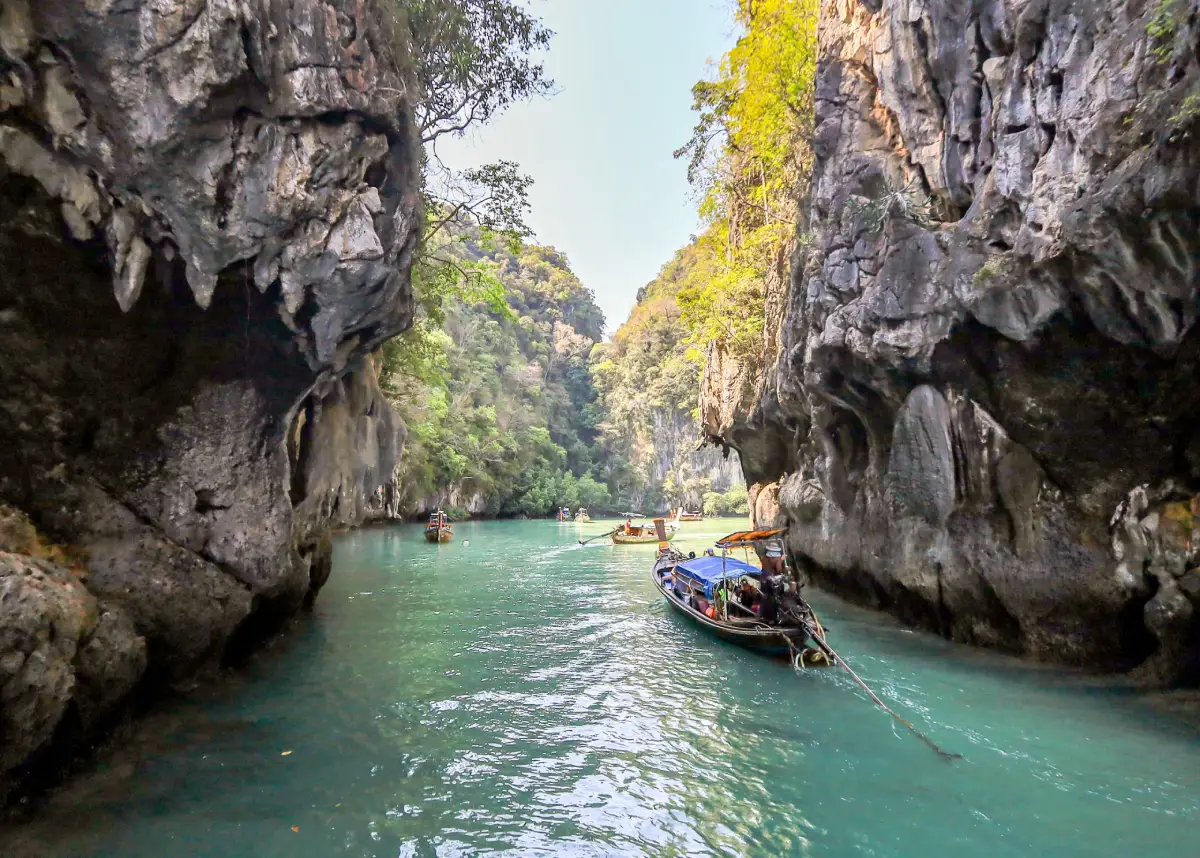
Ko Hong in Phang Nga Province is a limestone island in Ao Phang Nga National Park, known for its dramatic natural chamber formed by layers of limestone cliffs surrounding a sheltered body of water. When a boat enters the inner area, the scenery feels like a vast open-air hall with the sky as its ceiling, limestone walls around the sides, and sea water as the floor. Two natural openings resemble doors, giving the island its Thai name “Ko Hong,” meaning “room island.” It is one of the most distinctive canoeing and lagoon-viewing stops in Phang Nga Bay.
This Ko Hong is the Phang Nga Bay island in Khlong Khian Subdistrict, Takua Thung District, Phang Nga Province. It should not be confused with Ko Hong in Krabi, which is a different island with a similar name. Ko Hong in Phang Nga is part of the limestone island landscape of Ao Phang Nga National Park and sits among other well-known bay attractions such as Ko Phanak, Khao Phing Kan, Khao Tapu, Ko Panyi, Tham Lot, Khao Khian, and the extensive mangrove ecosystem of Phang Nga Bay. The island covers about 0.191 square kilometers.
The defining feature of Ko Hong is its enclosed limestone setting. Small and large limestone formations curve around the inner water almost like a circle, creating a natural hall hidden within the island. From a canoe, visitors see cliffs rising around them, green-blue water beneath them, and narrow passages that open like gateways between the outer sea and the interior. This chamber-like scenery gives Ko Hong a quieter and more immersive character than many viewpoints in the bay.
The name “Ko Hong” comes directly from this landform. Local communities and boat operators in Phang Nga Bay often name places according to their most visible shapes. Because this island encloses water like a large natural room, it became known as Ko Hong. The name is simple, but it accurately describes the experience. As a boat passes through the natural opening, the inner lagoon gradually reveals itself like a hidden room in the middle of the sea.
Geographically, Ko Hong is part of the limestone karst system of Phang Nga Bay. The island’s cliffs, openings, cavities, and inner lagoon were shaped by long-term erosion, rainfall, seawater movement, and the natural dissolution of limestone. These processes created caves, hollows, tidal passages, and enclosed water spaces. The same processes also make the island sensitive. Access can change according to tide level. When the water is too high, some openings become narrow or low. When the water is too low, canoes may be obstructed by mud or rock. Visitors should therefore follow the advice of local paddlers and boat operators.
The main experience at Ko Hong is entering the inner area by canoe or small boat. Larger tour boats usually wait in a safe area outside, while visitors transfer to canoes to pass through the natural openings. Canoes allow a slower, quieter, and closer approach to the limestone environment. Visitors can see erosion marks on rock surfaces, plants clinging to cliff faces, shadows reflecting on the water, and the calm inner lagoon that gives the island its name.
Ko Hong feels different from simply viewing limestone islands from a large boat. Here, visitors move into the landscape instead of observing it from outside. They hear water echo against limestone walls, pass close to rock formations, see light entering through natural doors, and experience the relationship between tide, rock, and enclosed sea water. This makes Ko Hong an important stop for travelers who want to understand Phang Nga Bay beyond postcard views.
The surrounding area is linked to the wider marine and mangrove ecosystem of Phang Nga Bay. Although Ko Hong is not primarily a beach-snorkeling destination, the bay contains shallow marine habitats, coral areas, mangrove forests, tidal channels, and nursery grounds for marine life. A trip to Ko Hong usually passes through this interconnected environment. The beauty of the island is therefore part of a larger ecological system that depends on careful tourism behavior.
Because Ko Hong lies within Ao Phang Nga National Park, visitors should follow national park rules and boat operator instructions. Do not throw waste into the sea, feed wildlife, collect shells or marine life, scratch or write on rocks, make loud noise in enclosed areas, or try to climb limestone cliffs. Limestone may look solid from a distance, but some surfaces are sharp, slippery, fractured, or unstable. Keeping a safe distance and respecting local guidance is essential.
Getting There requires a boat. The most direct route usually starts from the Phang Nga side, especially Ban Tha Dan Pier, the Ao Phang Nga National Park pier area, or Surakul Pier. Travelers can hire a long-tail boat or join a local boat tour into the bay. Another common option is to book a tour from Phuket, which often includes hotel transfers, boat service, meals, and canoeing. The Phang Nga route is usually more direct for inner-bay attractions, while the Phuket route is convenient for visitors staying in Phuket.
Ko Hong is usually visited as part of a wider Phang Nga Bay route. Common combined stops include Ko Phanak, Khao Phing Kan, Khao Tapu, Ko Panyi, Tham Lot, Ko Hong, and mangrove areas. Visitors who want the full Ko Hong experience should choose a program that clearly includes canoeing into the inner lagoon, not only a passing boat view. Before booking, confirm the canoeing time, included equipment, safety measures, number of stops, and whether the route depends on tide conditions.
The best general period for visiting Ko Hong is from November to April, when the Andaman Sea is often calmer, rainfall is lower, and boat and canoe travel are more comfortable. From May to October, the southwest monsoon can bring more rain, wind, and waves. Trips may still operate on suitable days, but decisions should be based on actual weather, sea conditions, tide level, and local operator advice.
For photography, morning to late morning and softer afternoon light are usually rewarding. Light entering the natural openings can bring out the green-blue water color and the texture of the limestone walls. Midday light can be strong, but it may also make the water appear brighter. The experience changes according to tide level, cloud cover, wind, and boat traffic, so flexibility is important.
Activities at Ko Hong include canoeing into the inner lagoon, sightseeing by boat, photographing limestone gateways, observing erosion patterns, viewing cliff vegetation, and learning about the mangrove and shallow-sea ecosystem of Ao Phang Nga. It is not a mainstream swimming beach or overnight island. The main value of Ko Hong is quiet nature observation and movement through a limestone lagoon landscape.
Nature-focused travelers can treat Ko Hong as an outdoor classroom. Its natural doors, cliff walls, tidal passages, and inner lagoon show how water and limestone shape the bay over long periods. The island demonstrates erosion, limestone dissolution, tidal influence, and the relationship between rock and sea. A visit here is therefore not only scenic but also educational.
Ko Hong is suitable for many types of travelers. Photographers will enjoy the limestone walls, green water, and natural gateways. Families can visit if they choose a safe canoeing program with proper life jackets. Older travelers can join easier routes that do not require climbing or difficult walking. Travelers who enjoy soft adventure will appreciate passing through narrow openings into the inner lagoon. Those who feel uncomfortable in small boats or enclosed spaces should tell the operator before selecting a route.
Useful items include quick-drying clothes, a hat, sunglasses, marine-friendly sunscreen, a waterproof pouch for phones or cameras, footwear suitable for wet surfaces, and drinking water. Visitors should check whether the tour includes life jackets, canoeing, a trained paddler, insurance, food, and water. Large bags should not be taken into canoes because space is limited and items can easily get wet.
Important precautions include careful boarding, wet boat surfaces, narrow canoe passages, and changing tide levels. Visitors should wear life jackets, avoid standing or making sudden movements in canoes, avoid touching rock walls, and follow the route set by experienced paddlers. Families with children should seat children securely in the canoe and keep close supervision throughout the trip.
For a half-day trip from the Phang Nga side, travelers can focus on Ko Hong together with Ko Phanak or Tham Lot for a route centered on canoeing and limestone scenery. For a full-day trip, Ko Hong can be combined with Ko Phanak, Khao Tapu, Khao Phing Kan, Ko Panyi, Khao Khian, and mangrove sightseeing. The best itinerary is not necessarily the one with the most stops, but the one that allows enough time to enter the lagoon safely and enjoy the scenery without rushing.
Compared with Khao Tapu, which is best known as a global landmark view, Ko Hong offers a more immersive natural experience. Visitors do not simply stand at a viewpoint; they move through water passages into a limestone chamber. Compared with Ko Phanak, Ko Hong feels more open and hall-like, while Ko Phanak focuses more on cave systems and tide-dependent tunnels. Visiting both islands helps travelers understand the variety of landscapes inside Phang Nga Bay.
There are no mainstream hotels or full restaurant facilities on Ko Hong itself. Visitors should stay in Phang Nga town, Khlong Khian, Khao Lak, Phuket, Ko Yao Noi, or other nearby areas. Meals are usually included in tour programs or arranged at Ko Panyi, mainland restaurants, or hotel restaurants depending on the itinerary. Planning food, drinking water, and rest time in advance makes the canoeing experience smoother.
Responsible travel is essential at Ko Hong. The area is beautiful but fragile. Too many boats, litter, contact with rock surfaces, disturbance to marine life, and careless movement through tidal passages can affect the natural environment. Visitors should choose operators who emphasize safety, proper waste handling, life jackets, trained paddlers, and respect for national park rules.
Overall, Ko Hong in Phang Nga is one of the places that make Ao Phang Nga National Park more than a scenic boat route. Its limestone chamber, two natural gateways, inner lagoon, clear green water, and quiet enclosed atmosphere create a memorable experience for travelers who want to see the bay closely and respectfully. With good timing, safe operators, and careful behavior, Ko Hong offers one of the most rewarding nature-based experiences in Phang Nga Bay.
| Name | Ko Hong, Phang Nga |
| Location | Khlong Khian Subdistrict, Takua Thung District, Phang Nga Province, within Ao Phang Nga National Park |
| Address | Ko Hong, Khlong Khian Subdistrict, Takua Thung District, Phang Nga Province / Ao Phang Nga National Park Office: 80 Moo 1, Ban Tha Dan Road, Ko Panyi Subdistrict, Mueang Phang Nga District, Phang Nga 82000, Thailand |
| Coordinates | Approx. Latitude 8.224548, Longitude 98.500457 |
| Highlights | Limestone island with cliffs surrounding an inner lagoon like a natural hall, two gateway-like openings, canoeing routes, and classic Phang Nga Bay scenery |
| History | A limestone karst island shaped by erosion, limestone dissolution, sea-level change, and tidal processes that formed cliffs, passages, and an inner lagoon |
| Name Origin | The name Ko Hong means “room island,” referring to the way limestone cliffs enclose the water like a large natural room |
| Distinctive Features | Inner lagoon, two natural door-like openings, limestone cliffs, green-blue water, canoeing areas, and a quiet chamber-like atmosphere within Phang Nga Bay |
| Travel Information | Accessible by boat from Phang Nga-side piers such as Ban Tha Dan Pier or Surakul Pier, or by tour package from Phuket. Popular routes combine Ko Hong with Ko Phanak, Khao Phing Kan, Khao Tapu, Ko Panyi, Tham Lot, and mangrove sightseeing |
| Current Status | Open for visits according to boat schedules, Ao Phang Nga National Park rules, tide level, and daily weather conditions |
| Open Days | Daily |
| Opening Hours | 08:00 – 16:30, according to Ao Phang Nga National Park service hours and boat tour schedules |
| Fees | Ao Phang Nga National Park Group 3 entrance fee: Thai adult 60 THB, Thai child 30 THB / foreign adult 300 THB, foreign child 150 THB. Boat, canoeing, and activities depend on the selected operator |
| Facilities | Tour boats, long-tail boats, canoes, life jackets, canoe paddlers, route-based boat stops, and visitor services at Ao Phang Nga National Park headquarters |
| Main Areas / Zones | Two natural gateway-like openings, inner lagoon, limestone cliffs, canoeing route, boat viewing area, nearby mangrove zone, and Ao Phang Nga sightseeing route |
| Caretaker / Responsible Offices | Ao Phang Nga National Park, Department of National Parks, Wildlife and Plant Conservation, and Khlong Khian Subdistrict Administrative Organization at the local level |
| Main Contact Number | Ao Phang Nga National Park Tel. 076 481 188 / Khlong Khian Subdistrict Administrative Organization Tel. 0-7641-0878 |
| Official Website / Official Page | AoPhangNgaDNP page, Ao Phang Nga National Park information channels, and Khlong Khian Subdistrict Administrative Organization website |
| Nearby Tourist Attractions | 1. Ko Phanak, about 4 km by boat 2. Tham Lot, Phang Nga Bay, about 6 km by boat 3. Khao Phing Kan and Khao Tapu, about 6 km by boat 4. Ko Panyi, about 12 km by boat 5. Khao Khian, about 14 km by boat 6. Ban Tha Dan Pier / Ao Phang Nga National Park, about 18 km by boat |
| Nearby Restaurants | 1. Panyee Muteara Seafood, Ko Panyi, about 12 km by boat, Tel. 089-289-6461 2. Koh Panyee Village Restaurant, Ko Panyi, about 12 km by boat, Tel. 081-958-0633 3. Andaman Seafood, Ko Panyi, about 12 km by boat, Tel. 085-787-0086 4. Sametnangshe Boutique Restaurant, Khlong Khian, about 28 km by boat and road, Tel. 065-508-8655 5. Laem Hin Seafood, Phuket, about 32 km by boat and road, Tel. 076-239-357 |
| Nearby Accommodations | 1. Phang Nga Bay Resort, Ko Panyi Subdistrict, about 18 km by boat and road, Tel. 076-481-167 2. Sametnangshe Boutique, Khlong Khian, about 28 km by boat and road, Tel. 065-508-8655 3. Rachawadee House Phang Nga, Mueang Phang Nga, about 30 km by boat and road, Tel. 096-653-3397 4. Bor Saen Villa, Thap Put District, about 48 km by boat and road, Tel. 081-538-1117, 076-418-888 5. COMO Point Yamu, Phuket, about 38 km by boat and road, Tel. 076-360-100 |
Frequently Asked Questions (FAQ)
Q: Where is Ko Hong in Phang Nga located?
A: Ko Hong is located in Khlong Khian Subdistrict, Takua Thung District, Phang Nga Province, within Ao Phang Nga National Park. It is different from Ko Hong in Krabi.
Q: What is Ko Hong in Phang Nga known for?
A: It is known for limestone cliffs surrounding an inner lagoon like a natural hall, two gateway-like openings, and canoeing routes through the limestone landscape.
Q: How do travelers get to Ko Hong in Phang Nga?
A: Travelers must go by boat from the Phang Nga side, such as Ban Tha Dan Pier or Surakul Pier, or join a tour from Phuket. Routes often include Ko Phanak, Khao Tapu, Khao Phing Kan, Ko Panyi, and Tham Lot.
Q: Is there an entrance fee for Ko Hong in Phang Nga?
A: Ko Hong is inside Ao Phang Nga National Park, so the national park entrance fee applies: Thai adult 60 THB, Thai child 30 THB, foreign adult 300 THB, and foreign child 150 THB. Boat and canoe costs depend on the operator.
Q: What activities are suitable at Ko Hong in Phang Nga?
A: Suitable activities include canoeing into the inner lagoon, boat sightseeing, photography, viewing limestone gateways, observing mangrove scenery, and learning about the karst landscape of Phang Nga Bay.
Q: When is the best time to visit Ko Hong in Phang Nga?
A: November to April is generally the best time because the Andaman Sea is usually calmer, rainfall is lower, and boat and canoe trips are more comfortable.
Q: Is Ko Hong in Phang Nga suitable for children and older travelers?
A: It can be suitable with a safe program, proper life jackets, trained canoe paddlers, and close supervision. Visitors should avoid difficult routes if they are uncomfortable with small boats or enclosed areas.
Q: What should visitors be careful about at Ko Hong in Phang Nga?
A: Visitors should be careful with tides, currents, narrow rock passages, wet boat surfaces, and limestone cliffs. They should not litter, touch or scratch rocks, or ignore guide and boat operator instructions.
 Category: ●Nature and Wildlife
 Group: ●Islands
Last Update : 2 MonthAgo
 Last Update : 2 MonthAgo

 Click to Access the Navigation Map GPS

 Art, Culture and Heritage
 Historical Sites and Monuments(2)
 Landmarks and Memorials(6)
 Art, Craft Centres, Tradition(3)
 Places of Worship
 Temple(18)
 Other Sacred Sites(8)
 Suburban Living
 Village, Community(3)
 National Parks and Marine Reserves(12)
 Mountain (Doi)(8)
 Waterfalls(21)
 Hot Springs(2)
 Caves(12)
 River, Canal(4)
 Bays and Beaches(28)
Islands(11)
 Other natural attractions(7)
 Entertainment and Agricultural
 Animal camps and shows(2)
 Farms, Parks and Ecotourism(2)
 Waterpark(3)
 Outdoor and Adventure Activities(3)
 Travel Articles, Recipes
 Travel Review, Food Review(1)
 Southern Food Menu, Southern Food Recipes(1)


