
lovethailand home >South Travel Attractions >Phang Nga Travel Attractions >Muang Phang Nga >Koh Pan Yi > Koh Panyee
TL;DR: Koh Panyee is located at Moo 2, Ko Panyi Subdistrict, Mueang Phang Nga District, Phang Nga Province 82000, open Daily, hours 08:00 – 16:30, depending on Ao Phang Nga National Park sightseeing hours and.

Koh Panyee
Open Days: Daily
Opening Hours: 08:00 – 16:30, depending on Ao Phang Nga National Park sightseeing hours and boat schedules
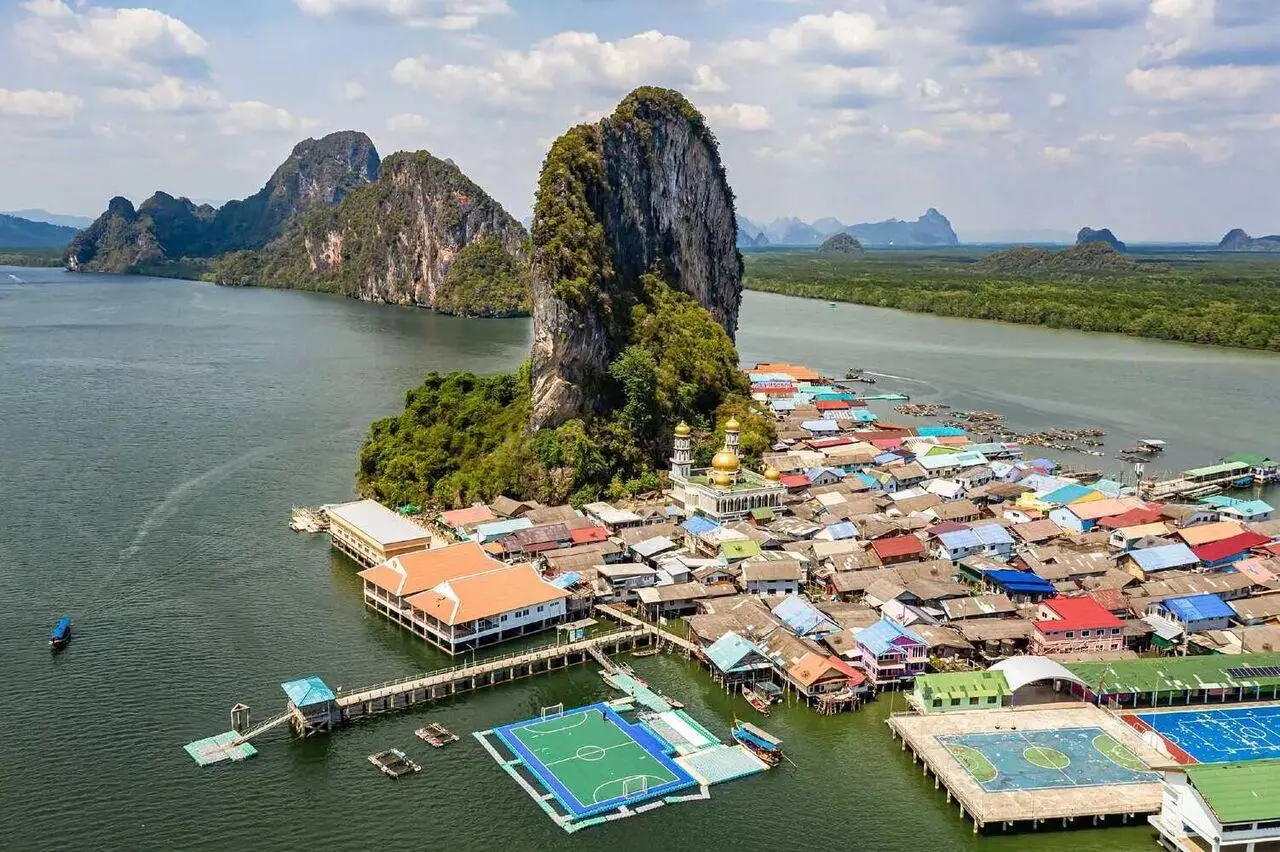
Koh Panyee in Phang Nga Province is one of Thailand’s most distinctive sea-based communities. Built on stilts above the shallow waters of Phang Nga Bay, the village is known for its fishing culture, Muslim community life, seafood restaurants, souvenir shops, floating fish cages, mosque, school, and famous floating football pitch. Most travelers visit Koh Panyee as part of a Phang Nga Bay boat route that also includes James Bond Island, Khao Phing Kan, Tham Lot, Khao Khian, and Khao Ma Chu.
What makes Koh Panyee memorable is not only its dramatic setting among limestone cliffs and emerald-green water, but also the way the community has adapted to limited land. Houses, shops, walkways, and public spaces are raised above the sea on posts and platforms, creating a compact village where people move around mainly on foot. Narrow lanes connect homes, restaurants, the mosque, the school, boat landings, and the floating football pitch, giving visitors a close look at daily life in a real fishing village rather than a purpose-built tourist attraction.
Koh Panyee is located in Moo 2, Ko Panyi Subdistrict, Mueang Phang Nga District, Phang Nga Province. As the village sits in the waters of Phang Nga Bay, it can only be reached by boat. Common departure points include Tha Dan Pier, Surakul Pier, and Ban Hin Rom Pier. Many visitors join a half-day or full-day boat trip that combines the village with nearby limestone islands, sea caves, ancient rock paintings, mangrove scenery, and other landmarks in Ao Phang Nga National Park.
The community’s roots are strongly connected to traditional fishing. Local livelihoods include shallow-water fishing, fish farming in floating cages, seafood trade, small shops, restaurants, and tourism services. Some original homes have been adapted into eateries or shops, but Koh Panyee remains a lived-in village. Long-tail boats, floating fish cages, seafood stalls, family homes, and the daily rhythm of the community all remain part of the experience.
The name “Panyee” is associated with the Malay word “panji,” meaning flag. Local stories connect the name with early Muslim settlers who used a flag as a signal when they found a suitable place to live and fish. This story gives the village a strong sense of identity and helps explain why Koh Panyee is more than a lunch stop on a bay tour. It is a community with its own memory, settlement history, and cultural character.
Inside the village, visitors can walk along raised paths lined with homes, shops, seafood restaurants, and small community spaces. The mosque is a central landmark and reflects the Muslim identity of the village. The school and floating football pitch show how the community has created practical spaces despite having very little dry land. The best way to experience Koh Panyee is to walk slowly, observe respectfully, and allow enough time to see both its photogenic scenery and its everyday life.
The floating football pitch is one of Koh Panyee’s most famous symbols. Because the village has very little open land, local children created a place to play football on the water. The pitch has become a visual icon of the village and a powerful example of community creativity. It is also one of the most photographed spots on Koh Panyee, especially for travelers interested in unusual places and stories of local resilience.
Koh Panyee is also a good place to learn about Muslim coastal culture in southern Thailand. Since most residents are Muslim, food in the village is centered on seafood, Thai dishes, and pork-free cooking. Seafood restaurants are popular with both tour groups and independent travelers. Common dishes include fish, prawns, crab, squid, shellfish, and Thai-style seafood preparations. Travelers who want a more local experience should ask about the fresh catch of the day and choose restaurants that allow time to enjoy the view and atmosphere rather than rushing through lunch.
A typical walk through Koh Panyee starts from the boat landing and follows the main village lanes through restaurant areas, souvenir stalls, homes, the mosque, the school, and the floating football pitch. Souvenirs often include sea-related crafts, shell products, and locally sold goods. Visitors should choose responsibly, support local vendors, and avoid products that may harm marine resources.
The best time to visit is usually from morning to early afternoon, when boat routes are active and sea conditions are suitable. Travelers who want a quieter experience should arrive before the main lunch rush or stay overnight in or near the bay area. Once many day-tour boats leave, the village becomes calmer and it is easier to appreciate the everyday rhythm of Koh Panyee.
Koh Panyee suits many travel styles. Families can enjoy the unusual village layout and bay scenery. Cultural travelers can learn about the settlement history and Muslim fishing way of life. Photographers can capture stilt houses, long-tail boats, limestone cliffs, the mosque, and the floating football pitch. Travelers on a short itinerary can include the village in a one-day Phang Nga Bay route together with James Bond Island, Khao Phing Kan, Tham Lot, Khao Khian, and Khao Ma Chu.
The landscape around Koh Panyee is one of its greatest strengths. Limestone karsts rise from the water around the village, while mangroves, channels, shallow sea, and fishing boats form the wider setting. The boat ride to the village is part of the experience because it gives travelers a wider view of Phang Nga Bay’s natural character before they step into the community itself.
Getting There by private car from Bangkok involves following Highway 4 toward Phang Nga Province, then continuing to a pier such as Tha Dan or Surakul. From Phuket, travelers usually drive or take a transfer to Phang Nga, then board a boat tour. Phuket International Airport is the most common airport gateway for visitors coming by air. From the airport, the drive to Phang Nga usually takes at least about one hour, depending on traffic and the chosen pier.
Travelers using public transportation can go to Phang Nga Bus Terminal, then continue by local transport or hired vehicle to the pier. From there, a boat is required to reach Koh Panyee. Boat options vary from private long-tail boats to shared services and packaged tours. When choosing a tour, check the route, duration, number of stops, and time allocated for Koh Panyee. A good itinerary should allow enough time to eat, walk through the village, see the floating football pitch, and explore without feeling rushed.
Cash is useful for boat fares, food, small purchases, and local expenses. Visitors should wear comfortable non-slip footwear because village walkways can be narrow. Clothing should be modest, especially around the mosque and residential areas. When taking photos of residents, children, private homes, or personal activities, visitors should ask for permission first.
Responsible travel matters at Koh Panyee because this is a real community with limited space. Visitors should avoid littering, blocking walkways, entering private areas, or treating homes as photo props. A respectful visit helps the village continue welcoming travelers while preserving its local identity and everyday way of life.
Historically and culturally, Koh Panyee is valuable as an old waterside community of Phang Nga. Its stilt houses, boat-based transportation, fish farming, fishing culture, mosque-centered community life, and compact layout all show how people have built a sustainable life around the sea. The village offers a deeper understanding of the relationship between people, faith, livelihood, and the marine environment.
To make the visit more meaningful, travelers should look beyond the famous photo spots. Notice how houses are arranged above the water, how boats are parked, how seafood is prepared, how fish cages are managed, and how shared spaces are used by the community. These details show that living above the sea is not just picturesque; it requires cooperation, practical knowledge, and respect for tides, weather, and limited space.
For a one-day trip, travelers can start from Tha Dan Pier in the morning, cruise through Phang Nga Bay, stop at Tham Lot or Khao Khian, continue to James Bond Island and Khao Phing Kan, and then have lunch at Koh Panyee. After lunch, walk through the village, visit the floating football pitch, browse local shops, and return to the pier in the afternoon. This route works well for travelers who want to see the main highlights of Phang Nga Bay in a single day.
For a slower trip, stay overnight on Koh Panyee or on the mainland near the bay. Staying longer gives travelers a chance to experience the village when day-tour crowds have left. Early morning and evening are especially rewarding for photography, quiet walks, and a more natural view of community life.
Koh Panyee is more than a seafood lunch stop. It is a living village that brings together the sea, fishing culture, Muslim heritage, local creativity, and tourism in one place. Travelers who visit with patience and respect will see why this small village in Phang Nga Bay remains one of Thailand’s most memorable cultural travel destinations.
| Name | Koh Panyee |
| Location | Moo 2, Ko Panyi Subdistrict, Mueang Phang Nga District, Phang Nga Province 82000 |
| Address | Moo 2, Ko Panyi Subdistrict, Mueang Phang Nga District, Phang Nga Province 82000, Thailand |
| Coordinates | Latitude 8.335479581, Longitude 98.5031693781 |
| Highlights | Stilted fishing village, Muslim coastal community, seafood restaurants, souvenir lanes, mosque, school, fish cages, and floating football pitch |
| History | A long-established Muslim fishing community in Phang Nga Bay with more than 200 years of settlement history |
| Name Origin | Associated with the Malay word “panji,” meaning flag, and a local story about early settlers raising a flag as a signal |
| Distinctive Features | Homes, walkways, shops, and community spaces are built above the sea on raised structures |
| Travel Information | Travel by road to Phang Nga, then continue by boat from Tha Dan Pier, Surakul Pier, or Ban Hin Rom Pier |
| Current Status | Open to visitors and remains a major stop on Phang Nga Bay sightseeing routes |
| Open Days | Daily |
| Opening Hours | 08:00 – 16:30, depending on Ao Phang Nga National Park sightseeing hours and boat schedules |
| Fees | No separate village admission fee for walking around Koh Panyee. Boat fares, tour package costs, and Ao Phang Nga National Park fees depend on the chosen route. Relevant national park fees are Thai adult 60 THB, Thai child 30 THB, foreign adult 300 THB, and foreign child 150 THB |
| Facilities | Restaurants, souvenir shops, village walkways, boat landings, mosque, school, and boat tour services around Phang Nga Bay |
| Main Areas / Zones | Village pier, stilt-house walkways, seafood restaurant area, souvenir lanes, Koh Panyee Mosque, Koh Panyee School, floating football pitch, and fish cages |
| Caretaker / Responsible Offices | Ko Panyi Subdistrict Administrative Organization and Ao Phang Nga National Park |
| Main Contact Number | Ao Phang Nga National Park Tel. 076 481 188, 076-411-136 / Ko Panyi Subdistrict Administrative Organization Tel. 076-679144 |
| Official Website / Official Page | Ko Panyi Subdistrict Administrative Organization website and Ao Phang Nga National Park official page |
| Nearby Tourist Attractions | 1. Khao Khian, about 2 km 2. Khao Ma Chu, about 3 km 3. Tham Lot, about 4 km 4. James Bond Island, about 7 km 5. Khao Phing Kan, about 7 km 6. Ao Phang Nga National Park / Tha Dan Pier, about 8 km |
| Nearby Restaurants | 1. New Fern Restaurant, about 0 km, Tel. 076-450644 2. Koh Panyee Village Restaurant, about 0 km, Tel. 081-9580633 3. Panyee Muteara Seafood, about 0 km, Tel. 089-2896461 4. Andaman Seafood, about 0 km, Tel. 085-7870086 5. Panyee Restaurant, about 0 km, Tel. 089-8740246 |
| Nearby Accommodations | 1. Jamesbond Bungalow Koh Panyee, about 0 km 2. Panyee Bungalow, about 0 km, Tel. 081-9580633, 089-3288388 3. Phang Nga Bay Resort, about 8 km, Tel. 076-481167 4. Rachawadee House Phang Nga, about 15 km, Tel. 096-6533397 5. Sametnangshe Boutique, about 18 km, Tel. 065-5088655 6. Bor Saen Villa, about 30 km, Tel. 081-5381117, 076-418888 |
Frequently Asked Questions (FAQ)
Q: Where is Koh Panyee located?
A: Koh Panyee is located in Moo 2, Ko Panyi Subdistrict, Mueang Phang Nga District, Phang Nga Province, within Phang Nga Bay.
Q: Is Koh Panyee open every day?
A: Yes. Koh Panyee is open to visitors daily, with sightseeing generally tied to boat schedules and Ao Phang Nga National Park’s 08:00 – 16:30 operating hours.
Q: How do travelers get to Koh Panyee?
A: Travelers must take a boat from a pier in Phang Nga, such as Tha Dan Pier, Surakul Pier, or Ban Hin Rom Pier. Most boat routes also visit other attractions in Phang Nga Bay.
Q: Is there an entrance fee for Koh Panyee?
A: There is no separate village admission fee for walking around Koh Panyee. Travelers should budget for boat fares or tour packages, and national park fees may apply depending on the route.
Q: What is Koh Panyee famous for?
A: Koh Panyee is famous for its stilted fishing village, Muslim coastal culture, seafood restaurants, floating fish cages, mosque, school, and floating football pitch.
Q: How long should visitors spend on Koh Panyee?
A: Most visitors should allow at least 1–2 hours to walk through the village, eat seafood, see the floating football pitch, and browse local shops.
Q: Are there restaurants on Koh Panyee?
A: Yes. Koh Panyee has several seafood restaurants, including New Fern Restaurant, Koh Panyee Village Restaurant, Panyee Muteara Seafood, and Andaman Seafood.
Q: What should visitors wear on Koh Panyee?
A: Visitors should wear modest clothing and comfortable non-slip footwear, especially because the village is a Muslim community with narrow walkways and residential areas.
 Category: ●Nature and Wildlife
 Group: ●Islands
Last Update : 2 MonthAgo
 Last Update : 2 MonthAgo
 Click to Access the Navigation Map GPS
Koh Panyee Map
Recommend

 Art, Culture and Heritage
 Historical Sites and Monuments(2)
 Landmarks and Memorials(6)
 Art, Craft Centres, Tradition(3)
 Places of Worship
 Temple(18)
 Other Sacred Sites(8)
 Suburban Living
 Village, Community(3)
 National Parks and Marine Reserves(12)
 Mountain (Doi)(8)
 Waterfalls(21)
 Hot Springs(2)
 Caves(12)
 River, Canal(4)
 Bays and Beaches(28)
Islands(11)
 Other natural attractions(7)
 Entertainment and Agricultural
 Animal camps and shows(2)
 Farms, Parks and Ecotourism(2)
 Waterpark(3)
 Outdoor and Adventure Activities(3)
 Travel Articles, Recipes
 Travel Review, Food Review(1)
 Southern Food Menu, Southern Food Recipes(1)


