
lovethailand home >South Travel Attractions >Phang Nga Travel Attractions >Khura Buri >Koh Phra Thong > Ko Phra Thong
TL;DR: Ko Phra Thong is located at Ko Phra Thong Subdistrict, Khura Buri District, Phang Nga Province, on Thailand’s Andaman coast, open Daily, hours The island has no fixed opening or closing hours like a gated attraction.
Ko Phra Thong
Open Days: Daily
Opening Hours: The island has no fixed opening or closing hours like a gated attraction. Travel should follow boat schedules, sea conditions, and the seasonal operation of local accommodation or boat services.
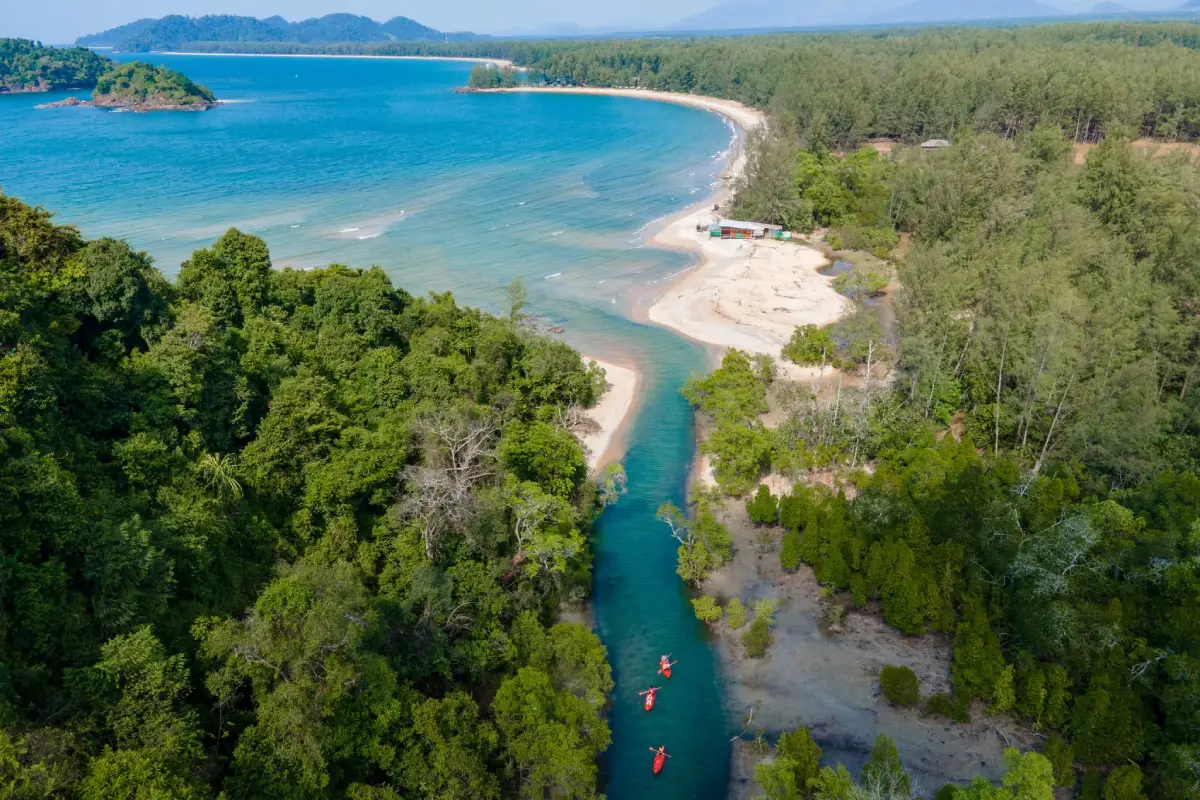
Ko Phra Thong in Phang Nga Province is a large Andaman Sea island in Ko Phra Thong Subdistrict, Khura Buri District. It is one of the most distinctive islands in southern Thailand because its identity is not based only on white beaches and quiet sea views. The island is also known for wide sandy plains, golden savanna-like grassland, Melaleuca forest, peat swamp, mangrove forest, beach forest, fishing communities, wildlife, birdwatching, and a slow island rhythm that feels very different from mainstream beach destinations.
Ko Phra Thong lies off the western coast of Phang Nga Province. Although it is not far from the mainland, the atmosphere changes completely after the boat crossing. The island stretches about 15.4 kilometers from north to south and about 9.7 kilometers from east to west, covering around 92 square kilometers or 57,500 rai. The eastern side faces the mainland and contains tidal channels, mangroves, fishing villages, and sheltered waterways. The western side faces the Andaman Sea, with long open beaches, quiet coastal scenery, and a sense of space that is increasingly rare in Thailand’s better-known island destinations.
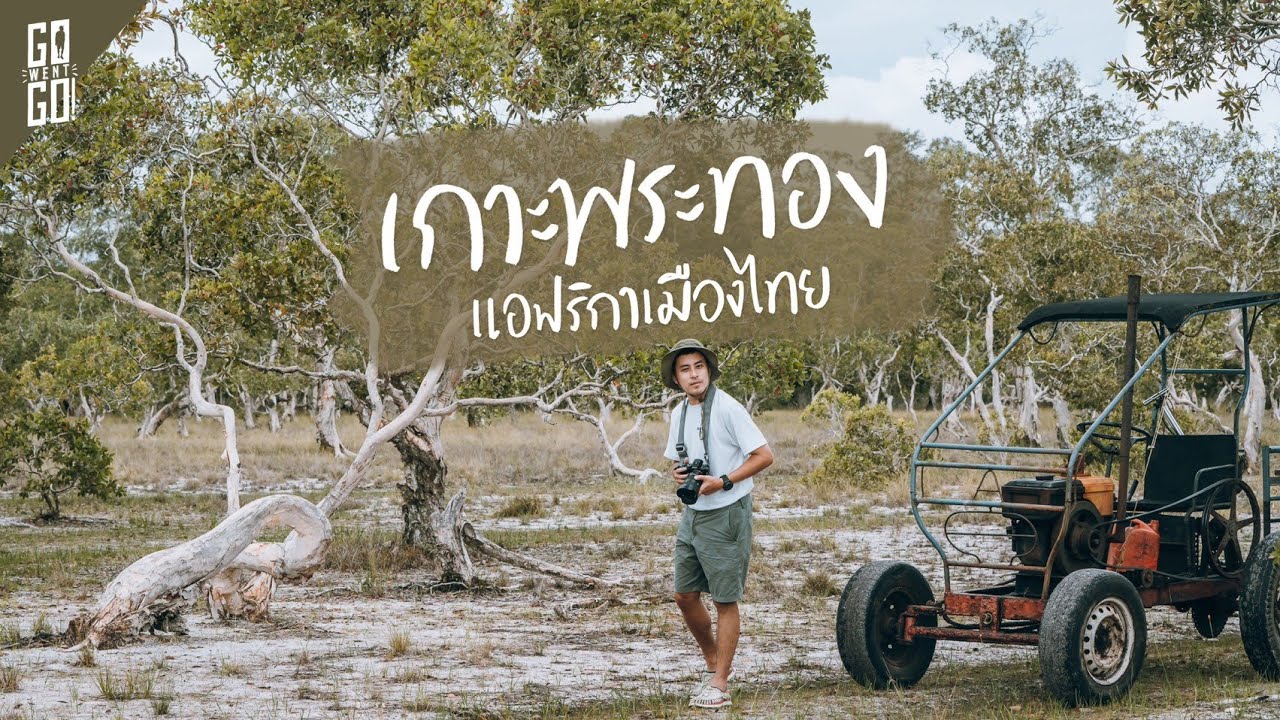
The island’s most memorable feature is its golden savanna-like grassland. This open landscape comes from the island’s flat sandy terrain and mixed grassland-Melaleuca ecosystem. During the dry season, the grass and small Melaleuca trees turn yellow, orange, and pale brown, creating a landscape that resembles an African savanna placed in the middle of the Andaman Sea. Deer moving through the grassland, scattered trees, wide sky, and quiet trails create a visual identity that makes Ko Phra Thong unlike limestone islands, snorkeling islands, or heavily developed beach resorts elsewhere in Phang Nga.
Ko Phra Thong’s natural systems are strongly interconnected. Mangrove forests line the eastern shore. Peat swamp and evergreen forest continue further inland. The central part of the island contains golden grassland and Melaleuca forest, while the western side opens to beach forest and the Andaman coast. These habitats provide feeding, nesting, sheltering, and breeding areas for many species. The result is a large natural island where land, freshwater, wetlands, mangroves, seagrass, beach, and sea all work together.
Wildlife is one of the island’s major attractions. Deer, barking deer, wild boar, hornbills, storks, raptors, water birds, resident birds, and migratory birds are all part of Ko Phra Thong’s natural character. Birdwatchers value the island because many species can be seen across grassland, swamp forest, mangrove, and beach habitats. Large birds moving above the savanna and wetlands create one of the most distinctive wildlife experiences on the island.
The surrounding marine ecosystem is also important. Seagrass areas, mangroves, shallow sea, and small coral zones support marine life and provide nursery grounds for young fish, crabs, shellfish, sea turtles, and other species. Seagrass is especially important for dugongs and other marine animals. Local fishing communities have long depended on the coastal resources around Ko Phra Thong, making the island a place where nature and traditional livelihoods remain closely connected.
Ko Phra Thong is part of the Ko Ra–Ko Phra Thong wetland area, which is recognized as a wetland of international importance. This adds another layer of significance to the island. Visitors should understand that Ko Phra Thong is not just a scenic beach destination. It is a sensitive ecological landscape where tourism, local livelihoods, wetlands, wildlife, and marine resources must be balanced carefully.
The island’s recent history is also shaped by the 2004 Indian Ocean tsunami, which affected coastal communities and landscapes across the Andaman region. Over time, nature and community life on Ko Phra Thong have recovered. Today, the island’s quiet eco-tourism, fishing villages, and conservation-oriented accommodation reflect a slower and more careful form of travel.
Ko Phra Thong also has sea-people and fishing communities with deep connections to the surrounding sea. Their daily life is shaped by boats, fishing grounds, tides, weather, seasonal change, and coastal resources. Visitors should travel respectfully, avoid photographing people intrusively, and avoid entering private community areas without permission. The island’s appeal lies not only in its landscapes but also in the living relationship between people and nature.
Suitable activities on Ko Phra Thong include beach walking, sunset watching, cycling, nature drives, birdwatching, wildlife observation, mangrove exploration, kayaking in safe areas, visiting local fishing communities, snorkeling at suitable sites, and staying at low-impact nature-oriented accommodation. This is not an island for loud nightlife, crowded beach clubs, or rushed sightseeing. Ko Phra Thong is best experienced slowly and respectfully.
Getting There begins from Khura Buri District in Phang Nga Province. Travelers use Highway 4 and continue toward Khura Buri Pier or Hua Thanon Pier, near the route to the Surin Islands departure area. From there, visitors cross to Ko Phra Thong by long-tail boat or by boat arranged through accommodation. The boat ride usually takes about 45 minutes to 1 hour and 10 minutes depending on the departure point, landing point, tide, boat type, and sea conditions.
Travelers coming from Phuket can drive north through Khao Lak, Takua Pa, and Khura Buri before taking the boat. Travelers coming from Ranong may find Khura Buri more convenient. Some accommodation providers on Ko Phra Thong can arrange airport transfers, land transport, boat transfers, and internal island transport. Booking accommodation and boat transfer in advance is strongly recommended because Ko Phra Thong does not operate like a high-frequency ferry island.
The best general period to visit Ko Phra Thong is from December to March. This is the drier season for the area, when the grassland becomes golden, boat conditions are often better, and activities such as birdwatching, beach walking, cycling, and wildlife observation are more comfortable. From April to November, rainfall increases, and some accommodation or boat services may adjust operations according to season, weather, and sea conditions.
The western beaches are the best areas for a quiet stay. These long beaches face the Andaman Sea and are suitable for walking, sunset watching, and relaxing with minimal disturbance. Accommodation is scattered rather than dense, so the overall atmosphere remains private and natural. Travelers who want to escape busy resort towns will appreciate the spacious feeling of the coastline.
The savanna-like grassland is best visited in the early morning or late afternoon. The light is softer, temperatures are lower, and wildlife activity is often better. Visitors should stay on approved routes, avoid driving into fragile areas, avoid disturbing animals, and never remove plants, orchids, or natural materials. The grassland is part of a living ecosystem, not just a photo backdrop.
Birdwatchers should spend at least one night on the island. The best birding times are usually early morning and late afternoon, when the island is quiet and light is suitable for observation. Binoculars, muted clothing, a long lens, and a local guide can greatly improve the experience while reducing disturbance to birds and wildlife.
Food and accommodation on Ko Phra Thong are limited and nature-oriented. Many places to stay operate their own restaurants and help arrange boats, transfers, and activities. Advance booking is important, especially during the main travel season. Some properties operate seasonally, so travelers should confirm availability before planning their dates.
Useful items include cash, personal medication, a hat, sunglasses, marine-friendly sunscreen, quick-drying clothes, beach and walking footwear, a waterproof bag, a small flashlight, binoculars, camera equipment, and any essential personal supplies. The island does not have the dense commercial services of major tourist towns, so visitors should prepare before crossing from the mainland.
Safety depends mainly on weather, sea conditions, and careful travel planning. During the monsoon period, visitors should not force a boat trip when winds or waves are unsafe. Swimming should follow local advice because Andaman-facing beaches can experience waves and currents. Travelers should avoid swimming alone or far from shore, especially in unsettled weather.
Environmental responsibility is essential. Visitors should reduce single-use plastic, take waste back to proper disposal points, avoid leaving cigarette butts on the beach, avoid collecting shells, coral, plants, or wildlife, avoid feeding animals, and stay on recommended routes. Ko Phra Thong remains special because it is quiet and ecologically rich; careful visitor behavior helps keep it that way.
A one-day trip is possible if boat timing is well planned, but it gives only a quick overview. A better plan is 2 days and 1 night: arrive from Khura Buri, check in, walk the beach, watch sunset, then explore the savanna, birding areas, and communities the next morning before returning to the mainland. A 3-day, 2-night stay is ideal for travelers who want a deeper nature experience, slower beach time, and better opportunities for birdwatching and photography.
Overall, Ko Phra Thong is one of Phang Nga’s most unusual and rewarding islands. Its white beaches first attract visitors, but its golden savanna, Melaleuca forest, peat swamp, mangrove system, wildlife, birds, fishing communities, and international wetland value make it far more than a simple beach destination. With careful planning, suitable season, advance boat arrangements, and respect for nature and local communities, Ko Phra Thong offers a quiet, spacious, and deeply memorable Andaman travel experience.
| Name | Ko Phra Thong |
| Location | Ko Phra Thong Subdistrict, Khura Buri District, Phang Nga Province, on Thailand’s Andaman coast |
| Address | Ko Phra Thong Subdistrict, Khura Buri District, Phang Nga Province 82150, Thailand |
| Coordinates | Approx. Latitude 9.0982, Longitude 98.2909 |
| Highlights | Golden savanna grassland, white beaches, Melaleuca forest, peat swamp, mangroves, fishing communities, birdwatching, wildlife, and quiet eco-focused island travel |
| History / Significance | A large ecological island and part of the Ko Ra–Ko Phra Thong wetland area, important for biodiversity, coastal ecosystems, wildlife, and local fishing communities |
| Name Origin | Ko Phra Thong is the local name of this large island in Khura Buri District; today its strongest visual identity is the golden savanna-like grassland and Andaman-facing beaches |
| Distinctive Features | Mostly flat sandy terrain with western beaches, eastern mangrove zones, peat swamp, Melaleuca woodland, savanna-like grassland, and fishing communities |
| Travel Information | Travel to Khura Buri Pier or Hua Thanon Pier, then take a long-tail boat or accommodation-arranged boat to Ko Phra Thong. The boat ride usually takes about 45 minutes to 1 hour and 10 minutes depending on route and sea conditions |
| Current Status | Open for travel, overnight stays, and nature-based activities according to boat schedules, season, weather, and local accommodation or operator services |
| Open Days | Daily |
| Opening Hours | No fixed opening or closing hours like a gated attraction. Daytime travel according to boat schedules and sea conditions is recommended |
| Fees | No general gated-island entrance fee. Main costs are boat transfer, island transport, accommodation, meals, and selected activities according to the operator |
| Facilities | Khura Buri mainland pier services, long-tail boats, eco-accommodation, accommodation restaurants, island transfers, nature routes, and selected community or accommodation-arranged activities |
| Main Areas / Zones | Western beaches, savanna grassland, Melaleuca forest, peat swamp, mangrove forest, fishing villages, Ban Thung Dap, Ban Tha Pae Yoi, Khlong Nam Sai, birdwatching areas, and beach accommodation zones |
| Caretaker / Responsible Offices | Ko Phra Thong Subdistrict Administrative Organization, Khura Buri District, Phang Nga Province, and natural-resource agencies related to the Ko Ra–Ko Phra Thong wetland area |
| Main Contact Number | Ko Phra Thong Subdistrict Administrative Organization Tel. 081-797-6566 / Chief Executive of Ko Phra Thong SAO Tel. 086-416-4708 |
| Official Website / Official Page | Ko Phra Thong Subdistrict Administrative Organization website and Department of Marine and Coastal Resources knowledge database |
| Nearby Tourist Attractions | 1. Ko Phra Thong Savanna, on the island, about 3–8 km depending on the starting point 2. Western Long Beach, Ko Phra Thong, about 5–12 km from the island landing area 3. Ban Tha Pae Yoi Sea People Community, about 2–8 km depending on the starting point 4. Ban Thung Dap, Ko Phra Thong, about 4–10 km depending on the starting point 5. Ko Pling Yai and Ko Pling Noi, about 3–6 km by boat from Ko Phra Thong 6. Ko Ra, about 8–15 km by boat from Ko Phra Thong 7. Mu Ko Surin National Park, about 45–60 km by boat from Khura Buri on marine tour routes |
| Nearby Restaurants | 1. BABA Ecolodge Restaurant, Ko Phra Thong, about 5–12 km from the island landing area, Tel. 081-892-2208 2. The Moken Eco Village Restaurant, Ko Phra Thong, about 5–10 km from the island landing area, Tel. 081-895-6186, 099-126-9296 3. Horizon Eco Resort Restaurant, Ko Phra Thong, about 5–12 km from the island landing area, Tel. 081-894-7195 4. Kuraburi Greenview Resort Restaurant, mainland Khura Buri, about 25–35 km by boat and road, Tel. 076-401-400, 081-958-1543 5. Kuraburi Resort Restaurant, mainland Khura Buri, about 25–35 km by boat and road, Tel. 081-719-4775, 062-449-5362 |
| Nearby Accommodations | 1. BABA Ecolodge, Ko Phra Thong, about 5–12 km from the island landing area, Tel. 081-892-2208 2. The Moken Eco Village, Ko Phra Thong, about 5–10 km from the island landing area, Tel. 081-895-6186, 099-126-9296 3. Horizon Eco Resort, Ko Phra Thong, about 5–12 km from the island landing area, Tel. 081-894-7195 4. Kuraburi Greenview Resort, mainland Khura Buri, about 25–35 km by boat and road, Tel. 076-401-400, 081-958-1543 5. Kuraburi Resort, mainland Khura Buri, about 25–35 km by boat and road, Tel. 081-719-4775, 062-449-5362 6. Kuraruenthai Resort, mainland Khura Buri, about 25–35 km by boat and road, Tel. 084-052-8475 |
Frequently Asked Questions (FAQ)
Q: Where is Ko Phra Thong located?
A: Ko Phra Thong is located in Ko Phra Thong Subdistrict, Khura Buri District, Phang Nga Province, on Thailand’s Andaman coast. It is a large island with beaches, savanna grassland, peat swamp, mangroves, wildlife, and fishing communities.
Q: What is Ko Phra Thong known for?
A: It is known for golden savanna-like grassland, white beaches, quiet natural scenery, Melaleuca forest, wetlands, wildlife, rare birds, and local fishing communities.
Q: How do travelers get to Ko Phra Thong?
A: Travelers go to Khura Buri Pier or Hua Thanon Pier, then cross by long-tail boat or an accommodation-arranged boat. The boat ride usually takes about 45 minutes to 1 hour and 10 minutes depending on route and sea conditions.
Q: Is there an entrance fee for Ko Phra Thong?
A: There is no general gated-island entrance fee. Main costs are boat transfer, island transport, accommodation, meals, and selected activities arranged by operators.
Q: What activities are suitable on Ko Phra Thong?
A: Suitable activities include beach walking, cycling, birdwatching, wildlife observation, savanna sightseeing, mangrove exploration, kayaking, community visits, sunset viewing, and quiet eco-focused stays.
Q: When is the best time to visit Ko Phra Thong?
A: December to March is generally the best period because rainfall is lower, the savanna grassland turns golden, boat travel is more comfortable, and nature-based activities are easier to arrange.
Q: Is Ko Phra Thong suitable for overnight stays?
A: Yes. Overnight stays are recommended because the island is large and its best experiences happen in the early morning and late afternoon, especially birdwatching, savanna views, beach walks, and sunset watching.
Q: What should visitors be careful about on Ko Phra Thong?
A: Visitors should check weather and boat conditions, avoid traveling during unsafe monsoon seas, respect local communities, stay on recommended nature routes, avoid disturbing wildlife, and take all waste back to proper disposal points.
 Category: ●Nature and Wildlife
 Group: ●Islands
Last Update : 2 MonthAgo
 Last Update : 2 MonthAgo
 Click to Access the Navigation Map GPS
Ko Phra Thong Map
Recommend

 Art, Culture and Heritage
 Historical Sites and Monuments(2)
 Landmarks and Memorials(6)
 Art, Craft Centres, Tradition(3)
 Places of Worship
 Temple(18)
 Other Sacred Sites(8)
 Suburban Living
 Village, Community(3)
 National Parks and Marine Reserves(12)
 Mountain (Doi)(8)
 Waterfalls(21)
 Hot Springs(2)
 Caves(12)
 River, Canal(4)
 Bays and Beaches(28)
Islands(11)
 Other natural attractions(7)
 Entertainment and Agricultural
 Animal camps and shows(2)
 Farms, Parks and Ecotourism(2)
 Waterpark(3)
 Outdoor and Adventure Activities(3)
 Travel Articles, Recipes
 Travel Review, Food Review(1)
 Southern Food Menu, Southern Food Recipes(1)


