
lovethailand home >South Travel Attractions >Pattani Travel Attractions >Pa Na Re >Pa Na Re > Panare Beach
TL;DR: Panare Beach is located at Panare Subdistrict, Panare District, Pattani Province, open Daily, hours 24 Hours. Highlights include Large Fishing Village, Kolek Boats, Many Types Of Fishing Boats, Traditional Fishing Life, And Community Shoreline Landscape.

Panare Beach
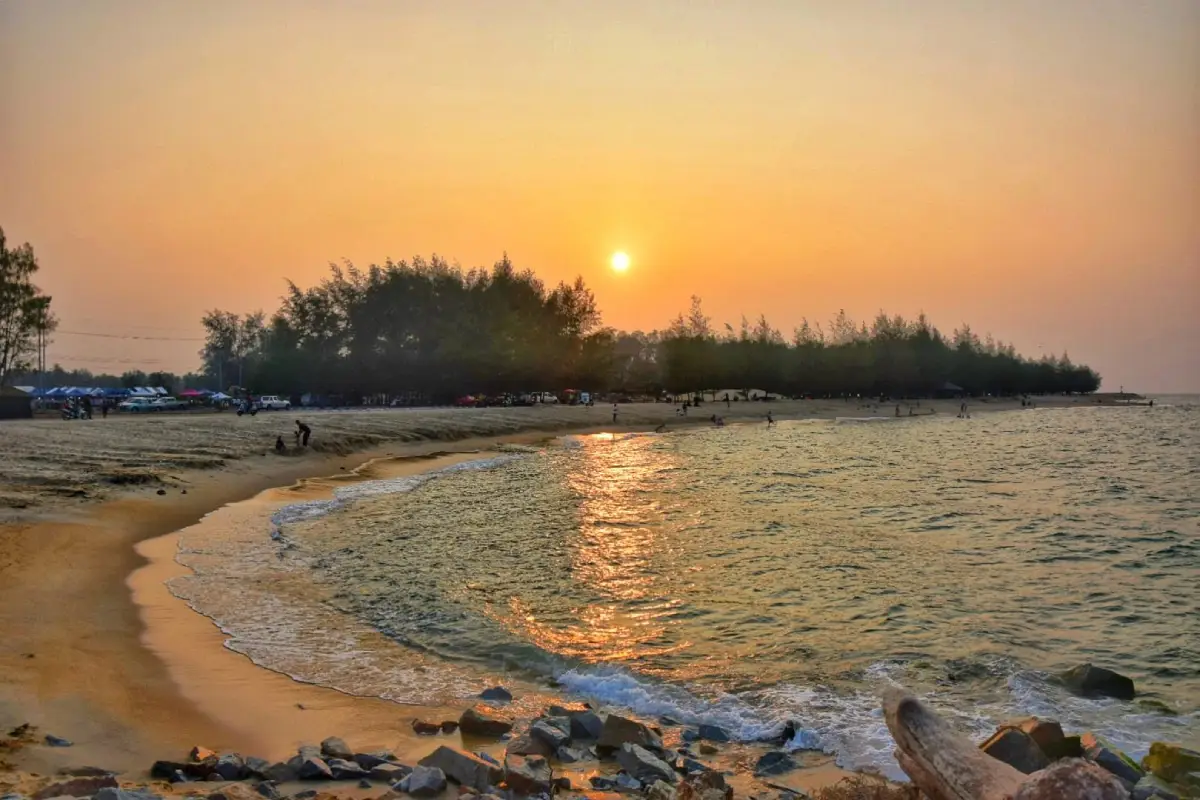
Open Days: Daily
Opening Hours: 24 Hours
Panare Beach in Pattani Province is a coastal fishing-community beach in Panare District. It is located about 3 km from the district center and follows the same travel route as Talo Kapo Beach. Its main identity is not swimming or resort-style recreation, but the vivid daily life of a large fishing village. Hundreds of fishing households live in the area, and the sandy beach is lined with kolek boats and many other kinds of local fishing boats. Panare Beach is therefore best visited for coastal scenery, traditional fishing life, photography, fresh seafood, and a deeper understanding of Pattani’s maritime culture.
The beach strongly reflects the identity of Panare District itself. The name Panare is linked to the local Malay language and refers to a beach associated with drying fishing nets. This meaning explains why the beach is so closely connected with fishing life. Panare Beach is not simply a seaside attraction; it is a cultural landscape where the district’s name, work, food, boats, and community life come together in one visible place.
When visitors arrive, the first thing they usually notice is the number of boats along the shore. Colorful kolek boats and other fishing boats are parked across the beach, creating a distinctive scene that is different from ordinary tourist beaches. These boats are not decorative props. They are real working boats used by local fishers. The beach is also used for boat parking, net work, fishing preparation, and community activity. This makes Panare Beach a living workplace as much as a place to visit.
Because fishing boats occupy much of the sandy shore, Panare Beach is not suitable as a swimming beach. Visitors should understand that the main role of the area is as a fishing village and boat-parking shoreline. The best way to experience the beach is to observe the scenery, learn about local fishing, photograph respectfully, buy seafood, and appreciate the community atmosphere rather than entering the water or using the beach in ways that interrupt local work.
The beauty of Panare Beach is a living beauty. The colorful boats, sea breeze, fishing gear, sound of waves, and residents working near the shore all give the area more meaning than a simple sea view. Travelers interested in documentary-style travel photography, cultural landscapes, or coastal communities will find many strong visual elements here: boat forms, painted patterns, fishing tools, sand, sea, and the movement of people working by the water.
The kolek boat is one of the important cultural symbols of Pattani and the lower southern coast. Its raised bow and stern, colorful designs, and practical fishing function make it both a working vessel and a form of local craftsmanship. Seeing many kolek boats along Panare Beach helps visitors understand the identity of Pattani’s coastal Muslim communities more clearly. The boats represent livelihood, skill, art, and continuity of local knowledge.
Traditional fishing is central to Panare Beach. Local fishers rely on knowledge of wind, waves, currents, seasons, and marine behavior. Going out to sea, returning to shore, drying nets, sorting catch, and maintaining boats are all part of daily life. These activities are not staged for visitors. They are real community work. Visitors should therefore behave respectfully, avoid interrupting work, avoid walking through boat areas unnecessarily, and never touch fishing equipment without permission.
From a coastal-management perspective, Panare Beach lies within the Laem Pho–Bang Maruat beach system, an important shoreline system in Pattani Province. Marine and coastal authorities describe Panare Beach as a balanced sandy beach, with beach recovery and sediment accumulation after monsoon periods. The surrounding area is also used as public space for beach tourism and local recreation. This confirms that Panare Beach is open as a seaside rest area while still requiring careful use and conservation awareness.
Parts of the Panare coastline include coastal protection structures such as jetties and sand-trapping groynes. These structures help manage sediment movement and reduce wave impacts. Visitors should not climb or walk on coastal structures that are not public walkways. During monsoon periods or strong-wave days, extra caution is needed. A community beach like Panare should be enjoyed with awareness of both its natural value and its vulnerability.
The best times to visit are morning and late afternoon. Morning is suitable for observing fishing-village activity, boat preparation, and soft light on the kolek boats. Late afternoon is good for resting, enjoying the sea breeze, and photographing the shoreline in gentler light. Visitors who want to document local life should keep an appropriate distance and avoid disrupting work.
Panare Beach is also part of the local seafood culture. Fresh fish, shrimp, squid, and other marine products are closely tied to the daily life of the community. Visiting the beach can be combined with eating in Panare, buying seafood, or continuing to nearby halal restaurants and local eateries. Food is a natural extension of the beach experience because the community’s livelihood comes from the sea.
Because the area is a Muslim fishing community, visitors should dress modestly, speak politely, avoid disturbing private homes, and ask permission before taking close-up photos of residents. Respectful travel protects the dignity of the local community and makes the experience more meaningful. Panare Beach is not a stage; it is a real place where people live and work.
For families, Panare Beach can be a useful learning place. Children can see real fishing boats, nets, fishing tools, sand, waves, and the life of a coastal community. Adults should supervise children closely, especially around boats, ropes, anchors, and work areas. Children should not climb boats, touch equipment, or play near areas used by fishers.
Panare Beach works well as part of a half-day or full-day coastal route in Panare District. Starting here gives visitors a view of fishing life and kolek boats. The route can then continue to Chalalai Beach, known for pine shade and a large pond near the beach, then to Maruat Beach, Ratcharak Beach, and Khae Khae Beach. Together, these beaches show that Panare’s coast is diverse, with fishing villages, sandy rest areas, rock formations, and scenic headlands.
Chalalai Beach is a good nearby contrast because it has a quieter recreational atmosphere with pine trees and a pond near the shore. Maruat Beach and Ratcharak Beach add more varied coastal scenery, while Khae Khae Beach is known for large granite rocks and a visually different shoreline. Combining these places with Panare Beach gives travelers a fuller understanding of the district’s coastal geography.
Palas Market is another useful stop for travelers who want to add local food and community life to the beach route. The market reflects Thai Muslim everyday culture through food, clothing, household items, and local activity. Visiting Palas Market before or after Panare Beach gives the trip a stronger sense of local life beyond the shoreline.
Travelers with more time can continue to Yaring Palace, Krue Se Mosque, or Pattani city. This creates a wider route connecting coastal fishing culture, Muslim heritage, historic places, and urban Pattani. Panare Beach is therefore not just one beach stop; it can be a gateway to understanding Pattani’s eastern coastal identity.
Getting to the beach is straightforward. From the Pattani–Narathiwat road, enter Panare District and continue to the beach area, about 3 km from the district center. The same route is used for Talo Kapo Beach. Private cars and motorcycles are the most practical options because they allow visitors to continue to nearby beaches and markets. Travelers using public transport should reach Panare town first and then hire local transport to the beach.
Although Panare Beach is a public shoreline that can be accessed throughout the day, the most practical visiting time is from daytime to early evening, when visibility is good and the beach and boat areas can be seen clearly. Visitors arriving very early or after dark should consider route safety, parking, and local work patterns. It is not advisable to walk into dark boat-parking areas unnecessarily.
Important precautions include avoiding swimming in boat areas, staying away from ropes, anchors, and fishing tools, and keeping clear of boats entering or leaving the shore. Visitors should not climb boats, move equipment, or drive onto crowded beach areas. Photography should be done respectfully, and residents should not be photographed at close range without permission.
Preparation is simple. Comfortable footwear for sand, sun protection, drinking water, a trash bag, and a phone or camera are enough for most visits. If buying seafood or eating in the area, carrying some cash is useful because small community vendors may not always support digital payment.
Panare Beach should be described honestly: it is beautiful as a fishing-community beach, not as a swimming beach. Its strengths are real life, kolek boats, fishing boats, sandy work areas, and a community whose livelihood depends on the sea. Once visitors understand this, the beach becomes more valuable than a standard scenic stop because it reveals the living culture of Pattani’s coast.
Getting There to Panare Beach: from the Pattani–Narathiwat road, turn into Panare District and continue toward the beach, about 3 km from the district center. The route is the same as the route to Talo Kapo Beach. Private cars and motorcycles are the most convenient choices because visitors can continue to Chalalai Beach, Maruat Beach, Ratcharak Beach, Khae Khae Beach, and Palas Market in the same trip. Public-transport users should get off in Panare town and continue by local hired transport.
In summary, Panare Beach is one of the most meaningful coastal places for understanding Pattani’s fishing culture. Its main highlights are the large fishing village, the colorful kolek boats, many types of fishing boats parked across the sand, and the daily life of local fishers. It is not suitable for swimming, but it is highly suitable for coastal views, photography, seafood, local learning, and a wider travel route through Panare District. With respectful behavior, cleanliness, and awareness that the beach is also a working community space, Panare Beach becomes one of the most authentic seaside destinations in Pattani.
| Name | Panare Beach |
| Location | Panare Subdistrict, Panare District, Pattani Province |
| Address | Coastal Area Of Panare Subdistrict, Panare District, Pattani Province 94130 |
| Highlights | Large Fishing Village, Kolek Boats, Many Types Of Fishing Boats, Traditional Fishing Life, And Community Shoreline Landscape |
| History | A Fishing-Community Beach In Panare District, Connected With Net Drying, Kolek Boats, Traditional Fishing, And The Laem Pho–Bang Maruat Coastal System |
| Name Origin Of The Area | Panare Comes From Local Malay Words Associated With A Beach And Drying Fishing Nets, Reflecting The Area’s Fishing Roots |
| Distinctive Features | A Working Fishing Beach With Kolek Boats And Fishing Boats Parked Across The Sand; Best For Observing Local Life And Photography Rather Than Swimming |
| Travel Information | From The Pattani–Narathiwat Road, Enter Panare District And Continue To The Beach. It Is About 3 Km From The District Center And Uses The Same Route As Talo Kapo Beach |
| Current Status | Open As A Public Beach, Fishing-Community Area, And Seaside Recreation Area In Panare District |
| Open Days | Daily |
| Opening Hours | 24 Hours |
| Facilities | Public Beach Area, Seaside Rest Space, Local Shops And Restaurants Depending On Operating Time, And Road Connections To Nearby Beaches In Panare District |
| Main Areas / Zones | Boat-Parking Shoreline, Kolek Boats, Local Fishing Boats, Net-Drying Areas, Fishing Community Space, And The Coastal Route Connecting Chalalai Beach And Talo Kapo Beach |
| Caretaker | Panare Subdistrict Municipality And Local Authorities In Panare District |
| Main Contact Number | 073-499-570 |
| Nearby Tourist Attractions | 1. Chalalai Beach, About 2 Km 2. Palas Market, About 8 Km 3. Maruat Beach, About 8 Km 4. Ratcharak Beach, About 9 Km 5. Khae Khae Beach, About 11 Km 6. Yaring Palace, About 24 Km 7. Krue Se Mosque, About 28 Km |
| Nearby Restaurants | 1. Pantai Restaurant, Panare Beach, About 1 Km, Tel. 098-740-7161 2. HIGHER GROUND Panare, About 3 Km, Tel. 093-597-5652 3. OWL CHA PTT Palas 1 Branch, About 8 Km, Tel. 089-869-1771 4. Black House Restaurant Palas, About 9 Km, Tel. 080-934-3055, 089-463-6935 5. The Tree Cafe In Panare, About 13 Km, Tel. 081-478-9341 |
| Nearby Accommodations | 1. Chaolay Resort Panare, About 1 Km, Tel. 090-421-9961 2. Takadum Beach Resort, About 14 Km, Tel. 093-579-6084, 098-707-1223 3. Forest Beach Resort, About 22 Km, Tel. 084-966-2043, 090-281-9455 4. Southern View Hotel Pattani, About 30 Km, Tel. 073-450570-72 5. C.S. Pattani Hotel, About 32 Km, Tel. 073-335093 6. The Rooms Residence, About 33 Km, Tel. 088-4478407 |
Frequently Asked Questions (FAQ)
Q: Where Is Panare Beach Located?
A: Panare Beach is located in Panare Subdistrict, Panare District, Pattani Province, about 3 km from the district center and on the same route as Talo Kapo Beach.
Q: What Is Special About Panare Beach?
A: It is a large fishing-community beach with many kolek boats and local fishing boats parked along the sand, making it ideal for observing fishing life and taking cultural photographs.
Q: Is Panare Beach Suitable For Swimming?
A: No. Panare Beach is not suitable for swimming because it is a fishing village and boat-parking beach. It is better for scenery, photography, seafood, and learning about local fishing life.
Q: What Are The Opening Hours Of Panare Beach?
A: Panare Beach is a public shoreline open daily, 24 hours. Morning and late afternoon are the most suitable times for visiting and photography.
Q: Is There An Entrance Fee For Panare Beach?
A: There is no confirmed information about an entrance fee. Visitors should prepare for transport, food, and personal expenses.
Q: How Do I Get To Panare Beach?
A: From the Pattani–Narathiwat road, enter Panare District and continue about 3 km to the beach. Public-transport users should reach Panare town first and then hire local transport to the beach.
Q: What Nearby Places Can I Visit With Panare Beach?
A: Nearby places include Chalalai Beach, Palas Market, Maruat Beach, Ratcharak Beach, Khae Khae Beach, Yaring Palace, and Krue Se Mosque.
Q: What Should Visitors Be Careful About At Panare Beach?
A: Visitors should be careful around boats, fishing tools, ropes, anchors, and working areas. Do not climb boats, touch equipment, or photograph residents closely without permission.
 Category: ●Nature and Wildlife
 Group: ●Bays and Beaches
Last Update : 2 MonthAgo
 Last Update : 2 MonthAgo
 Click to Access the Navigation Map GPS

 Art, Culture and Heritage
 Historical Sites and Monuments(3)
 Landmarks and Memorials(7)
 Royal Palace(2)
 Art, Craft Centres, Tradition(7)
 Historic Homes and Cities(1)
 Educational Places
 Museum for Study(1)
 Training Center(1)
 University
 Public university(1)
 Private University(1)
 Places of Worship
 Temple(13)
 Mosque(5)
 Other Sacred Sites(4)
 Research and Development
 Royal Project(2)
 Suburban Living
 Village, Community(5)
 Local Market(2)
 National Parks and Marine Reserves(2)
 Mountain (Doi)(3)
 Waterfalls(3)
 River, Canal(2)
Bays and Beaches(13)
 Islands(2)
 Other natural attractions(1)
 Entertainment and Agricultural
 Farms, Parks and Ecotourism(1)
 Travel Articles, Recipes
 Travel Review, Food Review(1)
 Southern Food Menu, Southern Food Recipes(3)


