
lovethailand home >South Travel Attractions >Pattani Travel Attractions >Sai Buri >Pa Se Ya Wo > Ban Paseyawo
TL;DR: Ban Paseyawo is located at Paseyawo Subdistrict, Sai Buri District, Pattani Province 94110, open Daily, hours 06.00 – 18.00.
Ban Paseyawo
Open Days: Daily
Opening Hours: 06.00 – 18.00
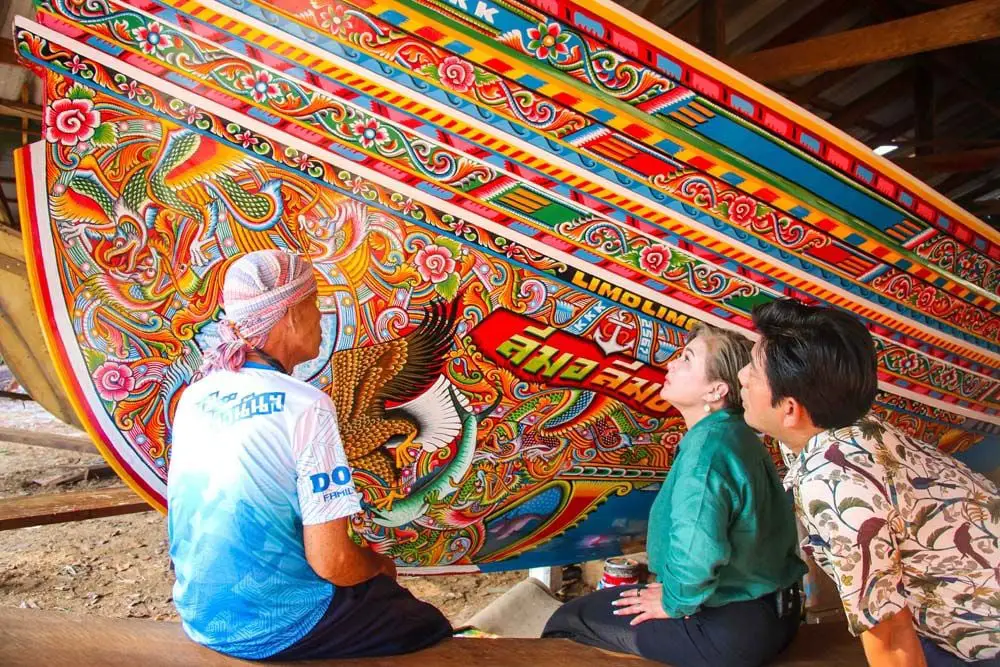
Ban Paseyawo in Pattani Province is a coastal village in Paseyawo Subdistrict, Sai Buri District. It is widely known for building kolae boats, the brightly painted traditional fishing boats of Pattani and Narathiwat. The village is also known for miniature kolae boat souvenirs, local boat-painting craftsmanship, and high-quality budu fish sauce, making it a strong destination for cultural, craft, and community-based travel in southern Thailand.
Ban Paseyawo is located in Paseyawo Subdistrict, Sai Buri District, Pattani Province. This coastal village is one of the most important places to understand the living heritage of the kolae boat, a traditional fishing boat used by coastal communities in Pattani and Narathiwat. The village is not a conventional attraction built only for tourists. It is a real community where maritime life, boatbuilding knowledge, local craft, Islamic Malay culture, Thai artistic influence, and seafood-based livelihoods remain connected in everyday life.
Ban Paseyawo is best known as a kolae boatbuilding village. Travelers who want to see the beauty of these boats in their original cultural context should include this village in a Pattani itinerary. The kolae boats of Paseyawo appear in both full-sized versions used by fishermen and smaller handmade models produced as souvenirs. The full-sized boats represent the livelihood of coastal fishermen, while the miniature boats help transmit local craftsmanship into education, tourism, and community income.
The charm of Ban Paseyawo lies in the way art and utility come together on a boat. A kolae boat is not merely a vessel for fishing. It is a floating work of art that requires structural knowledge, woodwork, proportion, balance, carving, painting, and cultural imagination. The patterns painted on the boats often blend Thai decorative elements with Malay Muslim artistic sensibilities, creating a style that is both functional and visually memorable.
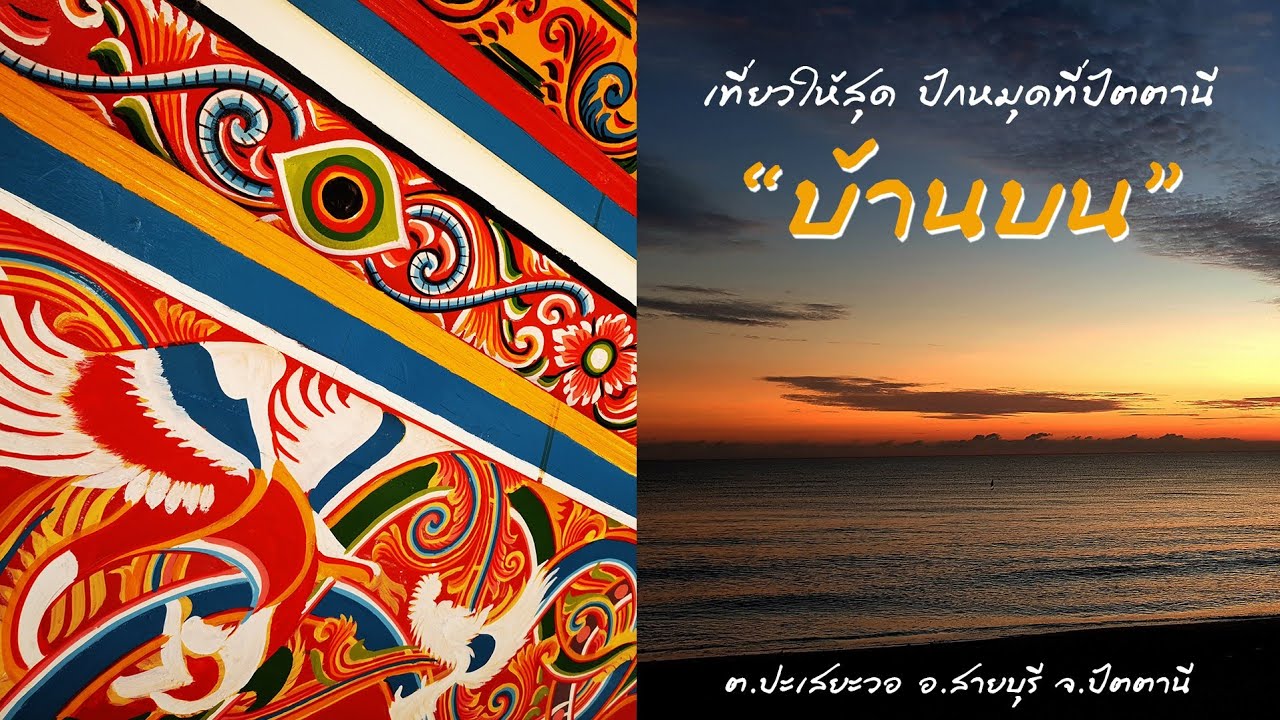
The most recognizable features of a kolae boat are its pointed bow and stern, slender body, bright colors, and detailed painted motifs. When these boats are seen along the coast or near the Sai Buri River, they immediately communicate the identity of Pattani’s maritime communities. They belong to a world of fishing, boat rituals, village craftsmanship, seafood processing, and local belief shaped by the sea.
Local boat craftsmen play a central role in preserving this heritage. Abdulloh Bula is mentioned as the head of the kolae boat learning group and a knowledge holder who inherited boatbuilding skills from earlier generations. The story of local craftsmen shows that boatbuilding cannot be mastered quickly. It requires years of observation, practice, material knowledge, and problem-solving. A skilled boatbuilder must understand wood selection, hull structure, boat balance, and the final decorative work that gives the vessel its character.
The choice of wood is essential. Full-sized working boats require strong and durable wood suitable for marine use. Local accounts mention takhian wood for its strength and endurance, while smaller model boats use materials appropriate for detailed craftwork. A miniature kolae boat is not a simple toy. When made by a skilled artisan, it preserves the form, proportions, and visual spirit of a real kolae boat in a smaller scale.
The work of building kolae boats and hang-tat boats involves different processes. A traditional kolae boat has pointed forms at both ends, while the hang-tat boat, or cut-stern boat, developed as a practical adaptation that allows more cargo space. Local stories identify Paseyawo as an important origin area for this design shift. Building a hang-tat boat can take several months because it includes heavy woodwork, hull formation, and hand-painted decoration.
Boatbuilding in Ban Paseyawo is also connected with belief and community participation. After a boat is completed, local practice includes prayer for blessing and well-being. Villagers may help pull the finished boat into the water. This shows that a boat is not the product of one craftsman alone. It involves families, neighbors, local belief, labor cooperation, and the social fabric of a fishing community.
Ban Paseyawo is also a valuable place to understand how local knowledge is transmitted across generations. Many craftsmen learn by watching parents, grandparents, or senior artisans at work from childhood. The knowledge is absorbed through daily practice rather than formal schooling alone. For this reason, the craft remains alive through hands, eyes, memory, and repeated experience.
In addition to kolae boats, Ban Paseyawo is famous for budu, a fermented fish sauce widely used in southern Thai and Malay-influenced cuisine. Budu is made by fermenting fish with salt until it develops a rich and distinctive flavor. It is commonly used in rice salad, seasoned budu sauce, and many local dishes. The presence of both kolae boats and budu in Paseyawo shows how deeply the village economy and culture are connected with the sea.
Paseyawo Subdistrict is a coastal area with fishing livelihoods, agriculture, seafood processing, and local craft traditions. The community is culturally diverse and reflects the broader identity of Sai Buri, an old coastal town with Malay Muslim, Thai Buddhist, and Chinese cultural layers. A visit to Ban Paseyawo should therefore be seen as more than a visit to a boat workshop. It is an opportunity to understand the coastline, the river, the village, the local economy, and the way cultural heritage continues through practical work.
The name Paseyawo is connected with a local Malay expression referring to sand meeting or colliding. The explanation relates to the landscape where the Sai Buri River and Thung Khet Canal meet, forming sand deposits. This origin shows that the identity of Paseyawo is tied to water, sand, river movement, and the sea from the level of its name.
Ban Paseyawo is Village No. 3 within Paseyawo Subdistrict. The wider subdistrict includes several villages such as Ban Patabara, Ban Bon, Ban Paseyawo, Ban Thung Khet, Ban Balo, Ban Chakong, and Ban Lum. Knowing this wider local context helps travelers understand that the boatbuilding village is not isolated. It is part of a connected coastal landscape shaped by roads, waterways, fishing activities, and household industries.
For travelers interested in craftsmanship, Ban Paseyawo offers a different experience from a museum. Here, the craft still belongs to real people and real places. A painted motif on a kolae boat is not only decorative. It is a cultural language expressing imagination, belief, taste, and the adaptation of multiple artistic traditions into a vessel that is used in daily life.
Miniature kolae boats allow this knowledge to travel beyond the village. They can be souvenirs, decorative pieces, teaching materials, and cultural objects that introduce Pattani to people outside the region. A well-made model preserves the key identity of a full-sized boat: the bow, stern, body line, bright colors, and detailed patterns. It turns local craft into a tangible memory of the village.
Ban Paseyawo is also useful for understanding culture-based local economy. Kolae boats, model boats, budu, dried fish products, and local crafts can all support community income. Responsible tourism in this village should therefore support local people directly by buying craft items, tasting local food, purchasing community products, and respecting village life.
Visitors should come during the daytime, dress modestly, and contact the community in advance if they want to see boatbuilding work or visit as a study group. Ban Paseyawo is a living residential community, not a staged tourist site with full-time reception staff. A respectful visit helps travelers experience the village naturally while allowing residents to continue their daily routines.
Getting There from Pattani city is straightforward. Take Highway 42 toward Sai Buri District for about 50 km, then continue on Highway 4157, the Sai Buri–Panare route, for about 2 km until reaching the turn toward Ban Paseyawo. Another option is to follow the same coastal route used for Khae Khae Beach and continue along the seaside road to the village. This route works well for a coastal itinerary combining Ban Paseyawo with Wasukri Beach, Ratcharak Beach, and Khae Khae Beach.
Nearby attractions help complete the journey. Wasukri Beach in Taluban is a quiet seaside recreation area in Sai Buri. The Old Sai Buri Palace, also known as Wang Phraya Phiphit Phakdi, reflects the local history of the old Sai Buri town. Ratcharak Beach and Khae Khae Beach in Panare District offer coastal scenery, sand, rocks, and viewpoints. Travelers continuing back toward Pattani city can also include Krue Se Mosque and Lim Ko Niao Shrine for a deeper historical and cultural route.
Ban Paseyawo is best for travelers who want to understand Pattani through living culture rather than quick sightseeing. The sight of craftsmen working by hand, the color of kolae boats, the smell and taste of local budu, and the coastal atmosphere of Sai Buri all combine to make this village a meaningful destination. It represents boatbuilding, fishing life, food heritage, local art, and the continuing identity of Pattani’s seafaring communities.
In summary, Ban Paseyawo is a craft village of Sai Buri District, a well-known source of kolae boats, model boats, and budu fish sauce. It reflects the deep relationship between people and the sea. For anyone planning a cultural trip in Pattani, this village offers a strong combination of local story, craftsmanship, food, fishing livelihood, and coastal travel routes.
| Name | Ban Paseyawo / Kolae Boat Village |
| Location | Paseyawo Subdistrict, Sai Buri District, Pattani Province 94110 |
| Address | Ban Paseyawo, Village No. 3, Paseyawo Subdistrict, Sai Buri District, Pattani Province 94110 |
| Coordinates | Latitude 6.7241, Longitude 101.6247 |
| Highlights | Coastal craft village known for full-sized kolae fishing boats, miniature kolae boat souvenirs, boat painting, and Paseyawo budu fish sauce |
| History / Importance | A major source of inherited kolae boatbuilding knowledge in Sai Buri District, serving as a learning area for kolae boats, hang-tat boats, and model boats |
| Name Origin | Linked with the local Malay expression “Pase Plagho,” referring to sand meeting or colliding where the Sai Buri River and Thung Khet Canal meet |
| Distinctive Features | Pointed bow and stern kolae boats painted in bright colors with detailed motifs blending Thai and Muslim artistic influences |
| Travel Information | From Pattani city, take Highway 42 toward Sai Buri for about 50 km, then continue on Highway 4157, the Sai Buri–Panare route, for about 2 km. Travelers may also follow the coastal route used for Khae Khae Beach and continue to Ban Paseyawo |
| Current Status | Still an active coastal community and kolae boat learning area in Paseyawo Subdistrict |
| Open Days | Daily |
| Opening Hours | 06.00 – 18.00 |
| Caretaker / Local Knowledge Holder | Abdulloh Bula, Head Of The Kolae Boat Learning Group |
| Main Contact Number | Kolae Boat Village Information, Tel. 081-0923823 |
| Main Areas / Zones | 1. Ban Paseyawo Village No. 3 2. Kolae Boat Learning Area 3. Boatbuilding Workshop And Local Woodcraft Area 4. Miniature Kolae Boat And Souvenir Craft Area 5. Budu And Seafood Processing Area In The Subdistrict |
| Local Authority In The Area | Paseyawo Subdistrict Administrative Organization, Village No. 2, Paseyawo Subdistrict, Sai Buri District, Pattani Province 94110, Tel. 073-330684 |
| Nearby Tourist Attractions | 1. Wasukri Beach, about 5 km 2. Old Sai Buri Palace, about 6 km 3. Ratcharak Beach, about 10 km 4. Khae Khae Beach, about 12 km 5. Panare Beach, about 20 km 6. Krue Se Mosque, about 45 km 7. Lim Ko Niao Shrine, about 54 km |
| Nearby Restaurants | 1. ZN cha & Burger, about 2 km, Tel. 084-854-4088 2. Kuay Tiao Kampong, about 4 km, Tel. 093-379-5008 3. Susa Strawberry Lava Milk Choc Sai Buri, about 6 km, Tel. 093-587-8745 4. Plai Na Restaurant, about 7 km, Tel. 089-467-6216 5. Sobareeyah Sai Buri, about 7 km, Tel. 061-229-6359 6. Kawae Baelang, about 7 km, Tel. 083-399-6621 |
| Nearby Accommodations | 1. Nee Ran Nee Resort, about 2 km, Tel. 089-298-1449 2. Saiburi Resort, about 7 km, Tel. 086-693-1691, 081-738-1093, 073-411-915 3. Jaidee Jing Jing, about 16 km, Tel. 062-207-7662, 073-565-805 4. Southern View Hotel Pattani, about 55 km, Tel. 073-450-570 5. C.S. Pattani Hotel, about 56 km, Tel. 073-335-093 |
Frequently Asked Questions (FAQ)
Q: Where is Ban Paseyawo located?
A: Ban Paseyawo is located in Village No. 3, Paseyawo Subdistrict, Sai Buri District, Pattani Province. It is a coastal village known for kolae boatbuilding and budu fish sauce.
Q: What is Ban Paseyawo famous for?
A: Ban Paseyawo is famous for kolae boatbuilding, miniature kolae boats, boat painting, and high-quality budu fish sauce from Sai Buri.
Q: What does a kolae boat from Ban Paseyawo look like?
A: A kolae boat has a pointed bow and stern, bright colors, and detailed motifs that blend Thai and Malay Muslim artistic styles.
Q: Can visitors see kolae boat craftsmanship every day?
A: The village area can be visited daily during the daytime. Travelers who want to see boatbuilding work or visit as a study group should contact the local learning group in advance.
Q: What type of travel is Ban Paseyawo suitable for?
A: It is suitable for cultural travel, community-based travel, craft learning, fishing village experiences, and local heritage tourism in Pattani.
Q: How do travelers get to Ban Paseyawo?
A: From Pattani city, take Highway 42 toward Sai Buri, then continue on Highway 4157, the Sai Buri–Panare route. Travelers can also use the coastal route connected with Khae Khae Beach.
Q: What nearby attractions can be combined with Ban Paseyawo?
A: Nearby places include Wasukri Beach, Old Sai Buri Palace, Ratcharak Beach, Khae Khae Beach, Panare Beach, Krue Se Mosque, and Lim Ko Niao Shrine.
 Category: ●Suburban Living
 Group: ●Village, Community
Last Update : 2 MonthAgo
 Last Update : 2 MonthAgo
 Click to Access the Navigation Map GPS

 Art, Culture and Heritage
 Historical Sites and Monuments(3)
 Landmarks and Memorials(7)
 Royal Palace(2)
 Art, Craft Centres, Tradition(7)
 Historic Homes and Cities(1)
 Educational Places
 Museum for Study(1)
 Training Center(1)
 Places of Worship
 Temple(13)
 Mosque(5)
 Other Sacred Sites(4)
 Research and Development
 Royal Project(2)
Village, Community(5)
 Local Market(2)
 Nature and Wildlife
 National Parks and Marine Reserves(2)
 Mountain (Doi)(3)
 Waterfalls(3)
 River, Canal(2)
 Bays and Beaches(13)
 Islands(2)
 Other natural attractions(1)
 Entertainment and Agricultural
 Farms, Parks and Ecotourism(1)
 Travel Articles, Recipes
 Travel Review, Food Review(1)
 Southern Food Menu, Southern Food Recipes(3)


