
lovethailand home >South Travel Attractions >Nakhon Si Thammarat Travel Attractions >Tha Sala >Thai Buri > Walailak University
TL;DR: Walailak University. (WU), known in Thai as มหาวิทยาลัยวลัยลักษณ์, is an autonomous public university located at 222 Thaiburi Subdistrict, Tha Sala District.
Walailak University
Open Days (Center for Educational Services): Monday – Friday, except government and public holidays
Opening Hours (Center for Educational Services): 08:30 – 16:30
Walailak Botanic Park and BOTA Sky Tower Open Days: Daily
BOTA Sky Tower Opening Hours: 09:00 – 18:00
SIRIN Museum Opening Hours: 09:00 – 16:30; closed every Saturday from 7 November 2026 onward
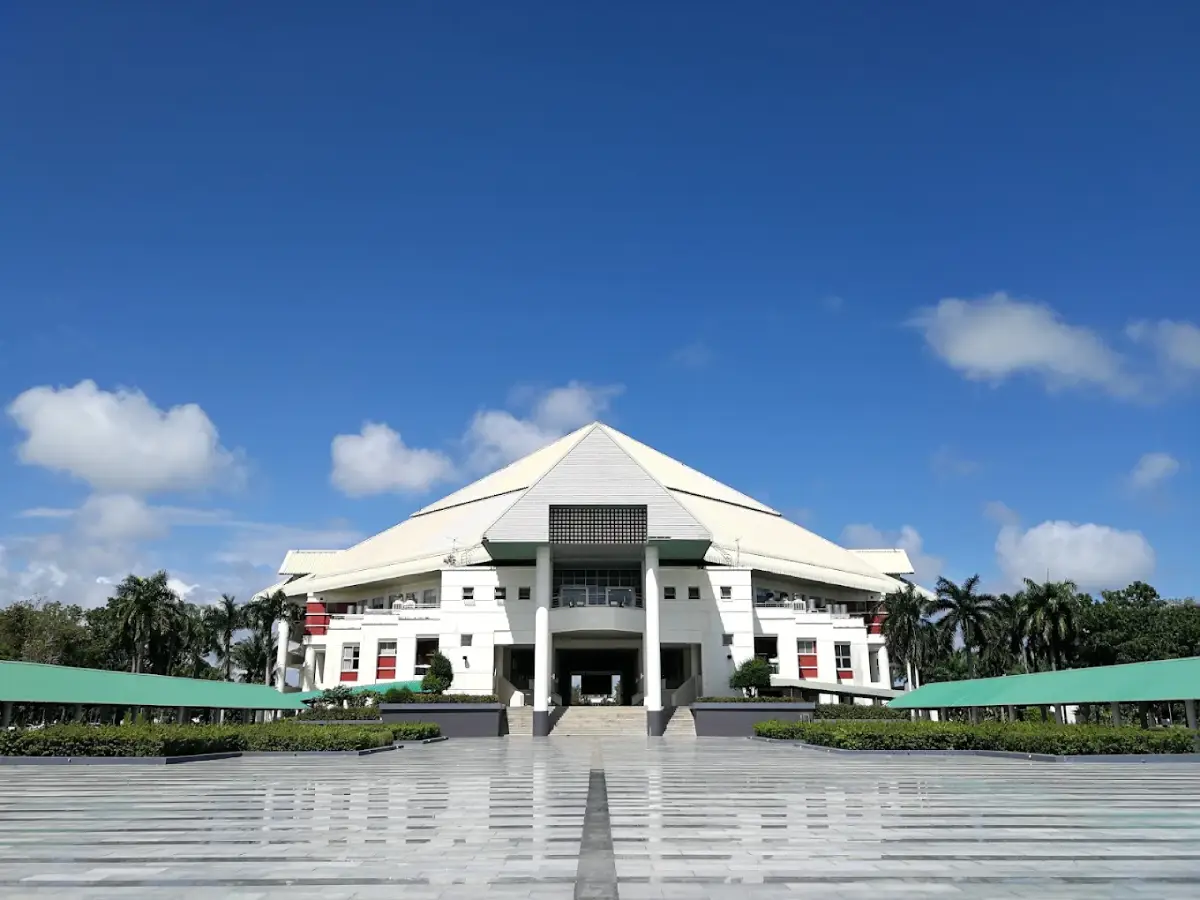
Walailak University (WU), known in Thai as มหาวิทยาลัยวลัยลักษณ์, is an autonomous public university located at 222 Thaiburi Subdistrict, Tha Sala District, Nakhon Si Thammarat Province 80160, in southern Thailand. Its campus occupies more than 9,000 rai, making it one of Thailand's largest university campuses. Walailak was established as a comprehensive university offering education in the humanities, social sciences, science, technology, and health sciences. On 8 February 1992, King Bhumibol Adulyadej (King Rama IX) bestowed the university's name, derived from the royal name of Princess Chulabhorn Walailak, now Princess Chulabhorn Krom Phra Srisavangavadhana. The institution observes 29 March 1992 as its official foundation date, and undergraduate teaching began on 28 May 1998. In 2026, the university marked its 34th anniversary under the leadership of President Professor Dr. Sombat Thamrongthanyawong. Its distinctive character combines a large residential campus, modern academic facilities, a university teaching hospital, Walailak Botanic Park, BOTA Sky Tower, and the Princess Maha Chakri Sirindhorn Natural History Museum, commonly known as SIRIN MUSEUM. Together, these facilities make Walailak an important center for higher education, research, healthcare, environmental learning, cultural preservation, and community development in southern Thailand.
Walailak University occupies an important place in the development of higher education in southern Thailand. Its establishment was the result of a decades-long effort by the people of Nakhon Si Thammarat to secure a comprehensive university within their province. The initiative reflected the belief that high-quality local higher education would create opportunities for young people, improve professional skills, strengthen public services, and support the economic and social development of the wider region.
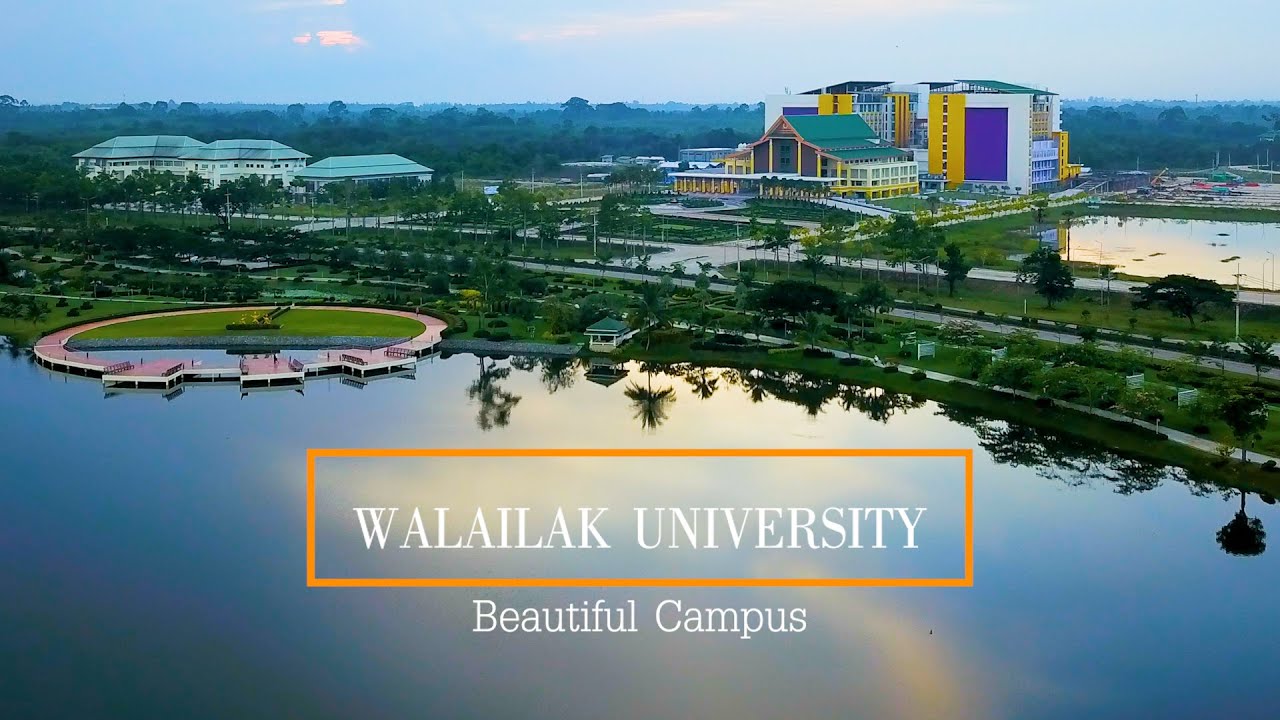
The university is situated in Thaiburi Subdistrict, Tha Sala District, on an extensive plain between the mountains of Nakhon Si Thammarat to the west and the Gulf of Thailand to the east. The surrounding landscape includes forests, water resources, agricultural land, coastal communities, and diverse natural ecosystems. Within the university grounds, a planned network of roads, academic buildings, research facilities, dormitories, parks, and public amenities creates an environment resembling a self-contained university town.
Long before Walailak University was founded, Nakhon Si Thammarat had been an important historical, cultural, and educational center in southern Thailand. The region's heritage is closely associated with Buddhism, traditional arts, regional trade, and maritime connections. Its large population and growing economy created a need for university education in teaching, science, medicine, engineering, agriculture, and other professions. Establishing a comprehensive university was therefore seen as an important investment in the province's future.
The movement to establish a university in Nakhon Si Thammarat began in 1967, when local residents started campaigning for greater access to university-level education. In 1979, members of parliament representing the province proposed legislation concerning the establishment of a university. These initiatives demonstrated that the demand for a local university had become an important public issue supported by both citizens and political representatives.
In 1984, prominent local residents and supporters of higher education formed a campaign committee to promote the establishment of a university in the province. Its efforts helped build cooperation between community leaders and government agencies and encouraged national policymakers to consider the educational needs of Nakhon Si Thammarat and the upper southern region.
On 13 September 1988, the Thai Cabinet approved a plan to establish Nakhon Si Thammarat College under Prince of Songkla University, with the possibility of developing it into an independent university later. This decision was an important milestone, although the proposed institutional model would subsequently change. It demonstrated that the longstanding campaign was beginning to receive concrete recognition at the national policy level.
On 4 April 1990, the Cabinet replaced the earlier arrangement with a decision to establish a university directly in Nakhon Si Thammarat. On 20 August 1991, the government approved the university establishment project. These decisions led to planning for the institution's legal structure, campus location, administrative organization, and academic development as a public autonomous university.
On 8 February 1992, King Bhumibol Adulyadej bestowed the name Walailak University. The name was derived from the royal name of Princess Chulabhorn Walailak, today formally known as Princess Chulabhorn Krom Phra Srisavangavadhana. This royal naming gave the institution a distinctive identity connected with the Thai monarchy and marked a decisive stage in the creation of the new university.
On 29 March 1992, King Bhumibol Adulyadej signed the Walailak University Act B.E. 2535. The university adopted that date as its official foundation day. The Act was published in the Royal Gazette on 7 April 1992 and came into force on 8 April 1992, legally establishing Walailak University as an autonomous public institution.
The university was designed from the beginning to operate as a comprehensive institution with considerable administrative flexibility. Its autonomous status allowed the development of management structures suited to academic planning, personnel administration, research, and the allocation of educational resources. At the same time, it retained the public responsibility of providing education, generating knowledge, and contributing to national and regional development.
Professor Dr. Wichit Srisa-an was one of the central figures in the university's establishment and served as its founding Acting President. He had extensive experience in Thai higher education, including important roles in the development of Sukhothai Thammathirat Open University and Suranaree University of Technology. His expertise in educational administration and university reform helped shape Walailak's early organizational structure and its vision of a modern autonomous university.
Professor Dr. Wichit Srisa-an also contributed to the development of cooperative education, linking classroom learning with professional experience in workplaces. This approach emphasized that students should acquire not only theoretical knowledge but also practical capabilities, communication skills, and an understanding of professional responsibilities before graduation. His contribution remains an important part of the university's educational history.
On 8 April 1993, Princess Chulabhorn granted permission for her royal monogram to be incorporated into the university's emblem. This event strengthened the relationship between the university's identity and the royal name it had received, providing an official symbol for documents, academic ceremonies, uniforms, and institutional activities.
The university was planned on a large site capable of accommodating teaching, research, residential facilities, and environmental learning areas. Its development was guided by the concept of an educational park integrated with nature. In 1996, the government approved the Royal Golden Jubilee Educational Park project, commemorating the 50th anniversary of King Bhumibol Adulyadej's accession to the throne. The King bestowed the project's name on 21 January 1996.
On 29 March 1996, Princess Chulabhorn, then Princess Chulabhorn Walailak, presided over the foundation-stone laying ceremony for Walailak University's buildings in Tha Sala District. The ceremony took place in the area designated for the university's library and educational media facilities, emphasizing the importance of knowledge and learning at the center of the new institution.
Walailak University began operating at its permanent site on 1 July 1997. In the following months, academic buildings, utilities, accommodation, and administrative services were prepared for the first intake of students. Developing a campus of this scale required an integrated approach to physical planning, with academic buildings, residential areas, transport routes, and landscaped open spaces designed as complementary parts of a university town.
On 23 May 1998, approximately 70 students completed registration as the university's first cohort, and teaching officially commenced on 28 May 1998. Many of these students came from Nakhon Si Thammarat and neighboring provinces. Their enrollment represented the realization of a community aspiration that had begun more than three decades earlier.
In 2002, the university held its first graduation ceremony for bachelor's degree recipients, with Princess Chulabhorn presiding on behalf of the King. In 2005, its first doctoral students graduated, marking another milestone in the university's development as an institution offering education at bachelor's, master's, and doctoral levels.
Subsequent development focused on creating a residential university, with student accommodation, specialist laboratories, sports facilities, healthcare services, research buildings, and landscaped public spaces. The scale of the campus made it possible to provide an integrated educational environment where students could study, conduct research, participate in activities, and access essential services without needing to leave the university grounds frequently.
Environmental planning became another defining element of the campus. The development of the botanical park, gardens, reservoirs, and conservation areas supported education, scientific research, recreation, and public engagement. By integrating natural spaces into the physical structure of the campus, the university established a distinctive environment that serves both academic and community purposes.
In 2026, Walailak University celebrated its 34th anniversary since its establishment on 29 March 1992 and 28 years since classes began in May 1998. During these decades, the institution expanded into a multidisciplinary university offering professional degrees, postgraduate study, international programs, and advanced research across a wide range of fields.
Professor Dr. Sombat Thamrongthanyawong served as President of Walailak University in 2026. Under his leadership, the university continued to emphasize internationally recognized research, high-quality teaching, institutional development, and improved campus facilities. Its strategies included strengthening academic staff capabilities, expanding research collaboration, and enhancing the university's international profile.
The name Walailak has a direct historical significance. It was bestowed by King Rama IX and derives from Princess Chulabhorn's royal name. The institution's identity is therefore linked with its foundation history and the royal contribution to the establishment of higher education in Nakhon Si Thammarat.
The university's official colors are orange and purple. Orange represents Thursday, the day of Princess Chulabhorn's birth, while purple is the traditional color associated with Nakhon Si Thammarat and the historical educational contributions of Phra Rattanathatchamuni, an important religious and educational figure in the province. Together, these colors express the university's connection with its royal heritage and the community in which it was established.
The university emblem incorporates Princess Chulabhorn's royal monogram beneath a small royal crown. The central letters are displayed in orange and white against a purple background, with a white ribbon bordered in gold carrying the university's name below. The emblem is an important symbol used in official documentation, academic ceremonies, uniforms, and university events.
The university's symbolic tree is the Pradu, or Burmese rosewood, scientifically known as Pterocarpus indicus Willd. The tree is valued for its shade and its historical association with Nakhon Si Thammarat. Generations of Walailak students are affectionately known as Cho Pradu, or clusters of Pradu blossoms, with the first cohort referred to as the First Pradu Cluster. This tradition helps build a shared identity among students and alumni.
Walailak University provides education through academic schools and colleges covering humanities, social sciences, health sciences, science, and technology. These include the Schools of Liberal Arts, Education, Management, Accountancy and Finance, Law, Political Science and Public Administration, Science, Engineering and Technology, Informatics, Architecture and Design, and Agricultural Technology and Food Industry.
Its health science academic units include the Schools of Medicine, Pharmacy, Nursing, Allied Health Sciences, and Public Health, together with the Walailak University International College of Dentistry and Akkhraratchakumari Veterinary College. The College of Graduate Studies coordinates advanced academic programs in numerous disciplines. Other academic units support languages, general education, and international study.
The School of Liberal Arts offers education related to language, communication, and culture, including Chinese, English, and Thai for Communication. The School of Education prepares future teachers in fields such as elementary education, early childhood education, Thai, English, social studies, physical education, and performing arts education. These areas contribute to the development of qualified teachers and professionals capable of effective communication and cultural understanding.
The School of Management and the School of Accountancy and Finance develop professional capabilities in tourism and hospitality management, logistics, digital marketing, branding, culinary business, accounting, finance, investment, and entrepreneurship. These fields are especially relevant to southern Thailand, where tourism, commercial services, agricultural production, and regional trade are major economic activities.
The School of Political Science and Public Administration offers education in political studies, international relations, and public-sector management, while the School of Law develops knowledge of legal systems and the administration of justice. Together, these disciplines help prepare graduates for careers in government, public institutions, business, and community organizations.
The School of Agricultural Technology and Food Industry focuses on agricultural science, food production, food safety, and technological innovation. Its work is relevant to crop production, food processing, agricultural product quality, and the development of value-added goods from local resources. Research in these fields can help strengthen agricultural enterprises and improve the competitiveness of regional producers.
The School of Science provides education in mathematics, chemistry, biology, physics, marine science, and related scientific disciplines. Strong foundations in science support research and technological innovation in healthcare, materials, environmental management, energy, and natural resources. The school's teaching also contributes to scientific training in other professional programs.
The School of Engineering and Technology offers education associated with computer engineering and artificial intelligence, chemical and pharmaceutical engineering, mechanical engineering and robotics, petrochemical and polymer engineering, electrical engineering, and civil engineering. These fields prepare students to work with modern industrial systems, design technologies, automation, infrastructure, and technical problem-solving.
The School of Informatics develops knowledge in intelligent information technology, medical digital technology, digital content, digital communication, interactive multimedia, animation, and games. The School of Architecture and Design focuses on architecture, interior design, and the creative application of technical knowledge to buildings and interior environments. Both schools reflect the growing importance of digital capabilities and design thinking in contemporary professional practice.
The School of Medicine provides medical and health-related education and contributes to the training of healthcare professionals. The School of Pharmacy focuses on pharmaceutical education and research, while the School of Nursing develops professional knowledge in nursing care, health promotion, and ethical patient services. These academic units support the university's broader responsibility to improve health and healthcare access in southern Thailand.
The School of Allied Health Sciences offers programs such as Medical Technology and Physical Therapy. Medical Technology supports clinical diagnosis through laboratory analysis, while Physical Therapy focuses on rehabilitation, movement, and physical function. The School of Public Health addresses environmental health, occupational health and safety, and community public health, helping prepare professionals for preventive and population-level healthcare.
Walailak University International College of Dentistry offers an international dental degree program, while Akkhraratchakumari Veterinary College provides international veterinary education and supports animal health research and clinical services. These specialist institutions contribute to the university's expertise in human and animal health and create opportunities for interdisciplinary collaboration.
The College of Graduate Studies supports master's and doctoral education in health sciences, science and technology, and the social sciences. Published fields include Drug and Cosmetic Innovation, Medical Innovation and Technology, Data Science and Artificial Intelligence, Engineering, Science, Public Health Research, Nursing, Public Administration, and Sustainable Business Management. Advanced education strengthens the university's ability to prepare researchers and specialists for scientific, professional, and societal challenges.
Research and innovation are central to Walailak University's academic strategy. The university operates research support units and specialized facilities that promote high-quality academic publications, international collaboration, and the practical application of research results. Its research interests span health sciences, engineering, environmental sustainability, agriculture, social sciences, and technological development.
In the Times Higher Education World University Rankings 2027, announced on 30 September 2026, Walailak University entered the 1001–1200 global ranking band. Its Research Quality score reached 66.2, the highest score in that category among the Thai universities included in that edition. The result reflected advances in research performance and international academic collaboration, while emphasizing the university's efforts to strengthen its research environment.
Walailak University Hospital is one of the campus's most important facilities. It provides medical services to the public while supporting clinical education and health-related research. The development of the teaching hospital has contributed to healthcare capacity in Nakhon Si Thammarat and neighboring provinces and provides practical learning opportunities for students and professionals in the health sciences.
Walailak Botanic Park is a major educational and recreational attraction within the university. It provides opportunities to study plants, biodiversity, and environmental conservation while offering landscaped gardens, water features, natural learning areas, and visitor facilities. Its development reflects the university's aim to integrate environmental education and public recreation into the wider campus environment.
One of the park's most recognizable attractions is BOTA Sky Tower, an elevated viewing platform that offers panoramic views of the university grounds, landscaped areas, reservoirs, and surrounding countryside. On clear days, visitors can see the mountain landscape behind the campus. The tower illustrates how the university's extensive green space can function as a public destination as well as an academic resource.
The botanic park also includes wildlife learning areas and facilities supporting environmental education. Visitors can explore the relationship between animals, plants, and their habitats and learn about biodiversity conservation. These educational activities are suitable for school groups, families, and other visitors interested in natural history and ecological awareness.
The Princess Maha Chakri Sirindhorn Natural History Museum, commonly known as SIRIN MUSEUM, is another major attraction within Walailak Botanic Park. Its exhibitions introduce the natural environments and biodiversity of southern Thailand, exploring ecosystems from mountainous areas and forests to the Pak Phanang River Basin, coastal habitats, and the Gulf of Thailand.
The museum combines scientific knowledge with interpretive displays designed for visitors of different ages. Its exhibitions explain ecological relationships, the importance of biodiversity, and the effects of environmental change. It provides an important educational destination for visitors who want to understand the natural heritage of southern Thailand.
As of October 2026, SIRIN MUSEUM advertised visiting hours of 09:00 to 16:30. A revised operating schedule takes effect on 7 November 2026, when the museum begins closing every Saturday while remaining open Sunday to Friday. BOTA Sky Tower and the wildlife learning facilities are advertised as operating daily from 09:00 to 18:00. Group visits and special educational activities can be coordinated with the botanic park's staff.
Walailak Park is a large landscaped recreational area associated with the university's campus environment. It offers paths and open spaces suitable for walking, jogging, exercise, and quiet relaxation. The park contributes to the university's identity as a healthy and sustainable place to live and study, while also providing recreational opportunities for members of the surrounding community.
The university's cultural activities are supported by Walailak Cultural Ashram, a unit responsible for promoting and preserving southern Thai arts, history, and local cultural traditions. Its work includes cultural learning, traditional performances, and the preservation of knowledge relating to the Tumpang archaeological site and the beliefs of communities in Tha Sala District.
The Tumpang archaeological site is an important historical and cultural area within the university. Local traditions associate the site with the spiritual figure known as Tuad Tumpang, and the area has long been connected with community beliefs and ritual practices. The university supports educational and cultural activities that encourage students and visitors to appreciate the historical significance of this heritage site.
One important tradition associated with the site is the Tuad Tumpang merit-making ceremony, which the university's cultural unit organizes around March. Activities combine elements of local religious belief, Brahmanic traditions, and Buddhist practices, including offerings, Buddhist chanting, merit-making, community meals, and volunteer cleaning of the archaeological grounds. The ceremony reflects the relationship between cultural heritage, community participation, and university life.
Preserving the Tumpang site connects modern higher education with the region's historical and spiritual traditions. Cultural activities provide opportunities for students to learn about archaeology, heritage conservation, and the responsibilities involved in protecting significant local sites for future generations.
Wai Khru, the traditional ceremony honoring teachers, is an important university event. On 6 August 2026, Walailak University held its annual Wai Khru ceremony at the main auditorium in the Thaiburi Building, with students, lecturers, and university administrators participating. The program included the presentation of traditional offerings, expressions of gratitude to teachers, student pledges, and recognition of outstanding student achievements.
New student orientation and welcoming activities also contribute to the university's community spirit. New students are introduced to campus facilities, residential life, student services, and activities supporting personal development. University songs, including Rak Walailak and Kiattiphum Walailak, help express institutional pride and strengthen connections among students and staff.
Walailak University's official foundation anniversary is observed on 29 March each year. In 2026, the university held its 34th anniversary ceremonies on 27 March because the official anniversary fell on a Sunday. Events included interfaith religious ceremonies, Buddhist almsgiving, commemorations of deceased university figures, staff recognition, and awards for distinguished alumni. The activities reflected the cultural and religious diversity of the university community.
In March 2026, the university also organized the Walailak Agricultural Fair, AgriNEXT, from 14 to 23 March. The event focused on contemporary agricultural technologies and innovation, allowing farmers, entrepreneurs, students, and the public to learn about improved production, applied technology, and opportunities to increase the value of agricultural products.
Walailak Research Convention 2026 was held from 25 to 28 March under a theme concerning global higher education collaboration, carbon neutrality, and sustainability. The event demonstrated the university's commitment to international research exchange and the development of knowledge relevant to environmental and technological challenges.
The university has also emphasized teaching quality through the professional development of its academic staff. The use of the UK Professional Standards Framework has supported efforts to strengthen teaching practices, encourage analytical thinking, and promote effective student learning. These initiatives complement the university's research strategy and broader academic development.
Residential facilities form another important part of student life. The Laksananives dormitory system provides accommodation for students and contributes to the university's residential campus environment. Student services, sports facilities, food outlets, shops, and academic resources are connected through the campus's infrastructure, making daily life more convenient for students arriving from different provinces.
The Center for Library Resources and Educational Media provides books, academic information, databases, and study spaces supporting teaching and research. Library schedules vary according to the academic calendar. Standard semester information lists Monday to Friday from 08:30 to 21:00 and Saturday to Sunday from 10:00 to 18:00, while extended opening hours may be announced during examinations. Vacation periods follow a different timetable.
The university's sports and health facilities support student wellbeing through exercise, recreation, and organized activities. Access to sporting facilities complements academic learning and helps promote a balanced lifestyle for students, employees, and eligible visitors.
The Science and Technology Park and related research support units provide opportunities to connect university research with businesses and communities. Their activities support innovation, product development, testing, entrepreneurship, and the application of scientific knowledge to practical challenges faced by regional enterprises.
Walailak University's development as a destination for educational tourism also supports Nakhon Si Thammarat's wider interest in conferences, exhibitions, and professional events. The presence of research facilities, meeting venues, museums, a botanical park, and cultural learning areas creates opportunities for academic visitors to combine conferences and educational activities with regional tourism.
Prospective undergraduate students can consult Walailak University's admissions system for application rounds, program requirements, and academic calendars. Master's and doctoral admissions are administered through the university's graduate admissions channels. In late 2026, announcements for the 2027 academic year had already begun, making it important for applicants to distinguish the year of an application announcement from the academic year in which they intend to study.
Campus visits are suitable for prospective students, parents, school groups, and travelers interested in science, nature, and southern Thai culture. Public learning destinations include Walailak Botanic Park, BOTA Sky Tower, SIRIN MUSEUM, and Walailak Park. Visits to research laboratories, specialist academic facilities, or clinical teaching areas should be coordinated with the relevant department in advance.
Getting There to Walailak University is possible by private vehicle from Nakhon Si Thammarat city along Highway 401 toward Tha Sala District. Visitors can then follow the university approach road into Thaiburi Subdistrict. The official postal address is 222 Thaiburi, Tha Sala, Nakhon Si Thammarat 80160. The campus is approximately 30 kilometers from central Nakhon Si Thammarat, and visitors should check their destination building before entering the extensive university grounds.
Travelers from Bangkok can reach Nakhon Si Thammarat by air, train, or interprovincial bus, then continue by road toward Tha Sala. Nakhon Si Thammarat Airport is a practical arrival point for domestic air travelers, while rail and bus passengers can arrange onward local transport. Those using public transportation should confirm current services and connections before traveling.
Other places of interest around Tha Sala District include Wat Yang Yai, also known as Wat Ta Phran Boon, a Buddhist temple recognized for its distinctive pink buildings and devotional traditions. The district's coastal areas and fishing communities offer opportunities to explore local livelihoods, regional culture, and the natural environment of southern Thailand.
Walailak University is significant not only as an educational institution but also as the result of a long public campaign for higher education in Nakhon Si Thammarat. From the first community efforts in 1967 to its legal foundation in 1992 and the beginning of teaching in 1998, the university's development demonstrates the relationship between local aspirations, government policy, and the establishment of a major center for education and research in southern Thailand.
In 2026, the university continued to expand its contribution through teaching, research, innovation, healthcare, environmental conservation, and cultural preservation. The integration of a teaching hospital, botanical park, natural history museum, and the historic Tumpang site within one campus illustrates how Walailak University has developed into a place where education, science, health, history, and community wellbeing are closely connected.
| University Name | Walailak University (WU) |
| Thai Name | มหาวิทยาลัยวลัยลักษณ์ |
| Institution Type | Autonomous Public University |
| District and Province | Tha Sala District, Nakhon Si Thammarat Province, Thailand |
| Full Address | 222 Thaiburi Subdistrict, Tha Sala District, Nakhon Si Thammarat 80160, Thailand |
| Campus Area | More than 9,000 rai, developed as a large residential university and educational park |
| Public Campaign for Establishment Began | 1967 |
| Cabinet Decisions | 4 April 1990 and 20 August 1991 |
| Royal Naming Date | 8 February 1992 |
| Foundation Date | 29 March 1992 |
| University Act Came into Force | 8 April 1992 |
| Foundation-Stone Ceremony | 29 March 1996 |
| Operations at Permanent Campus Began | 1 July 1997 |
| Teaching Began | 28 May 1998 |
| Institutional Age in 2026 | 34 years since foundation and 28 years since teaching began |
| Important Historical Figures | 1. King Bhumibol Adulyadej (King Rama IX), who bestowed the university's name 2. Princess Chulabhorn Krom Phra Srisavangavadhana, whose royal name and monogram are associated with the university 3. Professor Dr. Wichit Srisa-an, founding Acting President and a major figure in the institution's development |
| President in 2026 | Professor Dr. Sombat Thamrongthanyawong |
| University Colors | Orange and Purple |
| University Emblem | Princess Chulabhorn's Royal Monogram beneath a Small Crown, with the University Name on a Ribbon |
| University Tree | Pradu, Burmese Rosewood (Pterocarpus indicus Willd.) |
| Student Cohort Tradition | Cho Pradu, or Pradu Blossom Cluster |
| Educational Model | Comprehensive University and Residential University |
| Schools and Colleges | 1. School of Management 2. School of Accountancy and Finance 3. School of Liberal Arts 4. School of Education 5. School of Law 6. School of Political Science and Public Administration 7. School of Agricultural Technology and Food Industry 8. School of Science 9. School of Engineering and Technology 10. School of Architecture and Design 11. School of Informatics 12. School of Nursing 13. School of Medicine 14. School of Pharmacy 15. School of Allied Health Sciences 16. School of Public Health 17. School of Languages and General Education 18. Walailak University International College of Dentistry 19. Akkhraratchakumari Veterinary College 20. Walailak University International College 21. College of Graduate Studies |
| Academic Levels | Bachelor's, Master's, Doctoral, and Selected Professional Programs |
| Academic Strengths | Health Sciences, Medicine, Nursing, Pharmacy, Dentistry, Veterinary Medicine, Science, Engineering, Artificial Intelligence, Management, Food Technology, and Sustainability Research |
| Important Campus Facilities | 1. Thaiburi Building and Main Auditorium 2. Professor Dr. Wichit Srisa-an Building 3. Center for Library Resources and Educational Media 4. Walailak University Hospital 5. Walailak Botanic Park 6. BOTA Sky Tower 7. Princess Maha Chakri Sirindhorn Natural History Museum (SIRIN MUSEUM) 8. Walailak Park 9. Walailak Cultural Ashram and Tumpang Archaeological Site 10. Sports and Health Center 11. Science and Technology Park 12. Laksananives Student Dormitories |
| Important Traditions and Activities | 1. Foundation Anniversary on 29 March 2. Wai Khru Ceremony and New Student Orientation 3. Tuad Tumpang Merit-Making Ceremony 4. Walailak Agricultural Fair 5. Walailak Research Convention 6. Southern Thai Cultural Preservation Activities 7. Community Outreach and Volunteering |
| Center for Educational Services — Open Days | Monday – Friday, except government and public holidays |
| Center for Educational Services — Opening Hours | 08:30 – 16:30 |
| Library Hours During Regular Semesters | Monday – Friday 08:30 – 21:00; Saturday – Sunday 10:00 – 18:00. Special examination and vacation schedules may apply. |
| BOTA Sky Tower Opening Days and Hours | Daily, 09:00 – 18:00 |
| SIRIN MUSEUM Opening Days and Hours | 09:00 – 16:30; from 7 November 2026 onward, open Sunday – Friday and closed every Saturday |
| BOTA Sky Tower Admission | Sky Tower Ticket 40 Baht; Electric Garden Tour 40 Baht; Combined Ticket 70 Baht |
| Educational Visits | Public learning attractions follow their own regulations. Arrange visits to research laboratories, specialized facilities, and academic departments in advance. |
| Facilities | Academic Buildings, Laboratories, Hospital, Library, Student Dormitories, Sports Facilities, Food Outlets, Shops, Parks, Nature Learning Areas, and Parking |
| Getting There | Travel from Nakhon Si Thammarat city along Highway 401 toward Tha Sala District, then continue to the university entrance in Thaiburi. Private cars or hired transport from Nakhon Si Thammarat Airport and other transport terminals are practical options. |
| Nearby Attractions and Learning Destinations | 1. Walailak Botanic Park 2. BOTA Sky Tower 3. Princess Maha Chakri Sirindhorn Natural History Museum (SIRIN MUSEUM) 4. Walailak Park 5. Wat Yang Yai (Wat Ta Phran Boon) |
| Restaurants and Cafés in the Tha Sala Area | 1. Bunjerd Restaurant, Tel. +66 80 938 9882 2. Pala Cafe Pizza & Pasta, Tel. +66 83 834 9361 3. UBRGER, Tel. +66 82 215 9476 4. Pakpaying Restaurant, Tel. +66 83 185 1053 5. Baba Roti Cha Chak, Walailak University Branch, Tel. +66 97 149 7338 |
| Accommodation in Tha Sala District | 1. Wannachart Boutique Resort, Tel. +66 86 947 8880 2. VS Resort & Pool Villa Tha Sala, Tel. +66 75 522 168 3. The Modern Hotel, Tel. +66 75 445 133 4. The Room Thasala Resort, Tel. +66 87 625 6681 5. Ingtarn Resort at Thasala, Tel. +66 80 392 3624 |
| University Telephone | +66 75 673 000 |
| Center for Educational Services Telephone | +66 75 673 101 to +66 75 673 112 |
| Undergraduate Admissions Telephone | +66 75 673 101 to +66 75 673 105 |
| Walailak Botanic Park Telephone | +66 75 476 104 to +66 75 476 105, +66 81 397 8717 |
| SIRIN MUSEUM Telephone | +66 80 859 1660 |
| Walailak University Hospital Telephone | +66 75 479 999 |
| Official Website | www.wu.ac.th |
| Undergraduate Admissions Website | entry.wu.ac.th |
| Graduate Studies Website | grad.wu.ac.th |
| Current Status | Active University offering higher education, research, community services, and healthcare in the 2026 academic year |
Academic Programs and Fields of Study at Walailak University — Information Published in 2026 (B.E. 2569)
| School / College | Published Academic Programs and Fields of Study |
| School of Management | Undergraduate Programs 1. Tourism and Hospitality Management 2. Business Administration, Logistics Management track 3. Business Administration, Digital Marketing and Branding track 4. Professional Culinary Arts and Business Management |
| School of Accountancy and Finance | Undergraduate Programs 1. Business Administration in Business Innovation and Digital Finance, with tracks in Finance, Investment and Innovation; and Business Innovation and Entrepreneurship 2. Accountancy 3. Economics |
| School of Liberal Arts | Undergraduate Programs 1. Chinese 2. Thai for Communication 3. English |
| School of Education | Undergraduate Fields and Tracks 1. Elementary Education 2. Thai Classical Dance Education 3. Early Childhood Education 4. Physical Education 5. Thai Education 6. English Education 7. Social Studies Education 8. Mathematics Education 9. Computer Education 10. Biology Education 11. General Science Education |
| School of Law | Undergraduate Program 1. Law |
| School of Political Science and Public Administration | Undergraduate Fields and Tracks 1. Public Administration 2. Political Science, Politics and Government track 3. Political Science, International Relations track |
| School of Agricultural Technology and Food Industry | Undergraduate Programs 1. Agricultural Science and Innovation 2. Food Science and Innovation |
| School of Science | Undergraduate Fields and Tracks 1. Science, including Mathematics, Chemistry, Biology, and Physics tracks 2. Marine Science 3. Science and Mathematics Teacher-Education tracks delivered in cooperation with education-related academic units |
| School of Engineering and Technology | Undergraduate Programs 1. Computer Engineering and Artificial Intelligence 2. Chemical and Pharmaceutical Engineering 3. Mechanical Engineering and Robotics 4. Petrochemical and Polymer Engineering 5. Electrical Engineering 6. Civil Engineering |
| School of Architecture and Design | Undergraduate Programs 1. Interior Design 2. Architecture |
| School of Informatics | Undergraduate Programs 1. Digital Content and Media 2. Medical Digital Technology 3. Intelligent Information Technology 4. Digital Communication Arts 5. Interactive Multimedia, Animation and Games |
| School of Nursing | Undergraduate Program 1. Nursing Science |
| School of Medicine | Undergraduate and Professional Programs 1. Medicine 2. Applied Thai Traditional Medicine 3. Sports and Exercise Science |
| School of Pharmacy | Professional Degree 1. Pharmacy |
| School of Allied Health Sciences | Undergraduate Programs 1. Physical Therapy 2. Medical Technology 3. Medical Technology, International Program |
| School of Public Health | Undergraduate Program 1. Public Health, with tracks in Environmental Health, Occupational Health and Safety, and Community Public Health |
| School of Languages and General Education | Provides language and general education courses for students across the university. |
| Walailak University International College of Dentistry | Professional Degree 1. Doctor of Dental Surgery, International Program |
| Akkhraratchakumari Veterinary College | Professional Degree 1. Doctor of Veterinary Medicine, International Program |
| Walailak University International College | Undergraduate Program 1. Business Administration, International Program |
| College of Graduate Studies — Health Sciences | Master's Degrees 1. Master of Science in Drug and Cosmetic Innovation 2. Master of Science in Medical Innovation and Technology 3. Master of Nursing Science in Adult and Gerontological Nursing 4. Master of Nursing Science in Community Nurse Practitioner 5. Master of Science in Dentistry 6. Master of Public Health in Public Health Research 1. Doctor of Philosophy in Drug and Cosmetic Innovation 2. Doctor of Philosophy in Public Health Research |
| College of Graduate Studies — Science and Technology | Master's Degrees 1. Master of Science in Data Science and Artificial Intelligence 2. Master of Engineering in Engineering 3. Master of Science in Management of Information Technology Innovation 4. Master of Science in Science 5. Master of Science in Health, Environment and Safety 1. Doctor of Philosophy in Data Science and Artificial Intelligence 2. Doctor of Philosophy in Engineering 3. Doctor of Philosophy in Management of Information Technology Innovation 4. Doctor of Philosophy in Science 5. Doctor of Philosophy in Health, Environment and Safety |
| College of Graduate Studies — Social Sciences | Master's Degrees 1. Master of Public Administration in Public Administration 2. Master of Business Administration in Sustainable Business Management 1. Doctor of Philosophy in Liberal Arts 2. Doctor of Philosophy in Public Administration |
Frequently Asked Questions (FAQ)
Q: What days is Walailak University open, and what are its opening hours?
A: The Center for Educational Services operates Monday to Friday from 08:30 to 16:30, except government and public holidays. The library, museum, botanical park, and other campus facilities have their own operating schedules.
Q: Where is Walailak University located?
A: It is located at 222 Thaiburi Subdistrict, Tha Sala District, Nakhon Si Thammarat 80160, Thailand, approximately 30 kilometers from central Nakhon Si Thammarat.
Q: When was Walailak University established?
A: The university observes 29 March 1992 as its official foundation date. Teaching began on 28 May 1998.
Q: Who gave Walailak University its name?
A: King Bhumibol Adulyadej (King Rama IX) bestowed the name on 8 February 1992, drawing on the royal name of Princess Chulabhorn Walailak.
Q: Who founded Walailak University and served as its first President?
A: Professor Dr. Wichit Srisa-an was a central figure in its establishment and served as the university's founding Acting President.
Q: Who is the President of Walailak University in 2026?
A: Professor Dr. Sombat Thamrongthanyawong.
Q: What subjects is Walailak University known for?
A: Its main strengths include health sciences, medicine, nursing, pharmacy, science, engineering, research, digital technologies, and sustainability-related innovation.
Q: When is SIRIN MUSEUM open?
A: The museum's visiting hours are 09:00 to 16:30. From 7 November 2026 onward, it is scheduled to open Sunday to Friday and close every Saturday.
Q: What are the opening hours of BOTA Sky Tower?
A: BOTA Sky Tower is advertised as open daily from 09:00 to 18:00, with admission charges according to the selected ticket.
Q: What are Walailak University's official colors and symbolic tree?
A: The university colors are orange and purple, and its symbolic tree is Pradu, or Burmese rosewood. Student cohorts are traditionally known as Cho Pradu, meaning clusters of Pradu blossoms.
Q: What important traditions take place at Walailak University?
A: Important events include the university foundation anniversary on 29 March, Wai Khru ceremonies, the Tuad Tumpang merit-making tradition, the Walailak Agricultural Fair, and southern Thai cultural activities.
Q: How can visitors get to Walailak University?
A: From Nakhon Si Thammarat city, take Highway 401 toward Tha Sala District and continue to the university entrance in Thaiburi. Visitors can use private vehicles or arrange onward local transport from the airport, railway station, or provincial bus services.
 Category: ●University
 Group: ●Autonomous Universities
Last Update : 5 DayAgo
 Last Update : 5 DayAgo
 Click to Access the Navigation Map GPS
Walailak University Map
Recommend

 Art, Culture and Heritage
 Historical Sites and Monuments(9)
 Landmarks and Memorials(9)
 Royal Palace(1)
 Art, Craft Centres, Tradition(12)
 Museums(5)
 Educational Places
 Educational Gardens, Farm(2)
 Public university(1)
Autonomous Universities(3)
 Rajamangala University of Technology(2)
 Rajabhat University(1)
 Private University(1)
 Places of Worship
 Temple(44)
 Mosque(2)
 Other Sacred Sites(17)
 Research and Development
 Royal Project(2)
 Suburban Living
 Village, Community(8)
 Local Market(1)
 Floating Market(1)
 Nature and Wildlife
 National Parks and Marine Reserves(6)
 Mountain (Doi)(11)
 Dam, Reservoir, Lake(10)
 Waterfalls(43)
 Hot Springs(1)
 Caves(13)
 River, Canal(3)
 Bays and Beaches(29)
 Islands(2)
 Other natural attractions(3)
 Entertainment and Agricultural
 Farms, Parks and Ecotourism(3)
 Outdoor and Adventure Activities(4)
 Travel Articles, Recipes
 Travel Review, Food Review(5)
 Southern Food Menu, Southern Food Recipes(18)


