
lovethailand home >South Travel Attractions >Krabi Travel Attractions >Nuea Khlong >Khlong Khanan > Krabi Lignite Mine
TL;DR: Krabi Lignite Mine is located at Public Relations Building, Krabi Power Plant, Khlong Khanan Subdistrict, Nuea Khlong District, Krabi Province, open Monday – Friday, hours 08.00 – 16.00.

Krabi Lignite Mine
Open Days: Monday – Friday
Opening Hours: 08.00 – 16.00
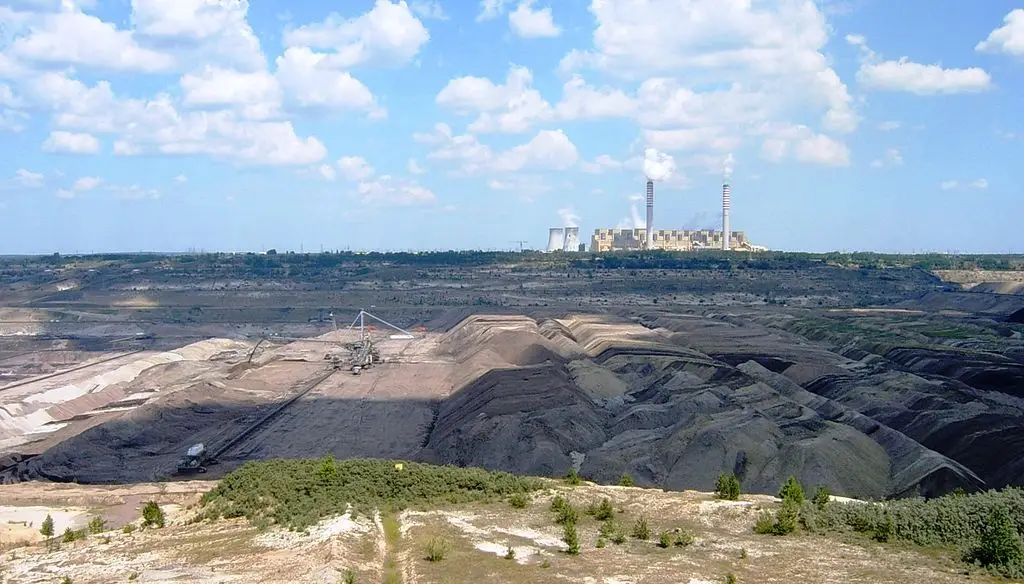
Krabi Lignite Mine and the Fossil Museum at Krabi Power Plant offer one of the most distinctive educational experiences in Krabi Province. Located within the Krabi Power Plant of the Electricity Generating Authority of Thailand in Khlong Khanan Subdistrict, Nuea Khlong District, this site introduces visitors to another side of Krabi beyond islands, beaches, and limestone cliffs. The exhibition area is located at the public relations building of Krabi Power Plant, near the reservoir and the former lignite mine area. Inside, visitors can learn about fossil discoveries, ancient vertebrates, mammals, reptiles, fish, shells, plant fossils, and geological evidence connected to the Krabi Basin millions of years ago.
In brief, Krabi Lignite Mine is not only a former coal-mining area. It is also an important fossil-learning site in Thailand. The highlight is the Fossil Museum at Krabi Power Plant, which presents fossils discovered from the Krabi lignite mine, including Siamopithecus eocaenus, an ancient primate dated to around 35–37 million years ago, saber-toothed cat remains, ancient mammals, reptiles, fish, shells, plant fossils, and coalified wood. The site opens Monday to Friday from 08.00 to 16.00 with no admission fee.
Krabi Lignite Mine is significant in terms of energy, geology, and paleontology. The area was once an important lignite source in southern Thailand and led to the development of Krabi Power Plant, formerly associated with lignite-fired electricity production. The discovery of lignite indicates that this part of Krabi once had environmental conditions suitable for the accumulation of plant remains and organic material. Over millions of years, these materials were compressed, buried, and transformed into lignite layers, preserving clues about past landscapes and climates.
Lignite is a type of coal formed from accumulated plant remains under long-term pressure and sedimentation. It is younger and lower in rank than higher-grade coal, but it has played an important role as an energy source in many places. In Krabi, the discovery of lignite did more than support energy development. It also opened the way to important fossil discoveries in the sedimentary layers of the Krabi Basin.
Inside the Fossil Museum at Krabi Power Plant, visitors can learn about the history of lignite discovery, geological exploration, fossil excavation, fossil classification, and the importance of these discoveries for understanding the evolution of life in Southeast Asia. The exhibition explains how ancient landscapes, prehistoric animals, fossil plants, sediments, and coal layers are connected. It turns geological and paleontological evidence into a story that visitors can see and understand.
One of the most important discoveries linked to the site is Siamopithecus eocaenus, an ancient primate described as a new genus and species. The fossils found include jaws and teeth dated to around 35–37 million years ago. This discovery is highly important for paleontology because it adds evidence to the study of primate evolution in Asia and gives the Krabi Basin international scientific significance beyond its role as a lignite source.
Siamopithecus eocaenus matters because it belongs to an ancient primate group from the late Eocene period. The study of its jaws and teeth helps specialists understand anatomical features, diet, and evolutionary relationships. When compared with evidence from other regions, the Krabi fossils contribute to broader questions about primate evolution and the role of Asia in early anthropoid history.
Beyond Siamopithecus, the Krabi lignite mine area has produced fossils of many ancient mammals. The exhibition and related sources refer to fossil mammals such as tapir-like animals, mouse deer, rodents, carnivores, ungulates, and ancient relatives linked to early hippopotamus lineages. These discoveries show that ancient Krabi once supported a diverse ecosystem with wetlands, vegetation, water sources, and a variety of animal groups.
Another striking exhibit is the fossil evidence of a saber-toothed cat, first discovered in 1990. Saber-toothed cats are extinct predatory mammals known for their long canine teeth and powerful hunting adaptations. The discovery of such fossils in Krabi expands our understanding of prehistoric carnivores in this region and helps build a clearer picture of ancient food chains in the Krabi Basin.
The fossil record at the site also includes reptiles such as snakes, turtles, and crocodiles, as well as fish and shell fossils. These remains suggest that the ancient environment around the Krabi lignite basin was closely connected with water, possibly including wetlands, ponds, or swamp-like habitats. The presence of different animal groups in one area allows researchers to reconstruct past ecosystems more clearly.
Plant fossils are another important part of the exhibition. Fossil leaves from both monocotyledonous and dicotyledonous plants have been found, along with coalified wood. These remains help visitors understand how plant life contributed to the formation of lignite. Seeing coalified wood on display makes the relationship between ancient vegetation, fossilization, and energy resources easier to grasp.
The strength of the Fossil Museum at Krabi Power Plant is that it makes scientific information visible and accessible. Rocks, coal, sediments, and fossils are not simply natural objects; they are records of past life. Every fossil fragment acts like a page from Earth’s history, showing what lived in ancient Krabi, what the environment was like, and how ecosystems changed through deep time.
For families and students, this site is especially suitable for learning outside the classroom. It links science, nature, energy, and local history in one place. Reading about fossils in a textbook is useful, but seeing real fossil evidence, jaw and tooth fragments, shells, plant remains, and coalified wood makes the subject more memorable. The museum can encourage young visitors to ask questions about geology, evolution, climate, and the natural history of Thailand.
For general travelers, Krabi Lignite Mine adds depth to a trip in Krabi. Many visitors associate Krabi with Phi Phi Islands, Ao Nang, Railay, and scenic beaches. This site reveals that Krabi also has major geological and paleontological value. The province is not only beautiful at the surface; it also contains deep-time stories preserved in rocks, coal layers, and fossil remains.
A visit should begin at the public relations building of Krabi Power Plant, where the main fossil exhibition is located. Visitors should allow at least 45 minutes to 1 hour for a general visit. Those who want to read the displays carefully and study the fossil information in more detail should allow additional time, especially if they are interested in ancient mammals, primate evolution, or Krabi’s geological history.
Because the site is under the care of the Electricity Generating Authority of Thailand, visitors should follow all site rules. Do not enter restricted operational areas, do not touch exhibits without permission, keep noise low inside the building, and contact the staff in advance for group visits. These practices help keep the learning area safe and available for public use.
Getting There is easiest by private car, rental car, or hired vehicle. From Krabi Town, travel toward Nuea Khlong District and Khlong Khanan Subdistrict, then continue to Krabi Power Plant. The drive from Krabi Town takes roughly half an hour depending on traffic. The route can be combined with nearby attractions in Nuea Khlong District or with trips toward Laem Kruat Pier, Ko Siboya, Ko Pu, and Ko Jum.
Travelers arriving from Krabi International Airport can also include the site in their itinerary, as the power plant is located in Nuea Khlong District. A hired vehicle or rental car is more practical than public transport, especially for travelers planning to continue to Laem Kruat Pier or the coastal communities of Nuea Khlong.
Nearby places that can be combined with Krabi Lignite Mine include Yao Beach in Nuea Khlong, Laem Kruat Pier, Ko Siboya, Ko Pu, Ko Jum, Khao Khanap Nam, the 45-million-year-old Shell Cemetery, and Wat Khlong Thom Museum. Travelers interested in geology and history can pair this visit with the Shell Cemetery and Wat Khlong Thom Museum, while those interested in coastal communities can continue toward Laem Kruat Pier and Ko Siboya.
The best time to visit is in the morning or early afternoon on weekdays, allowing enough time to explore the exhibition and continue to nearby destinations. Before visiting, especially as a school, organization, or group, contact Krabi Power Plant Public Relations in advance because the site is inside a power plant area and may have safety procedures that visitors must follow.
Krabi Lignite Mine is suitable for students, families, fossil enthusiasts, geology learners, energy-sector visitors, and travelers who want to see a different side of Krabi. Its strength lies in the way it brings energy history, geology, fossils, and natural history together in one place. A visit provides knowledge, curiosity, and a deeper understanding of Krabi Province.
Overall, Krabi Lignite Mine and the Fossil Museum at Krabi Power Plant expand the meaning of travel in Krabi. The province is not only a destination of present-day sea views and limestone scenery; it is also a landscape with ancient life preserved in rock and coal. Each fossil displayed inside the museum is evidence of organisms that lived tens of millions of years before modern humans. This makes the site a valuable natural heritage destination that deserves careful learning and protection.
| Name | Krabi Lignite Mine / Fossil Museum at Krabi Power Plant |
| Location | Public Relations Building, Krabi Power Plant, Khlong Khanan Subdistrict, Nuea Khlong District, Krabi Province |
| Address | 112 Moo 2, Krabi Power Plant, Khlong Khanan Subdistrict, Nuea Khlong District, Krabi 81130, Thailand |
| Highlights | Fossil exhibition from the Krabi lignite mine, including Siamopithecus eocaenus, saber-toothed cat remains, ancient mammals, reptiles, fish, shells, plant fossils, and coalified wood |
| History | Connected to the Krabi Basin and lignite layers containing fossils dating back tens of millions of years. The area later became part of Krabi Power Plant’s energy and educational landscape. |
| Name Origin | The name refers to the lignite coal deposits found in the area. The fossil museum is named for its exhibition of fossil remains discovered from the Krabi lignite mine. |
| Distinctive Features | A learning site combining energy history, geology, paleontology, and the natural history of Krabi Province. |
| Travel Information | From Krabi Town, travel by private car, rental car, or hired vehicle toward Khlong Khanan Subdistrict in Nuea Khlong District and enter the Krabi Power Plant area. |
| Current Status | Open as a tourist and educational attraction under the care of the Electricity Generating Authority of Thailand, Krabi Power Plant. |
| Open Days | Monday – Friday |
| Opening Hours | 08.00 – 16.00 |
| Fees | No admission fee |
| Facilities | Public relations building, fossil exhibition area, parking area, and visitor reception area inside Krabi Power Plant. |
| Main Areas / Zones | Krabi Power Plant Public Relations Building Fossil Museum Ancient vertebrate fossil exhibition Ancient mammal and reptile fossil exhibition Plant fossil and coalified wood exhibition Reservoir and landscape area near the public relations building |
| Caretaker | Electricity Generating Authority of Thailand, Krabi Power Plant |
| Main Contact Number | 075-635-000 ext. 3300 |
| Official Website / Official Page | Electricity Generating Authority of Thailand Website |
| Nearby Tourist Attractions | 1. Fossil Exhibition Building at Krabi Power Plant, about 0 km 2. Yao Beach, Nuea Khlong, about 10 km 3. Laem Kruat Pier, about 12 km 4. Ko Siboya, about 12 km 5. Wat Khlong Thom Museum, about 14 km 6. Khao Khanap Nam, about 15 km 7. 45-Million-Year-Old Shell Cemetery, about 18 km |
| Nearby Restaurants | 1. Pee Muy Kor Cha Yen, Krabi Power Plant Entrance Branch, about 2 km, Tel. 062-975-0589 2. Mangkon Lava Phon Fai Nuea Khlong, about 9 km, Tel. 087-166-2466 3. Tam Krok Taek Yum Pak Haek The Camping Cafe Nuea Khlong, about 10 km, Tel. 064-636-5221, 089-475-7003 4. Chatato Cafe Nuea Khlong-Tha Nun, about 10 km, Tel. 082-831-9102 5. Jee Lek Khanom Thai, about 10 km, Tel. 085-392-1957, 089-594-0209 |
| Nearby Accommodations | 1. Palmari Boutique Hotel, about 11 km, Tel. 089-988-3203 2. Srisuksant Urban, about 11 km, Tel. 095-265-0737 3. Chalalai Hotel Krabi, about 11 km, Tel. 062-085-2886 4. TawanWarn Hotel Krabi, about 13 km, Tel. 075-622-454 5. Krabi City Seaview Hotel, about 16 km 6. Krabi Seabass Hotel, about 17 km |
Frequently Asked Questions (FAQ)
Q: Where is Krabi Lignite Mine located?
A: Krabi Lignite Mine and the Fossil Museum are located inside Krabi Power Plant at 112 Moo 2, Khlong Khanan Subdistrict, Nuea Khlong District, Krabi Province.
Q: What are the opening days and hours?
A: The site opens Monday to Friday from 08.00 to 16.00 with no admission fee.
Q: What is the main highlight of the Fossil Museum at Krabi Power Plant?
A: The highlight is the fossil exhibition from the Krabi lignite mine, including Siamopithecus eocaenus, saber-toothed cat remains, ancient mammals, reptiles, fish, shells, and coalified wood.
Q: What is Siamopithecus eocaenus?
A: Siamopithecus eocaenus is an ancient primate discovered from the Krabi lignite mine. Its fossil remains are dated to around 35–37 million years ago and are important for the study of primate evolution.
Q: Who should visit Krabi Lignite Mine?
A: The site is suitable for students, families, fossil enthusiasts, geology learners, energy-sector visitors, and travelers who want to explore a different side of Krabi beyond the beaches.
Q: How do visitors get to Krabi Lignite Mine?
A: Travel from Krabi Town by private car, rental car, or hired vehicle toward Khlong Khanan Subdistrict in Nuea Khlong District and enter the Krabi Power Plant area.
Q: Should group visitors contact the site in advance?
A: Yes. Schools, organizations, and study groups should contact Krabi Power Plant Public Relations in advance because the museum is located inside a power plant area with visitor procedures.
Q: What nearby attractions can be visited after Krabi Lignite Mine?
A: Nearby places include Yao Beach, Laem Kruat Pier, Ko Siboya, Wat Khlong Thom Museum, Khao Khanap Nam, and the 45-Million-Year-Old Shell Cemetery.
 Category: ●Art, Culture and Heritage
 Group: ●Museums
Last Update : 2 MonthAgo
 Last Update : 2 MonthAgo
 Click to Access the Navigation Map GPS

 Historical Sites and Monuments(1)
 Landmarks and Memorials(7)
 Art, Craft Centres, Tradition(2)
Museums(2)
 Educational Places
 Educational Gardens, Farm(1)
 Places of Worship
 Temple(3)
 Mosque(2)
 Other Sacred Sites(2)
 Research and Development
 Royal Project(1)
 Suburban Living
 Village, Community(6)
 Nature and Wildlife
 National Parks and Marine Reserves(5)
 Mountain (Doi)(2)
 Dam, Reservoir, Lake(3)
 Waterfalls(12)
 Hot Springs(3)
 Caves(20)
 River, Canal(2)
 Bays and Beaches(36)
 Islands(23)
 Other natural attractions(7)
 Entertainment and Agricultural
 Farms, Parks and Ecotourism(1)
 Outdoor and Adventure Activities(1)
 Travel Articles, Recipes
 Travel Review, Food Review(2)
 Southern Food Menu, Southern Food Recipes(1)


