
lovethailand home >South Travel Attractions >Chumphon Travel Attractions >Muang Chumphon >Bang Mak > Tai Dam Community Museum
TL;DR: Tai Dam Community Museum is located at Ban Don Roub, Moo 8, Bang Mak Subdistrict, Mueang Chumphon District, Chumphon Province, open Advance Coordination With Local Caretakers Is Recommended Before Visiting, hours No Verified Fixed Museum Opening Hours Found.
Tai Dam Community Museum
Open Days: Advance Coordination With Local Caretakers Is Recommended Before Visiting
Opening Hours: No Verified Fixed Museum Opening Hours Found
The Tai Dam Community Museum At Ban Don Roub, also referred to in several sources as the Tai Dam Community Museum, Ban Don Roub, is a community-based cultural learning site in Bang Mak Subdistrict, Mueang Chumphon District, Chumphon Province. It is associated with Ban Don Roub, Moo 8, Wat Don Roub, Wat Don Roub School, and the local Thai Song Dam or Tai Dam community. The site is important because it preserves and presents the story of Tai Dam ancestors, traditional living, houses, tools, clothing, weaving, customs, rituals, beliefs, and community memory in Chumphon.
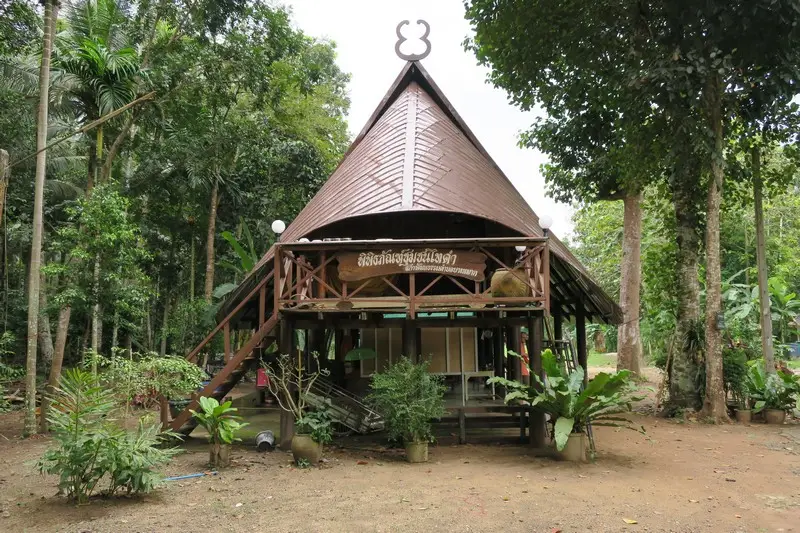
This museum should not be understood as a large state museum with full-time staff and regular walk-in service. It is a community museum whose value lies in local knowledge, local people, and cultural continuity. The Princess Maha Chakri Sirindhorn Anthropology Centre describes the museum as being located within Wat Don Roub and housed in a structure modeled after a Tai Dam house. Its displays were designed to present ancestral stories, daily life, traditional tools, clothing, customs, rituals, and beliefs of the Tai Dam people of Ban Don Roub. For this reason, visitors should approach the place as a living community heritage site rather than a conventional exhibition building.
Ban Don Roub is an ethnic community with a distinctive local history. The name “Don Roub” is linked with the landscape, which is a raised area safe from flooding and suitable for settlement. Local memory explains that the area was once called “Don Ruam” before the name gradually became “Don Roub.” The village is home to a large Thai Song Dam or Tai Dam population whose ancestors migrated through Phetchaburi before expanding to Chumphon in search of farmland and better living conditions. The fertile environment of Bang Mak, with agricultural land, coconut, oil palm, garden crops, and waterways, allowed the community to settle and grow.
The Tai Dam are part of the wider Tai-speaking ethnic world. Their ancestral homeland is associated with the Sip Song Chu Tai region and the Black River and Red River basins in northern Vietnam. Over time, Tai Dam people moved into Siam in several waves and later settled in many provinces, including Phetchaburi, Ratchaburi, Nakhon Pathom, Suphan Buri, Prachuap Khiri Khan, Nakhon Sawan, Chumphon, and Surat Thani. In Chumphon, communities such as Ban Don Roub, Ban Kho Tia, and Ban Bang Long remain important centers of Thai Song Dam identity.
The identity of the Tai Dam is visible in both the name and the clothing. The word “Dam” means black, and the group is widely recognized for traditional black clothing. This dark clothing is not merely a visual style. It is a marker of cultural memory, dignity, and continuity. Important garments, woven cloth, and ceremonial clothing continue to appear in rituals, merit-making events, weddings, funerals, and ceremonies related to ancestors. A visit to the museum helps travelers see clothing as part of social structure, not just decoration.
Language is another key part of Tai Dam identity. In Bang Mak, Tai Dam language or Lao Song speech has been used alongside the local Chumphon dialect and standard Thai. Although younger generations may use the traditional language less often than their elders, it remains visible in ritual language, songs, kinship terms, and cultural vocabulary. The role of Wat Don Roub School is important because the school has developed a local Tai Dam curriculum and encourages students to learn local music, such as khaen playing and long-drum performance, from community knowledge holders.
The museum building is significant because it represents the image of a Tai Dam house. Traditional Tai Dam houses are associated with raised living space, an underfloor area, and a distinctive roof form often compared to a tortoise shell. The house is more than a physical shelter. It is a place of family, kinship, ancestor belief, and ritual continuity. Even though the current building has been repaired and uses modern materials, it continues to serve as a symbol of the Tai Dam domestic world.
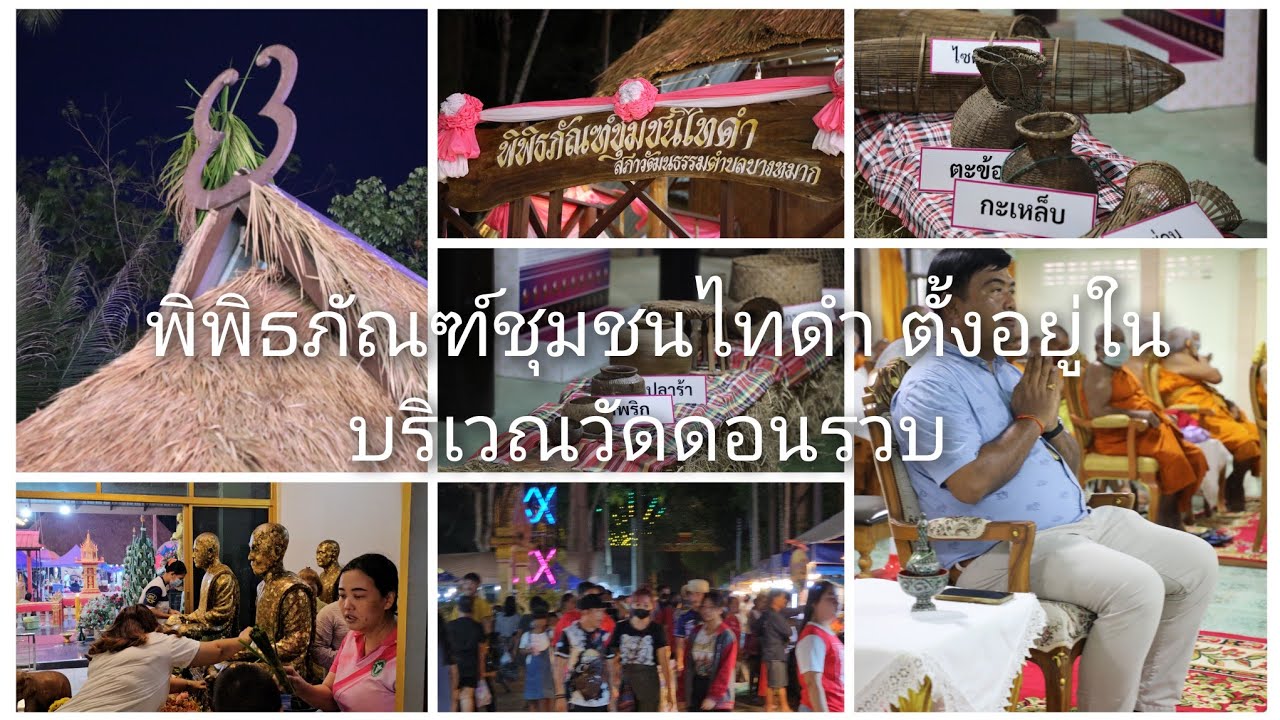
The museum’s intended content covers several areas of everyday life. Agricultural tools reflect the long farming background of the community. Ploughs, harrows, gardening tools, and food-production equipment show how people worked with land and water. Traps, baskets, woven containers, and household objects show how local knowledge transformed natural materials into useful objects. These everyday items make the museum valuable because they show that culture is not found only in ceremonies or performances, but also in ordinary tools once used in daily life.
The clothing and textile section is especially important for understanding Tai Dam aesthetics. Woven textiles, ceremonial garments, and traditional clothing reveal the skill of community women, the discipline of sewing, the use of dark colors, and the connection between clothing and social occasions. Some garments are used in daily life, while others appear in rites connected to family, death, and ancestor worship. Through these objects, visitors can understand how textiles carry memory, status, gender roles, and ritual meaning.
Ritual belief is central to Tai Dam culture. The ancestor ritual known in Thai as “Sen Ruean” maintains the relationship between the living family and ancestral spirits. In a Tai Dam house, a particular area may be reserved for ancestor spirits, and ritual practice helps maintain kinship memory and gratitude. The museum’s interpretation of these beliefs allows visitors to see how Buddhism and older ancestor-based belief can coexist in the everyday life of the community.
Food is another important entry point into Tai Dam culture. The Thai Song Dam community in Bang Mak is associated with distinctive foods used in both daily life and ritual contexts, such as sour bamboo-shoot curry, blood-based dishes, aquatic-plant curry, local vegetable dishes, spicy pork offal dishes, and traditional chili relishes. Many ingredients are linked to agriculture, bamboo, garden plants, and community food security. Learning about food helps visitors understand how ritual, ecology, agriculture, and identity are connected.
Wat Don Roub School plays a major role in cultural transmission. Located in Moo 8, Ban Don Roub, the school is close to Wat Don Roub and the community’s cultural space. The school records that it has developed a local Tai Dam curriculum, allowing students to learn and help preserve local culture. Students are encouraged to learn khaen, long drum, local songs, and cultural practices from community wisdom teachers. This makes the museum part of a wider educational network rather than a stand-alone building.
Wat Don Roub is also central to the community. It serves as a Buddhist temple, a community gathering place, and a major venue for the annual Thai Song Dam tradition. The annual Thai Song Dam event at Wat Don Roub has continued since 1995 and was still held in 2026. The event includes merit-making, cultural performances, historical exhibitions, demonstrations of traditional rituals, contests, and activities that express local identity. During the festival, the culture displayed in the museum becomes visible through dress, music, food, ritual, and community participation.
The current visiting status of the Tai Dam Community Museum should be understood carefully. The Anthropology Centre’s museum database notes that the site once functioned as a learning center and welcomed study groups, but the older museum function has declined after repairs and changes in the use of space. As a result, visitors should not expect a fully staffed museum with fixed walk-in hours. The most appropriate way to visit is to coordinate in advance with Bang Mak Subdistrict Municipality, Wat Don Roub School, Wat Don Roub, or local community contacts.
Getting There is easiest by using Wat Don Roub or Wat Don Roub School as the navigation point. The site is in Ban Don Roub, Moo 8, Bang Mak Subdistrict, Mueang Chumphon District, Chumphon Province, near the Ban Nong Thong Kham – Ban Thung Kha Road. From Chumphon town, visitors can travel by private car or local hired vehicle. The trip can be combined with nearby cultural places such as Wat Don Roub, Wat Bang Mak, the Youth Soldiers Monument, Chumphon City Pillar Shrine, Chumphon National Museum, and Khao Matsee Viewpoint.
Visitors should prepare for a community-based visit. Dress respectfully, behave appropriately within temple and school areas, ask before photographing people or private spaces, and listen carefully to local explanations. Much of Tai Dam culture lives in stories, language, memory, and the knowledge of elders. A guided or prearranged visit will usually give a better experience than simply viewing the building without context.
For travelers interested in ethnic history, the museum is valuable because it shows how a community migrated, adapted to a new environment, and preserved its identity across generations. The site connects ancestral homeland, Phetchaburi settlement, Chumphon migration, farming life, Buddhist temple culture, ancestor belief, school-based education, and annual cultural events. It shows that a small community museum can be highly meaningful when it is rooted in real people and living memory.
The best time to experience the strongest cultural atmosphere is during the annual Thai Song Dam event at Wat Don Roub. During that period, visitors can see traditional clothing, performances, music, rituals, exhibitions, and the gathering of Thai Song Dam people from several areas. On ordinary days, advance coordination is recommended to ensure that someone is available to explain the site and community context.
The Tai Dam Community Museum at Ban Don Roub is suitable for cultural travelers, students, teachers, researchers, and anyone interested in ethnic diversity in Chumphon. The province is often known for beaches, islands, seafood, and wartime history, but Ban Don Roub adds another important dimension: an ethnic community with its own language, clothing, food, rituals, and memory. Learning about this place gives visitors a deeper understanding of Chumphon as a culturally diverse province.
Overall, the Tai Dam Community Museum at Ban Don Roub is a gateway to the Thai Song Dam heritage of Bang Mak Subdistrict. Its value lies in the Tai Dam house model, traditional tools, clothing, textiles, ancestor rituals, Lao Song speech, food culture, and the ongoing role of Wat Don Roub and Wat Don Roub School in cultural preservation. Although visitors should coordinate in advance before visiting, the site remains an important community heritage point for understanding the Tai Dam identity of Chumphon.
| Name | Tai Dam Community Museum, Ban Don Roub |
| Names Found In Sources | Tai Dam Community Museum, Ban Don Roub / Thai Song Dam Museum |
| Place Type | Community Museum / Thai Song Dam Ethnic Cultural Learning Site |
| Location | Ban Don Roub, Moo 8, Bang Mak Subdistrict, Mueang Chumphon District, Chumphon Province |
| Reference Address | Wat Don Roub / Wat Don Roub School Area, Moo 8, Ban Don Roub, Bang Mak Subdistrict, Mueang Chumphon District, Chumphon 86000, Thailand |
| Ban Don Roub Coordinates | 10.42432583, 99.18308303 |
| Wat Don Roub School Coordinates | 10.42374818, 99.18311802 |
| Highlights | Tai Dam house model, traditional tools, clothing, woven textiles, rituals, ancestor belief, Tai Dam language, and the annual Thai Song Dam tradition at Wat Don Roub |
| History | The Thai Song Dam community of Ban Don Roub is linked to Tai Dam migration through Phetchaburi before settlement in Chumphon, with Ban Don Roub settlement memory dating to 1913 |
| Importance | A community heritage site preserving Thai Song Dam identity in Chumphon through house form, clothing, language, food, ritual, and ancestor belief |
| Building Features | A Tai Dam house model representing the ethnic house form, raised living space, and the symbolic roof style associated with Tai Dam domestic architecture |
| Current Status | A community learning site connected with Wat Don Roub, Wat Don Roub School, and the annual Thai Song Dam event; advance coordination is recommended before visiting |
| Travel Information | Travel to Bang Mak Subdistrict, Mueang Chumphon District, and navigate to Wat Don Roub or Wat Don Roub School, Moo 8, Ban Don Roub, near the Ban Nong Thong Kham – Ban Thung Kha Road |
| Caretaker / Local Agencies | Bang Mak Subdistrict Municipality / Wat Don Roub School / Wat Don Roub / Ban Don Roub Community |
| Local Contact Numbers | Bang Mak Subdistrict Municipality, Tel. 077-598-508 / Wat Don Roub School, Tel. 077-659-647 |
| Main Areas / Zones | Tai Dam house model, traditional tools area, clothing and textile area, ritual and belief area, Wat Don Roub, Wat Don Roub School, and annual Thai Song Dam festival activity area |
| Important Annual Event | The annual Thai Song Dam tradition at Wat Don Roub, continued since 1995 and still held in 2026 |
| Key Learning Themes | Tai Dam migration history, house form, clothing, textiles, language, food, Sen Ruean ancestor ritual, ancestor belief, and the role of temple and school in cultural preservation |
| Nearby Tourist Attractions | 1. Wat Don Roub, About 0 km 2. Wat Don Roub School / Thai Song Dam Community Learning Area, About 0 km 3. Wat Bang Mak, About 4 km 4. Youth Soldiers Monument, About 5 km 5. Chumphon City Pillar Shrine, About 8 km 6. Chumphon National Museum, About 12 km 7. Khao Matsee Viewpoint, About 15 km |
| Nearby Restaurants | 1. Chan Mai Chai Khlong, About 2 km, Tel. 086-945-9777 2. Kan Eng Restaurant, About 4 km, Tel. 098-190-0651 3. Sit-Nee De Bang Mak, About 5 km, Tel. 081-535-5355 4. Phung Kang Moo Kratha 1, About 5 km, Tel. 094-829-5232 5. Five Star 7-Eleven Bang Mak, About 5 km, Tel. 061-246-4797, 061-061-8586, 064-616-6932 6. Rin Cha Chumphon Bang Mak, About 6 km, Tel. 064-592-1491 |
| Nearby Accommodations | 1. Villa Varich, About 6 km, Tel. 081-543-0344 2. Mestyle Resort, About 8 km 3. SLEEP TIGHT @Chumphon, About 8 km 4. Matina Resort Chumphon, About 8 km 5. Loft Mania Boutique Hotel, About 9 km 6. Retro Box Hotel, About 9 km |
Frequently Asked Questions (FAQ)
Q: Where is the Tai Dam Community Museum at Ban Don Roub located?
A: It is located in Ban Don Roub, Moo 8, Bang Mak Subdistrict, Mueang Chumphon District, Chumphon Province, with Wat Don Roub and Wat Don Roub School as the main navigation landmarks.
Q: Is the museum open daily for walk-in visitors?
A: No verified fixed museum opening hours were found. Visitors should coordinate in advance with Bang Mak Subdistrict Municipality, Wat Don Roub School, or the Ban Don Roub community before traveling.
Q: What can visitors learn at the museum?
A: Visitors can learn about the Tai Dam house model, traditional tools, clothing, textiles, daily life, ancestor rituals, beliefs, and the migration history of the Thai Song Dam community at Ban Don Roub.
Q: Why is the Thai Song Dam community at Ban Don Roub important?
A: It is an ethnic community in Bang Mak Subdistrict that continues to preserve its clothing, language, rituals, food culture, and annual Thai Song Dam tradition.
Q: When is the best time to experience Thai Song Dam culture there?
A: The best time is during the annual Thai Song Dam event at Wat Don Roub, when traditional clothing, performances, exhibitions, rituals, and community gatherings are most visible.
Q: Is there an admission fee?
A: No verified official admission fee was found. Visitors should contact local caretakers before traveling for the latest visit details.
Q: Who should visit this community museum?
A: It is suitable for cultural travelers, students, teachers, researchers, and visitors interested in ethnic heritage, local culture, and community-based learning in Chumphon.
Q: Which nearby places can be visited on the same trip?
A: Nearby places include Wat Don Roub, Wat Bang Mak, the Youth Soldiers Monument, Chumphon City Pillar Shrine, Chumphon National Museum, and Khao Matsee Viewpoint.
 Category: ●Art, Culture and Heritage
 Group: ●Museums
Last Update : 2 MonthAgo
 Last Update : 2 MonthAgo
 Click to Access the Navigation Map GPS
Tai Dam Community Museum Map
Recommend

 Historical Sites and Monuments(1)
 Landmarks and Memorials(2)
 Art, Craft Centres, Tradition(3)
Museums(2)
 Educational Places
 Educational Gardens, Farm(1)
 Places of Worship
 Temple(31)
 Other Sacred Sites(10)
 Research and Development
 Royal Project(1)
 Suburban Living
 Village, Community(5)
 Local Market(1)
 Nature and Wildlife
 National Parks and Marine Reserves(7)
 Mountain (Doi)(5)
 Dam, Reservoir, Lake(1)
 Waterfalls(26)
 Hot Springs(1)
 Caves(21)
 River, Canal(7)
 Bays and Beaches(30)
 Islands(13)
 Other natural attractions(7)
 Entertainment and Agricultural
 Farms, Parks and Ecotourism(3)
 Outdoor and Adventure Activities(4)
 Shopping
 Shopping and Night Market(1)
 Travel Articles, Recipes
 Travel Review, Food Review(1)


