
lovethailand home >South Travel Attractions >Chumphon Travel Attractions >Muang Chumphon >Pak Nam > Ko Ngam Yai And Ko Ngam Noi
TL;DR: Ko Ngam Yai And Ko Ngam Noi is located at Hat Sai Ri Subdistrict, Mueang Chumphon District, Chumphon Province, Within Mu Ko Chumphon National Park, open Daily, Subject To Mu Ko Chumphon National Park Announcements And Sea Conditions, hours 08.00 - 16.30.
Ko Ngam Yai And Ko Ngam Noi
Open Days: Daily, Subject To Mu Ko Chumphon National Park Announcements And Sea Conditions
Opening Hours: 08.00 - 16.30
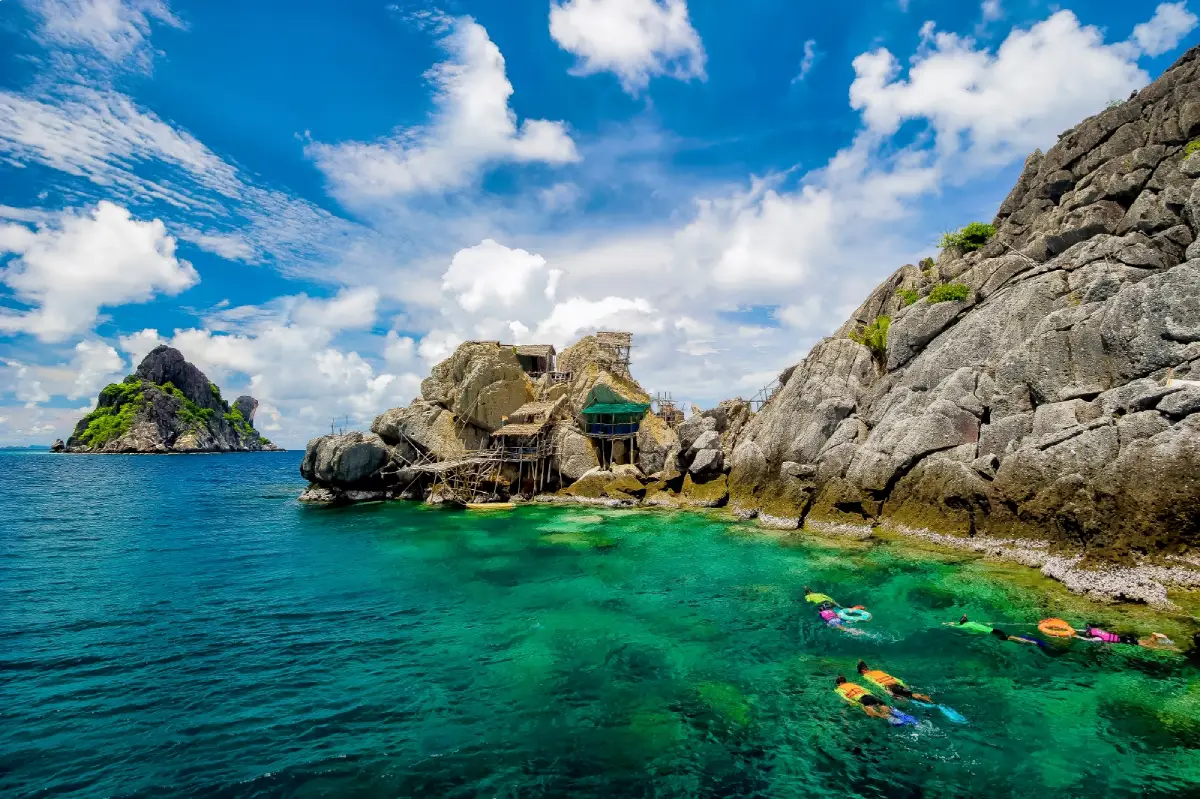
Ko Ngam Yai And Ko Ngam Noi in Chumphon are important islands within Mu Ko Chumphon National Park and among the province’s best-known diving areas. The islands are rugged limestone outcrops with steep cliffs, underwater caves, rock formations, coral reefs, anemones, and diverse marine life. Both islands are bird’s-nest concession islands, so landing on the islands is restricted. Most visitors come by boat to snorkel, scuba dive, view the reefs, and photograph the dramatic limestone seascape. The route can also be combined with Ko Thong Lang, known for its clean white-sand beach, and Ko Rang Ka Chio or Ko Langka Chio, a historically important bird’s-nest island associated with King Chulalongkorn’s visit and the royal initials “Chor Por Ror” carved on rock and cave surfaces. Travel begins from Mu Ko Chumphon National Park or an approved boat departure point near Hat Sai Ri and Pak Nam Chumphon.
Ko Ngam Yai And Ko Ngam Noi help define Chumphon as more than a transit province on the way south. They show that Chumphon has a strong marine identity, with coral reefs, limestone islands, underwater caves, fish, bird’s-nest history, and a conservation setting under Mu Ko Chumphon National Park. These islands are not beach-resort islands. Their main appeal is underwater scenery and the powerful visual character of limestone cliffs rising from the Gulf of Thailand.
The Ngam Islands are located within Mu Ko Chumphon National Park, a large marine national park covering coastal and island areas across Chumphon Province. The park includes mangrove forest, beaches, bays, islands, coral reefs, and marine habitats. Ko Ngam Yai and Ko Ngam Noi are part of this wider seascape, together with nearby islands such as Ko Mattra, Ko Thong Lang, Ko Maphrao, Ko Langka Chio, Ko Rang Ka Chio, and other islands around Thung Kha Bay and the Chumphon coast.
Ko Ngam Yai is a limestone island with steep cliffs and a dramatic rocky profile. Around the island are coral reefs, underwater rock formations, and cave-like structures. Divers visit not for a broad sandy beach, but for the underwater terrain: hard coral, soft coral, gorgonians, anemones, reef fish, nudibranchs, and marine life living in the cracks and spaces around the rocks.
Ko Ngam Noi is smaller and has the character of stacked rock outcrops. It is generally not treated as a walking island for tourists. Visitors usually view it from the boat or explore the surrounding reef by snorkeling or diving. When sea conditions are good, the water around Ko Ngam Noi can reveal coral, anemones, reef fish, and other marine life, making it suitable for visitors who want a Chumphon sea experience focused on the reef rather than beach relaxation.
Both islands are bird’s-nest concession islands. This is an important practical detail. Areas on the islands are connected with swiftlet-nest protection, workers, and concession management, so general tourists should not expect free access to land, caves, or working areas. The appropriate way to visit is by boat, snorkeling, diving, and observing from permitted areas while following the rules of the national park and local operators.
The bird’s-nest context adds another layer of meaning to the islands. Swiftlets use caves and cliff hollows for nesting, and nest collection has long been part of the maritime economy in Chumphon. This means the islands have ecological, economic, and cultural value. They are not only scenic formations in the sea, but also resource areas that require careful management.
The main diving appeal of Ko Ngam Yai and Ko Ngam Noi comes from underwater diversity. Coral, anemones, rocks, swim-through spaces, and small caves create habitats for many marine species. Depending on conditions, divers may encounter butterflyfish, wrasses, angelfish, fusiliers, cardinalfish, nudibranchs, brittle stars, sea cucumbers, and other reef organisms. Marine sightings vary by season, current, visibility, and the exact dive site.
The Ngam Islands are especially respected among scuba divers because some areas have depth and underwater structures better suited to tank diving than casual snorkeling. Underwater cave-like passages, rocky slopes, and deeper reef areas require skill and local knowledge. Beginners should not enter complex underwater terrain without trained dive leaders. General visitors can choose snorkeling or boat sightseeing instead.
Chumphon’s underwater environment should be understood as part of the Gulf of Thailand. Visibility and water conditions can change according to season, tide, current, and wind. Some days provide clear reef views, while other days may have more sediment or movement. A good trip plan should be flexible and safety-focused rather than based only on promotional images.
Ko Thong Lang can add a softer beach element to the route. Unlike the rugged profile of the Ngam Islands, Ko Thong Lang is known for a clean white-sand beach and a more relaxing coastal character. Visitors who want both reef diving and a beach stop may find this combination useful, depending on whether the island is open and whether the day’s sea conditions allow landing or stopping safely.
Ko Rang Ka Chio, also referred to in many sources as Ko Langka Chio, is another significant island in the same wider marine route. It is a bird’s-nest concession island with historical importance. King Chulalongkorn visited to observe bird’s-nest collection, and evidence remains in the form of Chinese inscriptions and the royal initials “Chor Por Ror” on rock and cave surfaces near the beach. This makes the island valuable not only for nature, but also for history.
Visiting Ko Rang Ka Chio or Ko Langka Chio requires respect for access restrictions. Some parts of the island may be controlled because of bird’s-nest concession activities or conservation rules. Visitors should not enter caves, touch inscriptions, write on rocks, remove natural materials, or disturb people working on the island. Any visit should follow park and local guidance.
A trip to Ko Ngam Yai, Ko Ngam Noi, Ko Thong Lang, and Ko Rang Ka Chio should be planned as a marine route requiring coordination. Visitors should contact Mu Ko Chumphon National Park or use boat operators who understand park regulations, sea conditions, safety standards, and island access rules. The best operator is not only the cheapest one, but the one that provides proper life jackets, safety equipment, local knowledge, and a responsible itinerary.
Getting There begins by traveling to Mu Ko Chumphon National Park or a boat meeting point near Hat Sai Ri and Pak Nam Chumphon. From Mueang Chumphon, take Highway 4001 toward Pak Nam Chumphon for about 21 km. Before reaching Pak Nam Chumphon, turn right toward Hat Sai Ri, then turn right again and continue for about 8 km. The national park entrance sign is on the left. From there, visitors continue by boat to the islands according to the route operating on that day.
Local fishing boats or charter boats may be available, but safety must be checked carefully. Boats should have life jackets for all passengers, communication equipment, experienced boat drivers, knowledge of weather and currents, and an understanding of national park rules. Even though the islands are not extremely far from the coast, Gulf of Thailand sea conditions can change quickly.
The best time to visit is when the sea is calm and the national park has opened marine areas for tourism. Visitors should check the latest park announcements before traveling, especially during the late-year monsoon period when rough seas can lead to temporary closures. Do not rely only on morning visual weather; use official announcements and local guidance.
National park entrance fees apply. Thai visitors pay 40 baht for adults and 20 baht for children. Foreign visitors pay 200 baht for adults and 100 baht for children. Boat fees, snorkeling equipment, scuba diving fees, guide fees, and marine-activity costs are charged separately according to operator, route, group size, boat type, and activities selected.
Mu Ko Chumphon National Park provides accommodation in the park area, but visitors should book or ask in advance because availability can change. This accommodation is useful for visitors who want to explore the mangrove trails, Hat Sai Ri area, or boat routes the next day. It should not be understood as tourist accommodation on Ko Ngam Yai or Ko Ngam Noi, because those islands have bird’s-nest concession and access restrictions.
Responsible snorkeling and diving are essential. Do not step on coral, touch coral, collect shells, touch marine animals, feed fish, or throw any waste into the sea. Visitors should wear life jackets when required and stay close to the boat or group if they are not strong swimmers. Every small action underwater can affect reef health.
Scuba divers should consider experience level, current, depth, visibility, and underwater terrain. The Ngam Islands can be rewarding dive sites, but not every area is suitable for beginners. Divers should inform operators of certification level and experience, check equipment, follow the dive plan, and avoid entering overhead or cave-like spaces without proper training and supervision.
For photography, Ko Ngam Yai and Ko Ngam Noi are impressive even from the boat. Their cliffs and rock formations contrast strongly with blue water and sky. Underwater photography should be done without touching reef surfaces or disturbing marine life. Safe buoyancy and respectful distance are more important than getting a close shot.
The Ngam Islands route is also a learning route. It shows the connection between limestone islands, swiftlets, bird’s nests, reefs, fish, and national-park conservation. The islands are not just scenic stops. They are nesting areas, resource areas, dive sites, and protected marine landscapes requiring careful management.
Overall, Ko Ngam Yai, Ko Ngam Noi, Ko Thong Lang, and Ko Rang Ka Chio or Ko Langka Chio reveal the diversity of Mu Ko Chumphon National Park. The Ngam Islands stand out for diving and limestone seascapes. Ko Thong Lang adds a white-sand beach element. Ko Rang Ka Chio adds bird’s-nest history and royal heritage. Together, they form one of Chumphon’s most meaningful marine routes for travelers who value nature, history, and responsible island tourism.
| Name | Ko Ngam Yai And Ko Ngam Noi / Ngam Islands, Chumphon |
| Location | Hat Sai Ri Subdistrict, Mueang Chumphon District, Chumphon Province, Within Mu Ko Chumphon National Park |
| National Park Contact Address | Mu Ko Chumphon National Park, 1/4 Moo 5, Hat Sai Ri Subdistrict, Mueang Chumphon District, Chumphon 86120, Thailand |
| Reference Coordinates Of Park Headquarters | 10.3568704, 99.2295399 |
| Contact Number | 077-558-144 |
| Managing Area | Mu Ko Chumphon National Park |
| Distinctive Features | Limestone islands, steep cliffs, underwater caves, rock formations, coral reefs, anemones, reef fish, and bird’s-nest concession areas |
| Highlights | Snorkeling, scuba diving, coral reefs, marine life, limestone island scenery, and a route that can combine Ko Thong Lang and Ko Rang Ka Chio or Ko Langka Chio |
| Area Status | Marine national park area and bird’s-nest concession islands. Landing or entering restricted areas must follow national park and concession regulations. |
| Open Days | Daily, Subject To National Park Announcements And Sea Conditions |
| Opening Hours | 08.00 - 16.30 |
| National Park Entrance Fee | Thai Visitors: Adult 40 Baht, Child 20 Baht Foreign Visitors: Adult 200 Baht, Child 100 Baht Boat, Diving Equipment, And Marine Activity Fees Are Charged Separately By Operator And Route |
| Travel Information | From Mueang Chumphon, take Highway 4001 toward Pak Nam Chumphon for about 21 km. Before Pak Nam Chumphon, turn right toward Hat Sai Ri, then turn right again and continue for about 8 km. The national park entrance sign is on the left. Continue by boat to the islands according to the available route. |
| Main Areas / Route Points | 1. Ko Ngam Yai 2. Ko Ngam Noi 3. Ngam Islands Dive Sites 4. Underwater Rock Formations And Cave-Like Areas 5. Coral Reefs And Anemone Areas 6. Ko Thong Lang 7. Ko Rang Ka Chio Or Ko Langka Chio 8. Mu Ko Chumphon National Park Headquarters |
| Recommended Activities | Snorkeling, Scuba Diving, Coral Reef Viewing, Marine Life Observation, Limestone Island Photography, Boat Touring, And Learning The History Of Ko Rang Ka Chio Or Ko Langka Chio |
| Visitor Guidelines | Wear A Life Jacket On Boats, Do Not Step On Coral, Do Not Touch Marine Animals, Do Not Feed Fish, Do Not Collect Shells Or Coral, Do Not Litter, Do Not Land On Bird’s-Nest Concession Islands Without Permission, And Check Park Announcements Before Boat Travel |
| Nearby Tourist Attractions | 1. Ko Thong Lang, About 6 km 2. Ko Rang Ka Chio Or Ko Langka Chio, About 8 km 3. Ko Mattra, About 10 km 4. Hat Sai Ri And Prince Chumphon Shrine, About 20 km 5. Khao Chao Mueang Viewpoint, About 21 km 6. Mu Ko Chumphon National Park Headquarters, About 25 km |
| Nearby Restaurants | 1. The Seaside Tha Ruea, Around The Pier Area Near The Park 2. Restaurants Around Hat Sai Ri, About 6 km From Park Headquarters 3. Restaurants Around Thung Makham Bay, About 8 km From Park Headquarters 4. Restaurants Around Pak Nam Chumphon, About 15 km From Park Headquarters 5. Seafood Restaurants Around Khao Matsee, About 18 km From Park Headquarters |
| Nearby Accommodations | 1. Mu Ko Chumphon National Park Accommodation, In The Park, Tel. 077-558-144 2. Hat Sai Resort, About 6 km, Tel. 077-558-028 3. Sai Ree Beach Cabana, About 6 km 4. Koidolare Resort Chumphon, About 5 km, Tel. 099-454-5534 5. Moonshine Resort Chumphon, About 3 km 6. M.T. Resort, About 10 km, Tel. 077-558-153 |
Frequently Asked Questions (FAQ)
Q: Where Are Ko Ngam Yai And Ko Ngam Noi Located?
A: They are located within Mu Ko Chumphon National Park in Hat Sai Ri Subdistrict, Mueang Chumphon District, Chumphon Province. They are well-known for diving, reefs, and limestone island scenery.
Q: Can Visitors Land On Ko Ngam Yai And Ko Ngam Noi?
A: Both islands are bird’s-nest concession islands, so landing is restricted. Visitors should tour by boat and dive or snorkel only in permitted areas.
Q: What Activities Are Best At The Ngam Islands?
A: The main activities are snorkeling, scuba diving, coral reef viewing, marine life observation, limestone island photography, and boat sightseeing.
Q: How Much Is The National Park Entrance Fee?
A: Thai visitors pay 40 baht for adults and 20 baht for children. Foreign visitors pay 200 baht for adults and 100 baht for children. Boat, equipment, and marine activity fees are charged separately.
Q: How Do Travelers Get There?
A: Travel from Mueang Chumphon on Highway 4001 toward Pak Nam Chumphon, turn toward Hat Sai Ri before Pak Nam Chumphon, continue to the national park or a boat meeting point, then take a boat to the islands.
Q: When Is The Best Time To Visit?
A: The best time is when the sea is calm and the national park has opened marine areas for tourism. Visitors should check official park announcements and weather before every boat trip.
Q: Why Is Ko Rang Ka Chio Or Ko Langka Chio Important?
A: It is a bird’s-nest concession island with historical importance. King Chulalongkorn visited to observe bird’s-nest collection, and the royal initials “Chor Por Ror” remain on rock and cave surfaces.
Q: What Should Visitors Be Careful About When Diving?
A: Visitors should wear life jackets when required, avoid stepping on or touching coral, avoid feeding fish, avoid collecting shells or marine life, avoid littering, and follow the instructions of park officers, boat operators, or dive leaders.
Tel : 077558144-5
 Tel : 077558144-5
 Category: ●Nature and Wildlife
 Group: ●National Parks and Marine Reserves
Last Update : 2 MonthAgo
 Last Update : 2 MonthAgo
 Click to Access the Navigation Map GPS
Ko Ngam Yai And Ko Ngam Noi Map
Recommend

 Art, Culture and Heritage
 Historical Sites and Monuments(1)
 Landmarks and Memorials(2)
 Art, Craft Centres, Tradition(3)
 Museums(2)
 Educational Places
 Educational Gardens, Farm(1)
 Places of Worship
 Temple(31)
 Other Sacred Sites(10)
 Research and Development
 Royal Project(1)
 Suburban Living
 Village, Community(5)
 Local Market(1)
National Parks and Marine Reserves(7)
Local Market(1)
National Parks and Marine Reserves(7)
 Mountain (Doi)(5)
 Dam, Reservoir, Lake(1)
 Waterfalls(26)
 Hot Springs(1)
 Caves(21)
 River, Canal(7)
 Bays and Beaches(30)
 Islands(13)
 Other natural attractions(7)
 Entertainment and Agricultural
 Farms, Parks and Ecotourism(3)
 Outdoor and Adventure Activities(4)
 Shopping
 Shopping and Night Market(1)
 Travel Articles, Recipes
 Travel Review, Food Review(1)


