
lovethailand home >South Travel Attractions >Chumphon Travel Attractions >Muang Chumphon >Bang Luek > Wat Chao Fa Sala Loi
TL;DR: Wat Chao Fa Sala Loi is located at Ban Sala Loi, Moo 7, Bang Luek Subdistrict, Mueang Chumphon District, Chumphon Province, open Daily, hours 08.00 – 16.30.
Wat Chao Fa Sala Loi
Open Days: Daily
Opening Hours: 08.00 – 16.30
Wat Chao Fa Sala Loi In Chumphon, also known in temple and cultural records as Wat Sala Loi, is an old Buddhist temple in Bang Luek Subdistrict, Mueang Chumphon District, Chumphon Province. It is located at No. 41, Ban Sala Loi, Moo 7, Bang Luek Subdistrict, Mueang Chumphon District, Chumphon 86000. The temple is deeply respected by local people because of its association with Luang Pu Song Chandasaro, one of Chumphon’s most revered monks. He is remembered for his sacred speech, meditative discipline, simplicity, compassion, and role in restoring an abandoned temple into a living place of Buddhist worship.
For most visitors, the strongest reason to visit Wat Chao Fa Sala Loi is to pay respect to the preserved body of Luang Pu Song Chandasaro, enshrined in a glass coffin at Sala 100 Pi, also known as the Dharma reflection hall. After Luang Pu Song passed away on August 2, 1983, his body did not decay. The temple preserved it in a glass coffin so that Buddhists and disciples could continue to pay respect. The devotion toward him is not based only on miracle stories, but also on his life as a respected meditation monk who practiced restraint, kindness, truthfulness, and long-term service to the local community.
Wat Sala Loi was established in 1890 and received its royal boundary grant on September 12, 1958. The temple land covers 20 rai, 3 ngan, and 53 square wah. It is located near the Tha Taphap river system, public water bodies, and the Ban Sala Loi community. This setting gives the temple a long relationship with Chumphon’s old settlement landscape. Before the revival of the temple, the site was abandoned and deteriorated. When Luang Pu Song came to stay in 1919, local villagers gradually helped restore the temple, turning it into one of Chumphon’s most meaningful places of faith.
The restoration of the temple is central to its identity. Cultural records explain that villagers had begun to make merit and build a small residence on the abandoned site before inviting Luang Pu Song to stay there. He remained at the temple for 64 years until his death. During this long period, Wat Chao Fa Sala Loi transformed from a deserted religious site into a respected Buddhist temple. This history shows how a temple can be rebuilt through the relationship between a monk, villagers, faith, and continuous community support.
The name “Wat Chao Fa Sala Loi” combines local memory with community identity. “Chao Fa” is associated with the story that a royal figure or high-ranking person had once entered the monkhood and served at the temple. “Sala Loi” comes from Ban Sala Loi, the village where the temple is located. Some documents use the name Wat Sala Loi, while local people and travelers often use the fuller name Wat Chao Fa Sala Loi. Both names refer to the same sacred site in Bang Luek, Chumphon.
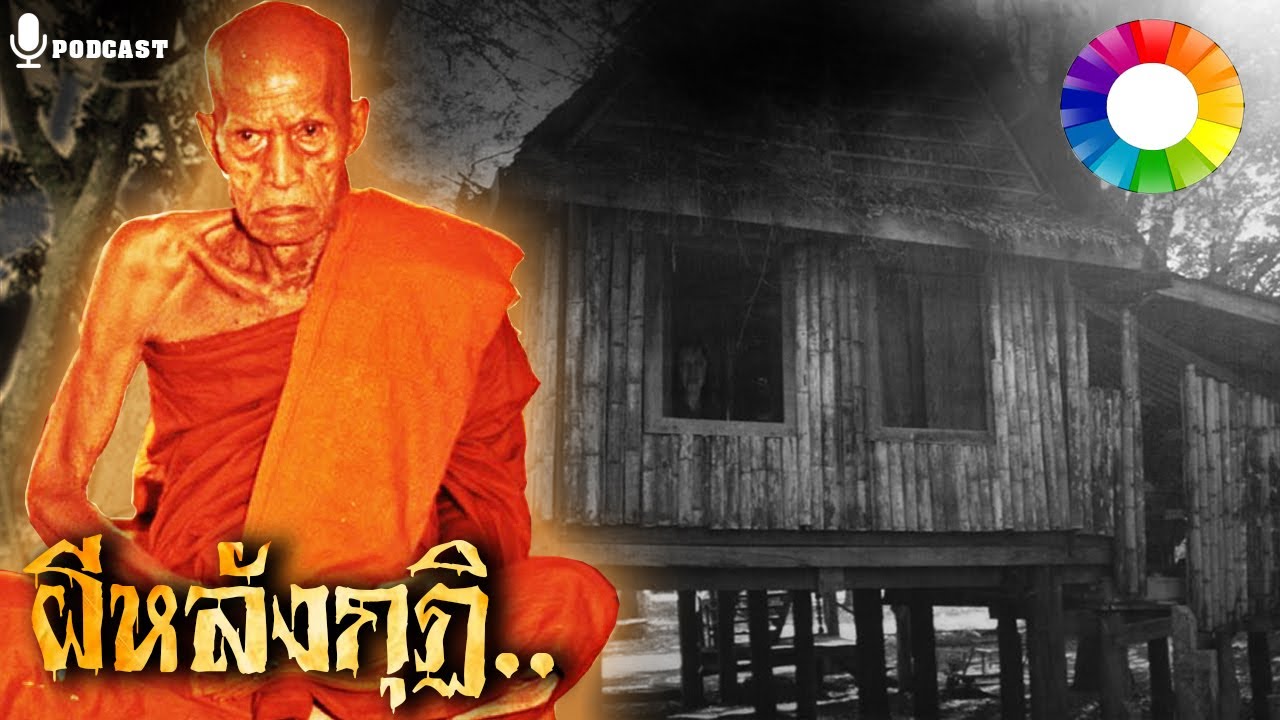
Luang Pu Song Chandasaro was born in 1889 during the reign of King Rama V. He became known as a meditation monk with strict discipline, simplicity, and broad compassion. Cultural-environment records describe him as a senior monk with beautiful conduct, meditative practice, truthfulness, and deep public faith. Local people believed that his words had sacred power and often described him as a monk of powerful speech. This reputation, together with his humility and service to the temple, made him one of the most important religious figures in Chumphon’s local memory.
Several stories about Luang Pu Song’s compassion toward animals and people are still repeated by devotees. Stories about deer, turtles, and temple animals should be understood as devotional memory that expresses the image of a monk with kindness toward all beings. The temple’s shaded atmosphere, trees, and calm setting strengthen this feeling. Many visitors do not come only to ask for blessings; they also come to find mental calm and to spend quiet time in a temple near Chumphon town.
The most important worship area is Sala 100 Pi, where the body of Luang Pu Song is enshrined in a glass coffin. Images and statues of the monk are also placed for devotees to pay respect and apply gold leaf. Visitors commonly pray for health, safe travel, protection, career stability, and inner peace. Worship should be done calmly and respectfully. Incense, candles, flowers, and offerings should be used only in the areas prepared by the temple.
The temple is also connected with continuing chanting practices for Luang Pu Song. Cultural records state that after his funeral, chanting continued at the temple, and on Tuesday nights, which correspond with both his birth day and the day of his passing, monks chant the Anattalakkhana Sutta and the Adittapariyaya Sutta in alternating weeks. This shows that devotion to Luang Pu Song is not limited to worshipping a relic-like body. It is also connected with listening to Dhamma, chanting, and Buddhist practice.
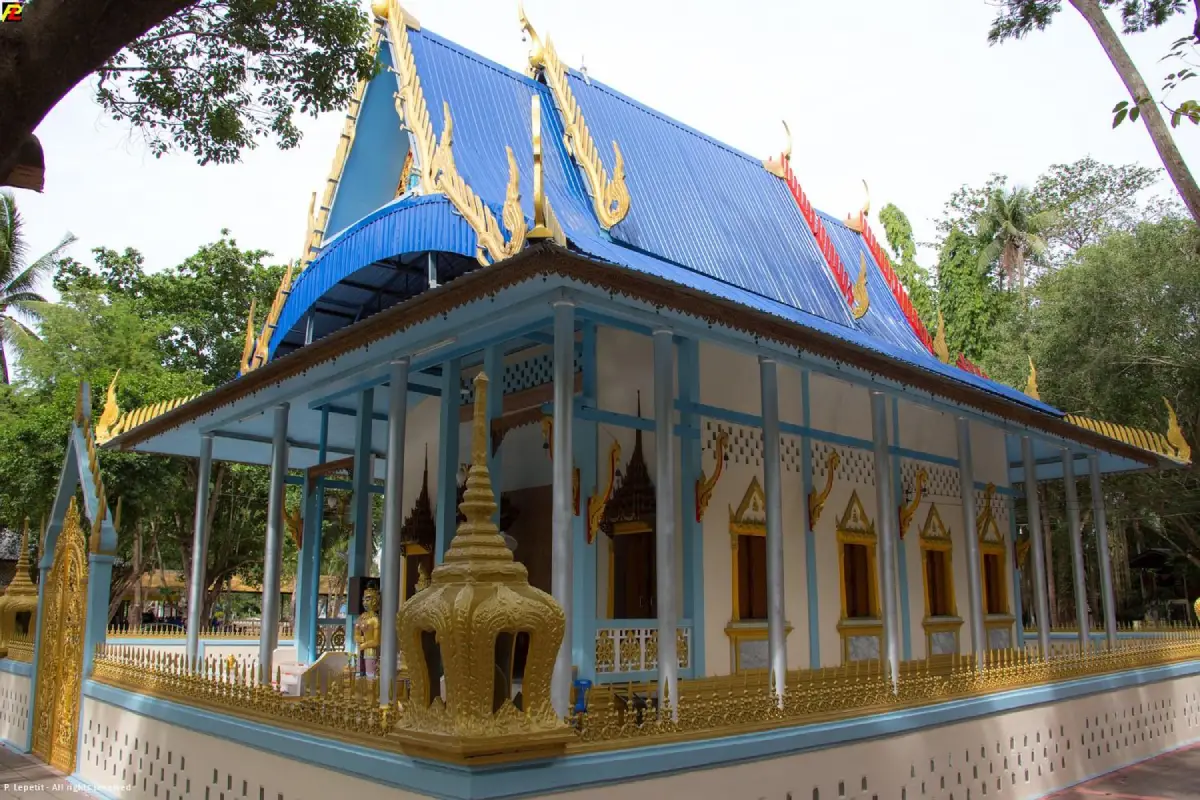
The temple compound includes an ordination hall, sermon hall, monks’ residences, a merit-making hall, crematorium, bell tower, kitchen, storage house, and abbot’s residence. The ordination hall was built in 1957 as a reinforced-concrete building and contains a principal Buddha image in the Phra Phuttha Chinnarat style. The sermon hall was built in 1960 as a one-storey Thai-style reinforced-concrete structure. These buildings show how the temple was rebuilt into a complete Buddhist institution serving the local community.
The principal Buddha image in the ordination hall measures 51 inches across the lap and 63 inches high. The principal Buddha image in the Dharma reflection hall is in meditation posture, measuring 36 inches across the lap and 40 inches high. These sacred objects show that the temple’s importance does not come only from Luang Pu Song, but also from its continued role as a Buddhist temple where local people worship, make merit, and take part in religious activities.
Another distinctive feature of Wat Chao Fa Sala Loi is its large sala tree. The sala tree is significant in Buddhist tradition and is associated with important events in the life of the Buddha. The flowers are visually striking and add a peaceful natural character to the temple. Many visitors stop to admire and photograph the tree after paying respect to Luang Pu Song. Together with the shaded temple grounds, the tree gives the temple a calm and contemplative atmosphere.
The temple’s charm lies in its simplicity. It is not a large commercial tourist site, but a local temple where faith still feels close to everyday life. The entrance gate, Sala 100 Pi, the preserved body of Luang Pu Song, the sala tree, and the quiet grounds create a strong sense of spiritual presence. Visitors should allow time to walk slowly, observe the temple respectfully, and understand why this site remains meaningful to the people of Chumphon.
Getting There is convenient from Chumphon town. The temple is about 6 km from the town center, in Bang Luek Subdistrict at Ban Sala Loi. It is also accessible from routes leading toward the northern coastal area and Thung Wua Laen Beach. For navigation, search “Wat Chao Fa Sala Loi” or “Wat Sala Loi Chumphon.” The recommended navigation coordinates are 10.548423, 99.179886. Parking is available within the temple grounds.
The temple is open daily from 08.00 to 16.30. There is no admission fee, though donations may be made according to personal faith. A business directory lists the temple contact number as 077-631-148, while Bang Luek Subdistrict Municipality can be contacted at 077-631-088 for local-area information. On Buddhist holy days, major Buddhist festivals, and the memorial day of Luang Pu Song, more devotees may visit than usual, so visitors should allow extra time.
Visitors should dress respectfully and behave calmly. Do not speak loudly inside worship areas, do not touch the glass coffin or sacred objects without permission, do not climb on religious structures, and take photographs respectfully. Those who wish to offer flowers, apply gold leaf, or make merit should use the areas prepared by the temple. Respectful conduct helps preserve the temple’s peaceful atmosphere for all visitors and devotees.
Wat Chao Fa Sala Loi can be combined with nearby cultural and natural attractions such as Chumphon National Museum, Wat Sam Kaeo, Nong Yai Royal Development Project, the Youth Soldiers Monument, Chumphon City Pillar Shrine, and Thung Wua Laen Beach. A visit to this temple introduces the faith dimension of Chumphon, while the nearby museum and historical places add context to the province’s past and local identity.
For spiritual travelers, Wat Chao Fa Sala Loi has a strong emotional presence. It brings together the memory of a respected monk, stories of sacred speech, the preserved body in a glass coffin, weekly chanting practices, the large sala tree, and a shaded temple environment. Visitors should spend at least 45 minutes to one hour here in order to pay respect, walk around the temple, and absorb the atmosphere without rushing.
Overall, Wat Chao Fa Sala Loi is one of Chumphon’s important temples for visitors who want to experience local Buddhist faith. It is an old temple, a sacred site connected with Luang Pu Song Chandasaro, a place where his preserved body is enshrined, and a peaceful temple compound marked by a large sala tree. For travelers interested in temples, revered monks, local faith, and quiet cultural places near Chumphon town, this temple is a meaningful stop.
| Name | Wat Chao Fa Sala Loi |
| Names Found In Records | Wat Sala Loi / Wat Chao Fa Sala Loi |
| Place Type | Buddhist Temple / Religious Site / Sacred Site Associated With Luang Pu Song Chandasaro |
| Location | Ban Sala Loi, Moo 7, Bang Luek Subdistrict, Mueang Chumphon District, Chumphon Province |
| Address | No. 41, Ban Sala Loi, Moo 7, Bang Luek Subdistrict, Mueang Chumphon District, Chumphon 86000, Thailand |
| Coordinates | 10.548423, 99.179886 |
| Distance From Chumphon Town | About 6 km |
| Highlights | Preserved body of Luang Pu Song Chandasaro in a glass coffin, Sala 100 Pi, large sala tree, shaded temple grounds, and the story of the monk who revived the abandoned temple |
| History | Established in 1890, granted royal boundary on September 12, 1958, and significantly revived after Luang Pu Song Chandasaro came to stay in 1919 |
| Important Monk | Luang Pu Song Chandasaro, a revered Chumphon monk who stayed at the temple for 64 years and passed away on August 2, 1983 at the age of 94 |
| Open Days | Daily |
| Opening Hours | 08.00 – 16.30 |
| Admission Fee | No Admission Fee; Donations Are Accepted |
| Current Status | An active Buddhist temple where visitors continue to pay respect to Luang Pu Song Chandasaro and join Buddhist merit-making activities |
| Caretaker / Related Agencies | Wat Chao Fa Sala Loi / Wat Sala Loi Sangha / Bang Luek Subdistrict Municipality / Chumphon Cultural Agencies |
| Abbot Found In Temple Database | Phra Khru Phiphat Khanthayaphon |
| Contact Numbers | Wat Chao Fa Sala Loi, Tel. 077-631-148 / Bang Luek Subdistrict Municipality, Tel. 077-631-088 |
| Facilities | Parking area, Luang Pu Song worship area, Sala 100 Pi, ordination hall, sermon hall, monks’ residences, bell tower, kitchen, and shaded temple grounds |
| Main Areas / Zones | Sala 100 Pi Dharma reflection hall, glass coffin of Luang Pu Song, ordination hall, sermon hall, chanting area, bell tower, large sala tree area, and temple courtyard |
| Important Practices / Events | Chanting related to Luang Pu Song, special Tuesday-night recitations, Buddhist holy day activities, and the annual memorial day of Luang Pu Song on August 2 |
| Travel Information | From Chumphon town, travel toward Bang Luek Subdistrict and Ban Sala Loi. Search “Wat Chao Fa Sala Loi” or “Wat Sala Loi Chumphon” in a map application. |
| Nearby Tourist Attractions | 1. Chumphon National Museum, About 3 km 2. Wat Sam Kaeo, About 4 km 3. Nong Yai Royal Development Project, About 5 km 4. Saphan Mai Khiam Nong Yai, About 5 km 5. Youth Soldiers Monument, About 6 km 6. Chumphon City Pillar Shrine, About 8 km 7. Thung Wua Laen Beach, About 15 km |
| Nearby Restaurants | 1. Melanie Restaurant And Internet Na Bang Luek, About 3 km, Tel. 077-631-243 2. Krua Lan Ta Phran, About 5 km, Tel. 086-276-2567 3. Je Toi Noen Khiri, About 5 km, Tel. 087-279-9468 4. Koko Restaurant, About 6 km, Tel. 077-570-188 5. Krua Samae Khao, About 7 km, Tel. 086-364-7166 6. Krua A-Te, About 8 km, Tel. 088-758-2868 |
| Nearby Accommodations | 1. Palm Sweet Resort, About 5 km, Tel. 077-631-112, 096-653-3256 2. BLU-LIB HOTEL, About 6 km, Tel. 083-146-4419 3. Chumphon Gardens Hotel, About 8 km, Tel. 077-506-888 4. A-Te Hotel Chumphon, About 8 km, Tel. 077-503-222 5. Loft Mania Boutique Hotel, About 8 km, Tel. 077-501-789, 087-158-6789 6. Chalicha Resort, About 10 km, Tel. 077-502-888 |
Frequently Asked Questions (FAQ)
Q: Where is Wat Chao Fa Sala Loi located?
A: Wat Chao Fa Sala Loi is located at No. 41, Ban Sala Loi, Moo 7, Bang Luek Subdistrict, Mueang Chumphon District, Chumphon 86000, about 6 km from Chumphon town.
Q: What are the opening hours?
A: The temple is open daily from 08.00 to 16.30.
Q: Is there an admission fee?
A: There is no admission fee. Visitors may make donations according to their faith.
Q: Why is Wat Chao Fa Sala Loi important?
A: It is an old Chumphon temple and the sacred place where the preserved body of Luang Pu Song Chandasaro, a highly revered monk of Chumphon, is enshrined in a glass coffin.
Q: Who was Luang Pu Song Chandasaro?
A: Luang Pu Song Chandasaro was a respected meditation monk who restored Wat Chao Fa Sala Loi after arriving in 1919. He stayed at the temple for 64 years and passed away on August 2, 1983 at the age of 94.
Q: What should visitors see inside the temple?
A: The main highlights are Sala 100 Pi, the glass coffin of Luang Pu Song, the ordination hall, the sermon hall, and the large sala tree in the temple grounds.
Q: How should visitors prepare before visiting?
A: Visitors should dress respectfully, speak quietly in worship areas, avoid touching sacred objects without permission, and use only the offering areas prepared by the temple.
Q: Which nearby places can be visited on the same trip?
A: Nearby places include Chumphon National Museum, Wat Sam Kaeo, Nong Yai Royal Development Project, the Youth Soldiers Monument, Chumphon City Pillar Shrine, and Thung Wua Laen Beach.
Mobile : 0869410152, 0816763612
 Mobile : 0869410152, 0816763612
 Category: ●Places of Worship
 Group: ●Temple
Last Update : 2 MonthAgo
 Last Update : 2 MonthAgo
 Click to Access the Navigation Map GPS
Wat Chao Fa Sala Loi Map
Recommend

 Art, Culture and Heritage
 Historical Sites and Monuments(1)
 Landmarks and Memorials(2)
 Art, Craft Centres, Tradition(3)
 Museums(2)
 Educational Places
 Educational Gardens, Farm(1)
Temple(31)
 Other Sacred Sites(10)
 Research and Development
 Royal Project(1)
 Suburban Living
 Village, Community(5)
 Local Market(1)
 Nature and Wildlife
 National Parks and Marine Reserves(7)
 Mountain (Doi)(5)
 Dam, Reservoir, Lake(1)
 Waterfalls(26)
 Hot Springs(1)
 Caves(21)
 River, Canal(7)
 Bays and Beaches(30)
 Islands(13)
 Other natural attractions(7)
 Entertainment and Agricultural
 Farms, Parks and Ecotourism(3)
 Outdoor and Adventure Activities(4)
 Shopping
 Shopping and Night Market(1)
 Travel Articles, Recipes
 Travel Review, Food Review(1)


