
lovethailand home >South Travel Attractions >Chumphon Travel Attractions >Muang Chumphon >Na Cha Ang > Chumphon National Museum
TL;DR: Chumphon National Museum is located at Chumphon Provincial Government Center, Trirat Road, Na Cha-Ang Subdistrict, Mueang Chumphon District, Chumphon Province, open Wednesday – Sunday, hours 09.00 – 16.00.
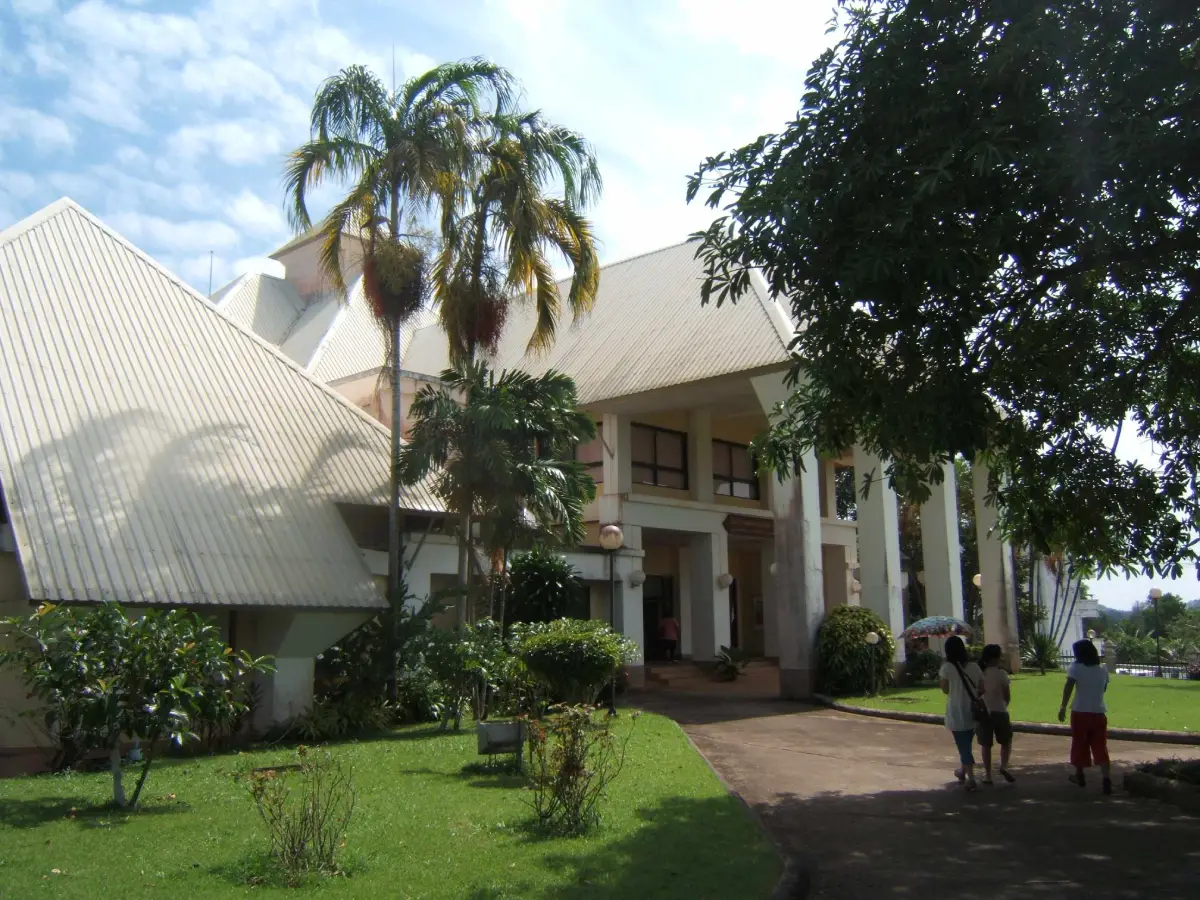
Chumphon National Museum
Open Days: Wednesday – Sunday
Opening Hours: 09.00 – 16.00
Chumphon National Museum is one of the most important historical, archaeological, cultural, and natural-history learning centers in Chumphon Province. It is located at No. 312, Chumphon Provincial Government Center, Trirat Road, Na Cha-Ang Subdistrict, Mueang Chumphon District, Chumphon 86000. The museum stands in the Khao Sam Kaeo area, close to Phet Kasem Road and the main route linking Chumphon town with the Pathomphon junction. For travelers who want to understand Chumphon beyond beaches, islands, seafood, and transit routes, this museum is one of the best starting points.
The museum functions as a historical gateway to Chumphon. It brings together the province’s long human history, prehistoric evidence, early historical development, maritime links, local communities, World War II memory, Typhoon Gay, natural heritage, and the legacy of Admiral Prince Abhakara Kiartivongse, Prince of Chumphon. Instead of presenting Chumphon as a single travel destination, the museum explains the province as a layered landscape shaped by people, sea routes, archaeology, war, natural disasters, Buddhism, local culture, and coastal ecology.
The project to establish Chumphon National Museum began from the province’s need for a city-level museum that could collect and present local heritage in a systematic way. In 1994, Chumphon Province provided about 7 rai of land in the Khao Sam Kaeo area of Na Cha-Ang Subdistrict to the Fine Arts Department. The museum project was carried out during the 1995–1997 fiscal years, including academic surveys, collection of local historical information, preparation of exhibition content, and construction of the museum building.
The museum building has two floors and combines southern Thai vernacular architectural character with contemporary design. The lower floor contains visitor service areas, including a reception zone, library, lecture room, office, and support areas. The upper floor contains the permanent exhibition, divided into eight main themes. This structure allows visitors to move from the present-day identity of Chumphon into deeper historical, archaeological, environmental, and cultural layers.
Chumphon National Museum was established as a national museum in 1996. After the construction and exhibition installation were completed, Her Royal Highness Princess Maha Chakri Sirindhorn presided over the official opening ceremony on April 30, 1999. Since then, the museum has served as a regional learning institution under the Fine Arts Department, Ministry of Culture, and as a public center for Chumphon’s cultural heritage.
The permanent exhibition is divided into eight themes: Chumphon Today, Prehistory in Chumphon, Early Historical Development, History of Chumphon, Chumphon during World War II and the Heroism of Youth Soldiers, Chumphon as a City on the Path of Typhoons, Natural History and Outstanding Heritage of Chumphon Province, and Admiral Prince Abhakara Kiartivongse, Prince of Chumphon. This arrangement makes the museum more than a display of artifacts. It presents the whole province through geography, people, archaeology, religion, trade, war, disaster memory, nature, and local identity.
The “Chumphon Today” section gives visitors an overview of the province before they enter earlier periods of history. It introduces Chumphon’s location, landscape, society, economy, local lifestyle, and natural resources. Chumphon is not merely a gateway to southern Thailand. It is a coastal province with islands, estuaries, agricultural land, mountains, towns, and communities that have developed through long interaction with the sea and the mainland. Beginning with the present helps visitors understand that modern Chumphon is the result of a complex historical and environmental background.
The “Prehistory in Chumphon” section takes visitors back to the earliest human presence in the province. The displays include stone tools, pottery, implements, and archaeological traces found in different parts of Chumphon. Rock paintings in shelters and evidence from ancient occupation sites show that people lived in this region long before written history. This section expands the visitor’s view of Chumphon from a modern coastal province into an ancient human landscape.
The “Early Historical Development” section connects prehistoric communities with the emergence of early settlements, trade links, and maritime contact. Chumphon’s location made it important as a passage between the Gulf of Thailand, inland routes, and cross-peninsula movement. Archaeological evidence from Khao Sam Kaeo and nearby ancient port communities suggests connections with distant regions. The displays help visitors understand Chumphon as a place where people, goods, and ideas moved across land and sea.
The “History of Chumphon” section presents the province’s role in written history and local memory. Chumphon has long been associated with the southern route and strategic movement. One explanation of the name Chumphon connects it with the idea of “gathering troops,” reflecting its image as a frontier or assembly point. Although some details of the earliest city location remain complex, Chumphon’s historical role as a significant southern province is clear in both local tradition and wider Thai history.
The “Chumphon during World War II and the Heroism of Youth Soldiers” section is one of the museum’s most emotionally important areas. It connects the province to the events of December 8, 1941, when Japanese forces landed and advanced into southern Thailand. In Chumphon, Thai soldiers, police officers, and youth soldiers resisted the advance at key locations, including the Thanang Sang Bridge area. The exhibition helps visitors see that World War II was not distant from Chumphon; it took place in landscapes that still exist and involved young Thai defenders who became part of the province’s collective memory.
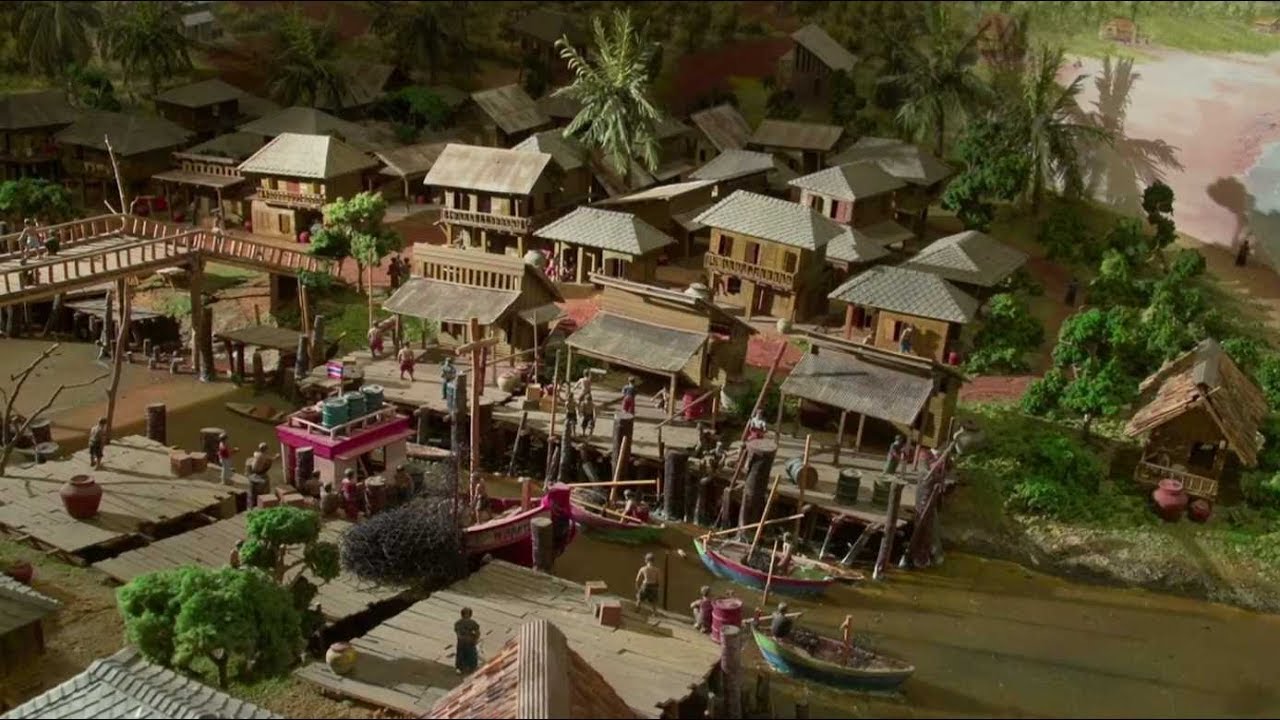
The section on “Chumphon as a City on the Path of Typhoons” gives the museum a distinctive character. Chumphon carries deep memory of Typhoon Gay, a major disaster that affected life along the Gulf of Thailand coast. The exhibition uses photographs, film, sound-and-light media, explanatory panels, models, and realistic scenes to explain the power of the storm, its impact on local people, and the lessons of living in a province exposed to heavy rain, strong winds, and coastal weather risks.
The “Natural History and Outstanding Heritage of Chumphon Province” section introduces the richness of Chumphon’s natural environment. The province has seas, islands, coral reefs, coastlines, mangroves, agricultural land, and diverse local ecosystems. The exhibition connects natural heritage with local livelihood, including fishing, agriculture, community traditions, foodways, and local products. It helps visitors see Chumphon’s sea and landscape not only as travel scenery but as heritage linked to culture and daily life.
The section dedicated to Admiral Prince Abhakara Kiartivongse, Prince of Chumphon, is highly relevant to the province’s identity. The Prince of Chumphon is widely respected as the Father of the Royal Thai Navy and is deeply venerated by Thai coastal communities. His life and work are linked with naval development, maritime knowledge, and national defense. The museum’s presentation helps explain why Chumphon has several memorial sites and shrines dedicated to him, including the important shrine at Hat Sai Ri and other coastal locations.
One of the museum’s strengths is its use of mixed media. The displays are not limited to artifacts in glass cases. They include photographs, films, sound-and-light presentation, detailed interpretive panels, models, and life-size recreated scenes. This approach makes complex topics such as archaeology, early settlement, war, and natural disaster easier for general visitors to understand. Families, school groups, and travelers without an academic background can follow the story of Chumphon in a clear sequence.
Chumphon National Museum is also an important out-of-classroom learning site. Schools can use the museum for history, local studies, social studies, geography, culture, and environmental education. Seeing artifacts, models, maps, old photographs, and interpretive displays in person helps students connect textbook knowledge with real places. The museum therefore serves both tourism and education, making it useful for families, teachers, researchers, and local residents.
For travelers, the museum works well as the first stop in Chumphon. After seeing the World War II section, a visit to the Youth Soldiers Monument becomes more meaningful. After learning about the Prince of Chumphon, a visit to the shrine at Hat Sai Ri or the Pak Nam Lang Suan shrine gains stronger context. After seeing the natural-history section, trips to Chumphon’s islands, viewpoints, beaches, and coastal communities become more than scenic experiences; they become part of a larger cultural and environmental story.
Getting There is convenient by private car. Use Phet Kasem Road or Highway 4 toward Chumphon Provincial Government Center. Before reaching Pathomphon junction, turn toward the government center area on Trirat Road in Na Cha-Ang Subdistrict. The museum is located within a government-office zone, making it suitable for family trips, school groups, and travelers passing through Chumphon on the main southern route. It can also be combined with nearby places such as Wat Sam Kaeo, Wat Na Thung, Nong Yai Royal Development Project, and the Youth Soldiers Monument.
Visitors should allow at least one to two hours to see the museum properly. Those who want to read all interpretive panels or visit as a study group should allow more time. The museum is open Wednesday to Sunday from 09.00 to 16.00. It is closed on Monday, Tuesday, and public holidays. Admission is 20 baht for Thai visitors and 100 baht for foreign visitors.
There are several ways to visit. Walk-in visitors can contact the ticket counter. Groups can submit a formal request in advance, stating the visit date, time, and number of visitors. Online appointment booking is also available through the museum’s Facebook booking system. Visitors who need to record images for special production purposes should submit a request according to Fine Arts Department regulations before filming or photographing for that purpose.
Visitors should behave respectfully inside the museum. Do not touch displayed objects, climb on models, move exhibition materials, speak loudly, eat in exhibition areas, or ignore staff instructions. Families with children should help young visitors understand the value of the objects and displays. A museum is a shared learning space, and careful behavior helps protect cultural heritage for future visitors.
Chumphon National Museum changes the way visitors see the province. It shows that Chumphon is not only a transit city or a beach destination. It is a province with deep human history, ancient settlements, maritime significance, wartime memory, disaster experience, rich natural environments, and respected historical figures. Visiting the museum gives travelers a fuller understanding of the province before continuing to its temples, monuments, beaches, viewpoints, islands, and coastal communities.
Overall, Chumphon National Museum is one of the most useful cultural stops in the province. Its eight permanent exhibition themes provide a complete introduction to Chumphon’s people, land, history, archaeology, natural heritage, and memory. The museum is suitable for students, families, cultural travelers, and anyone who wants to understand Chumphon in more depth. For a meaningful trip through the province, this museum is one of the best places to begin.
| Name | Chumphon National Museum |
| Place Type | National Museum / Historical, Archaeological, Cultural, And Natural-History Learning Center Of Chumphon Province |
| Location | Chumphon Provincial Government Center, Trirat Road, Na Cha-Ang Subdistrict, Mueang Chumphon District, Chumphon Province |
| Address | 312 Chumphon Provincial Government Center, Trirat Road, Na Cha-Ang Subdistrict, Mueang Chumphon District, Chumphon 86000, Thailand |
| Coordinates | 10.52358, 99.19343 |
| Highlights | Eight permanent exhibition themes covering prehistory, early historical development, local history, World War II, Typhoon Gay, natural heritage, and the Prince of Chumphon |
| History | Chumphon Province provided about 7 rai of land to the Fine Arts Department in 1994. The project was carried out during the 1995–1997 fiscal years. The museum was established in 1996 and officially opened on April 30, 1999. |
| Building Features | A two-storey building combining southern Thai vernacular character with contemporary architecture; the lower floor serves visitors, while the upper floor contains the permanent exhibition |
| Travel Information | Use Phet Kasem Road or Highway 4 toward Chumphon Provincial Government Center. Before Pathomphon junction, turn into the government center area on Trirat Road in Na Cha-Ang Subdistrict. |
| Current Status | Open as a national museum under the Fine Arts Department, Ministry of Culture |
| Open Days | Wednesday – Sunday; closed on Monday, Tuesday, and public holidays |
| Opening Hours | 09.00 – 16.00 |
| Admission Fee | Thai Visitors 20 Baht / Foreign Visitors 100 Baht |
| Facilities | Exhibition rooms, visitor service area, library, lecture room, office, artifact and art-object storage, landscaped surroundings, and air-conditioned exhibition areas |
| Main Areas / Zones | 1. Chumphon Today 2. Prehistory In Chumphon 3. Early Historical Development 4. History Of Chumphon 5. Chumphon During World War II And The Heroism Of Youth Soldiers 6. Chumphon As A City On The Path Of Typhoons 7. Natural History And Outstanding Heritage Of Chumphon Province 8. Admiral Prince Abhakara Kiartivongse, Prince Of Chumphon |
| Caretaker / Responsible Agency | Chumphon National Museum, Fine Arts Department, Ministry Of Culture |
| Main Contact Number | 077-658-358 |
| nm_chumphon@finearts.go.th | |
| Nearby Tourist Attractions | 1. Wat Sam Kaeo, About 1 km 2. Wat Na Thung, About 3 km 3. Nong Yai Royal Development Project, About 3 km 4. Saphan Mai Khiam Nong Yai, About 3 km 5. Youth Soldiers Monument, About 5 km 6. Chumphon City Pillar Shrine, About 6 km 7. Khao Matsee Viewpoint, About 15 km |
| Nearby Restaurants | 1. Krua Lan Ta Phran, About 3 km, Tel. 086-276-2567 2. Je Toi Noen Khiri, About 3 km, Tel. 087-279-9468 3. Koko Restaurant, About 4 km, Tel. 077-570-188 4. Krua Samae Khao, About 5 km, Tel. 086-364-7166 5. Krua A-Te, About 7 km, Tel. 088-758-2868 |
| Nearby Accommodations | 1. 25 Apartment, About 4 km 2. A-Te Hotel Chumphon, About 4 km, Tel. 077-503-222 3. Loft Mania Boutique Hotel, About 6 km, Tel. 077-501-789 4. Chumphon Gardens Hotel, About 6 km, Tel. 077-506-888 5. Nana Buri Hotel, About 6 km, Tel. 077-503-888 6. Suriwong Chumphon Hotel, About 7 km, Tel. 077-511-203 |
Frequently Asked Questions (FAQ)
Q: Where is Chumphon National Museum located?
A: It is located at 312 Chumphon Provincial Government Center, Trirat Road, Na Cha-Ang Subdistrict, Mueang Chumphon District, Chumphon 86000, Thailand.
Q: What days is Chumphon National Museum open?
A: The museum is open Wednesday to Sunday from 09.00 to 16.00. It is closed on Monday, Tuesday, and public holidays.
Q: How much is the admission fee?
A: Admission is 20 baht for Thai visitors and 100 baht for foreign visitors.
Q: What can visitors see inside the museum?
A: The museum has eight permanent exhibition themes covering present-day Chumphon, prehistory, early historical development, local history, World War II and youth soldiers, typhoons, natural heritage, and the Prince of Chumphon.
Q: How long should visitors spend at the museum?
A: Visitors should allow at least one to two hours. School groups or visitors who want to read the exhibition panels in detail should allow more time.
Q: Is the museum suitable for children and families?
A: Yes. The museum uses photographs, films, sound-and-light presentation, interpretive panels, models, and realistic scenes, making Chumphon’s history easier for children and families to understand.
Q: How can visitors get to Chumphon National Museum?
A: Use Phet Kasem Road or Highway 4 toward Chumphon Provincial Government Center, then turn into Trirat Road in Na Cha-Ang Subdistrict before Pathomphon junction.
Q: Which nearby places can be visited on the same trip?
A: Nearby places include Wat Sam Kaeo, Wat Na Thung, Nong Yai Royal Development Project, Saphan Mai Khiam, the Youth Soldiers Monument, Chumphon City Pillar Shrine, and Khao Matsee Viewpoint.
Tel : 077504105, 077504246
 Tel : 077504105, 077504246
 Category: ●Art, Culture and Heritage
 Group: ●Museums
Last Update : 2 MonthAgo
 Last Update : 2 MonthAgo
 Click to Access the Navigation Map GPS
Chumphon National Museum Map
Recommend

 Historical Sites and Monuments(1)
 Landmarks and Memorials(2)
 Art, Craft Centres, Tradition(3)
Museums(2)
 Educational Places
 Educational Gardens, Farm(1)
 Places of Worship
 Temple(31)
 Other Sacred Sites(10)
 Research and Development
 Royal Project(1)
 Suburban Living
 Village, Community(5)
 Local Market(1)
 Nature and Wildlife
 National Parks and Marine Reserves(7)
 Mountain (Doi)(5)
 Dam, Reservoir, Lake(1)
 Waterfalls(26)
 Hot Springs(1)
 Caves(21)
 River, Canal(7)
 Bays and Beaches(30)
 Islands(13)
 Other natural attractions(7)
 Entertainment and Agricultural
 Farms, Parks and Ecotourism(3)
 Outdoor and Adventure Activities(4)
 Shopping
 Shopping and Night Market(1)
 Travel Articles, Recipes
 Travel Review, Food Review(1)


