
lovethailand home >Northeastern Travel Attractions >Udon Thani Travel Attractions >Muang Udon Thani >Mak Khaeng > Udon Thani Rajabhat University
TL;DR: Udon Thani Rajabhat University. (UDRU), known in Thai as มหาวิทยาลัยราชภัฏอุดรธานี, is a public university located at 64 Thahan Road, Mak Khaeng Subdistrict, Mueang Udon.
Udon Thani Rajabhat University
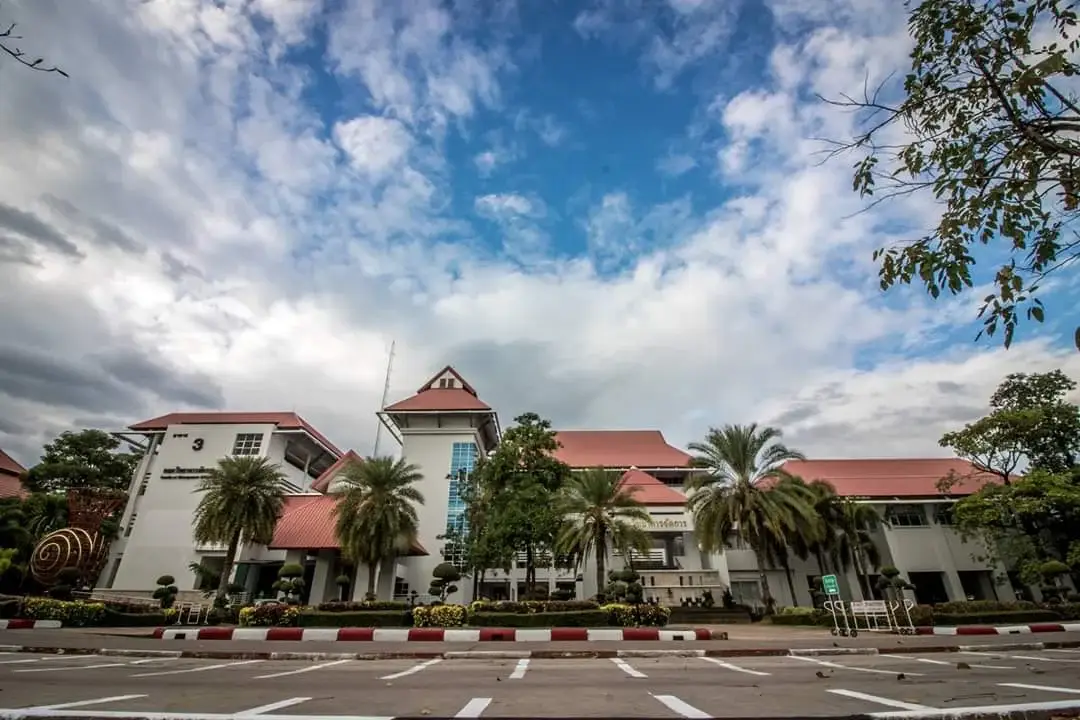
Open Days (Office of the President): Daily, except public holidays
Opening Hours (Office of the President): 08:30 – 17:00
Open Days (Faculty and General Administrative Offices): Monday – Friday, except public holidays
Opening Hours (Faculty and General Administrative Offices): 08:30 – 16:30
Udon Thani Rajabhat University (UDRU), known in Thai as มหาวิทยาลัยราชภัฏอุดรธานี, is a public university located at 64 Thahan Road, Mak Khaeng Subdistrict, Mueang Udon Thani District, Udon Thani Province 41000, northeastern Thailand. Its history began on 1 November 1923 with the establishment of the Udon Regional Agricultural Teacher Training School. The institution subsequently developed into Udon Thani Teacher Training School, Udon Thani Teachers College, Udon Thani Rajabhat Institute, and finally Udon Thani Rajabhat University on 15 June 2004. On 1 November 2026, the institution reaches its 103rd anniversary. Today, the university operates its main city campus, the Sam Phrao Education Center, and educational initiatives in Bueng Kan Province. Its academic strengths include teacher education, science, nursing, engineering, technology, business, languages, cultural studies, and social sciences. Its mission centers on higher education, research, innovation, and sustainable local development. Assistant Professor Dr. Kanisara Thanyasoontornsakul was appointed University President in February 2026.
Udon Thani Rajabhat University occupies an important place in the history of higher education in upper northeastern Thailand. Its origins lie in the training of teachers for rural schools, but its responsibilities have gradually expanded to include the development of professionals for schools, government organizations, businesses, and local communities. Its contribution extends beyond classroom teaching through research, technology transfer, academic services, and cultural preservation, reflecting the public-service mission of Thailand's Rajabhat universities.
The university has two principal educational locations in Udon Thani Province: the city campus on Thahan Road in Mak Khaeng and the Sam Phrao Education Center in Sam Phrao Subdistrict. The city campus has considerable historical significance because it developed from the original teacher-training institution. Sam Phrao, meanwhile, is a much larger educational area with facilities for science, technology, engineering, nursing, academic events, and major university ceremonies.
Having separate educational areas enables the university to allocate facilities according to the requirements of different academic disciplines. The central campus is closely connected with urban life, public transport, businesses, and government services. The Sam Phrao area offers more extensive open space and modern academic facilities, making it suitable for laboratory-based subjects, research, sports, large conferences, and ceremonies involving substantial numbers of participants.
Before the university was established, Thailand was expanding modern education into regional administrative centers. The former Udon administrative circle covered extensive communities spread across northeastern Thailand, and the increasing number of schools created growing demand for qualified teachers. Teacher-training institutions were therefore established to prepare people who could return to their home districts and provide education for local children.
On 1 November 1923, the Udon Regional Agricultural Teacher Training School was established in a temporary location associated with the Udon Wild Tiger Corps Club. Ratchaburut Phoem Kansamon served as acting head teacher. The school offered a regional teacher certificate program admitting male students who had completed the fourth year of primary school for two additional years of training. Its early students were scholarship recipients from provinces within the Udon administrative region, demonstrating the institution's regional educational responsibilities from the beginning.
The agricultural teacher-training identity reflected the importance of farming and rural life in northeastern Thailand. Teachers needed more than basic classroom knowledge; they also needed to understand the communities in which they would work. Training teachers within an agricultural setting helped connect education with everyday livelihoods and the practical needs of a predominantly rural society.
The school was subsequently renamed Udon Regional Teacher Training School, and a permanent educational site was developed in the Huai So area, associated with the present city campus. The original site covered approximately 350 rai. Portions of the land were subsequently allocated to other organizations, and the university's historical account records a remaining city-campus area of approximately 237 rai, 3 ngan, and 37 square wah.
In 1930, a separate regional women's teacher-training school was established, admitting female students who had completed primary education. This development was important because it expanded professional educational opportunities for women at a time when access to formal vocational and professional study was gradually increasing throughout Thailand.
Following the political and administrative changes of 1932, the regional circle system was abolished and provincial administration reorganized. Udon Regional Teacher Training School was consequently renamed Udon Thani Provincial Teacher Training School, reflecting the new administrative structure. This change illustrated how educational institutions were affected by broader transformations in the organization of government.
In 1934, the school introduced a provincial teacher certificate program accepting students with the prescribed secondary or teacher-training qualifications for two additional years of study. These developments formed part of the continuing effort to improve teacher preparation and provide personnel for an expanding system of provincial schools.
In 1939, the teacher-training institutions underwent further restructuring, with educational responsibilities transferred under the relevant government education authorities. Training during this period focused particularly on preparing teachers for remote communities where the shortage of educational personnel limited children's opportunities to attend school.
In 1948, the institution adopted the name Udon Thani Teacher Training School. A further reorganization took place in 1958 when the women's teacher-training institution was combined with the existing school. Siri Sukkit became head of the unified institution. The merger strengthened administrative coordination and supported the preparation of male and female teachers within a common institutional structure.
On 29 February 1960, the Ministry of Education announced the elevation of Udon Thani Teacher Training School to Udon Thani Teachers College, with the new status taking effect on 1 May 1960. The college introduced advanced educational certificate programs, marking a significant transition from school-level teacher preparation to an institution with higher education responsibilities.
The Teachers College Act of 1975 established a stronger legal foundation for degree-level education, allowing the college to offer bachelor's degree programs in education. In 1976, academic divisions were organized in Education, Science, and Humanities and Social Sciences. These developments broadened the academic structure and created foundations for faculties that would continue to serve the university in later decades.
In 1977, Udon Thani Teachers College began cooperating with seven other teachers colleges in northeastern Thailand through a regional network. This collaboration evolved into the Upper Isan United Colleges structure in 1985, with its administrative office located at Udon Thani Teachers College. Such partnerships encouraged the sharing of educational resources, academic experience, and institutional expertise among teacher-training colleges.
Amendments to the Teachers College Act in 1984 also permitted the expansion of academic offerings beyond teacher education. Udon Thani Teachers College subsequently developed business and management-related studies and established a Management Science academic unit. This represented an important step toward becoming a multidisciplinary higher education institution able to respond to more diverse regional workforce needs.
On 14 February 1992, King Bhumibol Adulyadej bestowed the name Rajabhat Institute upon Thailand's teachers colleges. The name Rajabhat became associated with the ideal of serving the nation through education and local development. It remains a central aspect of the institutional identity shared by Rajabhat universities across Thailand.
Under the Rajabhat Institute Act of 1995, the institution's responsibilities expanded in higher education, research, academic services, technology development, and cultural preservation. On 6 March 1995, Rajabhat institutions received royal permission to adopt the personal royal seal associated with King Rama IX as a central element of their institutional emblems.
On 10 June 2004, the Rajabhat University Act was signed, followed by its publication in the Royal Gazette on 14 June. As a result, Udon Thani Rajabhat Institute became Udon Thani Rajabhat University on 15 June 2004. The transition broadened its institutional responsibilities and supported continued development of academic programs, research, innovation, and collaboration with communities.
Following the transition to university status, UDRU established an educational area in Bueng Kan in 2004 to expand higher education opportunities along the Mekong River region. In 2024, the university developed a project to establish the Bueng Kan College of Innovation, focusing on scientific knowledge, technology transfer, and place-based innovation. These initiatives reflect the university's efforts to extend educational services beyond Udon Thani Province.
On 1 March 2005, the Faculty of Technology was established to develop higher education in technical, engineering, and industrial disciplines. In 2024, it was renamed the Faculty of Technology and Engineering to reflect its expanded emphasis on engineering knowledge and modern industrial workforce development.
In 2006, the University Council approved the expansion of the university into a new area in Sam Phrao Subdistrict. The project covered approximately 2,090 rai in the Khok Khum Pun area near Ban Sam Phrao and aimed to create a center for education, professional training, research, and technology transfer. The large-scale development significantly increased the university's capacity to provide specialized academic facilities and support regional innovation.
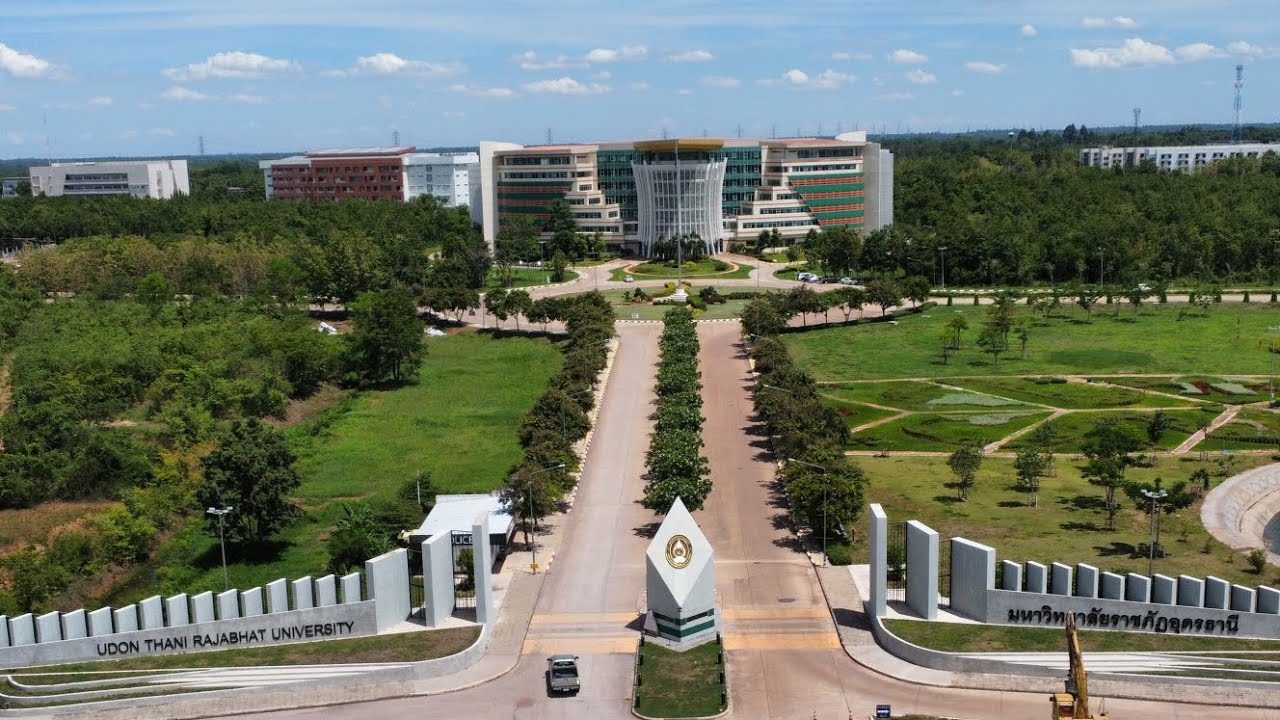
The Sam Phrao Education Center developed into one of the university's main academic locations. It now accommodates science and technology buildings, faculty facilities, major conference venues, student facilities, and expansive landscaped grounds. Its physical setting differs considerably from the established city campus and represents a major stage in the university's development during the twenty-first century.
On 28 April 2018, the University Council approved the establishment of the Faculty of Nursing to prepare healthcare professionals and support the quality of life of communities in upper northeastern Thailand. Nursing education further diversified the university's academic provision and strengthened its contribution to the region's healthcare workforce.
On 28 October 2023, the University Council approved a project to establish an International College. The initiative was intended to encourage international academic cooperation, provide an environment supportive of international education, and strengthen services for foreign students and lecturers. It also reflected the growing importance of global collaboration in contemporary higher education.
In 2023, Udon Thani Rajabhat University marked the centenary of its original establishment. The anniversary offered an opportunity for students, alumni, lecturers, and staff to reflect on the institution's development from a small teacher-training school into a multidisciplinary university with responsibilities extending across education, research, culture, and public service.
As of 29 October 2026, the institution was approaching its 103rd anniversary, which falls on 1 November 2026. It had also completed 22 years under its Rajabhat university designation, dating from 2004. These different anniversary figures reflect the distinction between the original teacher-training foundation and the institution's later legal status as a university.
In February 2026, Assistant Professor Dr. Kanisara Thanyasoontornsakul was appointed President of Udon Thani Rajabhat University. The appointment was made under a Royal Command reflected in a Prime Minister's Office announcement dated 11 February 2026 and published in the Royal Gazette on 12 February 2026. University leadership oversees academic development, research, student services, institutional quality, and community engagement.
The university's philosophy describes it as a higher education institution dedicated to local development. Its traditional Buddhist maxim, Suwichano Bhavam Hoti, conveys the idea that a person with good knowledge prospers. Together, these principles emphasize education as a means of personal advancement and social contribution, rather than merely the acquisition of formal qualifications.
Its educational philosophy stresses professional competence developed through practical experience and public engagement. The university's vision emphasizes being a learning institution that supports local development, produces academic leaders, and creates innovation and wisdom. These priorities influence the development of academic programs, research, community services, and opportunities for students to learn beyond the classroom.
The UDRU organizational values emphasize unity, ethical conduct, transparency, responsibility toward the university and society, and an international outlook. They reflect the responsibilities of a public university whose work should contribute to the wellbeing of communities while maintaining sound governance and educational standards.
The university's official colors are green and yellow, and its symbolic flower is the Dok Chan, the bright orange-red blossom of the flame-of-the-forest tree. The flower has a strong visual association with northeastern Thailand and is part of the institution's cultural identity. These symbols help maintain a sense of belonging among students, staff, and alumni.
The university emblem consists of two concentric oval designs surrounding the royal seal associated with King Rama IX. The seal includes the royal throne, a circular emblem with radiating lines, and the seven-tiered white umbrella. The surrounding design carries the university's name in Thai and English. Its colors represent the monarchy, nature, intellectual achievement, local arts and culture, and the purity of scholarly thought.
The university's principal academic faculties include the Faculty of Education, Faculty of Humanities and Social Sciences, Faculty of Management Science, Faculty of Science, Faculty of Technology and Engineering, and Faculty of Nursing. Additional academic units include the Graduate School, International College, and School of General Education, which support postgraduate study, international cooperation, and multidisciplinary foundational learning.
The Faculty of Education continues UDRU's original mission of teacher preparation. Its published academic fields include Early Childhood Education, Primary Education, Special Education, Thai, English, Mathematics, Science, Social Studies, Computer Education, Physical and Health Education, Art Education, Music Education, Dance Education, Chinese Teaching, and other language-related teaching fields. Teacher preparation combines educational theory, psychology, learning design, curriculum studies, and professional teaching practice.
The Faculty of Humanities and Social Sciences provides education in language studies, public administration, law, cultural studies, social development, and the arts. Its published undergraduate programs include English, Thai for Communication, Business English, Chinese, Social Development, Visual Arts and Design, Music, Performing Arts in Thai Dance, Public Administration, and Law. These academic fields support careers in government, business, communication, education, and creative industries.
The Faculty of Management Science focuses on business and service-sector education. Its published undergraduate fields include Accounting, Marketing, Management, Business Computer and Information Systems, Business Administration, Finance, Tourism and Event Management, Hotel Management, and Communication Arts. These programs support professional development in entrepreneurship, digital business, organizational management, finance, tourism, and communication.
The Faculty of Science offers academic programs in Biology, Chemistry, Physics, Mathematics, Computer Science, Information Technology, Environmental Science, Sports Science, Environmental Health, Occupational Health and Safety, Public Health, Thai Traditional Medicine, and Building Technology-related subjects. Science education and research contribute to environmental management, healthcare, scientific understanding, and practical innovation.
The Faculty of Technology and Engineering provides programs in Mechanical Engineering, Electrical Engineering, Computer and Communication Engineering, Energy Engineering, and Industrial Management and Logistics Engineering. Its work emphasizes system design, engineering analysis, technical skills, industrial development, and the application of technology to real-world problems.
The Faculty of Nursing operates at the Sam Phrao Education Center. Its Bachelor of Nursing Science curriculum was revised in 2024 and approved by the relevant professional and university authorities. Nursing education emphasizes professional knowledge, patient safety, health promotion, disease prevention, community care, and the ethical responsibilities of healthcare professionals.
The International College contributes to academic internationalization, supporting educational cooperation, language development, and engagement with international students and academic staff. The School of General Education provides foundational learning in language, digital skills, communication, analytical thinking, ethical awareness, and knowledge relevant to contemporary society.
The Graduate School supports postgraduate education at master's and doctoral levels. Programs with published information for 2026 include Law, Data Science and Information Technology, and Agricultural and Environmental Science. Educational Administration and other education-related graduate programs are also identified in faculty academic information. Advanced study supports the development of researchers, specialists, administrators, and professionals seeking deeper knowledge within their disciplines.
Research and innovation form important elements of UDRU's mission. Academic units contribute to research involving agriculture, environmental management, technology, information systems, education, business, and community development. These activities seek to translate academic knowledge into practical improvements that can support regional livelihoods and organizational effectiveness.
The university also supports Data Science and Artificial Intelligence through its specialized data analytics center. Master's and doctoral programs in Data Science and Information Technology were advertised for the 2026 academic year. These subjects are increasingly relevant to data analysis, digital systems, organizational decision-making, and the development of technology-based solutions to complex problems.
Community engagement is integral to the university's public mission. Faculties and academic service units cooperate with public agencies, businesses, and local residents through professional training, knowledge transfer, skills development, and projects addressing regional needs. These activities help connect university education with the practical challenges faced by communities.
Udon Thani also provides a rich cultural setting for university life. Its heritage includes Isan traditions, Thai-Chinese communities, Buddhist customs, local craftsmanship, and distinctive performing arts. Through its cultural activities and academic units, the university helps students recognize the importance of preserving regional traditions while developing contemporary knowledge and creative skills.
On 7 June 2026, the university's student organization held a Bai Sri Su Khwan welcoming ceremony for new students under the theme Home Hap Khwan, Fan Sai Naen, Phuk Khaen Nong Mai. The event took place at the university auditorium at the Sam Phrao Education Center. The ceremony drew on northeastern Thai traditions of blessing, welcoming, and strengthening relationships, helping new students feel part of the university community.
The Wai Khru ceremony is particularly meaningful at a university with a long history of teacher education. On 8 July 2026, the Faculty of Management Science organized a Wai Khru ceremony under the theme of paying respect and expressing gratitude to teachers. Held at the Student Activities Building, the program included students' pledges, ceremonial offerings, guidance from academic staff, and scholarship presentations.
On 6 September 2026, the Graduate School held its own Wai Khru ceremony and postgraduate orientation in a second-floor meeting room of Building 17. The event strengthened relationships among graduate students, lecturers, and academic administrators while introducing expectations related to research, postgraduate learning, and scholarly responsibility.
Songkran traditions also remain an important part of university culture. On 10 April 2026, UDRU organized Songkran activities at the Centenary Building in Sam Phrao, including Buddhist almsgiving, bathing a Buddha image, and paying respect to senior members of the university community through traditional water-blessing ceremonies. These activities promoted respect, gratitude, unity, and the preservation of Thai cultural practices.
In July 2026, the Faculty of Management Science worked with the Office of Arts and Culture to organize candle-making and candle-offering activities associated with Buddhist Lent. The program included activities at the cultural office's rotating exhibition space and aimed to preserve Buddhist traditions while encouraging ethical awareness and student participation.
Graduation ceremonies are important moments in the lives of students and their families. On 29 October 2026, the university's graduation-related ceremony was scheduled at the main auditorium of the Sam Phrao Education Center. The event illustrated the importance of the Sam Phrao facilities in hosting major institutional gatherings and celebrating academic achievement.
Among the university's notable historical landmarks is the Red Palace Building, a traditional raised wooden structure on the city campus. Its architectural form contrasts with the surrounding modern academic buildings and provides a visible connection to the institution's historical identity. The preservation of such a building contributes to the understanding of architectural and educational heritage on the campus.
The city campus also contains the Office of the President, the Faculty of Management Science buildings, student activity spaces, sports areas, and Graduate School facilities. These buildings support education and student services within a central urban environment closely connected with the civic and commercial life of Udon Thani.
At the Sam Phrao Education Center, important facilities include science and technology buildings, engineering academic spaces, nursing classrooms and laboratories, the ASEAN Technology and Language Learning Center, the Centenary Building, and a large auditorium. The broader campus environment includes open spaces, walkways, and landscaped areas that provide room for academic development and student activities.
The university's libraries and academic resource services support independent study, research, digital information access, and the development of lifelong learning skills. UDRU also operates a demonstration school connected with its teacher education heritage, contributing to educational development and the relationship between university-level teacher preparation and school education.
For educational visitors, the university offers opportunities to explore its teacher-training history, historic buildings, cultural events, modern science and engineering facilities, and campus environments. Public academic activities and organized study visits may provide insights into the university's role in provincial development. Specialized laboratories and professional training spaces should be visited only through appropriate arrangements with the responsible unit.
Visitors should distinguish administrative office hours from general access to university grounds. The Office of the President publishes office hours of 08:30 to 17:00 daily, except public holidays. Many faculty and administrative offices operate Monday to Friday, from 08:30 to 16:30. Libraries, laboratories, and event facilities may follow separate schedules and access arrangements.
Getting There to the city campus is straightforward via Thahan Road in Mak Khaeng Subdistrict, Mueang Udon Thani District. Visitors can use the address 64 Thahan Road in digital navigation services. Travelers arriving at Udon Thani International Airport can continue by taxi or local transport, while those arriving at the railway station or interprovincial bus terminal can use local services to reach the university.
For the Sam Phrao Education Center, travelers should enter Udon Thani Rajabhat University Sam Phrao Campus as their destination. It is situated in Sam Phrao Subdistrict rather than at the city campus on Thahan Road. Students attending the Faculty of Nursing, Faculty of Science, Faculty of Technology and Engineering, or major events at the Sam Phrao auditorium should confirm their building and campus location before traveling.
Udon Thani is a regional transportation hub with domestic air services, railway connections, interprovincial buses, and major roads linking it with neighboring provinces and Laos. These connections make the university accessible to students and visitors from different parts of Thailand and the wider region.
Visitors can also explore the cultural and historical attractions of Udon Thani city. Nong Prajak Park, Udon Thani City Museum, the Udon Thani City Pillar Shrine, the Thai-Chinese Cultural Center, and the Prince Prachaksinlapakhom Monument provide opportunities to understand the city's development, local beliefs, cultural diversity, and everyday community life.
From its beginnings in 1923 through more than a century of educational development, Udon Thani Rajabhat University has grown from a regional teacher-training school into a multidisciplinary public university. Its history illustrates the expansion of higher education in northeastern Thailand and the continuing importance of education in developing professional knowledge, communities, and human resources.
Today, Udon Thani Rajabhat University remains an institution closely connected with the educational, social, and cultural development of its region. Its heritage in teacher education continues alongside work in science, engineering, nursing, business, the arts, and digital innovation. The university's distinctive mission is to bring academic knowledge into practical engagement with local people and contribute to the long-term development of society.
| University Name | Udon Thani Rajabhat University (UDRU) |
| Thai Name | มหาวิทยาลัยราชภัฏอุดรธานี |
| Institution Type | Public University, Rajabhat University System |
| Main Campus Location | Mak Khaeng Subdistrict, Mueang Udon Thani District, Udon Thani Province, Thailand |
| Main Campus Address | 64 Thahan Road, Mak Khaeng, Mueang Udon Thani, Udon Thani 41000, Thailand |
| Sam Phrao Education Center | 234 Moo 12, Sam Phrao Subdistrict, Mueang Udon Thani District, Udon Thani 41000, Thailand |
| Bueng Kan Educational Area | Educational initiatives in Bueng Kan Province, including the project to establish the Bueng Kan College of Innovation |
| Original Foundation Date | 1 November 1923, as Udon Regional Agricultural Teacher Training School |
| Teachers College Status | Announced 29 February 1960; effective 1 May 1960 |
| Rajabhat University Status | 15 June 2004 |
| Institutional Anniversary | 103rd Anniversary on 1 November 2026 |
| Important Historical Figures | 1. Ratchaburut Phoem Kansamon, Acting Head Teacher at the original institution 2. Siri Sukkit, Head of the reorganized teacher-training school in 1958 |
| University President in 2026 | Assistant Professor Dr. Kanisara Thanyasoontornsakul |
| Institutional Philosophy | A Higher Education Institution for Local Development |
| Traditional Buddhist Maxim | Suwichano Bhavam Hoti — A Person with Good Knowledge Prospers |
| University Colors | Green and Yellow |
| University Flower | Dok Chan (Flame-of-the-Forest Flower) |
| University Emblem | Royal Seal associated with King Rama IX, surrounded by concentric ovals displaying the university's Thai and English names |
| Faculties and Academic Units | 1. Faculty of Education 2. Faculty of Humanities and Social Sciences 3. Faculty of Management Science 4. Faculty of Science 5. Faculty of Technology and Engineering 6. Faculty of Nursing 7. Graduate School 8. International College 9. School of General Education |
| Academic Levels | Bachelor's Degrees, Graduate Diploma, Master's Degrees, and Doctoral Degrees according to published programs |
| Academic Strengths | Teacher Education, Nursing, Science, Engineering, Information Technology, Data Science, Business, Tourism, Languages, Cultural Studies, and Local Development |
| Important Campus Facilities | 1. Red Palace Building 2. Office of the President 3. Student Activities Building 4. Graduate School, Building 5 5. City Campus Sports Facilities 6. Sam Phrao Centenary Building 7. Sam Phrao Main Auditorium 8. Science and Technology Buildings 9. ASEAN Technology and Language Learning Center |
| Traditions and Important Activities | 1. Bai Sri Su Khwan New Student Welcome Ceremony 2. Wai Khru Ceremony 3. Rajabhat Day 4. Institutional Foundation Anniversary 5. Songkran and Traditional Water Blessing 6. Buddhist Lent Candle-Making and Offering 7. Graduation Ceremonies 8. Cultural Preservation and Community Academic Services |
| Office of the President — Open Days | Daily, except public holidays |
| Office of the President — Opening Hours | 08:30 – 17:00 |
| Faculty and General Offices — Open Days | Monday – Friday, except public holidays |
| Faculty and General Offices — Opening Hours | 08:30 – 16:30 |
| Campus Visits | Arrange study visits in advance, especially for laboratories, nursing training facilities, and organized academic events |
| Facilities | Academic Buildings, Laboratories, Library Resources, Auditorium, Sports Facilities, Student Activity Areas, Academic Information Services, and Parking |
| Getting There | The city campus is on Thahan Road in Mak Khaeng; the Sam Phrao Education Center is in Sam Phrao Subdistrict. Visitors should confirm the destination campus and academic building before traveling |
| Attractions in Udon Thani City | 1. Nong Prajak Park 2. Udon Thani City Museum 3. Udon Thani City Pillar Shrine 4. Thai-Chinese Cultural Center 5. Prince Prachaksinlapakhom Monument |
| Restaurants and Cafés in Udon Thani City | 1. Prime Steakhouse, Thahan Road, Tel. +66 95 690 7432 2. Homenie Udon, Tel. +66 94 264 2366 3. Option Coffee Bar, Tel. +66 80 979 6567 4. Bluekoff Udon, Tel. +66 98 163 3393 5. Udon Phochana, Posri Road, Tel. +66 42 221 756 |
| Accommodation in Udon Thani City | 1. Civilize Hotel, Tel. +66 81 465 4477 2. Centara Udon, Tel. +66 42 343 555 3. Brown House Hotel Udonthani, Tel. +66 63 369 9888 4. Banbua Grand Udon Hotel, Tel. +66 92 753 9469 5. President Hotel Udonthani, Tel. +66 42 221 388 |
| University Telephone | +66 42 211 040 to +66 42 211 059 |
| Office of the President Telephone | +66 42 211 040 ext. 1712, 1118 |
| Admissions Telephone | +66 42 211 040 ext. 5067, 5068 |
| Official Website | www.udru.ac.th |
| Admissions Website | ent.udru.ac.th |
| Current Status | Active Public University providing education, research, academic services, and local development programs in the 2026 academic year |
Academic Programs and Fields of Study at Udon Thani Rajabhat University, Academic Year 2026 (B.E. 2569)
| Faculty / Academic Unit | Published Academic Programs and Fields of Study |
| Faculty of Education | Bachelor of Education — Fields of Study 1. English 2. Mathematics 3. General Science and Chemistry 4. General Science and Biology 5. General Science and Physics 6. Computer Education 7. Social Studies 8. Special Education 9. Mechanical Education 10. Buddhism 11. Dance Education 12. Early Childhood Education 13. Thai Language 14. Art Education 15. Primary Education 16. Music Education 17. Physical and Health Education 18. Chinese Language Teaching 19. Vietnamese and English 1. Graduate Diploma in Teaching Profession 1. Master of Education in Educational Administration 2. Master of Education in Curriculum and Instruction 3. Master of Education in Science Education 4. Master of Education in Physical and Health Education 5. Master of Education in Mathematics Education 6. Master of Education in Educational Research and Evaluation 7. Master of Education in Computer Education Innovation 8. Doctor of Education in Educational Administration 9. Doctor of Education in Curriculum and Instruction |
| Faculty of Humanities and Social Sciences | Bachelor's Degrees 1. Bachelor of Arts in English 2. Bachelor of Fine and Applied Arts in Product Design 3. Bachelor of Arts in Thai for Communication 4. Bachelor of Arts in Business English 5. Bachelor of Arts in Chinese 6. Bachelor of Arts in Social Development 7. Bachelor of Fine and Applied Arts in Visual Arts and Design 8. Bachelor of Fine and Applied Arts in Music 9. Bachelor of Fine and Applied Arts in Thai Dance Performing Arts 10. Bachelor of Public Administration in Public Administration 11. Bachelor of Laws |
| Faculty of Management Science | Bachelor's Degrees 1. Bachelor of Accountancy in Accounting 2. Bachelor of Business Administration in Marketing 3. Bachelor of Business Administration in Management 4. Bachelor of Business Administration in Business Computer and Information Systems 5. Bachelor of Business Administration in Business Administration 6. Bachelor of Business Administration in Finance 7. Bachelor of Arts in Tourism and Event Management 8. Bachelor of Arts in Hotel Management 9. Bachelor of Communication Arts in Communication Arts |
| Faculty of Science | Bachelor's Degrees 1. Bachelor of Thai Traditional Medicine in Thai Traditional Medicine 2. Bachelor of Public Health in Public Health 3. Bachelor of Science in Environmental Health 4. Bachelor of Science in Occupational Health and Safety 5. Bachelor of Science in Real Estate Management and Building Technology 6. Bachelor of Science in Biology 7. Bachelor of Science in Chemistry 8. Bachelor of Science in Environmental Science 9. Bachelor of Science in Sports Science 10. Bachelor of Science in Physics 11. Bachelor of Science in Computer Science 12. Bachelor of Science in Information Technology 13. Bachelor of Science in Mathematics |
| Faculty of Technology and Engineering | Bachelor's Degrees 1. Bachelor of Engineering in Mechanical Engineering 2. Bachelor of Engineering in Electrical Engineering 3. Bachelor of Engineering in Computer and Communication Engineering 4. Bachelor of Engineering in Energy Engineering 5. Bachelor of Engineering in Industrial Management and Logistics Engineering |
| Faculty of Nursing | Bachelor's Degree 1. Bachelor of Nursing Science, Revised Curriculum 2024 |
| Graduate School and Participating Academic Units | Master's Degrees 1. Master of Laws 2. Master of Science in Data Science and Information Technology 3. Master of Science in Agricultural and Environmental Science 1. Doctor of Philosophy in Data Science and Information Technology 2. Doctor of Philosophy in Agricultural and Environmental Science |
| International College | Academic unit supporting international education and international academic cooperation |
| School of General Education | Academic unit coordinating general education and foundational undergraduate courses |
Frequently Asked Questions (FAQ)
Q: What days is Udon Thani Rajabhat University open, and what time do offices close?
A: The Office of the President publishes office hours of 08:30–17:00 daily, except public holidays. Many faculty and general administrative offices operate Monday to Friday from 08:30 to 16:30. Access hours for libraries, laboratories, and other campus facilities may differ.
Q: Where is Udon Thani Rajabhat University located?
A: The main campus is at 64 Thahan Road, Mak Khaeng Subdistrict, Mueang Udon Thani District, Udon Thani 41000, Thailand. The university also operates the Sam Phrao Education Center in Sam Phrao Subdistrict.
Q: When was Udon Thani Rajabhat University established?
A: It was founded on 1 November 1923 as the Udon Regional Agricultural Teacher Training School and became Udon Thani Rajabhat University on 15 June 2004.
Q: How old is Udon Thani Rajabhat University in 2026?
A: The institution reaches its 103rd anniversary on 1 November 2026.
Q: Who is the President of Udon Thani Rajabhat University in 2026?
A: Assistant Professor Dr. Kanisara Thanyasoontornsakul was appointed University President in February 2026.
Q: What faculties does Udon Thani Rajabhat University have?
A: Its principal faculties are Education, Humanities and Social Sciences, Management Science, Science, Technology and Engineering, and Nursing. It also has the Graduate School, International College, and School of General Education.
Q: What is Udon Thani Rajabhat University best known for?
A: The university has a long history of teacher education and local development. It also provides education in nursing, science, engineering, business, languages, cultural studies, and other professional fields.
Q: What are the university's official colors and symbolic flower?
A: The official colors are green and yellow, and its symbolic flower is the Dok Chan, also known as the flame-of-the-forest flower.
Q: What is the difference between the city campus and Sam Phrao Education Center?
A: The city campus is on Thahan Road in Mak Khaeng, while Sam Phrao is a larger educational center in Sam Phrao Subdistrict with science, engineering, nursing, and major auditorium facilities. Students should confirm the correct campus before traveling.
Q: What traditions are important at Udon Thani Rajabhat University?
A: Important activities include the Bai Sri Su Khwan welcome ceremony, Wai Khru, Rajabhat Day, Songkran celebrations, Buddhist Lent candle activities, and programs preserving local arts and culture.
Q: Does Udon Thani Rajabhat University offer master's and doctoral degrees?
A: Yes. Published postgraduate fields include Educational Administration, Law, Data Science and Information Technology, and Agricultural and Environmental Science.
Q: How can visitors get to Udon Thani Rajabhat University?
A: The city campus is accessible via Thahan Road in central Udon Thani. Travelers arriving by air, rail, or interprovincial bus can continue using local transport. Those attending activities at Sam Phrao should navigate directly to the Sam Phrao Education Center.
 Category: ●University
 Group: ●Rajabhat University
Last Update : 5 DayAgo
 Last Update : 5 DayAgo
 Click to Access the Navigation Map GPS
Udon Thani Rajabhat University Map
Recommend

 Art, Culture and Heritage
 Historical Sites and Monuments(1)
 Landmarks and Memorials(1)
 Art, Craft Centres, Tradition(2)
 Museums(2)
 Public university(2)
Rajabhat University(1)
 Places of Worship
 Temple(21)
 Other Sacred Sites(8)
 Suburban Living
 Village, Community(3)
 Nature and Wildlife
 National Parks and Marine Reserves(3)
 Mountain (Doi)(1)
 Dam, Reservoir, Lake(8)
 Waterfalls(6)
 Caves(1)
 River, Canal(4)
 Islands(1)
 Other natural attractions(1)
 Entertainment and Agricultural
 Farms, Parks and Ecotourism(3)
 Waterpark(2)
 Shopping
 Shopping and Night Market(1)
 Travel Articles, Recipes
 Travel Review, Food Review(1)


