
lovethailand home >Northeastern Travel Attractions >Ubon Ratchathani Travel Attractions >Sirinthon >Kham Khuean Kaeo > Pak Mun Dam
TL;DR: Pak Mun Dam is located at Ban Hua Haew, Khong Chiam District, Ubon Ratchathani Province, on the Mun River before it meets the Mekong River, open Daily, hours 08.30 – 16.30.
Pak Mun Dam
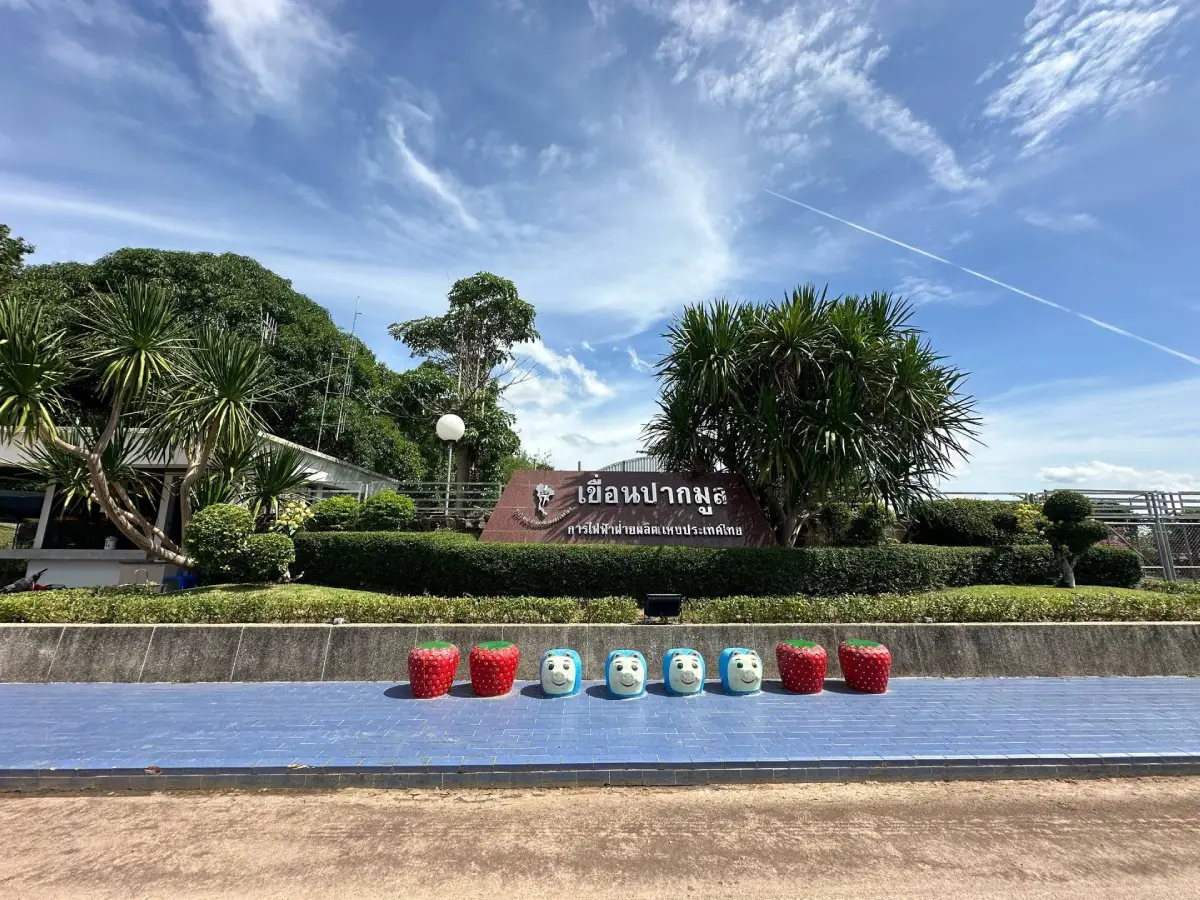
Open Days: Daily
Opening Hours: 08.30 – 16.30
Pak Mun Dam in Ubon Ratchathani Province is one of the most important river-based landmarks in northeastern Thailand. Built across the Mun River near Ban Hua Haew in Khong Chiam District, the dam stands close to the point where the Mun River flows toward the Mekong River. It is not only a hydropower structure but also a place connected with water management, local fishing, agriculture, transportation, and the wider river landscape of Khong Chiam.
For travelers who want to understand Ubon Ratchathani beyond temples and famous natural parks, Pak Mun Dam offers a deeper view of how rivers shape life in Isan. The dam is 17 meters high and 300 meters long. Its contracted generating capacity is 136 megawatts, produced by 4 hydropower generating units. It also plays a role in raising the water level of the Mun River during the dry season, supporting agriculture, and helping strengthen the regional power system in northeastern Thailand.
The dam is located near the final section of the Mun River before it meets the Mekong River. This geographical position gives Pak Mun Dam special meaning. Visitors can see the dam, the river below it, the water-control gates, and the route leading toward the famous Two-Color River area in Khong Chiam, where the Mun River and the Mekong River meet. A visit to Pak Mun Dam can therefore be combined with a wider journey through river scenery, local communities, and cultural sites around Khong Chiam.
Pak Mun Dam was built to develop water resources, increase the upstream water level of the Mun River, support farmers during the dry season, and generate electricity from the remaining water flow. Construction began in June 1990 and was completed in November 1994. Since then, the dam has become a significant part of Ubon Ratchathani’s modern landscape, representing both infrastructure development and the continuing relationship between local communities and the Mun River.
Technically, Pak Mun Dam is a run-of-river diversion dam. It has 8 spillway gates and is operated in connection with water conditions in the Mun and Mekong river systems. The hydropower plant contains 4 generating units, each with a capacity of 34 megawatts. The average annual electricity generation is about 280 million kilowatt-hours. Unlike large storage dams with high reservoirs, Pak Mun Dam uses the flow of the river and a relatively low water head to generate electricity.
One of the most interesting features of Pak Mun Dam is the way it connects engineering, river ecology, and local livelihoods. EGAT developed a fish ladder to allow fish from the Mekong River to move upstream into the Mun River for spawning. A fisheries center was also established to support aquatic breeding and conservation. These features are important because the Mun and Mekong rivers have long been major sources of fish, food, and livelihood for riverside communities.
The area around Pak Mun Dam is closely linked with local fishing culture. The Mun River and the Mekong River support many freshwater species and fishing practices. For visitors, the dam provides an opportunity to see how a hydropower project stands within a living river system. The landscape is not only about concrete structures and gates. It is also about boats, riverbanks, fishing communities, seasonal water levels, and the daily life of people who live beside the river.
In 2026, the water-management committee resolved to open all 8 spillway gates of Pak Mun Dam from July 30, 2026 onward. The decision was related to water levels and river-management criteria. For travelers, this means the river landscape may change depending on the season and dam operation. Water levels, current strength, and views below the dam can vary. Visitors should follow warning signs and stay within safe viewing areas, especially during periods of active water release.
As a travel destination, Pak Mun Dam is suitable for visitors who enjoy river landscapes, quiet viewpoints, engineering sites, and meaningful local context. It can be visited as a short stop on the way to Khong Chiam, Kaeng Tana National Park, Pha Taem National Park, or the Two-Color River viewpoint. A brief visit is enough for viewing and photography, but a slower visit allows travelers to understand the dam’s deeper role in water management, power generation, and local life.
The dam crest also serves as a convenient route between Khong Chiam District and Sirindhorn District. This makes Pak Mun Dam useful not only as a viewpoint but also as part of the local transportation network. Travelers driving through the area can use the route to connect Khong Chiam, Sirindhorn Dam, Chong Mek, Pha Taem, and other eastern Ubon Ratchathani destinations without backtracking through Phibun Mangsahan.
The downstream area of the dam offers views of the Mun River as it continues toward the Mekong River. During suitable water conditions, local boat services may operate along the Mun River, giving visitors a different view of the riverside landscape. Anyone interested in boating should contact local operators directly and choose a safe time, because water currents can change according to river conditions and dam-gate operation.
The best times to visit Pak Mun Dam are morning and late afternoon. Morning offers cooler weather, softer light, and a calm atmosphere. Late afternoon is good for photography, especially when the light reflects on the water and the river landscape. Since the dam area is open and exposed to sunlight, visitors should bring drinking water, a hat, and sun protection, especially when planning to spend time walking or taking photographs outdoors.
Pak Mun Dam is often understood as an engineering structure, but its real value for travelers is broader than that. It reveals how one river location can hold several layers of meaning: electricity generation, water control, agriculture, fishing, transportation, ecology, and tourism. Standing near the dam, visitors can see the relationship between infrastructure and nature, and between national development and local riverside life.
For photographers, Pak Mun Dam offers several useful angles. The dam crest, spillway gates, downstream river, riverside boats, road across the dam, and distant river scenery all create different visual compositions. On clear days, the open sky and wide water surface give the area a spacious feeling. On cloudy or rainy days, the river can look more dramatic, reflecting the power and importance of water in this part of Thailand.
For travelers interested in contemporary history and society, Pak Mun Dam is an important learning site. It has been discussed for decades in relation to water management, fish migration, local communities, energy development, and public policy. Visiting the dam therefore gives travelers a chance to think beyond sightseeing and to understand how major infrastructure projects affect rivers, livelihoods, and regional development.
Pak Mun Dam fits well into a wider Ubon Ratchathani itinerary. Travelers can start from Ubon Ratchathani city, drive toward Khong Chiam, stop at Pak Mun Dam, continue to the Two-Color River viewpoint, visit Wat Tham Khuha Sawan or Kaeng Tana National Park, and then stay overnight in Khong Chiam before visiting Pha Taem National Park the next morning. This route gives a complete experience of water, cliffs, temples, local communities, and Mekong-side landscapes.
Nearby attractions help make the trip more complete. The Two-Color River is one of Khong Chiam’s best-known landmarks. Kaeng Tana National Park offers riverside rock formations and natural scenery. Wat Tham Khuha Sawan combines local religious culture with river views. Pha Taem National Park and Sao Chaliang are famous for cliff landscapes, prehistoric rock paintings, and unusual sandstone formations. Together, these places create a strong cultural and natural travel route around Pak Mun Dam.
Restaurants near Pak Mun Dam and Khong Chiam usually focus on freshwater fish, Isan dishes, and riverside dining. Common dishes include spicy fish soup, fried river fish, steamed fish with chili dip, fish larb, grilled river prawns, and local-style salads. Visitors can eat in Khong Chiam before or after visiting the dam, as many riverside restaurants are within a short driving distance.
Accommodation is most convenient in Khong Chiam town and along the Mekong River. Visitors can choose from small hotels, riverside resorts, and peaceful accommodations near the river. Staying in Khong Chiam is especially useful for travelers who plan to watch the sunrise, continue to Pha Taem National Park, or spend more time exploring the Mekong and Mun river landscapes.
Getting There from Ubon Ratchathani city is straightforward by private car, rental car, or motorcycle. The distance is about 75 kilometers. The route heads toward Khong Chiam District. Once in the area, the dam can also be used as a connecting route toward Sirindhorn District. Travelers should check fuel, road conditions, and timing before continuing to farther destinations such as Pha Taem, Chong Mek, or Sirindhorn Dam.
Traveling by public transport is possible by taking a local bus or van from Ubon Ratchathani city to Khong Chiam and then arranging local transport to the dam. This option is suitable for travelers without a private vehicle, but advance planning is important because local transport may not run as frequently as city transport. For small groups, hiring a local vehicle or driver in Khong Chiam can be more convenient.
Visitors should observe all safety rules around the dam. Do not enter restricted areas, climb barriers, approach strong currents, or disturb dam operations. Pak Mun Dam is an active infrastructure site, so travel should remain within safe public areas. Warning signs and instructions from staff should always be followed.
Respect for nearby communities is also important. Local people depend on the Mun and Mekong rivers for fishing, trade, travel, and daily life. Visitors should keep the area clean, avoid littering, respect local work along the river, and support local restaurants and accommodations responsibly. This approach makes the trip more meaningful and helps local communities benefit from tourism.
For international travelers, Pak Mun Dam provides a valuable introduction to the role of rivers in northeastern Thailand. In Isan, rivers are not only beautiful scenery. They are sources of food, livelihood, movement, belief, policy, and development. A visit to Pak Mun Dam helps explain why the Mun and Mekong rivers are central to Ubon Ratchathani’s identity.
Pak Mun Dam is therefore a destination for travelers who want more than a quick photo stop. It is a place where engineering, hydropower, river ecology, agriculture, fishing, transportation, and community life can be understood together. For Thai visitors, it offers a deeper look at a familiar province. For foreign travelers, it provides an accessible way to understand the river-based culture and modern development of lower Isan.
A trip to Pak Mun Dam is best completed by continuing to the Two-Color River area. Seeing the Mun River after it passes the dam and flows toward the Mekong River gives the journey a clear sense of continuity. From the dam to the river confluence, travelers can understand how water connects places, people, and landscapes across Ubon Ratchathani Province.
| Name | Pak Mun Dam |
| Location | Ban Hua Haew, Khong Chiam District, Ubon Ratchathani Province, on the Mun River before it meets the Mekong River |
| Address | Pak Mun Dam, Kham Khuean Kaeo Subdistrict, Sirindhorn District, Ubon Ratchathani 34350, with adjoining area near Ban Hua Haew, Khong Chiam District |
| Highlights | A major dam across the Mun River near the Mekong confluence, 17 meters high and 300 meters long, with hydropower generation, river views, and a travel route linking Khong Chiam and Sirindhorn |
| History | Construction began in June 1990 and was completed in November 1994. The dam was developed to raise the Mun River water level during the dry season, support agriculture, and generate electricity. |
| Distinctive Features | Run-of-river diversion dam with 8 spillway gates, 4 hydropower units, 136 MW contracted generating capacity, and average annual electricity generation of about 280 million kWh |
| Importance | Important for hydropower generation, water management, agriculture, local fisheries, transportation, and educational tourism in the Mun River Basin |
| Travel Information | Travel from Ubon Ratchathani city toward Khong Chiam District, about 75 km. Suitable for private car, rental car, or motorcycle. The dam crest can also connect toward Sirindhorn District. |
| Current Status | Open as a dam area and riverside attraction. All 8 spillway gates have been resolved to open from July 30, 2026 onward under Ubon Ratchathani’s water-management process. |
| Open Days | Daily |
| Opening Hours | 08.30 – 16.30 |
| Fees | No admission fee |
| Facilities | Dam crest road, viewpoint areas, Khong Chiam-Sirindhorn connecting route, downstream river area, and local boat-service access in some periods |
| Main Areas / Zones | Dam crest, 8 spillway gates, hydropower plant, downstream river area, fish ladder, Mun River riverside area, and route toward the Two-Color River |
| Caretaker | Electricity Generating Authority of Thailand (EGAT), Pak Mun Dam, and Sirindhorn Dam Power Plant Division |
| Main Contact Number | EGAT Pak Mun Dam, Tel. 0 4536 6079 Tel. 0 4344 6148-9, 0 4536 6081-3 |
| Official Website / Official Page | Electricity Generating Authority of Thailand (EGAT) website |
| Nearby Tourist Attractions | 1. Two-Color River / Mun-Mekong Confluence, 6 km 2. Kaeng Tana National Park, 3 km 3. Wat Tham Khuha Sawan, 8 km 4. Khong Chiam Town and Mekong Riverside Road, 8 km 5. Pha Taem National Park, 20 km 6. Sao Chaliang, 22 km |
| Nearby Restaurants | 1. Phae Araya Khong Chiam, 7 km, Tel. 045-351-015 2. Khrua Khong Chiam, 8 km, Tel. 045-351-027, 062-829-3697 3. Larb Pla Khong Chiam, 9 km, Tel. 0-4535-1283 4. Phae Le Mun, 6 km, Tel. 098-242-4464 5. Huen Rab Lom Khong Chiam Restaurant, 8 km, Tel. 084-595-5502 |
| Nearby Accommodations | 1. Khong Chiam Hotel, 8 km, Tel. 086-468-7431 2. View Khong Khong Chiam Hotel, 8 km, Tel. 065-242-3392 3. Tohsang Heritage Khong Chiam, 11 km, Tel. 045-351-174-6 4. Sedhapura by Tohsang, 11 km, Tel. 094-310-6202 5. Khong Chiam Orchid Riverside Resort, 12 km, Tel. 098-916-8771 |
Frequently Asked Questions (FAQ)
Q: Where is Pak Mun Dam located?
A: Pak Mun Dam is located near Ban Hua Haew in Khong Chiam District, Ubon Ratchathani Province, close to the point where the Mun River flows toward the Mekong River.
Q: What are the opening days and hours of Pak Mun Dam?
A: Pak Mun Dam is open daily from 08.30 to 16.30.
Q: Is there an admission fee for Pak Mun Dam?
A: No. There is no admission fee.
Q: Why is Pak Mun Dam important?
A: Pak Mun Dam is important for hydropower generation, water management, agriculture, local fishing, transportation, and educational tourism in the Mun River Basin.
Q: What is the generating capacity of Pak Mun Dam?
A: Pak Mun Dam has a contracted generating capacity of 136 MW from 4 hydropower generating units, with an average annual generation of about 280 million kWh.
Q: When is the best time to visit Pak Mun Dam?
A: Morning and late afternoon are the best times for sightseeing and photography because the weather is more comfortable and the river views are clearer.
Q: What attractions can be visited together with Pak Mun Dam?
A: Nearby attractions include the Two-Color River, Kaeng Tana National Park, Wat Tham Khuha Sawan, Pha Taem National Park, and Sao Chaliang.
Q: How can travelers get from Ubon Ratchathani city to Pak Mun Dam?
A: Travelers can drive or rent a car from Ubon Ratchathani city toward Khong Chiam District, about 75 km away. The dam crest also connects toward Sirindhorn District.
 Category: ●Nature and Wildlife
 Group: ●Dam, Reservoir, Lake
Last Update : 3 MonthAgo
 Last Update : 3 MonthAgo

 Click to Access the Navigation Map GPS
Pak Mun Dam Map
Recommend

 Art, Culture and Heritage
 Historical Sites and Monuments(5)
 Landmarks and Memorials(2)
 Royal Palace(1)
 Art, Craft Centres, Tradition(7)
 Museums(3)
 Places of Worship
 Temple(37)
 Other Sacred Sites(4)
 Research and Development
 Royal Project(2)
 Suburban Living
 Village, Community(2)
 Local Market(4)
 National Parks and Marine Reserves(5)
 Mountain (Doi)(6)
Dam, Reservoir, Lake(8)
 Waterfalls(12)
 Hot Springs(1)
 Caves(2)
 River, Canal(11)
 Bays and Beaches(8)
 Islands(2)
 Other natural attractions(6)
 Entertainment and Agricultural
 Zoos and Aquariums(2)
 Animal camps and shows(1)
 Farms, Parks and Ecotourism(1)
 Waterpark(1)
 Travel Articles, Recipes
 Travel Review, Food Review(1)


