
lovethailand home >Northeastern Travel Attractions >Ubon Ratchathani Travel Attractions >Phibun Mang Sa Han >Phibun > Wat Phu Khao Kaew
TL;DR: Wat Phu Khao Kaew is located at Phibun Subdistrict, Phibun Mangsahan District, Ubon Ratchathani Province, open Daily, hours 09.00 – 16.00.
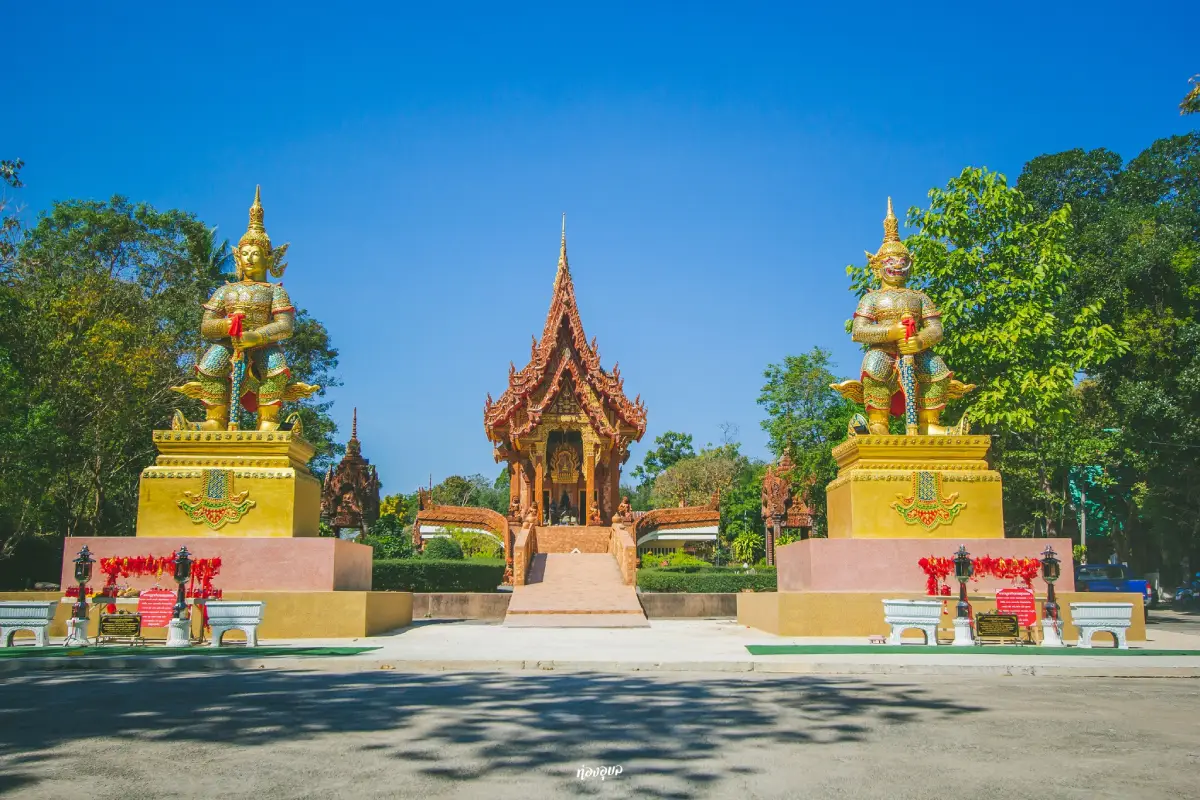
Wat Phu Khao Kaew
Open Days: Daily
Opening Hours: 09.00 – 16.00
Wat Phu Khao Kaew in Ubon Ratchathani is one of the most distinctive temples in Phibun Mangsahan District. Located on a hill in Phibun Subdistrict, about 44 km from Ubon Ratchathani city and roughly 1 km before the town center of Phibun Mangsahan on Highway 217, the temple combines forest-monastery history, local Buddhist art, and a striking glazed-tile ordination hall in one place. For Thai travelers, it is an important temple connected with the meditation lineage of Luang Pu Sao Kantasilo and Phra Achan Dee Channo. For international visitors, it is a valuable cultural site that shows a quieter and more local side of Thai Buddhism outside the usual tourist routes.
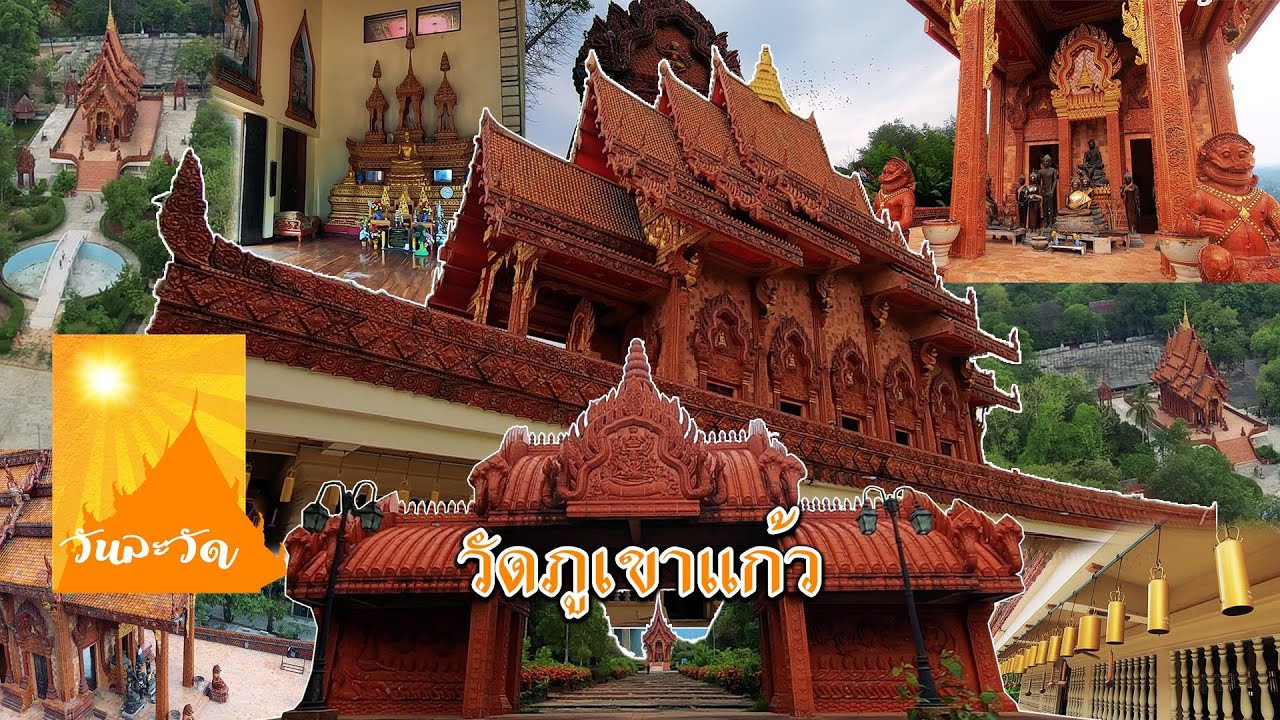
The temple is best known for its beautiful ordination hall, which is covered with glazed ceramic tiles. The building stands on the hill with a warm terracotta tone and a strong visual identity. Its roof follows a Thai architectural form with 4 tiers at the front and back, decorated with chofah, bai raka, hang hong, and naga-shaped brackets supporting the eaves. At the center of the roof rises a gilded castle-like finial, giving the ordination hall both sacred symbolism and elegant balance. This is the image that makes Wat Phu Khao Kaew instantly memorable.
Wat Phu Khao Kaew is not only a place for making merit or taking photographs. It is a temple with a layered story. The hilltop setting, the glazed-tile ubosot, the high-relief images inside the hall, the lower-level sermon and meditation space, and the local museum together create a complete cultural experience. Visitors can learn about forest meditation, local craftsmanship, Buddhist symbolism, and community memory in a single visit.
The temple’s history became firmly established in 1937, when Somdet Phra Maha Wirawong (Tisso Uan) asked Luang Pu Sao Kantasilo to consider founding a forest meditation monastery in Phibun Mangsahan. The intention was to create a place where local people could make merit, receive Dhamma instruction, and practice meditation. Phra Achan Sngiam and Phra Achan Dee Channo later established a practice center on the hill site, which local people called Wat Pa, Wat Pa Phu Khao Kaew, and eventually Wat Phu Khao Kaew.
The forest-monastery identity of Wat Phu Khao Kaew is important. Before becoming a developed temple, the area was a high hill and an old forested ground near the entrance to Phibun Mangsahan. Its quiet character made it suitable for meditation training. The temple therefore grew from the practice-oriented spirit of the Thai forest tradition rather than from ornamental construction alone. This background gives the temple a deeper meaning for visitors interested in Thai Buddhist practice.
Phra Achan Dee Channo is one of the most important figures in the temple’s history. He was connected with the forest meditation lineage and played a key role in establishing Wat Phu Khao Kaew. Historical records of temple administration name Phra Achan Dee Channo as the first abbot, followed by Luang Pho Phet, and later Phra Khru Wiboon Thammaphan, also known as Luang Pho Chot Aphakko. This lineage helps explain why Wat Phu Khao Kaew is remembered not only for architecture, but also for its role in the Buddhist meditation tradition of northeastern Thailand.
The original temple had a 2-storey wooden sermon hall built by Phra Achan Dee Channo. After that structure was destroyed by fire on 3 December 1973, Phra Khru Phibun Thammaphan (Chot Aphakko) designed a new ordination hall to replace it. The new building was created as a 2-storey structure: the lower level functions as a sermon hall and meditation space, while the upper level serves as the ordination hall. The entire structure was designed in the form of a symbolic Buddhist boat, known as “Phuttha Nawa”, or the vessel of the Buddha’s teaching.
This boat-like concept gives the ordination hall a special meaning. In Buddhist symbolism, a boat represents the Dhamma that carries beings across suffering toward liberation. At Wat Phu Khao Kaew, this idea is expressed through architecture. The building is not only a sacred hall for monastic ceremonies; it is also a symbolic vessel, a visual teaching, and a work of local Buddhist imagination.
The glazed-tile ubosot is a strong example of how Thai Buddhist architecture can combine local craftsmanship with religious meaning. The 4-tiered roof gives the structure grandeur without excess. The naga brackets link the building with northeastern beliefs and the river-culture symbolism of the region. The stucco gable features graceful scrollwork, while the column bases show influence from Indian artistic forms. Seen as a whole, the ordination hall balances strength, elegance, and sacred narrative.
The glazed ceramic tiles give the building its unique surface and color. They protect the structure from weather while creating a warm texture that sets the temple apart from many other temples in Ubon Ratchathani. The terracotta tone fits naturally with the hilltop setting and gives the ordination hall a dignified yet approachable character. It is a temple building that feels both carefully designed and deeply rooted in local craftsmanship.
Inside the ordination hall, high-relief panels above the doors and windows depict important pagodas and sacred relic sites of Thailand. Each display introduces the story and significance of important Thai chedis in concise form. This makes the interior of the hall both a place of worship and a cultural learning space. Visitors can see how Buddhist geography, sacred relics, and national religious memory are represented through local art.
These high-relief images are meaningful for both Thai and foreign visitors. For Buddhist devotees, they encourage reflection on sacred places connected with relics and faith. For art and culture travelers, they show how local artisans use form, depth, and composition to tell religious stories. The hall rewards careful observation. A quick visit may reveal a beautiful building, but a slower visit reveals a teaching space built into the architecture itself.
The lower level of the ordination hall serves as a sermon hall and a meditation area. This reflects the temple’s practice-oriented origin. Wat Phu Khao Kaew was not created only as an architectural landmark. It was rooted in Dhamma study, meditation, and community training. The lower-level space helps visitors understand that listening to Dhamma, practicing meditation, and participating in temple life have always been part of the temple’s identity.
Another important part of the temple is the Wat Phu Khao Kaew Folk Museum. The museum displays local objects and old items such as household utensils, antique objects, jars, ceramics, and brassware. This museum adds a community dimension to the temple visit. It shows how a temple can serve not only as a religious site, but also as a place where local memory, everyday objects, and cultural identity are preserved.
The folk museum is open daily from 09.00 to 16.00 and does not charge an admission fee. Visitors who want to experience the temple fully should allow enough time to see both the ordination hall and the museum. A visit of 1 to 2 hours is suitable for viewing the exterior architecture, observing the interior reliefs, and walking through the museum without rushing.
The hilltop setting gives Wat Phu Khao Kaew an atmosphere different from temples on flat land. Visitors gradually move upward from the road toward the temple grounds, creating a natural transition from the everyday world into a sacred space. The steps, gate, and elevated setting make the approach to the ubosot feel ceremonial. This landscape also explains the temple’s name, which is connected with the hill and its local identity.
For foreign travelers, Wat Phu Khao Kaew is a useful introduction to northeastern Thai temple culture. It is very different from the grand royal temples of Bangkok or the Lanna temples of northern Thailand. Instead of gold-dominated decoration, it emphasizes glazed terracotta tiles, local stucco work, naga brackets, the Buddhist boat concept, and high-relief panels about Thailand’s sacred pagodas. It is a temple that shows the regional character of Isan Buddhism clearly.
The temple is also convenient for travelers exploring Phibun Mangsahan. It can be combined with Kaeng Saphue, Wat Don That, Kaeng Hai, Phu Kratae, Wat Pa Pak Dom, and the route toward Sirindhorn and Khong Chiam. From Ubon Ratchathani city, Wat Phu Khao Kaew can be visited as the first major stop before entering Phibun Mangsahan town. From there, travelers can continue to riverside attractions and other temples in the district.
Kaeng Saphue is one of the easiest nearby attractions to combine with Wat Phu Khao Kaew. It is a well-known riverside attraction on the Mun River in Phibun Mangsahan. During the dry season, the rock formations become more visible as the water level drops. During other seasons, the area is still suitable for walking by the river and enjoying local food. Together, Wat Phu Khao Kaew and Kaeng Saphue create a balanced trip of temple art, faith, and local river scenery.
Wat Don That is another important nearby temple, especially for travelers interested in the Thai Forest Tradition. Located on an island in the Mun River, it is associated with Luang Pu Sao Kantasilo. Visiting Wat Phu Khao Kaew and Wat Don That in the same trip gives travelers a deeper understanding of the forest-meditation history of Phibun Mangsahan. One temple stands on a hill, while the other stands on an island; together they show how geography and spiritual practice shaped Buddhist places in this district.
The overall atmosphere of Wat Phu Khao Kaew is calm and local. Although the ordination hall is visually striking, the temple is not overly commercialized. Visitors can walk slowly around the grounds, observe the details of the roof, stucco work, naga brackets, and glazed tiles, and then enter the interior to see the high-relief panels. The temple is best appreciated with patience and attention to detail.
Photography is rewarding here. The entrance, stairway, front elevation of the ubosot, side angles of the roof, glazed-tile surfaces, stucco details, and interior reliefs all provide meaningful visual material. However, photography should remain respectful. Visitors should keep voices low, avoid disturbing people making merit, and follow temple etiquette inside sacred buildings and museum spaces.
Modest clothing is required for a proper visit. Shoulders and knees should be covered, and shoes should be removed before entering the ordination hall. Visitors should avoid touching museum objects unless permission is given. Respectful behavior is part of understanding the temple correctly, especially because Wat Phu Khao Kaew is both a religious site and a cultural learning space.
The best time to visit is from morning to early afternoon, especially for travelers who want to see the folk museum during opening hours. Morning light is pleasant for walking and photography, while afternoon light brings out the warm color of the glazed tiles. Travelers who plan to continue to Kaeng Saphue or Wat Don That can comfortably include Wat Phu Khao Kaew as the first or middle stop of the day.
For those interested in architecture, Wat Phu Khao Kaew represents the transformation of a temple space after the loss of the original wooden sermon hall. The new glazed-tile ubosot did not simply replace the old building; it created a new identity for the temple. Designed under the direction of Phra Khru Phibun Thammaphan (Chot Aphakko), the building became the landmark that defines Wat Phu Khao Kaew today.
For community history, the temple is equally important. The folk museum preserves everyday objects that reflect local life in Phibun Mangsahan. These objects help visitors see the relationship between temple and community. A temple is not only a place of rituals; it can also be a repository of memory, craftsmanship, local knowledge, and shared identity.
Getting There is straightforward by private car. From Ubon Ratchathani city, take Highway 217 toward Phibun Mangsahan for about 44 km. The temple is located on a hill roughly 1 km before reaching Phibun Mangsahan town. Travelers already in Phibun Mangsahan can return along Highway 217 for a short distance to reach the temple. A private car is the easiest option because it allows visitors to continue to Kaeng Saphue, Wat Don That, or Wat Pa Pak Dom on the same day.
Travelers without a private car can first reach Phibun Mangsahan town and then use local transport to reach the temple. Visiting during the museum opening hours is the best way to see the temple fully. For families or small groups, hiring a local vehicle from Ubon Ratchathani city or Phibun Mangsahan gives more control over timing and makes it easier to combine several nearby places in one route.
A good visit can begin outside the ordination hall, where travelers can observe the overall form of the Buddhist boat structure and the 4-tiered roof. After that, visitors can enter the accessible interior to see the high-relief panels about important Thai chedis. The visit can then continue to the folk museum, where local objects and old items provide another layer of cultural understanding.
Wat Phu Khao Kaew offers a different experience from many famous temples in Ubon Ratchathani. Its beauty is visual, but its meaning is historical and spiritual. The glazed-tile ubosot makes a powerful first impression, while the temple’s connection with forest meditation masters gives the visit depth. This combination makes Wat Phu Khao Kaew suitable for travelers who want more than a quick temple stop.
In summary, Wat Phu Khao Kaew brings together 3 important elements: the forest-meditation heritage of Luang Pu Sao and Phra Achan Dee Channo, the distinctive glazed-tile ubosot shaped as a Buddhist boat, and the local folk museum that preserves community memory. These elements make the temple one of the most meaningful cultural sites in Phibun Mangsahan District. For both Thai and international travelers, it is a place to see, learn, and understand the deeper character of Ubon Ratchathani.
| Name | Wat Phu Khao Kaew |
| Former Names | Wat Pa / Wat Pa Phu Khao Kaew |
| Location | Phibun Subdistrict, Phibun Mangsahan District, Ubon Ratchathani Province |
| Address | Wat Phu Khao Kaew, Phibun Subdistrict, Phibun Mangsahan District, Ubon Ratchathani 34110, Thailand |
| Coordinates | 15.241985, 105.227090 |
| Highlights | A glazed-tile ordination hall designed as a Buddhist boat, 4-tiered Thai roof, naga brackets, high-relief panels about Thailand’s important pagodas, and Wat Phu Khao Kaew Folk Museum |
| History | The temple originated as a forest meditation site in 1937 under the inspiration of Somdet Phra Maha Wirawong (Tisso Uan) and is connected with Luang Pu Sao Kantasilo, Phra Achan Sngiam, and Phra Achan Dee Channo |
| Name Origin | The name reflects its hilltop location in Phibun Mangsahan and developed from the earlier name Wat Pa Phu Khao Kaew |
| Distinctive Features | A hilltop forest temple with a terracotta-toned glazed-tile ubosot, stucco scrollwork, naga brackets, and interior high-relief Buddhist narratives |
| Travel Information | From Ubon Ratchathani city, take Highway 217 toward Phibun Mangsahan for about 44 km. The temple is about 1 km before the town center |
| Current Status | Open to visitors and remains an important temple for architecture, local museum learning, and forest-meditation history in Phibun Mangsahan |
| Open Days | Daily |
| Opening Hours | 09.00 – 16.00 |
| Fees | No admission fee |
| Main Areas / Zones | Glazed-Tile Ubosot In Buddhist Boat Form Lower-Level Sermon Hall And Meditation Area High-Relief Panels About Important Thai Chedis Wat Phu Khao Kaew Folk Museum Stairway And Hilltop Approach Forest Temple Grounds And Courtyard |
| Abbot / Caretaker | Historical abbot records include Phra Achan Dee Channo, Luang Pho Phet, and Phra Khru Wiboon Thammaphan (Chot Aphakko); Wat Phu Khao Kaew Folk Museum is managed by the temple |
| Main Contact Number | 045-251-798 |
| Nearby Tourist Attractions | 1. Kaeng Saphue, about 4 km 2. Wat Don That, about 10 km 3. Kaeng Hai Phibun Mangsahan, about 15 km 4. Phu Kratae, about 16 km 5. Wat Pa Pak Dom, about 26 km 6. Wat Sirindhorn Wararam Phu Prao, about 39 km |
| Nearby Restaurants | 1. Pimbunya Bakery House & Cafe, about 2 km, Tel. 096-417-7026 2. Kaeng Saphue Restaurant, about 4 km, Tel. 086-873-5714 3. Sahaphochana Kaeng Saphue, about 4 km 4. Jib House Thai-Isan Restaurant, about 5 km, Tel. 083-460-1866 5. Chom Moon Floating Restaurant, about 15 km, Tel. 045-959-889 |
| Nearby Accommodations | 1. Pimbunya House / Pimbunya Bakery House & Cafe, about 2 km, Tel. 096-417-7026 2. O-Rich Gold Hotel, about 2 km, Tel. 092-167-3450 3. Sunny Resort, about 4 km, Tel. 089-791-6391 4. Koompasansuk Resort, about 5 km, Tel. 086-469-6102 5. Sabaithong Resort, about 9 km, Tel. 084-478-1108 6. Bluemoon Riverside Resort Ubon Ratchathani, about 15 km, Tel. 062-904-4441 |
Frequently Asked Questions (FAQ)
Q: Where is Wat Phu Khao Kaew located?
A: Wat Phu Khao Kaew is located in Phibun Subdistrict, Phibun Mangsahan District, Ubon Ratchathani Province, about 44 km from Ubon Ratchathani city.
Q: What are the opening hours of Wat Phu Khao Kaew?
A: Wat Phu Khao Kaew and its folk museum are open daily from 09.00 to 16.00.
Q: Is there an admission fee at Wat Phu Khao Kaew?
A: There is no admission fee for Wat Phu Khao Kaew or Wat Phu Khao Kaew Folk Museum.
Q: What is Wat Phu Khao Kaew famous for?
A: The temple is famous for its glazed-tile ordination hall designed in the form of a Buddhist boat, with a 4-tiered roof, naga brackets, and high-relief panels about important Thai chedis.
Q: How is Wat Phu Khao Kaew connected with Thai forest meditation?
A: The temple originated as a forest meditation site in 1937 and is connected with Somdet Phra Maha Wirawong (Tisso Uan), Luang Pu Sao Kantasilo, and Phra Achan Dee Channo.
Q: What can visitors see inside Wat Phu Khao Kaew?
A: Visitors can see the glazed-tile ubosot, lower-level sermon hall and meditation space, high-relief Buddhist panels, and Wat Phu Khao Kaew Folk Museum.
Q: How do travelers get to Wat Phu Khao Kaew?
A: From Ubon Ratchathani city, take Highway 217 toward Phibun Mangsahan for about 44 km. The temple is located about 1 km before the town center.
Q: What nearby places can be visited with Wat Phu Khao Kaew?
A: Nearby places include Kaeng Saphue, Wat Don That, Kaeng Hai, Phu Kratae, Wat Pa Pak Dom, and Wat Sirindhorn Wararam Phu Prao.
 Category: ●Places of Worship
 Group: ●Temple
Last Update : 3 MonthAgo
 Last Update : 3 MonthAgo
 Click to Access the Navigation Map GPS
Wat Phu Khao Kaew Map
Recommend

 Art, Culture and Heritage
 Historical Sites and Monuments(5)
 Landmarks and Memorials(2)
 Royal Palace(1)
 Art, Craft Centres, Tradition(7)
 Museums(3)
Temple(37)
 Other Sacred Sites(4)
 Research and Development
 Royal Project(2)
 Suburban Living
 Village, Community(2)
 Local Market(4)
 Nature and Wildlife
 National Parks and Marine Reserves(5)
 Mountain (Doi)(6)
 Dam, Reservoir, Lake(8)
 Waterfalls(12)
 Hot Springs(1)
 Caves(2)
 River, Canal(11)
 Bays and Beaches(8)
 Islands(2)
 Other natural attractions(6)
 Entertainment and Agricultural
 Zoos and Aquariums(2)
 Animal camps and shows(1)
 Farms, Parks and Ecotourism(1)
 Waterpark(1)
 Travel Articles, Recipes
 Travel Review, Food Review(1)


