
lovethailand home >Northeastern Travel Attractions >Surin Travel Attractions >Muang Surin >Nok Muang > Surin Rajabhat University
TL;DR: Surin Rajabhat University is located at Nok Mueang Subdistrict, Mueang Surin District, Surin Province, Thailand, open Monday – Friday for administrative office services.
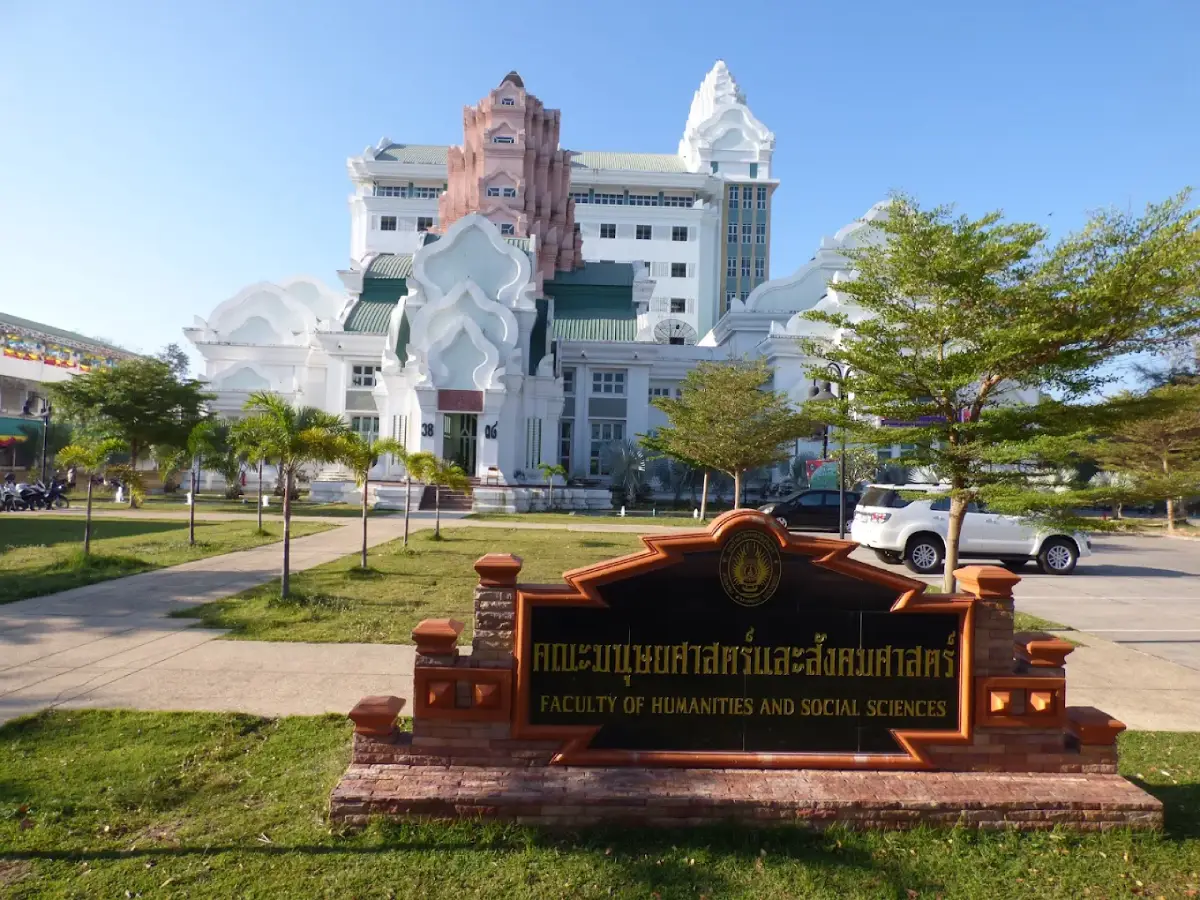
Surin Rajabhat University
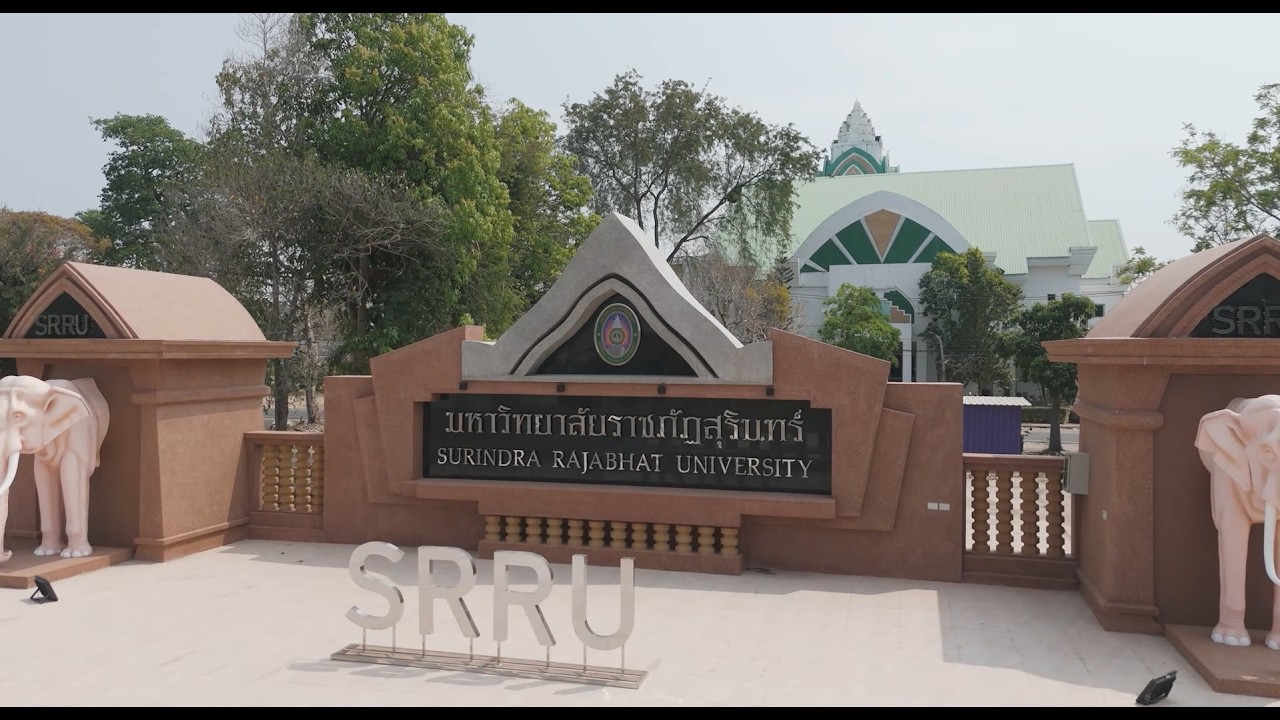
Open Days: Monday – Friday for administrative office services
Office Hours: 08:30 – 16:30
Surindra Rajabhat University (SRRU), known in Thai as มหาวิทยาลัยราชภัฏสุรินทร์, is a public university in Surin Province, northeastern Thailand. Its history began on 29 September 1973 with the establishment of Surin Teachers College, an institution created to train teachers and support educational development in the region. It subsequently became Surin Rajabhat Institute in 1995 and was granted university status on 15 June 2004 under the Rajabhat University Act. The university is located at 186 Moo 1, Surin–Prasat Road, Nok Mueang Subdistrict, Mueang Surin District, Surin Province. Its campus covers 479 rai, 1 ngan, and 70 square wah. By 2026, the institution had celebrated 53 years of educational development, expanding from a teacher-training college into a multidisciplinary university with academic strengths in education, science, humanities, social sciences, business, industrial technology, agriculture, research, and local cultural preservation.
Surindra Rajabhat University is more than an institution offering higher education qualifications. Its development reflects the changing educational, economic, and social needs of lower northeastern Thailand. Beginning with a mission to prepare teachers for schools in Surin and neighboring provinces, the university gradually expanded into a center for professional training, scientific research, community engagement, and cultural preservation. Its academic and public-service responsibilities remain closely linked to the communities of Surin, a province distinguished by the cultural traditions of Thai-Khmer, Kuy, and Lao-Isan populations.
The university occupies a substantial campus along the Surin–Prasat Road, within reach of central Surin and the city's main transportation facilities. Its grounds contain academic buildings, science and technology laboratories, administrative offices, student activity spaces, a library, sports facilities, professional training facilities, and cultural learning centers. These facilities create an educational environment in which modern academic activities coexist with institutions devoted to preserving local history, traditional craftsmanship, and regional cultural identity.
To understand the university's origins, it is useful to consider the expansion of teacher education in Thailand during the twentieth century. As educational opportunities spread beyond major cities, the government needed more qualified teachers to serve schools across provincial and rural areas. Surin, an important province in lower northeastern Thailand, required a stronger system of teacher preparation to support educational development in both urban and rural communities. The establishment of Surin Teachers College was therefore part of a broader national effort to improve educational access and strengthen the professional teaching workforce.
Surin Teachers College was officially established on 29 September 1973 under the Department of Teacher Training, Ministry of Education. Its primary responsibility was to prepare teachers for schools at different educational levels. Establishing the college in Surin allowed students from the province and surrounding areas to pursue professional teacher training closer to home. It also provided opportunities for serving teachers to improve their qualifications without having to relocate permanently to Bangkok or another distant educational center.
During its early years, the college offered the Certificate in Education, known in Thai as Por Kor Sor, and the Higher Certificate in Education, or Por Kor Sor Sung. These qualifications formed an important part of Thailand's historical teacher-training system. Students studied educational principles, teaching methods, academic subjects, classroom management, and practical teaching skills. The emphasis was on preparing graduates who could enter schools with the professional foundations needed to support children's learning.
The period from 1976 to 1981 marked an important stage of institutional growth. Bunjit Chusongdet was one of the college's significant early administrators. In the 1976 academic year, Surin Teachers College admitted 1,000 teacher trainees from Surin and Si Sa Ket provinces. Because the demand for qualified teachers remained substantial, the college also developed evening study opportunities to accommodate students and working educators who could not attend normal daytime classes.
Between 1977 and 1981, the college continued offering its teacher-training certificate programs and provided opportunities for practicing teachers in Surin and Si Sa Ket to obtain higher qualifications. The range of educational specializations expanded in response to the needs of local schools. Through these programs, the institution became part of a wider teacher-development network serving lower northeastern Thailand and helped strengthen the educational workforce in communities throughout the region.
From 1981 to 1985, Assistant Professor Phaitun Charoenphanthuwong succeeded Bunjit Chusongdet in the college's leadership. This was a period of continuing curriculum development, during which teacher education expanded beyond certificate-level qualifications. Degree-level studies became increasingly important, reflecting the changing professional standards and higher academic expectations of Thailand's education system.
Changes to Thailand's Teachers College legislation in 1984 and subsequent developments in 1985 allowed teachers' colleges to broaden their academic responsibilities beyond teacher preparation. Surin Teachers College consequently expanded into education, science, and liberal arts at diploma and degree levels. This was a decisive step toward the modern multidisciplinary university. It enabled the institution to respond to local demands for professionally trained graduates in fields beyond the traditional teaching profession.
In 1985, teachers' colleges throughout Thailand were organized into regional groups to promote administrative and academic cooperation. Surin Teachers College joined Nakhon Ratchasima Teachers College, Buriram Teachers College, and Ubon Ratchathani Teachers College in the Southern Isan United Colleges network. During this period, the institution was associated with the name Southern Isan United Colleges–Surin. The arrangement created opportunities for collaboration among teacher-training institutions with shared geographical and educational responsibilities.
A major milestone in the history of Thailand's Rajabhat institutions occurred on 14 February 1992, when His Majesty King Bhumibol Adulyadej graciously bestowed the name Rajabhat Institute upon 36 teachers' colleges throughout Thailand. The term Rajabhat conveys the idea of people serving the King and the nation. It subsequently became associated with an educational mission centered on public service, regional development, and responsibility toward Thai society.
On 25 January 1995, Surin Teachers College became Surin Rajabhat Institute under the Rajabhat Institute Act of 1995. The new status expanded the institution's academic and administrative responsibilities. It could develop degree programs across a wider range of disciplines while strengthening research, academic services, and cultural preservation. Graduate education also became an important part of the institution's development, offering further study opportunities for teachers, administrators, researchers, and other professionals.
During the Rajabhat Institute period, academic offerings expanded in education, science, liberal arts, and related fields. Graduate programs supported the professional development of education administrators and teaching personnel, while other academic disciplines strengthened the institution's contribution to regional employment and community development. The transition helped establish the foundations of the university's present academic structure.
On 15 June 2004, Surin Rajabhat Institute was elevated to Surindra Rajabhat University under the Rajabhat University Act of 2004. This new legal status marked its formal emergence as a public university with responsibilities encompassing higher education, research, community services, and the preservation of arts and culture. Although its range of academic disciplines had broadened significantly, teacher education and local development remained central to its institutional mission.
Three years are especially significant in the university's historical timeline: 1973, the establishment of Surin Teachers College; 1995, the transition to Surin Rajabhat Institute; and 2004, the granting of university status. These milestones should be distinguished from one another, as the university's founding date refers to the original teacher-training institution rather than the later legal establishment of the university.
By 2026, Surindra Rajabhat University had reached the 53rd anniversary of its original foundation and completed 22 years under its university designation. Over that period, it had developed from a specialist teacher-training college into an institution covering numerous professional and academic fields. Its history illustrates the expansion of higher education opportunities in provincial Thailand and the continuing importance of universities in regional development.
In late October 2026, Associate Professor Dr. Chalee Thongrueang, a pharmacist and academic, was serving as Acting President of Surindra Rajabhat University following the presidency of Associate Professor Dr. Chalong Sukthong. The university's administration operates through the Office of the President, academic faculties, institutes, offices, and support divisions responsible for teaching, research, student development, personnel, and institutional management.
The university's identity is closely tied to the concept of higher education for local development, a fundamental principle shared by Thailand's Rajabhat universities. This mission emphasizes education that addresses local opportunities and challenges, develops qualified professionals, supports public institutions, and encourages the application of academic knowledge in communities. Research and teaching are therefore connected with the practical needs of schools, government agencies, local businesses, and residents.
The university emblem derives from the royal seal associated with King Rama IX, which was graciously bestowed upon Rajabhat institutions. Five colors form part of the emblem's symbolism. Blue represents the monarchy, green refers to nature and the environment, gold symbolizes intellectual prosperity, orange represents the flourishing of local arts and culture, and white signifies the purity of scholarly thought. Together, these elements express the historical, intellectual, and cultural ideals associated with the Rajabhat system.
The official colors of Surindra Rajabhat University are purple and green, a combination that has been associated with the institution since its establishment as Surin Teachers College in 1973. These colors are prominent during university ceremonies, student activities, and celebrations. The university flower is the Inthanin, a flowering tree known for its purple and pinkish-purple blossoms. Its name is also used in identifying incoming student classes, helping create a sense of continuity between generations of students and alumni.
The students admitted in the 2026 academic year were known as Inthanin Class 53, reflecting the institution's 53-year heritage. This naming tradition connects the university's floral symbol with student identity and encourages new students to view themselves as part of an educational community extending across many generations.
In 2026, the university listed seven faculties within its organizational structure: the Faculty of Education, Faculty of Science and Technology, Faculty of Humanities and Social Sciences, Faculty of Management Science, Faculty of Industrial Technology, Faculty of Agriculture and Agro-Industry, and Faculty of Nursing. The first six faculties were represented in the university's 2026 intake. The Faculty of Nursing was developing its curriculum, facilities, and professional training arrangements, with the first student intake planned for the 2027 academic year.
The Faculty of Education preserves the university's original teacher-training mission. Its academic programs include Early Childhood Education, Primary Education, Physical Education, Digital Technology for Education, Chinese Language Teaching, and Sports Science. It also supports professional teacher qualifications and graduate studies in education. Through these programs, the faculty prepares future teachers and provides advanced educational knowledge for professionals working in schools and educational organizations.
Modern teacher preparation involves much more than knowledge of individual school subjects. Student teachers must understand educational psychology, curriculum development, teaching strategies, learning assessment, digital technology, and classroom management. Supervised professional experience provides opportunities to apply these skills in real educational settings. This combination of academic preparation and practical training remains an essential part of the university's continuing contribution to Thai education.
The Faculty of Science and Technology extends the university's academic reach into fundamental sciences, applied sciences, computing, health, and environmental studies. Its programs include Computer Science, Applied Chemistry, Creative Biology, Environmental Science, Food Processing Business, Public Health, and Thai Traditional Medicine. The faculty also participates in teacher education in mathematics, science, chemistry, biology, physics, home economics, and computing.
Scientific education is particularly valuable to local development because it provides methods for understanding and solving practical problems. Areas such as environmental monitoring, food processing, public health promotion, chemical analysis, and digital information management have applications in businesses, public services, and community organizations. Through laboratory learning and scientific research, students develop analytical abilities that can be applied across a range of professional environments.
The Faculty of Humanities and Social Sciences provides education in languages, society, history, culture, arts, law, and public administration. Its academic programs include English for Communication, Visual Arts and Design, Social Development, Public Administration, Law, and Political Science. It also contributes to teacher preparation through programs in Thai, English, Music Education, Dance Education, Social Studies, and related subjects.
These disciplines are particularly meaningful in Surin, where several cultural and linguistic traditions coexist. Humanities and social sciences provide tools for understanding community identities, historical change, cultural expression, public policy, and social relationships. Language and arts education can also contribute to cultural tourism, creative industries, community communication, and the preservation of traditional knowledge.
The Faculty of Management Science focuses on the economic, administrative, and commercial aspects of professional education. Its programs cover Business Economics, Communication Arts, Tourism and Hotel Management, Logistics and Supply Chain Management, Digital Business Technology, Business Administration, and Accounting. Students develop knowledge of organizational management, finance, marketing, information systems, and contemporary business practices.
Business education is relevant to Surin's expanding commercial environment and to local enterprises involved in agriculture, retail, services, hospitality, and traditional products. Knowledge of financial planning, market analysis, logistics, digital communication, and business operations can help organizations improve efficiency and create opportunities for growth. The faculty's academic work therefore complements the university's wider commitment to strengthening local economic development.
The Faculty of Industrial Technology provides education in Industrial Arts, Mechanical Engineering Technology and Electric Vehicles, Civil Engineering and Architecture Technology, Design Innovation, Computer Technology, Machinery Design and Manufacturing Technology, Industrial Technology, Electrical Engineering, and Engineering Management and Logistics. These subjects support the development of skilled personnel for industries that increasingly depend on automation, digital systems, modern machinery, and technical expertise.
Industrial and technological education has become more important as manufacturing and transportation systems evolve. Students must understand equipment operation, technical design, production processes, energy use, and systematic problem-solving. Practical learning allows them to connect engineering concepts with working conditions and helps prepare graduates for changing professional environments.
The Faculty of Agriculture and Agro-Industry connects academic knowledge with the agricultural economy and livelihoods of communities in northeastern Thailand. Its academic offerings include Agriculture, Animal Science, and Agricultural Education. These disciplines support knowledge of crop and livestock production, responsible resource use, agricultural management, and the development of technical skills that can improve production and provide value to local products.
The Faculty of Nursing represents a newer stage of the university's academic development. During 2026, the university continued preparing a Bachelor of Nursing Science curriculum, developing facilities, and establishing cooperation with hospitals and public-health organizations to support future professional training. The announced target for the faculty's first student intake was the 2027 academic year. Its development illustrates the university's efforts to respond to regional needs for healthcare personnel and professional health education.
Graduate education is offered through several faculties and the university's graduate education administration. Academic fields identified in university curriculum information include Educational Administration, Information and Communication Technology in Education, Curriculum and Learning Innovation, Business Administration, Industrial Technology, and Public Health. Graduate education supports research, advanced professional development, and the preparation of specialists for educational institutions, private organizations, and public agencies.
Research and community engagement form important elements of the university's public mission. The Research and Development Institute supports scholarly activities and the application of knowledge to local challenges. Research-related work connects academic expertise with education, agriculture, community development, small businesses, environmental management, and other subjects relevant to the province and surrounding region.
Academic services provide another way for the university to contribute to local society. Training programs, professional consultation, community projects, and technology transfer can help schools, local authorities, and organizations strengthen their capabilities. These activities demonstrate how higher education can benefit people beyond the immediate community of enrolled students and academic staff.
One of the university's most distinctive responsibilities is the preservation and promotion of local arts and culture through its Office of Arts and Culture. This office developed from the former Surin Provincial Cultural Center and Surin Teachers College Cultural Center. It preserves and presents knowledge relating to traditional crafts, community ceremonies, ethnic identities, local history, and cultural expression.
Building 13 has particular historical significance for the university's cultural mission. Constructed in 1983, it originally accommodated cultural center activities and was subsequently developed into a learning space associated with traditional textiles, historical fabrics, and visual arts. The building is linked to the university's Textile Museum and Inthanin Art Gallery, while the Office of Arts and Culture is based on the first floor of Building 38.
The university's Textile Museum is an important resource for understanding Surin's weaving heritage. Its learning materials examine traditional fabrics, historical textiles, local clothing, and the relationship between weaving practices and the province's ethnic communities. The university has also developed a 360-degree virtual museum experience, allowing visitors to explore aspects of the textile collection and related cultural knowledge online.
Surin's silk weaving traditions are closely connected with local livelihoods, historical craftsmanship, and community identity. Producing silk involves several stages, including silkworm cultivation, silk reeling, dyeing, and weaving. Textile patterns, colors, and garments also communicate cultural meanings. Exhibitions at the university provide opportunities to understand these traditions as both artistic expressions and forms of knowledge passed between generations.
Among the significant local traditions associated with the university is San Don Ta, an ancestral remembrance ceremony practiced particularly among Thai-Khmer communities in Surin. The tradition involves preparing food and ceremonial offerings as expressions of gratitude and respect for deceased ancestors. It reflects the continuing relationship between family identity, community beliefs, and the remembrance of earlier generations.
On 2 October 2026, the Office of Arts and Culture organized the San Don Ta event known as the Day of Gratitude and Ancestor Remembrance. A ceremonial procession began near Building 37, passed the university's administrative complex at Building 31, and continued to the campus ancestral shrine. Participating departments prepared traditional offerings and joined the ceremony. The event enabled students and staff to experience a significant Surin cultural tradition through direct participation.
San Don Ta is important not only as a religious or ceremonial practice but also as a form of cultural transmission. It communicates values of gratitude, family continuity, and respect for ancestors. By organizing related activities on campus, the university helps younger generations understand a tradition that has long held significance within Thai-Khmer communities and strengthens its commitment to preserving local cultural heritage.
Rajabhat Day, observed annually on 14 February, commemorates the royal granting of the Rajabhat name in 1992. At Surindra Rajabhat University, the occasion is associated with ceremonies honoring King Rama IX and celebrating the institution's educational identity. In 2026, the university held a commemorative ceremony on 13 February at its sports ground, where 3,497 students participated in a coordinated formation depicting the number 9 and the letters SRRU.
Another meaningful university tradition is the ceremonial procession of the royal university emblem and the Bai Sri Su Khwan welcome ceremony for new students. Bai Sri Su Khwan is a traditional welcoming and blessing ceremony associated with encouragement, unity, and auspicious beginnings. Combined with the presentation of the university's emblem, it connects new students with the historical symbols and cultural values of the institution.
On 22 August 2026, the university organized its royal emblem procession and Bai Sri Su Khwan ceremony for the incoming Inthanin Class 53. The event took place at the university sports ground and brought together administrators, lecturers, staff, senior students, and new students. It marked a formal welcome into the university community and encouraged a sense of belonging through shared institutional traditions.
Songkran is another Thai cultural celebration maintained through university activities. In 2026, the university promoted Songkran traditions through a procession of Buddha images, Buddhist ceremonies, respectful water-pouring rituals for senior members of the university community, traditional sand pagoda building, a Songkran cultural pageant known as Nari Si Inthanin, and traditional dance competitions. These activities allowed students and staff to participate in the preservation of Thai customs while strengthening relationships across the institution.
Among the university's most recognizable buildings is Building 31, the Office of the President, also referred to as the Elephant Building. It serves as an important administrative center and venue for institutional meetings and official activities. Architectural features associated with elephants reflect the identity of Surin Province, widely known for its elephant traditions and the knowledge of Kuy communities historically associated with elephant handling.
Building 41 accommodates the Faculty of Education and includes the Chang Phueak Conference Room, a major venue for university activities. On 11 June 2026, the university held an orientation program for new students there. A total of 1,723 new students entered the university in the 2026 academic year, and orientation activities introduced university services, student registration, online systems, tuition payment procedures, and other essential aspects of campus life.
The university's library and Office of Academic Resources and Information Technology provide essential services for students, faculty members, and researchers. These include access to academic publications, electronic journals, theses, digital databases, and information systems supporting teaching and administrative activities. Such resources help students connect their studies with wider bodies of knowledge and support independent research at different academic levels.
The Lanchang Professional Training Center and Lang Chang Hotel form another part of the university environment. These facilities are associated with professional experience, hospitality-related learning, and accommodation for visitors attending university functions. Their presence supports the university's practical approach to education and its ability to accommodate guests participating in academic and professional activities.
The university also operates a demonstration school associated with its educational mission. Demonstration schools provide an important connection between teacher education, practical classroom experience, and the development of teaching methods. Within a university historically devoted to training teachers, such an institution reinforces the relationship between educational theory and actual school environments.
For educational tourism, Surindra Rajabhat University offers several points of interest, particularly for students, teachers, researchers, and visitors interested in Surin's cultural heritage. The Textile Museum, Inthanin Art Gallery, and cultural learning activities provide opportunities to explore the province's weaving traditions, ethnic identities, and traditional ceremonies. Academic events and public exhibitions can also provide insights into the university's research and professional education.
Visitors wishing to arrange group study tours should contact the relevant department in advance, especially when planning to visit museums, laboratories, or facilities used for teaching and research. Those who cannot visit in person can explore the online learning resources and virtual museum offered by the Office of Arts and Culture.
Prospective students should choose academic programs by considering their interests, educational backgrounds, and professional objectives. The university offers fields ranging from teacher education and applied sciences to humanities, business, industrial technology, and agriculture. Entry requirements, tuition arrangements, program duration, and application periods vary by course and should be checked through the university's official admissions announcements.
The university provides online admissions and academic registration services. In the 2026 academic year, admissions activities covered undergraduate degrees, postgraduate studies, and the Graduate Diploma in Teaching Profession. Some programs also offered special-session study arrangements. Applicants could consult the university's admissions system and Office of Academic Promotion and Registration for application procedures, examination schedules, enrolment, and academic registration.
Getting There is convenient from Surin city via the Surin–Prasat Road. The campus is situated in Nok Mueang Subdistrict, Mueang Surin District. Visitors traveling by private car can use digital navigation services and select the appropriate university building or faculty as their destination. Because the campus occupies a relatively large area, identifying the building number before arrival is helpful.
Travelers arriving from other provinces can take a train to Surin Railway Station or an interprovincial bus to Surin Bus Terminal, then continue to the university using local transport. It is important to specify Surindra Rajabhat University when arranging transportation because Rajamangala University of Technology Isan, Surin Campus, is another separate institution situated along the Surin–Prasat Road.
Visitors attending graduation ceremonies, orientation programs, cultural festivals, conferences, or other large events should check the university's announcements regarding parking, entrances, and event locations. Traffic arrangements and access to particular areas may differ from normal academic operations during major activities.
A visit to the university can also be combined with cultural sightseeing in Mueang Surin District. Relevant destinations include Surin National Museum, Wat Burapharam Royal Temple, Surin City Pillar Shrine, the Phraya Surin Phakdi Si Narong Changwang Monument, and Huai Saneng Reservoir. Together, these attractions offer a broader perspective on the history, beliefs, local communities, and natural environment surrounding the university.
From its foundation in 1973 through its transformation into a university in 2004 and its continued development in 2026, Surindra Rajabhat University has reflected the changing role of higher education in Thailand. What began as a specialist institution devoted to teacher preparation has become a multidisciplinary university connecting education, research, technology, and cultural preservation with local needs.
Today, Surindra Rajabhat University remains significant as a center for educational opportunity, professional development, applied research, and cultural heritage in lower northeastern Thailand. Its distinctive strength lies in connecting academic knowledge with the lives and aspirations of surrounding communities. For students, researchers, and visitors, the university represents an important part of Surin's modern educational history and its continuing efforts toward sustainable regional development.
| University Name | Surindra Rajabhat University (SRRU) |
| Thai Name | มหาวิทยาลัยราชภัฏสุรินทร์ |
| Institution Type | Public University, Rajabhat University System |
| Location | Nok Mueang Subdistrict, Mueang Surin District, Surin Province, Thailand |
| Full Address | 186 Moo 1, Surin–Prasat Road, Nok Mueang, Mueang Surin, Surin 32000, Thailand |
| Campus Area | 479 rai, 1 ngan, 70 square wah |
| Original Foundation Date | 29 September 1973, as Surin Teachers College |
| Rajabhat Institute Status | 25 January 1995 |
| University Establishment Date | 15 June 2004 |
| Institutional Age in 2026 | 53 years since its establishment in 1973 |
| Important Historical Administrators | Bunjit Chusongdet and Assistant Professor Phaitun Charoenphanthuwong, important figures in the early development of Surin Teachers College |
| Acting University President, October 2026 | Associate Professor Dr. Chalee Thongrueang |
| Former Institutional Names | Surin Teachers College, Southern Isan United Colleges–Surin, and Surin Rajabhat Institute |
| Meaning of Rajabhat | People serving the King and the nation |
| University Colors | Purple and Green |
| University Flower | Inthanin Flower |
| University Emblem | Royal Seal associated with King Rama IX, incorporating Blue, Green, Gold, Orange, and White |
| Faculties | 1. Faculty of Education 2. Faculty of Science and Technology 3. Faculty of Humanities and Social Sciences 4. Faculty of Management Science 5. Faculty of Industrial Technology 6. Faculty of Agriculture and Agro-Industry 7. Faculty of Nursing (preparing its curriculum and first student intake) |
| Academic Levels | Bachelor's Degrees, Graduate Diplomas, Master's Degrees, and Doctoral Degrees |
| Academic Strengths | Teacher Education, Applied Sciences, Humanities, Social Sciences, Business Administration, Industrial Technology, Agriculture, Research, and Local Development |
| Important Campus Facilities | 1. Office of the President, Building 31 (Elephant Building) 2. Faculty of Education, Building 41 3. Chang Phueak Conference Room 4. Office of Arts and Culture, Building 38 5. Building 13, Textile Museum and Cultural Learning Area 6. Inthanin Art Gallery 7. Office of Academic Resources and Information Technology 8. University Sports Ground 9. Ancestral Shrine 10. Lanchang Professional Training Center 11. Surindra Rajabhat University Demonstration School |
| Important Traditions and Events | Rajabhat Day (14 February), Foundation Anniversary (29 September), San Don Ta Ancestor Remembrance Ceremony, Royal Emblem Procession, Bai Sri Su Khwan, Songkran Activities, and Student Development Events |
| Administrative Office Hours | Monday – Friday, 08:30 – 16:30 |
| Educational Visits | Arrange visits with the relevant department in advance, particularly for museums, laboratories, and specialized academic facilities |
| Facilities | Academic Buildings, Conference Rooms, Laboratories, Library, Student Information Systems, Sports Grounds, Activity Areas, Professional Training Facilities, and Campus Accommodation |
| Getting There | Follow Surin–Prasat Road from central Surin, or arrive by train or interprovincial bus and continue by local transport |
| Attractions in Mueang Surin District | 1. Surin National Museum 2. Wat Burapharam Royal Temple 3. Surin City Pillar Shrine 4. Phraya Surin Phakdi Si Narong Changwang (Pum) Monument 5. Huai Saneng Reservoir |
| Restaurants and Cafés on Campus and in Surin City | 1. Café Amazon, Surindra Rajabhat University Branch 2. SATI Coffee Roaster, Tel. +66 85 567 7104 3. TumKraToei Surin, Tel. +66 44 061 261 4. Sit-in Restaurant, Tel. +66 84 477 6688 5. Khao Soi Nuea, Tel. +66 96 702 1339 |
| Accommodation on Campus and in Surin City | 1. Lang Chang Hotel, Tel. +66 44 514 686 2. The Oriental Residence Surin, Tel. +66 61 159 4348 3. HOP INN Surin, Tel. +66 2 080 2222 4. Slive Hotel Surin, Tel. +66 44 060 322 5. The Wood Hotel, Tel. +66 63 023 7999 |
| University Telephone | +66 44 710 000 |
| Academic Promotion and Registration Office | +66 44 710 018, +66 44 514 606 |
| Office of Arts and Culture | +66 44 515 227 |
| Official Website | www.srru.ac.th |
| Admissions Website | new.srru.ac.th |
| saraban@srru.ac.th | |
| Current Status | Active Public University offering education, research, academic services, and cultural preservation activities during the 2026 academic year |
Academic Programs and Fields of Study at Surindra Rajabhat University, Academic Year 2026 (B.E. 2569)
| Faculty / Academic Unit | Academic Programs and Fields of Study |
| Faculty of Education | Bachelor's Degrees 1. Bachelor of Education in Digital Technology for Education 2. Bachelor of Education in Early Childhood Education 3. Bachelor of Education in Primary Education 4. Bachelor of Education in Physical Education 5. Bachelor of Education in Chinese Language Teaching 6. Bachelor of Science in Sports Science 1. Graduate Diploma in Teaching Profession 1. Master of Education in Educational Administration 2. Master of Education in Information and Communication Technology in Education 3. Master of Education in Curriculum and Learning Innovation 1. Doctor of Education in Information and Communication Technology in Education 2. Doctor of Education in Educational Administration |
| Faculty of Science and Technology | Bachelor's Degrees 1. Bachelor of Education in Mathematics 2. Bachelor of Education in Chemistry 3. Bachelor of Education in Biology 4. Bachelor of Education in Physics 5. Bachelor of Education in Computer Education 6. Bachelor of Education in General Science 7. Bachelor of Education in Home Economics 8. Bachelor of Thai Traditional Medicine in Thai Traditional Medicine 9. Bachelor of Public Health in Public Health 10. Bachelor of Public Health in Health Promotion for Children and Older Adults 11. Bachelor of Science in Computer Science 12. Bachelor of Science in Creative Biology 13. Bachelor of Science in Environmental Science 14. Bachelor of Science in Applied Chemistry 15. Bachelor of Science in Food Processing Business 16. Bachelor of Science in Mathematics 1. Master of Science in Public Health |
| Faculty of Humanities and Social Sciences | Bachelor's Degrees 1. Bachelor of Education in Thai Language 2. Bachelor of Education in English Language 3. Bachelor of Education in Library and Information Science 4. Bachelor of Education in Music Education 5. Bachelor of Education in Dance Education 6. Bachelor of Education in Social Studies 7. Bachelor of Arts in English for Communication 8. Bachelor of Fine and Applied Arts in Visual Arts and Design 9. Bachelor of Arts in Social Development 10. Bachelor of Public Administration in Public Administration 11. Bachelor of Laws in Law 12. Bachelor of Political Science in Political Science |
| Faculty of Management Science | Bachelor's Degrees 1. Bachelor of Economics in Business Economics 2. Bachelor of Communication Arts in Communication Arts 3. Bachelor of Business Administration in Tourism and Hotel Management 4. Bachelor of Business Administration in Logistics and Supply Chain Management 5. Bachelor of Business Administration in Digital Business Technology 6. Bachelor of Business Administration in Business Administration 7. Bachelor of Accountancy in Accounting 8. Bachelor of Accountancy in Accounting (Continuing Program) 1. Master of Business Administration in Business Administration 1. Doctor of Business Administration in Business Administration |
| Faculty of Industrial Technology | Bachelor's Degrees 1. Bachelor of Science in Technical Education in Industrial Arts 2. Bachelor of Science in Mechanical Engineering Technology and Electric Vehicles 3. Bachelor of Science in Civil Engineering and Architecture Technology 4. Bachelor of Science in Design Innovation 5. Bachelor of Technology in Computer Technology 6. Bachelor of Technology in Machinery Design and Manufacturing Engineering Technology 7. Bachelor of Technology in Industrial Technology 8. Bachelor of Technology in Electrical Engineering 9. Bachelor of Engineering in Engineering Management and Logistics 1. Master of Science in Industrial Technology 1. Doctor of Philosophy in Industrial Technology |
| Faculty of Agriculture and Agro-Industry | Bachelor's Degrees 1. Bachelor of Education in Agriculture 2. Bachelor of Science in Animal Science 3. Bachelor of Science in Agriculture |
Frequently Asked Questions (FAQ)
Q: Where is Surindra Rajabhat University located?
A: It is located at 186 Moo 1, Surin–Prasat Road, Nok Mueang Subdistrict, Mueang Surin District, Surin Province 32000, Thailand.
Q: When was Surindra Rajabhat University founded?
A: The institution was founded on 29 September 1973 as Surin Teachers College. It became Surindra Rajabhat University on 15 June 2004.
Q: How old is Surindra Rajabhat University in 2026?
A: The university has 53 years of institutional history dating back to its original foundation in 1973.
Q: How many faculties does Surindra Rajabhat University have?
A: Its organizational structure includes seven faculties. Six had student intakes in the 2026 academic year, while the Faculty of Nursing was preparing for its first intake, planned for 2027.
Q: What is Surindra Rajabhat University known for?
A: The university is historically known for teacher education and is also recognized for its commitment to local development, applied sciences, industrial technology, humanities, social sciences, agriculture, and cultural heritage preservation.
Q: What are the university colors and flower?
A: The university colors are purple and green, and its official flower is the Inthanin.
Q: Are there cultural learning attractions on campus?
A: Yes. The campus includes a Textile Museum, cultural learning facilities, and the Inthanin Art Gallery, which are associated with traditional textiles and the cultural heritage of Surin. Visitors can contact the Office of Arts and Culture to arrange visits.
Q: What are the university's important traditions?
A: Important traditions include Rajabhat Day, the Royal Emblem Procession and Bai Sri Su Khwan ceremony for new students, the San Don Ta ancestral remembrance ceremony, and Songkran cultural celebrations.
Q: Does Surindra Rajabhat University offer master's and doctoral degrees?
A: Yes. Graduate study is available in several disciplines, including Educational Administration, Information and Communication Technology in Education, Business Administration, and Industrial Technology. Admissions depend on individual program announcements.
Q: How can visitors travel to Surindra Rajabhat University?
A: Visitors can follow the Surin–Prasat Road from central Surin. Those arriving by train or interprovincial bus can take local transport from Surin city to the campus in Nok Mueang Subdistrict.
 Category: ●University
 Group: ●Rajabhat University
Last Update : 5 DayAgo
 Last Update : 5 DayAgo
 Click to Access the Navigation Map GPS
Surin Rajabhat University Map
Recommend

 Art, Culture and Heritage
 Historical Sites and Monuments(11)
 Landmarks and Memorials(2)
 Art, Craft Centres, Tradition(5)
 Museums(1)
 Public university(1)
 Autonomous Universities(1)
 Rajamangala University of Technology(1)
Rajabhat University(1)
 Places of Worship
 Temple(15)
 Other Sacred Sites(1)
 Suburban Living
 Village, Community(9)
 Local Market(1)
 Nature and Wildlife
 National Parks and Marine Reserves(2)
 Mountain (Doi)(2)
 Dam, Reservoir, Lake(6)
 Waterfalls(1)
 River, Canal(2)
 Other natural attractions(4)
 Entertainment and Agricultural
 Animal camps and shows(1)
 Farms, Parks and Ecotourism(2)
 Travel Articles, Recipes
 Travel Review, Food Review(1)


