
lovethailand home >Northeastern Travel Attractions >Sakon Nakhon Travel Attractions >Tao Ngoi >Chan Phen > Huai Huat Reservoir
TL;DR: Huai Huat Reservoir is located at Ban Huai Huat, Village No. 4, Chan Phen Subdistrict, Tao Ngoi District, Sakon Nakhon Province, open Daily, hours 08.00 – 17.00.

Huai Huat Reservoir
Open Days: Daily
Opening Hours: 08.00 – 17.00
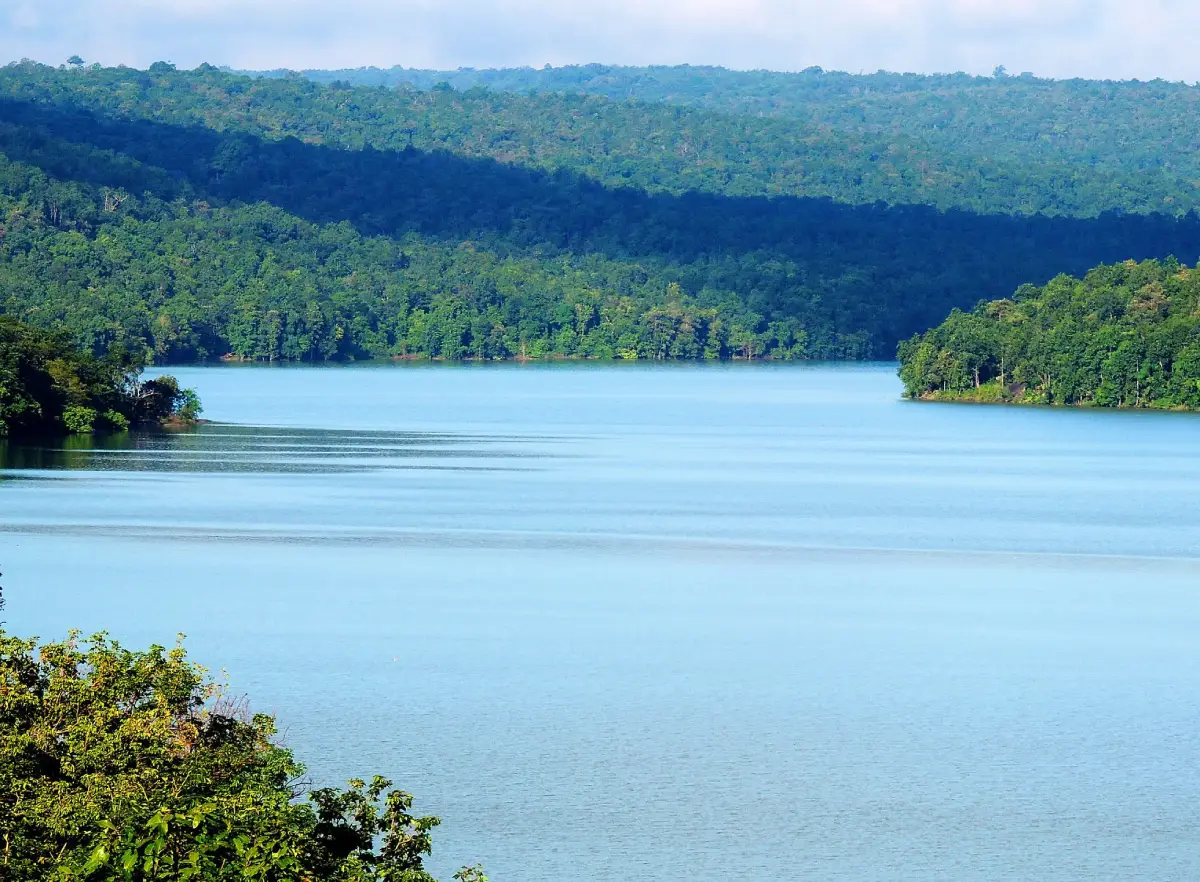
Huai Huat Reservoir in Sakon Nakhon is a medium-sized royal-initiative reservoir located at Ban Huai Huat, Village No. 4, Chan Phen Subdistrict, Tao Ngoi District. It was built to dam Huai Huat stream and store water for agriculture, household use, fish breeding, and tourism. Set within the natural landscape of Phu Pha Yon National Park, the reservoir is known for its scenic embankment, open water views, seasonal waterfalls, stargazing area, and peaceful Phu Phan mountain atmosphere.
Huai Huat Reservoir, Sakon Nakhon, is one of the most meaningful natural and water-resource attractions in Tao Ngoi District. Located at Ban Huai Huat, Village No. 4, Chan Phen Subdistrict, the reservoir sits within the wider natural setting of Phu Pha Yon National Park. It combines several values in one place: royal-initiative water development, agricultural irrigation, fish breeding, community benefit, scenic travel, forest conservation, and outdoor recreation. For foreign travelers, Huai Huat Reservoir offers more than a beautiful lake view. It is a living example of how water management, local livelihoods, and protected nature are connected in northeastern Thailand.
The reservoir was developed under the royal initiative of His Majesty King Bhumibol Adulyadej The Great. After visiting the Huai Huat watershed area on 28 November 1981, His Majesty gave guidance for the Royal Irrigation Department to urgently study and construct Huai Huat Reservoir. The purpose was to provide water for cultivation in Ban Noi, Ban Chan Phen, Ban Bueng Sa, and nearby villages in Tao Ngoi District, allowing local people to farm during both the rainy and dry seasons. The project also aimed to secure water for household use throughout the year. This background gives the reservoir deep importance beyond tourism.
Huai Huat Reservoir is an earthen dam built across Huai Huat stream near Ban Huai Huat. The project includes an earthen dam about 26 meters high and 395 meters long, with a storage capacity of approximately 21 million cubic meters. The reservoir covers a water surface of around 1,200 rai. Construction began in 1983 and was completed in 1987. The irrigation system supports approximately 8,000 rai of agricultural land in Chan Phen and Tao Ngoi subdistricts. These figures show that the reservoir is a practical water infrastructure project with a significant role in local agriculture and rural stability.
For visitors, the most immediate impression of Huai Huat Reservoir is its landscape. The water surface opens out between forested hills, sandstone terrain, and the Phu Phan mountain environment. From the embankment, visitors can look across the reservoir and see the surrounding natural scenery. The area is peaceful, open, and suitable for slow travel. It is a place for viewing the water, taking photographs, enjoying the wind, and resting in a quiet natural atmosphere rather than rushing through a crowded tourist route.
Huai Huat Reservoir is part of Phu Pha Yon National Park, a protected area known for mixed deciduous forest, dry dipterocarp forest, dry evergreen forest, sandstone mountains, cliffs, rock terraces, waterfalls, and prehistoric rock art. This gives the reservoir an important natural context. A visit to the reservoir can easily be combined with other attractions in the national park, including seasonal waterfalls, viewpoints, rock terraces, caves, and nature trails. The reservoir is therefore not just a single attraction; it is an entry point into the wider natural landscape of Phu Pha Yon.
Several seasonal waterfalls flow toward the reservoir area during the rainy season. These include Rak Sai Yoi Waterfall, Pha Phueng Waterfall, and Kham Nam Sang Waterfall. Rak Sai Yoi Waterfall can be reached by walking about 500 meters from the reservoir viewpoint area, while Pha Phueng Waterfall is about 1 km away. Kham Nam Sang Waterfall is the highest waterfall in the national park, about 25 meters high, and is located about 1.8 km from the park office. These waterfalls are most impressive during the rainy season and shortly afterward, when the forest is fresh and the streams have enough water.
Another distinctive feature of Huai Huat Reservoir is its stargazing potential. The reservoir embankment and the royal working pavilion area are recognized as a dark-sky viewing area within Phu Pha Yon National Park. Located at an elevation of around 300–400 meters above sea level and surrounded by open water, the area offers good visibility for observing the night sky when conditions are clear. This makes Huai Huat Reservoir appealing not only for daytime scenery but also for visitors interested in astronomy and night-sky photography. Night visits must follow national park regulations and official permission procedures.
The reservoir is suitable for many types of travelers. Nature lovers can enjoy the quiet forest-and-water landscape. Photographers can capture the embankment, open water, seasonal waterfalls, cliffs, and changing light. Families can use the area as a calm outdoor stop. Travelers interested in community development can learn how a royal-initiative reservoir supports agriculture and household water use. Those who enjoy camping can stay in the national park area and experience the atmosphere of Phu Phan’s forested hills more fully.
Huai Huat Reservoir also works well as part of a Tao Ngoi travel route. Tao Ngoi District is widely known for Phraya Tao Ngoi, Wat Siri Mangkhala Tao Ngoi, the Phung River area, and local community landscapes. By adding Huai Huat Reservoir to the itinerary, travelers can see another side of the district: the side connected to water management, forests, mountains, and royal development projects. This makes the trip more complete than visiting only the main landmark.
The reservoir is also connected with local fisheries and fish breeding. Because it stores a large volume of water and supports the local water environment, it contributes to aquatic life and community use. Visitors should treat the area carefully. The water is not just part of the scenery. It supports agriculture, fish resources, and local livelihoods. Throwing rubbish, leaving plastic waste, disturbing wildlife, or damaging the environment directly affects the quality of the reservoir and the people who depend on it.
Getting There is most convenient by private car. Travelers can head toward Tao Ngoi District, continue to Chan Phen Subdistrict, and proceed to Ban Huai Huat and Phu Pha Yon National Park. The reservoir is located near the national park office area and is accessible by car. Visitors traveling from Sakon Nakhon city should plan a half-day or full-day trip because the reservoir can be combined with Phraya Tao Ngoi, Wat Siri Mangkhala Tao Ngoi, seasonal waterfalls, and viewpoints in Phu Pha Yon National Park. It is best to prepare the vehicle, fuel, drinking water, and enough time for mountain and rural roads.
The best time to visit Huai Huat Reservoir depends on the purpose of the trip. Morning and late afternoon are the most comfortable times for viewing the reservoir and taking photographs. The rainy season and early cool season are best for waterfalls, forest greenery, and fresh scenery. The cool season is suitable for camping, stargazing, and slow outdoor travel. During the dry season, the landscape is clearer and road access is generally easier, but sunlight can be stronger. Each season gives the reservoir a different character.
Visitors should bring drinking water, sun protection, a hat, comfortable walking shoes, a camera, insect repellent, a personal rubbish bag, and rain gear during the wet season. Those who plan to walk to nearby waterfalls should wear shoes with good grip. Visitors interested in stargazing should bring a flashlight or headlamp and contact the park staff about access regulations. Since this is a national park area, visitors should follow park rules at all times.
Safety is important around the reservoir. Visitors should avoid climbing risky viewpoints, standing too close to cliffs or steep reservoir edges, swimming in unmanaged areas, or walking outside marked paths. During the rainy season, rocks and soil can be slippery. Children and elderly visitors should be supervised closely. The reservoir, waterfalls, and cliffs are beautiful, but they should be enjoyed with care and respect for natural conditions.
Responsible travel is essential at Huai Huat Reservoir. Visitors should not leave rubbish, collect wildflowers, disturb wildlife, carve or damage rocks, light fires in unauthorized areas, or feed wild animals. Phu Pha Yon National Park is a watershed and ecological area, so keeping it clean helps protect both nature and the communities that benefit from the reservoir. A good visit should leave the area as clean and quiet as it was before arrival.
For accommodation, Phu Pha Yon National Park provides park lodges, camping areas, and basic visitor services. Staying in the park allows travelers to experience the reservoir at different times of day, especially morning and evening when the atmosphere is quieter. Travelers who prefer more urban convenience can stay in Tao Ngoi District or Sakon Nakhon city and make a day trip to the reservoir. Advance contact with the park is recommended for lodging, camping, and current visitor regulations.
Huai Huat Reservoir is meaningful because it brings together water, agriculture, forest, community, and tourism. It was created to solve real water problems for local people, but over time it has also become a scenic and educational destination. Visitors can see how one reservoir supports farms, households, fish resources, forest tourism, outdoor recreation, and environmental learning. This layered value makes Huai Huat Reservoir more than a viewpoint. It is a landscape with function, memory, and continuing local importance.
Overall, Huai Huat Reservoir is one of the most rewarding nature stops in Tao Ngoi District for travelers who appreciate quiet places with real local value. It offers royal-initiative history, irrigation significance, beautiful water scenery, seasonal waterfalls, national park nature, and dark-sky potential in one destination. For foreign travelers who want to understand Sakon Nakhon beyond its temples and city attractions, Huai Huat Reservoir provides a calm, authentic, and meaningful encounter with the water landscapes of northeastern Thailand.
| Name | Huai Huat Reservoir, Sakon Nakhon |
| Location | Ban Huai Huat, Village No. 4, Chan Phen Subdistrict, Tao Ngoi District, Sakon Nakhon Province |
| Address | Huai Huat Reservoir Area, Ban Huai Huat, Village No. 4, Chan Phen Subdistrict, Tao Ngoi District, Sakon Nakhon 47260, inside Phu Pha Yon National Park |
| Highlights | Medium-sized royal-initiative reservoir, scenic embankment, open water view, seasonal waterfalls, stargazing area, and natural landscape of Phu Pha Yon National Park |
| History | Initiated by royal guidance on 28 November 1981 to provide water for agriculture and household use in Tao Ngoi District. Construction began in 1983 and was completed in 1987. |
| Distinctive Features | Earthen dam across Huai Huat stream, about 26 meters high and 395 meters long, with a storage capacity of about 21 million cubic meters and a water surface of around 1,200 rai, supporting approximately 8,000 rai of agricultural land |
| Travel Information | Travel by private car to Tao Ngoi District, continue to Chan Phen Subdistrict and Ban Huai Huat. The reservoir is close to the Phu Pha Yon National Park office area and is accessible by car. |
| Current Status | Open as an agricultural water source, fish-breeding area, and natural attraction inside Phu Pha Yon National Park |
| Open Days | Daily |
| Opening Hours | 08.00 – 17.00 |
| Fees | Phu Pha Yon National Park entrance fee: Thai adults 20 baht, Thai children 10 baht / foreign adults 100 baht, foreign children 50 baht |
| Facilities | Reservoir viewpoint, embankment area, resting points, camping area, national park lodges, welfare shop, seasonal waterfall trails, and stargazing area near the reservoir embankment |
| Main Areas / Zones | Huai Huat Reservoir embankment, reservoir viewpoint, royal working pavilion area, stargazing area, Rak Sai Yoi Waterfall, Pha Phueng Waterfall, Kham Nam Sang Waterfall, and nature areas in Phu Pha Yon National Park |
| Caretaker / Related Authorities | Phu Pha Yon National Park, Department of National Parks, Wildlife and Plant Conservation, together with related irrigation authorities, Tel. 042-707-214 |
| Nearby Tourist Attractions | 1. Phu Pha Yon National Park Office, about 1 km 2. Rak Sai Yoi Waterfall, about 1 km 3. Pha Phueng Waterfall, about 1 km 4. Kham Nam Sang Waterfall, about 2 km 5. Tham Pha Phraya Tao Ngoi, about 7 km 6. Dusita Rock Terrace, Phu Pha Yon National Park, about 8 km 7. Phraya Tao Ngoi, about 25 km |
| Nearby Restaurants | 1. Phu Pha Yon National Park Welfare Shop, about 1 km, Tel. 042-707-214 2. Local Restaurants In Ban Huai Huat, about 2 km 3. Local Restaurants In Chan Phen Subdistrict, about 10 km 4. Restaurants In Tao Ngoi District Center, about 25 km 5. Restaurants In Sakon Nakhon City, about 55 km |
| Nearby Accommodations | 1. Phu Pha Yon National Park Lodges, about 1 km, Tel. 042-707-214 2. Phu Pha Yon National Park Camping Area, about 1 km, Tel. 042-707-214 3. Community Stays And Homestays In Chan Phen Subdistrict, about 10 km 4. Accommodations In Tao Ngoi District, about 25 km 5. Hotels In Sakon Nakhon City, about 55 km |
Frequently Asked Questions (FAQ)
Q: Where is Huai Huat Reservoir located?
A: Huai Huat Reservoir is located at Ban Huai Huat, Village No. 4, Chan Phen Subdistrict, Tao Ngoi District, Sakon Nakhon Province, inside Phu Pha Yon National Park.
Q: Why was Huai Huat Reservoir built?
A: It was built under a royal initiative to store water for agriculture and household use in Tao Ngoi District, while also supporting fish breeding and nature tourism.
Q: What are the opening days and opening hours of Huai Huat Reservoir?
A: It is open daily from 08.00 to 17.00. Morning and late afternoon are the best times for scenery and photography.
Q: Is there an entrance fee for Huai Huat Reservoir?
A: The reservoir is inside Phu Pha Yon National Park. The entrance fee is 20 baht for Thai adults, 10 baht for Thai children, 100 baht for foreign adults, and 50 baht for foreign children.
Q: What are the main highlights of Huai Huat Reservoir?
A: Highlights include the scenic reservoir embankment, open water view, seasonal waterfalls, royal working pavilion area, stargazing spot, and the forested mountain landscape of Phu Pha Yon National Park.
Q: When is the best time to visit Huai Huat Reservoir?
A: The rainy season to early cool season is best for waterfalls and lush greenery. The cool season is suitable for viewpoints, camping, and outdoor relaxation.
Q: Are there waterfalls near Huai Huat Reservoir?
A: Yes. Nearby seasonal waterfalls include Rak Sai Yoi Waterfall, Pha Phueng Waterfall, and Kham Nam Sang Waterfall, which are most beautiful during and after the rainy season.
Q: Can visitors stay overnight near Huai Huat Reservoir?
A: Yes. Phu Pha Yon National Park provides lodges and camping areas. Visitors should contact the park in advance for lodging details and current regulations.
 Category: ●Nature and Wildlife
 Group: ●Dam, Reservoir, Lake
Last Update : 3 MonthAgo
 Last Update : 3 MonthAgo
 Click to Access the Navigation Map GPS
Huai Huat Reservoir Map
Recommend

 Art, Culture and Heritage
 Historical Sites and Monuments(9)
 Landmarks and Memorials(2)
 Royal Palace(1)
 Art, Craft Centres, Tradition(8)
 Museums(3)
 Educational Places
 Educational Gardens, Farm(2)
 Places of Worship
 Temple(18)
 Church(2)
 Other Sacred Sites(4)
 Research and Development
 Royal Project(3)
 Suburban Living
 Village, Community(7)
 National Parks and Marine Reserves(4)
 Mountain (Doi)(3)
Dam, Reservoir, Lake(14)
 Waterfalls(4)
 Caves(4)
 River, Canal(9)
 Bays and Beaches(1)
 Islands(1)
 Other natural attractions(5)
 Entertainment and Agricultural
 Zoos and Aquariums(1)
 Farms, Parks and Ecotourism(4)
 Outdoor and Adventure Activities(1)
 Travel Articles, Recipes
 Travel Review, Food Review(1)


