
lovethailand home >Northeastern Travel Attractions >Roi Et Travel Attractions >Sela Phum >Koh Kaeo > Roi Et Rajabhat University
TL;DR: Roi Et Rajabhat University, Roi Et attractions : University, Rajabhat University.
Roi Et Rajabhat University
Open Days: Monday–Friday for administrative offices, excluding public holidays and university-announced holidays
Opening Hours: 08:30–16:30 for administrative offices. Academic buildings, the library, and individual facilities may follow different schedules.
Roi Et Rajabhat University (RERU) is a public university located at 113 Moo 12, Roi Et–Phon Thong Road, Ko Kaeo Subdistrict, Selaphum District, Roi Et Province 45120, Thailand. It plays an important role in higher education, teacher preparation, professional training, academic research, and community development in northeastern Thailand. The institution traces its origins to a university-establishment initiative launched in 1994. It was formally established as Roi Et Rajabhat Institute on 20 July 2001 and became Roi Et Rajabhat University in 2004. Today, its academic fields include education, information technology, liberal arts and sciences, law and political science, nursing, business administration, and accounting. Beyond its academic responsibilities, the university supports lifelong learning, local cultural activities, and cooperation with communities throughout the region.
One of the university's defining characteristics is its close relationship with the needs of the surrounding region. Roi Et Province has a strong agricultural heritage, distinctive local crafts, traditional performing arts, and a rich body of community knowledge. These characteristics provide an important setting for the university's teaching, research, and public-service activities. Students can connect classroom knowledge with practical experience through professional training, fieldwork, community activities, and cooperation with public agencies, local organizations, and residents. This approach reflects the wider mission of Thailand's Rajabhat universities to make higher education relevant and accessible to local communities.
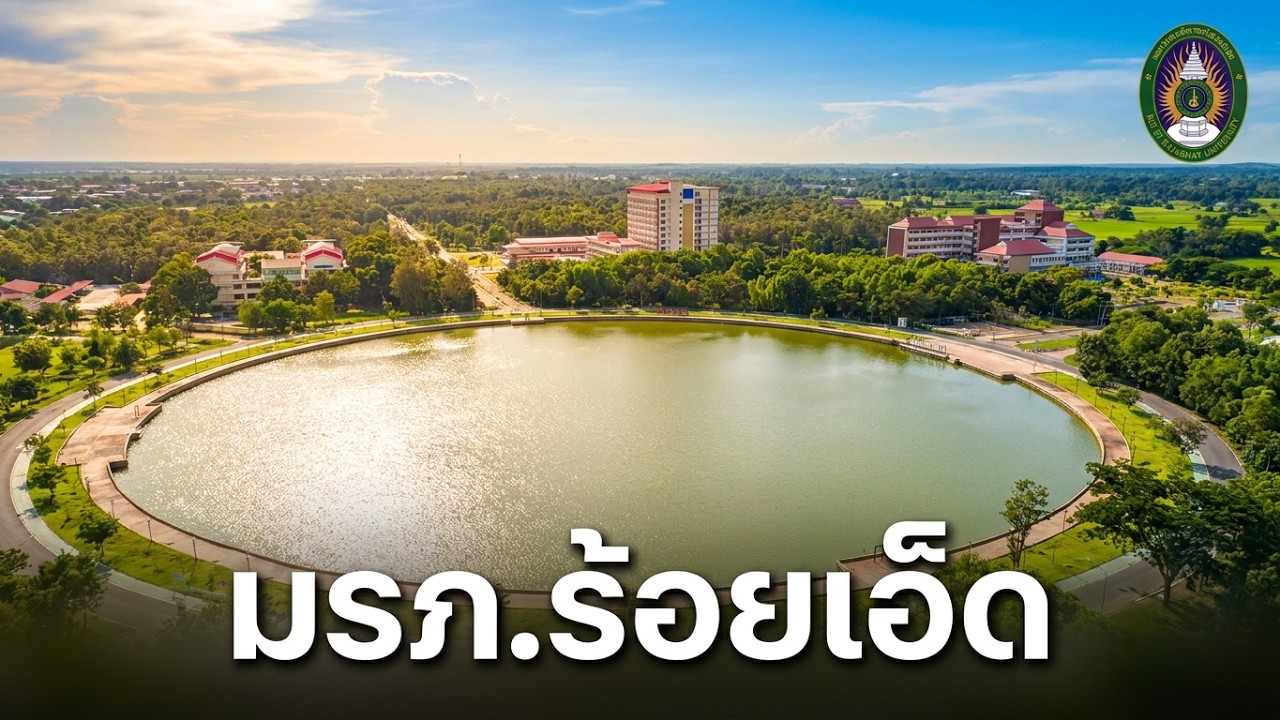
The main university campus is situated in Ko Kaeo Subdistrict, Selaphum District, rather than in the center of Roi Et city. Visitors attending meetings, applying for admission, or traveling for an educational visit should therefore confirm the correct destination before setting out. The campus includes academic buildings, administrative offices, student activity spaces, sports facilities, professional training facilities, and landscaped outdoor areas. Sa Kaeo Ratchaphumi, a pond and green area within the university grounds, is among the recognizable features of the campus landscape. Together, these facilities support an environment used for education, professional activities, student life, and university events.
The university's institutional history began to take shape on 6 September 1994, when a committee was appointed to identify a suitable site for a new Rajabhat institution in Roi Et Province. The initiative formed part of a broader effort to expand access to higher education beyond major urban centers. Establishing an institution in the province was expected to create educational opportunities for local students and support the development of professionals who understood the social and economic conditions of northeastern Thailand. The project therefore represented more than the construction of new classrooms. It was an investment in the long-term educational capacity of the region.
On 29 April 1997, a Cabinet resolution advanced the establishment project. Administrative arrangements continued to develop, and on 30 March 1999 a committee was appointed to oversee the creation of a new Rajabhat institute serving higher education in the Northeast. These stages helped transform the original provincial initiative into an institution-building project operating within Thailand's national higher education system. They also established the administrative foundation needed for subsequent legal recognition and institutional development.
Another major milestone came on 12 June 2001, when the Cabinet approved a draft royal decree concerning the establishment of Rajabhat institutions. Roi Et Rajabhat Institute was subsequently established through a royal decree published in the Royal Gazette on 20 July 2001. This date is particularly important because it marked the institution's formal legal establishment. With a recognized institutional status, it could develop its administrative system, academic structure, personnel, and educational services within the framework governing higher education at the time.
On 29 April 2002, Assistant Professor Dr. Chaloey Phumiphan was appointed rector of Roi Et Rajabhat Institute. His appointment was an important step in organizing leadership during the institution's early development. Later that year, Professor Dr. Preedee Kasemsap was appointed chairman of the institute's council. The establishment of these leadership positions helped provide a structure for academic policy, institutional administration, resource planning, and the expansion of educational opportunities during the university's formative years.
The institution entered a new stage in 2004 when Thailand's Rajabhat institutes were elevated to university status under the Rajabhat University Act B.E. 2547 (2004). Roi Et Rajabhat University's official institutional history identifies 10 June 2004 as a key date associated with this transition, while the Act was published in the Royal Gazette on 14 June 2004. The change from institute to university marked an important development in its responsibilities for degree-level education, academic research, community service, local development, and the preservation of arts and culture.
Institutional development continued after the transition to university status. In 2005, ministerial regulations established administrative units that included the Office of the President and the Faculty of Liberal Arts and Science. The university subsequently developed additional faculties and academic structures as its educational responsibilities expanded. Its growing range of disciplines reflected demand for teachers, business professionals, technology specialists, public administrators, legal professionals, and healthcare personnel. This expansion also strengthened the university's ability to serve a wider variety of student interests and professional needs.
For a clear understanding of its history, three dates should be distinguished. The year 1994 marks the beginning of the establishment initiative, 20 July 2001 marks the formal establishment of Roi Et Rajabhat Institute, and 2004 marks the transition to Roi Et Rajabhat University. These milestones represent different stages rather than competing founding dates. Recognizing the distinction helps explain how a regional educational project gradually developed into a public university.
The name Roi Et Rajabhat University reflects both its institutional heritage and geographical identity. The term Rajabhat belongs to Thailand's national network of universities developed from the Rajabhat institute system, while Roi Et identifies the province in which the university is based. By including the province's name, the university emphasizes its relationship with the local population and its responsibility to support regional development. Its name therefore carries educational, historical, and geographical significance.
The university's philosophy is expressed as “A Source of Lifelong Knowledge,” reflecting the idea that education should remain available beyond the years spent studying for a degree. Learning can continue through professional development, community education, training, academic cooperation, and the acquisition of new skills throughout life. The university's vision focuses on becoming a leading institution in northeastern Thailand that develops local communities through innovation. Its graduate identity, expressed in Thai as “รอบรู้ กล้าคิด จิตอาสา,” emphasizes knowledge, independent thinking, and a spirit of volunteer service.
The university's emblem belongs to the Rajabhat university tradition and incorporates symbolism associated with the royal insignia of King Bhumibol Adulyadej, Rama IX. The emblem reflects the historical connections between Thailand's Rajabhat institutions and the development of the country's educational system. While the Rajabhat universities share an institutional heritage, Roi Et Rajabhat University also expresses its individual identity through its academic work, cultural activities, student achievements, and contribution to the surrounding province.
Roi Et Rajabhat University has six main faculties: the Faculty of Education and Human Development, the Faculty of Information Technology, the Faculty of Liberal Arts and Science, the Faculty of Law and Political Science, the Faculty of Nursing, and the Faculty of Business Administration and Accountancy. The Graduate School supports postgraduate education. Together, these units provide a multidisciplinary learning environment and prepare students for careers in education, technology, healthcare, law, government, business, and community development.
The Faculty of Education and Human Development continues the university's strong connection with teacher education. Preparing teachers involves more than delivering subject knowledge. It also requires an understanding of how students learn, how to design meaningful lessons, how to use educational technology, and how to communicate effectively in different classroom environments. Academic fields appearing in the 2026 undergraduate admissions announcement include computer education, music education, English, general science, art education, social studies, and an integrated mathematics and English program. Professional practice and practical teaching skills form an important context for these fields.
The Faculty of Information Technology addresses the growing importance of computing and digital systems. Its academic fields listed in the 2026 undergraduate admissions announcement include Information Technology and Computer Science. Although these areas are closely related, each follows its own curriculum structure and educational emphasis. Prospective students should review the subjects, practical training, and professional pathways associated with each program before deciding which course of study best matches their interests.
The Faculty of Liberal Arts and Science covers a broad range of disciplines in science, technology, humanities, and social sciences. The 2026 admissions announcement includes Chemistry within teacher education, Sports Science, Animal Science, Agricultural Technology and Innovation, Community Public Health, Community Development and Social Innovation, Chinese, Business English, and Digital Communication Innovation. This diversity enables students to pursue interests connected with agriculture, public health, language, communication, and community development, all of which are relevant to the social and economic life of northeastern Thailand.
The Faculty of Law and Political Science provides education in legal studies, political science, and public administration. The 2026 undergraduate admissions announcement identifies the Bachelor of Laws in Law, the Bachelor of Political Science in Political Science, and the Bachelor of Public Administration in Public Administration. These disciplines provide different perspectives on legislation, legal institutions, political systems, government, public policy, and the administration of public organizations. Their presence within a single faculty creates opportunities to understand the connections between law, politics, and public governance.
The Faculty of Nursing contributes to professional education in the healthcare sector. Roi Et Rajabhat University published a separate admissions announcement for the Bachelor of Nursing Science program for the 2026 academic year. Nursing education combines scientific knowledge, clinical skills, professional responsibility, and patient care. Prospective applicants should study the faculty's specific admission requirements, assessment criteria, and professional training arrangements because they may differ from those of other undergraduate programs.
The Faculty of Business Administration and Accountancy offers education related to business operations, management, finance, marketing, and professional accounting. Programs appearing in the 2026 undergraduate admissions announcement include Management, Digital Business Computing, Hotel and Tourism Business Management, Digital Marketing, Retail Business Innovation, and Accounting. Certain fields also offer admission routes for applicants with higher vocational qualifications. These routes make it possible for students from different educational backgrounds to continue developing professional and academic skills.
Postgraduate education has been part of the institution's development since its early years. According to the university's Graduate School history, postgraduate teaching began in the first semester of the 2003 academic year with the Master of Education program in Educational Administration. Graduate education subsequently developed alongside the university's wider academic mission. In the 2026 academic year, the university continued to publish postgraduate admissions information and information concerning the Graduate Diploma in Teaching Profession. Applicants should consult the Graduate School for the exact programs, admission rounds, and requirements applicable to their intended semester of entry.
Several buildings help explain how the university operates. The Building Commemorating the 80th Birthday Anniversary on 5 December 2007 accommodates functions associated with university administration and services, including activities connected with student financial procedures. The Office of Academic Promotion and Lifelong Learning is especially relevant to prospective and current students because of its role in academic administration, admissions, and educational services. Visitors attending official appointments should confirm the correct office and building before arriving.
The Building Commemorating the 56th Birthday Anniversary of Princess Maha Chakri Sirindhorn is associated with nursing education and practical skills training. The Science and Technology Laboratory Building provides a setting for laboratory-based teaching and academic work, while the Language and Computer Center supports education in language and digital technologies. The Faculty of Education and Human Development also has dedicated facilities for its teaching and academic activities. These buildings illustrate the range of learning environments required by a multidisciplinary university.
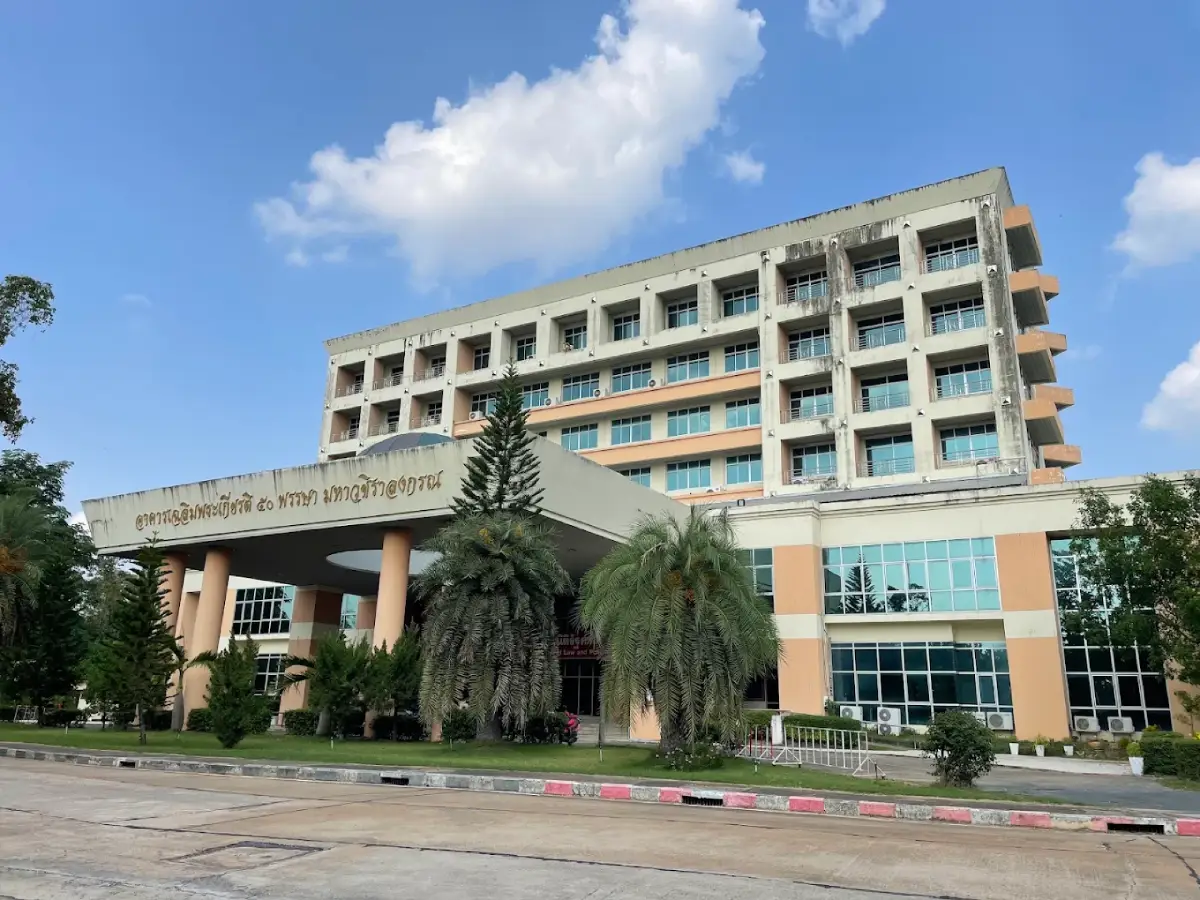
The Building Commemorating the 50th Birthday Anniversary of Crown Prince Maha Vajiralongkorn has functions connected with the Faculty of Law and Political Science and university research activities. Facilities for studying law and practicing professional skills help connect academic knowledge with real-world applications. Another notable facility is Rajabhat Greenview, the university's professional training center, which also offers accommodation and hospitality-related services. Its distinctive role connects practical training with service activities, meetings, and visits to the university.
Sa Kaeo Ratchaphumi is one of the recognizable outdoor features of the campus. The pond and surrounding landscaped areas contribute to the atmosphere of the university and provide a setting associated with recreation and campus activities. Sports and exercise areas support student well-being and community life, while meeting rooms and auditoriums host ceremonies, academic gatherings, and events. Together, these spaces allow the university to function as more than a collection of classrooms.
University traditions form an important part of student life and connect contemporary education with long-established Thai values. The Wai Khru ceremony, in which students formally express respect and gratitude toward their teachers, is a particularly meaningful example. On 2 July 2026, Roi Et Rajabhat University held a Wai Khru ceremony under the Thai theme “ปาเจราน้อมจิต ศิษย์น้อมใจ.” The event included ceremonial activities and expressions of appreciation for teachers. Such occasions help students develop a sense of belonging to their academic community while emphasizing respect, gratitude, and ethical responsibility.
Orientation programs for incoming students are another important part of university life. These activities introduce new students to the university's academic structure, administrative procedures, student services, and campus environment. Moving from secondary school or vocational education to university requires academic and personal adjustment. Orientation therefore helps students understand expectations, responsibilities, and opportunities for participation in activities outside the classroom.
Roi Et's local cultural heritage is also reflected in university activities. Cultural performances and creative projects draw on regional symbols such as Saket silk, jasmine rice associated with the Thung Kula Ronghai area, and the wot, a traditional northeastern Thai musical instrument closely associated with Roi Et Province. These cultural elements carry meaning beyond their decorative appearance. They represent local knowledge, craftsmanship, agricultural traditions, and performing arts. When students engage with them through performances, communication, or creative projects, they participate in the continuing interpretation and transmission of Isan cultural identity.
Research and academic service form another major dimension of the university's responsibilities. Knowledge developed through teaching and research can support local needs in agriculture, public health, digital skills, community organization, cultural preservation, and business development. The university's local-development mission emphasizes the practical application of knowledge to real problems. Its role is therefore not limited to producing academic publications or delivering lectures; it also involves creating opportunities for communities to benefit from research, education, and professional expertise.
Cooperation with communities also provides opportunities for experiential learning. Students who participate in local projects can develop communication, teamwork, analytical, and problem-solving skills. The communities of Roi Et Province offer different social and economic settings, from agricultural villages to more urbanized areas, each with distinct needs and cultural traditions. These settings can help students understand the relationships between economic activity, social organization, the environment, and cultural identity.
For visitors interested in educational tourism, the university offers an opportunity to understand the role of higher education in Roi Et Province. Its landscape, academic facilities, professional training center, and public events provide different perspectives on university life. However, not all campus facilities function as unrestricted visitor attractions. Classrooms, laboratories, professional training spaces, and administrative offices may have separate access requirements. Educational groups and visitors planning a formal study tour should contact the relevant university office in advance to arrange a suitable program.
Office hours should be distinguished from general campus access. Administrative offices generally operate from Monday to Friday, 08:30–16:30, excluding public holidays and university-announced closures. Teaching schedules, library services, meetings, student activities, and other facilities may follow different timetables. These office hours should therefore not be interpreted as a universal opening and closing time for every building or area within the university. Visitors who need to submit documents or speak with administrative staff should plan their visit during the regular office service period.
Getting There: Travelers arriving by private car can follow Roi Et–Phon Thong Road toward Ko Kaeo Subdistrict in Selaphum District and use Roi Et Rajabhat University as their navigation destination. Visitors arriving from other provinces can travel to Roi Et and continue toward the university by local transport. Those relying on public transportation should confirm which services use the Roi Et–Phon Thong route and where to transfer or arrange the final part of the journey. For examinations, registration appointments, meetings, or ceremonies, it is advisable to allow extra travel time and verify the building where the event will take place.
The Ko Kaeo area has dining and accommodation options for students, staff, and visitors. Food choices include the university food center, local restaurants, noodle shops, and evening dining establishments. Those requiring overnight accommodation can consider Rajabhat Greenview or private lodging in Ko Kaeo and the wider Selaphum area. It is important to distinguish short-stay hotels and resorts from student dormitories and monthly accommodation. Visitors should confirm room availability and the type of stay offered before making arrangements.
Roi Et Rajabhat University represents an important part of the educational and social development of Roi Et Province. Its progress from the establishment initiative of 1994 to legal recognition as a Rajabhat institute in 2001 and university status in 2004 reflects the expansion of higher education opportunities in northeastern Thailand. Today, its contributions include professional education, academic research, community service, cultural activities, and lifelong learning. The university's significance lies both in its institutional history and in its continuing mission to use education and innovation to support the development of local communities.
Roi Et Rajabhat University Summary Table
| Thai Name | มหาวิทยาลัยราชภัฏร้อยเอ็ด |
| English Name | Roi Et Rajabhat University (RERU) |
| Institution Type | Public University in Thailand's Rajabhat University System |
| Address | 113 Moo 12, Roi Et–Phon Thong Road, Ko Kaeo Subdistrict, Selaphum District, Roi Et Province 45120, Thailand |
| Establishment Initiative | 6 September 1994 |
| Established as Rajabhat Institute | 20 July 2001 |
| University Status | 2004, under the Rajabhat University Act B.E. 2547 |
| Important Early Leaders | Assistant Professor Dr. Chaloey Phumiphan, appointed Rector in 2002; Professor Dr. Preedee Kasemsap, appointed Chairman of the Institute Council in 2002 |
| University President | Assistant Professor Dr. Wichit Kammantakhun |
| Philosophy | A Source of Lifelong Knowledge |
| Graduate Identity | Knowledge, Independent Thinking, and Volunteer Service |
| Faculties | 1. Faculty of Education and Human Development 2. Faculty of Information Technology 3. Faculty of Liberal Arts and Science 4. Faculty of Law and Political Science 5. Faculty of Nursing 6. Faculty of Business Administration and Accountancy |
| Graduate Education | Graduate School, Roi Et Rajabhat University |
| Academic Focus | Teacher Education, Professional Development, Community Research, Local Innovation, Lifelong Learning, and Isan Cultural Heritage |
| Notable Campus Facilities | 1. Sa Kaeo Ratchaphumi 2. Building Commemorating the 80th Birthday Anniversary on 5 December 2007 3. Building Commemorating the 56th Birthday Anniversary of Princess Maha Chakri Sirindhorn 4. Building Commemorating the 50th Birthday Anniversary of Crown Prince Maha Vajiralongkorn 5. Science and Technology Laboratory Building 6. Language and Computer Center 7. Faculty of Education and Human Development Building 8. Rajabhat Greenview Professional Training Center |
| Traditions and Activities | Wai Khru Ceremony, Student Orientation, Academic Events, Student Activities, and Isan Cultural Performances |
| Administrative Office Days | Monday–Friday, excluding public holidays and university-announced holidays |
| Administrative Office Hours | 08:30–16:30 |
| Educational Visits | Contact the relevant university office before visiting laboratories, teaching facilities, or professional training areas |
| Facilities | Food Center, Library and Information Services, Sports Areas, Meeting Facilities, and Academic Service Units |
| Getting There | Via Roi Et–Phon Thong Road to Ko Kaeo Subdistrict, Selaphum District, by private car or connecting local transportation |
| Nearby Places of Interest | 1. Sa Kaeo Ratchaphumi, University Campus 2. Bueng Kluea, Selaphum District 3. Sala Loi Public Park, Selaphum District 4. Wat Selaphum Wanaram, Selaphum District 5. Wat Ban Nong Rua, Selaphum District |
| Restaurants and Dining | 1. RERU Food Center, University Campus 2. Baan Nom Rajabhat Roi Et, Ko Kaeo 3. Khon Tid Man Korean BBQ Buffet, Rajabhat Roi Et Branch, Tel. 099-998-1737 4. Saep Nua Khrua Phesat Restaurant, Roi Et–Phon Thong Road, Tel. 099-683-1788 5. Rajabhat Roi Et 10-Baht Boat Noodle Shop, Ko Kaeo, Tel. 087-824-4039 |
| Nearby Accommodation | 1. Rajabhat Greenview Professional Training Center, University Campus, Tel. 043-556-223 2. Baan Suan Resort, Ko Kaeo, Tel. 089-489-4437 3. Moeiwadee Resort, Branch 1, Ko Kaeo, Tel. 089-507-4523 4. PS Student Dormitory, Ko Kaeo, Tel. 099-095-1085 5. Baan Sakura Student Dormitory, Tha Muang, Selaphum District |
| University Telephone | +66 43 556 001–008 Administration: +66 43 556 006 Secretariat: +66 43 556 007 |
| saraban@reru.ac.th | |
| Official Website | www.reru.ac.th |
| Current Status | Operating Public University with Academic Programs in the 2026 Academic Year |
Roi Et Rajabhat University Academic Programs — Academic Year 2026 (B.E. 2569)
| Faculty / Academic Unit | Programs and Fields of Study |
| Faculty of Education and Human Development | Undergraduate: Bachelor of Education 1. Mathematics and English 2. Computer Education 3. Music Education 4. English 5. General Science 6. Art Education 7. Social Studies |
| Faculty of Information Technology | Undergraduate: Bachelor of Science 1. Information Technology 2. Computer Science |
| Faculty of Liberal Arts and Science | Undergraduate: Bachelor of Education 1. Chemistry Bachelor of Science 2. Sports Science 3. Animal Science 4. Agricultural Technology and Innovation Bachelor of Public Health 5. Community Public Health Bachelor of Arts 6. Community Development and Social Innovation 7. Chinese 8. Business English Bachelor of Communication Arts 9. Digital Communication Innovation |
| Faculty of Law and Political Science | Undergraduate 1. Bachelor of Laws — Law 2. Bachelor of Political Science — Political Science 3. Bachelor of Public Administration — Public Administration |
| Faculty of Nursing | Undergraduate 1. Bachelor of Nursing Science — Nursing |
| Faculty of Business Administration and Accountancy | Undergraduate: Bachelor of Business Administration 1. Management 2. Digital Business Computing 3. Hotel and Tourism Business Management 4. Digital Marketing 5. Retail Business Innovation Bachelor of Accountancy 6. Accounting |
| Graduate School and Postgraduate Education | Graduate Diploma 1. Graduate Diploma in Teaching Profession Master's Degree 2. Master of Education — Educational Administration |
Frequently Asked Questions (FAQ)
Q: Where is Roi Et Rajabhat University located?
A: The university is located at 113 Moo 12, Roi Et–Phon Thong Road, Ko Kaeo Subdistrict, Selaphum District, Roi Et Province 45120, Thailand.
Q: What are the opening days and hours of Roi Et Rajabhat University?
A: Administrative offices generally operate Monday–Friday, 08:30–16:30, excluding public holidays and university-announced holidays. Individual facilities and campus activities may follow different schedules.
Q: When was Roi Et Rajabhat University established?
A: Its establishment initiative began in 1994. It was formally established as Roi Et Rajabhat Institute on 20 July 2001 and became a Rajabhat university in 2004.
Q: Who was an important early rector of the institution?
A: Assistant Professor Dr. Chaloey Phumiphan was appointed rector of Roi Et Rajabhat Institute on 29 April 2002.
Q: How many faculties does Roi Et Rajabhat University have?
A: It has six main faculties covering education, information technology, liberal arts and science, law and political science, nursing, and business administration and accountancy. The Graduate School also supports postgraduate education.
Q: What are the university's main academic strengths?
A: Its work focuses on teacher education, professional development, research for local communities, lifelong learning, and the integration of education with regional culture and innovation.
Q: Can members of the public visit the university?
A: Visitors planning an educational tour or access to specific buildings should contact the relevant university department beforehand. Classrooms, laboratories, and professional training facilities may have access restrictions.
Q: How can I contact Roi Et Rajabhat University?
A: Visit www.reru.ac.th, call +66 43 556 001–008, or email saraban@reru.ac.th.
 Category: ●University
 Group: ●Rajabhat University
Last Update : 6 DayAgo
 Last Update : 6 DayAgo
 Click to Access the Navigation Map GPS
Roi Et Rajabhat University Map
Recommend

 Art, Culture and Heritage
 Historical Sites and Monuments(3)
 Landmarks and Memorials(5)
 Art, Craft Centres, Tradition(2)
 Museums(1)
 Educational Places
 Educational Gardens, Farm(3)
 Autonomous Universities(1)
Rajabhat University(1)
 Places of Worship
 Temple(35)
 Other Sacred Sites(6)
 Suburban Living
 Village, Community(1)
 Local Market(1)
 Nature and Wildlife
 National Parks and Marine Reserves(1)
 Mountain (Doi)(2)
 Dam, Reservoir, Lake(8)
 Waterfalls(1)
 Flower Field(1)
 River, Canal(4)
 Entertainment and Agricultural
 Zoos and Aquariums(1)
 Stadium(1)
 Farms, Parks and Ecotourism(5)
 Shopping
 Shopping and Night Market(1)
 Travel Articles, Recipes
 Travel Review, Food Review(1)


