
lovethailand home >Northeastern Travel Attractions >Roi Et Travel Attractions >Si Som Det >Si Som Det > Wat Prachakhom Wanaram (Wat Pa Kung)
TL;DR: Wat Prachakhom Wanaram (Wat Pa Kung) is located at Ban Pa Kung, Si Somdet Subdistrict, Si Somdet District, Roi Et Province, open Daily, Including Public Holidays, hours 07.00 – 19.00.
Wat Prachakhom Wanaram (Wat Pa Kung)
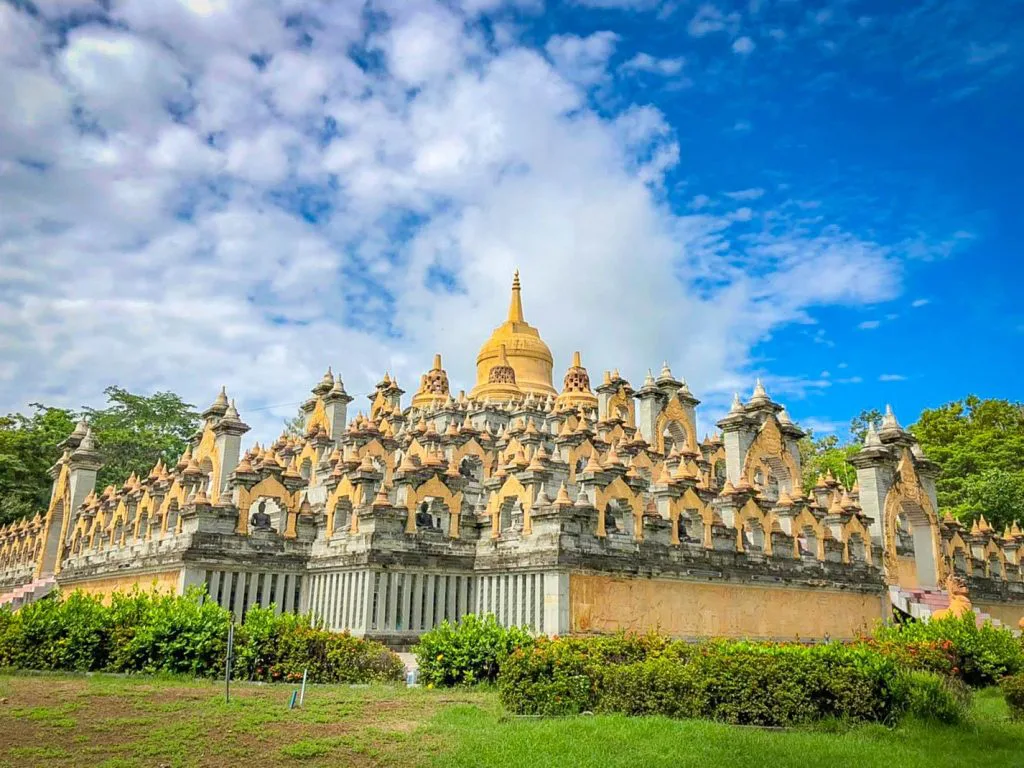
Open Days: Daily, Including Public Holidays
Opening Hours: 07.00 – 19.00
Wat Prachakhom Wanaram, also known as Wat Pa Kung, is one of the most remarkable Buddhist temples in Roi Et Province. Located in Si Somdet District, the temple is best known for its monumental natural sandstone stupa, widely recognized as Thailand’s first large-scale sandstone stupa of its kind. Inspired by Borobudur in Indonesia, the stupa houses sacred relics of the Buddha and is decorated with detailed sandstone bas-reliefs depicting the life of the Buddha, the Vessantara Jataka, the biography of Luang Pu Sri Mahaviro, and revered forest meditation masters. The temple is open daily from 07.00 to 19.00 and there is no admission fee.
Wat Prachakhom Wanaram is located at Ban Pa Kung, Moo 11, Si Somdet Subdistrict, Si Somdet District, Roi Et Province 45000. Locals and Thai travelers often call it simply Wat Pa Kung, a name closely connected to the surrounding community and the peaceful forest-monastery atmosphere of the temple. The official name, Wat Prachakhom Wanaram, reflects the idea of a forest monastery created through collective faith. This makes the temple more than a sightseeing destination. It is a living Buddhist place shaped by local devotion, monastic discipline, and the deep spiritual culture of northeastern Thailand.
The history of Wat Pa Kung goes back to an old deserted temple believed to have existed since around 1770. The site was later restored and developed under the guidance of Phra Thep Wisutthimongkhon, better known as Luang Pu Sri Mahaviro, one of the most respected forest meditation monks in the Isan region. The temple was officially established as Wat Prachakhom Wanaram on 22 October 1965 under the Dhammayuttika Nikaya tradition. Luang Pu Sri Mahaviro became the abbot who led the restoration and development of the temple, transforming the quiet forest site into an important spiritual center for Buddhists in Roi Et and nearby provinces.
The temple’s identity is inseparable from Luang Pu Sri Mahaviro. He was deeply respected for his calm monastic conduct, strict meditation practice, and role in preserving the forest-monastery tradition. When he came to Pa Kung and stayed there, local villagers developed strong faith in his teachings. They supported the temple by offering land, labor, and donations, helping create permanent monastic facilities and sacred spaces. Over time, Wat Pa Kung became a place for merit-making, meditation, religious ceremonies, and community gathering, while still retaining the quiet atmosphere of a traditional forest temple.
The major feature that made Wat Pa Kung nationally known is its large sandstone stupa. The idea began after Luang Pu Sri Mahaviro traveled to Indonesia in 1988 and visited Borobudur, the great Buddhist monument on Java. Impressed by its scale and spiritual power, he later shared the experience with his disciples. This eventually led to the construction of a sandstone stupa in Roi Et as a memorial to Luang Pu Sri Mahaviro on the occasion of his 90th year and 60th rains retreat. Construction began in 1992 and continued through the combined effort, devotion, and generosity of his disciples.
The sandstone stupa was completed on 28 October 2004, when a 101-baht-weight gold finial was raised and installed at the top. A major celebration was later held on 3 May 2006. The stupa has an octagonal plan, measuring 101 meters wide, 101 meters long, and 109 meters high. The number 101 also resonates with the name of Roi Et, making the structure both a sacred Buddhist monument and a symbolic landmark for the province. The stupa is decorated with natural sandstone from Pak Chong District in Nakhon Ratchasima Province and is arranged in seven levels, each carrying religious and artistic meaning.
Inside the stupa, sacred relics of the Buddha are enshrined at the central point, making it a significant place of worship for Buddhist pilgrims. Around the structure, sandstone bas-reliefs narrate important Buddhist stories. The first level illustrates the Vessantara Jataka, the final birth of the Bodhisattva before becoming the Buddha, highlighting the perfection of generosity. The second and third levels depict episodes from the Buddha’s life. The fourth level presents imagery related to the Chaiyamangkala Gatha. The fifth level illustrates the Four Holy Places associated with the Buddha’s birth, enlightenment, first sermon, and passing into parinirvana. The upper levels include subsidiary stupas and the main stupa, completing the symbolic architectural composition.
Walking around the stupa allows visitors to experience how architecture, devotion, and Buddhist storytelling come together. The reliefs are not merely decorative. They function as a visual scripture, allowing visitors to learn Buddhist stories through carved stone. For travelers interested in Thai religious art, Isan Buddhist culture, and sacred architecture, Wat Pa Kung offers a layered experience. It rewards slow observation, especially when visitors take time to study the details of the sandstone figures, lotus motifs, celestial beings, and narrative panels.
Wat Pa Kung is also culturally connected to the Bun Phawet tradition of Roi Et. The Vessantara Jataka carvings on the stupa correspond closely with the core story of Bun Phawet, an important Isan Buddhist merit-making tradition centered on the recitation of the Great Birth Sermon. For foreign travelers, this connection helps explain why the Vessantara Jataka remains so important in northeastern Thailand. A visit to Wat Pa Kung therefore provides insight not only into Buddhist architecture, but also into the living religious culture of Roi Et Province.
Another important annual event at the temple is the ceremony honoring Luang Pu Sri Mahaviro, held from 1 to 3 May each year. The event includes chanting, merit-making, almsgiving, food offerings, and participation by disciples from many places. The atmosphere is simple, devotional, and deeply rooted in the forest-monk tradition. Travelers interested in Buddhist ceremonies and local religious culture may find this period especially meaningful, as the temple becomes a gathering point for people who come to remember the virtues and teachings of Luang Pu Sri Mahaviro.
The temple grounds include several important areas. The sandstone stupa is the main highlight, followed by the relic worship area and the surrounding bas-relief galleries. There are also museum and hall areas connected with Phra Ratchaphatcharayanamuni, known as Luang Pu Thong-in Katapunyo, a highly respected former abbot who continued the temple’s spiritual legacy after Luang Pu Sri Mahaviro. The green surroundings, quiet monastic zones, and forest atmosphere make the temple suitable not only for sightseeing, but also for reflection and respectful Buddhist practice.
Phra Ratchaphatcharayanamuni, or Luang Pu Thong-in Katapunyo, was the most recent former abbot widely associated with Wat Prachakhom Wanaram. He passed away on 11 June 2026 at the age of 88, after 67 rains retreats. His passing further strengthened the temple’s role as a place of remembrance for revered forest meditation masters. Visitors should approach the temple with respect, especially around monastic areas and halls connected with senior monks and memorial ceremonies.
The atmosphere at Wat Pa Kung differs from many busy tourist temples. Although the stupa is grand and photogenic, the temple still preserves the calm character of a forest monastery. Shaded areas, parking space, public restrooms, and quiet walkways make it suitable for families, elderly visitors, Buddhist pilgrims, and cultural travelers. Morning and late afternoon are the most pleasant times to visit, as the sunlight is softer and the stone details of the stupa can be appreciated more comfortably.
For those interested in architecture, it is worth spending time walking around the stupa rather than taking photographs only from the front. The most meaningful details are found in the relief panels, terrace levels, stairways, and surrounding stonework. The design encourages visitors to move slowly, look closely, and gradually understand the Buddhist stories carved into the monument. This slow experience is one of the reasons Wat Pa Kung remains memorable for both Thai and foreign visitors.
A visit to Wat Pa Kung can easily be planned as a half-day or full-day trip from Roi Et city. Travelers can combine the temple with Wat Burapha Phiram, Bueng Phalan Chai, Roi Et Tower 101, and Roi Et National Museum. Those interested in major Buddhist monuments can continue to Phra Maha Chedi Chai Mongkhon in Nong Phok District, another important Roi Et landmark connected with the name of Luang Pu Sri Mahaviro. This route is especially suitable for travelers who want to understand Roi Et as a province of Buddhist faith, large-scale sacred architecture, and distinctive Isan religious culture.
Getting There is easiest by private car, rental car, or chartered local transport. From Roi Et city, follow the route toward Si Somdet District for about 21 km. The road is generally convenient, and the temple is suitable for a day trip. Travelers without a private vehicle can first reach Roi Et city and then arrange local transport to the temple. Morning visits are suitable for worship and photography, while late afternoon offers a quieter atmosphere and softer light around the stupa courtyard.
Visitors should dress respectfully, avoid loud behavior, remove shoes where required, and refrain from climbing or touching delicate sandstone carvings. Photography is allowed in appropriate areas, but visitors should remain mindful that this is an active Buddhist temple, not merely a photo stop. Respecting monks, worshippers, and meditation areas is essential for a meaningful visit.
Overall, Wat Prachakhom Wanaram, or Wat Pa Kung, is one of the most important temples to visit in Roi Et. It brings together the legacy of Luang Pu Sri Mahaviro, the devotion of his disciples, Thailand’s first large-scale natural sandstone stupa, sacred relics of the Buddha, Buddhist narrative carvings, and the peaceful atmosphere of a forest monastery. For travelers planning a cultural or spiritual journey in northeastern Thailand, Wat Pa Kung is a destination that offers both architectural beauty and deep religious meaning.
| Name | Wat Prachakhom Wanaram, Also Known As Wat Pa Kung |
| Location | Ban Pa Kung, Si Somdet Subdistrict, Si Somdet District, Roi Et Province |
| Address | Moo 11, Si Somdet Subdistrict, Si Somdet District, Roi Et Province 45000, Thailand |
| Coordinates | 15.99235, 103.49822 |
| Highlights | Thailand’s first large-scale natural sandstone stupa, inspired by Borobudur in Indonesia and built through the devotion of Luang Pu Sri Mahaviro’s disciples |
| History | Originally an old deserted temple dating back to around 1770, officially established as Wat Prachakhom Wanaram on 22 October 1965. The sandstone stupa was started in 1992, completed on 28 October 2004, and celebrated on 3 May 2006. |
| Name Origin | The official name reflects a forest monastery created through community faith, while Wat Pa Kung is the commonly used local name linked to Ban Pa Kung. |
| Distinctive Features | Octagonal sandstone stupa measuring 101 meters wide, 101 meters long, and 109 meters high, divided into 7 levels with carvings of the Buddha’s life, the Vessantara Jataka, Chaiyamangkala Gatha, and the Four Holy Places |
| Important Sacred Objects | Sacred relics of the Buddha, sandstone narrative carvings, biography panels of Luang Pu Sri Mahaviro, images of revered teachers, museum areas, and forest meditation spaces |
| Travel Information | About 21 km from Roi Et city via the route toward Si Somdet District. Best reached by private car, rental car, or chartered local transport. |
| Current Status | Open daily for Buddhist worshippers and visitors |
| Open Days | Daily, Including Public Holidays |
| Opening Hours | 07.00 – 19.00 |
| Fees | No Admission Fee |
| Facilities | Parking Area, Public Restrooms, Worship Area, Stupa Walkway, And Rest Areas Within The Temple Grounds |
| Main Areas / Zones | 1. Sandstone Stupa Zone 2. Sacred Relic Worship Zone 3. Buddha Life And Vessantara Jataka Carving Zone 4. Museum And Teachers’ Hall Zone 5. Forest Temple And Meditation Area |
| Important Monks / Latest Officially Reported Caretaker Role | Luang Pu Sri Mahaviro restored and developed the temple. The most recent former abbot was Phra Ratchaphatcharayanamuni, Luang Pu Thong-in Katapunyo, who passed away on 11 June 2026. In the official funeral ceremony on 15 June 2026, Phra Kru Adul Thammachan of Wat Prachakhom Wanaram presided over the monastic ceremony. |
| Main Contact Number | 095-509-5185 |
| Official Page | Facebook: Wat Pa Kung (Luang Pu Sri Mahaviro), Roi Et |
| Nearby Tourist Attractions | 1. Bun Koson Bridge, About 9 km 2. Wat Burapha Phiram, About 21 km 3. Bueng Phalan Chai, About 22 km 4. Roi Et Tower 101, About 23 km 5. Roi Et National Museum, About 23 km 6. Phra Maha Chedi Chai Mongkhon, About 85 km |
| Nearby Restaurants | 1. I’amnomsod Na Si Somdet, About 8 km, Tel. 089-073-1552 2. Kap Khao Ban Pho Khrua Non Than, About 9 km, Tel. 092-295-5652 3. Krua Chai Thung, About 8 km 4. C Cash Coffee, About 8 km 5. Tiao Kai Nae Non, About 8 km 6. Hug Ko Fresh Coffee Si Somdet, About 8 km |
| Nearby Accommodations | 1. Baan Rai Ruenrudee Homestay, About 4 km 2. Tonnam Resort, About 5 km 3. Baan Suan Resort Camp 6th Infantry Division, About 8 km, Tel. 089-940-4026 4. Roi Et Hotel, About 17 km 5. De Paris Hotel, About 18 km 6. M Grand Hotel Roi Et, About 18 km, Tel. 061-021-4848 7. The Pool Hotel Roi Et, About 19 km, Tel. 095-574-7487 |
Frequently Asked Questions (FAQ)
Q: Where is Wat Prachakhom Wanaram or Wat Pa Kung located?
A: Wat Prachakhom Wanaram, also known as Wat Pa Kung, is located at Ban Pa Kung, Moo 11, Si Somdet Subdistrict, Si Somdet District, Roi Et Province, about 21 km from Roi Et city.
Q: What are the opening days and opening hours of Wat Pa Kung?
A: The temple is open daily, including public holidays, from 07.00 to 19.00.
Q: Is there an admission fee to visit Wat Pa Kung?
A: No. Visitors can enter the temple, worship the sacred relics, and admire the sandstone stupa without paying an admission fee.
Q: What is the main highlight of Wat Pa Kung?
A: The main highlight is Thailand’s first large-scale natural sandstone stupa, inspired by Borobudur in Indonesia and decorated with carvings of the Buddha’s life, the Vessantara Jataka, and the biography of Luang Pu Sri Mahaviro.
Q: How is Wat Pa Kung connected with Luang Pu Sri Mahaviro?
A: Luang Pu Sri Mahaviro restored and developed the temple. After visiting Borobudur in Indonesia, he inspired the creation of the sandstone stupa as a sacred memorial.
Q: What can visitors see inside the sandstone stupa?
A: Visitors can worship sacred relics of the Buddha and see sandstone reliefs depicting the Vessantara Jataka, the life of the Buddha, Chaiyamangkala Gatha, the Four Holy Places, the biography of Luang Pu Sri Mahaviro, and revered Buddhist teachers.
Q: What should visitors wear when visiting Wat Pa Kung?
A: Visitors should dress respectfully, avoid overly revealing clothing, remove shoes where required, and keep a calm and respectful manner inside the temple grounds.
Q: What nearby attractions can be visited with Wat Pa Kung?
A: Nearby and connected attractions include Bun Koson Bridge, Wat Burapha Phiram, Bueng Phalan Chai, Roi Et Tower 101, Roi Et National Museum, and Phra Maha Chedi Chai Mongkhon.
 Category: ●Places of Worship
 Group: ●Temple
Last Update : 2 MonthAgo
 Last Update : 2 MonthAgo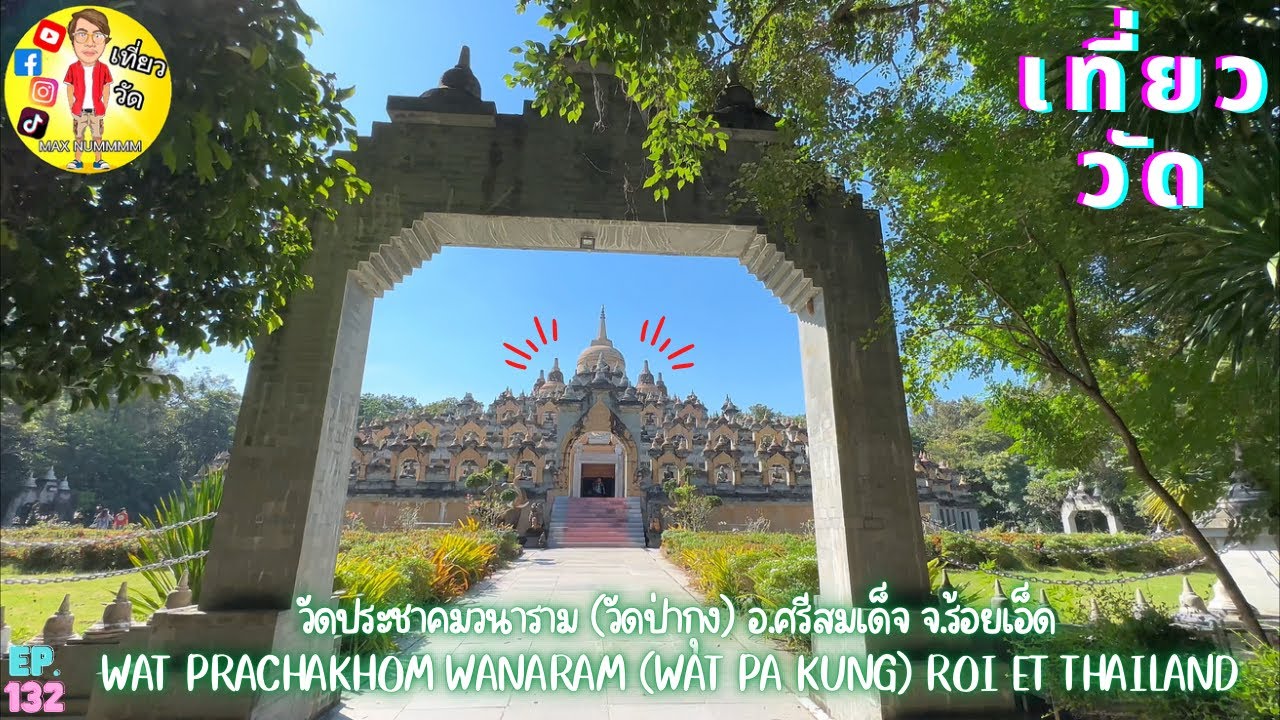
 Click to Access the Navigation Map GPS
Wat Prachakhom Wanaram (Wat Pa Kung) Map
Recommend

 Art, Culture and Heritage
 Historical Sites and Monuments(3)
 Landmarks and Memorials(5)
 Art, Craft Centres, Tradition(2)
 Museums(1)
 Educational Places
 Educational Gardens, Farm(3)
Temple(35)
Educational Gardens, Farm(3)
Temple(35)
 Other Sacred Sites(6)
 Suburban Living
 Village, Community(1)
 Local Market(1)
 Nature and Wildlife
 National Parks and Marine Reserves(1)
 Mountain (Doi)(2)
 Dam, Reservoir, Lake(8)
 Waterfalls(1)
 Flower Field(1)
 River, Canal(4)
 Entertainment and Agricultural
 Zoos and Aquariums(1)
 Stadium(1)
 Farms, Parks and Ecotourism(5)
 Shopping
 Shopping and Night Market(1)


