
lovethailand home >Northeastern Travel Attractions >Nakhon Ratchasima Travel Attractions >Muang Nakhon Ratchasima >Hua Thale > Tawee Art Gallery
TL;DR: Tawee Art Gallery is located at Soi Phet Ma Tu Kla 4, Phet Ma Tu Kla Road, Hua Thale Subdistrict, Mueang Nakhon Ratchasima District, Nakhon Ratchasima Province, open Wednesday – Sunday, hours 09.30 – 16.00.
Tawee Art Gallery
Open Days: Wednesday – Sunday
Opening Hours: 09.30 – 16.00
Tawee Art Gallery in Nakhon Ratchasima is one of the most meaningful contemporary art spaces in Khorat. Located at 203 Soi Phet Ma Tu Kla 4, Moo 10, Phet Ma Tu Kla Road, Hua Thale Subdistrict, Mueang Nakhon Ratchasima District, Nakhon Ratchasima 30000, the gallery was founded in 2007 by Tawee Ratchaneekorn, a National Artist in Visual Arts. The purpose of the gallery is to display different forms of art created by the artist and related artistic networks, including painting, sculpture, mixed media, combined techniques, drawing, and other works that express both visual beauty and deep social reflection. For foreign visitors who want to understand Thai contemporary art outside Bangkok, this gallery offers a rare and personal encounter with the life, ideas, and creative spirit of one of Thailand’s important artists.
The character of Tawee Art Gallery is different from a conventional tourist attraction. It is not merely a building where artworks are placed on walls. It is a living art space shaped by the artist’s long career, personal experiences, social concerns, and commitment to education. Visitors can feel that the gallery was created with a clear purpose: to give art a permanent place in Khorat, to allow students and the public to see real works of art, and to encourage younger generations to understand that art is not distant from life. The atmosphere is quiet, reflective, and intimate, making it suitable for slow viewing rather than hurried sightseeing.
Tawee Ratchaneekorn is closely connected with Nakhon Ratchasima and Northeastern Thailand. Although he was born in Ratchaburi Province, much of his artistic life and teaching career developed in Khorat. He became a National Artist in Visual Arts in 2005 and is widely recognized for his distinctive painting, his role as an art educator, and his contribution to the development of art education in the Northeast. His importance is not limited to his own artistic production. He also helped create space for students, young artists, local cultural practitioners, and the public to meet art directly. This educational spirit is one of the main reasons the gallery is significant.
The idea behind the gallery is strongly connected to the belief that contemporary art needs a place to be seen. Tawee Ratchaneekorn has emphasized that without contemporary art galleries, contemporary art cannot grow properly. An artist may create works, but without a space where those works can communicate with society, art remains isolated. Tawee Art Gallery therefore functions as a cultural platform. It allows artworks to meet viewers, students to meet real artistic practice, and the city to recognize the value of art as part of its public life.
The main body of works inside the gallery consists of paintings. Tawee’s paintings are known for their powerful use of color, line, form, light, shadow, and composition. Some works explore abstraction and the beauty of visual structure, while others respond to social issues, poverty, war, environmental destruction, inequality, and human suffering. His paintings do not always tell stories in a direct narrative way. Instead, they use visual language to create emotional force and invite interpretation. Visitors should spend time observing how color, form, rhythm, and surface work together to create meaning.
Many of the paintings reflect different periods of the artist’s life and thought. Some are rooted in nature, some in social observation, some in Buddhist reflection, and some in the emotional weight of historical events. The works reveal that contemporary Thai art can be both beautiful and critical. It can express inner imagination while also responding to the realities of society. This combination makes the gallery especially valuable for visitors who want to understand how Thai artists have interpreted modern life, local experience, and global concerns through visual expression.
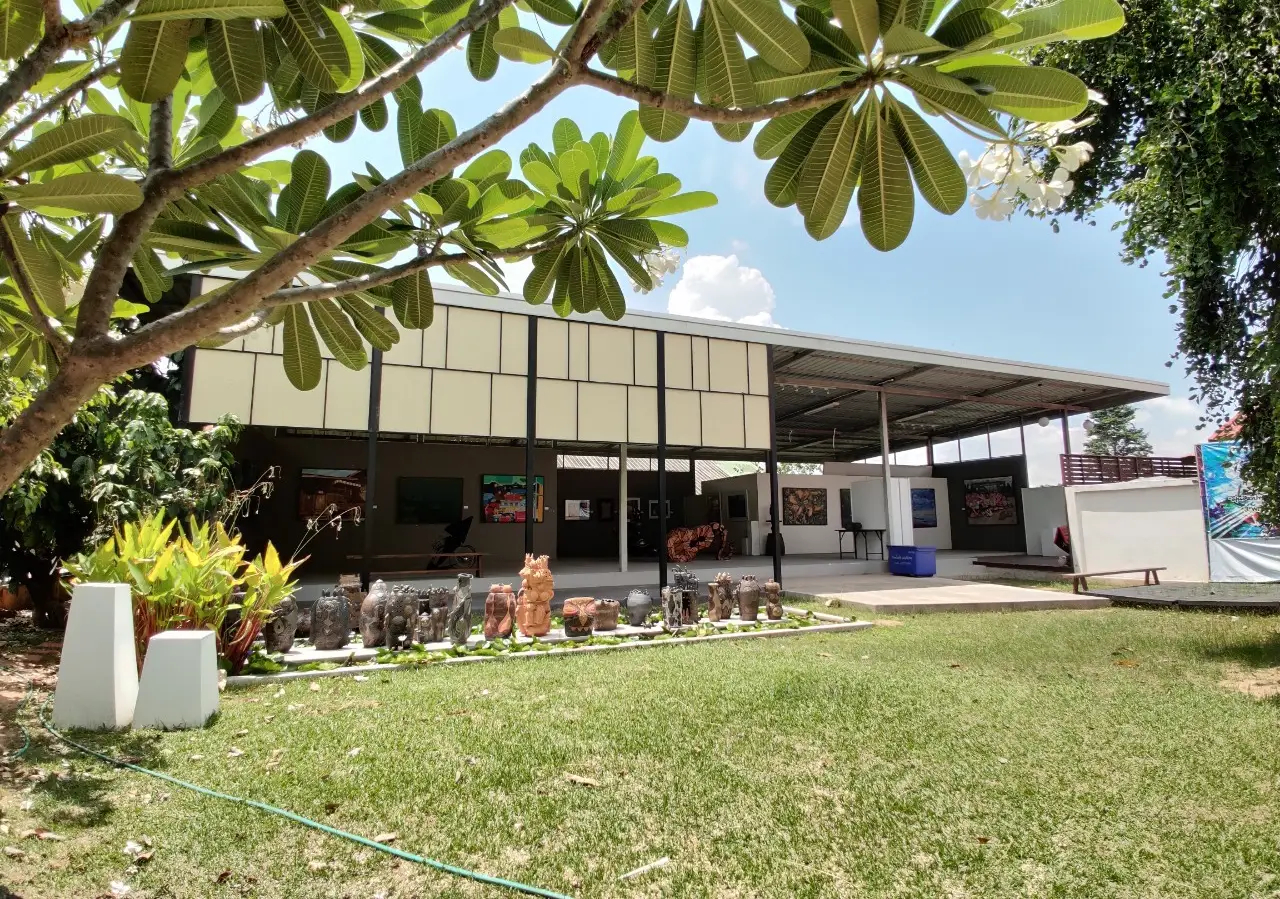
In addition to painting, the gallery also displays sculpture, mixed media, and combined-technique works. These pieces show the artist’s willingness to move beyond a single medium. Some works make use of materials and ideas connected with local culture, including references to Dan Kwian ceramics, local craft, and Northeastern Thai visual traditions. This is important because it shows that contemporary art does not have to separate itself from local roots. Instead, it can transform local materials, memories, and cultural references into a modern artistic language that speaks to both Thai and international audiences.
The gallery includes a main exhibition building and a smaller building. The main building presents major paintings, sculptures, and mixed-media works. The smaller building displays drawings and combined-technique works, while the upper floor functions as an art library with books available for visitors and learners. This library is a valuable part of the gallery because it turns the visit into an educational experience. Visitors can see artworks and then continue learning through books about art, artists, techniques, history, and visual culture. For students, this combination of viewing and reading is especially useful.
The art library reflects the founder’s belief that art education should be accessible. Seeing real artworks is essential, but reading and research deepen understanding. A young visitor who sees a painting may begin with curiosity, but a book can help explain artistic processes, styles, movements, and historical context. The presence of a library inside the gallery therefore makes the space more than an exhibition venue. It becomes a small cultural learning center for visual arts in Nakhon Ratchasima.
Tawee Art Gallery also organizes activities for young people, students, and art lovers, including drawing competitions, art talks, lectures, and workshops. These activities make the gallery a living space rather than a static collection. Drawing competitions encourage young people to express themselves. Lectures and talks allow visitors to hear artistic ideas directly from artists or experts. Workshops allow participants to learn through practice. Such activities help create future audiences and future artists, which is essential for a city that wants to strengthen its cultural life.
Within the context of Khorat, the gallery plays an important role in presenting Nakhon Ratchasima as a city of art as well as history. Many travelers associate Khorat with Thao Suranari Monument, Chumphon Gate, temples, shopping centers, national parks, and historical sites. Tawee Art Gallery expands that image by showing that the city also has a strong contemporary art dimension. A visit to the gallery helps travelers understand Khorat not only through monuments and traditions, but also through artistic imagination, social reflection, and creative practice.
Tawee Ratchaneekorn’s works often arise from deep sensitivity to the world around him. Some works respond to poverty, violence, injustice, environmental loss, and the suffering of ordinary people. Others explore beauty, nature, memory, and inner emotion. This range makes the viewing experience rich and varied. Visitors may encounter works that feel peaceful and poetic, followed by works that feel intense, dramatic, or critical. The gallery invites viewers to accept art as both aesthetic experience and moral reflection.
Nature and environmental concern are important themes in many works. The artist does not treat nature merely as scenery. He often sees nature as something vulnerable, damaged, or threatened by human action. Forests, animals, earth, water, and natural forms can become visual symbols of loss, warning, and responsibility. Even when a painting does not identify a specific event, it may still communicate a sense of ecological fragility. This gives the gallery strong relevance for contemporary viewers, including foreign visitors who are interested in how Thai artists respond to environmental issues.
The gallery also connects contemporary art with local Khorat and Isan traditions. It has supported interest in Korat songs, Dan Kwian pottery, Isan mural painting traditions, and local art teachers. This connection is important because it prevents contemporary art from becoming detached from local culture. Instead, the gallery demonstrates that modern art and folk heritage can support each other. Young people can learn from both the works of a National Artist and the living wisdom of local cultural practitioners.
For students of art, the gallery is highly valuable because real artworks cannot be fully replaced by textbooks or digital images. Scale, texture, brushwork, surface, spacing, and the physical presence of a work can only be understood in person. A painting seen in a gallery affects the viewer differently from a small image on a screen. Students can observe how the artist builds composition, how colors interact, how rhythm is created, and how visual tension is controlled. These observations are essential for developing artistic understanding.
For families, Tawee Art Gallery can be a gentle introduction to art. Children may not understand art theory, but they can respond to color, shape, feeling, and imagination. Parents can encourage them to ask simple questions: What colors do you see? What does this painting make you feel? Why do you think the artist used these shapes? What story could this artwork be telling? These questions help develop observation, creativity, and emotional awareness. The gallery is therefore not only for art experts. It is a place where anyone can begin learning to look more carefully.
For international travelers, the gallery provides a meaningful introduction to Thai contemporary art outside the capital. Many foreign visitors know Thai art through temples, Buddha images, royal craftsmanship, or large museums in Bangkok. Tawee Art Gallery shows another side of Thai art: personal, regional, socially conscious, experimental, and deeply connected with local experience. It helps visitors understand that contemporary Thai art is not only decorative. It can be philosophical, critical, emotional, and historically aware.
The location in Hua Thale Subdistrict gives the gallery a calm local atmosphere away from the busiest parts of central Khorat. Hua Thale is connected to local neighborhoods, restaurants, hotels, and roads leading toward the eastern side of the city. Traveling by private car or ride-hailing service is the most convenient option. Once inside the gallery, visitors usually experience a quieter rhythm than in large tourist sites. This calm setting is well suited to art viewing, because it allows visitors to slow down and give time to the works.
Visitors should allow at least 1.5 to 2 hours for a meaningful visit. Those who are especially interested in painting, sculpture, art education, or Thai contemporary art may want to stay longer. A good route is to begin with the main exhibition building, observe the major paintings and mixed-media works, then continue to the smaller building, drawings, and art library. If a special exhibition, talk, or workshop is taking place, visitors should allow additional time.
Proper gallery etiquette is important. Visitors should not touch artworks, lean against walls or display platforms, move objects, use flash photography where prohibited, or speak loudly inside the exhibition spaces. Children should be supervised closely. Many artworks have artistic, historical, and personal value. Even small damage can permanently affect a work. Respectful viewing helps preserve the gallery for future visitors and supports the cultural value of the space.
The current admission fee is accessible: 50 baht for adults, 30 baht for students, and free admission for children under 13 years old. This makes the gallery suitable for families, students, and general travelers. At the same time, the admission fee helps support the care of the space and its continued role as an independent art venue in Nakhon Ratchasima. Visiting the gallery is therefore also a small way of supporting local art infrastructure.
Getting There is straightforward from central Nakhon Ratchasima. Travel toward Hua Thale using the Ratchasima-Chakkarat route or Phet Ma Tu Kla Road, then enter Soi Phet Ma Tu Kla 4. Visitors can search for Tawee Art Gallery or หอศิลป์ทวี รัชนีกร on map applications. From the Thao Suranari Monument or Chumphon Gate area, the journey usually takes about 15 to 25 minutes depending on traffic. A private car or ride-hailing service is the most convenient way to reach the gallery.
Tawee Art Gallery can be included in a cultural and art-focused route in Khorat. Visitors may begin with the gallery, then continue to Korat Museum, Korat Art Gallery, Maha Weerawong National Museum, or the Thao Suranari Monument. This route allows travelers to experience contemporary art, city history, local identity, and public memory in the same day. With more time, visitors can continue to Nakhon Ratchasima Zoo, the Petrified Wood Museum, or other attractions around the city.
The gallery is also suitable for educational visits. Schools and universities can use the space for art appreciation, visual analysis, cultural studies, and creative learning. Group visits should contact the gallery in advance, especially if the group needs guidance, a scheduled visit, or additional preparation. The gallery’s combination of artworks, library, educational activities, and the life story of a National Artist makes it a strong learning resource for students at different levels.
Overall, Tawee Art Gallery is an essential destination for visitors interested in art, culture, and the creative identity of Nakhon Ratchasima. It brings together the works of a National Artist, art education, youth activities, local cultural connections, and the broader idea of Khorat as a city of art. A visit here reveals that Khorat is not only a city of history and major landmarks. It is also a city of ideas, images, memory, and artistic expression.
In summary, Tawee Art Gallery is one of the most important contemporary art destinations in Nakhon Ratchasima. It presents paintings, sculptures, mixed media, drawings, an art library, and learning activities in a setting closely connected with the life and vision of Tawee Ratchaneekorn. The gallery is open Wednesday to Sunday from 09.30 to 16.00, with an accessible admission fee. For travelers who want to understand Khorat beyond its famous monuments, this gallery offers a thoughtful, personal, and inspiring view of Thai contemporary art.
| Name | Tawee Art Gallery / Tawee Ratchaneekorn Art Gallery |
| Location | Soi Phet Ma Tu Kla 4, Phet Ma Tu Kla Road, Hua Thale Subdistrict, Mueang Nakhon Ratchasima District, Nakhon Ratchasima Province |
| Address | 203 Soi Phet Ma Tu Kla 4, Moo 10, Phet Ma Tu Kla Road, Hua Thale Subdistrict, Mueang Nakhon Ratchasima District, Nakhon Ratchasima 30000, Thailand |
| Highlights | A contemporary art gallery founded by National Artist Tawee Ratchaneekorn, displaying paintings, sculptures, mixed media, drawings, combined-technique works, and an art library |
| History | Founded in 2007 by Tawee Ratchaneekorn, a National Artist in Visual Arts who was honored in 2005 |
| Name Origin | Named after Tawee Ratchaneekorn, the founder of the gallery and the artist whose major works form the core of the collection |
| Distinctive Features | A contemporary art space combining the works of a National Artist, socially engaged art, local Khorat cultural connections, youth activities, and art education |
| Travel Information | From central Nakhon Ratchasima, travel toward Hua Thale using the Ratchasima-Chakkarat route or Phet Ma Tu Kla Road, then enter Soi Phet Ma Tu Kla 4. Search for Tawee Art Gallery on map applications. |
| Current Status | Open as a contemporary art gallery and learning center for general visitors, students, art lovers, and educational groups |
| Open Days | Wednesday – Sunday |
| Opening Hours | 09.30 – 16.00 |
| Fees | Adults 50 Baht / Students 30 Baht / Children Under 13 Free |
| Facilities | Main exhibition building, smaller drawing and mixed-technique building, art library, art activity space, parking area, and support for group visits with advance notice |
| Main Areas / Zones | 1. Painting Exhibition Building 2. Sculpture Display Area 3. Mixed Media And Combined-Technique Display Area 4. Smaller Building For Drawings And Combined Techniques 5. Art Library 6. Youth Activity, Drawing Competition, Talk, And Lecture Area 7. Contemporary And Local Khorat Art Learning Area |
| Caretaker | Private / Tawee Art Gallery |
| Founder | Tawee Ratchaneekorn, National Artist In Visual Arts |
| Main Contact Number | 044-265-877, 044-266-988, 089-629-9227 |
| Email / Official Page | tawee.artgallery@gmail.com / Facebook: หอศิลป์ทวี รัชนีกร - Tawee Art Gallery |
| Nearby Tourist Attractions | 1. Korat Art Gallery, about 6 km 2. Korat Museum, about 7 km, Tel. 044-009-009 Ext. 1010, 044-253-097 3. Maha Weerawong National Museum, about 8 km 4. Thao Suranari Monument And Chumphon Gate, about 8 km 5. Bung Ta Lua Park, about 9 km 6. Nakhon Ratchasima Zoo, about 16 km, Tel. 044-934-532, 044-934-647, 083-372-0404 7. Petrified Wood Museum, Ancient Elephants And Dinosaurs, about 17 km, Tel. 044-370-739 |
| Nearby Restaurants | 1. Krua Baan Mae Hua Thale, about 2 km, Tel. 098-525-1265 2. Ped Yang Koracha Hua Thale, about 2 km, Tel. 091-502-2888 3. Andaman Seafood Hua Thale, about 2 km, Tel. 093-230-7590 4. Tam Sang Tam Jai Hua Thale By Kwang, about 2.5 km, Tel. 092-598-3252 5. Mhee Yak Shabu Hua Thale, about 3 km, Tel. 080-639-2389 6. Tung Sawang Korean BBQ Hua Thale Branch, about 3 km, Tel. 062-518-8855 |
| Nearby Accommodations | 1. Mix Hotel, about 3 km, Tel. 044-244-700 2. Bankhun Hotel, about 3 km, Tel. 098-353-3328 3. RM Resort, about 4 km, Tel. 089-585-5585 4. Montara Hotel And Resort Korat, about 6 km, Tel. 085-817-8890 5. Hermitage Hotel Korat, about 6 km, Tel. 044-247-444 |
Frequently Asked Questions (FAQ)
Q: Where is Tawee Art Gallery located?
A: Tawee Art Gallery is located at 203 Soi Phet Ma Tu Kla 4, Moo 10, Phet Ma Tu Kla Road, Hua Thale Subdistrict, Mueang Nakhon Ratchasima District, Nakhon Ratchasima 30000, Thailand.
Q: What days and hours is Tawee Art Gallery open?
A: The gallery is open Wednesday to Sunday from 09.30 to 16.00 and is closed on Monday and Tuesday.
Q: How much is the admission fee?
A: Admission is 50 baht for adults, 30 baht for students, and free for children under 13 years old.
Q: What can visitors see inside Tawee Art Gallery?
A: Visitors can see paintings, sculptures, mixed media, combined-technique works, drawings, a smaller exhibition building, an art library, and areas used for youth activities, art talks, lectures, and workshops.
Q: Who founded Tawee Art Gallery?
A: The gallery was founded by Tawee Ratchaneekorn, a National Artist in Visual Arts and an important figure in Thai contemporary art and art education in Northeastern Thailand.
Q: How long should visitors spend at the gallery?
A: Visitors should allow at least 1.5 to 2 hours to explore the main exhibition building, smaller building, art library, and surrounding areas without rushing.
Q: How can travelers get to Tawee Art Gallery?
A: From central Nakhon Ratchasima, travel toward Hua Thale using the Ratchasima-Chakkarat route or Phet Ma Tu Kla Road, then enter Soi Phet Ma Tu Kla 4. The easiest way is to search for Tawee Art Gallery on a map application.
Q: What nearby places can be visited after Tawee Art Gallery?
A: Nearby places include Korat Art Gallery, Korat Museum, Maha Weerawong National Museum, Thao Suranari Monument, Bung Ta Lua Park, Nakhon Ratchasima Zoo, and the Petrified Wood Museum.
Tel : 044265877, 044266988
 Tel : 044265877, 044266988
Fax : 044265877
 Fax : 044265877
 Category: ●Art, Culture and Heritage
 Group: ●Art Gallery
Last Update : 1 MonthAgo
 Last Update : 1 MonthAgo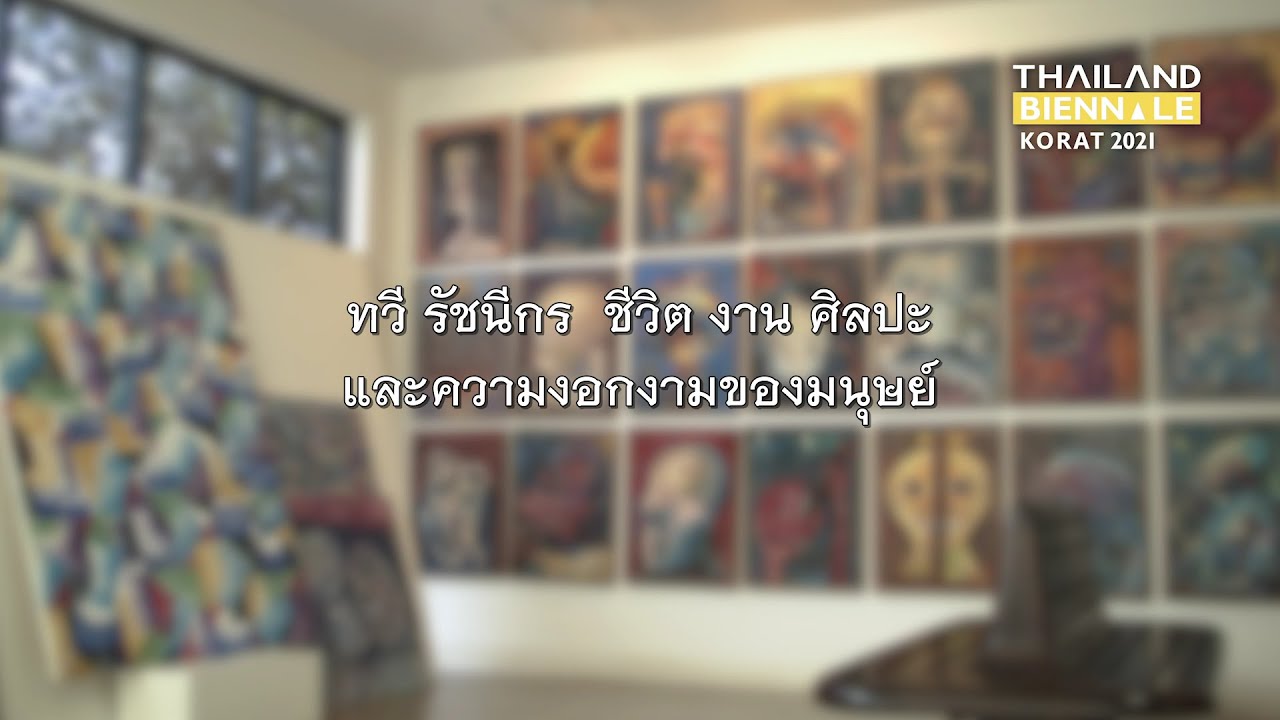
 Click to Access the Navigation Map GPS
Tawee Art Gallery Map
Recommend

 Historical Sites and Monuments(20)
 Landmarks and Memorials(5)
 Art, Craft Centres, Tradition(7)
 Museums(6)
Art Gallery(1)
Museums(6)
Art Gallery(1)
 Educational Places
 Educational Gardens, Farm(4)
 Places of Worship
 Temple(29)
 Mosque(1)
 Other Sacred Sites(6)
 Research and Development
 Royal Project(3)
 Suburban Living
 Village, Community(6)
 Local Market(4)
 Floating Market(1)
 Nature and Wildlife
 National Parks and Marine Reserves(3)
 Mountain (Doi)(5)
 Dam, Reservoir, Lake(8)
 Waterfalls(9)
 Hot Springs(1)
 Caves(2)
 Flower Field(1)
 River, Canal(8)
 Bays and Beaches(2)
 Other natural attractions(3)
 Entertainment and Agricultural
 Zoos and Aquariums(1)
 Animal camps and shows(1)
 Farms, Parks and Ecotourism(21)
 Waterpark(2)
 Outdoor and Adventure Activities(6)
 Shopping
 Shopping and Night Market(2)
 Travel Articles, Recipes
 Travel Review, Food Review(5)


