
lovethailand home >Northeastern Travel Attractions >Nakhon Ratchasima Travel Attractions >Muang Nakhon Ratchasima >Chai Mong Khon > Thao Suranari Monument
TL;DR: Thao Suranari Monument is located at Central Nakhon Ratchasima, around Ratchadamnoen Road near Chumphon Road, Mueang Nakhon Ratchasima District, Nakhon Ratchasima Province, open Daily, hours Open 24 Hours.
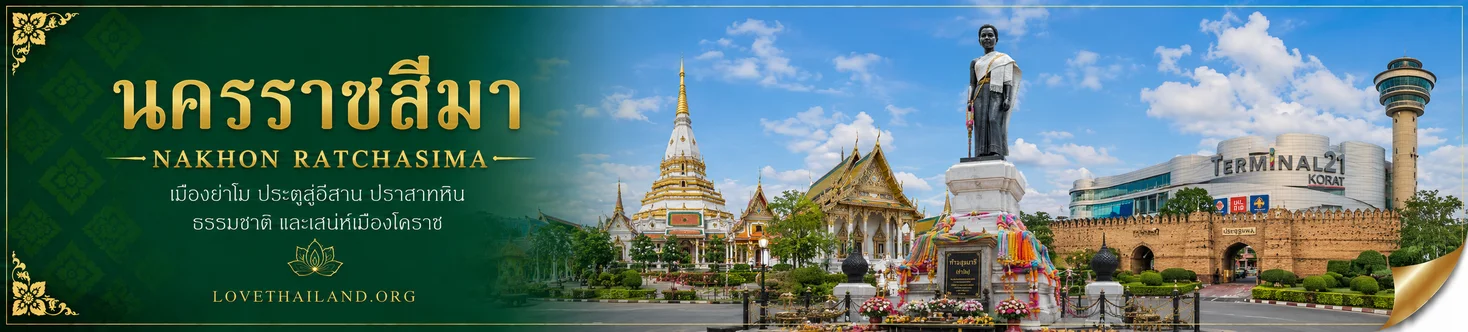
Thao Suranari Monument
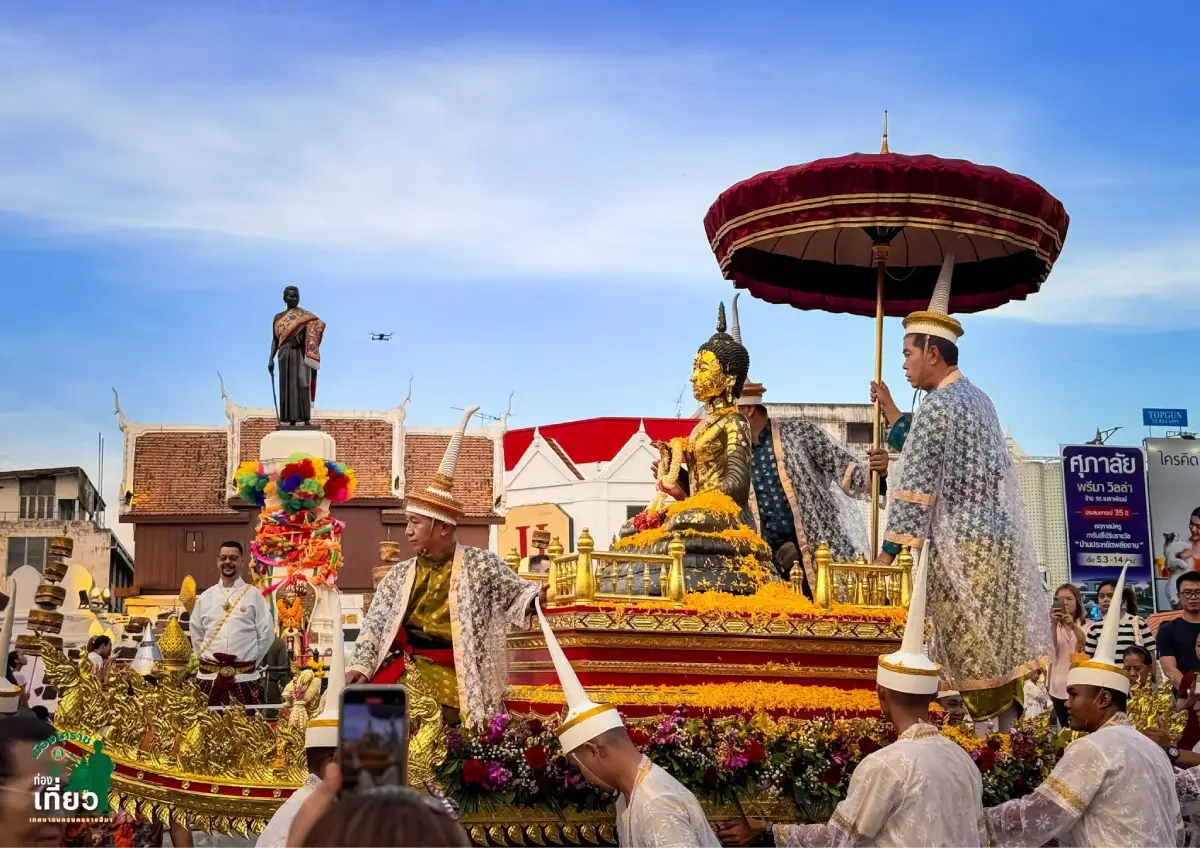
Open Days: Daily
Opening Hours: Open 24 Hours
Thao Suranari Monument, widely known as the Ya Mo Monument, is the most iconic historical and spiritual landmark in Nakhon Ratchasima, or Korat. Located in the heart of the city near Ratchadamnoen Road and Chumphon Road, with the historic Chumphon Gate standing behind it, the monument honors Thao Suranari, formerly known as Khunying Mo, a revered heroine remembered for her role in defending Nakhon Ratchasima during the conflict with Chao Anouvong in 1826. The monument is open daily for 24 hours and can be visited without an admission fee.
For foreign travelers, the Ya Mo Monument is more than a city landmark. It is the cultural heart of Korat, where history, faith, public life, local identity, and annual ceremonies come together. Local people visit the monument to pay respect, ask for blessings, offer garlands, make vows, and express gratitude. Travelers from other provinces also consider it an essential stop when arriving in Korat, because paying respect to Ya Mo is widely seen as a meaningful way to connect with the spirit of the city.
Thao Suranari was originally named Khunying Mo. She was the wife of the deputy governor of Nakhon Ratchasima and became a central figure in one of the most important historical events of the province. In 1826, Chao Anouvong of Vientiane led an army into Nakhon Ratchasima. Khunying Mo gathered local people and helped organize resistance against the invading force, preventing the army from advancing toward Bangkok. In recognition of her courage and leadership, King Rama III granted her the noble title “Thao Suranari,” meaning a brave and noble woman.
To the people of Nakhon Ratchasima, Thao Suranari is not remembered only as a historical figure. She is affectionately called “Ya Mo,” which means Grandmother Mo. This intimate form of address shows the deep emotional bond between the people of Korat and their heroine. Many residents come to the monument before beginning important life events, business activities, study plans, journeys, or family ceremonies. Visitors often ask for courage, success, safety, protection, and good fortune.
The monument was begun in 1933 and officially opened on January 15, 1934. It is widely recognized as the first public monument in Thailand built to honor an ordinary woman as a national heroine. The statue is made of darkened copper, stands 1.85 meters high, and weighs 325 kilograms. Thao Suranari is portrayed wearing royal regalia, standing upright with her right hand holding a sword whose tip touches the ground, while her left hand rests firmly on her waist. The statue faces west, toward Bangkok.
The posture of the statue carries strong symbolic meaning. The sword represents determination, protection, and readiness to defend the land. The upright stance and the hand placed on the waist express confidence, strength, and dignity. The westward orientation toward Bangkok connects the monument with the historical role of Nakhon Ratchasima as a strategic frontier city protecting the route to the capital. This makes the statue both a memorial to a heroic woman and a symbol of Korat’s role in Thai history.
The statue stands on a twelve-indented square pedestal that contains the ashes of Thao Suranari. Because of this, the monument functions not only as a public sculpture but also as a sacred memorial site. Visitors do not simply come to look at a statue; they come to pay respect to a revered person whose presence remains central to the spiritual identity of Nakhon Ratchasima. Offerings, garlands, incense, flowers, and vow-fulfillment performances are commonly seen around the monument.
Before the present monument was built, the ashes of Thao Suranari had been kept at other sacred places. After her death in 1852, she was cremated and her ashes were first enshrined at Wat Sala Loi, a temple she had founded. Later, when the original structure deteriorated and became too small, a new reliquary was built at Wat Klang, now known as Wat Phra Narai Maharat. Her ashes were eventually transferred to the pedestal of the current monument so that the people of Korat could honor her in a more prominent and dignified public setting.
The construction of the monument was a joint effort involving provincial leaders, military officers, government officials, local people, and the Fine Arts Department. Professor Silpa Bhirasri, one of the most important figures in modern Thai sculpture, was involved in the design together with Phra Thewaphinimmit, a respected sculptor of the period. The monument therefore represents not only local devotion but also an important stage in the development of modern public monuments in Thailand.
The monument was registered as a national historic object on January 3, 1937. In 1967, after the pedestal had deteriorated, government officials and residents of Nakhon Ratchasima joined together to rebuild the base at the same site. This continuing care reflects the position of the monument as a living heritage site. It remains one of the most carefully respected public landmarks in the province and continues to define the identity of Korat today.
The area around the monument is also historically significant. It is located in the old urban core of Nakhon Ratchasima, close to the former provincial hall area, old commercial streets, Chumphon Road, Ratchadamnoen Road, and Chumphon Gate. Around the monument are flower shops, incense and offering stalls, restaurants, cafes, public seating areas, and walking spaces. This makes the monument not only a sacred site but also a central urban square where local life continues throughout the day.
Behind the monument stands Chumphon Gate, the old western city gate of Nakhon Ratchasima. It is the only original old city gate that remains from the former defensive wall system. The presence of Chumphon Gate behind the Ya Mo Monument gives the area even greater historical depth. The gate reflects the old fortified city planned in the Ayutthaya period, while the monument reflects the heroic memory of the Rattanakosin period. Together, they allow visitors to understand several layers of Korat history in one place.
Rituals and local beliefs are central to the experience of visiting the Ya Mo Monument. Many visitors bring flower garlands, incense, candles, betel nut, flowers, and other offerings. Some come to ask for blessings; others return to fulfill vows after their wishes are granted. Traditional dance offerings and Korat songs can often be seen near the monument, especially when visitors hire local performers to honor Ya Mo. These practices keep local heritage alive and make the monument a living cultural space rather than a silent historical object.
The annual Thao Suranari Victory Celebration is the most important event associated with the monument. It is held every year from March 23 to April 3 to commemorate the bravery of Thao Suranari and the ancestors of Nakhon Ratchasima. The event includes ceremonial worship, mass dance offerings, cultural performances, local products, OTOP goods, Red Cross activities, traditional entertainment, and public festivities. It is one of the province’s major cultural events and a strong expression of Korat pride.
In 2026, the annual celebration has special importance because it marks the 200th anniversary of Thao Suranari’s heroic deed. The celebration is held under the theme “200 Years of Heroism, Unfading Faith” from March 23 to April 3, 2026, at the Ya Mo Monument square and the former provincial hall area. This anniversary confirms that the monument remains the center of collective memory and community identity for the people of Nakhon Ratchasima.
Travelers who visit during the annual celebration will experience a very different atmosphere from an ordinary day. The area becomes lively with ceremonies, performances, lights, music, food stalls, local products, and large crowds. For visitors interested in culture, this is one of the best times to see how a monument, a historical figure, and a modern community continue to connect through public ritual and shared memory.
On normal days, the monument remains active from morning until night. Morning is suitable for a quieter visit and clear daylight photography. Afternoon is good for observing the statue, pedestal, Chumphon Gate, and surrounding old town details. Evening and night offer a more atmospheric experience, as the monument is illuminated and the public square becomes lively with locals, worshippers, vendors, and visitors.
Visitors who wish to pay respect can buy garlands or offerings from nearby shops and proceed to the designated worship area. Those who come to fulfill a vow with a traditional dance offering should use the performers and services arranged around the monument and follow local rules. Respectful behavior is important. Visitors should avoid blocking others, keep the area clean, and remember that this is both a tourist destination and a sacred site for local people.
The Ya Mo Monument is suitable for many types of travelers. Families can bring children to learn local history. Students can use the site to understand the role of women in Thai history and the identity of Nakhon Ratchasima. Cultural travelers can observe worship practices, Korat songs, and vow-fulfillment rituals. Photographers can capture the statue, the white pedestal, Chumphon Gate, offering flowers, and the movement of people in the square.
The surrounding area can easily be turned into a walking route through the old city of Korat. A practical itinerary can begin with paying respect to Ya Mo, then walking behind the monument to Chumphon Gate, continuing to Wat Phayap, Maha Weerawong National Museum, Nakhon Ratchasima City Pillar Shrine, and Wat Phra Narai Maharat. Cafes, local restaurants, and hotels are located nearby, making the monument an ideal starting point for a one-day exploration of central Korat.
Getting There is convenient from Bangkok and from within Nakhon Ratchasima. By car from Bangkok, take Highway 1 through Saraburi, then continue on Highway 2, Mittraphap Road, toward Nakhon Ratchasima. Once inside the city, follow signs to the Thao Suranari Monument. By train, get off at Nakhon Ratchasima Railway Station and continue by local transport, taxi, or ride-hailing service to the monument square. The site is centrally located and easy to recognize.
Visitors traveling by private car should allow extra time for traffic, especially in the evening, on weekends, and during the annual celebration. Parking is available in nearby areas and along permitted streets, but spaces can be limited during busy periods. Travelers staying in central Korat can often reach the monument by walking, short taxi ride, tuk-tuk-style local transport, or ride-hailing service.
When visiting and taking photographs, travelers should respect worshippers and avoid obstructing ceremonies. Climbing on the monument, touching the statue or pedestal inappropriately, placing items outside designated areas, and leaving rubbish should be avoided. The monument is a historic site, a sacred place, and a provincial symbol, so respectful conduct helps preserve both the physical space and the dignity of the site.
For foreign travelers, the Ya Mo Monument provides a compact but powerful introduction to Nakhon Ratchasima. It shows the role of women in Thai historical memory, the importance of Korat as a frontier city, the connection between old city walls and modern monuments, and the continuing strength of local belief in contemporary Thailand. Visiting this site is not only about taking a photograph with a landmark; it is about understanding the emotional and cultural heart of Korat.
In summary, the Thao Suranari Monument is an essential stop for anyone visiting Nakhon Ratchasima. It combines history, faith, architecture, annual tradition, and local urban life in one place. The darkened copper statue standing proudly at the center of the city continues to tell the story of Khunying Mo’s bravery, while the devotion of local people keeps her memory alive. To understand Korat, one should begin at the Ya Mo Monument.
| Name | Thao Suranari Monument (Ya Mo Monument) |
| Location | Central Nakhon Ratchasima, around Ratchadamnoen Road near Chumphon Road, Mueang Nakhon Ratchasima District, Nakhon Ratchasima Province |
| Address | Thao Suranari Monument Square, Ratchadamnoen Road, Nai Mueang Subdistrict, Mueang Nakhon Ratchasima District, Nakhon Ratchasima 30000, Thailand |
| Coordinates | Thao Suranari Monument Square, central Nakhon Ratchasima |
| Highlights | A central monument honoring Korat’s revered heroine, located in front of historic Chumphon Gate and serving as the spiritual heart of Nakhon Ratchasima |
| History | Construction began in 1933 and the monument was officially opened on January 15, 1934, to commemorate Thao Suranari’s role in the 1826 defense of Nakhon Ratchasima |
| Name Origin | “Thao Suranari” was the noble title granted by King Rama III to Khunying Mo after her role in defending Nakhon Ratchasima |
| Distinctive Features | Darkened copper statue, 1.85 meters high and 325 kilograms in weight, standing with a sword in the right hand, left hand on the waist, facing west toward Bangkok, with her ashes enshrined in the pedestal |
| Main Areas / Zones | Ya Mo worship square Pedestal containing the ashes of Thao Suranari Offering area Traditional dance and vow-fulfillment area Chumphon Gate behind the monument Annual Victory Celebration activity area |
| Caretaker | Nakhon Ratchasima Municipality, in cooperation with heritage authorities and relevant provincial agencies |
| Traditions / Related Rituals | The annual Thao Suranari Victory Celebration is held from March 23 to April 3 every year, featuring worship ceremonies, dance offerings, cultural performances, and provincial activities |
| Travel Information | From Bangkok, take Mittraphap Road into Nakhon Ratchasima city and head to the Thao Suranari Monument. The site can be reached by private car, train with local transfer, taxi, or ride-hailing service. |
| Current Status | Open to worshippers and visitors as a major historic site and central landmark of Nakhon Ratchasima |
| Open Days | Daily |
| Opening Hours | Open 24 Hours |
| Fees | No Admission Fee |
| Facilities | Public square, worship area, flower and offering shops, nearby restaurants, cafes, photo spots, nearby parking areas, and city transport access |
| Main Contact Number | Nakhon Ratchasima Municipality Tel. 044-234600 |
| Nearby Tourist Attractions | 1. Chumphon Gate, about 0.1 km 2. Wat Phayap, about 0.6 km 3. Maha Weerawong National Museum, about 0.7 km 4. Nakhon Ratchasima City Pillar Shrine, about 0.8 km 5. Wat Phra Narai Maharat, about 1 km 6. Terminal 21 Korat, about 1.5 km |
| Nearby Restaurants | 1. Chumphon Chicken Rice, about 0.1 km, Tel. 085-860-7778 2. Jompol Boutique Cafe, about 0.1 km, Tel. 064-462-8787 3. CLASS Cafe' Chalermwattana Ya Mo, about 0.2 km, Tel. 065-240-1811 4. Chicken Biryani Thonglang Anusawari, about 0.3 km, Tel. 063-385-2668, 063-272-0527 5. Yim Yim Traditional Oyster Omelet, about 0.2 km 6. Ming Tao, about 0.1 km |
| Nearby Accommodations | 1. Romyen Garden Place, about 0.8 km, Tel. 098-105-7978 2. Korat Hotel, about 0.8 km, Tel. 044-341-345 3. Urban-Bamboo, about 1 km, Tel. 044-268800, 081-444-4213 4. Sansabai House Hotel, about 1.2 km, Tel. 081-547-3066 5. Fortune Hotel Korat, about 1.5 km, Tel. 044-079-900 |
Frequently Asked Questions (FAQ)
Q: Where is the Thao Suranari Monument located?
A: The Thao Suranari Monument is located in the center of Nakhon Ratchasima, around Ratchadamnoen Road near Chumphon Road, with Chumphon Gate standing behind it.
Q: Why is the Thao Suranari Monument important?
A: The monument honors Thao Suranari, formerly Khunying Mo, who played an important role in defending Nakhon Ratchasima during the 1826 conflict with Chao Anouvong.
Q: When was the Thao Suranari Monument built?
A: Construction began in 1933, and the monument was officially opened on January 15, 1934.
Q: What are the opening hours of the Ya Mo Monument?
A: The monument is open daily for 24 hours because it is located in a public square in central Nakhon Ratchasima.
Q: Is there an admission fee?
A: No. Visitors can pay respect, take photographs, and walk around the monument area without an admission fee.
Q: When is the annual Thao Suranari Victory Celebration held?
A: The annual celebration is held every year from March 23 to April 3 around the Thao Suranari Monument and nearby areas.
Q: What should visitors prepare when paying respect to Ya Mo?
A: Visitors often bring garlands, flowers, incense, candles, betel nut, or other offerings, and should dress respectfully when entering the worship area.
Q: What nearby attractions can be visited with the Ya Mo Monument?
A: Nearby places include Chumphon Gate, Wat Phayap, Maha Weerawong National Museum, Nakhon Ratchasima City Pillar Shrine, Wat Phra Narai Maharat, and Terminal 21 Korat.
 Category: ●Art, Culture and Heritage
 Group: ●Landmarks and Memorials
Last Update : 2 MonthAgo
 Last Update : 2 MonthAgo
 Click to Access the Navigation Map GPS
Thao Suranari Monument Map
Recommend

 Historical Sites and Monuments(20)
Landmarks and Memorials(5)
Historical Sites and Monuments(20)
Landmarks and Memorials(5)
 Art, Craft Centres, Tradition(7)
 Museums(6)
 Art Gallery(1)
 Educational Places
 Educational Gardens, Farm(4)
 Places of Worship
 Temple(29)
 Mosque(1)
 Other Sacred Sites(6)
 Research and Development
 Royal Project(3)
 Suburban Living
 Village, Community(6)
 Local Market(4)
 Floating Market(1)
 Nature and Wildlife
 National Parks and Marine Reserves(3)
 Mountain (Doi)(5)
 Dam, Reservoir, Lake(8)
 Waterfalls(9)
 Hot Springs(1)
 Caves(2)
 Flower Field(1)
 River, Canal(8)
 Bays and Beaches(2)
 Other natural attractions(3)
 Entertainment and Agricultural
 Zoos and Aquariums(1)
 Animal camps and shows(1)
 Farms, Parks and Ecotourism(21)
 Waterpark(2)
 Outdoor and Adventure Activities(6)
 Shopping
 Shopping and Night Market(2)
 Travel Articles, Recipes
 Travel Review, Food Review(5)


