
lovethailand home >Northeastern Travel Attractions >Nakhon Ratchasima Travel Attractions >Phi Mai >Samrit > Thung Samrit Heroic Deeds Memorial
TL;DR: Thung Samrit Heroic Deeds Memorial is located at Moo 1, Ban Samrit Tawan Ok, Samrit Subdistrict, Phimai District, Nakhon Ratchasima Province, open Daily, hours 08.00 – 18.00.
Thung Samrit Heroic Deeds Memorial
Open Days: Daily
Opening Hours: 08.00 – 18.00
Thung Samrit Heroic Deeds Memorial in Nakhon Ratchasima is one of the most meaningful historical sites in Phimai District. Located at Moo 1, Ban Samrit Tawan Ok, Samrit Subdistrict, Phimai District, the memorial commemorates the bravery of Thao Suranari, Miss Bunluea, and the people of Korat who defended their homeland during the conflict with Chao Anouvong in 1826. The open ground around the memorial is remembered as the battlefield where local people of Nakhon Ratchasima fought against the Vientiane army during the reign of King Rama III. For travelers who want to understand Korat beyond its famous temples and Khmer ruins, this memorial offers a powerful story of courage, sacrifice, and community memory.
For foreign visitors traveling to Phimai, Thung Samrit Heroic Deeds Memorial is a valuable companion site to Phimai Historical Park, Phimai National Museum, and Sai Ngam. While Phimai Historical Park represents ancient Khmer civilization and religious architecture, Thung Samrit preserves the memory of a later historical moment in early Rattanakosin history. It shows that Phimai is not only a place of ancient stone sanctuaries but also a landscape of local resistance, public courage, and the continuing respect that Korat people hold for their ancestors.
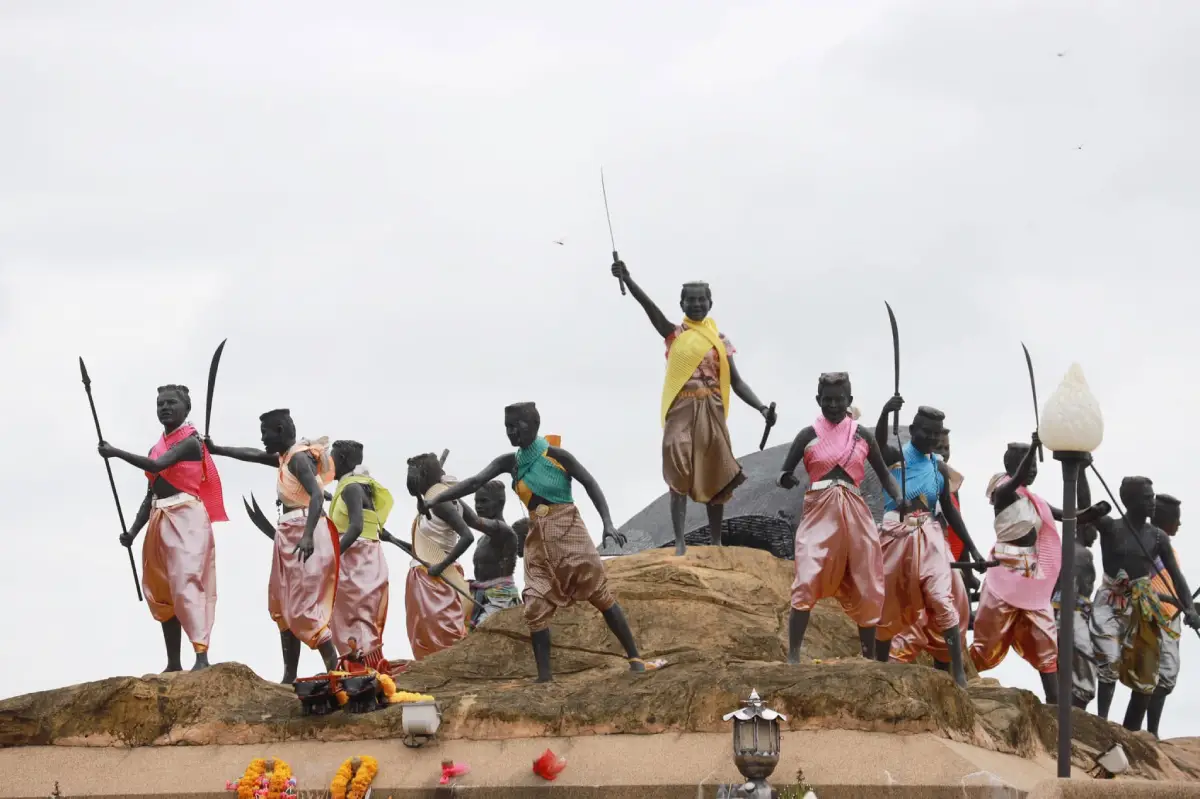
The heart of the memorial is a Thai-style four-sided pavilion built as a spiritual shrine for Miss Bunluea, also respectfully called Ya Luea, and other Korat heroes who died during the battle. The pavilion stands in an open area that evokes the memory of the former battlefield. Inside, visitors will see a statue of Miss Bunluea holding a burning torch or piece of firewood. This image represents the remembered moment when she used fire to destroy the gunpowder carts of the opposing army, damaging their ammunition and helping change the situation of the battle.
The story of Thung Samrit is closely connected with the historical event in 1826, when Chao Anouvong of Vientiane moved against Nakhon Ratchasima. Many people from the city were taken along the route before Thao Suranari, or Khunying Mo, gathered local people and encouraged them to resist. The defense of Korat was not carried out only by formal soldiers. It involved ordinary people, women, men, and villagers who joined together to protect their city and their families.
Miss Bunluea is one of the most significant heroines associated with this event. Her role is not remembered merely as a supporting figure to Thao Suranari. She is remembered as a person who acted decisively during a critical moment of battle. According to local historical memory, she carried a burning torch or piece of firewood and threw it into the enemy’s ammunition carts. The resulting explosion damaged the opposing army’s supplies and weakened their position. Miss Bunluea lost her life during the fighting, and her sacrifice became one of the lasting stories of Korat history.
The importance of Thung Samrit Heroic Deeds Memorial lies in the way it expands the story of Korat’s heroic memory. The defense of Nakhon Ratchasima is often associated with Thao Suranari, but this memorial makes it clear that the victory was part of a collective effort. Miss Bunluea, local villagers, and many unnamed heroes were also part of the struggle. For this reason, the memorial is not only a statue or a pavilion; it is an outdoor classroom that helps visitors understand how ordinary people became part of history.
The main memorial was built in 1988 to honor the spirits of Miss Bunluea and other heroes who died during the battle with Chao Anouvong’s forces. The shrine for Miss Bunluea and the Korat heroes has roots in the local community, with villagers of Thung Samrit having built a Thai-style four-sided pavilion in 1970. The area also includes historical and symbolic elements such as the statue of Ya Luea, figures or paintings of Thao Suranari, royal photographs associated with visits to Nakhon Ratchasima, and displays connected with the battle and its memory.
When visitors enter the memorial area, they will notice that the atmosphere is different from a typical archaeological attraction. The site is calm, open, and sacred in local feeling. The central pavilion provides a visual focus, while the statue of Miss Bunluea holding fire transforms historical memory into a clear and powerful image. This setting allows visitors to connect with the story through both space and symbol. The open ground around the memorial also helps people imagine the wider battlefield landscape remembered by the local community.
The memorial is also the venue for the annual Thung Samrit Heroic Deeds Commemoration. The event is traditionally held around March 3–5 and includes worship ceremonies, offerings, traditional dance, cultural performances, and community activities honoring Thao Suranari, Miss Bunluea, and the Korat heroes. This annual gathering keeps the history alive. The story is not preserved only in books or signs; it is transmitted through public ritual, performance, and the participation of villagers and local authorities.
In 2026, the site became especially important because Nakhon Ratchasima marked the 200th anniversary of the Thung Samrit heroic deeds. The commemorative event was held from March 3 to 5, 2026, at the memorial in Samrit Subdistrict, Phimai District. It included worship ceremonies for Thao Suranari, Miss Bunluea, and the Korat heroes, local products, handicrafts, OTOP goods, and a light-and-sound performance titled “200 Years of Heroes, Victory, and Thai Heroines: Thao Suranari.” This anniversary confirmed that the memorial remains a living center of local remembrance.
Travelers who visit during the annual event will experience a very different atmosphere from an ordinary day. Local people from Samrit and nearby communities gather to perform rituals, wear traditional dress, participate in dances, and honor their ancestors. This shows how strongly the community remains connected with the site. Thung Samrit is not simply a tourist stop; it is a place where people continue to pass down pride, gratitude, and historical identity to younger generations.
On regular days, the memorial is suitable for a quiet and thoughtful visit. Visitors can walk around the pavilion, pay respect to Ya Luea, observe the interior elements, read the historical information, and view the open ground as part of a remembered battlefield. Morning or late afternoon is a comfortable time to visit because part of the site is exposed to the sun. Travelers should bring drinking water, wear comfortable shoes, and dress respectfully because the place is both a memorial and a sacred local site.
Thung Samrit Heroic Deeds Memorial is also suitable for families, students, and educational groups. The story of the site is easy to connect with wider values: courage, community responsibility, sacrifice, and the role of women in history. Bringing young people here is not only a sightseeing activity. It helps them understand that history was shaped not only by rulers and armies, but also by ordinary people who acted bravely at decisive moments.
When combined with other attractions in Phimai, the memorial creates a rich historical route across different periods. A journey can begin with the ancient Khmer civilization at Phimai Historical Park, continue to Phimai National Museum to understand artifacts and city context, and then move to Thung Samrit to learn about local heroism in the Rattanakosin period. If time allows, Sai Ngam and Phimai Dam can be added for a natural and riverside atmosphere. This route gives travelers a fuller view of Phimai through archaeology, local history, culture, and nature.
Getting There is most convenient by private car. From Nakhon Ratchasima city, take Highway 2, also known as Mittraphap Road, toward Phimai District. Around kilometer markers 43–44, turn right and continue for about 3 km to reach the memorial. From central Phimai or Phimai Historical Park, visitors can use the Phimai–Samrit local road or nearby connecting routes to Samrit Subdistrict. Private transport is recommended because it allows travelers to combine the memorial with other attractions around Phimai in one trip.
Visitors using public transport can take a Korat–Phimai bus from Nakhon Ratchasima Bus Terminal 2 and ask the driver or staff whether the route passes near Thung Samrit. From the main road, local transfer or hired transport may be needed because the memorial is about 3 km from the highway. Travelers using public transport should allow extra time and check local connections in advance, especially outside festival days.
Visitors should behave respectfully at the memorial. Climbing on the pavilion or memorial structures, touching statues or displays carelessly, making loud noise, and leaving rubbish are not appropriate. If making offerings, visitors should place them in designated areas. The site commemorates people who lost their lives in battle and is used by the community for annual ceremonies, so preserving its dignity is important.
The site is also interesting for photography. Key viewpoints include the Thai-style pavilion, the memorial sign, the open ground, and the statue of Ya Luea holding a torch. The front of the pavilion offers a clear view of the structure and surrounding space. Morning light is soft and pleasant, while late afternoon gives a calm atmosphere. During the annual commemoration, rituals and performances add movement and cultural depth to the site.
In local belief, many Korat people show deep respect for Ya Luea and the heroes of Thung Samrit. They are honored as people who sacrificed themselves for the homeland, just as Thao Suranari is revered as Ya Mo. Visitors often come to pay respect and ask for courage, strength, safety, and success. Even travelers who approach the place primarily as a historical site should recognize that local faith is an important part of the memorial’s living meaning.
Thung Samrit Heroic Deeds Memorial also shows how rural landscapes can become central to national and provincial memory. A field and village area in Phimai became the stage for an event that shaped the identity of Nakhon Ratchasima. The site may not be large or commercial, but its quietness helps visitors listen more carefully to the story of the past. It is a place where silence, space, and memory work together.
For first-time visitors to Phimai, a practical itinerary is to visit Phimai Historical Park in the morning, continue to Phimai National Museum, have lunch in town, and then travel to Thung Samrit Heroic Deeds Memorial in the afternoon. The day can end at Sai Ngam or a riverside restaurant near the Mun River. This route allows travelers to experience Phimai through ancient civilization, museum interpretation, heroic memory, local food, and nature.
For foreign travelers interested in Thai history, the memorial deserves careful explanation. The event was not simply a local battle. It reflects political relationships between Siam, Vientiane, Lao territories, and frontier cities in the early 19th century. It also reveals the social role of women, villagers, and community memory in Thai local history. Visiting the memorial together with stories of Thao Suranari and Miss Bunluea helps travelers understand Korat’s identity more deeply.
In summary, Thung Samrit Heroic Deeds Memorial is an important destination for anyone visiting Phimai and Nakhon Ratchasima. It combines history, heroism, faith, and living community tradition in one place. Standing in the area remembered as a battlefield, paying respect to Ya Luea and the Korat heroes, and seeing the Thai-style pavilion and torch-bearing statue allow visitors to understand that behind the phrase “City of Ya Mo” are many other people whose sacrifice should also be remembered.
| Name | Thung Samrit Heroic Deeds Memorial |
| Location | Moo 1, Ban Samrit Tawan Ok, Samrit Subdistrict, Phimai District, Nakhon Ratchasima Province |
| Address | Moo 1, Samrit Road, Phimai District, Nakhon Ratchasima 30110, Thailand |
| Highlights | A Thai-style four-sided pavilion and shrine honoring Miss Bunluea, or Ya Luea, and the Korat heroes who sacrificed their lives during the 1826 conflict |
| History | Associated with the Chao Anouvong conflict during the reign of King Rama III in 1826; the main memorial was built in 1988, while the spirit shrine was built by local villagers in 1970 |
| Name Origin | Named after Thung Samrit, the battlefield area where local people of Korat fought against Chao Anouvong’s forces and where the community continues to commemorate their heroism |
| Distinctive Features | Inside the pavilion are a statue of Miss Bunluea holding a torch, figures and paintings of Thao Suranari, royal photographs, and elements related to the story of the battle |
| Main Areas / Zones | Memorial courtyard Thai-style four-sided pavilion Shrine of Miss Bunluea and the Korat heroes Ya Luea torch-bearing statue Figures and paintings of Thao Suranari Historical display area with battle-related objects Annual commemoration activity area |
| Caretaker | Samrit Subdistrict Administrative Organization, together with Phimai District, Nakhon Ratchasima Province, and related local agencies involved in maintaining the site and organizing the annual commemoration |
| Traditions / Related Rituals | The annual Thung Samrit Heroic Deeds Commemoration is held around March 3–5, with ceremonies honoring Thao Suranari, Miss Bunluea, and Korat heroes, along with traditional dance and cultural activities |
| Travel Information | From Nakhon Ratchasima city, take Highway 2 or Mittraphap Road toward Phimai. Around kilometer markers 43–44, turn right and continue for about 3 km to reach the memorial |
| Current Status | Open to visitors as a sacred local site and historical learning destination in Phimai District |
| Open Days | Daily |
| Opening Hours | 08.00 – 18.00 |
| Fees | No Admission Fee |
| Facilities | Parking area, wheelchair ramp, memorial courtyard, worship area, annual activity space, and visitor paths within the memorial grounds |
| Main Contact Number | 044-482900, Samrit Subdistrict Administrative Organization Tel. 044-482901 |
| Nearby Tourist Attractions | 1. Phimai Historical Park, about 8 km 2. Phimai National Museum, about 8 km 3. Sai Ngam Phimai, about 9 km 4. Phimai Dam, about 9 km 5. Wat Doem Phimai, about 8 km 6. Phimai Victory Gate, about 8 km |
| Nearby Restaurants | 1. Riverside Restaurant, about 4 km, Tel. 044-285510 2. Kiang Mool Phimai, about 7 km, Tel. 081-062-8875, 081-997-4970 3. Phot Roasted Duck, about 8 km, Tel. 044-928129, 098-162-3282 4. Thiw Phai Roasted Duck Phimai, about 8 km, Tel. 044-287500, 081-878-1466 5. Tim Chong Sanguanklang, about 9 km, Tel. 081-064-6263 |
| Nearby Accommodations | 1. Rabbit Hotel Phimai, about 7 km, Tel. 081-202-2250 2. Phimai Residence, about 8 km, Tel. 097-149-9992 3. Phimai Paradise Hotel, about 8 km, Tel. 044-287565, 044-471575, 086-4688402 4. Baan Lita Phimai, about 9 km, Tel. 088-595-2542 5. Kord Phimai Resort, about 9 km, Tel. 087-960-1177, 044-918600 |
Frequently Asked Questions (FAQ)
Q: Where is Thung Samrit Heroic Deeds Memorial located?
A: It is located at Moo 1, Ban Samrit Tawan Ok, Samrit Subdistrict, Phimai District, Nakhon Ratchasima Province.
Q: Why is Thung Samrit Heroic Deeds Memorial important?
A: The memorial honors Thao Suranari, Miss Bunluea, and the Korat heroes who sacrificed their lives defending Nakhon Ratchasima during the Chao Anouvong conflict in 1826.
Q: What can visitors see inside the memorial?
A: Visitors can see a Thai-style four-sided pavilion, the shrine of Miss Bunluea and the Korat heroes, the torch-bearing statue of Ya Luea, figures and paintings of Thao Suranari, and historical display elements related to the battle.
Q: What are the opening hours?
A: The memorial is open daily from 08.00 to 18.00.
Q: Is there an admission fee?
A: No. Visitors can enter the memorial, pay respect, and learn about the history without an admission fee.
Q: When is the annual Thung Samrit commemoration held?
A: The annual commemoration is held around March 3–5, with worship ceremonies, traditional dance, cultural performances, and community activities.
Q: How can travelers get there from Nakhon Ratchasima city?
A: Take Highway 2 or Mittraphap Road toward Phimai. Around kilometer markers 43–44, turn right and continue for about 3 km to reach the memorial.
Q: What nearby attractions can be visited with the memorial?
A: Nearby places include Phimai Historical Park, Phimai National Museum, Sai Ngam, Phimai Dam, Wat Doem Phimai, and Phimai Victory Gate.
 Category: ●Art, Culture and Heritage
 Group: ●Landmarks and Memorials
Last Update : 2 MonthAgo
 Last Update : 2 MonthAgo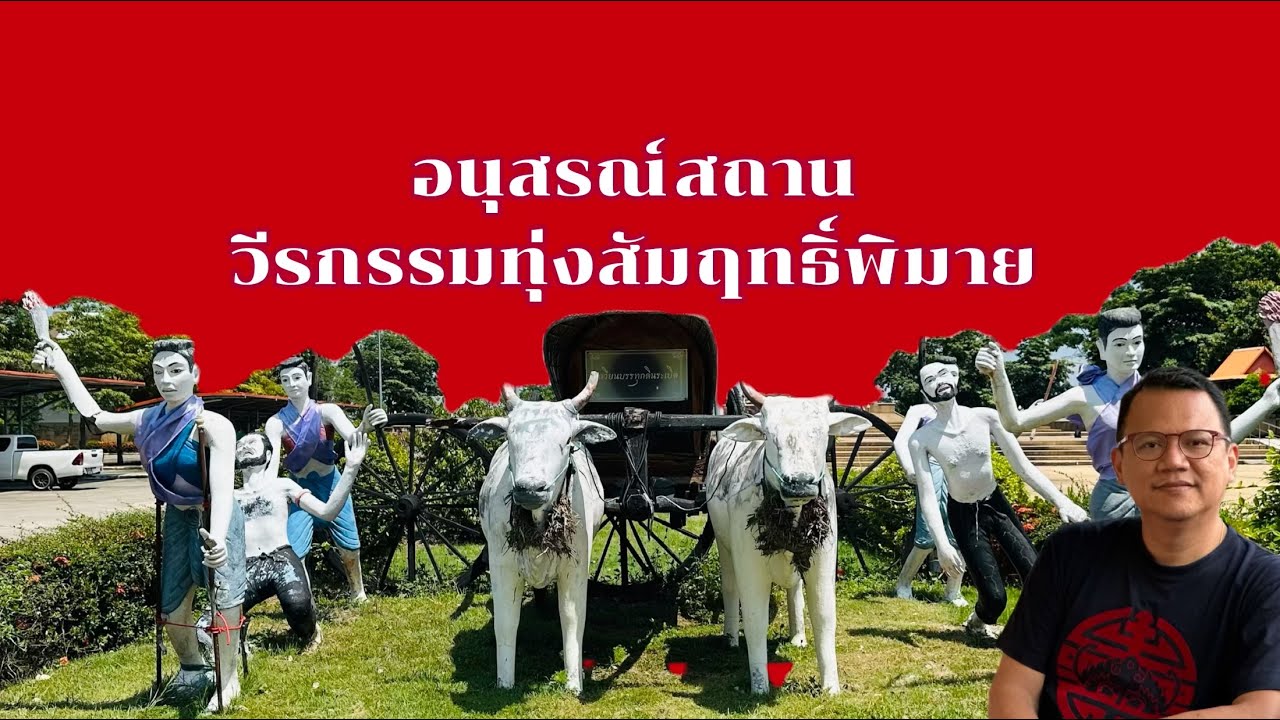
 Click to Access the Navigation Map GPS
Thung Samrit Heroic Deeds Memorial Map
Recommend

 Historical Sites and Monuments(20)
Landmarks and Memorials(5)
Historical Sites and Monuments(20)
Landmarks and Memorials(5)
 Art, Craft Centres, Tradition(7)
 Museums(6)
 Art Gallery(1)
 Educational Places
 Educational Gardens, Farm(4)
 Places of Worship
 Temple(29)
 Mosque(1)
 Other Sacred Sites(6)
 Research and Development
 Royal Project(3)
 Suburban Living
 Village, Community(6)
 Local Market(4)
 Floating Market(1)
 Nature and Wildlife
 National Parks and Marine Reserves(3)
 Mountain (Doi)(5)
 Dam, Reservoir, Lake(8)
 Waterfalls(9)
 Hot Springs(1)
 Caves(2)
 Flower Field(1)
 River, Canal(8)
 Bays and Beaches(2)
 Other natural attractions(3)
 Entertainment and Agricultural
 Zoos and Aquariums(1)
 Animal camps and shows(1)
 Farms, Parks and Ecotourism(21)
 Waterpark(2)
 Outdoor and Adventure Activities(6)
 Shopping
 Shopping and Night Market(2)
 Travel Articles, Recipes
 Travel Review, Food Review(5)


