
lovethailand home >Northeastern Travel Attractions >Nakhon Ratchasima Travel Attractions >Huai Thalaeng >Lung Pradu > Ban Lung Pradu Samakkhi Mulberry-Growing And Silk-..
TL;DR: Ban Lung Pradu Samakkhi Mulberry-Growing And Silk-Raising Village is located at Moo 1, Lung Pradu Subdistrict, Huai Thalaeng District, Nakhon Ratchasima Province 30240, open Daily, hours 08.30 – 16.30.
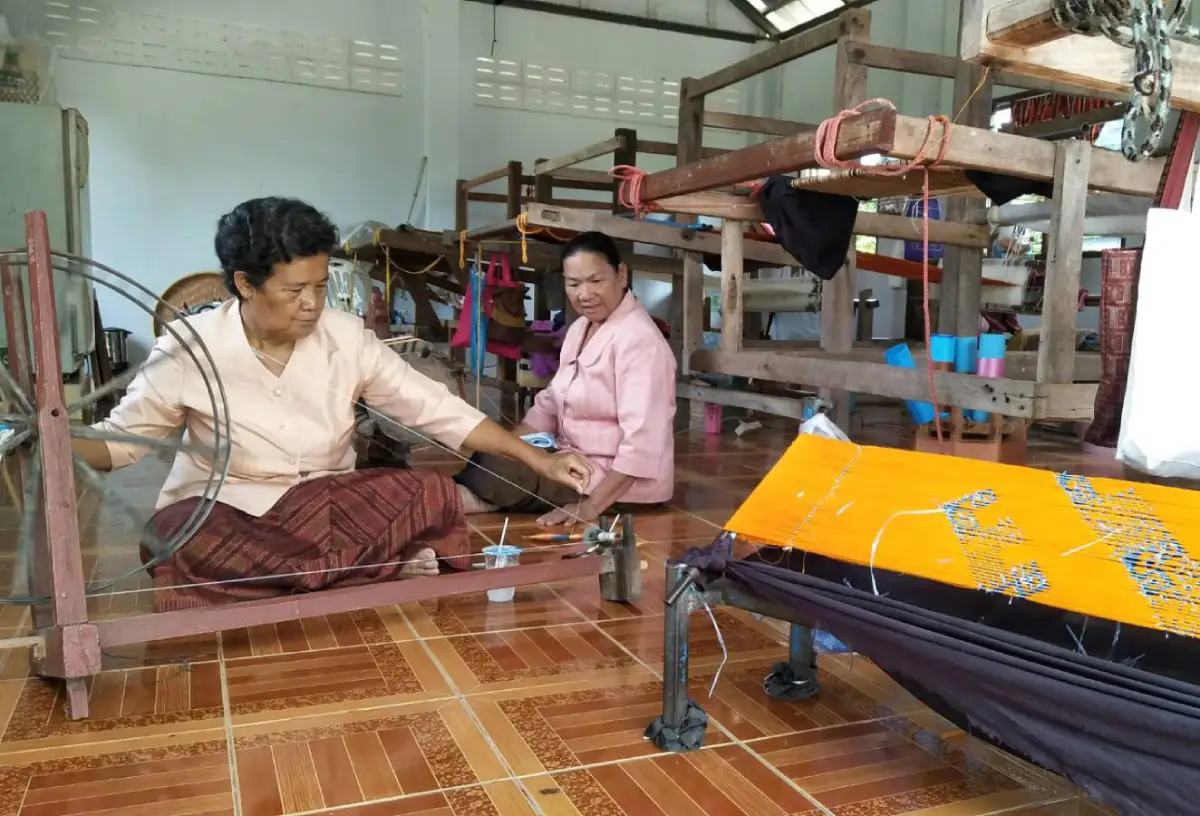
Ban Lung Pradu Samakkhi Mulberry-Growing And Silk-Raising Village
Open Days: Daily
Opening Hours: 08.30 – 16.30
Ban Lung Pradu Samakkhi Mulberry-Growing And Silk-Raising Village is located in Moo 1, Lung Pradu Subdistrict, Huai Thalaeng District, Nakhon Ratchasima Province 30240, along Highway 2163 on the Phimai–Hin Dat route near kilometer marker 21. It is one of the important silk-learning communities in Nakhon Ratchasima, where visitors can understand the complete cycle of Thai silk production from mulberry cultivation and silkworm raising to reeling, degumming, dyeing, and weaving. The village is known for the Lung Pradu Thai Silk Group, a local weaving community that has carried forward traditional silk knowledge for generations and produces silk shawls, mudmee silk, check-pattern silk, hang krarok silk, and both ancient and contemporary designs.
Ban Lung Pradu Samakkhi helps visitors see that silk does not begin at the loom alone. It begins with mulberry trees, whose leaves feed the silkworms. It continues through the careful care of silkworms, the gathering of cocoons, the reeling of silk thread, the preparation and dyeing of yarn, and finally the weaving of fabric on traditional looms. Every stage requires experience and precision. A visit to the village therefore explains Thai silk as a living system of farming, craft, family knowledge, and community cooperation rather than only as a finished textile product.
The silk tradition of Lung Pradu is deeply connected with the rural life of northeastern Thailand. In the past, many households produced cloth for family use, ceremonies, religious occasions, and personal clothing. Weaving was part of household work after agricultural seasons and was often passed from mothers and grandmothers to younger women in the family. Over time, this household skill became more organized through the formation of a silk-weaving group. The knowledge that once stayed within homes gradually became a community learning resource and a source of income.
The strongest characteristic of the village is its complete silk-production process. Visitors can understand how mulberry leaves influence the quality of silkworms, how cocoons become silk thread, how silk is prepared before dyeing, and how dyed yarn is transformed into cloth. The process reveals the close relationship between nature and craft. Without healthy mulberry leaves, there are no strong silkworms. Without good cocoons, there is no fine silk thread. Without careful dyeing and weaving, there is no beautiful fabric. Every part of the process depends on the previous stage.
Silk reeling is one of the clearest demonstrations of skill in the village. The artisan must control water temperature, find the silk filament from the cocoon, and combine the threads into a size suitable for weaving. If the thread is pulled too quickly, it may break. If the thread size is uneven, the woven fabric may lose its consistency. This stage shows how much hand skill lies behind the smoothness and shine of Thai silk.
Dyeing is another important part of the Lung Pradu silk identity. The community uses both natural dyes and chemical dyes depending on the product, color, and market needs. Natural dyes create soft and warm tones linked with local plants such as jackfruit heartwood, neem, butterfly pea, local leaves, lac, and other dye materials. Chemical dyes allow a wider and more consistent color range. Together, these dyeing methods show how the village preserves older knowledge while adapting to modern demand.
The silk of Lung Pradu includes both ancient patterns and modern designs. Older patterns preserve memory and cultural continuity, while newer patterns allow silk to be used in contemporary clothing and accessories. Products include silk shawls, mudmee silk, check-pattern silk, silk fabric for tailoring, and hang krarok silk. Each type has its own rhythm and texture. Some pieces are subtle and elegant. Some focus on detailed mudmee patterns. Others show the shimmering color effect that has become closely associated with Korat silk.
Hang krarok silk is especially important to Nakhon Ratchasima’s textile identity. Its main technique involves twisting 2 silk or cotton threads of different colors together to create a special weft thread known as hang krarok thread. When woven, the cloth appears to have fine shimmering lines within the surface. The beauty does not depend on large motifs but on the way small color movements appear in the fabric. The cloth changes visually under light, giving it depth, gloss, and a refined local character.
The Tri-Lak pattern of Lung Pradu hang krarok silk has become particularly significant because it was developed and recognized as a distinctive silk pattern of Nakhon Ratchasima Province. This recognition reflects the strength of the community’s weaving knowledge and the ability of local artisans to turn traditional technique into a contemporary provincial identity. A single pattern therefore represents not only skill but also the wider cultural image of Korat silk.
Ban Lung Pradu is a place where knowledge is transmitted through practice. Weaving knowledge is not passed only through written manuals. It is learned through watching, helping, sitting near the loom, handling silk thread, preparing dye, tying mudmee patterns, and correcting problems during real work. This form of learning creates a living craft culture. It allows each weaver to inherit knowledge while developing personal skill and style.
Within the Lung Pradu Thai Silk Group, members often divide work according to their strengths. Some are skilled in mudmee tying, some in dyeing, some in reeling, some in weaving, and others in product display or coordination. Members who do not have a loom at home may use the group’s facilities or work together at the learning center. This cooperative structure makes the group more than a collection of individual weavers. It is a shared production and learning system.
The Lung Pradu local museum and silk-learning center help connect visitors with the community’s knowledge. Visitors can see looms, silk yarn, weaving tools, dyed threads, fabric samples, and examples of local silk patterns. Seeing these materials in the village setting makes the finished silk easier to understand. A single cloth represents many hands: the person who raises silkworms, reels silk, dyes thread, ties patterns, prepares the loom, and weaves the fabric.
The village also shows how silk production is connected with agriculture. Mulberry cultivation and silkworm raising often exist alongside rice farming, field crops, and other seasonal work. Weaving is therefore not separate from the agricultural calendar. It follows the rhythm of the household and the village. This relationship gives Lung Pradu silk its grounded character. The cloth belongs to real rural life, not only to a display room or a marketplace.
The products of Ban Lung Pradu include silk shawls, mudmee silk, check-pattern silk, hang krarok silk, traditional silk fabric, and contemporary woven pieces. Silk shawls are accessible and easy to wear. Mudmee silk emphasizes the beauty of tied-and-dyed patterns. Check-pattern silk adapts traditional weaving into a familiar visual structure. Hang krarok silk reflects a deeper Korat identity through its shimmering mixed-color thread. Together, these products show the range of the community’s skill.
For visitors interested in craft, Ban Lung Pradu offers a different experience from buying silk in a city shop. Visitors can meet the makers, see the process, touch the fabric, observe the loom, and understand how silk is formed from thread to textile. Buying directly from the community also gives the cloth a stronger story. It is not only a beautiful material. It is linked with mulberry trees, silkworms, dye pots, looms, and the hands of local artisans.
For international visitors, the village is an accessible place to understand Thai silk at community level. It shows the origin of silk through real production rather than only finished products. The processes of reeling, dyeing, and weaving reveal the practical science and artistic sensitivity behind Thai silk. The fabric becomes meaningful because visitors can see the natural material, the human labor, and the cultural knowledge that shape it.
Ban Lung Pradu Samakkhi is also a strong example of community-based tourism without needing large infrastructure. Its value comes from living knowledge. The village has homes, looms, a learning center, silk products, skilled weavers, and local stories. Visitors enter a working community, not an artificial display. Silk production gives the village a clear identity and helps younger generations recognize the value of local craft.
Getting There is by Highway 2163 on the Phimai–Hin Dat route. Around kilometer marker 21, turn right at the sign leading to Ban Lung Pradu silk-weaving village. The distance from Nakhon Ratchasima city is about 90 km. Travelers can first head toward Phimai District and then continue along the Phimai–Hin Dat route to Lung Pradu Subdistrict. The navigation coordinates are 15.045272, 102.558743.
The surrounding area connects silk learning with local culture and history. Nearby places include Wat Lung Pradu, Wat Pa Lung Pradu Samakkhi Tham, the Lung Pradu local museum, the Lung Pradu Thai Silk Learning Center, and Ku Sila Khan in Ban Ku Sila Khan. The route can also connect with Phimai Historical Park, Phimai National Museum, and Sai Ngam in Phimai. This allows travelers to combine silk, community life, temples, archaeology, and Korat cultural heritage in one route.
The silk-learning experience can be understood in several stages. The mulberry area explains the food source of silkworms. The silkworm area explains the beginning of silk fiber. The cocoon and reeling stage shows how thread is drawn from natural material. The dyeing area shows how color enters the silk. The loom area shows how warp and weft become fabric. Together, these stages allow visitors to understand the transformation from plant and insect life into woven textile.
The main internal zones include mulberry-growing areas, silkworm-raising areas, reeling areas, degumming and dyeing areas, weaving areas, product display areas, product sales areas, and the Lung Pradu Thai Silk Learning Center. Each zone serves a different function. When viewed in sequence, they show the complete change from mulberry leaves and cocoons into silk thread, dyed yarn, and finished cloth.
The cultural value of Lung Pradu comes from continuity across generations. Silk weaving here is not the work of one person alone. It is inherited from mothers, grandmothers, relatives, elders, and community teachers. Younger members receive not only techniques but also stories, patience, and pride. This makes Lung Pradu silk a living craft tradition that can continue to adapt while keeping its identity.
Economically, the Lung Pradu Thai Silk Group creates income from local skill. Silk shawls, mudmee cloth, hang krarok silk, and handwoven products bring value back to the makers and the community. Group members act as producers, knowledge keepers, and cultural representatives of Korat silk. Supporting village-made silk therefore supports local livelihoods and the preservation of weaving knowledge.
Natural dyeing adds environmental and cultural depth to the silk. Each dye plant gives a different tone, and the final color depends on the material, heat, dyeing duration, and artisan knowledge. Natural colors often appear soft and warm, while chemical colors allow precise and repeatable shades. The presence of both systems shows how the community works with tradition and contemporary market needs.
Mudmee silk demonstrates precision because patterns are tied into the yarn before dyeing and weaving. When the yarn is placed on the loom, the pattern gradually appears across the fabric. This requires careful calculation, color control, and weaving skill. Check-pattern silk and hang krarok silk show another kind of skill: the control of color rhythm, thread direction, and woven surface. Each product reveals a different side of local textile knowledge.
During the opening period of 08.30 to 16.30, visitors can experience the daytime atmosphere of the community and the silk-learning area. The village is suitable for textile lovers, designers, students, study groups, cultural travelers, and visitors interested in rural Thai life. For group visits, product selection, or deeper learning activities, coordination with Khun Busaba Prathesang at 089-582-6025 connects visitors with the local silk group.
Restaurants and accommodations are available in Huai Thalaeng and Phimai. Huai Thalaeng offers local cafés, small restaurants, and nearby lodging, while Phimai has more hotels, guesthouses, restaurants, and heritage attractions. Travelers interested in combining silk with archaeology can stay in Phimai and visit Ban Lung Pradu during the day. Those who prefer a more rural route can stay around Huai Thalaeng and explore the local community landscape.
Overall, Ban Lung Pradu Samakkhi Mulberry-Growing And Silk-Raising Village is a complete silk-learning destination in Nakhon Ratchasima. Its highlights are mulberry growing, silkworm raising, silk reeling, degumming, dyeing, hand weaving, mudmee silk, check-pattern silk, silk shawls, and hang krarok silk connected with Korat identity. The village helps visitors understand Thai silk as a living heritage shaped by local people, natural materials, practical skill, and continuous transmission across generations.
| Name | Ban Lung Pradu Samakkhi Mulberry-Growing And Silk-Raising Village / Lung Pradu Thai Silk Group |
| Location | Moo 1, Lung Pradu Subdistrict, Huai Thalaeng District, Nakhon Ratchasima Province 30240 |
| Address | Ban Lung Pradu Samakkhi, Moo 1, Lung Pradu Subdistrict, Huai Thalaeng District, Nakhon Ratchasima 30240, along Highway 2163 on the Phimai–Hin Dat route near kilometer marker 21 |
| Coordinates | 15.045272, 102.558743 |
| Highlights | A complete silk-learning village covering mulberry growing, silkworm raising, silk reeling, degumming, dyeing, and hand weaving, with mudmee silk, check-pattern silk, shawls, and hang krarok silk products |
| History / Significance | The community weaves under the Lung Pradu Thai Silk Group and has carried forward local silk-weaving knowledge for more than 300 years. Its Tri-Lak hang krarok silk pattern has been recognized as a distinctive silk pattern of Nakhon Ratchasima Province |
| Name Origin | The name Lung Pradu comes from the local community name, while the mulberry-growing and silk-raising village identity reflects its role as a complete silk-production learning area |
| Type | Silk handicraft village, community learning center, Thai silk product source, and local textile wisdom destination in lower northeastern Thailand |
| Main Products | Silk shawls, mudmee silk, check-pattern silk, hang krarok silk, local silk fabric, fabric for tailoring, and handmade silk products from the community group |
| Textile Features | Handwoven silk using both ancient and contemporary designs, natural and chemical dyeing, silk reeling, mudmee tying, and hang krarok weaving with shimmering mixed-color thread |
| Travel Information | From Nakhon Ratchasima city, travel about 90 km to Highway 2163 on the Phimai–Hin Dat route. Around kilometer marker 21, turn right at the sign for Ban Lung Pradu silk-weaving village |
| Current Status | Open as a community silk-learning site and silk product source operated by the Lung Pradu Thai Silk Group and local weavers |
| Open Days | Daily |
| Opening Hours | 08.30 – 16.30 |
| Admission Fee | Free Admission For Walking Through The Village And Shopping For Silk Products. In-Depth Study Activities Or Special Community Activities Are Arranged Through Group Coordination |
| Facilities | Thai silk learning area, weaving area, silk product display area, product sales area, looms, demonstration tools, and community parking areas |
| Main Areas / Learning Zones | 1. Mulberry-Growing Area 2. Silkworm-Raising Area 3. Silk-Reeling Area 4. Degumming And Dyeing Area 5. Hand-Weaving Area 6. Lung Pradu Thai Silk Learning Center 7. Hang Krarok, Mudmee, And Check-Pattern Silk Display Area 8. Community Silk Product Sales Area |
| Caretaker / Coordinator | Lung Pradu Thai Silk Group / Khun Busaba Prathesang / Ban Lung Pradu Silk-Weaving Members |
| Contact Number | Khun Busaba Prathesang: 089-582-6025 Lung Pradu Thai Silk Group: 061-086-2953 |
| Nearby Tourist Attractions | 1. Lung Pradu Thai Silk Learning Center / Lung Pradu Local Museum – Within The Same Community 2. Wat Lung Pradu – About 1 Km 3. Wat Pa Lung Pradu Samakkhi Tham – About 3 Km 4. Ku Sila Khan, Ban Ku Sila Khan – About 6 Km 5. Huai Thalaeng Town – About 22 Km 6. Phimai Historical Park – About 24 Km – Tel. 044-471-568 7. Phimai National Museum – About 24 Km – Tel. 044-471-167 8. Sai Ngam, Phimai – About 26 Km |
| Nearby Restaurants | 1. Jungle Cafe, Huai Thalaeng Branch – About 22 Km – Tel. 086-023-0263 2. Thung Na Coffee @ Huai Thalaeng – About 22 Km – Tel. 080-351-4938, 091-832-6325 3. Phuean Rao Restaurant, Huai Thalaeng – About 22 Km – Tel. 044-301-245 4. Naisuan CAFE, Huai Thalaeng – About 23 Km – Tel. 095-619-5819 5. Cartoon Café, Huai Thalaeng – About 23 Km – Tel. 081-760-4489 6. Noi Som Tam, Phimai – About 24 Km – Tel. 083-365-7490 7. Rakkan Bakery 1, Phimai – About 24 Km – Tel. 065-584-8675 |
| Nearby Accommodations | 1. Sleep Tight Hotel Huai Thalaeng – About 22 Km – Tel. 098-881-0108 2. Tiyakorn Resort, Huai Thalaeng – About 25 Km – Tel. 084-473-2626 3. Suksan Resort, Huai Thalaeng – About 25 Km – Tel. 098-631-9795 4. Phimai Paradise Hotel – About 24 Km – Tel. 044-287-565, 044-471-575 5. Benya Guest House, Phimai – About 24 Km – Tel. 081-976-2471 6. Rabbit Hotel Phimai – About 25 Km – Tel. 081-202-2250 7. Phimai Inn Hotel – About 25 Km – Tel. 044-471-175, 081-266-9058 |
Frequently Asked Questions (FAQ)
Q: Where is Ban Lung Pradu Samakkhi Mulberry-Growing And Silk-Raising Village located?
A: It is located in Moo 1, Lung Pradu Subdistrict, Huai Thalaeng District, Nakhon Ratchasima Province 30240, along Highway 2163 on the Phimai–Hin Dat route near kilometer marker 21, about 90 km from Nakhon Ratchasima city.
Q: What are the opening days and hours?
A: The village is open daily from 08.30 to 16.30.
Q: What is the main highlight of Ban Lung Pradu Samakkhi?
A: The main highlight is the complete silk-production process, including mulberry growing, silkworm raising, silk reeling, degumming, dyeing, and hand weaving, along with mudmee silk, check-pattern silk, shawls, and hang krarok silk.
Q: Why is Lung Pradu hang krarok silk important?
A: Hang krarok silk uses a special mixed-color thread technique that creates a shimmering surface, and the Tri-Lak hang krarok pattern from Lung Pradu has been recognized as a distinctive silk pattern of Nakhon Ratchasima Province.
Q: Is there an admission fee?
A: Admission is free for walking through the village and shopping for silk products. In-depth study activities or special community activities are arranged through group coordination.
Q: How can travelers get to Ban Lung Pradu Samakkhi?
A: Take Highway 2163 on the Phimai–Hin Dat route. Around kilometer marker 21, turn right at the sign for Ban Lung Pradu silk-weaving village. The navigation coordinates are 15.045272, 102.558743.
Q: How can visitors contact the Lung Pradu Thai Silk Group?
A: Visitors can contact Khun Busaba Prathesang at 089-582-6025 or the Lung Pradu Thai Silk Group at 061-086-2953.
Q: What nearby attractions can be combined with Ban Lung Pradu Samakkhi?
A: Nearby places include the Lung Pradu Thai Silk Learning Center, Wat Lung Pradu, Wat Pa Lung Pradu Samakkhi Tham, Ku Sila Khan, Phimai Historical Park, Phimai National Museum, and Sai Ngam in Phimai.
 Category: ●Suburban Living
 Group: ●Village, Community
Last Update : 1 MonthAgo
 Last Update : 1 MonthAgo
 Click to Access the Navigation Map GPS
Ban Lung Pradu Samakkhi Mulberry-Growing And Silk-Raising Village Map
Recommend

 Art, Culture and Heritage
 Historical Sites and Monuments(20)
 Landmarks and Memorials(5)
 Art, Craft Centres, Tradition(7)
 Museums(6)
 Art Gallery(1)
 Educational Places
 Educational Gardens, Farm(4)
 Places of Worship
 Temple(29)
 Mosque(1)
 Other Sacred Sites(6)
 Research and Development
 Royal Project(3)
Village, Community(6)
Royal Project(3)
Village, Community(6)
 Local Market(4)
 Floating Market(1)
 Nature and Wildlife
 National Parks and Marine Reserves(3)
 Mountain (Doi)(5)
 Dam, Reservoir, Lake(8)
 Waterfalls(9)
 Hot Springs(1)
 Caves(2)
 Flower Field(1)
 River, Canal(8)
 Bays and Beaches(2)
 Other natural attractions(3)
 Entertainment and Agricultural
 Zoos and Aquariums(1)
 Animal camps and shows(1)
 Farms, Parks and Ecotourism(21)
 Waterpark(2)
 Outdoor and Adventure Activities(6)
 Shopping
 Shopping and Night Market(2)
 Travel Articles, Recipes
 Travel Review, Food Review(5)


