
lovethailand home >Northeastern Travel Attractions >Nakhon Ratchasima Travel Attractions >Chok Chai >Dan Kwian > Dan Kwian Pottery Village
TL;DR: Dan Kwian Pottery Village is located at Dan Kwian Subdistrict, Chok Chai District, Nakhon Ratchasima Province 30190, open Daily, hours 08.30 – 16.30.

Dan Kwian Pottery Village
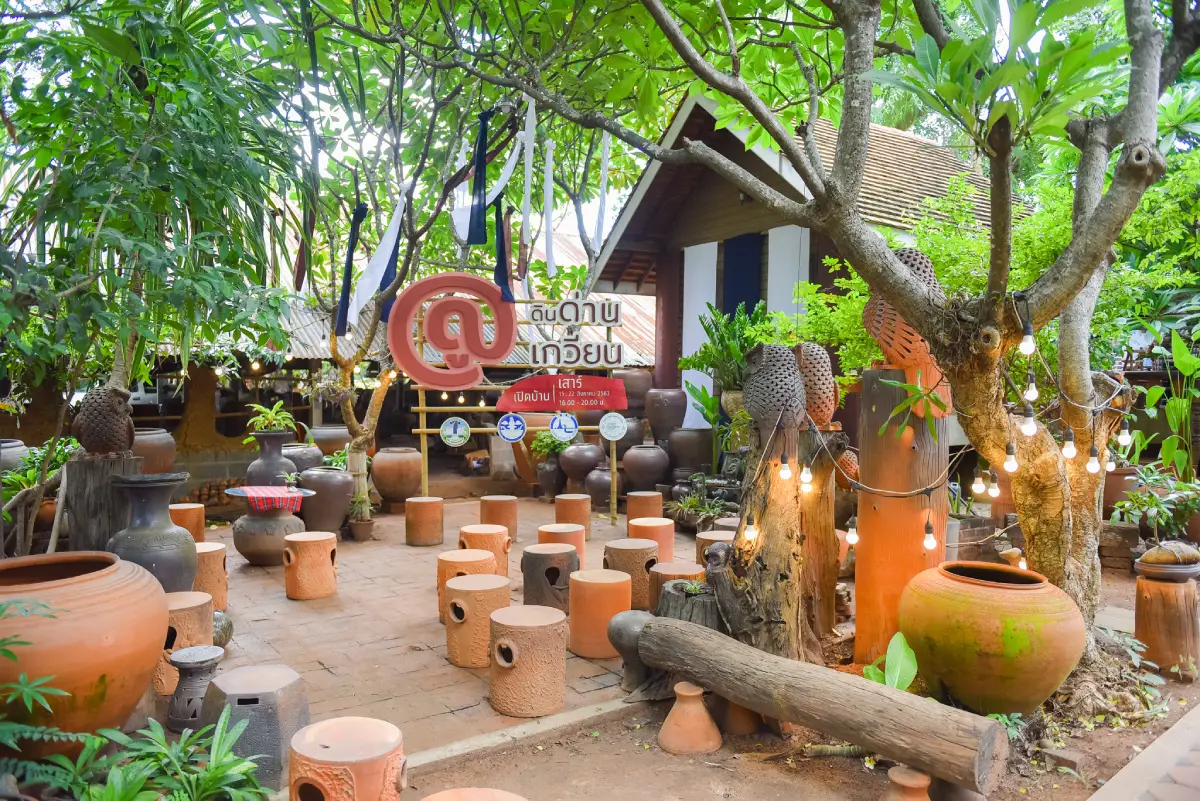
Open Days: Daily
Opening Hours: 08.30 – 16.30
Dan Kwian Pottery Village is located in Dan Kwian Subdistrict, Chok Chai District, Nakhon Ratchasima Province 30190, about 15 km from Korat city along Highway 224, the Nakhon Ratchasima–Chok Chai route. It is one of Thailand’s most distinctive pottery communities, known for strong earthenware, natural bronze-like colors, and a long craft tradition rooted in the landscape of the Mun River. Dan Kwian is not only a place to buy souvenirs or garden decorations. It is a living craft village where clay, water, fire, shaping, firing, design, trade, and community knowledge have been passed down through generations.
The identity of Dan Kwian pottery begins with its clay. The clay used by local artisans comes from areas along the Mun River, especially natural riverbank deposits formed by erosion and sedimentation. This clay is fine, sticky, easy to shape, and highly resistant to heat. It contains a large amount of iron-rich minerals, which produce the characteristic colors after firing. Depending on the firing condition, finished pieces can appear reddish brown, dark brown, black, bronze-like, or deep oxblood in tone. These natural colors have become the visual signature of Dan Kwian pottery.
The history of Dan Kwian is closely connected with trade routes in the Ayutthaya period. The village lay on an important route between Korat and the Khmer region. Ox-cart caravans used the area as a resting point and trading route, and the name Dan Kwian is associated with a checkpoint or station for ox carts. This long history of movement and exchange helped shape the village as a meeting point of people, goods, skills, and materials. Over time, the local community developed pottery knowledge based on the clay available along the Mun River.
In the early period, Dan Kwian pottery was made mainly for household and agricultural use. Local people produced water jars, storage jars, pots, mortars, basins, plant pots, and practical vessels used in daily life. These objects were simple in form but highly functional. They reflected a rural way of life in which people used local materials to create durable tools for the home, the farm, and the community. This practical beginning is still important because it explains why Dan Kwian pottery is known for strength and usability, not only for beauty.
Over time, the pottery of Dan Kwian developed from household utensils into a wide range of craft products. Today, visitors can find jewelry, home decorations, garden pieces, vases, large pots, animal sculptures, wall reliefs, contemporary art pieces, and custom-designed works for homes, cafés, restaurants, resorts, public spaces, and gardens. This development shows how the village has adapted traditional skills to modern design and tourism markets while still preserving the core identity of Dan Kwian clay and firing techniques.
The most admired quality of Dan Kwian pottery is its surface. Many pieces have a natural glossy appearance without needing heavy glaze. During high-temperature firing, minerals in the clay interact with heat and produce a surface that can appear smooth, deep, and lustrous. The result is a strong piece with a natural earthy color. The beauty comes from the clay itself and from the skill of the artisan controlling the firing process. This is why Dan Kwian pottery has a character that is difficult to reproduce elsewhere.
The production process begins with selecting and preparing clay. The clay is kneaded to remove air and create an even texture. It is then shaped by hand, on a wheel, or through a combination of techniques depending on the product. After shaping, the artisan decorates, carves, smooths, or refines the piece before drying it carefully. The dried piece is then fired in a kiln. Each step requires experience. Moisture, thickness, temperature, air flow, and firing time all affect the final quality. A mistake can cause cracking, warping, or uneven color.
A visit to Dan Kwian is visually memorable because pottery shops, workshops, and display areas line both sides of the main road. Visitors can see small souvenirs, plant pots, jars, sculptures, animal figures, and large garden decorations displayed in front of shops and studios. Some shops focus on traditional forms, while others create contemporary designs or large-scale decorative pieces. This concentration of pottery gives Dan Kwian a strong sense of place. The village itself feels like an open-air craft corridor.
Beyond shopping, Dan Kwian functions as a cultural learning destination. In some shops, workshops, and community learning areas, visitors can see or learn about clay preparation, shaping, carving, drying, and firing. Community knowledge also includes old kilns, clay sources, water-lifting devices, village stories, cart history, and the way pottery has shaped local life. This makes a visit to Dan Kwian more meaningful than a simple souvenir stop, because visitors can connect finished products with the people and processes behind them.
Dan Kwian was selected as an OTOP Tourism Village in early 2005, one of only 4 model villages in Thailand at that time and the first model in northeastern Thailand. This status reflects the importance of the village as both a craft production center and a community-based tourism destination. It shows how local wisdom can be developed into tourism, creative products, and community income without losing the cultural roots of the craft.
The main areas of Dan Kwian include pottery shops along Highway 224, pottery workshops, community craft groups, clay-working demonstration areas, old kilns, clay-source areas along the Mun River, the cart museum, community homestays, and product display areas. Each zone presents a different side of the village. The shops show contemporary production and design. The workshops reveal craft processes. The homestay and community activities show local life. The river and clay-source areas explain why the pottery exists in this village in the first place.
Dan Kwian Pottery Homestay adds another level to the experience. It allows visitors to stay in the community and learn about the craft more slowly. Activities can include pottery demonstrations, hands-on clay shaping, local performances, storytelling about the village, cycling through the community, visiting old kilns, seeing clay sources, and visiting the cart museum. Staying in the village changes the visit from a short shopping stop into a deeper cultural experience.
Dan Kwian pottery plays an important role in home and garden design. Many products are used as plant pots, water jars, decorative basins, animal sculptures, lamps, path decorations, and landscape elements for homes, resorts, restaurants, cafés, and public gardens. The clay colors work especially well with natural environments because they come from earth and fire rather than artificial paint. When placed in a garden, the pieces add warmth and texture without overpowering the greenery.
Economically, Dan Kwian is an example of how a village can use local resources to create long-term livelihood. River clay becomes the raw material. Artisans turn it into products. Shops and studios become points of sale. Homestays and learning activities become tourism services. Income is created not only from pottery pieces but also from a whole community system involving skills, materials, transport, design, tourism, and cultural interpretation. This is the strength of Dan Kwian as a craft village.
The success of Dan Kwian also comes from adaptation. The community began with everyday household objects such as water jars, storage jars, and mortars. It then expanded into garden decorations, jewelry, export products, and contemporary sculpture. This flexibility has allowed the village to remain relevant in changing markets. At the same time, the core identity remains clear: local clay, natural firing colors, strong structure, and the hand skill of Dan Kwian artisans.
For visitors interested in cultural history, Dan Kwian reveals the relationship between Ayutthaya-period trade routes, settlement along the Mun River, ethnic and regional knowledge exchange, and local craft production. The tradition that villagers learned pottery from the Kha people, a Mon-Khmer-related indigenous group of the Mekong region, suggests that the craft developed through contact and exchange rather than from a single source. Dan Kwian therefore belongs to the wider cultural world of northeastern Thailand and the lower Mekong region.
For international visitors, Dan Kwian is an accessible place to understand Thai craft culture. The village shows raw material, production process, community life, and finished craft products in one setting. Dan Kwian pottery is not a souvenir invented only for tourism. It comes from practical household vessels and agricultural life, then developed into modern craft and design. Visiting the village helps explain how Thai communities preserve traditional skills while adapting to contemporary markets.
Getting There is straightforward by private car. From Nakhon Ratchasima city, take Highway 224, the Nakhon Ratchasima–Chok Chai route, for about 15 km. Dan Kwian village appears along both sides of the road. Public transport such as the Korat–Chok Chai route or local songthaew services can also pass through the area. The village is easy to combine with Chok Chai District, Nakhon Ratchasima Zoo, the Petrified Wood Museum, and other attractions south of Korat city.
A visit can take from 1 hour to half a day. A short visit is enough for walking through shops and buying pottery. A longer visit allows time for pottery demonstrations, clay-shaping experiences, homestay activities, old kiln stories, and community interpretation. Visitors who enjoy craft, design, photography, or cultural learning will find that Dan Kwian rewards slower observation.
The general visiting period is from morning to afternoon during the opening time of 08.30 to 16.30. Morning offers a comfortable atmosphere for walking between shops and photographing the village. Afternoon works well for travelers combining Dan Kwian with nearby attractions. Individual shops and studios may operate on their own schedules, but the village as a whole is best experienced during daytime.
Products at Dan Kwian range from small souvenirs to large garden sculptures. Small items suit casual travelers, while larger pottery pieces are suitable for homes, restaurants, resorts, gardens, and landscape projects. Many shops can handle delivery for larger pieces, making it possible to purchase big decorative works without carrying them immediately. This has helped Dan Kwian pottery reach markets far beyond the village.
Food and accommodation are available around Dan Kwian, Chok Chai, and Nakhon Ratchasima city. Visitors can find Thai restaurants, Isan food, cafés, local eateries, community homestays, daily rooms, resorts, and city hotels along the route. Those seeking community life can stay in Dan Kwian homestays, while travelers who prefer convenience can stay in Chok Chai or Korat city and visit Dan Kwian as a half-day trip.
Overall, Dan Kwian Pottery Village is one of the most important craft communities in Nakhon Ratchasima and northeastern Thailand. Its value lies in river clay, bronze-like natural firing colors, strong earthenware, diverse designs, active artisans, community learning, and a long history linked with trade routes and the Mun River. From water jars, storage jars, and mortars to contemporary decorations and export products, Dan Kwian shows how a local Thai craft can grow, adapt, and remain strongly rooted in place.
| Name | Dan Kwian Pottery Village |
| Location | Dan Kwian Subdistrict, Chok Chai District, Nakhon Ratchasima Province 30190 |
| Address | Ban Dan Kwian, Dan Kwian Subdistrict, Chok Chai District, Nakhon Ratchasima 30190, along Highway 224, the Nakhon Ratchasima–Chok Chai route |
| Coordinates | 14.84654, 102.19447 |
| Highlights | A Mun River pottery village known for strong earthenware, bronze-like natural colors, pottery shops along both sides of Highway 224, community workshops, and local craft learning |
| History | Dan Kwian was historically connected with the trade route between Korat and the Khmer region during the Ayutthaya period. Local pottery developed from household objects into contemporary craft, garden decoration, and export products |
| Name Origin | The name Dan Kwian is associated with an old checkpoint or resting place for ox-cart caravans traveling through the Korat region |
| Clay Characteristics | Fine river clay from the Mun River area, rich in iron minerals, easy to shape, heat-resistant, and able to produce distinctive natural colors after firing |
| Main Products | Water jars, storage jars, mortars, pots, basins, plant pots, vases, jewelry, home decorations, garden decorations, animal sculptures, and custom works for homes, cafés, restaurants, resorts, and gardens |
| OTOP Status | Selected as an OTOP Tourism Village in early 2005, one of 4 model villages in Thailand and the first model village in northeastern Thailand |
| Travel Information | From Nakhon Ratchasima city, take Highway 224 toward Chok Chai for about 15 km. The pottery village stretches along both sides of the road in Dan Kwian Subdistrict |
| Current Status | Open as a craft village, pottery shopping area, community learning site, and cultural tourism destination in Chok Chai District |
| Open Days | Daily |
| Opening Hours | 08.30 – 16.30 |
| Admission Fee | Free Admission For Walking Through The Village And Shopping |
| Facilities | Pottery shops, product display areas, demonstration areas, community homestays, limited parking areas, nearby restaurants, and road access between Korat city and Chok Chai |
| Main Areas / Zones | 1. Pottery Shops Along Highway 224 2. Pottery Craft Groups And Artisan Studios 3. Demonstration And Clay-Learning Areas 4. Old Kilns And Mun River Clay-Source Areas 5. Cart Museum And Community Story Area 6. Dan Kwian Pottery Homestay 7. Home And Garden Decoration Product Areas |
| Caretaker / Coordinator | Dan Kwian Subdistrict Municipality, Dan Kwian pottery entrepreneurs, and Dan Kwian Pottery Homestay group |
| Contact Number | Dan Kwian Homestay Group: 087-877-7544, 081-265-4078 Dan Kwian Pottery Group, Khun Somchai Loturit: 081-730-6710 Dan Kwian Pottery Homestay: 087-959-4011, 087-877-7544, 085-023-9303 |
| Nearby Tourist Attractions | 1. Dan Kwian Lime Garden – About 2 Km 2. Ban Nong Sano Pottery Village – About 7 Km 3. Chok Chai District / Chok Chai Market – About 10 Km 4. Nakhon Ratchasima Zoo – About 18 Km – Tel. 044-934-532, 044-934-647, 083-372-0404 5. Petrified Wood Museum, Nakhon Ratchasima – About 20 Km 6. Thao Suranari Monument – About 18 Km |
| Nearby Restaurants | 1. Krua Dan Kwian – About 1 Km – Tel. 044-338-505 2. Tam Thad Dan Kwian – About 1 Km – Tel. 080-727-4449 3. Isan Dan Kwian – About 2 Km – Tel. 093-363-3228 4. Chor Chok Chai – About 8 Km – Tel. 089-717-2584 5. CHAT & CHEW Chok Chai – About 10 Km – Tel. 090-986-8411, 097-342-7655 |
| Nearby Accommodations | 1. Dan Kwian Pottery Homestay – Within The Community – Tel. 087-959-4011, 087-877-7544, 085-023-9303 2. Thai House Dan Kwian Resort – About 1 Km – Tel. 044-375-400 3. Roi Kwian @ Dan Kwian – About 1 Km – Tel. 044-338-271 4. Baan Rom Mai Yai Nakhon Ratchasima – About 10 Km – Tel. 044-327-177, 081-877-8311 5. Greenway Resort Chok Chai – About 18 Km – Tel. 044-938-886, 092-665-9988, 092-594-8889 6. K-Inn Hotel Chok Chai – About 12 Km – Tel. 044-492-844, 080-170-4315 |
Frequently Asked Questions (FAQ)
Q: Where is Dan Kwian Pottery Village located?
A: Dan Kwian Pottery Village is located in Dan Kwian Subdistrict, Chok Chai District, Nakhon Ratchasima Province 30190, about 15 km from Korat city along Highway 224, the Nakhon Ratchasima–Chok Chai route.
Q: What are the opening days and hours of Dan Kwian Pottery Village?
A: The village is open daily from 08.30 to 16.30.
Q: Is there an admission fee for Dan Kwian Pottery Village?
A: Admission is free for walking through the village and shopping. Pottery workshops, special activities, or homestay services are separate services depending on each group or operator.
Q: What makes Dan Kwian pottery special?
A: Dan Kwian pottery is made from fine Mun River clay rich in iron minerals. After high-temperature firing, the clay produces distinctive natural colors such as red, dark brown, bronze-like tones, and oxblood, with a strong and glossy surface.
Q: What products can visitors buy at Dan Kwian?
A: Visitors can buy water jars, storage jars, mortars, pots, plant pots, vases, jewelry, home decorations, garden decorations, animal sculptures, and custom pottery works for homes, restaurants, resorts, and gardens.
Q: How can travelers get to Dan Kwian Pottery Village?
A: From Nakhon Ratchasima city, take Highway 224 toward Chok Chai for about 15 km. The pottery village stretches along both sides of the road in Dan Kwian Subdistrict.
Q: Are there homestays or community activities in Dan Kwian?
A: Yes. Dan Kwian Pottery Homestay offers community-based experiences such as pottery demonstrations, hands-on clay shaping, old kiln visits, clay-source learning, the cart museum, and local craft-life activities.
Mobile : 0878777544, 0812654078
 Mobile : 0878777544, 0812654078
 Category: ●Suburban Living
 Group: ●Village, Community
Last Update : 3 MonthAgo
 Last Update : 3 MonthAgo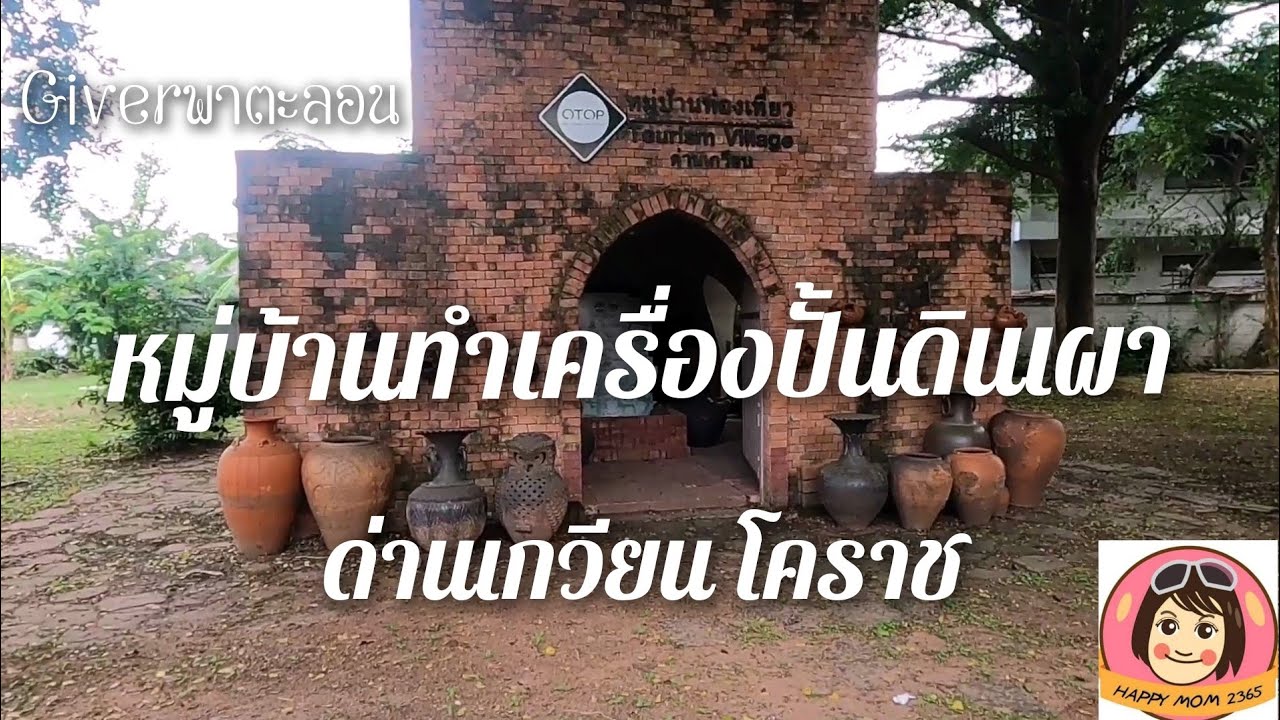
 Click to Access the Navigation Map GPS
Dan Kwian Pottery Village Map
Recommend

 Art, Culture and Heritage
 Historical Sites and Monuments(20)
 Landmarks and Memorials(5)
 Art, Craft Centres, Tradition(7)
 Museums(6)
 Art Gallery(1)
 Educational Places
 Educational Gardens, Farm(4)
 Places of Worship
 Temple(29)
 Mosque(1)
 Other Sacred Sites(6)
 Research and Development
 Royal Project(3)
Village, Community(6)
Royal Project(3)
Village, Community(6)
 Local Market(4)
 Floating Market(1)
 Nature and Wildlife
 National Parks and Marine Reserves(3)
 Mountain (Doi)(5)
 Dam, Reservoir, Lake(8)
 Waterfalls(9)
 Hot Springs(1)
 Caves(2)
 Flower Field(1)
 River, Canal(8)
 Bays and Beaches(2)
 Other natural attractions(3)
 Entertainment and Agricultural
 Zoos and Aquariums(2)
 Animal camps and shows(1)
 Farms, Parks and Ecotourism(21)
 Waterpark(4)
 Outdoor and Adventure Activities(6)
 Shopping
 Shopping and Night Market(2)
 Travel Articles, Recipes
 Travel Review, Food Review(6)


