
lovethailand home >Northeastern Travel Attractions >Khon Kaen Travel Attractions >Muang Khon Kaen >Nai Muang > Northeastern University
TL;DR: Northeastern University is located at 199/19 Mittraphap Road, Nai Mueang, Mueang Khon Kaen, Khon Kaen 40000, Thailand, open Tuesday – Sunday (Admissions and Registrar's Office), hours 08:30 – 16:30 (Office Service Hours).

Northeastern University
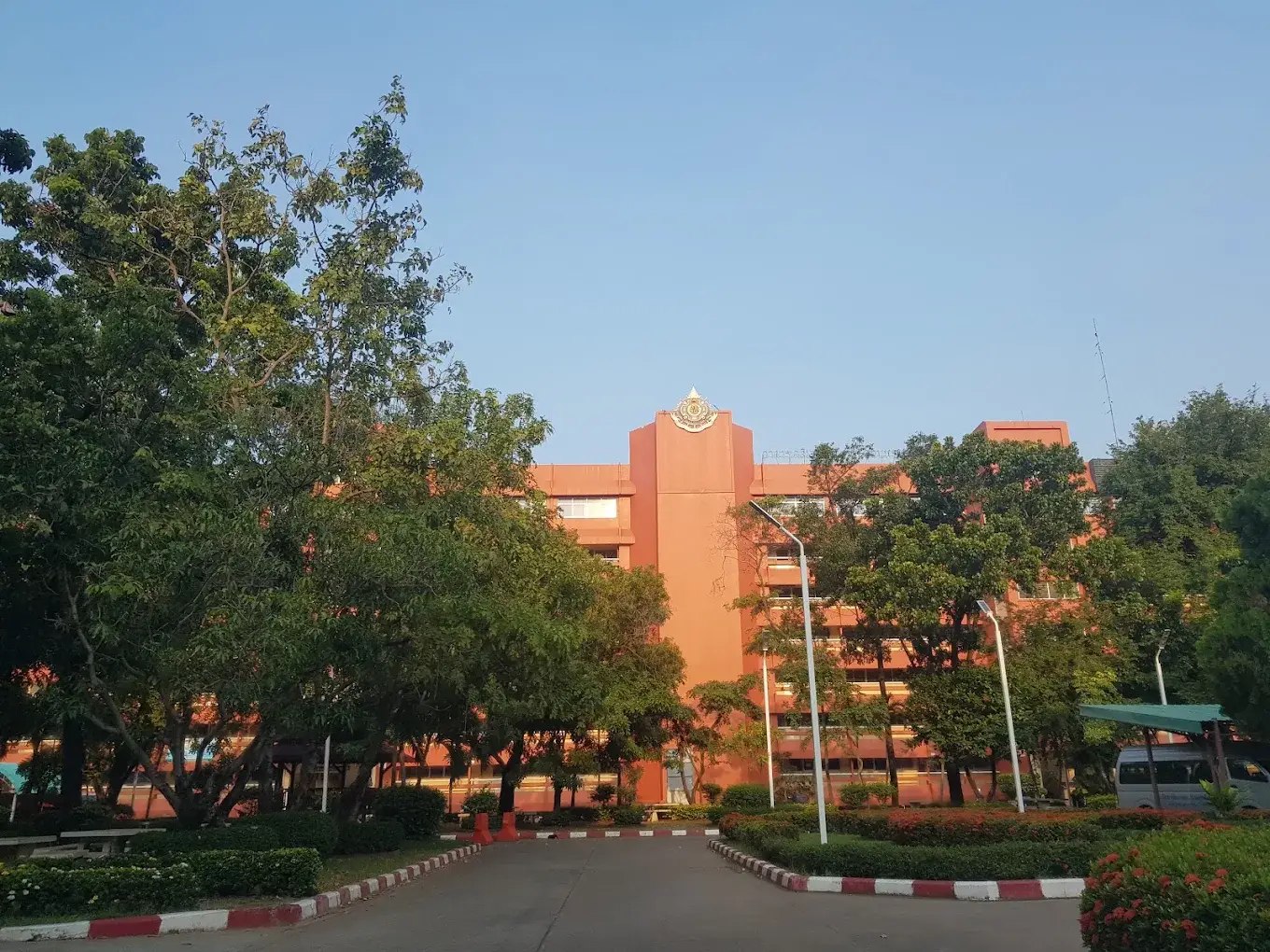
Open Days: Tuesday – Sunday (Admissions and Registrar's Office)
Opening Hours: 08:30 – 16:30 (Office Service Hours)
North Eastern University (NEU) is a private university located at 199/19 Mittraphap Road, Nai Mueang Subdistrict, Mueang Khon Kaen District, Khon Kaen Province, Thailand. Founded on March 8, 1988, as North Eastern College, the institution was established through the initiative of Dr. Prapha Phakpho, its original license holder, with the support of Dr. Mangkon Phakpho, who served as the first chairman of the college council. On December 27, 1999, the college received official approval to change its institutional status to North Eastern University. Today, the university offers higher education across engineering, business administration, education, social sciences and humanities, and nursing. Its guiding philosophy, “Qualifications, Morality, Quality,” reflects a commitment to developing academically capable, professionally skilled, and socially responsible graduates who can contribute to community and national development.
North Eastern University occupies an important position in the educational landscape of Khon Kaen Province as a private institution established to increase access to higher education in northeastern Thailand. Its original mission was particularly relevant to students and families who sought university-level education without necessarily relocating to Bangkok. This commitment reflected the economic and social needs of the Northeast, where expanding industries, businesses, educational institutions, government organizations, and public services required professionals with a wide range of specialized skills.
The university is situated along Mittraphap Road, one of northeastern Thailand's major transportation corridors. Its location within Mueang Khon Kaen District makes it accessible from the city and surrounding provinces. The campus includes academic buildings, administrative offices, teaching laboratories, student activity spaces, and educational facilities supporting disciplines from undergraduate study to postgraduate research and professional development.
The history of North Eastern University began well before its formal authorization in 1988. Preparations for establishing the institution started in 1979, when its founders worked with an advisory group of academics and experienced administrators. The objective was to create a private higher education institution with sufficient land, buildings, financial resources, personnel, and administrative capacity to serve the educational needs of northeastern Thailand.
The original college site was developed near Mittraphap Road in Mueang Khon Kaen District. Historical institutional documents record an area of approximately 47 rai, 3 ngan, and 51.1 square wah, situated around 200 metres from the roadside. The selection of a relatively extensive site demonstrated the intention to establish an educational environment with room for academic buildings, student facilities, and future institutional development.
A major milestone occurred on February 19, 1987, when the foundation stone was laid for the administration building, which later became the Office of the President. Construction and the procurement of educational equipment formed part of the institution's early development, with an initial investment reported at approximately 90 million baht. These preparations were essential to establishing the physical and academic infrastructure required for a new private college.
Dr. Prapha Phakpho played the central role in initiating the institution and obtaining authorization as its license holder. Dr. Mangkon Phakpho supported the development and subsequently became chairman of the college council. Both individuals are recognized in the university's historical records for their contributions to the institution's establishment and their shared commitment to expanding higher educational opportunities in the Northeast.
On March 8, 1988, Thailand's Ministry of University Affairs officially approved the establishment of North Eastern College, also known by the abbreviation N.E.C. The establishment license was signed by Subin Pinkhayan, who served as Minister of University Affairs at the time. This date marks the institution's formal legal establishment and an important development in the history of private higher education in Khon Kaen Province.
During the presentation of the college's establishment license, Professor Dr. Wichit Srisa-an, then Permanent Secretary of the Ministry of University Affairs, acknowledged the institution's preparation and readiness. The founding committee had secured substantial land, financial resources, and facilities and had completed the application process within the required period. This recognition reflected the importance of careful institutional planning before the college began its educational operations.
In the 1988 academic year, North Eastern College received approval to introduce its first Bachelor of Business Administration programs in four fields: Accounting, Marketing, Finance and Banking, and Business Computer. These disciplines addressed the growing demand for business professionals during a period of economic development and expansion of Thailand's private sector.
In the 1989 academic year, the college expanded into engineering education with approved Bachelor of Engineering programs in Electrical Engineering and Electronics Engineering. This marked an important diversification of the institution's academic activities. It began developing technical professionals who could contribute to industrial development, infrastructure, and technological advancement in northeastern Thailand.
The next academic development came in 1990 with approval for a Bachelor of Communication Arts program in Public Relations and Advertising. Journalism was added in the 1994 academic year. These fields reflected the growing significance of public communication, advertising, information dissemination, and media-related professions in Thai society.
Postgraduate education began in the 1992 academic year with the approval of a Master of Business Administration program in General Business Administration. The introduction of the MBA marked the institution's transition beyond undergraduate education and created opportunities for professionals and graduates to develop advanced management knowledge and organizational leadership skills.
During the late 1990s, the college continued to diversify its curriculum. A Bachelor of Laws program received approval in the 1997 academic year, while Civil Engineering was added in 1998. These additions broadened the institution's professional education profile and responded to demand for graduates in law, construction, engineering, and organizational management.
On December 27, 1999, North Eastern College received official authorization to change its classification and become North Eastern University. The approval was signed by Prachuab Chaiyasan, then Minister of University Affairs. The change reflected the institution's growth in academic programs, educational qualifications, and organizational capacity.
The university's history therefore includes two distinct founding milestones. March 8, 1988, marks the legal establishment of the original private college, while December 27, 1999, marks its official transition to university status. These dates represent separate stages in the institution's development and should not be treated as interchangeable.
After becoming a university, academic expansion continued. In the 2000 academic year, new study opportunities included Management, Mechanical Engineering, and teacher professional education. In 2001, the institution added Economics at undergraduate level and Public Administration at master's level. This development broadened its role beyond business and engineering into public sector administration and educational professions.
In the 2002 academic year, the university established a Faculty of Computer and Information Technology to support education in Information Technology and Business Computing. During the same period, postgraduate study in Educational Administration developed further, creating additional opportunities for school administrators and educational professionals seeking advanced qualifications.
International academic cooperation became another aspect of the university's development. In 2003, North Eastern University entered into an academic agreement with Murray State University in the United States involving academic exchange, personnel development, and educational opportunities. The establishment of an English language centre also reflected efforts to strengthen international communication and educational preparation.
In the 2007 academic year, the university introduced a Graduate Diploma in Teaching Profession to support professional teacher qualifications. In 2008, the institution received authorization to provide doctoral-level education and introduced programs in Educational Administration and Business Administration. These developments established the university as a provider of bachelor's, master's, and doctoral education.
In the 2010 academic year, the university expanded its programs in Public Administration and established the Faculty of Social Sciences and Humanities. Engineering and postgraduate programs continued to develop in subsequent years, including Computer Engineering and advanced studies in public administration and educational management.
The 2016 academic year brought an important organizational restructuring. The university established the Faculty of Education and consolidated its former eight faculties into four principal faculties: Business Administration, Engineering, Social Sciences and Humanities, and Education. The restructuring aligned academic disciplines more closely with institutional administration and curriculum development.
Teacher education subsequently expanded through programs in Early Childhood Education, Computer Education, Elementary Education, and Teaching English. Graduate studies also developed in Educational Administration and Leadership, Curriculum and Instruction, and related areas. These fields reflect the university's role in preparing teachers, school administrators, and educational researchers.
During the 2022 academic year, the university further developed Intelligent Systems Engineering and graduate-level Civil Engineering. Academic development in social sciences and education also continued, reflecting increased demand for digital technologies, automation, specialized professional training, and advanced educational management.
The establishment of the Faculty of Nursing represented another significant stage of development. Its Bachelor of Nursing Science curriculum, introduced in the 2024 revision, received approval from the Thailand Nursing and Midwifery Council according to the university's official curriculum documents. This expansion strengthened the institution's role in educating healthcare professionals at a time when nursing services and an ageing population were becoming increasingly important national priorities.
Today, North Eastern University comprises five main faculties: the Faculty of Engineering, Faculty of Business Administration, Faculty of Education, Faculty of Social Sciences and Humanities, and Faculty of Nursing. Together, they provide professional and academic pathways associated with regional workforce requirements, public services, technological development, and community needs.
The Faculty of Engineering prepares students for engineering and technology-related careers. Its published fields include Electrical Engineering, Civil Engineering, Mechanical Engineering, Intelligent Systems Engineering, and Information Technology. Engineering education combines mathematics, scientific principles, design, experimentation, and practical problem-solving to prepare students for professional responsibilities.
Electrical Engineering involves power systems, circuits, electrical machinery, and control systems. Civil Engineering addresses structures, construction materials, surveying, and construction management. Mechanical Engineering focuses on machines, mechanical systems, energy, heat, and related technical processes. These disciplines contribute directly to industrial operations, infrastructure development, and the effective use of technology.
Intelligent Systems Engineering reflects the growing role of automation and interconnected technologies in professional environments. It draws upon knowledge of control systems, data processing, electronics, and automated operations. Information Technology and multimedia-related education also support the development of digital systems, information communication, and technology-based services.
The Faculty of Business Administration provides educational programs addressing contemporary commercial and organizational needs. Its fields include Digital Marketing, Entrepreneurship and Modern Management, Digital Business Technology, Sports and Entertainment Management, Logistics and Supply Chain Management, and Accountancy. These disciplines help students understand organizational operations, business planning, data analysis, and the application of technology in commercial environments.
Digital Marketing is concerned with consumer behaviour, online communication, marketing analysis, and brand development. Entrepreneurship and Modern Management introduces business planning, resource administration, cost control, and strategy. These areas are especially relevant to students interested in commercial employment or establishing and managing their own enterprises.
Logistics and Supply Chain Management is particularly relevant to Khon Kaen's position as a regional transportation and commercial centre. Students examine transportation systems, inventory management, procurement, business coordination, and the use of technology to improve operational efficiency. Accountancy provides essential knowledge for financial reporting, auditing, and responsible business decision-making.
The Faculty of Education plays an important role in preparing teachers and educational professionals. Its published academic fields include Early Childhood Education, Computer Education, Elementary Education, Teaching English, and Physical and Health Education. Graduate programs address Educational Administration and Leadership, Curriculum and Instruction, and specialized educational research.
Preparing teachers requires more than knowledge of a particular academic subject. Students also develop communication skills, an understanding of learning psychology, lesson planning techniques, and the ability to assess educational progress. The faculty's educational approach is relevant to teaching children of different ages and using technology to support effective learning.
At postgraduate level, the Faculty of Education contributes to the development of school administrators and education professionals responsible for institutional leadership, curriculum planning, educational quality, and organizational management. Advanced study provides opportunities to investigate educational problems and develop research-based approaches to improving teaching and administration.
The Faculty of Social Sciences and Humanities provides education in Public Administration, Law, languages, and organizational or community management. These fields develop understanding of government administration, legal systems, society, and communication across cultural contexts. They prepare graduates for work in public organizations, legal professions, community-related activities, and language-based occupations.
Public Administration focuses on public sector organizations, policy implementation, organizational management, and public services. Law develops legal reasoning and understanding of judicial processes and legal principles. English and Chinese communication programs support language competence relevant to professional interaction and international cooperation.
The Faculty of Nursing prepares students for professional nursing through scientific knowledge, clinical skills, and ethical principles. The Bachelor of Nursing Science curriculum includes theoretical learning, nursing practice, and supervised professional experience under the requirements of the academic program and relevant professional standards.
Nursing education requires knowledge of anatomy, physiology, health assessment, patient care, and communication with patients and their families. Professional responsibility and patient safety are central considerations. The development of qualified nursing graduates therefore contributes to the quality and capacity of healthcare services in Thailand.
One important nursing tradition is the Capping and Nightingale Lamp Ceremony, which symbolizes students' progression into professional nursing education. On August 26, 2025, the Faculty of Nursing organized this ceremony for Bachelor of Nursing Science students at Prapakorn Convention Hall on the university campus. University administrators, faculty members, students, and parents attended the event.
The Nightingale lamp is associated with Florence Nightingale, a pioneering figure in modern nursing. Within the ceremony, the lamp represents professional dedication, compassionate care, and responsibility toward patients. The tradition helps students appreciate the values and ethical commitments associated with the nursing profession.
Student activities are another important part of campus life. On August 13, 2026, the university organized NEU Activity Ambassador 2026 at Prapakorn Convention Hall. The event provided opportunities for students to demonstrate creativity, individual talents, and participation in university activities. Such occasions also encourage relationships among students from different faculties.
The university's degree-conferral ceremony is another major institutional event. In 2026, the university held a graduation and certificate presentation ceremony for graduates of the 2025 academic year. The occasion celebrated academic achievement and reflected the university's role in preparing graduates for professional careers and further education.
During the ceremony, the university reported achievements in education, staff development, research, community service, and cultural preservation. These included the revision of six academic programs and the introduction of four new programs, together with the awarding of 258 scholarships. The initiatives demonstrated continuing efforts to improve educational quality and access.
In research development, the university reported research funding totalling 1,063,527 baht for projects addressing community and social challenges. It also supported the publication or presentation of 50 research works at national and international levels during the reporting period associated with the 2025 academic year. These efforts reflect the connection between academic research and practical benefits for society.
Community service is another central university mission. The institution reported 48 academic service and volunteer projects, together with a blood donation initiative involving 160 participants and approximately 68,000 cubic centimetres of donated blood. These activities illustrate how educational resources and student participation can contribute to public welfare.
North Eastern University also places importance on preserving the cultural heritage of northeastern Thailand. Its activities include support for local traditions associated with “Heet 12 Khong 14,” a traditional framework of annual customs and community conduct in Isan society. Cultural education helps younger generations recognize the significance of local heritage while connecting traditional knowledge with contemporary social development.
The university's name reflects its geographic identity and regional mission. The expression “North Eastern” identifies the part of Thailand that the institution was originally created to serve. It also expresses its commitment to expanding higher education and contributing to regional development. The official English name is North Eastern University, commonly abbreviated as NEU.
It is important not to confuse today's private North Eastern University with Khon Kaen University. The latter, a separate public institution, used a Thai name equivalent to “Northeastern University” during an early phase of its establishment in the 1960s. The present North Eastern University was established in 1988 as a private college and has a separate history, legal identity, and administrative structure.
The university's philosophy, “Qualifications, Morality, Quality,” emphasizes the importance of combining academic knowledge with ethical conduct and professional competence. Its institutional identity includes the concept of a “University for Community Development,” with a commitment to producing capable graduates who demonstrate public-mindedness and contribute to local society.
The university's official colors are yellow, pink, and blue. Its symbolic tree is the golden shower tree, or Ratchaphruek, commonly known in the Isan region as the Koon tree. The tree is recognized for its bright yellow flowers and its cultural association with Khon Kaen and northeastern Thailand. Its presence in the university's identity links the institution with the landscape and traditions of the region.
The university emblem incorporates imagery associated with northeastern Thailand, knowledge, and technological progress. Elements include a regional map within a gear-like design, radiating light, and the institution's name in Thai and English. Together, these symbols express the connection between education, regional identity, and the advancement of knowledge.
Environmental sustainability is another dimension of institutional development. North Eastern University has promoted a Green University approach involving energy use, water management, waste, transportation, campus conditions, and sustainability-related education. These efforts align with broader objectives of responsible management and social contribution.
The campus provides facilities intended to support different academic disciplines. These include air-conditioned classrooms, library resources, computer laboratories, engineering laboratories, communication facilities, and information technology services. A mock courtroom is also available as a practical learning environment for law students, allowing them to develop legal reasoning and courtroom-related skills through simulated professional activities.
Prapakorn Convention Hall is one of the university's important venues for major activities, including academic ceremonies, nursing traditions, and student events. The Office of the President building is also historically significant because it is connected to the original administration building developed during the institution's founding period.
Digital information services support university operations and academic learning. The institution has developed systems for registration, student information, library services, and administrative management. Automated library resources and campus internet infrastructure help students and staff access educational information and complete essential academic tasks.
Prospective students can explore academic opportunities at undergraduate, master's, and doctoral levels, together with professional graduate diploma programs. Choosing a program requires consideration of eligibility, duration, timetable, tuition, career objectives, and graduation requirements. Published curriculum information should be distinguished from the programs accepting applications in a specific admissions round.
The university provides information relevant to students from general secondary and vocational education backgrounds. Higher Vocational Certificate graduates should consult the appropriate faculty about possible credit-transfer arrangements. Working adults should also confirm whether their preferred program offers a timetable compatible with employment, including weekend study where available.
English-language competence forms part of the university's academic development. The institution has organized training and assessment activities aligned with the Common European Framework of Reference for Languages (CEFR). Such activities support communication, academic research, and professional preparation in workplaces where international interaction is increasingly important.
For visitors interested in educational heritage, North Eastern University offers an opportunity to understand the development of private higher education in Khon Kaen. Its history, community development philosophy, and professional programs illustrate how universities can respond to regional educational and economic needs. Formal study visits should be arranged in advance, particularly when access is requested to specialist laboratories, the mock courtroom, or other controlled learning facilities.
Getting There is convenient for travelers within Khon Kaen and surrounding provinces. The university is located at 199/19 Mittraphap Road, Nai Mueang Subdistrict, Mueang Khon Kaen District. Visitors can travel by private car, taxi, or available local public transport. Those arriving from other provinces can enter Khon Kaen via the main road network and use navigation services to locate the campus entrance.
Travelers arriving at Khon Kaen Airport can use a taxi or rental vehicle to reach the university. Those traveling by train can arrive at Khon Kaen Railway Station and continue using local transportation. Planning the route in advance is advisable for admissions appointments, examinations, interviews, or scheduled academic events.
The university's admissions and registration service information lists Tuesday through Sunday, from 08:30 to 16:30, as office service hours. The principal telephone numbers are +66 43 222959 to +66 43 222961. These administrative hours are separate from teaching schedules and access arrangements for academic buildings and specialized facilities. Visitors seeking particular services should contact the responsible office before traveling.
University visitors can also explore Khon Kaen's urban attractions, including the Khon Kaen City Pillar Shrine, Ton Tann Market, Bueng Kaen Nakhon, Phra Mahathat Kaen Nakhon at Wat Nong Waeng, and Khon Kaen National Museum. These places provide different perspectives on the city's religious traditions, historical development, local lifestyle, and cultural heritage.
Since its formal establishment on March 8, 1988, North Eastern University has developed from a private college offering business-related programs into a multidisciplinary university. Academic expansion, organizational restructuring, postgraduate education, professional training, research, and community partnerships have contributed to its continuing development.
The importance of North Eastern University extends beyond its role as a private higher education institution in Khon Kaen. It is part of the broader history of expanding university education in northeastern Thailand, developing a regional workforce, supporting applied research, and preserving local cultural traditions. Through its philosophy of “Qualifications, Morality, Quality,” the university continues to express its commitment to educating people who can contribute meaningfully to their communities, society, and the nation.
| University Name | North Eastern University (NEU) |
| Thai Name | มหาวิทยาลัยภาคตะวันออกเฉียงเหนือ |
| University Type | Private University |
| Address | 199/19 Mittraphap Road, Nai Mueang, Mueang Khon Kaen, Khon Kaen 40000, Thailand |
| Establishment Date | March 8, 1988 |
| University Status Granted | December 27, 1999 |
| Former Name | North Eastern College (N.E.C.) |
| Founders | Dr. Prapha Phakpho, with the support of Dr. Mangkon Phakpho |
| University President in 2026 | Assistant Professor Dr. Kanokon Boonmee |
| Historical Milestones | Preparations Began in 1979; Administration Building Foundation Stone Laid in 1987; College Established in 1988; University Status Granted in 1999 |
| Educational Philosophy | Qualifications, Morality, Quality |
| Institutional Identity | University for Community Development |
| Graduate Identity | High-Quality Graduates With Public-Mindedness and a Commitment to Community Development |
| University Colors | Yellow, Pink, and Blue |
| University Tree | Golden Shower Tree (Ratchaphruek / Koon Tree) |
| Faculties | 1. Faculty of Engineering 2. Faculty of Business Administration 3. Faculty of Education 4. Faculty of Social Sciences and Humanities 5. Faculty of Nursing |
| Levels of Study | Bachelor's Degrees, Master's Degrees, Doctoral Degrees, and Graduate Diploma Programs |
| Academic Strengths | Engineering, Digital Technology, Business Administration, Teacher Education, Public Administration, Law, and Nursing |
| Important Campus Facilities | Office of the President, Prapakorn Convention Hall, Library, Mock Courtroom, Computer Laboratories, and Engineering Laboratories |
| Traditions and Activities | Graduation Ceremonies, Nursing Capping and Nightingale Lamp Ceremony, Student Events, Academic Service Activities, and Isan Cultural Heritage Programs |
| Administrative Open Days | Tuesday – Sunday (Admissions and Registrar's Office) |
| Administrative Opening Hours | 08:30 – 16:30 |
| Campus Facilities | Air-Conditioned Classrooms, Library, Laboratories, Meeting Facilities, Student Information Systems, and Internet Services |
| Educational Visits | Advance Arrangements Recommended for Study Tours, Laboratories, and Specialist Teaching Facilities |
| Getting There | Via Mittraphap Road in Mueang Khon Kaen by Private Car, Taxi, or Local Public Transport |
| Attractions in Khon Kaen City | 1. Khon Kaen City Pillar Shrine 2. Ton Tann Market 3. Bueng Kaen Nakhon 4. Phra Mahathat Kaen Nakhon at Wat Nong Waeng 5. Khon Kaen National Museum |
| Restaurants in Khon Kaen City | 1. Halong Bay Vietnamese Restaurant 2. Prikthai Kitchen 3. Tumkratoei Khon Kaen 4. Jha Brown Larb Ped 5. Food by Fire |
| Hotels in Khon Kaen City | 1. Panwalee Hotel 2. Beyond 21 Hotel 3. L Hotel 4. Tonwa Resort 5. Charoen Thani Hotel Khon Kaen |
| Telephone | +66 43 222959 to +66 43 222961 |
| Official Website | https://neu.ac.th/ |
| Current Status | Operating as a Private University With Academic Activities and Administrative Services in 2026 |
Academic Programs and Fields of Study at North Eastern University: Information Published Through Academic Year 2026
| Faculty / Academic Unit | Academic Programs and Fields of Study |
| Faculty of Engineering | Bachelor's Degrees 1. Bachelor of Engineering in Electrical Engineering 2. Bachelor of Engineering in Civil Engineering 3. Bachelor of Engineering in Mechanical Engineering 4. Bachelor of Engineering in Intelligent Systems Engineering 5. Bachelor of Science in Information Technology 6. Information Systems and Multimedia Technology Program Group Master's Degree1. Master of Engineering in Civil Engineering |
| Faculty of Business Administration | Bachelor's Degrees 1. Bachelor of Business Administration in Digital Marketing 2. Bachelor of Business Administration in Entrepreneurship and Modern Management 3. Bachelor of Business Administration in Digital Business Technology 4. Bachelor of Business Administration in Sports and Entertainment Management 5. Bachelor of Business Administration in Logistics and Supply Chain Management 6. Bachelor of Accountancy Master's Degrees1. Master of Business Administration 2. Master of Accountancy Doctoral Degree1. Doctor of Business Administration |
| Faculty of Education | Bachelor's Degrees 1. Bachelor of Education in Early Childhood Education 2. Bachelor of Education in Computer Education 3. Bachelor of Education in Elementary Education 4. Bachelor of Education in Teaching English 5. Bachelor of Education in Physical and Health Education Graduate Diplomas1. Graduate Diploma in Teaching Profession 2. Graduate Diploma in Educational Administration Master's Degrees1. Master of Education in Educational Administration and Leadership 2. Master of Education in Curriculum and Instruction 3. Master of Education in Elementary and Early Childhood Education 4. Master of Education in Education and Innovation (International Program) Doctoral Degrees1. Doctor of Philosophy in Educational Administration and Leadership 2. Doctor of Philosophy in Curriculum and Instruction 3. Doctor of Philosophy in Education and Innovation (International Program) |
| Faculty of Social Sciences and Humanities | Bachelor's Degrees 1. Bachelor of Public Administration 2. Bachelor of Laws 3. Bachelor of Arts in English for Communication 4. Bachelor of Arts in Chinese for Communication 5. Modern Organization and Community Management Program Group 6. Tourism and Hotel Studies Program Group Master's Degrees1. Master of Public Administration 2. Master of Arts in Public and Private Sector Management |
| Faculty of Nursing | Bachelor's Degree 1. Bachelor of Nursing Science |
Frequently Asked Questions (FAQ)
Q: Where is North Eastern University located?
A: North Eastern University is located at 199/19 Mittraphap Road, Nai Mueang Subdistrict, Mueang Khon Kaen District, Khon Kaen Province 40000, Thailand.
Q: What are the opening days and hours of North Eastern University?
A: Published admissions and registration office hours are Tuesday through Sunday, from 08:30 to 16:30. Academic schedules and access to other university facilities may differ.
Q: When was North Eastern University established?
A: The institution was established on March 8, 1988, as North Eastern College. It officially became North Eastern University on December 27, 1999.
Q: Who founded North Eastern University?
A: Dr. Prapha Phakpho initiated the establishment of the institution and became its original license holder, with support from Dr. Mangkon Phakpho, who served as the college's first council chairman.
Q: What faculties does North Eastern University have?
A: The university has five main faculties: Engineering, Business Administration, Education, Social Sciences and Humanities, and Nursing.
Q: Is North Eastern University a public or private institution?
A: North Eastern University is a private university in Khon Kaen, originally established as a private college before receiving university status in 1999.
Q: Does North Eastern University offer nursing education?
A: Yes. Its Faculty of Nursing offers a Bachelor of Nursing Science curriculum. The 2024 curriculum received approval from the Thailand Nursing and Midwifery Council according to official university curriculum records.
Q: Is North Eastern University the same institution as Khon Kaen University?
A: No. North Eastern University is a separate private institution established in 1988. Khon Kaen University is a public university that previously used a similar Thai name during its early development in the 1960s.
Q: Can the public arrange an educational visit to North Eastern University?
A: Visitors should contact the relevant university office in advance when arranging educational tours, particularly those involving specialist laboratories, the mock courtroom, or restricted academic facilities.
Q: How can I contact North Eastern University?
A: Contact the university at +66 43 222959 to +66 43 222961, or visit its official website at https://neu.ac.th/.
 Category: ●University
 Group: ●Private University
Last Update : 6 DayAgo
 Last Update : 6 DayAgo

 Click to Access the Navigation Map GPS
Northeastern University Map
Recommend

 Art, Culture and Heritage
 Historical Sites and Monuments(7)
 Landmarks and Memorials(3)
 Art, Craft Centres, Tradition(2)
 Museums(4)
 Educational Places
 Museum for Study(2)
 Public university(2)
 Autonomous Universities(2)
 Rajamangala University of Technology(1)
Private University(2)
 Places of Worship
 Temple(27)
 Other Sacred Sites(5)
 Suburban Living
 Village, Community(3)
 Local Market(1)
 Nature and Wildlife
 National Parks and Marine Reserves(5)
 Mountain (Doi)(1)
 Dam, Reservoir, Lake(4)
 Waterfalls(8)
 Caves(9)
 River, Canal(10)
 Bays and Beaches(3)
 Islands(1)
 Other natural attractions(5)
 Entertainment and Agricultural
 Zoos and Aquariums(2)
 Animal camps and shows(2)
 Farms, Parks and Ecotourism(7)
 Waterpark(3)
 Travel Articles, Recipes
 Travel Review, Food Review(1)


