
lovethailand home >Northeastern Travel Attractions >Khon Kaen Travel Attractions >Chonnabot >Chonnabot > Sala Mai Thai
TL;DR: Sala Mai Thai is located at Within Khon Kaen Industrial and Community Education College, Chonnabot District, Khon Kaen Province, open Monday – Sunday; Closed on Public Holidays, hours 08.30 – 16.30.

Sala Mai Thai

Open Days: Monday – Sunday; Closed on Public Holidays
Opening Hours: 08.30 – 16.30
Sala Mai Thai, also known as the 60th Birthday Anniversary of Her Majesty the Queen Commemorative Building, is located within Khon Kaen Industrial and Community Education College in Chonnabot District, Khon Kaen Province. It is one of the most meaningful cultural learning centers for Thai silk in northeastern Thailand, especially for travelers who want to understand why Chonnabot is widely respected as a major home of mudmee silk. The site serves as a silk museum, a cultural conservation center, a learning space for local wisdom, and a place that continues the royal vision of preserving and developing silk-related handicrafts in the Isan region.
Sala Mai Thai is not simply a place where silk fabrics are displayed. It is a place that explains the entire cultural life behind a silk textile. Visitors can learn how raw silk becomes a patterned cloth, how traditional designs are planned, how silk threads are tied before dyeing, how colors are created, and how handweaving transforms prepared threads into a finished fabric. For foreign visitors, this is one of the clearest places in Khon Kaen to understand that Thai silk is not just a luxury product but a form of living heritage created through patience, precision, memory, and community knowledge.
The museum was established as part of a royal commemorative project in honor of Her Majesty Queen Sirikit, The Queen Mother, on the auspicious occasion of her 60th birthday anniversary on 12 August 1992. Its purpose was to continue the royal initiative related to arts and crafts, especially silk and silk products of northeastern Thailand. It also functions as a center for preserving Isan art, culture, customs, and local traditions. Because of this background, Sala Mai Thai carries both cultural and historical significance. It is connected to local livelihoods, women’s craftsmanship, rural income development, and the preservation of a textile tradition that has shaped the identity of Chonnabot for generations.
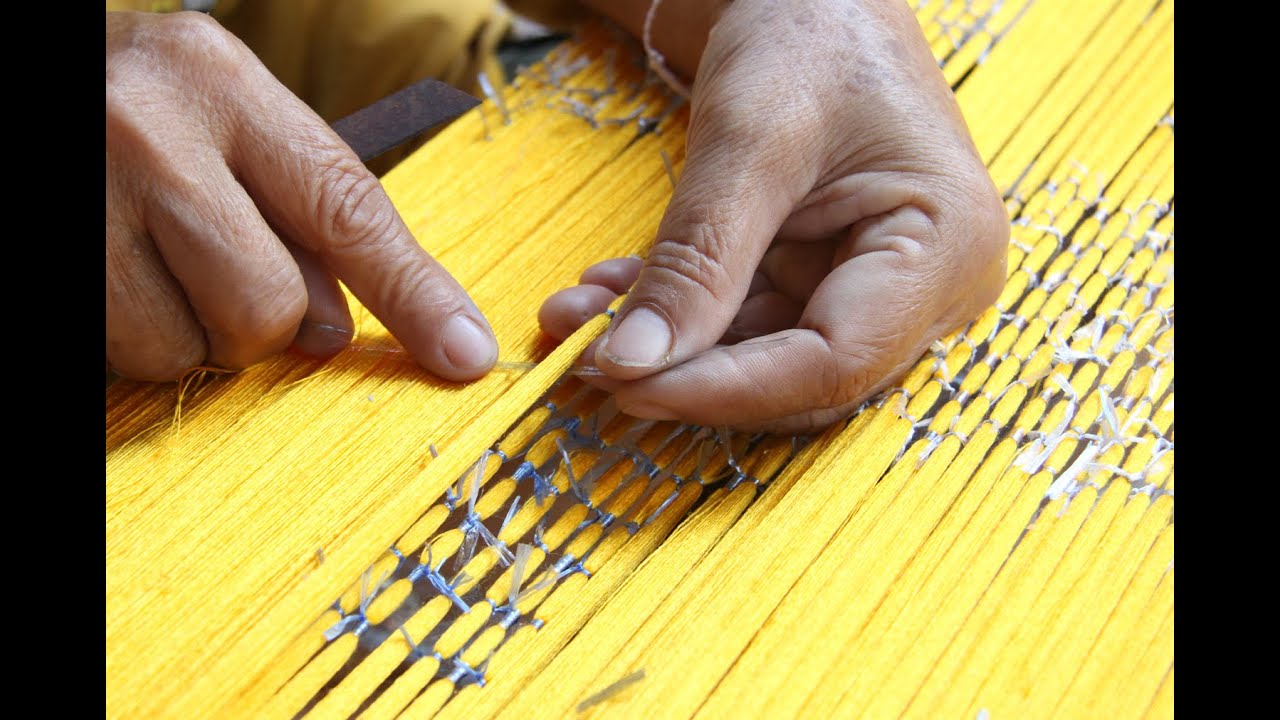
The most important theme of Sala Mai Thai is mudmee silk, the tie-dye weaving technique for which Chonnabot is famous. Mudmee differs from printed fabric because the pattern is created on the threads before the weaving begins. The artisan must plan the design in advance, tie specific parts of the silk threads, dye them in stages, remove the ties, arrange the threads on the loom, and weave them carefully so that the pattern appears in the correct position. This process requires deep experience, because even a small mistake in tying or dyeing can change the final pattern of the cloth.
Chonnabot silk is known for its refined patterns, dense weave, distinctive colors, and long-standing community-based craftsmanship. Traditional patterns associated with the district include Mee Kong, Khan Mak Beng, Kho Phra Thep, and Choeng Thian patterns. These designs are not only decorative motifs. They reflect belief, ritual, local aesthetics, and the memory of the community. Many Chonnabot textiles are also associated with a three-heddle weaving technique, which gives the fabric a firm texture, regular structure, and a sophisticated appearance.
Color is another important feature of Chonnabot mudmee silk. Traditional color tones such as purple, red, green, and tamarind-brown are often connected with local taste and natural dyeing knowledge. These colors are part of the cultural identity of the district. They show how silk makers understand plants, dye materials, silk threads, and the behavior of color on fabric. In this sense, each woven textile is both a work of art and a document of local knowledge.
The history of Sala Mai Thai began in 1987 from the ideas of local administrators and educators, including Chonnabot District Chief Jetsada Milinthangkun and Somkiat Naowaphen, then director of Khon Kaen Vocational Training Center, the former name of Khon Kaen Industrial and Community Education College. Their aim was to support sericulture and silk weaving in the community by renovating an old silkworm-rearing facility that had fallen into disuse. The site was transformed into a demonstration and training center for mudmee silk weaving, allowing local people to learn, practice, and develop their skills.
The project later became Sala Mai Thai, and additional construction was completed in 1992. The building received the royal name “60th Birthday Anniversary of Her Majesty the Queen Commemorative Building.” It was officially opened on 29 July 1993 by Her Royal Highness Princess Maha Chakri Sirindhorn. This royal opening gave the building a special place in the cultural history of Chonnabot. It represents the cooperation of educational institutions, local communities, government agencies, and silk artisans who wanted to preserve and strengthen the silk heritage of the district.
The original objectives of Sala Mai Thai were to improve local income, create a learning center for silk production, and promote tourism in Khon Kaen Province. These objectives remain relevant today. Visitors do not only see beautiful textiles; they also learn how weaving is connected to family income, women’s knowledge, community identity, and rural development. The museum shows that silk weaving is both an artistic practice and an economic foundation for many local families.
Inside the building, exhibitions present mudmee silk, silk-related royal arts and crafts, Isan silk products, award-winning textiles, old silk fabrics, and traditional weaving tools. The displays help visitors understand the full journey from thread to textile. The museum does not focus only on finished cloth. It introduces the materials, tools, techniques, and human skills behind every silk fabric. This makes the visit especially valuable for people interested in craft, fashion, textile design, anthropology, local history, and sustainable tourism.
One of the key sections introduces the production process from tying and dyeing to weaving. This section explains that mudmee is not just a pattern but a method. The artisan ties parts of the silk threads to resist dye, dyes the threads, unties them, and then weaves them into a cloth. The pattern appears only when the threads are correctly arranged on the loom. This method requires careful calculation and a clear mental image of the finished textile before the weaving even begins.
Another section displays tools and equipment used in silk production. These may include devices used for preparing silk threads, tying, dyeing, winding, and weaving. For visitors unfamiliar with textile production, these tools reveal how complex the craft really is. A silk fabric is not created by a single action but through many stages that require specialized knowledge. Seeing the tools helps visitors appreciate the amount of labor and expertise hidden behind every finished piece of silk.
The old mudmee silk section is especially important because it preserves textile memory. Each piece of old silk carries a pattern, a color system, a weaving technique, and a cultural meaning. Some patterns are connected with rituals or important occasions. Some represent family knowledge passed from older women to younger generations. Others show the personal skill of particular weavers. For this reason, old mudmee textiles are more than beautiful fabrics. They are cultural records made of silk and color.
One of the most famous highlights at Sala Mai Thai is a mudmee silk textile from Chonnabot that has been described as the most expensive mudmee silk in the world. This exceptional work was created by artisans from Chonnabot District, won an Asian silk competition, and received a royal trophy from Her Royal Highness Princess Maha Chakri Sirindhorn. Its importance is not only about price. It represents the technical excellence, creativity, and international recognition of Chonnabot silk craftsmanship.
From a cultural perspective, the textiles displayed at Sala Mai Thai show that weaving is deeply connected to everyday life. In many Isan communities, weaving skills are learned within families and passed down through generations. Women often learn from mothers, grandmothers, or senior relatives before developing their own skill and design sense. Silk weaving can therefore be understood as art, livelihood, education, and cultural inheritance at the same time.
Sala Mai Thai also preserves Isan customs and traditions because silk textiles are closely related to ceremonial life. Silk can be worn during merit-making ceremonies, weddings, important community events, formal occasions, and cultural celebrations. A silk textile can express respect, beauty, identity, and social meaning. Learning about silk is therefore a way to understand Isan culture beyond food, music, and language. It reveals the refined artistic knowledge embedded in rural communities.
For students and researchers, Sala Mai Thai offers a useful field-learning experience. It connects art, local economy, women’s work, textile technology, cultural heritage, and community-based tourism in one place. Students can learn how a local craft becomes part of regional identity and how museums can help preserve knowledge that might otherwise disappear. The site also demonstrates how vocational education can support cultural conservation and practical livelihood development.
For general travelers, Sala Mai Thai adds depth to a trip through Khon Kaen Province. Many visitors know Khon Kaen as a modern city with shopping centers, universities, hospitals, and transport links. A visit to Chonnabot reveals another side of the province: a quieter cultural landscape shaped by silk weaving, local artisans, rural communities, and traditional knowledge. This makes the museum a valuable stop for travelers who want a more meaningful route beyond the city center.
The museum is located opposite Nong Kong Kaew, a scenic local pond in Chonnabot District. This gives the surrounding area a pleasant and open atmosphere. Visitors can combine the museum with a short walk or a local food stop in the district. A practical half-day trip may include Sala Mai Thai, the local silk shopping area, a mudmee silk community, and a meal at a local restaurant. This route allows travelers to experience both the museum and the living silk culture around it.
The strength of visiting Sala Mai Thai is that it connects a museum experience with a real community. After seeing the exhibitions, visitors can continue to nearby silk-related areas such as Ban Hua Fai Mudmee Silk Community Enterprise or the silk streets of Chonnabot. This helps the trip move beyond display cases and labels. Travelers can see how silk knowledge continues in local products, community shops, and contemporary craft development.
For textile lovers and fashion travelers, Sala Mai Thai is especially rewarding. It explains why high-quality mudmee silk can be so valuable. The value of silk does not come only from the material. It comes from pattern planning, tying accuracy, color control, weaving density, texture, the reputation of the production area, and the skill of the artisan. Understanding this process helps visitors appreciate why authentic handwoven silk is different from machine-made or printed fabric.
For young designers and craft entrepreneurs, the museum can be a source of inspiration. Traditional motifs, old color combinations, and local weaving techniques can be adapted into modern clothing, accessories, home textiles, and design products. At the same time, the museum reminds visitors that innovation should respect cultural roots. The future of mudmee silk depends on balancing tradition with modern use, so that the craft remains alive rather than becoming only an object of the past.
For foreign travelers, Sala Mai Thai is a clear introduction to Thai silk outside the usual luxury retail context. It shows that Thai silk has strong community roots and that Isan silk is deeply connected with rural life. The mudmee technique is particularly interesting because the pattern is not printed after the fabric is made. Instead, the design is planned in the threads before weaving. This makes every finished textile the result of anticipation, calculation, and hand skill.
Visitors should allow about 1 to 2 hours for a meaningful visit. Those with a special interest in textiles may want to spend longer, because the patterns, colors, and tools contain many details. A slow walk through the exhibitions will make the visit more rewarding. Looking carefully at the differences between patterns and reading the background of the displays helps visitors understand the complexity of the craft.
Visitors should also follow basic museum etiquette. Silk textiles and old tools should not be touched unless permission is given. Flash photography should be avoided in sensitive display areas. Visitors should not pull, handle, or disturb any silk threads, fabrics, or weaving equipment. If staff or local guides are available, their explanations can greatly improve the visit because many details about patterns and techniques require local knowledge.
Getting There from Khon Kaen city is most convenient by private car or rental car. Take Highway 2, the Khon Kaen – Nakhon Ratchasima route, for about 44 km. At the Ban Phai intersection, turn right onto Highway 229 toward Chonnabot District and continue for about 11 km. Sala Mai Thai is on the left-hand side, within Khon Kaen Industrial and Community Education College, opposite Nong Kong Kaew. Traveling by car allows visitors to combine the museum with local silk shops, community attractions, restaurants, and accommodations in Chonnabot or Ban Phai.
Visitors using public transport can travel from Khon Kaen city to Ban Phai or Chonnabot and then continue by local transport or hired vehicle to the college area. This option is possible but requires more time and planning, especially for the return trip. Public transport in smaller districts may not operate as frequently as in central Khon Kaen, so visitors should plan their schedule carefully.
A good half-day itinerary begins at Sala Mai Thai in the morning, followed by a visit to a local silk shopping area or Ban Hua Fai Mudmee Silk Community Enterprise. After that, travelers can have lunch in Chonnabot District and stop by Nong Kong Kaew or continue toward Ban Phai. This route is suitable for visitors interested in textiles, local crafts, community tourism, and Isan culture.
For a full-day cultural trip, travelers can begin in Khon Kaen city, drive to Chonnabot, explore Sala Mai Thai, continue to silk communities and local shops, and return through Ban Phai. This itinerary offers a richer understanding of Khon Kaen Province by connecting royal craft heritage, rural livelihoods, local food, and community-based tourism. It is particularly suitable for travelers who want to experience northeastern Thailand through people, craft, and living culture.
Sala Mai Thai is therefore more than a silk display center. It preserves the memory of Chonnabot’s weaving communities, continues a royal arts-and-crafts vision, and helps visitors understand the value of mudmee silk as a cultural achievement. For anyone who wants to understand Khon Kaen through silk, craftsmanship, and Isan identity, Sala Mai Thai is one of the most important places to visit.
| Name | Sala Mai Thai / The 60th Birthday Anniversary of Her Majesty the Queen Commemorative Building |
| Thai Name | ศาลาไหมไทย หรือ อาคารเฉลิมพระเกียรติ 60 พรรษา มหาราชินี |
| Location | Within Khon Kaen Industrial and Community Education College, Chonnabot District, Khon Kaen Province |
| Address | 172 Moo 3, Chaeng Sanit Road, Chonnabot District, Khon Kaen 40180, Thailand |
| Coordinates | 16.09109343018212, 102.60963563748169 |
| Highlights | A major mudmee silk learning center in Chonnabot, displaying silk production processes, weaving tools, old mudmee textiles, and an award-winning high-value mudmee silk textile from local artisans |
| History | The project began in 1987, became a royal commemorative project in 1992, and the building was officially opened on 29 July 1993. |
| Name Origin | The building received the royal name “The 60th Birthday Anniversary of Her Majesty the Queen Commemorative Building” in honor of Her Majesty Queen Sirikit, The Queen Mother, on the occasion of her 60th birthday anniversary on 12 August 1992. |
| Distinctive Features | A two-storey exhibition building presenting mudmee silk, royal arts-and-crafts work, Isan silk products, weaving tools, old silk textiles, and Chonnabot silk patterns from past to present |
| Key Evidence | Old mudmee silk textiles, Mee Kong pattern, Khan Mak Beng pattern, Kho Phra Thep or Choeng Thian pattern, silk-production tools, weaving equipment, and an award-winning mudmee silk textile by Chonnabot artisans |
| Main Areas / Zones | 1. Sala Mai Thai History and Royal Commemorative Project Zone 2. Chonnabot Mudmee Silk and Ancient Pattern Zone 3. Silk Production Process Zone, From Tying And Dyeing To Weaving 4. Silk Tools and Weaving Equipment Zone 5. Award-Winning and High-Value Mudmee Silk Textile Zone 6. Isan Culture, Customs, and Local Traditions Zone |
| Travel Information | From Khon Kaen city, take Highway 2 toward Nakhon Ratchasima for about 44 km. At Ban Phai intersection, turn right onto Highway 229 and continue for about 11 km. Sala Mai Thai is on the left-hand side, opposite Nong Kong Kaew. |
| Current Status | Open |
| Open Days | Monday – Sunday; Closed on Public Holidays |
| Opening Hours | 08.30 – 16.30 |
| Fees | Free Admission |
| Facilities | Exhibition areas, silk learning center, demonstration space, weaving knowledge displays, local guides, and directional signs |
| Caretaker | Khon Kaen Industrial and Community Education College and Sala Mai Thai, Khon Kaen Industrial and Community Education College |
| Learning Manager | Krittima Anadkhathat, Manager of Sala Mai Thai and Chairperson of Sala Mai Thai Community Enterprise |
| Main Contact Number | 043-286-160, 084-470-5835, 043-286-218 |
| admin@kknic.ac.th, salamaithai@gmail.com | |
| Official Website / Official Page | Khon Kaen Industrial and Community Education College Website: kknic.ac.th Sala Mai Thai Website: gyb315.wordpress.com Facebook: Sala Mai Thai |
| Nearby Tourist Attractions | 1. Nong Kong Kaew, about 0.2 km 2. Chonnabot Silk Street Area, about 2 km 3. Wat Si Bun Rueang, Chonnabot District, about 2 km 4. Ban Hua Fai Mudmee Silk Community Enterprise, about 9 km 5. Ban Phai District, about 13 km 6. Phra Mahathat Kaen Nakhon at Wat Nong Waeng, about 60 km |
| Nearby Restaurants | 1. Milk Mellow Cafe' Chonnabot, about 2 km, Tel. 063-732-0412, 088-021-1488 2. Phai Khiao Roasted Duck Noodles, Chonnabot, about 2 km 3. Kuai Tiao Chonnabot Tid Air, about 2 km 4. Mum Mae Bua Ngoen Jae Pha Chonnabot, about 3 km, Tel. 081-592-2005 5. Chonnabot Camp, about 3 km, Tel. 093-794-9469, 095-225-7736 6. Rim Chi Resort, about 5 km, Tel. 081-909-1049 |
| Nearby Accommodations | 1. Rung Rueng Resort, about 4 km, Tel. 061-969-1682 2. Rim Chi Resort, about 5 km, Tel. 081-909-1049, 085-758-1620 3. Kankluay Resort Chonnabot, about 10 km, Tel. 096-640-9720, 098-827-8974 4. Yu Sabai Place, about 8 km 5. Inpawa Hotel Ban Phai, about 13 km, Tel. 043-272-333 6. Jasper Hotel Ban Phai, about 14 km |
Frequently Asked Questions (FAQ)
Q: Where is Sala Mai Thai located?
A: Sala Mai Thai is located within Khon Kaen Industrial and Community Education College in Chonnabot District, Khon Kaen Province, near Nong Kong Kaew.
Q: What are the opening days and hours of Sala Mai Thai?
A: Sala Mai Thai is open from Monday to Sunday, from 08.30 to 16.30, and is closed on public holidays.
Q: Is there an admission fee?
A: No. Admission to Sala Mai Thai is free.
Q: What can visitors see inside Sala Mai Thai?
A: Visitors can see exhibitions on mudmee silk, silk production processes, tying and dyeing techniques, weaving tools, old mudmee textiles, traditional Chonnabot patterns, and award-winning silk fabrics.
Q: How is Sala Mai Thai connected to Her Majesty Queen Sirikit, The Queen Mother?
A: Sala Mai Thai was established as part of a royal commemorative project honoring Her Majesty Queen Sirikit, The Queen Mother, on the occasion of her 60th birthday anniversary on 12 August 1992, and it continues the royal vision of preserving silk-related arts and crafts.
Q: How long should travelers spend at Sala Mai Thai?
A: Most visitors should allow about 1 to 2 hours to explore the exhibitions, silk tools, old textiles, and mudmee production displays at a comfortable pace.
Q: What nearby places can travelers visit after Sala Mai Thai?
A: Nearby places include Nong Kong Kaew, the Chonnabot Silk Street area, Wat Si Bun Rueang, Ban Hua Fai Mudmee Silk Community Enterprise, and Ban Phai District.
Q: Is Sala Mai Thai suitable for foreign travelers?
A: Yes. It is an excellent place for foreign travelers to understand Isan mudmee silk, Thai textile craftsmanship, traditional dyeing and weaving techniques, and the cultural meaning of silk in northeastern Thailand.
 Category: ●Art, Culture and Heritage
 Group: ●Museums
Last Update : 4 MonthAgo
 Last Update : 4 MonthAgo
 Click to Access the Navigation Map GPS
Sala Mai Thai Map
Recommend

 Historical Sites and Monuments(7)
 Landmarks and Memorials(3)
 Art, Craft Centres, Tradition(2)
Museums(4)
 Educational Places
 Museum for Study(2)
 Places of Worship
 Temple(27)
 Other Sacred Sites(5)
 Suburban Living
 Village, Community(3)
 Local Market(1)
 Nature and Wildlife
 National Parks and Marine Reserves(5)
 Mountain (Doi)(1)
 Dam, Reservoir, Lake(4)
 Waterfalls(8)
 Caves(9)
 River, Canal(10)
 Bays and Beaches(3)
 Islands(1)
 Other natural attractions(5)
 Entertainment and Agricultural
 Zoos and Aquariums(2)
 Animal camps and shows(2)
 Farms, Parks and Ecotourism(7)
 Waterpark(3)
 Travel Articles, Recipes
 Travel Review, Food Review(1)


