
lovethailand home >North Travel Attractions >Phitsanulok Travel Attractions >Muang Phitsanulok >Phlai Chum Phon > Pibulsongkram Rajabhat University
TL;DR: Pibulsongkram Rajabhat University, open Monday – Friday (General administrative offices, excluding public holidays), hours 08:30 – 16:30 (General administrative offices and Education Services Division.

Pibulsongkram Rajabhat University
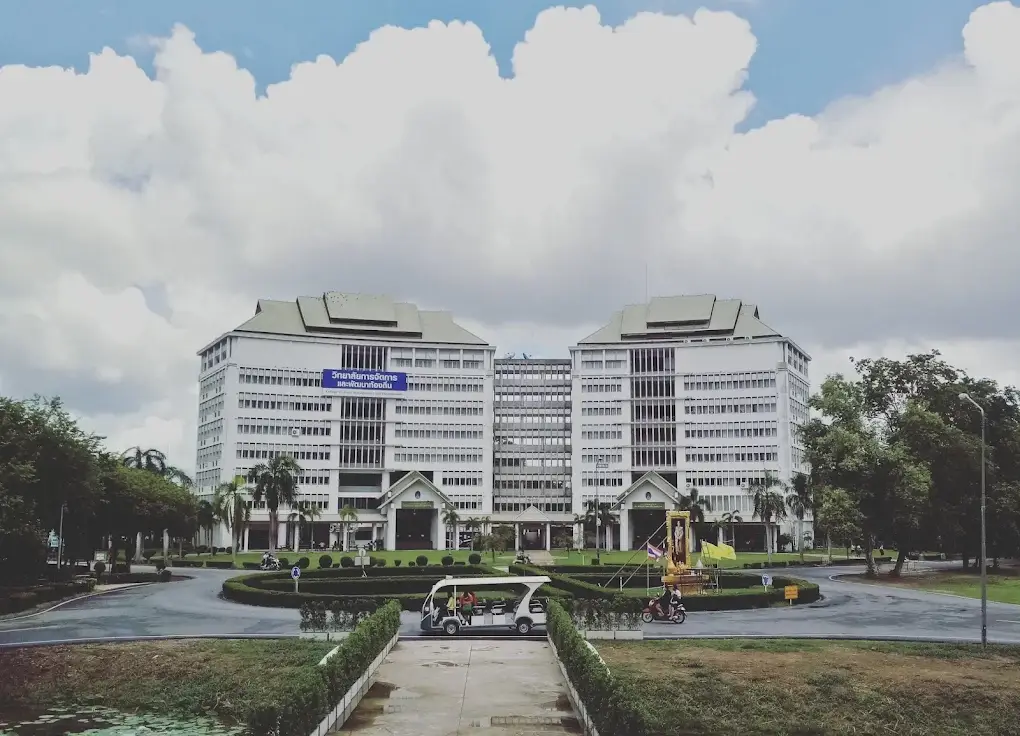
Open Days: Monday – Friday (General administrative offices, excluding public holidays). The Education Services Division also provides weekend services.
Opening Hours: 08:30 – 16:30 (General administrative offices and Education Services Division, Monday – Friday). The Education Services Division also opens Saturday – Sunday, 09:00 – 16:00, except on official holidays and university-designated closure days.
Pibulsongkram Rajabhat University (PSRU) is a public university in Phitsanulok Province, Thailand, with an educational heritage extending back to the provincial teacher-training system established in 1926 (B.E. 2469). The institution developed into Pibulsongkram Teacher Training School in 1956, Pibulsongkram Teachers College in 1960, Pibulsongkram Rajabhat Institute in 1995, and officially became Pibulsongkram Rajabhat University on June 15, 2004. Today, the university operates two important campus areas: Thale Kaew Campus in Phlai Chumphon Subdistrict and Wang Chan Campus in Nai Mueang Subdistrict, both in Mueang Phitsanulok District. Its eight faculties cover teacher education, science, technology, humanities, social sciences, business and management, agriculture and food technology, engineering, and nursing. The university plays a significant role in higher education, research, innovation, academic services, and the preservation of cultural heritage in Thailand's lower northern region. Its central purpose is to develop capable graduates and apply academic knowledge to sustainable community and regional development.
The identity of Pibulsongkram Rajabhat University is deeply connected with the history of teacher education and the development of Phitsanulok Province, an important historical city and regional transportation center. Over the decades, the institution has evolved through several major changes in Thailand's educational system. What began as provincial teacher training gradually developed into diploma-level education, bachelor's degree programs, and advanced university studies across numerous disciplines. This transformation reflects the changing role of regional universities, which now support not only classroom education but also local economic development, professional training, research, and community well-being.
Thale Kaew Campus is located at 156 Moo 5, Phlai Chumphon Subdistrict, Mueang Phitsanulok District, Phitsanulok 65000. It accommodates many of the university's important administrative and academic facilities, including the Thipawit Building, where university executives and administrative personnel work. The campus also contains faculty buildings, academic facilities, an auditorium, the Academic Resource and Information Technology Center, student accommodation, and areas used for educational and extracurricular activities. Its development reflects the university's expansion into a modern multidisciplinary institution capable of supporting a substantial student population.
Wang Chan Campus is located at 66 Wang Chan Road, Nai Mueang Subdistrict, Mueang Phitsanulok District, Phitsanulok 65000. This campus has particular historical importance because it is closely associated with the establishment of Pibulsongkram Teacher Training School in 1956. Today, Wang Chan remains connected with university education, cultural preservation, and public activities. One of its most significant facilities is the Lower Northern Cultural Center, which supports cultural education, exhibitions, and programs relating to the heritage of Phitsanulok and the surrounding provinces.
The university's two-campus structure offers an interesting perspective on its institutional development. Thale Kaew represents the expansion of modern higher education, with a broad range of academic buildings and student services, while Wang Chan preserves a strong connection with the historical development of teacher training in Phitsanulok. Visitors should therefore confirm the exact campus of the department, activity, or event they wish to attend. Although both sites belong to the same university, they are located at different addresses.
The origins of Pibulsongkram Rajabhat University can be traced to educational reforms in early twentieth-century Thailand. The Primary Education Act of 1921 (B.E. 2464) helped expand access to schooling and increased the demand for qualified teachers throughout the country. Phitsanulok Monthon, the former regional administrative unit, consequently needed to develop its teacher-training system to provide enough educators for schools serving provincial communities.
Initially, teacher training was provided through professional education courses incorporated into existing schools in Phitsanulok. In 1926, financial support from the Ministry of Education's predecessor, the Ministry of Public Instruction, was combined with donations from local merchants and residents to construct a dedicated teacher-training school building in the Chan Royal Palace area. This undertaking represented cooperation between the government and local people in establishing educational resources that would benefit future generations.
On January 7, 1926, as recorded in the institution's historical chronology using the Buddhist Era date B.E. 2469, King Prajadhipok (Rama VII), accompanied by Queen Rambhai Barni, visited Phitsanulok and formally inaugurated the provincial teacher-training school building. The King graciously bestowed the name "Phitsanu Witthayayon" upon the institution. The royal inauguration became an important milestone in the development of teacher education in Phitsanulok and forms part of the historical heritage inherited by the modern university.
Phitsanu Witthayayon initially operated as a teacher-training school for male students. Its purpose was to prepare qualified personnel for the teaching profession at a time when modern schools were expanding throughout the region. Mr. Sopha Palabut served as the first headmaster of the provincial teacher-training school. The institution contributed to the establishment of a more structured teaching profession through the development of general academic knowledge and practical educational methods.
In 1933, the male teacher-training school moved to the Sa Kaeo area, associated with the location of the present-day Buddhachinaraj Hospital. During the same period, the Ministry of Public Instruction established a teacher-training section for female students within the provincial girls' school, later known as Chalermkwansatree School. This development expanded opportunities for women to enter the teaching profession and contributed to the growing number of trained teachers available to local schools.
The female teacher-training program provided qualifications associated with elementary teaching and provincial teacher certification. Ms. Sangwan Sukroj was the first headmistress of the female teacher-training section. In 1939, the male teacher-training school was discontinued, and male teacher trainees were transferred to a training institution in Uttaradit Province. The female teacher-training program, however, continued and became a major line of institutional development leading toward the future university.
In 1943, the female teacher-training section was administratively separated from Chalermkwansatree School and became Phitsanulok Teacher Training School. Although the two institutions continued sharing facilities, the separation established teacher preparation as a more clearly defined educational mission. This was an important transition from teacher-training classes within an existing secondary school to an institution focused specifically on preparing professional educators.
In 1954, Thailand established the Department of Teacher Education under the Ministry of Education. Phitsanulok Teacher Training School was transferred to the new department, and its curriculum was developed into the Certificate in Education program, commonly known in Thai as Por Kor Sor. This reform strengthened the administrative framework and professional standards of teacher education.
In 1955, the government led by Field Marshal Plaek Phibunsongkhram approved funding for the construction of new educational facilities along Wang Chan Road in Phitsanulok. The buildings had originally been associated with plans for a new Chalermkwansatree School campus, but they were subsequently allocated to the female teacher-training institution. The decision proved particularly important because it provided teacher education with a dedicated site and space for future expansion.
On June 1, 1956, the teacher-training school moved from its shared facilities at Chalermkwansatree School to the new Wang Chan location. On June 23, 1956, it was renamed "Pibulsongkram Teacher Training School" in recognition of Field Marshal Plaek Phibunsongkhram's role in supporting the development of the institution. This was the first stage in the institution's history when the name Pibulsongkram became part of its official identity, a name that has remained associated with the university ever since.
Pibulsongkram Teacher Training School subsequently developed a coeducational system in which female students lived on campus while male students traveled to school each day. In 1957, it offered the Certificate in Education program. Ms. Prayao Rangsikut became the first principal of Pibulsongkram Teacher Training School, contributing to an important transition from a female teacher-training institution into a coeducational professional school.
During the late 1950s, the institution continued expanding its land and educational facilities. Additional property was obtained through arrangements involving neighboring educational establishments, providing more space for teaching and other activities. In 1959, the institution also expanded into land associated with the Royal Thai Air Force, another important stage in its geographical and institutional growth.
In 1960, Pibulsongkram Teacher Training School was elevated to "Pibulsongkram Teachers College." This transformation marked a major advancement in the status and scope of the institution. The college developed higher-level teacher education, including the Higher Certificate in Education, enabling students to obtain more advanced professional qualifications and teaching skills.
The college also recognized the importance of practical teaching experience. A demonstration school was developed to support teacher preparation through observation, classroom practice, and the study of educational methods. In 1962, the demonstration school received authorization to provide primary education. The school created a stronger connection between theoretical studies and practical classroom experience, a relationship that remains central to teacher education at the university.
In 1968, Pibulsongkram Teachers College began planning and pursuing expansion into the Thung Thale Kaew area. Lecturer Chitchom Kanchanachot played an important role during this period of institutional administration and development. The need for additional land reflected the increasing number of students, the expansion of academic activities, and the long-term requirement for new educational buildings and facilities.
In 1974, the college began providing bachelor's degree education in Thai language studies. This represented another important transition, as the institution moved beyond diploma and certificate qualifications into university-level degree education. The Teachers College Act of 1975 subsequently established a broader legal framework for the administration and academic development of teachers colleges throughout Thailand.
In 1981, Pibulsongkram Teachers College received approval to use approximately 1,000 rai of public land in the Thung Thale Kaew area for future educational expansion, with an initial development plan covering 400 rai. This decision proved crucial for the institution's long-term future, providing space for academic buildings, practical training facilities, research activities, and a more extensive university campus.
In 1982, the Thale Kaew area was used for agricultural demonstrations, plant propagation, training, and community occupational development. Activities included the propagation of flowering and fruit-bearing plants and work associated with pomelo cultivation and agricultural development inspired by royal initiatives. These projects illustrate how the college was beginning to apply educational knowledge to agriculture, vocational development, and local community needs.
In 1984, amendments to the Teachers College legislation allowed teacher-training institutions to broaden their roles in education and research. Pibulsongkram Teachers College consequently developed programs in science, liberal arts, management, agriculture, and industrial fields. This change laid important foundations for its eventual transformation into a multidisciplinary university offering education far beyond the teaching profession.
February 14, 1992, was a landmark date for Rajabhat institutions throughout Thailand. King Bhumibol Adulyadej the Great graciously bestowed the name "Rajabhat" on the country's teachers colleges. The term represents an ideal of service to the monarchy, the nation, and the people, and has become closely associated with community development, educational opportunity, and socially responsible higher education.
In 1995, the institution gained the status of "Pibulsongkram Rajabhat Institute" under the Rajabhat Institute Act B.E. 2538. Its academic and administrative structure was strengthened, allowing for further development of faculties, research, and educational support services. Dr. Sawang Phuphatthanawibun became the institution's first president during its transition into the Rajabhat Institute system.
On June 15, 2004, Pibulsongkram Rajabhat Institute officially became "Pibulsongkram Rajabhat University" under the Rajabhat University Act B.E. 2547, published in the Royal Thai Government Gazette on June 14, 2004. The legislation established the institution's legal status as a public university and expanded its responsibilities in higher education, research, academic services, and the preservation of arts and culture.
The university's history therefore contains several distinct milestones. The year 1926 marks the foundation of the provincial teacher-training tradition; 1956 marks the adoption of the Pibulsongkram name; 1960 marks its elevation to teachers college status; 1995 marks the Rajabhat Institute period; and 2004 marks its establishment as a Rajabhat university. Understanding these dates helps distinguish the institution's original educational roots from the later legal changes through which it developed into a university.
By 2026, 100 years had passed since the establishment of the provincial teacher-training school associated with the institution's historical foundations in 1926, while 22 years had passed since its elevation to university status in 2004. This long history remains a source of institutional pride for students, staff, and alumni, reflecting the contribution of Pibulsongkram Rajabhat University to educational development in Phitsanulok and Thailand's lower northern region.
The university's name reflects both Thailand's national history and the development of education in Phitsanulok. "Pibulsongkram" derives from the name of Field Marshal Plaek Phibunsongkhram, whose administration supported the construction of the teacher-training facilities at Wang Chan. "Rajabhat" refers to the royally bestowed name associated with educational institutions committed to serving society. Together, the two elements express the university's institutional heritage and its continued commitment to education and community development.
The university's official emblem incorporates the royal insignia associated with Rajabhat institutions throughout Thailand. The use of this emblem reflects royal patronage and the ideal of developing graduates with knowledge, integrity, professional competence, and social responsibility. It also symbolizes the institution's historical connection to the Rajabhat educational system.
The official colors of Pibulsongkram Rajabhat University are green and white. Green symbolizes growth, vitality, stability, and continuity, while white represents purity in thought, speech, and conduct. Together, the two colors express sustainable progress accompanied by high moral standards. Green and white are important parts of the university's identity and appear in institutional activities and visual communications.
The university's symbolic tree and flower are the Kasalong, a flowering tree known for its fragrant white blossoms. The Thai name Kasalong is closely associated with northern Thai culture. Its green leaves and white flowers correspond to the university's official colors, while the fragrance of its blossoms symbolizes the spreading reputation and good works of the institution. Kasalong is therefore a meaningful natural and cultural symbol for the university community.
The university's traditional motto is "สุขา สงฺฆสฺส สามคฺคี," a Buddhist expression emphasizing the happiness and peace that arise from unity. Its meaning is often conveyed in Thai as "รู้รักสามัคคี ย่อมมีสันติสุข," or "Understanding and practicing unity brings peace." This principle reflects the importance of cooperation among students, staff, and members of an educational community with different backgrounds and experiences.
The university's educational philosophy emphasizes "Producing Practice-Oriented Graduates." It aims to develop individuals who can apply academic knowledge to professional work and real-world problem-solving. Its broader institutional direction focuses on developing people, knowledge, technology, and innovation for the benefit of society, reflecting the changing responsibilities of Rajabhat universities in an era shaped by digital technology and economic transformation.
Traditions and university culture remain closely connected with Pibulsongkram Rajabhat University's history in teacher education. One of its most meaningful ceremonies is Wai Khru, during which students express gratitude and respect toward their teachers. In 2026, the university held the Wai Khru and university pin presentation ceremony on August 20 at the Sri Wachirachot Auditorium, Thale Kaew Campus. The event strengthened the connection between students, lecturers, and the institution.
The presentation of the official university pin is particularly meaningful as a symbol of identity and belonging. Receiving the pin represents membership in the university community and encourages students to recognize their responsibilities toward education, professional development, and the institution's reputation. Such ceremonies contribute to the continuity of university traditions across generations.
Rajabhat Day, observed annually on February 14, commemorates King Bhumibol Adulyadej the Great's granting of the Rajabhat name to Thailand's teachers colleges in 1992. At Pibulsongkram Rajabhat University, the occasion provides an opportunity to reaffirm the institution's commitment to ethical education, public service, and community development.
Buddhist traditions and local cultural practices also contribute to the university's activities. One notable example in 2026 was the preservation of the Khao Thip offering ceremony. On May 20, 2026, the university's Office of Arts and Culture organized an offering of Khao Thip, also known as Madhu Payasa, at Wat Ratchamonthop in Wat Chan Subdistrict, Mueang Phitsanulok District. The ceremony formed part of a cultural and religious heritage initiative intended to strengthen connections between the university and local communities.
Khao Thip, or Madhu Payasa, is a ceremonial food associated with Buddhist tradition and the story of the nourishment offered to the Buddha before his enlightenment. Preserving the ritual is important both for religious heritage and for the transmission of traditional food knowledge. Through its participation, the university helps younger generations appreciate the ceremony's historical and spiritual meaning while supporting relationships between temples and surrounding communities.
In October 2026, the university organized a Buddhist merit-making ceremony associated with the Buddhist Lent tradition. The event took place on October 14 in the auxiliary building of the Sri Wachirachot Auditorium at Thale Kaew Campus. University executives, lecturers, and staff participated in religious activities and a traditional robe-offering ceremony, reflecting the institution's continuing role in preserving Buddhist traditions and cultural practices.
The university also promotes Thai performing arts, including Khon, the classical masked dance-drama based on the Ramakien epic. In February 2026, the university publicized Khon performances by students of music and performing arts education at the Agricultural Fair and Thai Cooperative event. These performances provided opportunities for students and the public to engage with traditional literature, music, costumes, and the discipline of classical Thai performance.
The Lower Northern Cultural Center at Wang Chan Campus is one of the university's most important facilities for connecting academic work with regional culture. It hosts cultural programs, exhibitions, and public events concerning history, arts, and important national institutions. In October 2026, the center hosted a public commemorative program honoring Thailand's monarchy, with activities taking place from October 13 to 24, 2026.
By providing facilities for cultural events and exhibitions, the Lower Northern Cultural Center contributes to lifelong learning and public engagement. Visitors interested in Phitsanulok's history, lower northern Thai traditions, and cultural education can benefit from activities organized there. Because individual exhibitions and events operate on different schedules, visitors should consult the Office of Arts and Culture before planning a visit.
Important facilities at Thale Kaew Campus include the Thipawit Building, Sri Wachirachot Auditorium, faculty buildings, the Academic Resource and Information Technology Center, and Thale Kaew Niwet Student Dormitory. These facilities support a variety of functions, including university administration, classroom learning, academic research, large events, student services, and everyday campus life.
The Sri Wachirachot Auditorium is a particularly important venue for major institutional activities, including university ceremonies, academic conferences, exhibitions, and events involving external organizations. On February 25, 2026, the university hosted activities related to National Cooperative Day and the development of Thailand's cooperative sector at the auditorium. The event illustrated the university's capacity to accommodate important provincial and national gatherings.
The Academic Resource and Information Technology Center provides essential support for learning and research. Its services include access to information resources, library lending, and study facilities. During regular academic semesters, the center operates Monday to Friday from 08:30 to 16:30 and Saturday to Sunday from 09:00 to 16:00. Summer and semester-break schedules differ, and visitors should check current announcements before using the facilities.
Thale Kaew Niwet Student Dormitory is an important student accommodation facility associated with the university's welfare and student support system. It helps students from other districts and provinces access campus accommodation and contributes to a supportive residential environment. Student housing also plays a role in encouraging responsibility, community living, and appropriate conduct within university life.
The university also has facilities for sports, exercise, and student activities, including sports grounds and recreational services. These spaces help students develop physical well-being, friendships, teamwork, and life skills. Access for members of the public depends on the regulations and operating schedules of individual facilities.
Wang Chan Campus retains a special connection with the university's history and public educational services. In addition to the Lower Northern Cultural Center, the campus reflects the institution's development from Pibulsongkram Teacher Training School into a modern university. Its historical association with the events of 1956 makes it especially relevant to understanding the university's institutional origins.
Academically, Pibulsongkram Rajabhat University comprises eight principal faculties: Education; Humanities and Social Sciences; Science and Technology; Management Science; Social Sciences and Local Development; Agricultural and Food Technology; Industrial Technology; and Nursing. The university offers undergraduate and graduate education supported by academic and administrative services. Its multidisciplinary structure enables students to pursue education in a wide range of professional and scholarly fields.
The Faculty of Education carries forward the university's original teacher-training mission. Its academic fields include mathematics education, physical education, early childhood education, music education, Thai language education, English language education, special education, social studies, primary education, and psychology and guidance. Graduate education covers areas such as educational administration, educational research and evaluation, and curriculum and instruction.
The Faculty of Education's work extends beyond preparing graduates for classroom teaching. It also supports educational research, curriculum development, instructional innovation, professional teacher development, and educational approaches for learners with different needs. The university's demonstration school contributes to practical teacher preparation by connecting academic study with real classroom experiences.
The Faculty of Humanities and Social Sciences focuses on languages, culture, arts, information, and human communication. Academic fields published by the university include Thai, English, Business English, Chinese, Business Chinese, Japanese, Western Music, and Information Science. These disciplines contribute to professional development in communication, education, tourism, service industries, and creative work.
The Faculty of Science and Technology develops expertise in fundamental and applied sciences, health-related disciplines, computing, and information technology. Its academic fields include chemistry, physics, biology, microbiology, mathematics, computer science, environmental science, public health, home economics, and data science and statistics. These disciplines support analytical thinking, scientific investigation, technological skills, and the practical application of scientific knowledge.
The Faculty of Management Science prepares graduates for careers in business and organizational management. Its academic fields include business administration, management, accounting, creative and digital marketing, modern trade, human resource management, business economics, tourism, hospitality, and communication arts. These subjects are relevant to the development of regional businesses, digital commerce, entrepreneurship, and the changing service economy.
The Faculty of Social Sciences and Local Development focuses on society, politics, law, public administration, and community development. Its disciplines include public administration, political science, law, community development, and social work. Such knowledge is essential to the development of local government, public services, social welfare, and communities capable of responding to social and economic change.
The Faculty of Agricultural and Food Technology contributes to education and research relating to agriculture, food systems, and biological resources. Academic fields include agriculture, agricultural systems technology, food science and technology, food engineering, animal science and aquaculture, and the development of health and cosmetic products. These subjects are particularly important for agricultural productivity, food processing, product development, and the sustainable use of local resources.
The Faculty of Industrial Technology provides education in engineering, industrial processes, logistics, design, and technological innovation. Academic fields include computer engineering, mechanical engineering, civil engineering, electronic engineering, logistics engineering, creative design innovation, and creative ceramics innovation. Its programs prepare students to apply technical knowledge in professional workplaces and use technology to improve industrial operations.
The Faculty of Nursing focuses on educating professional nurses who contribute to healthcare delivery and public well-being. Nursing education combines health sciences, clinical practice, professional ethics, and communication skills necessary for working with patients and families. The faculty expands the university's contribution to developing qualified healthcare personnel for Thai society.
Graduate education at Pibulsongkram Rajabhat University supports the development of advanced professional knowledge and research expertise. Published academic fields include educational administration, educational research and evaluation, special education, business administration, public administration, and home economics. Master's and doctoral programs provide opportunities for professional advancement, scholarly inquiry, and the application of research findings in workplaces and communities.
The university also offers a Graduate Diploma in the Teaching Profession, associated with the development of professional teaching qualifications and competencies. Admission requirements, available places, and program conditions are determined by official university announcements and relevant professional regulations. Prospective applicants should check the latest information for the academic year in which they intend to enroll.
During the 2026 academic year, Pibulsongkram Rajabhat University continues to provide undergraduate and graduate education, supported by the Education Services Division's registration and academic service systems. Since the university's published program listings include curricula from different revision years, applicants should consult the specific 2026 admission announcements of their intended faculties to confirm which programs accept new students, along with eligibility, fees, and application requirements.
Research and innovation are major components of the university's mission. Through its Research and Development Institute, academic faculties, and specialized units, Pibulsongkram Rajabhat University supports research and the application of knowledge for local development. Relevant areas include education, agriculture and food, environmental science, technology, management, and social development, reflecting the economic and environmental characteristics of Phitsanulok and the lower northern region.
An important example of academic cooperation in 2026 was the signing of a memorandum of understanding between Pibulsongkram Rajabhat University and the National Astronomical Research Institute of Thailand (Public Organization) on October 9, 2026. The cooperation aims to advance astronomy, deep technology, scientific research, and innovation while creating additional opportunities for students, young people, and the wider public to learn about astronomy and related sciences.
The cooperation includes plans to develop astronomical learning facilities in the lower northern region, including the Phitsanulok King Bhumibol's Seventh Cycle Birthday Anniversary Observatory and a digital planetarium. These initiatives demonstrate how collaboration between universities and national research institutions can improve access to advanced science education. The proposed facilities are part of a development plan and should not be regarded as fully operational visitor attractions.
Community development through the Social Engineer approach is another important element of the university's educational activities. The approach encourages students to work with communities, identify real problems, develop analytical thinking, collaborate across disciplines, and apply knowledge to practical solutions. In 2026, a university Social Engineer team also contributed to a road safety initiative in Phitsanulok, illustrating how student knowledge and creativity can support improvements in everyday community life.
Entrepreneurship and local economic development are also linked to the university's mission. Activities associated with business incubation, innovation, academic services, and knowledge transfer help connect university expertise with community enterprises and local businesses. Combining knowledge of agriculture, food, marketing, management, and technology can support product development, greater economic value, and new occupational skills.
Phitsanulok is an important regional center for commerce, education, agriculture, and transportation in lower northern Thailand. The university therefore serves a role extending beyond the boundaries of its campuses. Its graduates, academic projects, and community partnerships can contribute to teacher development, healthcare, agricultural innovation, tourism, business management, and the ability of local communities to respond to future challenges.
For travelers interested in educational tourism, Pibulsongkram Rajabhat University offers an opportunity to explore the relationship between academic development and regional history. Wang Chan Campus is closely connected with the historical origins of the institution and houses the Lower Northern Cultural Center, while Thale Kaew Campus illustrates the university's modern expansion through academic facilities, student services, and learning spaces. Educational visits can reveal how teacher education evolved into multidisciplinary higher education while maintaining strong connections with Phitsanulok society.
Visitors should plan according to the purpose of their trip. Those attending administrative appointments or applying for admission should visit during the relevant office's operating hours. Groups interested in cultural activities, educational tours, or specialized facilities should contact the responsible department in advance. The university is an active educational institution, and not all classrooms, laboratories, offices, or residential facilities are freely accessible to the public.
The Education Services Division at Thale Kaew Campus is open Monday to Friday from 08:30 to 16:30 and Saturday to Sunday from 09:00 to 16:00, excluding public holidays and university-designated closure days. Other offices and facilities, including the Academic Resource and Information Technology Center, Office of Arts and Culture, and individual faculties, may operate under separate service schedules. Visitors with appointments should confirm arrangements directly with the relevant department.
Phitsanulok also offers several historical and cultural attractions that can complement a university visit. These include Wat Phra Si Rattana Mahathat Woramahawihan, home to the revered Phra Buddha Chinnarat image, Wat Nang Phaya, Wat Chan Tawan Tok, and the Chan Royal Palace historical area. Exploring these destinations provides additional insight into the history, Buddhist culture, and heritage of Phitsanulok Province.
Getting to Thale Kaew Campus: Travelers can reach Pibulsongkram Rajabhat University's Thale Kaew Campus by private car, local hired transport, or public transport connections through Phitsanulok city. The campus address is 156 Moo 5, Phlai Chumphon Subdistrict, Mueang Phitsanulok District, Phitsanulok 65000. Visitors arriving from other provinces should first travel to Phitsanulok and then continue toward Phlai Chumphon. When using a navigation application, select Pibulsongkram Rajabhat University, Thale Kaew Campus, rather than Wang Chan Campus.
Getting to Wang Chan Campus: The Wang Chan Campus is located at 66 Wang Chan Road, Nai Mueang Subdistrict, Mueang Phitsanulok District, Phitsanulok 65000. The campus is situated within the urban area of Phitsanulok and is associated with the city's historic district. Visitors attending activities at the Lower Northern Cultural Center should specify Wang Chan Campus when arranging transport or using online maps.
Travelers from Bangkok can reach Phitsanulok by private car, intercity bus, train, or domestic flight. Phitsanulok Railway Station and Phitsanulok Airport provide convenient connections with other parts of Thailand. From the city, travelers can arrange a local vehicle or taxi service to either campus. Additional travel time should be allowed during examination periods, admission events, conferences, and large university gatherings.
Private vehicles are particularly convenient for visitors planning appointments at multiple departments or visits to both university campuses on the same day. Travelers using public transport should confirm suitable drop-off points and onward transportation arrangements in advance, especially when appointments must be completed during office hours.
For general inquiries, the university's Thale Kaew Campus can be contacted at +66 55 267000-2. Wang Chan Campus can be reached at +66 55 258584, +66 55 251206, or +66 55 259927. The official website is www.psru.ac.th, and the general administrative email address is saraban@psru.ac.th. The website provides information about academic programs, admissions, research activities, university news, and announcements from individual departments.
In 2026, Pibulsongkram Rajabhat University is led by Assistant Professor Dr. Chumpol Semakhun, the university president. Under its contemporary development direction, the institution emphasizes practice-oriented graduates, academic knowledge, research, technology, and innovation that can benefit society. These priorities reflect its continuing mission to provide quality higher education while contributing to regional economic and social development.
Pibulsongkram Rajabhat University is therefore an institution of significance both to Thailand's educational history and to the development of its lower northern region. From the provincial teacher-training system established in 1926 to a multidisciplinary public university comprising eight faculties in 2026, its history demonstrates the continuing importance of educational opportunity, professional development, and knowledge-based community advancement. The presence of both Wang Chan and Thale Kaew campuses preserves the connection between the university's historical foundations and its present-day responsibilities, making Pibulsongkram Rajabhat University an important center of education, culture, research, and social development in Phitsanulok.
| University Name | Pibulsongkram Rajabhat University (มหาวิทยาลัยราชภัฏพิบูลสงคราม) |
| Abbreviation | PSRU / มรพส. |
| University Type | Public Rajabhat University |
| Province | Phitsanulok, Thailand |
| Thale Kaew Campus Address | 156 Moo 5, Phlai Chumphon Subdistrict, Mueang Phitsanulok District, Phitsanulok 65000, Thailand |
| Wang Chan Campus Address | 66 Wang Chan Road, Nai Mueang Subdistrict, Mueang Phitsanulok District, Phitsanulok 65000, Thailand |
| Historical Foundation | Provincial teacher-training school established in 1926 (B.E. 2469) |
| Important Early Historical Event | January 7, B.E. 2469: King Prajadhipok inaugurated the teacher-training school building and bestowed the name Phitsanu Witthayayon |
| Adoption of Pibulsongkram Name | June 23, 1956 |
| Teachers College Status | 1960 |
| Rajabhat Institute Status | 1995 |
| University Establishment Date | June 15, 2004 |
| Historical Milestone in 2026 | 100 years since the provincial teacher-training school associated with the institution's 1926 historical foundations |
| Former Institutional Names | Phitsanu Witthayayon; Phitsanulok Teacher Training School; Pibulsongkram Teacher Training School; Pibulsongkram Teachers College; Pibulsongkram Rajabhat Institute |
| Important Historical Figures | King Prajadhipok; Queen Rambhai Barni; Field Marshal Plaek Phibunsongkhram; Sopha Palabut; Sangwan Sukroj; Prayao Rangsikut; Chitchom Kanchanachot; and Dr. Sawang Phuphatthanawibun |
| University President in 2026 | Assistant Professor Dr. Chumpol Semakhun |
| Official Colors | Green and White |
| Official Tree and Flower | Kasalong Tree and Kasalong Flower |
| Traditional Motto | สุขา สงฺฆสฺส สามคฺคี – Unity Brings Peace and Happiness |
| Educational Philosophy | Producing Practice-Oriented Graduates |
| Institutional Development Direction | Developing People, Knowledge, Technology, and Innovation for Society |
| Faculties | 1. Faculty of Education 2. Faculty of Humanities and Social Sciences 3. Faculty of Science and Technology 4. Faculty of Management Science 5. Faculty of Social Sciences and Local Development 6. Faculty of Agricultural and Food Technology 7. Faculty of Industrial Technology 8. Faculty of Nursing |
| Degree Levels | Bachelor's Degrees, Graduate Diplomas, Master's Degrees, and Doctoral Degrees according to the university's academic programs |
| Academic Strengths | Teacher Education, Science, Digital Technology, Humanities, Social Sciences, Management, Agriculture and Food Technology, Engineering, Nursing, and Local Development |
| Important Campus Facilities | 1. Thipawit Building, Thale Kaew Campus 2. Sri Wachirachot Auditorium, Thale Kaew Campus 3. Academic Resource and Information Technology Center 4. Thale Kaew Niwet Student Dormitory 5. Lower Northern Cultural Center, Wang Chan Campus 6. Pibulsongkram Rajabhat University Demonstration School 7. University Sports and Recreation Facilities |
| Important Traditions and Activities | Wai Khru and University Pin Presentation Ceremony, Rajabhat Day, Cultural Heritage Activities, Khao Thip Offering Ceremony, Buddhist Lent Activities, Khon Performances, and Community Academic Services |
| General Administrative Open Days | Monday – Friday, excluding public holidays |
| General Administrative Opening Hours | 08:30 – 16:30 |
| Education Services Division Hours | Monday – Friday: 08:30 – 16:30 Saturday – Sunday: 09:00 – 16:00 Closed on public holidays and university-designated closure days |
| Visitor Access | General inquiries and public activities are available according to university arrangements. Educational tours and access to specialized facilities should be arranged with the relevant departments. |
| Getting There | Travel to Phitsanulok by car, intercity bus, train, or domestic flight, then continue to Thale Kaew Campus in Phlai Chumphon or Wang Chan Campus on Wang Chan Road according to your destination. |
| Nearby Attractions and Phitsanulok City Landmarks | 1. Wat Phra Si Rattana Mahathat Woramahawihan (Wat Yai) 2. Wat Nang Phaya 3. Wat Chan Tawan Tok 4. Chan Royal Palace Historical Center 5. Phra Buddha Chinnarat National Museum |
| Nearby Restaurants Around Thale Kaew Campus | 1. Nuea Kham Beef Noodle Restaurant, Phlai Chumphon, Tel. +66 91 191 5692 2. Racha Jim Jum Jaew Hon, Phlai Chumphon, Tel. +66 85 652 1617 3. Lung Thoeng Restaurant, Phlai Chumphon, Tel. +66 55 335 692 4. Laemcharoen Seafood, Central Phitsanulok, Tel. +66 81 234 2076 5. On the Table, Central Phitsanulok, Tel. +66 91 784 5896 |
| Nearby Accommodation Around Thale Kaew Campus | 1. Mosstel Phitsanulok, Phlai Chumphon, Tel. +66 95 598 4469 2. Shinnabhura Historic Boutique Hotel, Wat Chan, Tel. +66 55 219 888 3. B2 Phitsanulok Premier Hotel, Wat Chan, Tel. +66 55 000 566 4. HOP INN Phitsanulok, Siharat Decho Chai Road, Tel. +66 2 080 2222 5. Elite Residence Phitsanulok, Phlai Chumphon, Tel. +66 91 838 4174 |
| Thale Kaew Campus Telephone | +66 55 267000-2 |
| Wang Chan Campus Telephone | +66 55 258584, +66 55 251206, +66 55 259927 |
| Education Services Division Telephone | +66 55 267098, +66 55 267050, +66 55 267100-101 |
| Academic Resource and Information Technology Center Telephone | +66 55 267224, +66 55 267225 |
| Official Email | saraban@psru.ac.th |
| Official Website | www.psru.ac.th |
| Current Status | Operating public university providing academic programs and educational services during the 2026 academic year |
Pibulsongkram Rajabhat University Academic Programs and Fields of Study, Academic Year 2026 (B.E. 2569)
| Faculty of Education | Bachelor's Degree 2. Physical Education 3. Early Childhood Education 4. Music Education 5. Thai Language Education 6. English Language Education 7. Special Education 8. Social Studies Education 9. Primary Education 10. Psychology and Guidance Graduate Diploma Master's Degree 13. Educational Research and Evaluation 14. Curriculum and Instruction Doctoral Degree 16. Special Education 17. Educational Administration |
| Faculty of Humanities and Social Sciences | Bachelor's Degree 2. Chinese Language 3. Japanese Language 4. Thai Language 5. Western Music 6. English Language 7. Business English 8. Business Chinese Master's Degree |
| Faculty of Science and Technology | Bachelor's Degree 2. Physics 3. Environmental Science 4. Public Health 5. Information Technology 6. Computer Science 7. Integrated Health, Beauty and Spa Studies 8. Mathematics 9. Microbiology 10. Biology 11. Data Science and Statistics 12. Home Economics 13. Science Education Master's Degree Doctoral Degree |
| Faculty of Management Science | Bachelor's Degree 2. Creative and Digital Marketing 3. Business Information Technology Management 4. Tourism and Hospitality in the Digital Era 5. Business and Public Sector Economics 6. Information Technology 7. Management 8. Accounting 9. Human Resource and Organizational Management 10. Communication Arts 11. International Tourism Management Master's Degree Doctoral Degree |
| Faculty of Social Sciences and Local Development | Bachelor's Degree 2. Community Development 3. Social Work 4. Public Administration 5. Political Science Master's Degree 7. Law Doctoral Degree |
| Faculty of Agricultural and Food Technology | Bachelor's Degree 2. Food Science and Technology 3. Food Engineering 4. Animal Science and Aquaculture 5. Agriculture 6. Agricultural Systems Technology |
| Faculty of Industrial Technology | Bachelor's Degree 2. Computer Engineering 3. Creative Art and Design Innovation 4. Creative Ceramics Innovation 5. Logistics Engineering 6. Electronic Engineering 7. Mechanical Engineering 8. Civil Engineering |
| Faculty of Nursing | Bachelor's Degree |
Frequently Asked Questions (FAQ)
Q: Where is Pibulsongkram Rajabhat University located?
A: Pibulsongkram Rajabhat University is located in Phitsanulok Province, Thailand. It has two principal campus areas: Thale Kaew Campus at 156 Moo 5, Phlai Chumphon, and Wang Chan Campus at 66 Wang Chan Road, Nai Mueang, both in Mueang Phitsanulok District.
Q: When was Pibulsongkram Rajabhat University established?
A: The university's historical roots extend to the provincial teacher-training school established in 1926. The institution adopted the Pibulsongkram name on June 23, 1956, and officially became Pibulsongkram Rajabhat University on June 15, 2004.
Q: What are Pibulsongkram Rajabhat University's opening days and hours?
A: General administrative offices operate Monday to Friday from 08:30 to 16:30, excluding public holidays. The Education Services Division also provides services on Saturday and Sunday from 09:00 to 16:00, except on official closure days.
Q: How many faculties does Pibulsongkram Rajabhat University have?
A: The university has eight faculties: Education; Humanities and Social Sciences; Science and Technology; Management Science; Social Sciences and Local Development; Agricultural and Food Technology; Industrial Technology; and Nursing.
Q: What is Pibulsongkram Rajabhat University known for?
A: The university is known for its long history in teacher education and its important role in educational and community development in lower northern Thailand. Its academic activities also cover science, technology, management, agriculture, food technology, engineering, nursing, and social development.
Q: What is the difference between Thale Kaew Campus and Wang Chan Campus?
A: Thale Kaew Campus is located in Phlai Chumphon and accommodates many of the university's major administrative and academic facilities. Wang Chan Campus is located on Wang Chan Road in central Phitsanulok and has historical significance, including the Lower Northern Cultural Center.
Q: Does Pibulsongkram Rajabhat University offer master's and doctoral programs?
A: The university provides graduate education in fields such as educational administration, educational research and evaluation, business administration, and public administration. Applicants should consult the official 2026 admission announcements for current program availability.
Q: Can tourists and members of the public visit Pibulsongkram Rajabhat University?
A: Members of the public may contact university offices or attend publicly announced activities. Group educational tours and visits to specialized facilities such as cultural centers, laboratories, and academic buildings should be arranged with the responsible departments in advance.
Q: How can I get to Pibulsongkram Rajabhat University?
A: Travelers can reach Phitsanulok by private car, intercity bus, train, or domestic flight, then arrange transport to Thale Kaew Campus in Phlai Chumphon or Wang Chan Campus on Wang Chan Road, depending on their destination.
 Category: ●University
 Group: ●Rajabhat University
Last Update : 5 HourAgo
 Last Update : 5 HourAgo
 Click to Access the Navigation Map GPS
Pibulsongkram Rajabhat University Map
Recommend

 Art, Culture and Heritage
 Historical Sites and Monuments(1)
 Landmarks and Memorials(2)
 Art, Craft Centres, Tradition(3)
 Museums(3)
 Educational Places
 Educational Gardens, Farm(1)
 Public university(1)
 Rajamangala University of Technology(1)
Rajabhat University(1)
 Private University(1)
 Places of Worship
 Temple(29)
 Mosque(1)
 Other Sacred Sites(3)
 Research and Development
 Royal Project(1)
 Suburban Living
 Village, Community(1)
 Nature and Wildlife
 National Parks and Marine Reserves(7)
 Mountain (Doi)(4)
 Dam, Reservoir, Lake(5)
 Waterfalls(19)
 Caves(3)
 River, Canal(9)
 Other natural attractions(1)
 Entertainment and Agricultural
 Farms, Parks and Ecotourism(2)
 Outdoor and Adventure Activities(1)
 Travel Articles, Recipes
 Travel Review, Food Review(1)


