
lovethailand home >North Travel Attractions >Phitsanulok Travel Attractions >Muang Phitsanulok >Tha Pho > Naresuan University
TL;DR: Naresuan University is located at Tha Pho Subdistrict, Mueang Phitsanulok District, Phitsanulok Province, Thailand.

Naresuan University
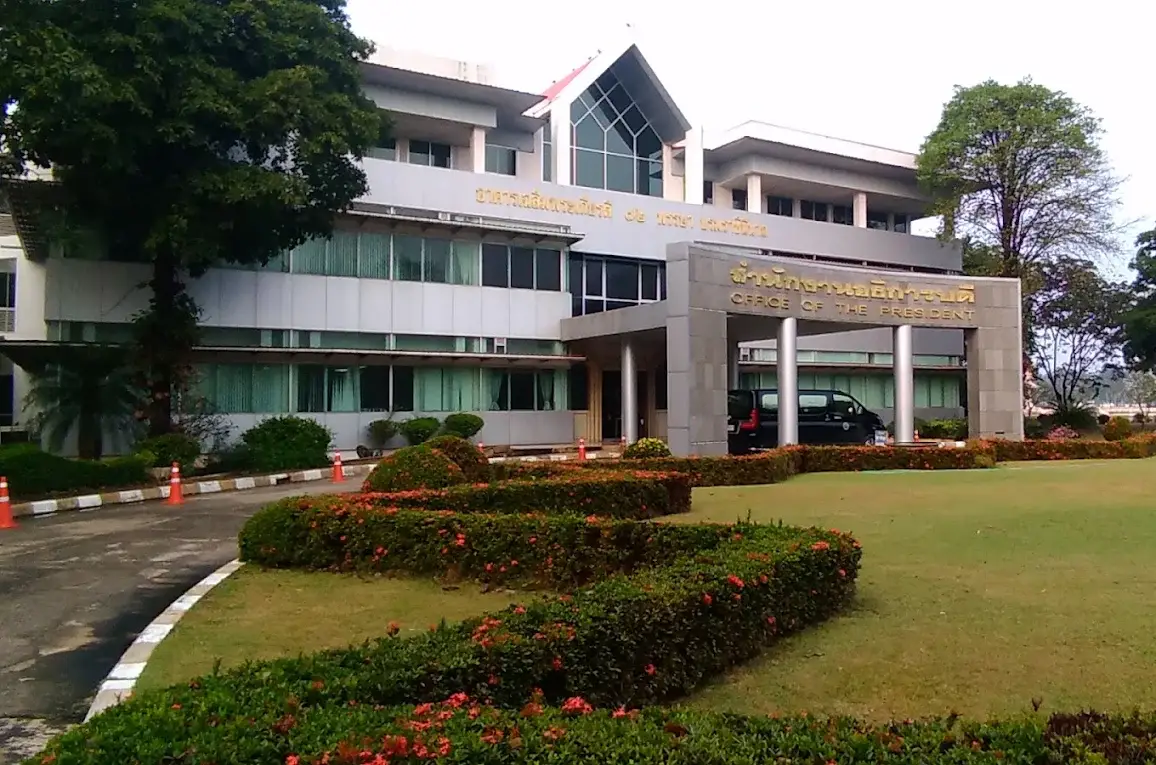
Open Days (Administrative Offices): Monday – Friday (Closed on Public Holidays)
Opening Hours (Administrative Offices): 08:30 – 16:30
Naresuan University (NU) is a major public university in Phitsanulok Province, Thailand, and an important center for higher education in the country's lower northern region. The university is located at 99 Moo 9, Phitsanulok–Nakhon Sawan Road, Tha Pho Subdistrict, Mueang Phitsanulok District, Phitsanulok Province 65000. Its history began on January 25, 1967, with the establishment of Phitsanulok College of Education. The institution later became part of Srinakharinwirot University before gaining independent university status on July 29, 1990. It received the royal name “Naresuan University” in honor of King Naresuan the Great, whose life and historical achievements are closely connected with Phitsanulok. Today, NU is a comprehensive university offering programs across health sciences, medicine, engineering, science and technology, agriculture, humanities, social sciences, and education. Its mission includes teaching, research, academic services, innovation, and the preservation of arts and culture.
Naresuan University is commonly known among Thai students as “Mor Nor,” a pronunciation of its Thai abbreviation, มน., while NU is its official English abbreviation. The university has played an important role in expanding access to higher education for people across Thailand's lower northern region, particularly Phitsanulok, Phichit, Sukhothai, Kamphaeng Phet, Phetchabun, Uttaradit, Tak, Nakhon Sawan, and Uthai Thani. Its multidisciplinary academic structure allows students to study at bachelor's, graduate diploma, master's, and doctoral levels, preparing graduates for careers in a wide range of professional and academic fields.
The university's main campus is situated in the Thung Nong O area of Tha Pho Subdistrict, south of central Phitsanulok. Phitsanulok–Nakhon Sawan Road, part of Highway 117, provides the principal road connection to the campus. The extensive university grounds contain teaching buildings, administrative offices, laboratories, a university hospital, a central library, museums, an art gallery, conference facilities, student residences, sports grounds, and landscaped public spaces. Internal roads, activity areas, ponds, and greenery contribute to an environment designed to support both academic work and campus life.
The importance of Naresuan University extends beyond its role as an educational institution for Phitsanulok. It functions as a regional academic and healthcare center, with Naresuan University Hospital providing medical services while supporting the education of healthcare professionals. The faculties of science, engineering, agriculture, and other disciplines also contribute to research, technology development, and innovation that can benefit businesses, public organizations, communities, and the wider economy.
The origins of Naresuan University are closely linked to Thailand's policy of expanding higher education beyond Bangkok. In earlier decades, students who wished to pursue university-level qualifications often had to travel to the capital or other major educational centers. Distance, accommodation costs, and financial limitations restricted access for many provincial families. The establishment of a college of education in Phitsanulok helped address these barriers and supported the preparation of teachers for schools in the lower northern region.
On January 25, 1967, Phitsanulok College of Education was established under the College of Education Act. It was Thailand's fourth college of education, following Prasarnmit, Pathumwan, and Bang Saen. Its establishment marked a significant step in decentralizing teacher training and higher education. Phitsanulok's strategic location and connections with surrounding provinces made it a suitable center for the development of a regional educational institution.
The college admitted its first students into the third year of study in 1967. However, because its facilities in Phitsanulok were not yet ready, 60 students were temporarily assigned to the College of Education at Bang Saen, while another 60 studied at the Pathumwan College of Education. This temporary arrangement reflected the challenges associated with establishing a new institution while also demonstrating cooperation within Thailand's growing network of colleges of education.
In 1968, Phitsanulok College of Education began delivering courses within Phitsanulok itself, admitting students to continue their third-year studies. The move established a functioning higher education center in the province and allowed the institution to begin developing its own teaching staff, academic resources, and campus facilities. These early developments later provided the foundation for the university's expansion into multiple academic disciplines.
On June 28, 1974, Thailand's colleges of education were elevated to university status under the Srinakharinwirot University Act. Phitsanulok College of Education consequently became Srinakharinwirot University, Phitsanulok Campus. The change allowed the institution to develop within a university system and gradually expand its academic responsibilities beyond teacher preparation.
The name Srinakharinwirot was graciously bestowed by King Bhumibol Adulyadej and carries a meaning associated with the prosperity and distinction of a great city. As part of Srinakharinwirot University, the Phitsanulok campus gained opportunities to strengthen academic administration, develop degree programs, expand research activities, and build a more comprehensive educational environment.
The late 1970s and early 1980s were particularly important for the development of the university's physical campus. In 1979, the institution requested permission to use public land in the Thung Nong O and Pak Khlong Chik areas to accommodate its expansion. On June 27, 1984, land registration procedures were completed for two parcels measuring approximately 1,283 rai, 3 ngan, 6 square wah and 102 rai, 3 ngan, 37 square wah. These land arrangements provided the space required for long-term campus planning and new educational facilities.
The acquisition of a larger campus site was important for both educational capacity and institutional development. It created opportunities to build specialized teaching facilities, laboratories, administrative buildings, and supporting infrastructure. The project represented more than an increase in physical space; it reflected a vision of establishing a comprehensive university capable of meeting the educational and professional needs of the lower northern region.
On August 9, 1984, the Thai Cabinet approved in principle the elevation of Srinakharinwirot University's Phitsanulok Campus to an independent university. This decision recognized the need for a regional institution with its own administrative structure and responsibility for higher education development. Between 1984 and 1988, preparations included campus master planning, budget allocation, construction, personnel development, and administrative arrangements.
On October 9, 1989, King Bhumibol Adulyadej graciously bestowed the name “Naresuan University” upon the planned institution. The name honors King Naresuan the Great, one of Thailand's most celebrated monarchs, whose history is closely connected with Phitsanulok. The royal naming gave the university a distinctive identity rooted in the region's history and the national significance of King Naresuan's achievements.
King Naresuan the Great was born and spent part of his early life in Phitsanulok before undertaking the military and political actions for which he is remembered in Thai history. His association with the restoration of Ayutthaya's independence made him a symbol of courage, determination, and national sovereignty. Naming the university after King Naresuan therefore established a lasting relationship between the institution, its home province, and the cultural memory of the Thai people.
On July 29, 1990, the Naresuan University Act B.E. 2533 (1990) was published in the Royal Gazette, formally establishing Naresuan University as an independent institution separate from Srinakharinwirot University. The date coincided with the 400th anniversary of King Naresuan's accession to the throne. Because of its historical and institutional significance, July 29 has continued to be celebrated as Naresuan University's official establishment anniversary.
Independent university status enabled Naresuan University to develop its own academic structure, faculties, research priorities, and administrative arrangements. Building upon its educational origins, the institution expanded into a comprehensive university offering studies in healthcare, basic sciences, engineering, agriculture, social sciences, humanities, business administration, and international education.
The expansion of Naresuan University after 1990 was particularly important for the development of the lower northern region. It created opportunities for students to pursue a wide range of professional qualifications without relocating to Bangkok. Healthcare education became a significant part of the university's mission, supported by the development of medical faculties and Naresuan University Hospital. The university's growing health sciences infrastructure connected undergraduate and postgraduate education with research and clinical services.
On July 29, 2026, Naresuan University celebrated 36 years since gaining independent university status. Its institutional origins, beginning with Phitsanulok College of Education in 1967, reached 59 years in the same year. These anniversaries refer to different stages of the institution's history: 1967 marks the founding of its predecessor, while 1990 marks the legal establishment of Naresuan University under its present name.
As of October 2026, Associate Professor Dr. Sarintip Thanthanee serves as Acting President of Naresuan University. The university's administration oversees teaching, research, student development, community services, and cooperation with public and private organizations. Its work reflects the objective of connecting higher education with human resource development, regional economic progress, and social well-being.
Naresuan University's official philosophy is “Free Thai Society from Ignorance,” expressed in Thai as “สืบสานให้สังคมไทยเป็นไทจากอวิชชา.” The philosophy emphasizes education as a means of overcoming ignorance by developing knowledge, critical thinking, and independent judgment. Its educational philosophy, “Education for Liberation,” similarly stresses the importance of enabling learners to think independently, continue learning, and use knowledge responsibly.
The university's vision is “University for Entrepreneurial Society.” This vision emphasizes initiative, innovation, entrepreneurship, and the application of knowledge to economic and social development. It encourages the university community to contribute to a society capable of creating opportunities, solving practical problems, and responding to technological and economic change. The approach connects education, research, business cooperation, and community engagement.
Naresuan University's educational identity is expressed through five qualities: competence in work, interpersonal skills, thinking ability, life management, and problem-solving. These qualities emphasize the development of graduates who can apply professional knowledge, collaborate with others, make informed decisions, manage their responsibilities, and respond effectively to challenges in their working and personal lives.
The university's official symbols are associated with King Naresuan the Great. One design depicts the monarch seated and pouring water from a golden vessel to symbolize the declaration of independence. Another features a war elephant within a traditional circular shield. These symbols express the historical association between King Naresuan, the independence of the Thai kingdom, and the identity of the university. They also connect the institution to the pride and heritage of Phitsanulok.
The university's official colors are gray and orange. Gray represents thought, intellect, and wisdom, while orange symbolizes morality and courage. The symbolism of orange combines red, associated with King Naresuan and bravery, and yellow, associated with Phra Buddha Chinnarat and moral virtue. Together, the colors express the relationship between knowledge, courage, and ethical responsibility.
The university's symbolic flower is the Salao blossom, which grows in clusters of delicate purple to pinkish-purple flowers. Salao is a flowering tree valued for its ornamental appearance and its contribution to landscaped environments. Its selection as the university's symbolic flower helps give Naresuan University a distinctive natural identity and is familiar to generations of students and staff.
One of the university's most meaningful traditions is the annual royal homage ceremony honoring King Naresuan the Great. These ceremonies are organized on significant historical and institutional occasions, particularly the university's establishment anniversary on July 29. Events at the Royal Monument of King Naresuan the Great express respect for the monarch's achievements and reinforce the connection between university life and the history of Phitsanulok.
On July 29, 2026, the university marked the 36th anniversary of its establishment with a ceremony honoring the spirit of King Naresuan the Great, the presentation of ceremonial flower arrangements by university departments and external organizations, and an oath-taking ceremony emphasizing service to the nation. Government representatives, university administrators, and members of the university community participated. Recognition awards were also presented to organizations and personnel who had made valuable contributions to the university.
April 25 is another important date in the university's cultural calendar, commemorating the anniversary of King Naresuan's death. On April 25, 2026, university administrators and staff participated in a wreath-laying and royal tribute ceremony at the King Naresuan monument. The event reflected the institution's continuing commitment to preserving historical memory and honoring the monarch whose name it bears.
Welcoming new students is another important part of university life. In the 2026 academic year, Naresuan University organized a first-year orientation program on June 17 at its Multipurpose Building, commonly known as the Dome. This was followed by the Beginning Camp welcome activities on June 18–19. The events introduced students to university life, academic systems, campus facilities, and opportunities to form relationships with fellow students.
On June 27, 2026, the university held an activity fair that introduced students to clubs, student organizations, and extracurricular opportunities. Such events encourage participation in university life while supporting leadership, teamwork, time management, and communication skills. They also allow new students to develop interests and build social connections beyond their academic departments.
The Wai Khru ceremony is a traditional part of Thai educational culture and continues to be observed at Naresuan University. For the 2026 academic year, faculty-level Wai Khru activities were scheduled for July 2. Through these ceremonies, students express gratitude and respect to their teachers. The tradition reinforces the importance of the relationship between educators and learners and reminds students that professional knowledge should be accompanied by ethical conduct and personal responsibility.
On July 18, 2026, Naresuan University organized its NU Identity Festival at the main sports stadium under the theme “Epilogue of the Night: Unveiling the Cards of Dreams.” The festival provided opportunities for students to demonstrate creativity, express pride in their university, and participate in activities that strengthen relationships across faculties. It also formed part of the university's 36th anniversary celebrations.
Arts and culture form another important part of Naresuan University's mission. Through its Division of Art and Culture Promotion, the university supports museums, galleries, exhibitions, and educational activities related to Thai heritage. In October 2026, activities included the 70th National Exhibition of Art and the 41st Exhibition of Contemporary Art by Young Artists. Such events create opportunities for students, artists, and the general public to engage with both traditional and contemporary artistic expression.
The Royal Monument of King Naresuan the Great is one of the most important landmarks on the campus. Its ceremonial plaza serves as the setting for royal tribute ceremonies, university anniversaries, and other significant occasions. Beyond its visual and architectural value, the monument represents the relationship between the university's name and the history of its home province. Visitors interested in the origins of Naresuan University can gain an immediate understanding of this connection through the monument.
The Textile Museum at Naresuan University is an important cultural learning center dedicated to Thai textiles, traditional weaving knowledge, and handicrafts. Its facilities include displays of textile products and a collection of traditional fabrics. The museum also has an exhibition area associated with Chitralada textiles, presenting silk, cotton, traditional woven patterns, and products connected with Thailand's royal arts and crafts initiatives. It offers an educational experience for visitors interested in Thai clothing, textile history, and regional craftsmanship.
The museum's educational value lies in the way textiles reflect the identities and traditions of different communities. Weaving techniques, materials, patterns, and the social uses of cloth vary across regions of Thailand. By preserving and interpreting these traditions, the Textile Museum helps visitors understand the relationship between handicrafts, local environments, historical practices, and the cultural meaning of textiles in Thai society.
The Naresuan University Art Gallery also supports the study and appreciation of visual arts. It hosts exhibitions and creative activities at different times of the year, providing opportunities for students and members of the public to encounter contemporary art. Events in 2026 included national art exhibitions and work by emerging young artists, contributing to the university's cultural role beyond formal classroom education.
Naresuan University Library is the central academic resource institution of the university. Its history can be traced back through the College of Education and Srinakharinwirot University periods before becoming Naresuan University Library in 1990. The library supports teaching, research, and lifelong learning through printed collections, information resources, and digital services. It forms a vital part of the university's educational infrastructure.
Naresuan University Hospital is another significant institution within the campus. It provides healthcare services while supporting the clinical education of medical students and other healthcare professionals. Its role extends across teaching, professional training, medical research, and the provision of services to the public. The hospital is therefore an important part of the university's contribution to the regional healthcare system.
The King Naresuan the Great Exhibition and Convention Center, commonly known as KNECC, hosts academic conferences, exhibitions, and large university events. In July 2026, it was the venue for the 22nd Naresuan Research and Innovation Conference. The facility helps the university welcome participants from educational institutions, public agencies, businesses, and international academic networks.
The Maha Thammaracha Building and the Office of the President are important administrative and research-support facilities. The university's Division of Research and Innovation is based within the Maha Thammaracha Building, while the Office of the President accommodates administrative functions and meetings. These facilities support the coordination of the university's academic, research, and institutional responsibilities.
The university's Multipurpose Building, or Dome, provides a venue for large student activities, including first-year orientation and club events. The main sports stadium and football grounds support sporting activities and student development programs. Together, these areas help create opportunities for students to participate in university life and gain experience outside the classroom.
Academically, Naresuan University is organized into three broad disciplinary clusters: Health Sciences, Science and Technology, and Humanities and Social Sciences. Its faculties and colleges provide specialized teaching and research while creating opportunities for collaboration across disciplines. This structure reflects the university's status as a comprehensive institution serving a wide range of academic and professional needs.
The Health Sciences Cluster includes the Faculty of Medicine, Faculty of Nursing, Faculty of Dentistry, Faculty of Medical Science, Faculty of Pharmaceutical Sciences, Faculty of Allied Health Sciences, and Faculty of Public Health. Each faculty prepares professionals with specialized competencies. Together, they contribute to health promotion, disease prevention, medical diagnosis, treatment, rehabilitation, and biomedical research.
The Faculty of Medicine provides education leading to the Doctor of Medicine qualification and supports medical research and professional development. Its medical degree normally requires six years of study, combining foundational sciences, medical sciences, and clinical training. The Faculty of Nursing prepares nursing professionals, while the Faculty of Dentistry contributes to education and professional services related to oral health.
The Faculty of Medical Science specializes in foundational biomedical disciplines such as microbiology, biochemistry, molecular biology, and medical science. The Faculty of Pharmaceutical Sciences prepares pharmacy professionals and supports research in pharmaceuticals, medicinal compounds, natural products, and cosmetic science. The Faculty of Allied Health Sciences offers education in professions including medical technology, physical therapy, radiological technology, cardiovascular technology, and optometry.
The Faculty of Public Health focuses on health promotion, disease prevention, and community well-being. Its academic fields include environmental health, occupational health and safety, applied Thai traditional medicine, and community health management. These disciplines contribute to public health systems by addressing health risks, workplace safety, and the social and environmental factors that influence people's quality of life.
The Science and Technology Cluster includes the Faculty of Agriculture, Natural Resources and Environment, Faculty of Science, Faculty of Engineering, Faculty of Architecture, Art and Design, Faculty of Logistics and Digital Supply Chain, School of Renewable Energy and Smart Grid Technology, and the Institute for Fundamental Study. These academic units support the development of knowledge and technology related to agriculture, industry, infrastructure, energy, logistics, and modern economic systems.
The Faculty of Agriculture, Natural Resources and Environment contributes to agricultural education and research through fields such as agricultural science, fisheries science, agricultural biotechnology, precision agriculture, food science and technology, animal science, geography, and natural resource management. These subjects are relevant to improving production efficiency, protecting natural resources, and developing sustainable food systems.
The Faculty of Science provides education in fundamental and applied sciences, including mathematics, chemistry, physics, biology, computer science, data science, applied statistics, information technology, and intelligent measurement systems. These disciplines create a foundation for scientific understanding and technological innovation, particularly in fields where data analysis, computing, and digital systems are increasingly important.
The Faculty of Engineering prepares engineers for careers involving the design, analysis, operation, and development of technical systems. Its programs include civil, mechanical, electrical, computer, chemical, materials, industrial, and environmental engineering, along with smart innovation engineering. The knowledge and practical skills developed through these fields are relevant to infrastructure, manufacturing, energy, technology, and industrial development.
The Faculty of Architecture, Art and Design combines creative education with technology and professional design practice. Its programs cover architecture, architectural technology, visual arts, innovative media design, and product and packaging design. The faculty helps students understand how artistic expression, functionality, materials, and technology can contribute to better products, buildings, and built environments.
The Faculty of Logistics and Digital Supply Chain develops expertise in logistics, supply chain management, and digital applications. Its academic activities focus on the movement of goods, information, and resources through modern business systems. These skills are important to transportation, warehousing, distribution, and the efficient management of increasingly complex commercial networks.
The School of Renewable Energy and Smart Grid Technology provides graduate-level education related to renewable energy, smart electrical grids, smart city management, and digital innovation. The Institute for Fundamental Study focuses on advanced theoretical research, particularly theoretical physics and disciplines that apply fundamental scientific methods. Together, these units demonstrate the university's academic activities in both applied technology and foundational scientific inquiry.
The Humanities and Social Sciences Cluster includes the Faculty of Business, Economics and Communications, Faculty of Education, Faculty of Humanities, Faculty of Law, Faculty of Social Sciences, and Naresuan University International College. These faculties contribute to professional and academic education in languages, education, economics, business, law, history, culture, public affairs, and international studies.
The Faculty of Education maintains a connection with the university's earliest history as a college of education. It prepares teachers and educational professionals through programs associated with Thai, English, mathematics, science, computer education, physical education, and digital technology for learning. Its postgraduate programs address educational administration, curriculum development, research, assessment, and other specialized educational fields.
The Faculty of Humanities supports the study of languages, literature, music, Thai dance, and cultural heritage. Programs include Thai, English, Chinese, Japanese, Korean, French, and Burmese studies. Language and cultural education help students develop communication abilities and cross-cultural understanding, both of which are increasingly valuable in international business, tourism, education, and cultural cooperation.
The Faculty of Social Sciences offers programs related to history, political science, psychology, social development, and global community studies. These subjects encourage students to understand human behavior, public institutions, and the relationships within societies. The Faculty of Law prepares graduates with legal knowledge and a commitment to professional ethics and the responsible practice of law.
The Faculty of Business, Economics and Communications offers education in economics, accounting, finance, digital business, business administration, tourism, and communication arts. These disciplines support entrepreneurship and modern economic development. Naresuan University International College provides internationally oriented programs in areas such as international business management, event, hotel and tourism management, and international human resource development.
For the 2026 academic year, the university published figures showing 83 bachelor's degree programs, 2 graduate diploma programs, 87 master's degree programs, and 61 doctoral programs. These figures demonstrate the breadth of the university's educational provision across foundational academic subjects and specialized professions. Prospective students can consult the Division of Academic Affairs and the official admissions systems for program requirements and admission arrangements.
Bachelor's degree programs develop core academic knowledge and professional abilities, while master's and doctoral programs allow students to pursue advanced specializations and research. Offering several qualification levels enables the university to support school leavers, university graduates, and working professionals who wish to enhance their expertise or undertake research in their fields.
Research and innovation are central to Naresuan University's development strategy. Its Division of Research and Innovation identifies important research directions including high-value agriculture, high-value health and medicine, energy and a low-carbon society, sustainable tourism, and logistics and supply chains. These priorities reflect the university's aim to connect research with practical economic, environmental, and social challenges.
On July 23–24, 2026, Naresuan University organized the 22nd Naresuan Research and Innovation Conference under the theme “GREENISM FOR INCLUSIVE INNOVATION.” The event took place at the King Naresuan the Great Exhibition and Convention Center and focused on research, green economic development, sustainability, and innovation ecosystems that encourage broad participation.
More than 500 participants from government agencies, private companies, universities, and research organizations attended the conference. Activities included oral and poster research presentations, innovation exhibitions, business matching, and discussions about transferring university research into commercial applications. International speakers also contributed perspectives on innovation, environmental development, and cooperation across research networks.
The university's research activities are particularly relevant to the lower northern region, where agriculture, industry, tourism, and culturally distinctive communities play important economic roles. Applying research from science, engineering, social sciences, and management can support productivity, environmental protection, product development, and improvements in people's livelihoods.
A notable example of community-based research in 2026 involved the Talat Tai neighborhood in central Phitsanulok. On September 26, the university presented its work to a parliamentary committee responsible for higher education, science, research, and innovation. The project had progressed through several stages, including surveying cultural assets, developing shared community learning spaces, and compiling information about more than 1,500 buildings to support neighborhood development planning.
Research of this kind demonstrates how universities can contribute to the development of historic urban communities. Information about buildings, local history, cultural identity, and the needs of residents can support more informed decisions about city planning and neighborhood improvement. It also illustrates the value of academic cooperation with communities whose cultural and architectural heritage deserves careful consideration.
Naresuan University also supports students' professional development through activities connecting them with employers. In 2026, the Division of Student Affairs publicized NU Career Connect X JOB BKK 2026, creating opportunities for students to engage with employers and learn about careers, recruitment, and labor market expectations. Such initiatives help students relate their studies to employment and professional development.
The university's broader social contribution includes scholarships, alumni networks, student support services, healthcare, and activities intended to improve students' well-being. The Division of Student Affairs supports accommodation, welfare, health-related services, extracurricular activities, and other aspects of university life. These services help students develop academically while also supporting their personal and professional growth.
From an educational tourism perspective, Naresuan University offers several interesting locations. The Royal Monument of King Naresuan the Great, the Textile Museum, and the Art Gallery provide opportunities to explore the connections between regional history, Thai cultural heritage, and modern higher education. Academic study tours related to medicine, science, and technology can also provide valuable learning experiences when arranged through the appropriate university departments.
Those wishing to visit the Textile Museum should consult the university's Division of Art and Culture Promotion for current visitor arrangements. Visits to laboratories and specialized teaching facilities require permission and must follow safety regulations. Hospital services are managed separately according to the medical facility's operating procedures, so visitors should not treat the hospital's opening hours as the general visiting hours of the university campus.
Prospective students can explore a wide range of study options at Naresuan University, from healthcare and engineering to technology, computing, business, education, languages, and the arts. Choosing an appropriate program requires considering personal interests, academic qualifications, professional goals, and any specific admission requirements. Some professional programs have additional conditions involving academic preparation, health standards, or aptitude assessments.
Applications for undergraduate programs are managed through the university's official admissions system, while graduate-level applications follow their respective procedures. Applicants should check the latest announcements before applying, since admission rounds, available places, selection criteria, and tuition fees can vary by academic year and program.
Getting There: Naresuan University can be reached by private car, interprovincial bus, train, and air travel. The campus is located on Phitsanulok–Nakhon Sawan Road, Highway 117, in Tha Pho Subdistrict. Drivers traveling from Bangkok can use the main northbound highway network through Nakhon Sawan before joining Highway 117 toward Phitsanulok. The university is directly accessible from this road and can be located using Naresuan University as the destination in a navigation application.
Travelers arriving from central Phitsanulok can continue to the campus by private car or hired local transport. The university's travel information also references the Por.12 public bus route, connecting areas around the railway station and the city's bus terminal with the university district. The campus has an internal electric transport service intended to help students and visitors travel between university facilities.
Visitors arriving by train can travel on Thailand's Northern Railway Line to Phitsanulok Railway Station and continue by local transport. Air travelers can use Phitsanulok Airport before taking a car or taxi to Tha Pho. The most suitable transport option depends on the traveler's schedule, luggage, and the specific building or campus facility they need to visit.
Because Naresuan University is a large campus with faculties and administrative buildings spread across different areas, visitors attending examinations, interviews, conferences, or academic appointments should confirm their exact destination in advance. The university hospital, individual faculties, and conference facilities may have different access routes and parking arrangements. Consulting the campus map can make a visit more efficient.
The surrounding Tha Pho district offers restaurants, student accommodation, small hotels, and everyday services for students and visitors. Phitsanulok's major cultural attractions, including Wat Phra Si Rattana Mahathat Woramahawihan, Chan Royal Palace, and Wat Chulamani, are located elsewhere in the city and surrounding areas. Visitors can combine a university appointment or educational tour with sightseeing to better understand Phitsanulok's history and cultural significance.
Looking back at its development from Phitsanulok College of Education in 1967 to Srinakharinwirot University's Phitsanulok Campus and finally an independent institution in 1990, Naresuan University has played a continuing role in expanding educational access and developing human resources in Thailand. Its importance lies not merely in the size of its academic structure, but in the way teaching, research, healthcare, innovation, and public service have become connected to the needs of the region.
Naresuan University represents both academic progress and the historical identity of Phitsanulok Province. The name of King Naresuan the Great expresses the values of courage and service associated with Thai national history, while the university's work in education, medicine, science, technology, and culture demonstrates its commitment to creating knowledge for public benefit. Guided by the philosophy of freeing society from ignorance, the university continues to prepare graduates, advance research, and contribute to the development of communities across lower northern Thailand and beyond.
| University Name | Naresuan University |
| Thai Name | มหาวิทยาลัยนเรศวร |
| Abbreviation | NU / มน. / Mor Nor |
| Institution Type | Public University under the Ministry of Higher Education, Science, Research and Innovation |
| Location | Tha Pho Subdistrict, Mueang Phitsanulok District, Phitsanulok Province, Thailand |
| Address | 99 Moo 9, Phitsanulok–Nakhon Sawan Road, Tha Pho Subdistrict, Mueang Phitsanulok District, Phitsanulok Province 65000, Thailand |
| Original Establishment Date | January 25, 1967 |
| University Establishment Date | July 29, 1990 |
| Date of Royal Naming | October 9, 1989 |
| Institutional Age in 2026 | 36 Years as an Independent University and 59 Years Since the Original College of Education Was Established |
| Former Institutional Names | 1. Phitsanulok College of Education 2. Srinakharinwirot University, Phitsanulok Campus 3. Naresuan University |
| Historical Figures Associated with the University Name | King Naresuan the Great and King Bhumibol Adulyadej, Who Bestowed the University Name |
| University Leadership as of October 2026 | Associate Professor Dr. Sarintip Thanthanee, Acting President of Naresuan University |
| University Philosophy | Free Thai Society from Ignorance |
| Educational Philosophy | Education for Liberation |
| Vision | University for Entrepreneurial Society |
| Educational Identity | Competence in Work, Interpersonal Skills, Thinking Ability, Life Management, and Problem-Solving |
| University Colors | Gray and Orange |
| Symbolic Flower | Salao Flower |
| Academic Clusters | 1. Health Sciences 2. Science and Technology 3. Humanities and Social Sciences |
| Health Sciences Faculties | 1. Faculty of Medicine 2. Faculty of Nursing 3. Faculty of Dentistry 4. Faculty of Medical Science 5. Faculty of Pharmaceutical Sciences 6. Faculty of Allied Health Sciences 7. Faculty of Public Health |
| Science and Technology Faculties and Colleges | 1. Faculty of Agriculture, Natural Resources and Environment 2. Faculty of Science 3. Faculty of Engineering 4. Faculty of Architecture, Art and Design 5. Faculty of Logistics and Digital Supply Chain 6. School of Renewable Energy and Smart Grid Technology 7. Institute for Fundamental Study |
| Humanities and Social Sciences Faculties and Colleges | 1. Faculty of Business, Economics and Communications 2. Faculty of Education 3. Faculty of Humanities 4. Faculty of Law 5. Faculty of Social Sciences 6. Naresuan University International College |
| Education Levels | Bachelor's Degree, Graduate Diploma, Master's Degree, and Doctoral Degree |
| Programs by Level for Academic Year 2026 | 83 Bachelor's Degree Programs, 2 Graduate Diploma Programs, 87 Master's Degree Programs, and 61 Doctoral Degree Programs, According to the University's Published Breakdown |
| Academic Strengths | Medicine and Health Sciences, Engineering, Science, Agriculture, Information Technology, Logistics, Renewable Energy, Humanities, Social Sciences, Education, and Research-Based Innovation |
| Important Campus Locations | 1. Royal Monument of King Naresuan the Great 2. Naresuan University Textile Museum 3. Naresuan University Art Gallery 4. Naresuan University Library 5. Naresuan University Hospital 6. King Naresuan the Great Exhibition and Convention Center (KNECC) 7. Maha Thammaracha Building 8. Office of the President 9. Multipurpose Building (Dome) 10. Main Sports Stadium |
| Important Traditions and Activities | 1. University Establishment Anniversary on July 29 2. Royal Homage Ceremony Honoring King Naresuan the Great 3. Commemoration of King Naresuan's Death Anniversary 4. Wai Khru Ceremony 5. Beginning Camp for New Students 6. NU Identity Festival 7. Naresuan Research and Innovation Conference |
| Administrative Open Days | Monday – Friday, Excluding Public Holidays |
| Administrative Opening Hours | 08:30 – 16:30 |
| Campus Visits | Public Access Is Subject to University Regulations. Contact Relevant Departments in Advance for Museum Visits, Study Tours, Specialized Laboratories, and Scheduled Activities. |
| Campus Facilities | Academic Buildings, Laboratories, University Library, Hospital, Student Dormitories, Sports Facilities, Conference Center, Museums, Art Gallery, and Internal Campus Transportation |
| Getting There | Travel Along Highway 117, Phitsanulok–Nakhon Sawan Road, to Tha Pho Subdistrict. Accessible by Private Car, Public Bus, Train with Local Transport, or via Phitsanulok Airport. |
| Nearby Tourist Attractions | 1. Royal Monument of King Naresuan the Great, On Campus 2. Naresuan University Textile Museum, On Campus 3. San Phra Thepparat Shrine, On Campus 4. Wat Khung Wari, Tha Pho 5. Asom Wasin, Tha Pho |
| Nearby Restaurants | 1. Yentafo Chiang Kham, Naresuan University Branch, Tel. +66 80 134 9716 2. Tiao Khai Wis-Wa, Tel. +66 85 552 8489 3. Pa Ban Coconut Bowl Boat Noodles, Tel. +66 66 058 2899 4. Sam Sian Chicken Rice, Naresuan University Branch, Tel. +66 86 925 7999 5. Bu Lim Pochana, Tel. +66 87 571 0041 |
| Nearby Accommodations | 1. Kresident, Tel. +66 93 664 9191 2. Nature Park Resort, Tel. +66 89 245 6542 3. Rim Khlong Resort, Tel. +66 90 188 5183 4. Natip Resort, Tel. +66 64 123 1700 5. Cher Aim Guesthouse, Tel. +66 85 402 1434 |
| University Telephone | +66 55 961 000 |
| Fax | +66 55 961 103 |
| naresuan@nu.ac.th | |
| Official Website | https://www.nu.ac.th/ |
| Academic Programs Website | https://www.acad.nu.ac.th/course/ |
| Current Status | Operating as a Public University in 2026 |
Academic Programs and Fields of Study at Naresuan University – Academic Year 2026 The following table brings together degree programs and fields of study published in Naresuan University's academic program database. Programs are arranged by faculty and qualification level. A program's presence in the database does not necessarily mean it is accepting new students in every admissions round. Prospective applicants should check the official admissions announcement and current program status before applying.
| Faculty / College | Academic Programs and Fields of Study |
| Faculty of Medicine | Bachelor's Level 1. Doctor of Medicine Master's Level 1. Master of Science in Health Science Education 2. Master of Science in Pediatrics 3. Master of Science in Orthopedics 4. Master of Science in Internal Medicine Doctoral Level 1. Doctor of Philosophy in Clinical Epidemiology and Research |
| Faculty of Nursing | Bachelor's Degree 1. Bachelor of Nursing Science Master's Degree 1. Master of Nursing Science in Nursing Administration 2. Master of Nursing Science in Community Nurse Practitioner 3. Master of Nursing Science in Adult and Gerontological Nursing 4. Master of Nursing Science in Gerontological Nurse Practitioner Doctoral Degree 1. Doctor of Philosophy in Nursing Science |
| Faculty of Dentistry | Bachelor's Level 1. Doctor of Dental Surgery Master's Degree 1. Master of Science in Dentistry |
| Faculty of Medical Science | Bachelor of Science 1. Microbiology 2. Biochemistry and Molecular Biology 3. Anatomical Pathology 4. Medical Science Master of Science 1. Biochemistry 2. Physiology 3. Microbiology 4. Parasitology 5. Medical Science 6. Anatomy Doctor of Philosophy 1. Medical Science |
| Faculty of Pharmaceutical Sciences | Bachelor's Level 1. Doctor of Pharmacy in Pharmaceutical Care 2. Bachelor of Science in Cosmetic Science and Natural Products Master's Level 1. Master of Science in Cosmetic Science 2. Master of Science in Pharmaceutical Chemistry and Natural Products 3. Master of Science in Pharmacology and Molecular Biosciences 4. Master of Pharmacy in Community Pharmacy and Integrated Pharmaceutical Services Management Doctoral Level 1. Doctor of Philosophy in Pharmaceutical Sciences |
| Faculty of Allied Health Sciences | Bachelor's Level 1. Doctor of Optometry 2. Bachelor of Science in Physical Therapy 3. Bachelor of Science in Radiological Technology 4. Bachelor of Science in Cardiovascular Technology 5. Bachelor of Medical Technology Master's Level 1. Master of Science in Biomedical Science 2. Master of Science in Cardiovascular Technology 3. Master of Science in Medical Physics 4. Master of Medical Technology 5. Master of Science in Physical Therapy Doctoral Level 1. Doctor of Philosophy in Biomedical Science |
| Faculty of Public Health | Bachelor's Level 1. Bachelor of Applied Thai Traditional Medicine 2. Bachelor of Science in Environmental Health 3. Bachelor of Science in Occupational Health and Safety 4. Bachelor of Public Health in Elderly Health Care and Management 5. Bachelor of Public Health in Community Health Master's Degree 1. Master of Public Health Doctoral Degree 1. Doctor of Public Health |
| Faculty of Agriculture, Natural Resources and Environment | Bachelor of Science 1. Natural Resources and Environment 2. Geography 3. Fisheries Science 4. Agricultural Science 5. Food Science and Technology 6. Animal Science and Feed Technology 7. Precision Agriculture 8. Agricultural Biotechnology Master of Science 1. Food Science and Technology 2. Agricultural Science 3. Natural Resources and Environment 4. Agricultural Biotechnology 5. Geoinformatics 6. Fisheries Science 7. Environmental Science 8. Animal Science Doctor of Philosophy 1. Natural Resources and Environment 2. Agricultural Biotechnology 3. Agricultural Science 4. Food Science and Technology 5. Environmental Science 6. Animal Science |
| Faculty of Science | Bachelor of Science 1. Mathematics 2. Biology 3. Physics 4. Applied Physics 5. Data Science 6. Computer Science 7. Applied Statistics and Data Analytics 8. Chemistry 9. Measurement Technology and Intelligent Systems 10. Information Technology 11. Energy and Environmental Technology and Innovation Master of Science 1. Mathematics 2. Biotechnology 3. Physics 4. Applied Physics 5. Applied Statistics and Data Analytics 6. Chemistry 7. Computer Science 8. Industrial Chemistry 9. Biological Science 10. Data Science and Machine Learning 11. Information Technology Doctor of Philosophy 1. Mathematics 2. Physics 3. Applied Physics 4. Statistics 5. Chemistry 6. Biotechnology 7. Biological Science 8. Computer Science 9. Information Technology |
| Faculty of Engineering | Bachelor of Engineering 1. Environmental Engineering 2. Civil Engineering 3. Computer Engineering 4. Smart Innovation Engineering (English-Language Program) 5. Materials Engineering 6. Industrial Engineering 7. Chemical Engineering 8. Mechanical Engineering 9. Electrical Engineering Master's Level 1. Master of Science in Climate Change and Disaster Management 2. Master of Engineering in Mechanical Engineering 3. Master of Engineering in Biomedical Engineering 4. Master of Engineering in Civil Engineering 5. Master of Engineering in Environmental Engineering 6. Master of Engineering in Engineering Management 7. Master of Engineering in Computer Engineering 8. Master of Engineering in Electrical Engineering 9. Master of Engineering in Construction Management 10. Master of Engineering in Chemical Engineering |
| Faculty of Architecture, Art and Design | Bachelor's Level 1. Bachelor of Science in Architectural Technology 2. Bachelor of Fine Arts in Innovative Media Design 3. Bachelor of Fine Arts in Visual Arts 4. Bachelor of Fine Arts in Product and Packaging Design 5. Bachelor of Architecture Master's Level 1. Master of Fine Arts in Art and Design 2. Master of Fine Arts in Art and Cultural Heritage Wisdom 3. Master of Architecture Doctoral Level 1. Doctor of Fine Arts in Art and Design 2. Doctor of Philosophy in Architecture 3. Doctor of Philosophy in Art and Cultural Heritage Wisdom |
| Faculty of Logistics and Digital Supply Chain | Bachelor of Science 1. Logistics and Digital Supply Chain 2. Logistics and Digital Supply Chain (Continuing Program) Master of Science 1. Logistics and Digital Supply Chain Doctor of Philosophy 1. Logistics and Digital Supply Chain |
| School of Renewable Energy and Smart Grid Technology | Master of Science 1. Smart City Management and Digital Innovation 2. Smart Grid Technology 3. Renewable Energy Doctor of Philosophy 1. Smart Grid Technology 2. Smart City Management and Digital Innovation |
| Institute for Fundamental Study | Master of Science 1. Theoretical Physics Doctor of Philosophy 1. Theoretical Physics |
| Faculty of Business, Economics and Communications | Bachelor's Level 1. Bachelor of Communication Arts 2. Bachelor of Business Administration 3. Bachelor of Business Administration in Finance 4. Bachelor of Business Administration in Digital Business 5. Bachelor of Accountancy 6. Bachelor of Science in Creative Innovation and Marketing 7. Bachelor of Arts in Tourism 8. Bachelor of Economics Master's Level 1. Master of Business Administration in Strategic Digital Business Administration 2. Master of Business Administration 3. Master of Arts in Tourism and Hospitality Management 4. Master of Economics 5. Master of Communication Arts in Communication 6. Master of Accountancy 7. Master of Science in Innovative Smart Marketing and Data Science Doctoral Level 1. Doctor of Philosophy in Business Administration 2. Doctor of Philosophy in Communication 3. Doctor of Philosophy in Tourism and Hospitality Management 4. Doctor of Philosophy in Economics |
| Faculty of Education | Bachelor of Education 1. Education 2. English 3. Mathematics 4. Computer Education 5. Biology 6. Physical Education and Exercise Science 7. Physics 8. Thai 9. Chemistry 10. Digital Technology and Innovation for Learning Master's Level 1. Master of Arts in Sports Management 2. Master of Education in Educational Administration 3. Master of Education in Mathematics Education 4. Master of Education in Computer and Educational Technology 5. Master of Education in Learning Assessment Innovation 6. Master of Education in Physical Education and Exercise Science 7. Master of Education in Thai 8. Master of Education in English 9. Master of Education in Educational Research and Evaluation 10. Master of Education in Science Education 11. Master of Education in Social Studies 12. Master of Education in Curriculum and Instruction 13. Master of Education in Development Education Doctoral Level 1. Doctor of Philosophy in Sports Management 2. Doctor of Education in Educational Administration 3. Doctor of Philosophy in Mathematics Education 4. Doctor of Philosophy in Computer and Digital Technology for Education 5. Doctor of Philosophy in Learning Assessment Innovation 6. Doctor of Education in Physical Education and Exercise Science 7. Doctor of Education in Thai 8. Doctor of Philosophy in Educational Research and Evaluation 9. Doctor of Philosophy in Science Education 10. Doctor of Philosophy in Curriculum and Instruction 11. Doctor of Education in Social Studies |
| Faculty of Humanities | Bachelor's Level 1. Bachelor of Music 2. Bachelor of Arts in Thai Classical Dance 3. Bachelor of Arts in Myanmar Studies 4. Bachelor of Arts in Chinese 5. Bachelor of Arts in Japanese 6. Bachelor of Arts in French 7. Bachelor of Arts in English 8. Bachelor of Arts in Korean 9. Bachelor of Arts in Thai Master's Level 1. Master of Arts in Folklore 2. Master of Arts in Thai 3. Master of Arts in Linguistics 4. Master of Arts in English Studies 5. Master of Music Doctoral Level 1. Doctor of Philosophy in Folklore 2. Doctor of Philosophy in Thai 3. Doctor of Philosophy in Linguistics 4. Doctor of Philosophy in Musical Arts |
| Faculty of Law | Bachelor's Degree 1. Bachelor of Laws |
| Faculty of Social Sciences | Bachelor's Level 1. Bachelor of Political Science 2. Bachelor of Science in Psychology 3. Bachelor of Arts in Global Community Studies (Bilingual Program) 4. Bachelor of Arts in History 5. Bachelor of Arts in Social Development Master's Level 1. Master of Arts in Social Development 2. Master of Arts in Southeast Asian Studies 3. Master of Political Science 4. Master of Arts in ASEAN Studies (International Program) Doctoral Level 1. Doctor of Philosophy in ASEAN Studies (International Program) 2. Doctor of Philosophy in Social Development 3. Doctor of Philosophy in Southeast Asian Studies 4. Doctor of Philosophy in Political Science |
| Naresuan University International College | Bachelor's Degree Programs 1. Bachelor of Business Administration in International Business Management (International Program) 2. Bachelor of Business Administration in Event, Hotel and Tourism Management (International Program) 3. Bachelor of Business Administration in International Human Resource Management and Development (International Program) 4. Bachelor of Arts in English for Business Communication |
Frequently Asked Questions (FAQ)
Q: Where is Naresuan University located?
A: Naresuan University is located at 99 Moo 9, Phitsanulok–Nakhon Sawan Road, Tha Pho Subdistrict, Mueang Phitsanulok District, Phitsanulok Province 65000, Thailand.
Q: What are the opening days and hours of Naresuan University?
A: General administrative and academic affairs contact hours are Monday to Friday, 08:30 – 16:30, excluding public holidays. The university hospital, museums, and other specialized services may operate according to separate schedules.
Q: When was Naresuan University established?
A: The institution originated as Phitsanulok College of Education on January 25, 1967, and became an independent university on July 29, 1990.
Q: When was the name Naresuan University officially bestowed?
A: King Bhumibol Adulyadej graciously bestowed the name Naresuan University on October 9, 1989, in honor of King Naresuan the Great.
Q: What is Naresuan University best known for?
A: The university is particularly recognized for medicine and health sciences, science, engineering, agriculture, education, humanities, social sciences, and research and innovation supporting national development.
Q: What faculties and degree programs does Naresuan University offer?
A: Its academic programs are organized into the Health Sciences, Science and Technology, and Humanities and Social Sciences clusters. The university offers bachelor's degrees, graduate diplomas, master's degrees, and doctoral degrees. Details are available from its academic affairs division.
Q: What are the most interesting places to visit at Naresuan University?
A: Important locations include the Royal Monument of King Naresuan the Great, the Textile Museum, the Art Gallery, Naresuan University Library, Naresuan University Hospital, and the King Naresuan the Great Exhibition and Convention Center.
Q: Can members of the public visit Naresuan University?
A: Visitors may access areas open to the public according to university regulations. Contact the relevant department in advance when arranging educational tours, museum visits, laboratory visits, or participation in special activities.
Q: How can I contact Naresuan University?
A: Contact the university by telephone at +66 55 961 000, email naresuan@nu.ac.th, or visit https://www.nu.ac.th/.
 Category: ●University
 Group: ●Public university
Last Update : 1 WeekAgo
 Last Update : 1 WeekAgo
 Click to Access the Navigation Map GPS
Naresuan University Map
Recommend

 Art, Culture and Heritage
 Historical Sites and Monuments(1)
 Landmarks and Memorials(2)
 Art, Craft Centres, Tradition(3)
 Museums(3)
 Educational Places
 Educational Gardens, Farm(1)
Public university(1)
 Rajamangala University of Technology(1)
 Rajabhat University(1)
 Private University(1)
 Places of Worship
 Temple(29)
 Mosque(1)
 Other Sacred Sites(3)
 Research and Development
 Royal Project(1)
 Suburban Living
 Village, Community(1)
 Nature and Wildlife
 National Parks and Marine Reserves(7)
 Mountain (Doi)(4)
 Dam, Reservoir, Lake(5)
 Waterfalls(19)
 Caves(3)
 River, Canal(9)
 Other natural attractions(1)
 Entertainment and Agricultural
 Farms, Parks and Ecotourism(2)
 Outdoor and Adventure Activities(1)
 Travel Articles, Recipes
 Travel Review, Food Review(1)


