
lovethailand home >North Travel Attractions >Phichit Travel Attractions >Bang Mun Nak >Noen Makok > Sirindhorn Chaipattana Agricultural Center
TL;DR: Sirindhorn Chaipattana Agricultural Center is located at Moo 11, Ban Saphan Yao, Noen Makok Subdistrict, Bang Mun Nak District, Phichit Province, open Contact The Center Before Visiting, hours Contact The Center Before Visiting.

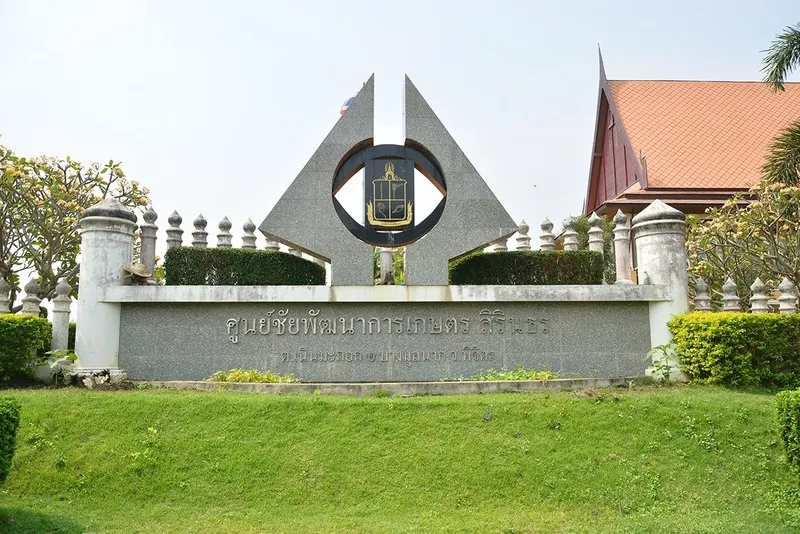
Sirindhorn Chaipattana Agricultural Center
Open Days: Contact The Center Before Visiting
Opening Hours: Contact The Center Before Visiting
Sirindhorn Chaipattana Agricultural Center in Phichit Province is located in Moo 11, Ban Saphan Yao, Noen Makok Subdistrict, Bang Mun Nak District. It is an important agricultural learning center developed under the Chaipattana Foundation to address the challenges of farming in lowland areas that are regularly affected by seasonal flooding. The center applies the Sufficiency Economy Philosophy and practical land-use management to help farmers understand how to adapt their livelihoods to the natural conditions of their area.
This center is suitable for farmers, students, researchers, agricultural groups, and travelers interested in sustainable farming. It is not a conventional tourist attraction built mainly for sightseeing. Instead, it is a living learning area where visitors can observe how land, water, crops, livestock, and community livelihoods are managed in a flood-prone environment. The center demonstrates that flooding does not have to be seen only as a problem. With careful planning, it can become part of an integrated agricultural system.
The origin of the center began with a plot of land measuring 91 rai, 2 ngan, and 44 square wah donated to the Chaipattana Foundation by Mrs. Charatsri Chindasanguan. The Ministry of Agriculture and Cooperatives was granted permission to develop the land on January 15, 2007. On June 25, 2007, the project was graciously given the name “Sirindhorn Chaipattana Agricultural Center.” On July 19, 2007, Her Royal Highness Princess Maha Chakri Sirindhorn privately visited the area and officially unveiled the center’s name sign.
The significance of Sirindhorn Chaipattana Agricultural Center lies in its practical response to real agricultural problems. Noen Makok and nearby areas in Bang Mun Nak District are lowland communities that can be affected by seasonal floods. Flooding can damage crops, interrupt income, and make farming uncertain. The center was therefore designed as a learning site to show how land can be used effectively even under challenging water conditions through planning, demonstration, experimentation, and knowledge transfer.
The Sufficiency Economy Philosophy is at the heart of the center. This approach does not focus only on maximizing production. It emphasizes moderation, careful decision-making, self-reliance, and resilience against risk. At the center, visitors can see how farmers may reduce dependence on a single crop, diversify income sources, use local resources wisely, and build a farming system that can survive uncertainty caused by water, weather, markets, and production costs.
The center contains several types of agricultural demonstration areas. These include safe vegetable production plots, good-quality rice seed production, aquatic animal breeding such as Nile tilapia and field frogs, dairy cattle management, mixed fruit orchards, and land-use demonstrations suitable for flood-prone areas. These activities help visitors understand agriculture as an integrated system rather than separate activities. Soil, water, crops, animals, labor, income, and household stability are all connected.
The safe vegetable production plots are an important learning component. They show how farmers can produce quality vegetables while reducing unnecessary chemical use and improving consumer confidence. Safe vegetable farming can be suitable for small-scale farmers because it does not always require large land areas and can be managed with household labor. Visitors can observe plot organization, crop care, input management, and the connection between production and local distribution.
Good-quality rice seed production is especially important in Phichit because rice is one of the main crops in the lowland areas. Reliable seed helps improve yield quality, reduce contamination from mixed varieties, and increase stability for rice farmers. The center demonstrates rice seed production as a model for farmers to learn about variety selection, field management, quality control, and seed handling suited to local conditions.
The aquatic animal breeding area is another practical example of adapting to water. Instead of treating standing water only as a difficulty, the center demonstrates how fish and frogs can become additional sources of income when managed properly. Nile tilapia and field frog breeding can help farmers diversify their livelihoods, especially during periods when crop production is limited. This approach turns water into a productive resource rather than only a seasonal hazard.
Dairy cattle management at the center demonstrates another part of an integrated agricultural system. The focus is on using good-quality roughage, reducing excessive feed costs, and adding value through milk-related products. This gives visitors a practical understanding of how livestock can be managed alongside crops and other farm activities. When planned carefully, livestock can support household income and make farming systems more resilient.
The mixed fruit orchard area shows how farmers can diversify production and reduce risk. Growing several kinds of fruit trees together can help spread income across seasons and reduce dependence on one crop or one market price. In flood-prone areas, fruit cultivation must be carefully planned with attention to land levels, drainage, and water management. The orchard therefore serves as a useful example of how plant diversity can strengthen a farm system.
The center also functions as a distribution point for safe and quality agricultural products. Produce from the project, such as vegetables, fruit, milk-related products, or seasonal agricultural goods, helps demonstrate that learning activities can connect with real production and real markets. This gives visitors a clearer picture of how agricultural knowledge can lead to income, food safety, and confidence among consumers.
Another important role of the center is education. Farmers, students, trainees, and interested members of the public can visit to learn from real working areas. Instead of learning only from theory, visitors can walk through plots, observe irrigation and water management, see livestock systems, talk with staff, and understand actual problems in the field. This makes the knowledge more practical and easier to adapt to other communities.
The center also teaches an important lesson about living with water. In lowland agricultural areas, flooding is not always an unusual disaster; it can be a repeating natural condition of the landscape. Development must therefore begin by understanding the local environment. Farmers need to know which areas can be raised for crops, which areas can be used for fish or frogs, which crops suit the land, and how to create alternative income when planting is temporarily impossible.
For visitors interested in educational travel, Sirindhorn Chaipattana Agricultural Center offers a different experience from ordinary sightseeing. It provides insight into real agricultural challenges and practical solutions. Visitors can learn about sustainable agriculture, safe food production, water management, mixed farming, rural development, and the application of the Sufficiency Economy Philosophy in a real location rather than in abstract terms.
Getting There is easiest by private car. From Mueang Phichit District, travelers can drive toward Bang Mun Nak District and continue to Noen Makok Subdistrict and Ban Saphan Yao, Moo 11. Because the center is located in an agricultural community area, using a navigation map is recommended. Visitors who wish to arrange a group study visit should contact the center before traveling so that staff can prepare appropriate information and learning routes.
The route from Phichit town passes through rural and agricultural landscapes before reaching the center. This makes the journey itself useful for understanding the setting of the project. Visitors can see the wider lowland agricultural environment of Phichit before arriving at the demonstration areas. Once at the center, it is best to explore slowly and focus on how different agricultural activities are arranged in relation to land and water.
Visitors should prepare for an agricultural learning environment. Comfortable walking shoes, sun protection, drinking water, and practical clothing are recommended. Do not enter demonstration plots without permission, and follow staff instructions when visiting learning areas. Organized groups should contact the center in advance to ensure that the visit is suitable for the group’s purpose, whether for school learning, farmer training, or general educational travel.
The center can be combined with nearby places in Bang Mun Nak District, such as Chao Pho Kaeo Shrine, Bang Mun Nak Old Market, Wat Sukhumaram, Wat Hiranyaram, and other community attractions. This makes it possible to design a one-day route that combines agricultural learning with local culture, temples, shrines, and community food in Phichit Province.
The value of Sirindhorn Chaipattana Agricultural Center can be understood at both local and conceptual levels. Locally, it provides a practical model for farmers in flood-prone areas. Conceptually, it shows how the Sufficiency Economy Philosophy can be transformed into real land management, income planning, farm diversification, and household resilience. This makes the center meaningful not only for Phichit but also for other communities facing similar environmental challenges.
Overall, Sirindhorn Chaipattana Agricultural Center in Phichit Province is a valuable learning destination for farmers, students, agricultural professionals, and travelers interested in sustainable rural development. It is a model for using land wisely in flood-prone areas, transferring practical agricultural knowledge, distributing safe produce, and reflecting the royal concern for farmers and people living in lowland communities of Phichit.
| Name | Sirindhorn Chaipattana Agricultural Center, Phichit Province |
| Location | Moo 11, Ban Saphan Yao, Noen Makok Subdistrict, Bang Mun Nak District, Phichit Province |
| Address | Moo 11, Ban Saphan Yao, Noen Makok Subdistrict, Bang Mun Nak District, Phichit Province 66120 |
| Place Type | Agricultural Learning Center Under Royal Initiative And The Sufficiency Economy Philosophy |
| Highlights | Learning center for agriculture in flood-prone areas, safe vegetable production, rice seed production, aquatic animal breeding, dairy cattle, and mixed fruit orchards |
| History | The 91 rai, 2 ngan, and 44 square wah land was donated to the Chaipattana Foundation. The project received its royal name on June 25, 2007, and the center’s sign was officially unveiled on July 19, 2007 |
| Name Origin | The name “Sirindhorn Chaipattana Agricultural Center” was graciously granted for the agricultural learning project under royal initiative |
| Distinctive Features | A model center for land use in repeatedly flooded areas, applying integrated farming and the Sufficiency Economy Philosophy |
| Main Activities | Safe vegetable production, good-quality rice seed production, Nile tilapia and field frog breeding, dairy cattle, mixed fruit orchards, and agricultural produce distribution |
| Travel Information | Best reached by private car from Phichit town toward Bang Mun Nak District, then continue to Noen Makok Subdistrict and Ban Saphan Yao, Moo 11 |
| Current Status | Active agricultural learning and knowledge-transfer center of the Chaipattana Foundation in Phichit Province |
| Open Days | Contact The Center Before Visiting |
| Opening Hours | Contact The Center Before Visiting |
| Facilities | Study visit areas, demonstration plots, agricultural learning points, produce distribution point, and parking space according to project conditions |
| Main Areas / Zones | Safe vegetable plots, rice seed production area, aquatic animal breeding ponds, dairy cattle area, mixed fruit orchard, and produce distribution point |
| Caretaker / Related Agencies | The Chaipattana Foundation, local agricultural agencies, and Sirindhorn Chaipattana Agricultural Center, Phichit Province |
| Main Contact Number | 056-632333, Fax 056-632222 |
| Nearby Local Office | Noen Makok Subdistrict Municipality, Tel. 056-632-608 |
| Nearby Tourist Attractions | 1. Chao Pho Kaeo Shrine, Bang Mun Nak, about 8 km 2. Bang Mun Nak Old Market, about 8 km 3. Wat Sukhumaram, Bang Mun Nak District, about 12 km 4. Wat Hiranyaram or Wat Bang Khlan, about 14 km 5. Wat Thai Nam, about 18 km 6. Wat Pa Si Wilai, about 20 km |
| Nearby Restaurants | 1. Niyom Kin, Noen Makok Subdistrict, about 3 km, Tel. 088-689-9777 2. Krua Thai Isan Before Chaipattana Center, about 2 km 3. Le Monarch Cafe' Lamun Nak Cafe, about 8 km, Tel. 095-998-2822 4. Local Food Shops In Bang Mun Nak Market, about 8 km 5. Krua Lung Mee Chicken Noodles, Stewed Pork And Wild Food, about 9 km |
| Nearby Accommodations | 1. Weethara Resort Bang Mun Nak, Noen Makok Subdistrict, about 4 km, Tel. 081-785-2040 2. Ban Sabai Jai Resort, about 9 km, Tel. 082-877-8848 3. Ban Mai Ngam Resort, about 10 km 4. Doo Dow Resort, about 12 km 5. Rice Country Village, about 14 km 6. Rim Nan Hotel, about 18 km |
Frequently Asked Questions (FAQ)
Q: Where is Sirindhorn Chaipattana Agricultural Center located?
A: It is located in Moo 11, Ban Saphan Yao, Noen Makok Subdistrict, Bang Mun Nak District, Phichit Province.
Q: Why is Sirindhorn Chaipattana Agricultural Center important?
A: It is an agricultural learning center under royal initiative that demonstrates how to manage land and farming systems in areas repeatedly affected by flooding.
Q: When was the center established?
A: The project received its royal name on June 25, 2007, and the center’s sign was officially unveiled on July 19, 2007.
Q: What can visitors learn at the center?
A: Visitors can learn about safe vegetable production, good-quality rice seed production, aquatic animal breeding, dairy cattle, mixed fruit orchards, produce distribution, and land-use management in flood-prone areas.
Q: Who should visit Sirindhorn Chaipattana Agricultural Center?
A: The center is suitable for farmers, students, agricultural groups, local agencies, and travelers interested in sustainable farming and the Sufficiency Economy Philosophy.
Q: Should visitors contact the center before a study visit?
A: Yes. Visitors, especially groups, should contact the center before traveling so that staff can prepare suitable information and learning routes.
Q: How can visitors contact the center?
A: The center can be contacted by phone at 056-632333 or by fax at 056-632222.
Q: What nearby places can be visited together with the center?
A: Nearby places include Chao Pho Kaeo Shrine, Bang Mun Nak Old Market, Wat Sukhumaram, Wat Hiranyaram, Wat Thai Nam, and attractions in Bang Mun Nak District.
 Category: ●Research and Development
 Group: ●Royal Project
Last Update : 3 MonthAgo
 Last Update : 3 MonthAgo
 Click to Access the Navigation Map GPS
Sirindhorn Chaipattana Agricultural Center Map
Recommend

 Art, Culture and Heritage
 Historical Sites and Monuments(1)
 Art, Craft Centres, Tradition(1)
 Museums(1)
 Places of Worship
 Temple(32)
 Other Sacred Sites(4)
Royal Project(1)
Other Sacred Sites(4)
Royal Project(1)
 Suburban Living
 Floating Market(1)
 Nature and Wildlife
 National Parks and Marine Reserves(1)
 Dam, Reservoir, Lake(3)
 River, Canal(2)
 Other natural attractions(1)
 Entertainment and Agricultural
 Animal camps and shows(1)
 Farms, Parks and Ecotourism(4)


