
lovethailand home >Central Travel Attractions >Nonthaburi Travel Attractions >Pak Kret >Bang Phut > Sukhothai Thammathirat University
TL;DR: Sukhothai Thammathirat University is located at Bang Phut Subdistrict, Pak Kret District, Nonthaburi Province, Thailand, open Monday – Friday (University Administrative Offices), hours 08:30 – 16:30.
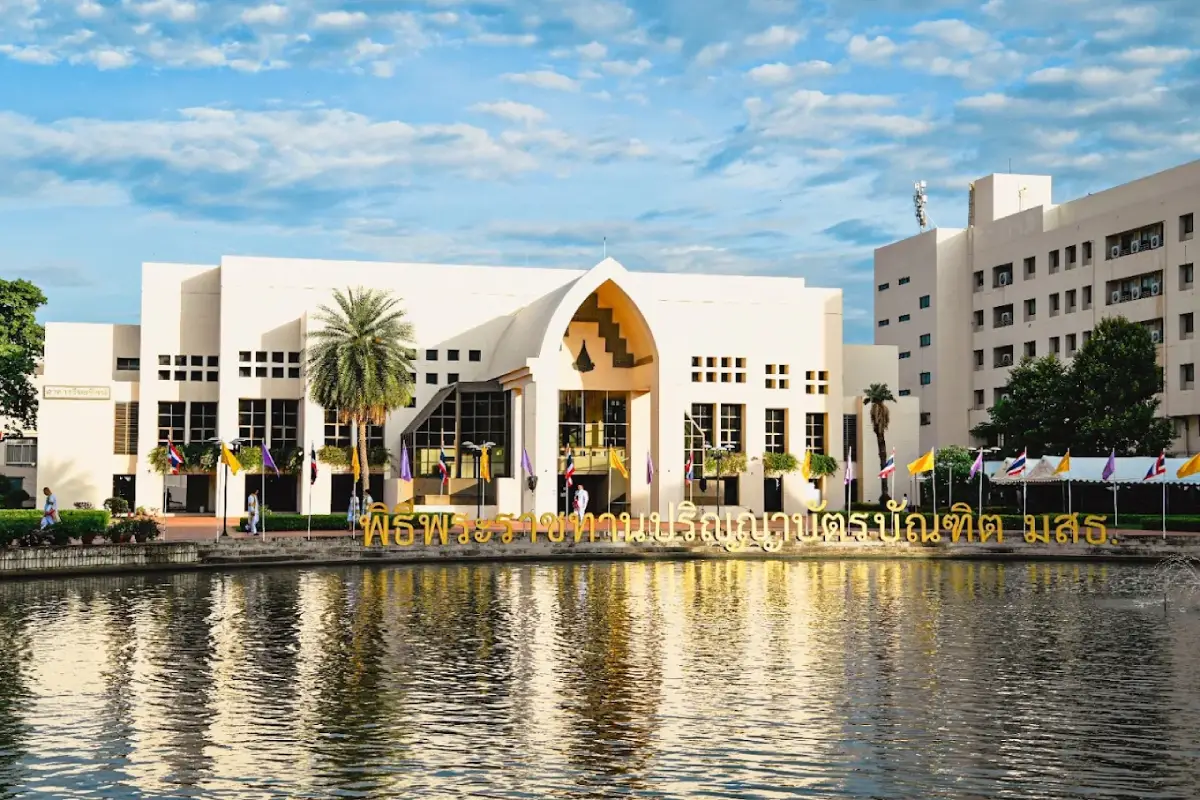
Sukhothai Thammathirat University
Open Days: Monday – Friday (University Administrative Offices)
Opening Hours: 08:30 – 16:30
Information Center Hours: Monday – Friday, 08:00 – 19:10; Saturday – Sunday, 08:30 – 16:30
Sukhothai Thammathirat Open University (STOU), known in Thai as Mahawitthayalai Sukhothai Thammathirat (มหาวิทยาลัยสุโขทัยธรรมาธิราช), is a Thai public open university that has played a significant role in expanding access to higher education throughout Thailand. Established on September 5, 1978, the university is headquartered at 9/9 Moo 9, Bang Phut Subdistrict, Pak Kret District, Nonthaburi Province. Unlike conventional universities that require students to attend regular classroom lectures, STOU specializes in open and distance learning, allowing students to pursue recognized qualifications while managing their employment, family responsibilities, and personal commitments. The university is particularly notable for its lifelong learning philosophy, extensive academic programs, educational media production, and nationwide student support network. Its main campus also contains distinctive cultural landmarks, including the Phum Khao Bin Building, the monument commemorating King Prajadhipok, and the Ratchamangkhala Phisek Educational Park, which connect Thai historical heritage with the university's educational mission.
One of the university's defining characteristics is its commitment to removing barriers to education. Rather than requiring every student to travel to Nonthaburi for daily classes, STOU develops learning materials, academic services, and assessment systems that support independent study. This approach is particularly valuable to working adults, public-sector employees, professionals seeking further qualifications, people living outside major urban centers, and individuals who wish to return to education later in life. The university's contribution therefore extends beyond awarding degrees. It provides a framework through which education can become a continuous part of an individual's working and personal life.
The main campus is situated in the Muang Thong Thani area of Pak Kret, Nonthaburi, immediately north of Bangkok. The surrounding district combines residential neighborhoods, commercial developments, office complexes, convention facilities, shopping centers, and transport links connecting Greater Bangkok. Within the university grounds are administrative buildings, academic offices, student service centers, library facilities, educational media production units, meeting and seminar buildings, landscaped gardens, and open spaces. Together, these facilities create an institutional environment that supports the university's large nationwide distance-learning operation.
The history of Sukhothai Thammathirat Open University is closely connected to the expansion of higher education in Thailand during the twentieth century. As increasing numbers of people sought university qualifications, existing institutions faced challenges in providing sufficient places, classrooms, and educational resources. Thailand had already experimented with relatively open approaches to higher education. The University of Moral and Political Sciences, established in 1933 and later known as Thammasat University, initially offered a relatively accessible educational system. Ramkhamhaeng University, founded in 1971, also expanded opportunities for large numbers of students. Nevertheless, the continued dependence on physical classrooms and campus facilities created difficulties as enrollments increased.
The idea of creating a dedicated open university based on distance education emerged as a way of addressing these limitations. Instead of relying primarily on conventional lectures, such a university would distribute carefully prepared learning materials and establish systems allowing students to study independently. This model offered the possibility of reaching learners across the country without requiring the government to continually expand classroom capacity in proportion to enrollment. It also made higher education more accessible to people who could not relocate or leave their jobs to become full-time university students.
An influential figure in this development was Professor Dr. Wichit Srisa-an, a prominent Thai educator and higher education administrator who played a leading role in advancing the concept of an open university. His contribution involved translating the philosophy of distance education into practical institutional arrangements, including academic organization, learning materials, teaching methods, and administrative procedures. He subsequently became the first rector of Sukhothai Thammathirat Open University, helping establish the foundations of Thailand's national open-university model.
On September 5, 1978, King Bhumibol Adulyadej signed the Sukhothai Thammathirat Open University Act. The institution consequently recognizes September 5 as its foundation anniversary. The legislation provided the legal basis for a public university responsible for higher education, research, academic services to society, and the preservation of arts and culture. STOU was established with the authority to award recognized degrees and certificates, while developing a mode of teaching appropriate to the needs of distance learners.
On October 24, 1978, the university's first governing council was appointed, together with Professor Dr. Wichit Srisa-an as its inaugural rector. The following period involved intensive institutional preparation. Unlike a university built around daily lectures, STOU needed systems for producing self-instructional courses, organizing academic content, providing student services, arranging examinations, and coordinating teaching staff and specialists across several disciplines. These foundations were essential to ensuring that students learning away from campus could receive structured and academically credible instruction.
After approximately two years of preparation, Sukhothai Thammathirat Open University admitted its first students on December 1, 1980. Initially, three academic schools offered programs: Liberal Arts, Educational Studies, and Management Science. The first intake marked a major milestone in the development of organized distance higher education in Thailand. It demonstrated that a public university could deliver degree-level education without requiring conventional daily attendance.
Academic expansion followed steadily. In the 1981 academic year, STOU began admitting students in Health Science and Law. In 1982, its offerings expanded to Economics, Agricultural Extension and Cooperatives, and Home Economics, the latter subsequently becoming Human Ecology. Political Science was introduced in 1983, followed by Communication Arts in 1984. These additions reflected the growing needs of Thailand's public administration, business sector, agricultural communities, and professional workforce.
As Thailand's economy and society increasingly depended on technology and specialized professional skills, the university continued expanding into new fields. Science and Technology began admitting students in the 1995 academic year, while Nursing was added in 2001. Together, these developments brought the university's academic structure to 12 schools, covering the humanities, social sciences, education, management, law, health, agriculture, communication, technology, and professional disciplines.
The university also gradually developed postgraduate education. Master's-level programs began with Educational Studies in the 1993 academic year, followed by Economics in 1999. Management Science, Health Science, and Agricultural Extension and Cooperatives followed in 2000, with further expansion into Human Ecology, Liberal Arts, Political Science, Communication Arts, Nursing, and Law over the subsequent years. This development allowed working professionals to pursue advanced academic qualifications while remaining engaged in employment and other responsibilities.
Doctoral education represented another important stage in STOU's development. The university began offering doctoral studies in Educational Studies in the 2006 academic year. A doctoral program in Business Administration followed in 2008, with further doctoral offerings in Communication Arts and agricultural extension introduced in 2010. At this level, distance education is combined with academic supervision, research activities, seminars, and other program-specific requirements. The development of doctoral education demonstrated that the university's model could support advanced scholarship as well as undergraduate learning.
The university's name has a distinctive royal and historical origin. King Bhumibol Adulyadej bestowed the name Sukhothai Thammathirat Open University in reference to King Prajadhipok, Rama VII, who previously held the royal title Krom Luang Sukhothai Thammaracha. The name therefore commemorates a connection to the Chakri dynasty and Thai royal history. Despite the word Sukhothai in its title, the university's main campus is located in Nonthaburi Province, not in Sukhothai Province.
The official university emblem reflects this historical relationship. STOU was granted permission to incorporate the royal insignia of King Prajadhipok, featuring three royal arrows beneath a crown, together with the upper section of a Phum Khao Bin-style chedi associated with Sukhothai architecture. The combination represents an institutional identity rooted in royal heritage and the artistic traditions of historic Sukhothai.
The university's official colors are green and gold. Green is associated with Wednesday, the day of King Prajadhipok's birth, while gold symbolizes auspiciousness. Its designated university tree is the Parichat, also called the patterned Thong Lang tree, whose green leaves and golden veins correspond to the university colors. These symbols contribute to a visual identity that connects education, Thai cultural heritage, and institutional tradition.
Lifelong education forms the central philosophy of Sukhothai Thammathirat Open University. Education is understood as a continuing process that can accompany employment, family life, and personal development rather than something confined to a particular age or stage of life. The university translates this philosophy into practice by preparing independent-study materials, designing flexible learning systems, and organizing academic support that accommodates different backgrounds and personal circumstances.
One of STOU's most important academic innovations is its course-unit system. A course unit is more than a textbook. It represents a structured package of educational content, learning objectives, activities, supporting media, and assessment requirements. Developing these units involves collaboration among subject specialists, teaching staff, educational technologists, editors, and assessment experts. This collaborative production process allows students to study complex academic subjects without depending entirely on classroom explanations.
Printed course materials were especially important during the university's early decades. Educational radio and television programs, audiovisual resources, and other supplementary media were subsequently incorporated into its teaching model. As digital technology developed, STOU expanded the use of electronic learning materials, online courses, recorded lessons, and interactive academic activities. Students today can access learning resources through combinations of printed or electronic documents, digital platforms, online communication, and supervised activities specified by their programs.
A significant stage in the university's educational development was the STOU 2018 Distance Education Plan, known in Thai as the STOU 2561 Plan. This framework was introduced to modernize distance teaching in response to technological advances, changing social conditions, and the diverse needs of learners. It recognizes independent distance learning, virtual learning environments, and blended learning activities as complementary parts of an integrated educational system.
At undergraduate level, the university developed the A1, A2, and A3 study arrangements. A1 emphasizes independent learning and assessment through examinations. A2 includes additional tutorial activities to reinforce students' understanding, while A3 incorporates collaborative learning activities and opportunities to apply knowledge. The exact instructional and assessment arrangements depend on the selected course units, and students should consult the requirements for each academic term.
Distance learning at STOU does not mean that students will never meet lecturers or participate in group activities. Certain courses and degree programs require tutorials, seminars, skills training, practical sessions, research supervision, or examinations at designated locations. These requirements are particularly important in professional and postgraduate programs. Prospective students should therefore examine each program carefully and plan for any compulsory activities that may require travel or attendance at specified times.
Academically, STOU is organized into 12 schools rather than the conventional faculty structure used by many Thai universities. These are the School of Liberal Arts, School of Educational Studies, School of Management Science, School of Law, School of Health Science, School of Economics, School of Human Ecology, School of Political Science, School of Agriculture and Cooperatives, School of Communication Arts, School of Science and Technology, and School of Nursing. Each school contributes to curriculum development, academic instruction, learning resource production, research, and professional development.
The School of Liberal Arts covers areas such as language, information studies, Thai studies, and the humanities. It also plays a role in providing general academic foundations relevant to students from other schools. The School of Educational Studies focuses on fields including early childhood development, educational technology, psychological guidance, and lifelong learning. These disciplines are closely connected to the university's broader mission of improving access to education.
The School of Management Science offers academic pathways involving management, finance, marketing, accounting, tourism management, human resource administration, and organizational management. The School of Law provides legal education and opportunities to develop a systematic understanding of legal principles and their applications. These fields are particularly relevant to working adults seeking additional professional qualifications or broader responsibilities in their careers.
The School of Health Science and School of Nursing contribute to the development of knowledge and professional skills associated with community health, occupational health, workplace safety, nursing, and healthcare administration. Health-related programs have specific admission and professional requirements, and certain courses involve compulsory practical components. Applicants should verify the qualifications and study arrangements required by the particular degree they intend to pursue.
The School of Economics addresses economic principles, resource allocation, business economics, and their relevance to public and private decision-making. The School of Human Ecology focuses on areas such as food, nutrition, human development, and family studies. Both schools support knowledge relevant to economic development, social change, wellbeing, and the quality of everyday life.
The School of Political Science examines political systems, government, and international relations. The School of Agriculture and Cooperatives covers agricultural extension, crop and livestock production, forestry and environmental resource management, agricultural entrepreneurship, cooperatives, and community enterprises. These areas connect higher education with rural development, resource management, and the needs of agricultural and local communities across Thailand.
The School of Communication Arts addresses communication practices and the transformation of media in the digital age. The School of Science and Technology covers subjects including industrial technology, manufacturing management, logistics, packaging, computer science, data science, and information and communication technology. Together, these schools demonstrate how STOU has broadened its academic offerings in response to economic modernization and technological change.
Beyond degree programs, the university offers certificate-based learning through its Sumritbat and postgraduate Sumritbat initiatives. These arrangements allow interested learners to study selected course units without necessarily enrolling immediately in a complete degree program. They can be useful for professional development, personal enrichment, exploring an unfamiliar subject, or preparing for further education. Such opportunities reinforce the university's commitment to learning throughout life.
Another important feature of the STOU system is its nationwide network of Academic Services and Community Relations Centers. University service centers operate in several provinces, including Nonthaburi, Lampang, Sukhothai, Nakhon Sawan, Udon Thani, Ubon Ratchathani, Nakhon Nayok, Phetchaburi, Chanthaburi, Nakhon Si Thammarat, and Yala. Their role is to connect students and local communities with university services and learning resources. These centers should not be confused with conventional university campuses offering full-time daily classroom instruction.
Research and academic services also form part of the university's wider mission. STOU maintains research and development functions that support academic work in areas such as education, economics, management, public health, agriculture, communication, and technology. Its institutional repositories and academic journals provide channels for organizing and disseminating scholarly knowledge. Through these activities, the university contributes to professional development, community learning, research dissemination, and the practical application of academic knowledge.
The preservation of arts and culture remains an important responsibility of the university. Thai history, language, society, and cultural heritage are represented through academic subjects, research activities, institutional symbolism, and selected university events. STOU also organizes activities associated with national and Buddhist occasions, as well as educational gatherings and university ceremonies. September 5, its foundation anniversary, holds particular significance because it commemorates the formal establishment of the institution in 1978.
The royal graduation ceremony represents another major occasion in the university community. Many STOU graduates complete their studies while balancing employment and family obligations. Their achievements therefore reflect not only academic knowledge but also persistence, self-discipline, and careful time management. Graduation ceremonies are especially meaningful for students and families who have invested years in a form of education requiring substantial personal commitment and independent study.
For visitors interested in Thai history and architecture, the Nonthaburi campus contains several noteworthy landmarks. The most recognizable is the Phum Khao Bin Building, whose distinctive design draws inspiration from Sukhothai architectural traditions. Its tiered structure and pointed upper form echo the Phum Khao Bin-style chedi that appears in the university emblem. The building represents the relationship between the institution's name, its historical associations, and the artistic heritage of Thailand.
The Phum Khao Bin Building stands within landscaped grounds featuring water and greenery. Its light-colored structure, reflected on the surrounding water, creates one of the university's most recognizable architectural views. Beyond its visual appeal, the building demonstrates how traditional Thai design can be incorporated into a modern educational institution to express identity and historical continuity.
Another significant landmark is the monument to King Prajadhipok, Rama VII. Its presence relates directly to the royal history behind the university's name and provides an opportunity to understand the institution's historical identity. The monument is an important commemorative element of the campus and reflects the university's connection to the Thai monarchy and the preservation of historical memory.
Within the Ratchamangkhala Phisek Educational Park is the Phra Phuttha Ming Mongkhon Thammasathan Hall, which houses the university's principal Buddha image, Phra Phuttha Maha Muni Si Sukhothai Thammathirat. The area expresses the relationship between Buddhist culture, traditional values, and the spiritual and cultural life of the university community. It contributes an additional dimension to an institution whose primary mission is educational but whose responsibilities also include cultural preservation.
The Office of Documentation and Information and its library facilities play a central role in supporting teaching and research. In a distance-learning institution, the library is more than a physical study space. Its functions also include organizing academic resources and facilitating access to information that can support learners beyond the campus. Printed collections and digital information services contribute to the university's wider system of independent learning.
The university's radio and television production facilities and educational technology units illustrate another important aspect of its operation. Distance teaching requires substantial preparation behind the scenes, including instructional design, editing, media production, program scheduling, and distribution across different platforms. These facilities help explain how academic knowledge can be delivered to students located throughout the country without relying entirely on conventional lectures.
The STOU Seminar and Training Center supports practical learning activities, training sessions, conferences, and academic gatherings. Its facilities include seminar buildings, meeting rooms, and accommodation for students and other eligible guests. Important buildings associated with these services include Seminar Buildings 1 and 2, the Phitthayaphat Building, and the 80th Anniversary Commemorative Building. The center is particularly useful for students who must attend compulsory practical activities or academic events at the main university.
The Sukhothai Club and other campus facilities provide recreational, dining, and activity spaces for university personnel, students, and authorized visitors. Sports and leisure facilities operate according to their own service arrangements. Such shared spaces are especially valuable in an open university because they create opportunities for personal interaction among people whose academic activities are otherwise largely conducted at a distance.
Visitors should distinguish between university administrative services, public activities, and access to particular buildings or landscaped areas. General university offices have published operating hours, but individual facilities such as the library, media production areas, meeting spaces, and academic buildings may follow separate procedures. Anyone planning an educational tour or wishing to enter restricted facilities should contact the university in advance rather than assuming all buildings are open to the public.
Sukhothai Thammathirat Open University is also an interesting destination for educational and cultural visits. Its grounds bring together Thai historical references, traditional-inspired architecture, modern academic administration, and facilities for distance education. A visit can therefore offer insights into the development of open learning in Thailand as well as the ways in which cultural heritage contributes to university identity.
The surrounding Muang Thong Thani and Pak Kret areas provide opportunities to combine a university visit with other activities. Nearby destinations include IMPACT Muang Thong Thani, shopping and dining areas, and cultural attractions such as Ko Kret, an island community in the Chao Phraya River known for its Mon heritage, traditional pottery, and local food. This makes the university's location suitable for visitors combining academic appointments with business events or cultural exploration in Nonthaburi.
Getting There is convenient by private car, taxi, or public transportation serving the Muang Thong Thani area. From Bangkok, travelers can approach the university via Chaeng Watthana Road and continue toward Muang Thong Thani following local directions to STOU. Public bus services, including routes serving the Muang Thong Thani district, can provide connections to the surrounding area, with local transport available for the final part of the journey. Travelers should verify the current public transport routes, boarding points, and schedules before departure, as services can change.
Visitors who need to contact university administrative offices should plan to arrive between 08:30 and 16:30, Monday through Friday, excluding public holidays and special closures. Students attending examinations, training sessions, seminars, or practical courses must follow the dates and times provided in their official university notices. Some academic activities take place on weekends or at times different from normal administrative office hours.
Since its establishment in 1978, Sukhothai Thammathirat Open University has developed into a major institution for lifelong and distance education in Thailand. Its significance lies in its ability to connect academic qualifications with the realities of working and personal life, while maintaining a historical identity expressed through Thai architectural and cultural traditions. By combining independent learning, educational technology, academic research, and nationwide student support, STOU continues to demonstrate that higher education need not be limited by distance, conventional classroom schedules, or age.
| University Name | Sukhothai Thammathirat Open University (มหาวิทยาลัยสุโขทัยธรรมาธิราช) |
| Abbreviation | STOU / มสธ. |
| University Type | Public Open University Specializing in Distance Education |
| Location | Bang Phut Subdistrict, Pak Kret District, Nonthaburi Province, Thailand |
| Address | 9/9 Moo 9, Bang Phut, Pak Kret, Nonthaburi 11120, Thailand |
| Foundation Date | September 5, 1978 |
| Institutional Age | 48 Years as of 2026 |
| First Student Admission | December 1, 1980 |
| Key Founding Figure | Professor Dr. Wichit Srisa-an, a leading advocate of open university education and the institution's first rector |
| Rector | Associate Professor Dr. Taweewat Watthanakuljaroen (2026) |
| Origin of the Name | The university was granted a royal name associated with King Prajadhipok, Rama VII, who previously held the title Krom Luang Sukhothai Thammaracha. |
| University Colors | Green and Gold |
| University Tree | Parichat / Patterned Thong Lang Tree |
| University Emblem | The Royal Insignia of King Rama VII Combined with a Phum Khao Bin-style Chedi |
| Number of Academic Schools | 12 |
| Academic Schools | Liberal Arts, Educational Studies, Management Science, Law, Health Science, Economics, Human Ecology, Political Science, Agriculture and Cooperatives, Communication Arts, Science and Technology, and Nursing |
| Learning System | Open and Distance Learning Through Printed and Digital Materials, e-Learning, Tutorials, and Program-Specific Academic Activities |
| Academic Strengths | Lifelong Learning, Distance Education, Educational Technology, Professional Development, and Nationwide Access to Higher Education |
| Regional Services | Academic Services and Community Relations Centers in Multiple Provinces Throughout Thailand |
| Important Campus Landmarks | Phum Khao Bin Building, King Rama VII Monument, Ratchamangkhala Phisek Educational Park, Phra Phuttha Ming Mongkhon Thammasathan Hall, Library Building, Radio and Television Production Center, Seminar Buildings 1 and 2, Phitthayaphat Building, Sukhothai Club, and 80th Anniversary Commemorative Building |
| Important Events | University Foundation Anniversary on September 5, Royal Graduation Ceremonies, Academic Seminars, Student Orientation, and Selected Religious and Cultural Activities |
| Administrative Open Days | Monday – Friday, Excluding Public Holidays |
| Administrative Opening Hours | 08:30 – 16:30 |
| Information Center Hours | Monday – Friday: 08:00 – 19:10
Saturday – Sunday: 08:30 – 16:30 |
| Visitor Access | Administrative Visits and Public Events Follow the Relevant Service Schedules. Access to Certain Buildings or Facilities Requires Prior Authorization. |
| Facilities | Library, University Book Center, Student Services, Meeting and Seminar Facilities, On-Campus Accommodation, Recreational Spaces, and Sports Facilities Subject to Service Conditions |
| Getting There | Travel via Chaeng Watthana Road toward Muang Thong Thani, using a private car, taxi, or public transportation with local connections to the university. |
| Nearby Attractions and Landmarks | 1. BeeHive Lifestyle Mall, Muang Thong Thani (Opposite the University)
2. IMPACT Muang Thong Thani 3. Central Chaengwattana 4. Ko Kret, Pak Kret District 5. Government Complex, Chaeng Watthana Road |
| Nearby Restaurants | 1. Nittaya Kai Yang, Muang Thong Thani, Tel. +66 2 503 3279
2. Lao Der, Muang Thong Thani, Tel. +66 95 569 3716 3. Mae La Kitchen, Muang Thong Thani, Tel. +66 2 503 3272 4. Chuan Kitchen, Muang Thong Thani, Tel. +66 2 503 2888 5. 10cc Coffee & Co., Muang Thong Thani, Tel. +66 84 269 2698 |
| Nearby Accommodation | 1. STOU Seminar and Training Center (On Campus), Tel. +66 2 504 8716
2. Novotel Bangkok IMPACT, Tel. +66 2 833 4888 3. ibis Bangkok IMPACT, Tel. +66 2 011 7800 4. TK Palace Hotel & Convention, Tel. +66 2 574 1588 5. Pearl Resort & Hotel, Tel. +66 2 961 9151 |
| University Telephone | +66 2 504 7777 |
| Information Center | +66 2 504 7788 |
| Official Website | https://www.stou.ac.th |
| Current Status | Operating and Providing Education in Academic Year 2026 (B.E. 2569) |
Academic Programs and Fields of Study at Sukhothai Thammathirat Open University, Academic Year 2026 (B.E. 2569)
| School of Liberal Arts | Bachelor's Degree 1. Bachelor of Arts – Information Science 2. Bachelor of Arts – English 3. Bachelor of Arts – Thai Studies Certificate Programs 1. English for Specific Careers 2. General Education 3. Information Work 4. Chinese for Communication 5. Khmer Language 6. Thai Language 7. Thai Society and Culture |
| School of Educational Studies | Bachelor's Degree 1. Bachelor of Arts – Early Childhood Development 2. Bachelor of Arts – Guidance and Psychological Counseling 3. Bachelor of Arts – Educational Technology and Communication 4. Bachelor of Arts – Lifelong Learning Promotion Certificate Programs 1. Innovations in Early Childhood Development 2. Holistic Early Childhood Wellbeing Development 3. Learning Management for Older Adults |
| School of Management Science | Bachelor's Degrees 1. Bachelor of Technology – Construction Management (Continuing Program) 2. Bachelor of Business Administration – Management 3. Bachelor of Business Administration – Finance 4. Bachelor of Business Administration – Marketing 5. Bachelor of Business Administration – Tourism Management 6. Bachelor of Public Administration – Human Resource Administration 7. Bachelor of Public Administration – Local Administration and Urban Management 8. Bachelor of Public Administration – Public and Private Sector Management 9. Bachelor of Accountancy |
| School of Law | Bachelor's Degree 1. Bachelor of Laws |
| School of Health Science | Bachelor's Degrees 1. Bachelor of Public Health – Community Public Health 2. Bachelor of Science – Occupational Health and Safety |
| School of Economics | Bachelor's Degree 1. Bachelor of Economics – Economics 2. Bachelor of Economics – Business Economics |
| School of Human Ecology | Bachelor's Degrees 1. Bachelor of Science – Food, Nutrition and Applications 2. Bachelor of Arts – Human and Family Development |
| School of Political Science | Bachelor's Degree 1. Bachelor of Political Science – Politics and Government 2. Bachelor of Political Science – International Relations |
| School of Agriculture and Cooperatives | Bachelor's Degrees 1. Bachelor of Agriculture – Agricultural Extension and Development 2. Bachelor of Agriculture – Crop Production Management 3. Bachelor of Agriculture – Livestock Production Management 4. Bachelor of Agriculture – Forest Resources and Environmental Management 5. Bachelor of Agriculture – Agribusiness and Entrepreneurship 6. Bachelor of Business Administration – Cooperatives and Community Business Certificate Programs 1. Agricultural Extension and Development 2. Cooperative and Community Business Administration 3. Commercial Field Crop and Forage Crop Production Management 4. Commercial Ornamental Plant Production and Landscape Management 5. Vegetable Production Management in Smart Agriculture 6. Fruit Production Management in Smart Agriculture |
| School of Communication Arts | Bachelor's Degree 1. Bachelor of Communication Arts – Digital Communication Certificate Programs 1. Professional Communication Arts 2. Marketing Communication Strategies in the Digital Age 3. Communication Business Operations in the Digital Age 4. Creative Communication Innovation – Digital Citizenship 5. Creative Communication Innovation – Creative Wellbeing 6. Community Communication |
| School of Science and Technology | Bachelor's Degree 1. Bachelor of Science – Manufacturing Engineering Technology and Management 2. Bachelor of Science – Logistics and Packaging Management 3. Bachelor of Science – Computer Science 4. Bachelor of Science – Data Science 5. Bachelor of Science – Information and Communication Technology Certificate Programs 1. Computer Programming 2. Data Science 3. Product Innovation and Strategy |
| School of Nursing | Bachelor's Degree 1. Bachelor of Nursing Science Master's Degree 1. Master of Nursing Science – Nursing Administration 2. Master of Nursing Science – Community Nurse Practitioner |
Frequently Asked Questions (FAQ)
Q: Where is Sukhothai Thammathirat Open University located?
A: The university's main campus is at 9/9 Moo 9, Bang Phut Subdistrict, Pak Kret District, Nonthaburi Province 11120, Thailand, in the Muang Thong Thani area.
Q: What are the opening days and hours of Sukhothai Thammathirat Open University?
A: University administrative offices operate Monday through Friday from 08:30 to 16:30, excluding public holidays. The Information Center operates Monday through Friday from 08:00 to 19:10 and on Saturday and Sunday from 08:30 to 16:30.
Q: When was Sukhothai Thammathirat Open University established?
A: It was established on September 5, 1978, and admitted its first students on December 1, 1980.
Q: Who was the first rector of Sukhothai Thammathirat Open University?
A: Professor Dr. Wichit Srisa-an was the first rector and an important figure in establishing Thailand's open university system.
Q: How many academic schools does Sukhothai Thammathirat Open University have?
A: STOU has 12 academic schools covering the humanities, social sciences, education, management, law, health, agriculture, communication, science, technology, and nursing.
Q: Do students need to attend classes at STOU every day?
A: No. STOU primarily uses distance learning, allowing students to study independently through designated learning materials and educational activities. However, certain programs require attendance at examinations, seminars, training sessions, or practical activities.
Q: Can members of the public visit the STOU campus?
A: Members of the public can contact university offices and attend activities open to visitors according to university regulations. Access to particular buildings or restricted areas may require prior permission.
Q: What are the most important landmarks on the STOU campus?
A: Notable landmarks include the Phum Khao Bin Building, King Rama VII Monument, Ratchamangkhala Phisek Educational Park, Phra Phuttha Ming Mongkhon Thammasathan Hall, Library Building, and Seminar and Training Center.
 Category: ●University
 Group: ●Public university
Last Update : 2 DayAgo
 Last Update : 2 DayAgo
 Click to Access the Navigation Map GPS
Sukhothai Thammathirat University Map
Recommend

 Art, Culture and Heritage
 Royal Palace(1)
 Art, Craft Centres, Tradition(2)
 Museums(3)
 Historic Homes and Cities(1)
 Art Gallery(1)
 Educational Places
 Museum for Study(2)
Public university(1)
 Rajamangala University of Technology(1)
 Private University(2)
 Places of Worship
 Temple(52)
 Mosque(11)
 Other Sacred Sites(2)
 Suburban Living
 Village, Community(2)
 Floating Market(3)
 Nature and Wildlife
 National Parks and Marine Reserves(1)
 Flower Field(1)
 River, Canal(2)
 Islands(1)
 Entertainment and Agricultural
 Animal camps and shows(1)
 Farms, Parks and Ecotourism(8)
 Waterpark(1)
 Shopping
 Shopping and Night Market(1)
 Travel Articles, Recipes
 Travel Review, Food Review(1)


