
lovethailand home >Central Travel Attractions >Nonthaburi Travel Attractions > 20 Best Places to Visit in Nonthaburi Central Thai..
TL;DR: 20 Best Places to Visit in Nonthaburi Central Thailand, open Daily Opening Hours: 06:00 – 19:00.
20 Best Places to Visit in Nonthaburi Central Thailand
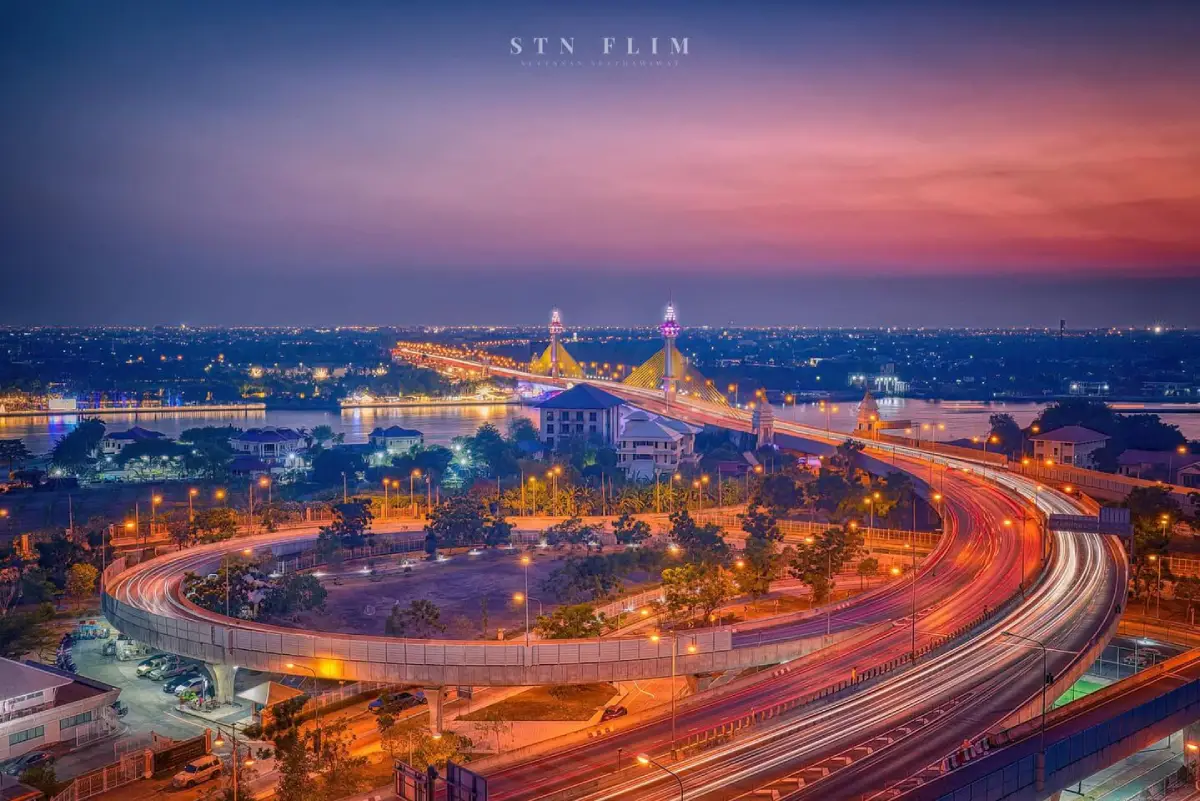
20 Best Places to Visit in Nonthaburi, Central Thailand Nonthaburi is one of the easiest provinces to visit from Bangkok for a day trip, yet it still preserves a distinctive mix of riverside communities, historic temples, local markets, fruit orchards, and Mon cultural heritage. Major highlights include Koh Kret and Wat Paramaiyikawat, the riverside architecture of Wat Chaloem Phra Kiat Worawihan, local history at the Nonthaburi Provincial Museum, ancient murals at Wat Chomphuwek, Chinese Mahayana architecture at Wat Boromracha Kanchanapisek Anusorn, and community markets such as Sai Noi Floating Market. Travelers with only one day should focus on a single zone such as Pak Kret–Koh Kret or central Nonthaburi–Bang Si Mueang, while a 2–3 day trip can also include Bang Bua Thong, Sai Noi, and Bang Kruai without rushing.
Nonthaburi lies along the Chao Phraya River immediately north of Bangkok and forms part of the Bangkok Metropolitan Region. Although the eastern side of the province is highly urbanized, the landscape changes noticeably once travelers reach the riverside communities and western districts, where old canals, orchards, temples, and traditional settlements still reveal the province’s long relationship with water.
Nonthaburi’s history reaches back to the Ayutthaya period. The early town developed around Ban Talat Khwan before being elevated to city status during the reign of King Maha Chakkraphat. Later canal excavation projects along the Chao Phraya River significantly changed the geography, transportation routes, and settlement patterns of the area. One of the clearest results of these changes was the formation of Koh Kret, which is now the province’s best-known cultural destination.
One of Nonthaburi’s most distinctive cultural features is its Mon heritage, particularly on Koh Kret. Mon communities have preserved language, food, religious traditions, artistic practices, festivals, and pottery-making knowledge for generations. Travelers can therefore experience living culture through temples, neighborhoods, food, crafts, and community life rather than seeing Mon heritage only inside museums.
Nonthaburi also has an unusually diverse collection of religious sites. These range from Mon temples on Koh Kret and royal monasteries beside the Chao Phraya River to Ayutthaya-period temples with historic murals and large Chinese Mahayana temples. This variety makes the province particularly rewarding for visitors interested in history, architecture, Buddhist art, religious culture, and temple routes close to Bangkok.
Food is another important part of traveling in Nonthaburi. The province offers Thai, Mon, and riverside community cuisine. Dishes strongly associated with Koh Kret include Mon-style khao chae, deep-fried fish cakes made with kala shoots, and other dishes using young kala stems. Visitors will also find traditional Thai sweets, market food, seasonal fruit, and produce from local orchards. Nonthaburi durian, often known as Durian Non, remains one of the province’s most famous agricultural products.
Popular souvenirs include Koh Kret pottery, traditional sweets, community products, handmade crafts, and seasonal agricultural produce. Buying directly from local makers and community vendors not only gives travelers more distinctive souvenirs but also helps keep tourism income within local communities.
For trip planning, Nonthaburi can be divided into several practical travel zones. Pak Kret is best for Koh Kret, Wat Paramaiyikawat, and Wat Ku. Central Nonthaburi and Bang Si Mueang are suitable for the Nonthaburi Provincial Museum, Wat Chaloem Phra Kiat, Wat Chomphuwek, Wat Sangkhathan, and Chaloem Kanchanaphisek Park. Bang Bua Thong and Sai Noi are better for Wat Boromracha Kanchanapisek Anusorn and Sai Noi Floating Market. Traveling by zone saves considerably more time than repeatedly crossing the province.
Nonthaburi is easily accessible from Bangkok by private car, the MRT Purple Line, the MRT Pink Line, public buses, and Chao Phraya express boats. Visiting Koh Kret requires an additional short ferry crossing from the Pak Kret side. Because of this combination of road, rail, and river transport, a Nonthaburi itinerary can easily include both land-based sightseeing and traditional river travel.

1. Koh Kret is one of Nonthaburi’s most important landmarks and an ideal destination for travelers who want to experience Mon culture, riverside life, traditional food, pottery, and historic temples in a single trip. The island lies in the middle of the Chao Phraya River in Pak Kret District and can easily be visited as either a half-day or full-day excursion from Bangkok.
Highlights: Mon communities, the leaning Mutao Chedi beside the river, Wat Paramaiyikawat, traditional pottery, Mon-style khao chae, kala-shoot fish cakes, local sweets, cycling routes, and the atmosphere of an old riverside settlement.
Koh Kret was formed after a shortcut canal was excavated across a large bend in the Chao Phraya River during the Ayutthaya period. Over time, the current widened the canal until the land became separated into an island. This geography has shaped Koh Kret’s close relationship with the Chao Phraya River through transportation, settlement, trade, and agriculture.
Following Mon migration into the area, Koh Kret developed into one of Central Thailand’s most important Mon communities. Mon cultural identity can still be seen in temples, religious art, language, food, festivals, and especially traditional pottery. Many clay vessels produced on the island feature distinctive shapes and finely carved decorative patterns that have become closely associated with Koh Kret.
A popular route begins at the ferry pier near Wat Sanam Nuea on the mainland. After crossing the river, visitors arrive near Wat Paramaiyikawat and can continue on foot through the market and community lanes. Along the way, there are opportunities to try kala-shoot fish cakes, khao chae, Thai sweets, and locally made snacks, as well as shop for pottery and handmade products.
Travelers who want to see more than the market area can rent a bicycle and explore the quieter parts of the island. Cycling routes pass orchards, local homes, temples, and small communities away from the main pier. Many paths are narrow, so cyclists should ride slowly and always give way to pedestrians.
Weekends and public holidays are the liveliest times to visit because more food stalls, pottery shops, and community businesses are open. Weekdays are quieter and still suitable for visiting temples and exploring the island, although some shops may be closed. Choose a weekend for food and shopping or a weekday morning for a more peaceful atmosphere.
Getting There: From Bangkok, travel to Pak Kret District and continue to the ferry pier near Wat Sanam Nuea. Take the short ferry crossing to Koh Kret. Travelers using the MRT Pink Line can continue by local transport or taxi to the Pak Kret pier. Once on the island, walking and cycling are the most practical ways to explore.
Map (GPS):Open Google Maps – Koh Kret
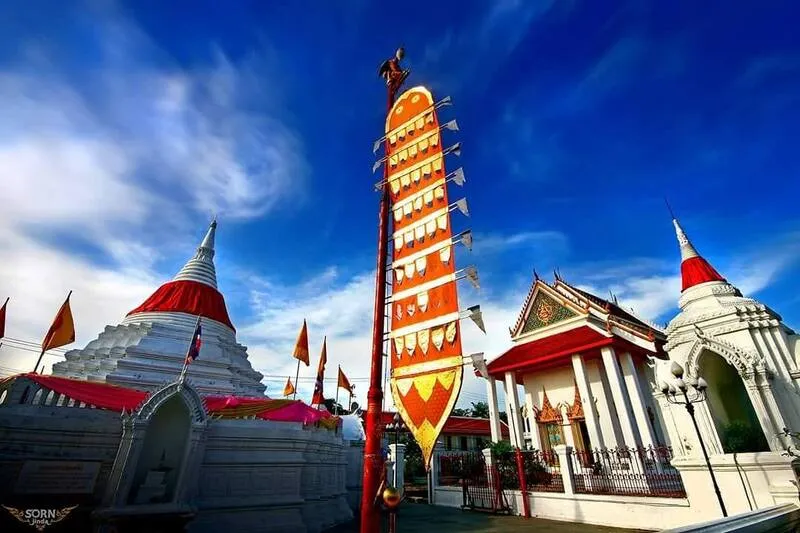
2. Wat Paramaiyikawat Worawihan, formerly known as Wat Pak Ao, is a royal monastery and one of the most important temples on Koh Kret. Located near the northern tip of the island beside the Chao Phraya River, the temple is one of the best places in Nonthaburi to understand Mon culture through history, architecture, Buddhism, and community heritage.
Highlights: The leaning Mutao Chedi, Phra Nonthamunin, Mon-style Buddhist art, the reclining Buddha viharn, decorative work from the reign of King Rama V, and views across the Chao Phraya River.
The temple was originally known as Wat Pak Ao and has long been associated with the Mon community of Koh Kret. After the area suffered damage during the late Ayutthaya period, Mon settlers helped restore the temple and re-establish it as an important religious center for the community.
During the reign of King Chulalongkorn, Rama V, the temple underwent major restoration and received the royal name Wat Paramaiyikawat. The restoration strengthened the temple’s importance both as a royal monastery and as a center of Mon religious culture on Koh Kret.
The most recognizable landmark is the leaning Mutao Chedi beside the river. The Mon-style chedi gradually tilted because of riverbank erosion and ground settlement. Its distinctive angle has become one of the defining visual symbols of Koh Kret and one of the most photographed landmarks in Nonthaburi.
The temple also houses Phra Nonthamunin, an important Buddha image, as well as viharns and decorative elements that reflect the interaction between Thai and Mon artistic traditions. Spending time inside the temple therefore provides a much deeper understanding of Koh Kret than simply walking through the market area.
Wat Paramaiyikawat is particularly suitable for travelers interested in history, Buddhist art, architecture, Mon culture, and family cultural trips. A morning visit works especially well because visitors can continue directly into the market, pottery communities, and other parts of Koh Kret afterward.
Open Days: Daily Opening Hours: 06:00 – 19:00
Getting There: Travel to Pak Kret and take the ferry from the Wat Sanam Nuea side to Koh Kret. The temple is close to the island pier and can easily be reached on foot.

3. Wat Chaloem Phra Kiat Worawihan is a royal monastery beside the Chao Phraya River in Bang Si Mueang, Mueang Nonthaburi District. The temple is distinguished by early Rattanakosin architecture, its close connection with King Rama III, and an elegant riverside setting that makes it one of Nonthaburi’s most important heritage temples.
Highlights: A royal-style ordination hall from the reign of King Rama III, fortress-like temple walls, a chedi, viharns, Chinese-influenced decorative art, and a scenic Chao Phraya riverside atmosphere.
The temple was established during the reign of King Nangklao, Rama III, in honor of members of his maternal family who were closely connected with the Nonthaburi area. This gives the temple special importance as a religious monument linking royal history with local history.
The architectural style reflects the preferences of the Rama III period, when Chinese decorative elements were frequently combined with Thai temple architecture. The ordination hall and other major buildings therefore differ from temples that rely exclusively on traditional chofa, bai raka, and hang hong roof decorations.
The outer walls are another distinctive feature. Their fortress-like form gives the temple a strong visual identity, while the riverside area shows how closely temples were once connected with the Chao Phraya River when waterways served as the principal transportation routes of Nonthaburi.
Morning and late afternoon are particularly good times for photography because the softer light brings out architectural details and views toward the river. The grounds are relatively spacious, making the temple suitable for families, older visitors, and travelers who prefer to explore at a relaxed pace.
Wat Chaloem Phra Kiat can easily be combined with Chaloem Kanchanaphisek Park next door, followed by the Nonthaburi Provincial Museum or Wat Sangkhathan. This makes the Bang Si Mueang area suitable for a half-day or full-day itinerary.
Open Days: Daily Opening Hours: 08:00 – 17:00
Getting There: From Bangkok, travel via Ratchaphruek Road or Nakhon In Road toward Bang Si Mueang, then continue to Soi Chaloem Phra Kiat. The temple is located beside the Chao Phraya River and is easily accessible by car.

4. Nonthaburi Provincial Museum is an important local museum near Nonthaburi Pier, housed in the former Nonthaburi Provincial Hall. The teak building itself is historically and architecturally significant, making the museum an excellent starting point for travelers who want to understand the province before visiting its temples and communities.
Highlights: The historic teak provincial hall, the development of old Nonthaburi, Chao Phraya riverside communities, Nonthaburi durian, Koh Kret pottery, and local knowledge related to agriculture and craftsmanship.
The building is one of the museum’s most interesting features. Its wooden architecture reflects an earlier period of Thai provincial administration and preserves the atmosphere of a riverside town before modern roads, expressways, and rail systems reshaped Nonthaburi.
Exhibitions trace the province’s development from the old settlement and riverside communities through fruit orchard culture and into its transformation as part of metropolitan Bangkok. The displays help visitors understand the historical connections between destinations such as Koh Kret, Mon communities, pottery production, and traditional orchards.
Local knowledge forms an important part of the museum. Exhibits related to pottery and fruit growing explain two industries that have long shaped the economy and cultural identity of Nonthaburi. Families with children can use the museum as an introduction before visiting the actual communities where these traditions are still practiced.
The area around Nonthaburi Pier also contains local restaurants, markets, and river transport, making it convenient to continue exploring after the museum. Travelers can connect the visit with Wat Chaloem Phra Kiat, riverside neighborhoods, or other attractions along the Chao Phraya River.
Open Days: Tuesday – Sunday; closed Monday Opening Hours: Tuesday – Friday 09:00 – 17:00 / Saturday, Sunday and public holidays 10:00 – 18:00
Getting There: The museum is located near Nonthaburi Pier in Mueang Nonthaburi District. Visitors can arrive by car, bus, the MRT Purple Line followed by local transport, or Chao Phraya express boat services to Nonthaburi Pier.

5. Wat Chomphuwek is a historic temple in Tha Sai, Mueang Nonthaburi District, renowned for Ayutthaya-period murals and Mon artistic influences. Its best-known artwork is the celebrated mural of Mae Thorani wringing water from her hair inside the old ordination hall, one of the province’s most important examples of traditional mural painting.
Highlights: The historic ordination hall, the Mae Thorani mural, Mon-style Mutao Chedi, Buddhist narrative paintings, and the quiet atmosphere of an old temple surrounded by modern Nonthaburi.
The temple has strong connections with the Mon community and traces its history back to the Ayutthaya period. Architectural and artistic elements therefore combine Thai and Mon influences. Its earlier name was Wat Chomphu Wiwek before gradually becoming known as Wat Chomphuwek.
The old ordination hall is the main reason to visit. Its murals depict Buddhist stories and scenes from the life of the Buddha. The painting of Mae Thorani wringing water from her hair above the doorway is particularly admired for its composition, line work, and artistic character.
The Mutao Chedi is another important element. Its Mon form reflects the long-standing cultural relationship between Nonthaburi and Mon communities. Seen together with the murals, the chedi helps establish the temple as both a place of worship and an important repository of provincial art heritage.
Wat Chomphuwek is particularly suitable for history, art, culture, and architecture enthusiasts. Visitors should be careful when photographing inside historic structures, avoid flash photography where prohibited, and maintain a respectful atmosphere because the temple remains an active religious site.
The temple can be combined with the Nonthaburi Provincial Museum, Wat Chaloem Phra Kiat Worawihan, or other attractions around Sanambin Nam Road, making it a convenient stop on a cultural route through Mueang Nonthaburi District.
Open Days: Daily Opening Hours: 08:00 – 16:30
Getting There: Wat Chomphuwek is located in Soi Nonthaburi 33 off Sanambin Nam Road, Tha Sai Subdistrict, Mueang Nonthaburi District. It can be reached by car, public bus, or local transport from the Phra Nang Klao Bridge and Sanambin Nam areas.
Map (GPS):Open Google Maps – Wat Chomphuwek

6. Sai Noi Floating Market is a community market beside Khlong Phra Phimon Racha in Sai Noi District, close to Wat Sai Yai. It is a good destination for travelers who want to leave the heavily urbanized areas of Nonthaburi and experience local food, canal-side life, and a slower community atmosphere in the western part of the province.
Highlights: Local food, Thai sweets, vegetables and community produce, canal-side stalls, a relaxed weekend morning atmosphere, and an easy connection with nearby Wat Sai Yai.
Sai Noi Floating Market differs from larger purpose-built tourist markets because it retains a stronger everyday community character. Visitors will find food commonly eaten by local residents, seasonal produce, snacks, and small independently operated stalls.
Morning to late morning is the best period to visit. More vendors are open, food choices are broader, and temperatures are generally more comfortable than later in the afternoon. Visitors can choose from savory dishes, Thai desserts, fried snacks, and seasonal agricultural products.
The market is closely connected with Wat Sai Yai and the local community beside Khlong Phra Phimon Racha. Travelers can therefore combine breakfast or lunch at the market with a temple visit in the same area without needing additional transportation.
The destination is particularly suitable for families, food lovers, and travelers who want to explore the quieter Sai Noi side of Nonthaburi. It can also be combined with Wat Boromracha Kanchanapisek Anusorn in Bang Bua Thong, creating an efficient western Nonthaburi route.
Open Days: Saturday – Sunday Opening Hours: 08:00 – 15:00
Getting There: The market is located beside Khlong Phra Phimon Racha near Wat Sai Yai in Sai Noi District. Private car is the most convenient option, using Bang Kruai–Sai Noi Road or Kanchanaphisek Road before continuing into central Sai Noi.
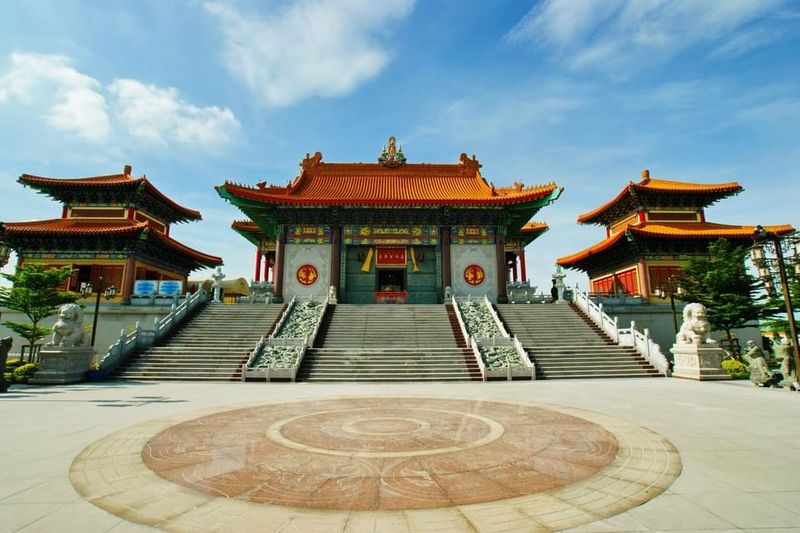
7. Wat Boromracha Kanchanapisek Anusorn, widely known as Leng Nei Yi 2, is a large Chinese Mahayana Buddhist temple in Bang Bua Thong District. The complex is distinguished by elaborate Chinese architecture and spacious temple grounds, making it an important destination for worship, Chinese religious traditions, merit-making, and architectural photography.
Highlights: Palace-style Chinese architecture, large worship halls, Buddhist images and Chinese deities, rituals associated with overcoming inauspicious zodiac years, Chinese New Year celebrations, and decorative details inspired by Ming and Qing architectural traditions.
The temple was developed from an earlier Chinese shrine and later expanded as a commemorative temple honoring an important royal occasion connected with King Bhumibol Adulyadej, Rama IX. Today it is one of the most prominent Mahayana Buddhist centers in Nonthaburi and is popularly known as Leng Nei Yi 2.
Upon entering the complex, visitors encounter red buildings, Chinese tiled roofs, stone columns, guardian lions, carved details, and ceremonial courtyards. The arrangement of the buildings creates the atmosphere of a large traditional Chinese religious compound and gives the temple one of the most distinctive architectural identities in the province.
Chinese New Year and other major dates in the Chinese religious calendar attract especially large numbers of worshippers. Many visitors come to make merit, pray for good fortune, perform rituals associated with unfavorable zodiac years, and pay respect to Chinese deities. Travelers who want to focus on architecture should avoid the busiest festival periods.
Photography enthusiasts should pay attention to roof details, gateways, stonework, pillars, and the central courtyards. Visitors should dress respectfully and follow temple regulations, particularly in spaces where religious ceremonies are taking place.
The temple can be combined with Sai Noi Floating Market, Wat Sai Yai, or other attractions around Bang Bua Thong. This allows travelers to spend a half or full day exploring western Nonthaburi without returning to central Nonthaburi between stops.
Open Days: Daily Opening Hours: Monday – Friday 08:00 – 17:00 / Saturday – Sunday 08:00 – 18:00
Getting There: The temple is located on Bang Kruai–Sai Noi Road in Sano Loi Subdistrict, Bang Bua Thong District. From Bangkok, travel via Kanchanaphisek Road or Rattanathibet Road and continue toward Bang Bua Thong. MRT Purple Line passengers can continue by local transport or taxi.

8. Chaloem Kanchanaphisek Park is a large public park beside the Chao Phraya River in Bang Si Mueang, located directly next to Wat Chaloem Phra Kiat Worawihan. The park combines landscaped green space, a large pond, traditional Thai architecture, and walking routes, making it suitable for exercise, photography, and relaxation away from the busier parts of the city.
Highlights: Wiman Saran Nawamin Pavilion, the large central pond, traditional teak buildings, walking and exercise paths, green spaces, and views toward the Chao Phraya River.
The park was developed to commemorate the 50th anniversary of King Rama IX’s accession to the throne. As a result, its architecture and landscaping were designed with greater ceremonial detail than an ordinary neighborhood park.
The most prominent structure is Wiman Saran Nawamin, a traditional Thai pavilion standing within the pond. From surrounding bridges and walkways, visitors can photograph the pavilion reflected in the water, particularly during the softer light of early morning and late afternoon.
The park also contains traditional Thai-style buildings, gardens, shaded paths, and open lawns. Local residents regularly use the grounds for walking and exercise, especially in the morning and evening, so the park functions both as a visitor attraction and as part of everyday community life.
Families can use the open areas for relaxed recreation, while photographers will find a combination of Thai architecture, water, gardens, and river scenery. Midday can be hot if walking across the entire park, so morning or late afternoon is more comfortable.
The easiest combination is with Wat Chaloem Phra Kiat Worawihan immediately next door. Visitors can then continue to the Nonthaburi Provincial Museum or Nonthaburi Pier without major backtracking.
Open Days: Daily Opening Hours: 05:30 – 18:30
Getting There: The park is located in Soi Chaloem Phra Kiat 13, Bang Si Mueang, Mueang Nonthaburi District. It uses the same general access route as Wat Chaloem Phra Kiat Worawihan and is easily reached from Nakhon In Road and Ratchaphruek Road.

9. Wat Sangkhathan is an important Buddhist temple in Bang Phai, Mueang Nonthaburi District. It is widely known for meditation practice, a forest-monastery atmosphere, the revered Luang Pho To Buddha image, and its glass ordination hall. The temple is particularly suitable for travelers seeking merit-making, meditation, or a peaceful religious environment close to Bangkok.
Highlights: Luang Pho To in U Thong artistic style, the glass ordination hall, meditation facilities, boat-shaped monk residences, shaded temple grounds, and short-term Buddhist practice activities.
The temple’s history reaches back to the late Ayutthaya period. It was formerly known as Wat Sarikho. Even during periods when the temple declined, local people continued to revere its principal Buddha image and invited monks from other temples to receive sangkhathan offerings, a practice that eventually gave the temple its present name.
Luang Pho To is a seated Buddha image in the Mara-vijaya posture associated with U Thong artistic traditions and remains an important focus of local devotion. The glass ordination hall is another notable structure used for religious ceremonies, meditation, and Dhamma activities.
The atmosphere is greener and quieter than at many urban temples. Areas are available for meditation and religious practice, and the temple attracts visitors who want to spend time in contemplation or participate in short-term Buddhist practice.
Tourists should be especially respectful because several parts of the temple are actively used for meditation. Dress modestly, speak quietly, and avoid taking photographs that disturb monks or people engaged in religious practice.
Wat Sangkhathan can be combined with Wat Chaloem Phra Kiat, Chaloem Kanchanaphisek Park, or Wat Chalo in Bang Kruai, creating an easy one-day Buddhist and cultural route close to Bangkok.
Open Days: Daily Opening Hours: 08:00 – 17:00
Getting There: The temple is located in Bang Phai Subdistrict, Mueang Nonthaburi District. From Bangkok, travel via Nakhon In Road or Ratchaphruek Road toward Bang Phai. Private car or taxi is the most convenient option for combining the temple with other nearby attractions.
Map (GPS):Open Google Maps – Wat Sangkhathan

10. Wat Ku, sometimes known as the Temple of the Sunken Queen, is a historic temple beside the Chao Phraya River in Pak Kret District. It is widely associated with the tragic death of Queen Sunanda Kumariratana and also preserves elements connected with the Mon communities that historically settled around Pak Kret.
Highlights: The memorial shrine to Queen Sunanda Kumariratana, a reclining Buddha image, the old ordination hall, Mon-influenced religious art, and the Chao Phraya riverside setting.
Wat Ku has a long history closely connected with Mon settlement in the Pak Kret area. The temple and surrounding community developed beside the river during a period when waterways were the main transportation routes linking settlements throughout Nonthaburi.
The event that made Wat Ku nationally known was the royal boat accident on the Chao Phraya River in 1880, which resulted in the death of Queen Sunanda Kumariratana and her daughter. This tragedy transformed the temple into an important place of remembrance associated with Thai royal history.
A shrine within the temple grounds commemorates the Queen, and many visitors come to pay respect before exploring the rest of the temple and the riverside area. The site therefore combines religious significance, historical memory, and connections with the Thai royal court.
Beyond the story of the royal accident, the temple also contains a reclining Buddha and other religious structures that reflect its long history as a community temple. Visitors interested in Mon heritage can also observe elements of local religious art and settlement history.
Wat Ku is especially suitable for travelers interested in Thai history and visitors planning a day around Pak Kret. It can easily be combined with Koh Kret and Wat Paramaiyikawat, with Wat Ku visited in the morning before continuing to the Koh Kret ferry later in the day.
Open Days: Daily Opening Hours: 07:00 – 17:00
Getting There: The temple is located in Moo 5, Soi Sukhaprachasan 2, Bang Phut Subdistrict, Pak Kret District. From Bangkok, travel via Chaeng Watthana Road toward Pak Kret and continue to Sukhaprachasan Road. MRT Pink Line passengers can continue by local transport or taxi.
Map (GPS):Open Google Maps – Wat Ku

11. Wat Chalo is a historic temple in Bang Kruai District, Nonthaburi, best known for its remarkable Suphannahong royal-barge-shaped ordination hall and stories connected with the waterways of the area. The temple stands close to Khlong Bang Kruai and Bang Kruai–Sai Noi Road, making it easy to reach from Bangkok. It is suitable for merit-making, architectural sightseeing, and inclusion in a heritage temple route through Bang Kruai.
Highlights: The Suphannahong boat-shaped ordination hall, the historic ordination hall with architectural connections to traditional sailing vessels, local legends associated with water travel, and the atmosphere of an old canal-side temple in Bang Kruai.
Wat Chalo traces its history to the late Ayutthaya period and developed alongside communities that settled along local canals. Because waterways once served as the principal means of transportation in this part of Nonthaburi, the temple’s history became closely connected with boats, canals, and riverside community life.
The temple’s most recognizable feature is the ordination hall constructed on a large base shaped like the royal Suphannahong barge. The elaborate bow and boat-like form make the building visible from a distance and have turned it into both a religious structure and one of Bang Kruai’s most distinctive architectural landmarks.
Wat Chalo also preserves an older ordination hall that helps visitors understand the architectural development of the temple. Exploring both the older structure and the modern boat-shaped hall reveals how religious architecture and symbolism connected with waterways have been interpreted in different periods.
Travelers who enjoy temples at a slower pace should allow time to examine the architectural details and walk around the temple grounds. In addition to Buddhist pilgrims, the temple is particularly suitable for visitors interested in local history and architectural photography because its Suphannahong-shaped structure is unlike most other temples in Nonthaburi.
Wat Chalo can be combined with Wat Pho Bang O, Wat Sao Thong Hin, and other attractions along the Bang Kruai–Bang Yai corridor. Starting at Wat Chalo and continuing toward nearby historic temples and old canal communities creates a practical route through western Nonthaburi.
Open Days: Daily Opening Hours: 08:00 – 18:00
Getting There: Wat Chalo is located in Wat Chalo Subdistrict, Bang Kruai District. From Bangkok, use Nakhon In Road and connect with Bang Kruai–Sai Noi Road, or approach from the Thonburi side through Bang Kruai. A private car is particularly convenient when visiting several attractions in this area.
Map (GPS):Open Google Maps – Wat Chalo

12. Wat Sao Thong Thong is a historic Mon temple on Koh Kret, ideal for travelers who want to move beyond the island’s main market area and explore the quieter inner community. Located in Moo 6, Ban Sao Thong Thong, the temple contains historic religious structures, Mon artistic influences, and local beliefs that continue to form part of community life.
Highlights: A large chedi, historic ordination hall, principal Buddha image in the Mara-vijaya posture, Mon religious art, local community shrines, and a quieter Koh Kret atmosphere away from the main market zone.
The temple was formerly known as Wat Suan Mak, or “Betel Palm Garden Temple,” a name associated with the agricultural landscape of Koh Kret when betel palm orchards were common across the island. The name Wat Sao Thong Thong later became established and is now also closely associated with the surrounding community.
Architectural elements throughout the temple reflect Koh Kret’s Mon cultural heritage, particularly the form of its chedis and religious structures. Visiting Wat Sao Thong Thong therefore adds another dimension to a Koh Kret trip beyond Wat Paramaiyikawat and the market near the ferry pier.
The temple also contains worship areas and shrines associated with local beliefs. These demonstrate that the temple functions not only as a place for Buddhist ceremonies but also as a center for community memories, stories, and traditional beliefs that have been passed down over generations.
Cyclists exploring Koh Kret can use Wat Sao Thong Thong as a convenient rest stop. The inner parts of the island are noticeably quieter than the commercial zone near the ferry, allowing visitors to observe houses, orchards, temples, and Mon community life at a slower pace.
Travelers with at least half a day can start at Wat Paramaiyikawat, continue through the pottery community, and cycle onward to Wat Sao Thong Thong before returning toward the ferry pier. This route combines religion, culture, craftsmanship, and everyday community life in a single journey.
Open Days: Daily Opening Hours: 06:00 – 18:00
Getting There: Take the ferry from Pak Kret to Koh Kret, then walk or rent a bicycle and follow the island route toward Moo 6, Ban Sao Thong Thong. Cycling is particularly convenient for visitors planning to explore several temples and community areas in one trip.
Map (GPS):Open Google Maps – Wat Sao Thong Thong

13. Wat Prasat is a historic temple in Bang Krang Subdistrict, Mueang Nonthaburi District, with outstanding artistic and architectural features dating from the late Ayutthaya period. It is particularly suitable for travelers interested in exploring Nonthaburi’s heritage beyond the province’s larger and more frequently visited temples.
Highlights: An Ayutthaya-period ordination hall, carved wooden pediments, teak roof structures, Mon-influenced decorative elements, and historic architectural details that remain visible throughout the temple.
Wat Prasat was established during the late Ayutthaya period and is associated with the era of King Narai the Great. Its architectural details therefore reflect craftsmanship from a period when Ayutthaya absorbed artistic influences from a wide range of cultures.
The ordination hall is the most important structure. Its carved wooden pediments and teak roof components demonstrate the skill of earlier craftsmen. Several decorative details also show connections with Mon art, giving the temple value as an architectural learning site in addition to its religious importance.
Visitors should pay attention to smaller architectural elements such as entrance arches, carved wooden details, structural bases, and decorative features around the ordination hall. These details help reveal how Ayutthaya-period temple architecture was designed and constructed.
Wat Prasat is particularly suitable for history enthusiasts, art lovers, and architectural photographers. Visitors should avoid touching or leaning against historic structures because many elements are old and require careful preservation.
The temple can be combined with Wat Chaloem Phra Kiat, Wat Sangkhathan, or Wat Pho Bang O. Traveling through Nakhon In Road and the western Nonthaburi road network helps keep the route geographically efficient.
Open Days: Daily Opening Hours: 08:00 – 17:00
Getting There: Wat Prasat is located in Bang Krang Subdistrict, Mueang Nonthaburi District. From Nakhon In Road, continue onto local roads leading into Bang Krang. Traveling by private car is the most convenient option when combining the temple with other nearby heritage sites.
Map (GPS):Open Google Maps – Wat Prasat

14. Somdet Phra Srinagarindra Park is a large public park in Ban Mai Subdistrict, Pak Kret District, located close to Muang Thong Thani. The park features a large lake, extensive green space, and walking and exercise routes, making it a suitable destination for families and travelers looking for an outdoor break within urban Nonthaburi.
Highlights: A large lake, walking and exercise routes, more than 100 rai of green space, waterside relaxation areas, and a peaceful setting close to Muang Thong Thani.
The park was developed as a public recreational area and remains one of Pak Kret’s important urban green spaces. Its lawns, mature trees, open areas, and paths surrounding the lake provide a strong contrast with the densely developed districts around Chaeng Watthana and Muang Thong Thani.
Mornings are popular for walking, jogging, and cycling, while late afternoons are well suited to families and visitors who want to relax beside the lake. The softer evening light is also suitable for landscape and nature photography.
The grounds are large enough for visitors to spend anywhere from around an hour to half a day depending on their activities. Families with children and older travelers can make use of shaded areas and seating without needing to walk the full perimeter of the park.
Somdet Phra Srinagarindra Park adds useful variety to a Nonthaburi itinerary. After a day dominated by temples, markets, or museums, visitors can finish with outdoor recreation and green space without leaving the province.
The park can be combined with Wat Ku, Koh Kret, or Muang Thong Thani. It is especially convenient for travelers staying around Pak Kret because these areas are connected by Si Saman and Chaeng Watthana roads.
Open Days: Daily Opening Hours: 05:00 – 20:00
Getting There: The park is located in the Nong Prue area of Ban Mai Subdistrict, Pak Kret District, close to Si Saman Road and Muang Thong Thani. It is easily accessible via Chaeng Watthana Road or Si Saman Road.

15. Flower Road in Bang Yai is a well-known plant, flower, and garden-supply district along Kanchanaphisek Road around Bang Yai, Plai Bang, and Bang Khu Wiang. It is especially suitable for plant lovers, home gardeners, and travelers interested in seeing another side of Nonthaburi as a major horticultural trading area close to Bangkok.
Highlights: Numerous plant shops, seasonal flowers, foliage plants, orchids, auspicious plants, cacti, pots, soil, fertilizer, garden decorations, and landscaping services spread throughout the area.
Flower Road is not a single gated attraction. Instead, it is an extended commercial district where nurseries and garden-related businesses are distributed along Kanchanaphisek Road and nearby areas. Visitors can therefore stop at individual shops according to their interests.
The main attraction is the variety of plants and gardening products available. Choices range from small potted plants suitable for condominiums to large trees for landscaping, together with growing media, pots, decorative stones, and outdoor garden accessories.
Simply exploring the nurseries without choosing a specific shop in advance can be enjoyable because each business tends to specialize in different products. Some focus on foliage plants, others on flowering varieties or large landscaping trees, making it easy to spend several hours browsing.
Visitors planning to purchase plants should prepare sufficient space in their vehicle and select varieties suitable for the light and growing conditions at home. Asking sellers for care instructions before purchasing can help prevent problems once plants are moved to a new environment.
Flower Road can be combined with Wat Sao Thong Hin, Wat Pho Bang O, or other Bang Yai attractions. The district also has restaurants, services, and major shopping centers nearby, making it convenient to finish the day with a meal or additional shopping.
Getting There: The Flower Road district extends along Kanchanaphisek Road around Bang Yai, Plai Bang, and Bang Khu Wiang. Traveling by private car is the most practical option because nurseries are distributed along both sides of the road and adjoining lanes.

16. Wat Pho Bang O is a historic temple in Bang Kruai District that preserves several examples of late Ayutthaya-period craftsmanship. Set within an old canal-side community, the temple has a quiet atmosphere and is particularly rewarding for travelers interested in historic temples and traditional Thai architecture.
Highlights: Carved wooden pediments, a historic ordination hall, late Ayutthaya-style stucco boundary-stone niches, lacquered and gilded doors, surrounding covered galleries, and a mondop-style bell tower topped by a chedi.
The temple has roots extending back to the Ayutthaya period and was later restored during the early Rattanakosin era. Its artistic details therefore illustrate an interesting transition between craftsmanship from the two historical periods.
The ordination hall is the principal architectural attraction. Its carved wooden pediments, covered exterior galleries, and boundary-stone niches differ noticeably from those of modern temples. Decorative doors and other surviving elements also demonstrate characteristics associated with the traditional craftsmanship of Nonthaburi.
The bell tower is another feature worth examining. Its mondop-like design and balanced proportions complement the historic ordination hall and strengthen the temple’s value as a preserved example of local religious architecture.
Wat Pho Bang O is suitable for travelers who prefer quiet heritage sites where architectural details can be appreciated without crowds. Families can also use the visit as an opportunity to introduce children to differences between Ayutthaya and Rattanakosin temple design.
The temple can be efficiently combined with Wat Chalo and Wat Sao Thong Hin because all three lie along the Bang Kruai–Bang Yai corridor. Visiting them in the same day reduces unnecessary driving and creates a coherent heritage route.
Open Days: Daily Opening Hours: 08:00 – 16:30
Getting There: Wat Pho Bang O is located in Wat Chalo Subdistrict, Bang Kruai District. Use Bang Kruai–Sai Noi Road and local roads leading into the Wat Chalo community. A private car is convenient for combining several temples in the area.
Map (GPS):Open Google Maps – Wat Pho Bang O
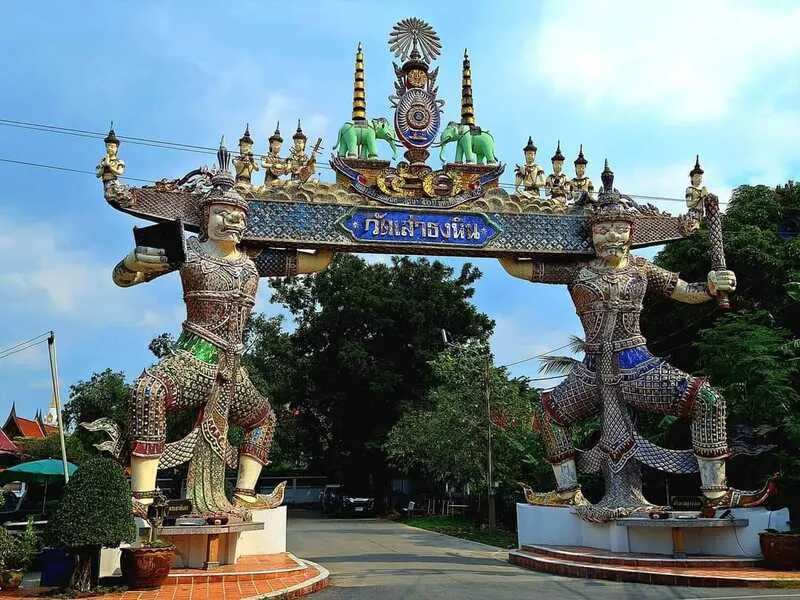
17. Wat Sao Thong Hin is a historic temple beside Khlong Om Non in Bang Yai District. The temple is closely associated with local community history and with the origin of the name Sao Thong Hin. Historic architectural features, the principal Buddha image, and older construction materials remain visible within the grounds.
Highlights: The historic ordination hall, large traditional bricks, an old Buddha pedestal, ceramic decorative elements, the principal Buddha image, and local stories associated with the stone flagpole that gave the area its name.
The temple was originally known as Wat Sak and developed within a community beside Khlong Om Non. This canal was once an important transportation route for communities in western Nonthaburi, making the temple both a religious center and a focal point of community life.
The historic ordination hall and surviving construction elements reveal characteristics of older craftsmanship. Large bricks, the original Buddha pedestal, and the creative use of ceramic pieces as decoration are details that architectural enthusiasts can observe at close range.
The story of the stone flagpole is another important part of the temple’s identity and eventually influenced the name of both the temple and the surrounding locality. Understanding this community context makes the visit more meaningful than simply stopping for photographs.
The surrounding neighborhood retains aspects of an older settlement, making Wat Sao Thong Hin particularly suitable for travelers interested in local history and quieter destinations away from heavily visited attractions.
The temple can be combined with Wat Pho Bang O, Wat Chalo, or Flower Road in Bang Yai. Traveling from Bang Kruai toward Bang Yai creates a logical route and helps avoid unnecessary backtracking.
Open Days: Daily Opening Hours: 08:00 – 16:30
Getting There: Wat Sao Thong Hin is located in Moo 1, Ban Khlong Om, Sao Thong Hin Subdistrict, Bang Yai District, near the old Bang Yai riverside area. Travel via Bang Kruai–Sai Noi Road and connect with local roads along Khlong Om Non.
Map (GPS):Open Google Maps – Wat Sao Thong Hin

18. Wat Sai Noi is an important community temple in Sai Noi District, located along Bang Kruai–Sai Noi Road. It has served as a center of local Buddhist faith for many decades and offers a simple, peaceful atmosphere that reflects the continuing role of temples in everyday community life.
Highlights: The principal Buddha image in the Mara-vijaya posture, the atmosphere of a local community temple, Buddhist education activities, and close connections with Sai Noi communities and nearby local markets.
The temple was formerly called Wat Salimuniphirom before adopting the name Wat Sai Noi in 1952 after the surrounding village and district. The newer name strengthened the temple’s identification with Sai Noi and the local community.
The ordination hall contains the principal Buddha image in the Mara-vijaya posture, which serves as an important focus of devotion for local residents. People regularly visit the temple to make merit and participate in ceremonies on important Buddhist dates.
Wat Sai Noi also plays a role in Buddhist education and the study of Buddhist scriptures, making it a center for religion, learning, and community activities rather than a place used only during festivals and holy days.
Travelers interested in community tourism will notice a clear contrast between Sai Noi and the more densely urbanized areas of Nonthaburi. The district retains more agricultural land, canals, and dispersed settlements, giving the trip a more rural character.
Wat Sai Noi can be combined with Sai Noi Floating Market and Wat Boromracha Kanchanapisek Anusorn. A practical weekend itinerary is to visit the temple in the morning, continue to the floating market, and travel toward Bang Bua Thong in the afternoon.
Open Days: Daily Opening Hours: 08:00 – 17:00
Getting There: The temple is located in Sai Noi Subdistrict, Sai Noi District. Bang Kruai–Sai Noi Road is the main access route, with convenient connections from Bang Bua Thong and Kanchanaphisek Road.
Map (GPS):Open Google Maps – Wat Sai Noi

19. Wat Saeng Siritham Floating Market is a riverside market in Tha It Subdistrict, Pak Kret District, located within the grounds of Wat Saeng Siritham. Its main appeal is the relaxed setting of floating platforms and riverside pavilions where visitors can eat, rest, and purchase local products during the weekend.
Highlights: Floating-platform restaurants, savory and sweet dishes, fruit, community products, Chao Phraya riverside scenery, and the opportunity to combine a market visit with merit-making at Wat Saeng Siritham.
The market today focuses more on riverside platforms and pavilions than on large numbers of vendors selling directly from paddle boats. Most stalls are located in easy-to-walk areas, making the market suitable for families and older travelers who prefer a relaxed waterside market without long walking distances.
Food is a major reason to visit. Choices include local dishes, desserts, fruit, and snacks that can be enjoyed beside the river. Breezes and views across the water create a more relaxed environment than indoor markets or modern shopping centers.
The market also gives local producers and residents a place to sell goods directly, linking tourism with community income. Visitors can therefore support local vendors while purchasing food and locally made products.
Morning to late morning is generally the best time to visit because more stalls are open and temperatures are more comfortable. After eating, visitors can enter Wat Saeng Siritham to pay respect to the Buddha images or continue exploring the riverside area.
The market can be combined with Koh Kret, Wat Ku, or other attractions around Tha It and Pak Kret. Because all are in the broader Pak Kret area, the floating market works best as an early stop before continuing elsewhere.
Open Days: Saturday – Sunday Opening Hours: 06:00 – 17:00
Getting There: The market is located within Wat Saeng Siritham in Tha It Subdistrict, Pak Kret District. Travel via Rattanathibet Road and continue onto Tha It Road, or take the MRT Purple Line and continue by local transport or taxi to the temple.

20. Wat Khongkha is a historic temple in Bang Muang Subdistrict, Bang Yai District, located within a community that has long been shaped by canals and waterways. The temple’s most important sacred image is Luang Pho Sila Daeng, a Buddha image deeply respected by local residents and closely connected with the area’s historical identity.
Highlights: Luang Pho Sila Daeng, the ordination hall, the atmosphere of an old Bang Muang community temple, local historical stories, and the canal landscape around Bang Yai and Khlong Lat.
The temple was originally known as Wat Khok, referring to the slightly elevated land on which it stood, before later becoming known as Wat Khongkha. Its present name reflects the temple’s close relationship with waterways that played an essential role in the lives of Bang Yai communities.
The temple’s principal sacred image is Luang Pho Sila Daeng, a Buddha image in the Mara-vijaya posture made from laterite. It has been revered by local residents for generations and continues to attract worshippers seeking blessings and good fortune.
Wat Khongkha is also connected with local stories relating to historical events around the late Ayutthaya and early Thonburi periods. These narratives have been preserved through community memory and contribute to the temple’s significance beyond its religious function.
For travelers, Wat Khongkha offers an opportunity to understand the pattern of settlement in western Nonthaburi, where temples, canals, and communities often developed in close relationship with one another.
The temple can be combined with Wat Sao Thong Hin, Flower Road, and Wat Boromracha Kanchanapisek Anusorn on a Bang Yai–Bang Bua Thong route. Beginning with canal-side heritage sites in the morning and moving toward more urban areas later in the day creates a practical travel sequence.
Open Days: Daily Opening Hours: 06:00 – 18:00
Getting There: Wat Khongkha is located in Moo 3, Ban Bang Muang, Bang Muang Subdistrict, Bang Yai District. Travel via Kanchanaphisek Road or Bang Kruai–Sai Noi Road and connect with local roads leading into the Bang Muang community.
Map (GPS):Open Google Maps – Wat Khongkha
| Category | Details |
| Pak Kret–Koh Kret Zone | 1. Koh Kret 2. Wat Paramaiyikawat Worawihan 3. Wat Ku 4. Wat Sao Thong Thong 5. Somdet Phra Srinagarindra Park 6. Wat Saeng Siritham Floating Market This zone is ideal for Mon culture, Buddhist temples, traditional food, cycling, riverside photography, community markets, and relaxing in green spaces. |
| Mueang Nonthaburi–Bang Si Mueang Zone | 1. Wat Chaloem Phra Kiat Worawihan 2. Nonthaburi Provincial Museum 3. Wat Chomphuwek 4. Chaloem Kanchanaphisek Park 5. Wat Sangkhathan 6. Wat Prasat This area is best for history, Buddhist art, architecture, historic temples, museums, and Chao Phraya riverside sightseeing. |
| Bang Kruai Zone | 1. Wat Chalo 2. Wat Pho Bang O Ideal for travelers interested in historic temples, Ayutthaya-period art, Thai architecture, and old canal-side communities. |
| Bang Yai–Bang Bua Thong Zone | 1. Wat Boromracha Kanchanapisek Anusorn, or Leng Nei Yi 2 2. Flower Road in Bang Yai 3. Wat Sao Thong Hin 4. Wat Khongkha A good route for Chinese Buddhist architecture, merit-making, historic temples, ornamental plant shopping, and exploring communities around Khlong Om Non. |
| Sai Noi Zone | 1. Sai Noi Floating Market 2. Wat Sai Noi Best for community markets, temple visits, local food, and experiencing the more agricultural and less urban side of Nonthaburi. |
| Best for Families and Children | 1. Koh Kret 2. Nonthaburi Provincial Museum 3. Chaloem Kanchanaphisek Park 4. Somdet Phra Srinagarindra Park 5. Sai Noi Floating Market 6. Wat Saeng Siritham Floating Market These destinations combine cultural learning, food, markets, outdoor activities, and relaxing environments suitable for family trips. |
| Best for Buddhist Pilgrimage | 1. Wat Paramaiyikawat Worawihan 2. Wat Chaloem Phra Kiat Worawihan 3. Wat Chomphuwek 4. Wat Boromracha Kanchanapisek Anusorn 5. Wat Sangkhathan 6. Wat Ku 7. Wat Chalo 8. Wat Sao Thong Thong 9. Wat Prasat 10. Wat Pho Bang O 11. Wat Sao Thong Hin 12. Wat Sai Noi 13. Wat Khongkha |
| Best for History Lovers | 1. Nonthaburi Provincial Museum 2. Wat Chaloem Phra Kiat Worawihan 3. Wat Chomphuwek 4. Wat Prasat 5. Wat Pho Bang O 6. Wat Chalo 7. Wat Ku 8. Koh Kret These places cover the development of Nonthaburi, Mon settlement, Ayutthaya-period art, royal history, and riverside community heritage. |
| Best for Culture and Community Tourism | 1. Koh Kret 2. Wat Paramaiyikawat Worawihan 3. Wat Sao Thong Thong 4. Sai Noi Floating Market 5. Wat Saeng Siritham Floating Market 6. Nonthaburi Provincial Museum These destinations are especially valuable for learning about Mon culture, local food, pottery, market traditions, and the relationship between communities and the Chao Phraya River. |
| Best for Photography | 1. The leaning Mutao Chedi at Wat Paramaiyikawat Worawihan 2. The Suphannahong boat-shaped ordination hall at Wat Chalo 3. Wat Boromracha Kanchanapisek Anusorn 4. Wat Chaloem Phra Kiat Worawihan 5. Chaloem Kanchanaphisek Park 6. Wat Chomphuwek 7. Flower Road in Bang Yai 8. Somdet Phra Srinagarindra Park |
| Best for Relaxation and Green Spaces | 1. Somdet Phra Srinagarindra Park 2. Chaloem Kanchanaphisek Park 3. Koh Kret 4. Flower Road in Bang Yai These places are suitable for walking, jogging, cycling, photography, and relaxed outdoor activities close to Bangkok. |
| Local Food and Products to Try | 1. Mon-style khao chae 2. Kala-shoot fish cakes 3. Dishes prepared with young kala shoots 4. Traditional Thai sweets and snacks on Koh Kret 5. Local food at Sai Noi Floating Market 6. Food and community products at Wat Saeng Siritham Floating Market 7. Nonthaburi durian and seasonal orchard fruit |
| Recommended Souvenirs | 1. Koh Kret pottery 2. Traditional Thai sweets 3. Mon community products 4. Ornamental plants and flowers from Bang Yai 5. Seasonal fruit and orchard products |
| Important Local Culture | Mon culture on Koh Kret, traditional pottery, Mon cuisine, Mon Songkran traditions, Buddhist merit-making festivals, Chao Phraya riverside community life, and the orchard-growing heritage of Nonthaburi. |
| Recommended Accommodation Areas | 1. Pak Kret–Chaeng Watthana: Best for Koh Kret, Wat Ku, Muang Thong Thani, and Somdet Phra Srinagarindra Park 2. Central Nonthaburi: Best for the Nonthaburi Provincial Museum, Nonthaburi Pier, Wat Chomphuwek, and Chao Phraya riverside attractions 3. Bang Yai–Bang Bua Thong: Best for Wat Boromracha Kanchanapisek Anusorn, Flower Road, and western Nonthaburi temple routes An overnight stay is not essential for a one-day trip from Bangkok, but staying one night makes it much easier to explore several zones without rushing. |
| 1-Day Nonthaburi Itinerary – Koh Kret and Mon Culture | Morning: Take the ferry to Koh Kret – Wat Paramaiyikawat Worawihan Late Morning: Explore the market, try Mon-style khao chae, kala-shoot fish cakes, and local sweets Afternoon: Cycle through the community – Wat Sao Thong Thong Evening: Return to Pak Kret – visit Wat Ku or relax at Somdet Phra Srinagarindra Park |
| 1-Day Nonthaburi Itinerary – History and Art | Morning: Nonthaburi Provincial Museum Late Morning: Wat Chomphuwek Lunch: Eat in central Nonthaburi Afternoon: Wat Chaloem Phra Kiat Worawihan – Chaloem Kanchanaphisek Park Evening: Relax beside the Chao Phraya River |
| 1-Day Nonthaburi Itinerary – Buddhist Temple Route | Morning: Wat Sangkhathan Late Morning: Wat Chaloem Phra Kiat Worawihan Lunch: Eat around Bang Si Mueang or Bang Kruai Afternoon: Wat Chalo – Wat Pho Bang O Evening: Wat Sao Thong Hin or return to Bangkok |
| 1-Day Nonthaburi Itinerary – Bang Yai and Sai Noi | Morning: Wat Sai Noi – Sai Noi Floating Market on Saturday or Sunday Lunch: Eat in Sai Noi or Bang Bua Thong Afternoon: Wat Boromracha Kanchanapisek Anusorn Evening: Flower Road in Bang Yai or Wat Khongkha before returning to Bangkok |
| 2 Days 1 Night in Nonthaburi | Day 1: Koh Kret – Wat Paramaiyikawat Worawihan – Wat Sao Thong Thong – Wat Ku – stay around Pak Kret or Chaeng Watthana Day 2: Nonthaburi Provincial Museum – Wat Chomphuwek – Wat Chaloem Phra Kiat Worawihan – Chaloem Kanchanaphisek Park – Wat Sangkhathan |
| 3 Days 2 Nights in Nonthaburi | Day 1: Pak Kret – Koh Kret – Wat Paramaiyikawat Worawihan – Wat Sao Thong Thong – Wat Ku Day 2: Central Nonthaburi – Nonthaburi Provincial Museum – Wat Chomphuwek – Wat Chaloem Phra Kiat Worawihan – Chaloem Kanchanaphisek Park – Wat Sangkhathan Day 3: Bang Kruai – Wat Chalo – Wat Pho Bang O – Bang Yai – Wat Sao Thong Hin – Wat Boromracha Kanchanapisek Anusorn – Flower Road in Bang Yai |
| Best Way to Get Around | Nonthaburi has more public transportation options than many Central Thailand provinces. Travelers can use private cars, the MRT Purple Line, the MRT Pink Line, public buses, taxis, local transport, and Chao Phraya express boats. Public transportation works particularly well for central Nonthaburi, Pak Kret, and Koh Kret. A private car is more convenient for visiting several attractions in Bang Kruai, Bang Yai, Bang Bua Thong, and Sai Noi on the same day. |
| Best Time to Visit | Nonthaburi can be visited throughout the year. November to February generally offers more comfortable conditions for walking around Koh Kret, temples, and outdoor markets. Weekends and public holidays are best for travelers who want the full Koh Kret market experience and community markets because more shops and food vendors are open. Parks and most temples can be visited throughout the week. |
Frequently Asked Questions (FAQ)
Q: Where should first-time visitors go in Nonthaburi?
A: First-time visitors should prioritize Koh Kret, Wat Paramaiyikawat Worawihan, Wat Chaloem Phra Kiat Worawihan, the Nonthaburi Provincial Museum, and Wat Boromracha Kanchanapisek Anusorn. Together, these attractions introduce travelers to Mon culture, local history, religion, architecture, and the province’s riverside identity.
Q: Can Nonthaburi be visited as a day trip from Bangkok?
A: Yes. Nonthaburi is one of the easiest day-trip destinations from Bangkok. The best approach is to focus on one zone, such as Koh Kret–Pak Kret, central Nonthaburi–Bang Si Mueang, or Bang Kruai–Bang Yai, rather than trying to cross the entire province in one day.
Q: How should I plan a 2-day, 1-night trip to Nonthaburi?
A: Spend the first day exploring Pak Kret and Koh Kret, then use the second day for central Nonthaburi, Wat Chomphuwek, Wat Chaloem Phra Kiat Worawihan, Chaloem Kanchanaphisek Park, and Wat Sangkhathan. This route covers culture, history, and religion without excessive backtracking.
Q: What is the best day to visit Koh Kret?
A: Saturday, Sunday, and public holidays are best if you want to experience the market, local food, pottery shops, and community products because more businesses are open. Weekdays are quieter and better for travelers who mainly want to visit temples and explore the community without crowds.
Q: Is Nonthaburi suitable for families with children?
A: Yes. Koh Kret, the Nonthaburi Provincial Museum, Somdet Phra Srinagarindra Park, Chaloem Kanchanaphisek Park, Sai Noi Floating Market, and Wat Saeng Siritham Floating Market are particularly suitable because they combine learning, food, community experiences, and outdoor recreation.
Q: What are the best historical attractions in Nonthaburi?
A: The Nonthaburi Provincial Museum, Wat Chomphuwek, Wat Prasat, Wat Pho Bang O, Wat Chalo, Wat Chaloem Phra Kiat Worawihan, Wat Ku, and Koh Kret are excellent choices for travelers interested in Ayutthaya history, the Rattanakosin era, Mon heritage, royal history, and local communities.
Q: Which temples should I visit in Nonthaburi?
A: A convenient Buddhist route can include Wat Sangkhathan, Wat Chaloem Phra Kiat Worawihan, Wat Chalo, and Wat Pho Bang O. Another option is the Bang Yai–Bang Bua Thong route with Wat Boromracha Kanchanapisek Anusorn, Wat Sao Thong Hin, and Wat Khongkha.
Q: What food should I try in Nonthaburi?
A: On Koh Kret, try Mon-style khao chae, kala-shoot fish cakes, dishes made with young kala shoots, and traditional Thai sweets. Nonthaburi durian and other seasonal orchard fruits are also strongly associated with the province.
Q: What souvenirs should I buy in Nonthaburi?
A: Koh Kret pottery is one of the most distinctive souvenirs. Other good choices include Thai sweets, Mon community products, seasonal fruit, locally made goods, and ornamental plants from the Bang Yai area.
Q: What culture is Nonthaburi best known for?
A: Mon culture on Koh Kret is one of the province’s strongest cultural identities. It can be experienced through Buddhist art, traditional pottery, Mon cuisine, religious customs, festivals, language, and everyday community life. Nonthaburi also has a strong Chao Phraya riverside and orchard-growing heritage.
Q: Can I travel around Nonthaburi without a private car?
A: Yes, especially in central Nonthaburi and Pak Kret. Travelers can use the MRT Purple Line, MRT Pink Line, buses, taxis, local transport, and Chao Phraya river services. Koh Kret requires a short ferry crossing. A private car is more convenient for visiting several places in Bang Kruai, Bang Yai, Bang Bua Thong, or Sai Noi in one day.
Q: What are the best places for photography in Nonthaburi?
A: Popular photography locations include the leaning Mutao Chedi at Wat Paramaiyikawat Worawihan, the Suphannahong boat-shaped ordination hall at Wat Chalo, the Chinese architecture of Wat Boromracha Kanchanapisek Anusorn, Chaloem Kanchanaphisek Park, Wat Chomphuwek, Flower Road in Bang Yai, and Somdet Phra Srinagarindra Park.
Q: What is the best time of year to visit Nonthaburi?
A: Nonthaburi can be visited year-round, but November to February is generally more comfortable for outdoor walking and sightseeing. Travelers who want busy markets and the full weekend atmosphere on Koh Kret should visit on Saturday, Sunday, or a public holiday.
Q: Is Nonthaburi suitable for older travelers?
A: Yes. Wat Chaloem Phra Kiat Worawihan, Chaloem Kanchanaphisek Park, Wat Sangkhathan, and Wat Saeng Siritham Floating Market require relatively moderate walking. Koh Kret is also possible, but older visitors should plan walking distances carefully and avoid the hottest part of the day.
Q: Which Nonthaburi route is best for a family trip?
A: Koh Kret is an excellent family route. Begin at Wat Paramaiyikawat Worawihan, explore the market, try local food, cycle through the community, and finish the day at Somdet Phra Srinagarindra Park. Another good option is central Nonthaburi, combining the Nonthaburi Provincial Museum, Wat Chaloem Phra Kiat Worawihan, and Chaloem Kanchanaphisek Park.
 Category: ●Travel Articles, Recipes
 Group: ●Travel Review, Food Review
Last Update : 3 WeekAgo
 Last Update : 3 WeekAgo
Recommend

 Art, Culture and Heritage
 Royal Palace(1)
 Art, Craft Centres, Tradition(2)
 Museums(3)
 Historic Homes and Cities(1)
 Art Gallery(1)
 Educational Places
 Museum for Study(2)
 Places of Worship
 Temple(52)
 Mosque(11)
 Other Sacred Sites(2)
 Suburban Living
 Village, Community(2)
 Floating Market(3)
 Nature and Wildlife
 National Parks and Marine Reserves(1)
 Flower Field(1)
 River, Canal(2)
 Islands(1)
 Entertainment and Agricultural
 Animal camps and shows(1)
 Farms, Parks and Ecotourism(8)
 Waterpark(1)
 Shopping
 Shopping and Night Market(1)
Travel Review, Food Review(1)


