lovethailand home >Central Travel Attractions >Nonthaburi Travel Attractions >Pak Kret >Koh Kret > Wat Sao Thong Thong
TL;DR: Wat Sao Thong Thong is located at Moo 6, Ban Sao Thong Tong, Ko Kret, Pak Kret, Nonthaburi, open Open Daily, hours 06:00–18:00.
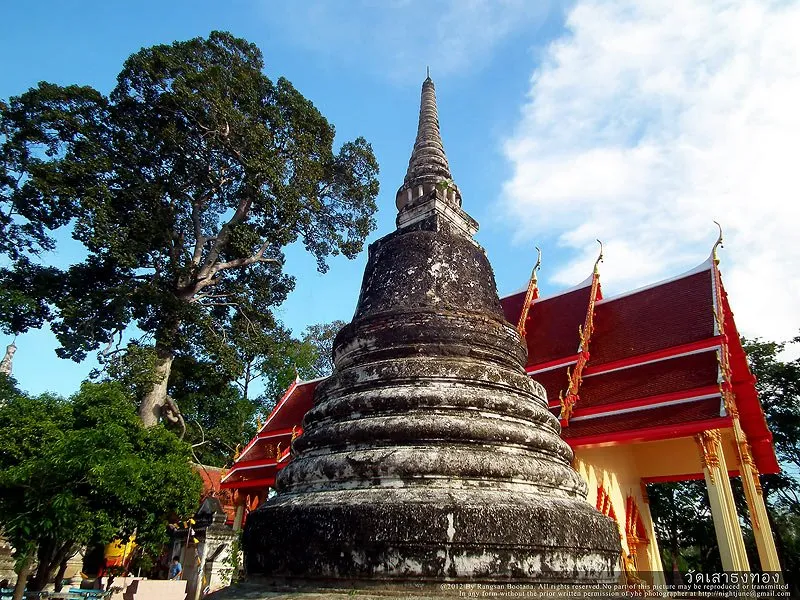
Wat Sao Thong Thong
Open Days: Open Daily
Opening Hours: 06:00–18:00
Wat Sao Thong Tong is an old local temple on Ko Kret in Pak Kret District, Nonthaburi, and it offers a quieter, more reflective side of the island than the busiest tourist paths near the main pier. This is one of the places that helps explain the deeper identity of Ko Kret, not only as a weekend destination near Bangkok, but as a long-standing Mon cultural community shaped by religion, river life, and local craftsmanship.
In practical terms, Wat Sao Thong Tong is worth visiting because it combines historic atmosphere, distinctive chedis, sacred local shrines, and a peaceful setting within the old settlement of Ko Kret. Visitors who come here do not only see another temple. They encounter an ancient Mon temple landscape with strong local memory, an important connection to the history of Pak Kret, and an atmosphere that feels noticeably calmer than the main market zone.
The temple was originally known as Wat Suan Mak, or the Betel Palm Temple, because betel palm trees once surrounded the area. It was founded by Mon settlers who came to Ko Kret during the Ayutthaya period. In the Mon language, the temple was called a name meaning “the western temple” because it stood on the western side of the island. This early identity matters because it places the temple firmly inside the historic Mon settlement pattern that still defines Ko Kret today.
Later, during the late reign of King Mongkut, Chao Chom Manda Ampa of the Second Reign, together with members of the royal family, helped restore the temple. The temple then received the name Wat Sao Thong Tong, a reference to the rows of Hongsa posts that once stood in front of it. Those posts eventually deteriorated and were later removed by an abbot in the past, but the name remained and became the enduring identity of the temple.
The temple also has an important royal connection. In 1897, King Chulalongkorn spent one night here, paid respect to the principal Buddha image in the ordination hall, and observed the making of jars and basins at the pottery workshops in the community. He later returned to offer Kathin robes at the temple again. This link between the temple and pottery production is especially meaningful because Ko Kret is still widely known for its earthenware traditions, and Wat Sao Thong Tong helps preserve that historical connection between religion and local craft culture.
Architecturally, the temple is especially notable for its very large twelve-cornered chedi, regarded as the tallest in the Pak Kret area. It is surrounded by smaller chedis arranged in multiple layers, creating one of the most striking religious compositions on Ko Kret. Beside the ordination hall, visitors can also see two other large chedis, one bell-shaped and another with a more unusual square-based form. This variety of structures makes the temple particularly interesting for travelers who enjoy temple architecture and old Thai-Mon religious design.
Inside the ordination hall, the principal Buddha image is in the Mara Victory posture. The hall also preserves traditional decorative elements, including gold-pattern painting. Within the temple grounds there are additional local shrines, including the shrine of the two topknotted child spirits and the shrine of Mae Takhian. These sacred spaces show how the temple is not only a historical monument but also a living place of devotion where formal Buddhism and local belief continue to coexist in everyday practice.
One of the temple’s strongest qualities is its atmosphere. Because it lies slightly deeper into the island than the most crowded entry zone, the visit feels slower and quieter. Large trees, historic structures, and the village environment around the temple create a sense of continuity with older Ko Kret life. For travelers who want to understand the island beyond cafés and snack stalls, this temple offers a much fuller cultural impression.
Wat Sao Thong Tong also works very well as part of a cultural walking route. Many visitors begin at Wat Paramaiyikawat, then continue through local paths, food stops, and pottery areas before reaching Wat Sao Thong Tong. Seen this way, the temple is not an isolated stop but an essential part of a larger heritage circuit across Ko Kret. It adds depth to the journey by showing a more reserved, community-rooted side of the island.
Getting There The usual route is to cross from the mainland to Ko Kret by ferry, most commonly from Wat Sanam Nuea Pier, and then continue on foot or by bicycle along the island’s main paths. Wat Sao Thong Tong is located in Moo 6 on Ko Kret and can be combined easily with Wat Paramaiyikawat, the community market, riverside cafés, and pottery-related stops. Morning is the best time to visit because the weather is more comfortable and the island is easier to enjoy at a slower pace.
| Name | Wat Sao Thong Tong |
| Location | Moo 6, Ban Sao Thong Tong, Ko Kret, Pak Kret, Nonthaburi |
| Address | 36 Moo 6, Ko Kret, Pak Kret, Nonthaburi 11120 |
| Coordinates | Approx. 13.916, 100.490 |
| Highlights | Large twelve-cornered chedi, unusual chedi forms, old ordination hall, Mon temple atmosphere, child-spirit shrine, Mae Takhian shrine |
| History | Ancient temple founded by Mon settlers during the Ayutthaya period, later restored in the late reign of King Mongkut |
| Name Origin | The present name refers to the Hongsa posts once erected in front of the temple |
| Distinctive Features | Historic Mon temple with strong local identity, layered chedi group, and living folk-belief shrines within the compound |
| Travel Information | Reach Ko Kret by ferry from the mainland, then continue on foot or by bicycle along the island routes. The temple fits naturally into a Ko Kret cultural day trip |
| Current Status | Open daily for worship and visits; one of the important historic temples on Ko Kret |
| Open Days | Open Daily |
| Opening Hours | 06:00–18:00 |
| Fees | No admission fee |
| Facilities | Worship areas, temple paths, shaded grounds, nearby cafés and community shops on Ko Kret |
| Main Areas / Zones | Ordination Hall, main large chedi and subsidiary chedis, child-spirit shrine, Mae Takhian shrine, old tree area |
| Main Contact Number | 02-583-9544 |
| Official Website / Official Page | tourismthailand.org, admin@kohkred-sao.go.th |
| Nearby Tourist Attractions | 1. Wat Paramaiyikawat Worawihan 3 km. Tel. 02-120-7043, 08-2295-2295 2. Wat Paramaiyikawat Museum 3 km. Tel. 02-120-7043, 08-2295-2295 3. Ko Kret Community Market 1 km 4. Wat Sanam Nuea 1 km. Tel. 02-583-8963 5. Ko Kret 1 km. Tel. 02-583-9544 |
| Nearby Restaurants | 1. Khao Chae Khun Daeng, Ko Kret 1 km. Tel. 089-686-2422 2. The Camellia Koh Kret 1 km. Tel. 091-479-7968 3. Rangnok Cafe & Bar 1 km. Tel. 094-159-6664, 02-082-8865 4. Khotcher's Café 1 km. Tel. 062-883-3636 5. Yok Yen Kuen Bok, Ko Kret 1 km |
| Nearby Accommodations | 1. Kalanan Riverside Resort 6 km. Tel. 02-584-2222 2. TUB Mansion 8 km. Tel. 02-962-6700, 081-314-0525, 088-011-1182 3. Best Western Plus Wanda Grand Hotel 9 km. Tel. 02-582-8282, 062-594-3609 4. Villa Baron Hotel 10 km. Tel. 02-050-5005, 099-181-5558, 095-247-0017 5. Novotel Bangkok IMPACT 12 km. Tel. 02-833-4888 |
Frequently Asked Questions (FAQ)
Q: What is Wat Sao Thong Tong best known for?
A: It is best known for its large twelve-cornered chedi, old Mon temple atmosphere, and the quieter cultural side of Ko Kret.
Q: What was the temple originally called?
A: It was originally called Wat Suan Mak, or the Betel Palm Temple.
Q: Where on Ko Kret is the temple located?
A: It is located in Moo 6 on the western side of Ko Kret in Pak Kret District, Nonthaburi.
Q: When is the best time to visit?
A: Morning is usually the best time because the weather is more comfortable and the island is easier to explore at a relaxed pace.
Q: Is the temple suitable for general travelers, not only worshippers?
A: Yes. It suits worshippers, history lovers, photographers, and travelers who want to see a deeper cultural side of Ko Kret.
Q: Can I combine this temple with other places on Ko Kret?
A: Yes. It combines very well with Wat Paramaiyikawat, the community market, pottery stops, and riverside cafés on the island.
 Category: ●Places of Worship
 Group: ●Temple
Last Update : 7 MonthAgo
 Last Update : 7 MonthAgo

 Click to Access the Navigation Map GPS
Wat Sao Thong Thong Map
Recommend

 Art, Culture and Heritage
 Royal Palace(1)
 Art, Craft Centres, Tradition(2)
 Museums(3)
 Historic Homes and Cities(1)
 Art Gallery(1)
 Educational Places
 Museum for Study(2)
Temple(52)
 Mosque(11)
 Other Sacred Sites(2)
 Suburban Living
 Village, Community(2)
 Floating Market(3)
 Nature and Wildlife
 National Parks and Marine Reserves(1)
 Flower Field(1)
 River, Canal(2)
 Islands(1)
 Entertainment and Agricultural
 Animal camps and shows(1)
 Farms, Parks and Ecotourism(8)
 Waterpark(1)
 Shopping
 Shopping and Night Market(1)
 Travel Articles, Recipes
 Travel Review, Food Review(1)


