
lovethailand home >North Travel Attractions >Nakhon Sawan Travel Attractions >Tha Tako >Wang Maha Kon > Pak Nam Pho God And Goddess Procession
TL;DR: Pak Nam Pho God And Goddess Procession is located at Pak Nam Pho Area, Mueang Nakhon Sawan District, Nakhon Sawan Province.
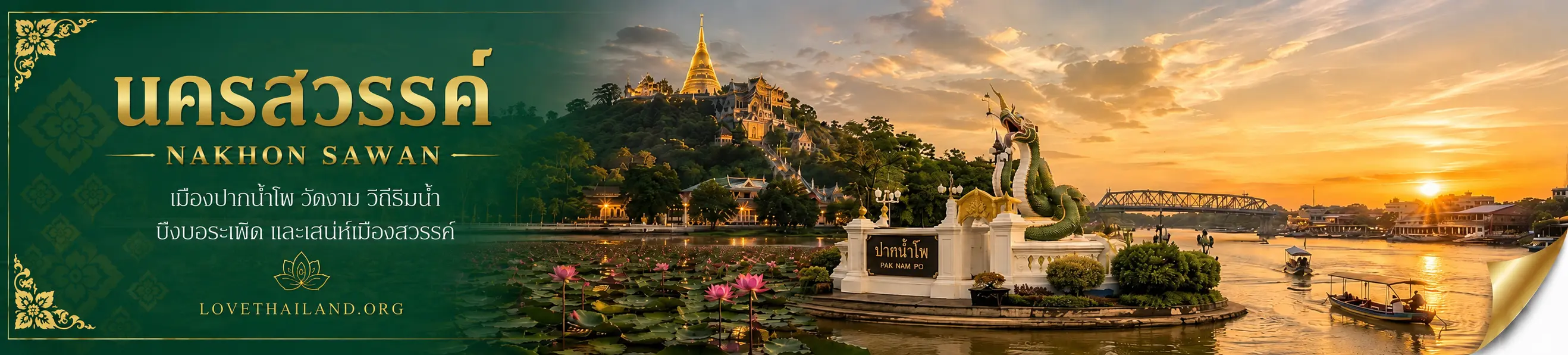
Pak Nam Pho God And Goddess Procession
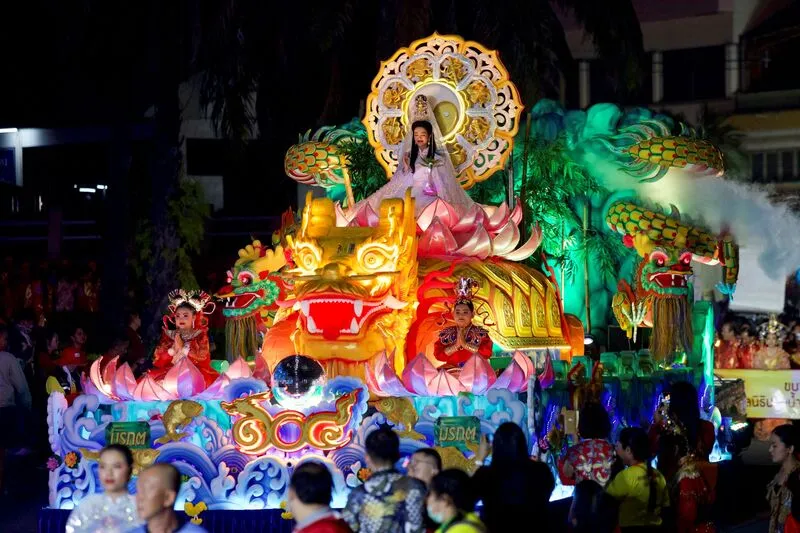
Event Days: Held Annually During Chinese New Year, Around Late January To Early February
Event Period: For 2025–2026, The Event Is Held From 10–21 February 2026
The Pak Nam Pho God And Goddess Procession is one of the most important Chinese New Year traditions in Nakhon Sawan Province. Held in the Pak Nam Pho area of Mueang Nakhon Sawan District, this annual event honors the sacred guardian deities of the local Thai-Chinese community. It is both a religious procession and a major cultural festival that reflects faith, gratitude, community unity, and the long-standing Thai-Chinese identity of Nakhon Sawan.
Pak Nam Pho has long been an important riverside trading community. Chinese migrants settled in the area, built shrines, developed local businesses, and created a strong community around shared faith and cultural practice. The worship of the Pak Nam Pho god and goddess became deeply connected with the lives of market families, merchants, and residents of Nakhon Sawan.
The origin of the procession is closely linked to a cholera outbreak that affected the Pak Nam Pho community many decades ago. During a time when modern medicine was not yet widely available, many local people became ill and suffered greatly. In response, villagers prayed to the guardian deities for protection and healing.
According to local belief, the deities helped the community through spirit mediums. A sacred talisman, known in Chinese belief as “hu,” was written, burned, and mixed with water for villagers to drink. The community believed that the illness was relieved and that peace returned to Pak Nam Pho. This story became part of the sacred memory of the community and strengthened devotion to the Pak Nam Pho god and goddess.
The procession is therefore not simply a festive Chinese New Year parade. It is an act of gratitude and reverence toward the deities believed to have protected the community. Every year, the people of Pak Nam Pho organize a grand procession to invite the sacred deities through the city, allowing residents to pay respect, set up offering tables, and receive blessings for the new year.
The procession is known for its impressive variety of cultural groups and performances. Major elements include the deity procession, spirit medium procession, Guanyin procession, Eng Ko, Lo Ko, celestial maiden procession, flag bearers, young girls carrying flower baskets, lion dances from different associations in Nakhon Sawan, and other Thai-Chinese cultural displays.
The Guanyin procession is one of the most graceful and meaningful parts of the event. A qualified young woman is selected to represent Guanyin, the bodhisattva of compassion. Her presence in the procession symbolizes mercy, peace, and auspicious blessings, making this procession one of the most memorable cultural images of the festival.
Eng Ko and Lo Ko bring rhythm, strength, and excitement to the event. Eng Ko is a powerful performance that expresses courage, unity, and the symbolic removal of misfortune. Lo Ko, with Chinese drums, cymbals, and percussion, adds a lively soundscape to the procession routes and helps create the energetic atmosphere of the festival.
Lion dances are another essential part of the Chinese New Year celebration. In Chinese culture, the lion represents protection, good fortune, and the ability to drive away negative forces. When lion dance groups pass homes, shops, and offering tables, local people come out to welcome them and receive auspicious blessings.
The most famous highlight of the festival is the Pak Nam Pho Golden Dragon Procession. Nakhon Sawan’s golden dragon performance is nationally recognized for its beauty, scale, and exciting movement. In Chinese culture, the dragon represents power, prosperity, good fortune, and renewal. The golden dragon has become the strongest visual symbol of the Pak Nam Pho Chinese New Year Festival.
In some years, the event also includes rituals or performances connected with spirit mediums and fire-walking. These elements reflect the traditional belief in sacred protection, purification, and the removal of misfortune. They add a deeper spiritual dimension to the festival beyond ordinary celebration.
During the festival, Pak Nam Pho is filled with lanterns, red and gold decorations, food stalls, offerings, music, and crowds of visitors. The atmosphere blends religion, belief, performing arts, commerce, and tourism, turning Nakhon Sawan into one of Thailand’s most vibrant Chinese New Year destinations.
Getting There to the Pak Nam Pho procession is convenient via Nakhon Sawan city. Visitors can travel by private car, interprovincial bus, or train, then continue to the Pak Nam Pho area, the main festival zone. During daytime and nighttime processions, some roads may be closed, so visitors should check the latest route, parking information, and procession schedule before traveling.
Visitors who want to watch the golden dragon or nighttime procession should arrive early, choose a safe viewing spot, wear comfortable shoes, bring drinking water, and keep personal belongings secure. Those traveling with children or elderly family members should plan rest areas and meeting points in advance because the festival can be very crowded.
In summary, the Pak Nam Pho God And Goddess Procession is a deeply meaningful tradition rooted in faith, gratitude, and community memory. From the story of the cholera outbreak, sacred hu talismans, and spirit mediums to the Guanyin procession, Eng Ko, Lo Ko, lion dances, and the famous golden dragon, this festival remains one of the most important Thai-Chinese cultural celebrations in Nakhon Sawan and Thailand.
| Tradition Name | Pak Nam Pho God And Goddess Procession / Nakhon Sawan Chinese New Year Festival |
| Location | Pak Nam Pho Area, Mueang Nakhon Sawan District, Nakhon Sawan Province |
| Event Period | Chinese New Year every year, around late January to early February. For 2025–2026, the event is held from 10–21 February 2026 |
| Chinese Calendar Date | The 4th day of the 1st lunar month in the Chinese calendar |
| Origin | Linked to local belief that the Pak Nam Pho deities protected the community during a cholera outbreak through sacred hu talismans and ritual healing |
| Highlights | Deity procession, Guanyin procession, Eng Ko, Lo Ko, celestial maidens, lion dances, spirit mediums, fire-walking, and the Pak Nam Pho golden dragon |
| Main Highlight | The Pak Nam Pho golden dragon procession, famous for its beauty, scale, and exciting performance |
| Importance | A major tradition of the Pak Nam Pho community, reflecting Thai-Chinese faith, cultural heritage, and community cooperation in Nakhon Sawan |
| Travel Information | Travel to Nakhon Sawan city by private car, bus, or train, then continue to the Pak Nam Pho festival area |
| Visitor Tips | Check the latest schedule, arrive early, choose a safe viewing spot, and allow extra time because some roads may be closed during the procession |
| Current Status | Held annually and recognized as one of the major cultural festivals of Nakhon Sawan Province |
Frequently Asked Questions (FAQ)
Q: What Is The Pak Nam Pho God And Goddess Procession?
A: It is a major Chinese New Year tradition in Nakhon Sawan, held to honor the Pak Nam Pho guardian deities with processions, golden dragon, lion dances, Eng Ko, Lo Ko, and Thai-Chinese cultural performances.
Q: What Is The Origin Of The Tradition?
A: The tradition is linked to local belief that the Pak Nam Pho deities protected villagers during a cholera outbreak in the past, which led the community to organize an annual procession in gratitude.
Q: What Is Hu In The History Of The Procession?
A: Hu refers to a sacred Chinese talisman. Local stories say it was written, burned, and mixed with water during the cholera outbreak, becoming part of the sacred memory of the festival.
Q: What Are The Main Highlights Of The Festival?
A: Main highlights include the Pak Nam Pho golden dragon, Guanyin procession, lion dances, Eng Ko, Lo Ko, celestial maidens, and deity procession.
Q: When Is The Pak Nam Pho Procession Held?
A: It is held annually during Chinese New Year, around late January to early February. For 2025–2026, the festival runs from 10–21 February 2026.
Q: Where Is The Festival Held?
A: It is held in the Pak Nam Pho area of Mueang Nakhon Sawan District, Nakhon Sawan Province, along procession routes in the city.
Q: How Should Visitors Prepare?
A: Visitors should check the latest schedule, arrive early, wear comfortable shoes, bring drinking water, and allow extra travel time because roads may be closed during the procession.
 Category: ●Art, Culture and Heritage
 Group: ●Art, Craft Centres, Tradition
Last Update : 6 MonthAgo
 Last Update : 6 MonthAgo
Recommend

 Historical Sites and Monuments(3)
 Landmarks and Memorials(4)
Art, Craft Centres, Tradition(9)
Landmarks and Memorials(4)
Art, Craft Centres, Tradition(9)
 Museums(3)
 Educational Places
 Museum for Study(1)
 Places of Worship
 Temple(34)
 Other Sacred Sites(5)
 Research and Development
 Royal Project(1)
 Suburban Living
 Village, Community(4)
 Local Market(2)
 Floating Market(1)
 Nature and Wildlife
 National Parks and Marine Reserves(3)
 Mountain (Doi)(3)
 Dam, Reservoir, Lake(6)
 Waterfalls(3)
 Caves(8)
 River, Canal(6)
 Other natural attractions(3)
 Entertainment and Agricultural
 Zoos and Aquariums(2)
 Animal camps and shows(1)
 Farms, Parks and Ecotourism(6)
 Accommodation
 Hotel(1)
 Travel Articles, Recipes
 Travel Review, Food Review(3)


