
lovethailand home >Central Travel Attractions >Nakhon Pathom Travel Attractions >Phuta Monthon >Sala Ya > Mahamakut Buddhist University (Sala Ya Campus)
TL;DR: Mahamakut Buddhist University (Sala Ya Campus), Nakhon Pathom attractions : University, Autonomous Universities.
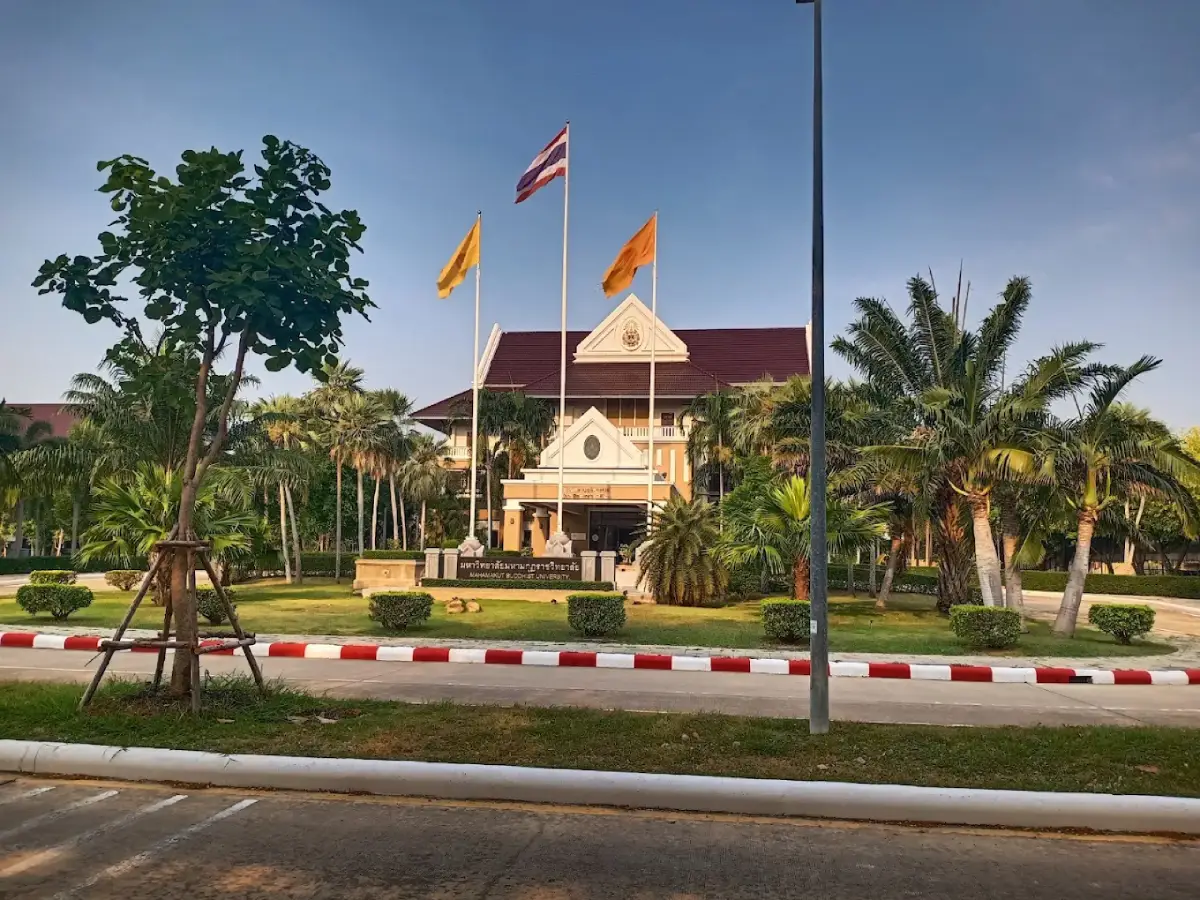
Mahamakut Buddhist University (Sala Ya Campus)
Open Days: Monday – Friday (Central University Offices, According to Published Business Listing)
Opening Hours: 08:00 – 17:00
Mahamakut Buddhist University, Salaya (MBU) is located at 248 Moo 1, Salaya–Nakhon Chai Si Road, Salaya Subdistrict, Phutthamonthon District, Nakhon Pathom Province 73170, Thailand. It is the central campus and administrative headquarters of Mahamakut Buddhist University, a public autonomous Buddhist university whose history began on October 1, 1893. Established during the reign of King Chulalongkorn, Rama V, the original institution was created to support Buddhist education for monks and novices and to strengthen the dissemination of the Buddha's teachings. The university subsequently obtained its present legal status under the Mahamakut Buddhist University Act of 1997 and developed a new central campus at Salaya. Today, its academic structure includes the Faculty of Religion and Philosophy, Faculty of Humanities, Faculty of Education, Faculty of Social Sciences, and Vajirananavarorasa Graduate School, together with research institutes, administrative departments, and academic service units devoted to Buddhist scholarship, ethical development, and community engagement.
What makes Mahamakut Buddhist University distinctive is its approach to higher education, in which Buddhist principles provide an important philosophical and ethical foundation. Academic study covers Buddhist doctrine, monastic discipline, philosophy, religious history, languages, education, political science, and social development. Students are encouraged to connect scholarly understanding with responsibility, ethical behavior, and service to society. The student community includes monks, novices, and laypeople according to the admission requirements of individual programs, creating an educational environment where religious practice and contemporary academic inquiry interact closely.
The university's Salaya campus is situated in an area that connects Bangkok with Nakhon Pathom and the surrounding Tha Chin River region. Nearby communities include residential neighborhoods, temples, educational institutions, markets, and local businesses. Establishing the central university at Salaya provided additional space for academic buildings, Buddhist practice facilities, libraries, student accommodation, and administrative operations. Its location also makes it possible to maintain connections with communities and educational organizations throughout the western Bangkok metropolitan region.
The origins of Mahamakut Buddhist University date back to October 1, 1893, when King Chulalongkorn, Rama V, granted royal permission to establish Mahamakut Rajavidyalaya within Wat Bowonniwet Vihara in Bangkok. The name was bestowed in honor of King Mongkut, Rama IV, and reflects his royal name and the meaning of the great crown. The institution was intended to provide systematic education for Buddhist monks and novices and to contribute to the development of Buddhist scholarship in Thailand.
The establishment of Mahamakut Rajavidyalaya was especially significant in the history of Thai monastic education. At the time, the Buddhist Sangha was developing more systematic approaches to religious instruction and scholarship. The study of Buddhist scriptures, Pali, monastic discipline, and doctrinal interpretation required suitable educational institutions capable of preparing learned monks to teach and explain Buddhist principles to wider society.
On October 26, 1896, King Chulalongkorn presided over the official opening of Mahamakut Rajavidyalaya and placed it under royal patronage. He also provided financial support for its continued operations. This event reflected the importance of Buddhist education within the wider transformation of Thailand's educational institutions during the late nineteenth century.
Prince-Patriarch Vajirananavarorasa played an important role in developing the institution's academic direction. He established objectives emphasizing education for monks and novices, the study of knowledge from Thailand and abroad, and the advancement of Buddhist research and dissemination. His educational vision encouraged systematic learning rather than relying exclusively on memorization, and helped Buddhist scholarship engage with wider intellectual developments.
As the institution developed, it expanded its administration, curricula, and academic activities. In 1945, it began operating under the Council of Education of Mahamakut Rajavidyalaya under Royal Patronage, with an important role played by Supreme Patriarch Vajirananavamsa. In 1946, the institution introduced a four-year undergraduate program leading to the Bachelor of Religious Studies, marking a significant development in higher education for the Thai Buddhist Sangha.
Undergraduate education strengthened the institution's role in preparing Buddhist scholars, teachers, and religious personnel. The development of formal degree programs allowed monks and novices to study systematically and apply their knowledge to Buddhist teaching, moral education, and community service. It also laid the foundations for the introduction of additional academic disciplines in later years.
During the 1950s and 1960s, Mahamakut Rajavidyalaya revised its educational structure and expanded fields of study involving philosophy, psychology, social sciences, languages, and education. In 1968, the undergraduate curriculum adopted a credit-based system. By 1970, the institution had developed four academic faculties: Religion and Philosophy, Social Sciences, Liberal Arts, later renamed Humanities, and Education.
These academic developments demonstrated the institution's commitment to connecting Buddhist education with the changing needs of society. Philosophy supported critical reflection on life, knowledge, and values. Social sciences provided ways of understanding communities and institutions. Language education improved communication and the study of religious literature, while education programs helped graduates prepare for teaching and other professional responsibilities.
On December 24, 1987, the institution established its Graduate School, and graduate-level teaching began on June 1, 1988. This development extended the institution's academic responsibilities beyond undergraduate education into advanced research and scholarly inquiry. It also created opportunities to train specialists capable of producing original research in Buddhism, philosophy, and related disciplines.
Continued academic expansion led to the establishment of regional campuses and colleges throughout Thailand. This wider network made Buddhist-oriented higher education more accessible to monks, novices, and lay learners living outside Bangkok. Regional campuses also strengthened the university's capacity for community engagement, moral education, and cooperation with local Buddhist institutions.
A major legal milestone occurred in 1997 when the Mahamakut Buddhist University Act established the institution as an autonomous public university. The legislation provided a clearer administrative framework for higher education, research, personnel management, academic services, and the preservation of Buddhist arts and culture.
The university subsequently expanded admission opportunities for laypeople beginning in the 1999 academic year. This contributed to the development of a more diverse student community while preserving the institution's distinctive educational philosophy. Academic knowledge, religious ethics, and responsible conduct remained central to its mission.
As the university's teaching and administrative responsibilities expanded, the original site at Wat Bowonniwet Vihara faced limitations in accommodating additional classrooms, research facilities, and administrative offices. The university consequently developed plans to relocate and expand its central operations to Salaya in Nakhon Pathom Province. The new location offered greater opportunities for the construction of academic buildings, a library, religious facilities, and infrastructure supporting both undergraduate and graduate education.
The Salaya site is associated with the Ban Wat Suwan community and the Salaya–Nakhon Chai Si Road. Its development required the establishment of academic facilities, administrative buildings, residential accommodation, infrastructure, and spaces for Buddhist practice. Moving central university functions from a historic monastery in Bangkok to a purpose-developed campus represented a major physical transformation while preserving the university's historical relationship with Wat Bowonniwet Vihara.
The university's Salaya campus is characterized by architectural and landscape features associated with Buddhism. Academic and administrative buildings stand alongside religious facilities, Buddha images, halls for ceremonies, and open spaces. The resulting environment supports the study of Buddhist texts, academic research, and meditation, while providing facilities for a modern university.
Salaya is home to the Office of the Rector and a number of central administrative departments, including divisions responsible for general administration, finance, student affairs, planning, information technology, personnel management, and quality assurance. These departments support cooperation between the university's central academic units, regional campuses, and affiliated colleges.
In 2026, the Rector of Mahamakut Buddhist University is Phra Phrom Wachiramethaphon, Associate Professor Dr., also known by his monastic name Somkid Cintamayo. His responsibilities include institutional leadership, educational development, research policy, administration, and support for Buddhist education. In October 2026, the university organized administrative and personnel activities at the Dhammasathan building in Salaya, demonstrating the campus's continuing role as the university's headquarters.
The university's educational philosophy is “Academic Excellence Based on Buddhism.” This principle emphasizes the development of intellectual understanding alongside ethical conduct. Education is therefore viewed not simply as the acquisition of information or professional qualifications, but also as a process of cultivating judgment, compassion, responsibility, and the ability to apply knowledge for the benefit of others.
The university's Buddhist motto is “Vijjacaranasampanno So Settho Devamanuse,” expressing the principle that a person accomplished in knowledge and conduct is especially worthy of respect among humans and celestial beings. The motto illustrates the ideal of combining intellectual achievement with ethical character, a central concept in the university's approach to higher education.
The university emblem incorporates several symbols associated with its history and mission. These include the great crown and unalome associated with King Mongkut, the royal insignia representing King Chulalongkorn, books and religious scriptures, traditional writing instruments, flowers, the Thai national flag, a ceremonial book stand, and rays of light. Together, these elements represent Buddhist education, scholarship, royal patronage, the production of religious texts, and the dissemination of wisdom.
The Dhammasathan building is one of the most important religious and ceremonial landmarks at Mahamakut Buddhist University, Salaya. It is used for Buddhist ceremonies, foundation anniversary activities, and significant gatherings involving the university and the Sangha. The building houses Phra Nirantarai, an important Buddha image associated with the university's religious identity.
Phra Nirantarai is related to a Buddha image design introduced during the reign of King Mongkut, Rama IV. The name conveys protection from danger and freedom from harm. Its presence within the Dhammasathan building makes this site a center of religious devotion and an important setting for ceremonial activities associated with the university.
The Suchip Punyanuparb Building is another significant academic facility at the Salaya campus. It provides meeting spaces and accommodates university activities, including academic examinations. In October 2026, the university organized first-semester final examinations for first-year students in this building, demonstrating its role in coordinating academic standards across the university's central and regional educational units.
The building named after Prince-Patriarch Vajirananavarorasa accommodates graduate-level academic functions, while the Phra Phrom Muni Building is associated with the Faculty of Religion and Philosophy. The names of these buildings reflect the institution's appreciation of important religious scholars and leaders whose contributions helped shape Buddhist higher education in Thailand.
Mahamakut Buddhist University's Central Library supports the collection and study of resources related to Buddhism, philosophy, languages, education, and social sciences. Its services provide access to textbooks, research materials, Buddhist literature, and digital academic information. The library is therefore an important resource for students, lecturers, and researchers engaged in Buddhist and interdisciplinary scholarship.
The Faculty of Religion and Philosophy represents one of the university's oldest academic traditions. It offers education involving Buddhist teachings, philosophy, religion and culture, and the application of Buddhist principles to personal and social development. Students learn to interpret religious texts, compare philosophical perspectives, and examine contemporary moral and social questions through scholarly methods.
The Faculty of Humanities contributes to the study of Thai, English, Pali, and Sanskrit. Pali and Sanskrit are particularly important for the interpretation of Buddhist texts and the study of religious and intellectual history. Thai and English studies support communication, literary analysis, translation, and the dissemination of knowledge to a wider audience.
The Faculty of Education focuses on teaching, curriculum development, school administration, and educational research. Its undergraduate and postgraduate programs provide opportunities for prospective teachers and educational professionals to develop knowledge and professional competence. Ethical responsibility and the development of learners as whole persons remain important elements of the faculty's educational approach.
The Faculty of Social Sciences provides education in political science, social work, and social development. These fields support the understanding of government, public institutions, community needs, social welfare, and public policy. Studying social sciences within a Buddhist university also creates opportunities to examine public issues through both scholarly and ethical perspectives.
Vajirananavarorasa Graduate School is responsible for advanced education involving Buddhist studies, philosophy, and related disciplines. Its master's and doctoral programs support research, thesis preparation, and the development of scholars who can apply systematic research methods to religious and social questions. Graduate education also strengthens the university's ability to produce teachers, researchers, and specialists.
The Nyanasamvara Research Institute supports the university's scholarly and research activities. Research involving Buddhism, social sciences, and related fields contributes to academic publications, teaching materials, and the development of knowledge relevant to society. The university's Academic Service Center and Buddhist dissemination units also support training, seminars, and educational activities for communities and schools.
The Institute of Meditation Studies represents another distinctive feature of Buddhist higher education. Its activities connect the theoretical study of Buddhist principles with meditation practice, mindfulness, and personal discipline. Practical training can help students understand how Buddhist teachings relate to mental development, ethical behavior, and the responsibilities of everyday life.
Important university traditions reflect Buddhist religious life and the historical identity of the institution. October 1 is the university's foundation anniversary, commemorating its establishment in 1893 and the royal support that made its development possible. On October 1, 2026, the university held a religious merit-making ceremony marking its 133rd anniversary at the Dhammasathan building in Salaya. The Supreme Patriarch appointed Somdet Phra Maha Viravong as his representative at the ceremony.
On September 16, 2026, Mahamakut Buddhist University also organized its Higher Education Day activities at the Suchip Punyanuparb Building. Somdet Phra Maha Viravong, Vice President of the University Council, presided over the opening ceremony. The event emphasized the university's role in educating Buddhist personnel and contributing to society through higher education.
Other academic and cultural activities include student orientation, moral education, examinations, research presentations, academic conferences, and community service. The exact schedules of these events vary according to the academic calendar and announcements issued by the responsible university departments.
The university also contributes to Buddhist dissemination through education for religious personnel, moral teaching programs, training courses, and the development of learning media. In a society increasingly shaped by digital communication, presenting Buddhist knowledge in accessible language and modern formats is an important part of reaching new audiences and connecting religious principles with everyday experience.
Academic partnerships with external organizations have supported the development of educational media and interdisciplinary research. Collaboration involving Buddhist meditation studies and contemporary scientific disciplines creates opportunities to explore questions about human experience, learning, and mental development from different intellectual perspectives.
Prospective students can find undergraduate, graduate diploma, master's, and doctoral programs within the university's central academic structure. The university's curriculum database identifies the responsible faculty, level of study, curriculum revision year, and educational location for individual programs. Verifying these details is especially important because Mahamakut Buddhist University also operates regional campuses and colleges that may offer programs with similar names but separate curriculum codes.
For the 2026 academic year, the central curriculum database lists 25 program records under the Salaya headquarters, grouped under the Faculty of Humanities, Faculty of Religion and Philosophy, Faculty of Education, Faculty of Social Sciences, and Vajirananavarorasa Graduate School. The records cover undergraduate and postgraduate education in various fields. However, inclusion in the curriculum database should not be interpreted as confirmation that every program admits new students in every application round. Applicants should refer to the official admissions announcements for the relevant academic year.
For visitors interested in educational and religious heritage, Mahamakut Buddhist University, Salaya offers an opportunity to explore the history of Thai Buddhist higher education and architecture associated with Buddhist learning. Visitors can learn about the institution's establishment under King Chulalongkorn, the transition toward modern university education, and the development of the present headquarters in Nakhon Pathom. Buildings associated with important religious leaders help connect this institutional history with the physical campus.
Visitors wishing to undertake study tours or see important buildings should contact the university in advance. Classrooms, offices, meeting halls, libraries, and spaces used for religious practice serve different purposes, and access arrangements vary. Some areas are intended primarily for students and staff, while others may be accessible during organized public activities or with permission from the responsible departments.
Respectful clothing and behavior are appropriate when visiting a Buddhist university. Visitors should avoid interrupting lectures, ceremonies, or meditation sessions and should respect monks, novices, students, and staff. Photography inside buildings and restricted spaces should follow the instructions provided by university personnel.
Getting There from Bangkok is possible by private car via Borommaratchachonnani Road toward Salaya, followed by Salaya–Nakhon Chai Si Road. Depending on the starting point and traffic conditions, travelers may also use connecting routes through Phutthamonthon Sai 4 or Phutthamonthon Sai 5. Navigation applications should use the destination Mahamakut Buddhist University, Salaya, or the address 248 Moo 1, Salaya, Nakhon Pathom.
Public transportation users can travel toward Salaya and continue by local taxi or other available transport to the university. Railway passengers may use Salaya Railway Station before arranging onward transportation. It is important to distinguish Mahamakut Buddhist University from Mahidol University, which is located elsewhere in Salaya, and from Sirindhorn Rajavidyalaya Campus in Om Yai, Sam Phran District.
Visitors traveling for admissions, registration, administrative appointments, or university ceremonies should allow sufficient time and identify their destination building in advance. Different academic departments, the Graduate School, the Registrar's Office, and university meeting facilities occupy separate buildings. Contacting the university before departure can help confirm the appropriate location and access arrangements.
Several attractions in the surrounding area make it possible to combine a university visit with broader cultural and educational exploration. Phutthamonthon is an important Buddhist park, while the Thai Film Archive preserves Thailand's moving-image heritage. Wat Suwannaram reflects local Buddhist history, Sireeruckhachati Nature Learning Park offers knowledge about medicinal plants, and Don Wai Floating Market introduces visitors to traditional food and riverside life along the Tha Chin River.
Overall, Mahamakut Buddhist University, Salaya is an important institution in the history of Thai Buddhist higher education. From its origins at Wat Bowonniwet Vihara in 1893, the institution developed undergraduate and graduate education, expanded its academic network, obtained autonomous public university status, and established a modern headquarters in Nakhon Pathom. Its continuing mission emphasizes the combination of scholarship and ethical conduct, Buddhist research, community academic services, and the application of moral principles to social development.
| University Name | Mahamakut Buddhist University, Salaya |
| Thai Name | มหาวิทยาลัยมหามกุฏราชวิทยาลัย ศาลายา |
| Abbreviation | MBU / มมร. |
| Institution Type | Autonomous Public Buddhist University |
| Address | 248 Moo 1, Salaya–Nakhon Chai Si Road, Salaya Subdistrict, Phutthamonthon District, Nakhon Pathom 73170, Thailand |
| Original Institution Founded | October 1, 1893 |
| Official Opening of Mahamakut Rajavidyalaya | October 26, 1896 |
| Degree-Level Education Began | 1946 |
| Graduate School Established | 1987 |
| Autonomous Public University Status | 1997 |
| Institutional Age in 2026 | 133 Years Since the 1893 Foundation |
| Important Historical Figures | King Chulalongkorn (Rama V), King Mongkut (Rama IV), Prince-Patriarch Vajirananavarorasa, and Supreme Patriarch Vajirananavamsa |
| Rector in 2026 | Phra Phrom Wachiramethaphon, Associate Professor Dr. (Somkid Cintamayo) |
| University Philosophy | Academic Excellence Based on Buddhism |
| Buddhist Motto | Vijjacaranasampanno So Settho Devamanuse – Excellence Through Knowledge and Ethical Conduct |
| University Emblem | Great Crown, Unalome, Royal Insignia, Religious Scriptures, Writing Instruments, Flowers, Thai National Flag, Ceremonial Book Stand, and Rays of Light |
| Central Academic Faculties and Graduate School | Faculty of Religion and Philosophy, Faculty of Humanities, Faculty of Education, Faculty of Social Sciences, and Vajirananavarorasa Graduate School |
| Supporting Academic Units | Office of the Rector, Nyanasamvara Research Institute, Academic Service Center, Institute of Meditation Studies, and Central Library |
| Academic Strengths | Buddhist Studies, Philosophy, Pali and Sanskrit, Humanities, Education, Political Science, Social Work, Social Development, and Meditation Studies |
| Important Campus Landmarks | Dhammasathan Building and Phra Nirantarai Buddha Image, Suchip Punyanuparb Building, Prince-Patriarch Vajirananavarorasa Building, Phra Phrom Muni Building, and Central Library |
| Important Traditions and Events | University Foundation Anniversary on October 1, Higher Education Day, Meditation Training, Buddhist Academic Conferences, and Community Services |
| Office Days According to Published Listing | Monday – Friday |
| Office Hours According to Published Listing | 08:00 – 17:00 |
| Visiting and Educational Tours | Contact the Responsible University Department in Advance, Particularly for the Dhammasathan Building, Meeting Facilities, Classrooms, and Meditation Areas |
| Transportation | Via Borommaratchachonnani Road and Salaya–Nakhon Chai Si Road; Connections through Phutthamonthon Sai 4 or Sai 5; Local Transportation from Salaya Railway Station |
| Nearby Attractions | 1. Phutthamonthon Buddhist Park 2. Thai Film Archive, Phutthamonthon Sai 5 3. Wat Suwannaram, Salaya 4. Sireeruckhachati Nature Learning Park, Mahidol University 5. Don Wai Floating Market, Sam Phran |
| Restaurants and Cafes in the Salaya Area | 1. Hua Seng Hong, Salaya Branch, Tel. +66 2 441 0696 2. So Leh Isan Fusion, Tel. +66 94 471 5916 3. Minna no Sushi, Tel. +66 34 100 608 4. CMD_Salaya, Tel. +66 93 324 7496 5. De White House, Tel. +66 62 405 5549 |
| Accommodation in and Around Salaya | 1. POSH 41, Tel. +66 87 519 5524 2. The Pride Salaya, Tel. +66 99 229 2288 3. Salaya One Hotel & Service Apartment, Tel. +66 2 441 4888 4. The Palm Hotel, Tel. +66 61 525 2099 5. 24 Poshtel Salaya, Tel. +66 82 890 4779 |
| University Telephone | +66 2 444 6000 |
| Registrar's Office | +66 2 444 6000, Extensions 1096 – 1098 |
| Official Website | https://www.mbu.ac.th |
| Academic Programs Database | https://www.mbu.ac.th/course/ |
| Current Status | Active University Headquarters for Education, Research, and Administration in 2026 |
Academic Programs and Fields of Study at Mahamakut Buddhist University, Salaya, Academic Year 2026 (B.E. 2569)
| Faculty of Humanities | Bachelor's Degree 1. Bachelor of Arts in Thai (Revised Curriculum 2024) 2. Bachelor of Arts in Pali and Sanskrit (Revised Curriculum 2024) 3. Bachelor of Arts in English (Revised Curriculum 2026) |
| Faculty of Religion and Philosophy | Bachelor's Degree 1. Bachelor of Arts in Philosophy, Religion and Culture (Revised Curriculum 2024) 2. Bachelor of Arts in Buddhism (Revised Curriculum 2024) 3. Bachelor of Arts in Buddhism for Development (Revised Curriculum 2024) 4. Bachelor of Arts in Buddhist Studies (Revised Curriculum 2024) 5. Bachelor of Arts in Buddhism and Philosophy (Revised Curriculum 2024) |
| Faculty of Education | Bachelor's Degree 1. Bachelor of Education in Teaching Thai (Four-Year Program, Revised Curriculum 2023) 2. Bachelor of Education in Teaching English (Four-Year Program, Revised Curriculum 2023) 3. Bachelor of Education in Teaching Social Studies (Four-Year Program, Revised Curriculum 2023) Graduate Diploma1. Graduate Diploma in Teaching Profession (New Curriculum 2025) Master's Degree1. Master of Education in Educational Administration (Revised Curriculum 2025) 2. Master of Education in Educational Research and Buddhist Wisdom Studies (New Curriculum 2022) Doctoral Degree1. Doctor of Education in Educational Administration (Revised Curriculum 2025) |
| Faculty of Social Sciences | Bachelor's Degree 1. Bachelor of Social Work in Social Work (Revised Curriculum 2025) 2. Bachelor of Political Science in Political Science (Revised Curriculum 2024) 3. Bachelor of Arts in Social Development (Revised Curriculum 2024) Master's Degree1. Master of Political Science in Political Science (Revised Curriculum 2025) Doctoral Degree1. Doctor of Political Science in Political Science (Revised Curriculum 2025) |
| Vajirananavarorasa Graduate School | Master's Degree 1. Master of Arts in Buddhist Studies (Revised Curriculum 2024) 2. Master of Arts in Buddhism and Philosophy (Revised Curriculum 2024) 3. Master of Arts in Buddhist Art Studies (New Curriculum 2024) Doctoral Degree1. Doctor of Philosophy in Buddhism and Philosophy (Revised Curriculum 2024) 2. Doctor of Philosophy in Buddhist Studies (Revised Curriculum 2023) |
Frequently Asked Questions (FAQ)
Q: Where is Mahamakut Buddhist University, Salaya located?
A: The university is located at 248 Moo 1, Salaya–Nakhon Chai Si Road, Salaya Subdistrict, Phutthamonthon District, Nakhon Pathom Province 73170, Thailand. It is the university's central headquarters.
Q: What are the opening days and hours of Mahamakut Buddhist University, Salaya?
A: The published university business listing indicates Monday to Friday, from 08:00 to 17:00. Individual faculties, the Graduate School, library, and religious facilities may operate on separate schedules.
Q: When was Mahamakut Buddhist University founded?
A: The original Mahamakut Rajavidyalaya was established on October 1, 1893, within Wat Bowonniwet Vihara in Bangkok and officially opened on October 26, 1896. The university obtained its autonomous public university status under legislation enacted in 1997.
Q: Who founded Mahamakut Buddhist University?
A: King Chulalongkorn granted royal permission to establish Mahamakut Rajavidyalaya, while Prince-Patriarch Vajirananavarorasa played an essential role in developing its educational direction and objectives.
Q: What is the difference between Mahamakut Buddhist University at Salaya and Sirindhorn Rajavidyalaya Campus?
A: Salaya is the university's central headquarters in Phutthamonthon District. Sirindhorn Rajavidyalaya Campus is a separate campus located at Wat Sirindhorn Thep Rattanaram in Om Yai, Sam Phran District, Nakhon Pathom Province.
Q: What academic programs are offered at Mahamakut Buddhist University, Salaya?
A: The university's 2026 central curriculum database lists 25 program records in Buddhist studies, philosophy, languages, education, political science, social work, and social development. They include undergraduate, graduate diploma, master's, and doctoral qualifications. Admission availability should be checked through the official announcements for each program.
Q: Can members of the public visit Mahamakut Buddhist University, Salaya?
A: Visitors may inquire about academic events and educational tours subject to university regulations. Advance coordination is recommended for visits to ceremonial buildings, classrooms, libraries, meeting rooms, and meditation facilities.
Q: How can visitors travel from Bangkok to Mahamakut Buddhist University, Salaya?
A: Visitors can drive via Borommaratchachonnani Road and Salaya–Nakhon Chai Si Road, or travel by public transport to the Salaya area and continue by local taxi. Travelers should specify Mahamakut Buddhist University as their destination to avoid confusion with Mahidol University.
 Category: ●University
 Group: ●Autonomous Universities
Last Update : 2 DayAgo
 Last Update : 2 DayAgo
 Click to Access the Navigation Map GPS
Mahamakut Buddhist University (Sala Ya Campus) Map
Recommend

 Art, Culture and Heritage
 Historical Sites and Monuments(6)
 Landmarks and Memorials(4)
 Royal Palace(3)
 Art, Craft Centres, Tradition(5)
 Museums(13)
 Art Gallery(1)
 Educational Places
 Educational Gardens, Farm(2)
 Public university(2)
Autonomous Universities(4)
 Rajamangala University of Technology(1)
 Rajabhat University(1)
 Private University(1)
 Places of Worship
 Temple(77)
 Other Sacred Sites(5)
 Research and Development
 Royal Project(1)
 Suburban Living
 Village, Community(3)
 Local Market(3)
 Floating Market(8)
 Nature and Wildlife
 River, Canal(4)
 Other natural attractions(3)
 Entertainment and Agricultural
 Animal camps and shows(1)
 Stadium(1)
 Farms, Parks and Ecotourism(5)
 Theater(1)
 Outdoor and Adventure Activities(2)
 Spas and Wellness
 Spas and Wellness(1)
 Travel Articles, Recipes
 Travel Review, Food Review(1)


