
lovethailand home >North Travel Attractions >Kamphaeng Phet Travel Attractions >Muang Kamphaeng Phet >Nai Muang > Shiva Shrine
TL;DR: Shiva Shrine is located at Nai Mueang Subdistrict, Mueang Kamphaeng Phet District, Kamphaeng Phet Province, open Open Daily, hours No Fixed Opening–Closing Hours.
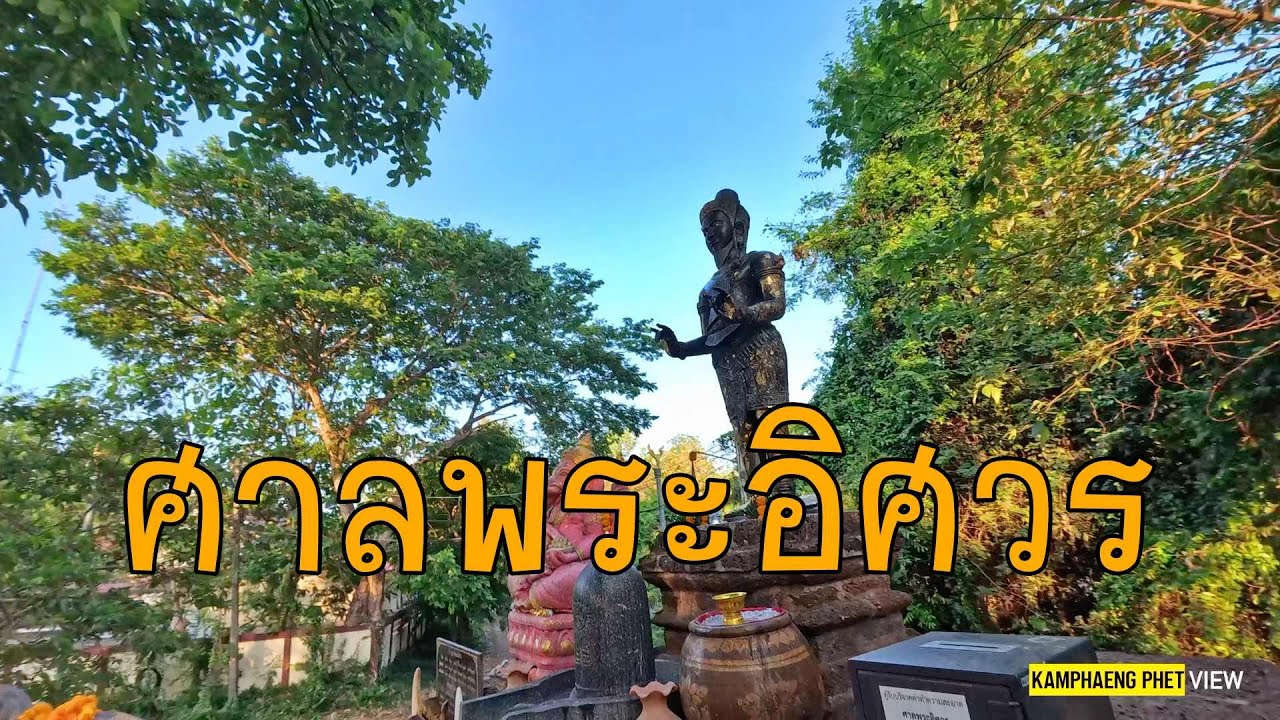
Shiva Shrine

Open Days: Open Daily
Opening Hours: No Fixed Opening–Closing Hours
Shiva Shrine, Kamphaeng Phet Province is one of the most historically significant archaeological sites in the old town of Kamphaeng Phet. Located in Nai Mueang Subdistrict, Mueang Kamphaeng Phet District, the shrine stands within the ancient city area, behind the Kamphaeng Phet Juvenile and Family Court. Although modest in size, this shrine carries exceptional value because it connects architecture, Hindu belief, Ayutthaya-period art, local history, and the preservation of Thai cultural heritage in one place.
The shrine is especially important because it was the original site of a large bronze Shiva statue dated by inscription to 1510 CE, or 2053 BE. The original statue is about 210 centimeters high and is considered an outstanding example of Ayutthaya-period bronze sculpture influenced by Khmer Bayon-style art. Today, the original bronze Shiva statue is preserved and displayed at Kamphaeng Phet National Museum, while a replica is enshrined at the Shiva Shrine for local worshippers and visitors.
For travelers interested in historical tourism, the Shiva Shrine is a valuable stop because it allows visitors to experience the original setting of the ancient Hindu sanctuary before continuing to the museum to see the original bronze sculpture. This route gives a fuller understanding of the relationship between the archaeological site, the statue, the inscription, and the old city of Kamphaeng Phet. It is also a practical stop for visitors planning to explore Wat Phra Kaeo, Wat Phra That, Kamphaeng Phet National Museum, and Kamphaeng Phet Historical Park in the same day.
The architectural remains of the shrine are built mainly of laterite, a material strongly associated with the ancient monuments of Kamphaeng Phet. The base has a rectangular plan and faces east. The lower laterite base measures about 11 meters wide, 29 meters long, and 1.6 meters high. The shrine once served as a Hindu sanctuary where images of Shiva, Vishnu, and a female deity were associated with the ritual space. The surviving laterite base helps visitors imagine the form of the original sanctuary and understand how religious architecture was placed within the old fortified city.
The inscription around the base of the original Shiva statue records that Chao Phraya Si Thammasokarat established the image in Kamphaeng Phet in 2053 BE. The inscription states that the image was created to protect humans and animals living in the city. It also refers to public works such as repairing temples, maintaining religious institutions, improving waterways, and managing irrigation. This makes the Shiva statue and its shrine more than an object of worship; they are historical evidence of governance, public works, religious belief, and urban life in the Ayutthaya period.
The story of the Shiva statue also became part of Thailand’s cultural heritage history during the reign of King Rama V. A German visitor reportedly cut off the head and hands of the original bronze statue and attempted to remove them from the country, but the pieces were recovered in Bangkok. The incident is remembered as an important example of the vulnerability of ancient Thai artifacts during a period when many cultural objects were sought by foreign collectors. The restoration and later preservation of the statue reflect the importance of safeguarding national heritage.
Artistically, the Shiva statue is notable for its standing posture, square-shaped face, joined eyebrows, straight lips, triangular beard, third eye on the forehead, cylindrical hairstyle, ornaments, sacred thread, armlets, bracelets, rings, and detailed clothing. These features identify the figure as Shiva while also revealing the artistic taste of the Ayutthaya period and the influence of Khmer sculptural traditions. Visitors who study the replica at the shrine and the original at the museum can appreciate both the sacred function and the artistic quality of the image.
The Shiva Shrine also reflects the religious diversity of ancient Kamphaeng Phet. While the old city contains many Buddhist monuments, this shrine represents the presence of Hindu worship within the same urban landscape. Its location among major historical sites shows that Kamphaeng Phet was not only a military and administrative center, but also a city where different religious traditions contributed to civic identity and ritual life. This makes the shrine especially meaningful for visitors interested in the broader cultural history of Thailand.
The atmosphere of the shrine is quiet and suitable for respectful worship, historical study, and photography. Visitors should spend at least 20 to 40 minutes here, especially if they want to read the information signs and observe the laterite base carefully. For a deeper visit, it is best to pair the shrine with Kamphaeng Phet National Museum, where the original bronze Shiva statue is displayed. This combination allows travelers to connect the archaeological site with the preserved artifact and understand why the shrine remains important today.
Getting There is straightforward because the shrine is located within Kamphaeng Phet town. Travelers with a private car can drive from Phahonyothin Road into the old town area and continue toward Pin Damri Road or the area behind the Kamphaeng Phet Juvenile and Family Court. Those arriving by bus can get off at Kamphaeng Phet Bus Terminal and take a local vehicle or ride-hailing service to the old town. Because the site is close to other major attractions, it works well as part of a half-day or full-day historical route.
When visiting the shrine, travelers should dress respectfully and behave with care because the site is both an archaeological monument and a living place of worship. Avoid climbing on the laterite base, moving offerings, or using the ancient structure as a photo prop. Photography is acceptable when done respectfully. These simple practices help protect the site and allow both local worshippers and travelers to share the space appropriately.
In summary, Shiva Shrine in Kamphaeng Phet is a small but highly meaningful destination. It preserves the memory of an ancient Hindu sanctuary, the story of one of Thailand’s important bronze Shiva sculptures, and the historical role of Kamphaeng Phet as an old city in the Ping River basin. For travelers interested in Thai history, sacred art, Hindu belief, and World Heritage-related cultural routes, this shrine is one of the most rewarding stops in Kamphaeng Phet town.
| Name | Shiva Shrine, Kamphaeng Phet Province |
| Location | Nai Mueang Subdistrict, Mueang Kamphaeng Phet District, Kamphaeng Phet Province |
| Address | 112 Kamphaeng Phet, Nai Mueang Subdistrict, Mueang Kamphaeng Phet District, Kamphaeng Phet 62000 |
| Coordinates | 16.486908, 99.524264 |
| Highlights | Ancient Hindu sanctuary, laterite base, and replica of the bronze Shiva statue dated to 2053 BE |
| History | Ayutthaya period, around the 21st Buddhist century; the inscription on the original Shiva statue records the year 2053 BE |
| Name Origin | Named after the Shiva statue that was originally enshrined in this Hindu sanctuary within the old city of Kamphaeng Phet |
| Distinctive Features | Rectangular laterite base facing east, with a raised platform for the sacred image |
| Travel Information | Located in Kamphaeng Phet old town, behind the Kamphaeng Phet Juvenile and Family Court; accessible by private car, local transport, or ride-hailing service |
| Current Status | An active archaeological site and worship place open to the public |
| Open Days | Open Daily |
| Opening Hours | No Fixed Opening–Closing Hours |
| Fees | Free Admission |
| Facilities | Worship area, walking area around the monument, and easy access to nearby old-town attractions |
| Main Areas / Zones | Laterite shrine base, raised sacred platform, replica Shiva statue, and front worship area |
| Caretaker | Fine Arts Department |
| Main Contact Number | Kamphaeng Phet Municipality Tel. 055-718-200 |
| Nearby Tourist Attractions | 1. Wat Phra Kaeo, Kamphaeng Phet – 1 km 2. Wat Phra That, Kamphaeng Phet – 1 km 3. Kamphaeng Phet National Museum – 1 km, Tel. 055-711-570 4. Kamphaeng Phet City Pillar Shrine – 1 km 5. Kamphaeng Phet Historical Park, Aranyik Zone – 4 km, Tel. 055-854-736, 055-854-737 |
| Nearby Restaurants | 1. Ba Mee Chakangrao – 1 km, Tel. 055-712-446 2. Banyakad Cafe & Restaurant – 3 km, Tel. 097-965-5599 3. Suea Rong Hai Kamphaeng Phet – 5 km, Tel. 096-892-4299 4. Mae Ping Riverside Restaurant – 6 km, Tel. 055-722-455, 081-973-8038 5. Mae Ping Riverside – 6 km, Tel. 099-243-5101 |
| Nearby Accommodations | 1. Navarat Heritage Hotel – 2 km, Tel. 081-533-5799 2. HOP INN Kamphaeng Phet – 3 km 3. White Wall Riverfront Hotel – 4 km, Tel. 080-361-4656 4. La Riva Boutique Hotel – 4 km 5. Grand The Room Hotel – 4 km |
Frequently Asked Questions (FAQ)
Q: Where is Shiva Shrine in Kamphaeng Phet located?
A: The shrine is located in Nai Mueang Subdistrict, Mueang Kamphaeng Phet District, within the old town area behind the Kamphaeng Phet Juvenile and Family Court.
Q: Is Shiva Shrine open every day?
A: Yes. The shrine is open daily and has no fixed opening or closing hours.
Q: Is there an entrance fee for Shiva Shrine?
A: No. Admission to Shiva Shrine is free.
Q: Where is the original bronze Shiva statue displayed?
A: The original bronze Shiva statue is displayed at Kamphaeng Phet National Museum, while the shrine houses a replica for worship.
Q: Why is Shiva Shrine historically important?
A: It is an important Hindu sanctuary in the old city of Kamphaeng Phet and is connected to a bronze Shiva statue inscribed with the year 2053 BE, reflecting Ayutthaya-period art, religion, and urban history.
Q: What nearby places should visitors combine with Shiva Shrine?
A: Visitors should combine the shrine with Kamphaeng Phet National Museum, Wat Phra Kaeo, Wat Phra That, Kamphaeng Phet City Pillar Shrine, and Kamphaeng Phet Historical Park.
Q: How can travelers get to Shiva Shrine?
A: Travelers can reach the shrine by private car, local transport, or ride-hailing service from Kamphaeng Phet town or the provincial bus terminal.
 Category: ●Places of Worship
 Group: ●Other Sacred Sites
Last Update : 5 MonthAgo
 Last Update : 5 MonthAgo
 Click to Access the Navigation Map GPS
Shiva Shrine Map
Recommend

 Art, Culture and Heritage
 Historical Sites and Monuments(4)
 Landmarks and Memorials(1)
 Art, Craft Centres, Tradition(4)
 Museums(4)
 Historic Homes and Cities(1)
 Temple(25)
Other Sacred Sites(8)
 Research and Development
 Royal Project(2)
 Suburban Living
 Village, Community(2)
 Local Market(2)
 Nature and Wildlife
 National Parks and Marine Reserves(4)
 Mountain (Doi)(2)
 Dam, Reservoir, Lake(4)
 Waterfalls(4)
 Hot Springs(1)
 River, Canal(3)
 Bays and Beaches(2)
 Other natural attractions(1)
 Entertainment and Agricultural
 Farms, Parks and Ecotourism(5)
 Waterpark(1)
 Shopping
 Shopping and Night Market(1)
 Travel Articles, Recipes
 Travel Review, Food Review(1)


