
lovethailand home >North Travel Attractions >Chiang Mai Travel Attractions >Hang Dong >Nong Kaeo > North-Chiang Mai University (NCU)
TL;DR: North-Chiang Mai University (NCU), Chiang Mai attractions : University, Private University.

North-Chiang Mai University (NCU)
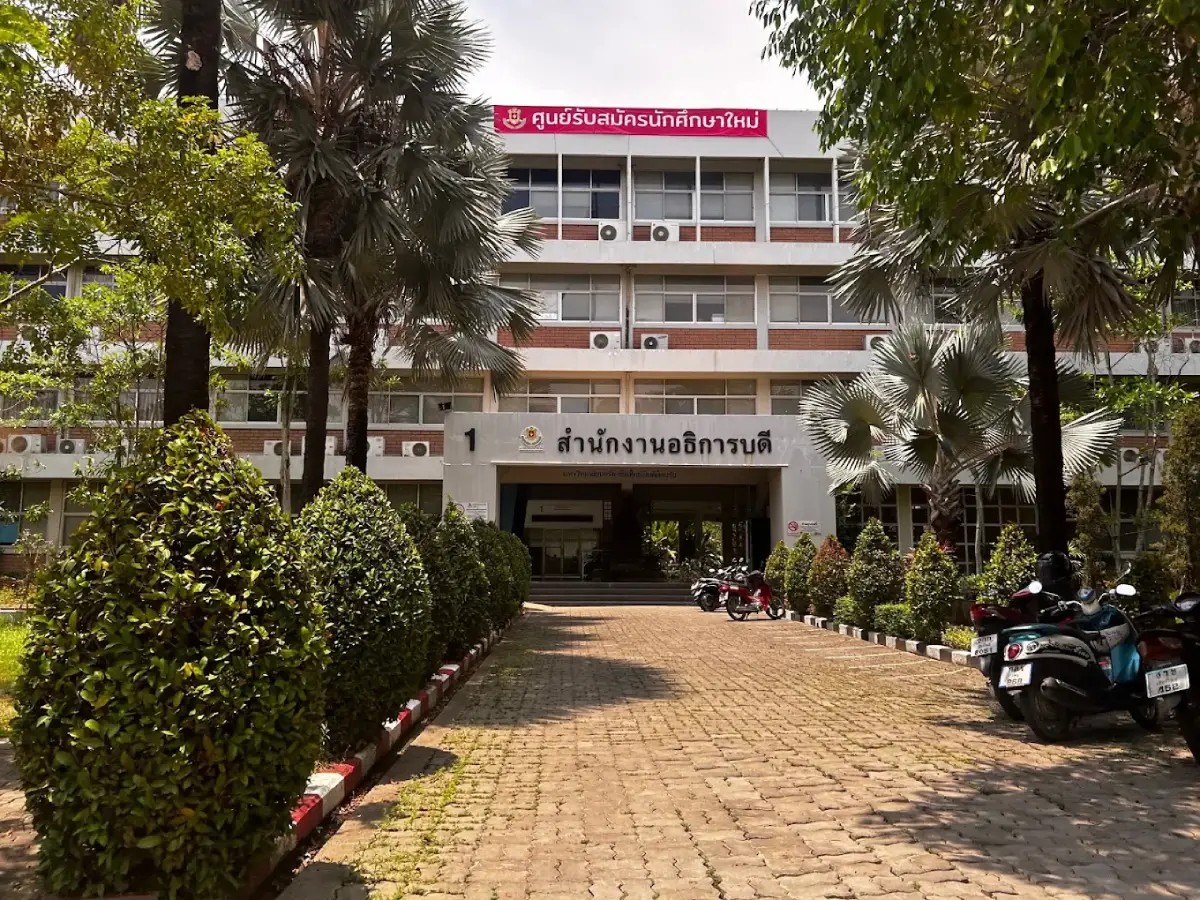
Open Days: Monday–Friday for Regular Administrative Office Services
Opening Hours: 08:00–17:00 for Regular Office Services. The University's Job Application Service Also Operates on Saturdays, Sundays, and Public Holidays from 09:00–16:00.
North-Chiang Mai University (NCU) is a private higher education institution located at 169 Moo 3, Nong Kaeo Subdistrict, Hang Dong District, Chiang Mai 50230, Thailand. It was founded in 1999 by Narong Chawasin, a Chiang Mai native whose goal was to expand educational opportunities for young people and communities in northern Thailand. The institution received permission from the Ministry of University Affairs to operate on September 13, 1999, began teaching in June 2000, and was elevated from North-Chiang Mai College to North-Chiang Mai University on May 26, 2004. The university is recognized for its academic strengths in Engineering and Technology, Business Administration, Digital Business Management, Public Administration, Law, and postgraduate innovation studies. Its principal academic units include the Faculty of Engineering and Technology, Faculty of Business Administration, Faculty of Social Sciences and Liberal Arts, Faculty of Law, Innovation College, and International College. The campus contains teaching buildings, the International Convention Center at the Royal Commemorative Building, library resources, computer facilities, student accommodation, and areas for activities within a landscaped setting. In 2026, North-Chiang Mai University marks 27 years since its foundation and continues to provide education, research, academic services, and community development opportunities.
The significance of North-Chiang Mai University extends beyond its status as one of Chiang Mai's private higher education institutions. Its educational philosophy emphasizes preparing graduates for practical professional life through academic knowledge, hands-on experience, technological competence, communication skills, ethical conduct, and the ability to work with others. This approach reflects the evolving requirements of businesses and society, where graduates are expected to apply knowledge to real challenges, adapt to change, and create opportunities for themselves and their communities.
The university is located in Hang Dong District, south of central Chiang Mai, within Nong Kaeo Subdistrict. The surrounding area contains longstanding communities, agricultural landscapes, handicraft businesses, and transportation routes connecting the university with the city. Travelers from central Chiang Mai can follow the Chiang Mai–Hang Dong or Chiang Mai–Hot Road, Highway 108, toward Hang Dong before turning toward the campus. The neighborhood reflects the transition from rural and village environments to a suburban district with markets, businesses, educational institutions, and growing residential communities.
North-Chiang Mai University's campus environment differs from that of universities located entirely within densely built urban commercial areas. Academic buildings are arranged among landscaped grounds, trees, and open spaces suitable for student activities. The Royal Commemorative Building, which houses the university's International Convention Center, is one of its notable facilities for academic and student gatherings. The Office of the President building serves as an important administrative center supporting the work of different academic and service departments.
The name North-Chiang Mai combines the English word North with the name of Chiang Mai, a major center of northern Thailand. It reflects the institution's regional origins and its commitment to providing educational opportunities for people in northern communities. The combination of English and Thai geographical identity also expresses an outward-looking educational outlook, connecting local development with modern knowledge and international communication.
The founding of the university began with the vision of Narong Chawasin, a Chiang Mai native who wished to give back to his home region by establishing a higher education institution. The initiative took shape in 1999, a year associated with the national celebration of the 72nd birthday of King Bhumibol Adulyadej, Rama IX. Inspired by the importance of giving through education, the founder sought to create an institution that could prepare skilled, ethical graduates who would contribute to Chiang Mai and Thai society.
During the late 1990s, Thailand was adapting to major economic changes while computer technology and information systems were becoming increasingly important in professional life. New employment opportunities required people with expertise in engineering, business, and modern technology. The establishment of North-Chiang Mai College during this period reflected the expansion of private higher education and the demand for graduates capable of applying academic knowledge in business and industrial environments.
September 13, 1999, was a major milestone when North-Chiang Mai College received official authorization from the Ministry of University Affairs to provide higher education. The date subsequently became associated with the university's annual foundation commemoration. Authorization made possible the development of academic programs, administrative structures, staffing, and educational facilities within Thailand's higher education framework.
In the 2000 academic year, the college began teaching in June with two faculties and one general education department: the Faculty of Engineering, Faculty of Business Administration, and Department of General Education. The decision to begin with Engineering and Business Administration reflected a commitment to professional fields relevant to economic development, manufacturing, organizational management, and the increasing adoption of technology by businesses in northern Thailand.
One of the institution's distinctive early achievements was the introduction of an undergraduate program in E-Commerce Management, a pioneering field within Thai higher education. It emerged as internet-based business was beginning to reshape commercial activity. The program demonstrated the college's intention to respond to technological change by developing academic pathways that connected management, information systems, and digital commerce.
In the 2002 academic year, the college established the Faculty of Social Sciences and Humanities, incorporating the General Education Department into the new faculty. This development expanded the institution's academic scope beyond engineering and business to include the study of society, public organizations, and human affairs. The unit later developed into the Faculty of Social Sciences and Liberal Arts, which continues to contribute to programs in Public Administration and postgraduate educational studies.
On May 26, 2004, North-Chiang Mai College was officially reclassified as North-Chiang Mai University. This marked the institution's transition from a private college into a university with broader responsibilities for academic education, research, community services, and cultural preservation. University status provided a foundation for the continued development of faculties, advanced degree programs, and cooperation with public and private organizations.
Although the transition occurred only a few years after teaching began, the university continued to emphasize close relationships between lecturers and students, practical learning, and the development of ethical graduates. These priorities became an important part of its institutional character, encouraging a supportive academic environment where students could strengthen their professional abilities while developing confidence and social responsibility.
In the 2006 academic year, the university established the Faculty of Law, expanding its academic responsibilities into legal education. The faculty provides students with opportunities to study legal principles, justice, rights, responsibilities, and the operation of law within society. Its establishment reflected the growth of North-Chiang Mai University from an institution primarily associated with engineering and business into a multidisciplinary university.
In 2011, the university established the Faculty of Science and Technology to strengthen education in scientific and technological disciplines. The university's academic organization subsequently evolved, with the current Faculty of Engineering and Technology providing programs in engineering and applied technology. These structural changes reflect the university's continuing efforts to align academic units with its educational programs and the professional skills required by industry.
Postgraduate education developed alongside the university's undergraduate programs. Fields associated with advanced study include Business Administration, Public Administration, Educational Administration, Curriculum and Instruction, Educational Innovation, and Innovation Management for Business Development. These programs provide opportunities for administrators, educators, entrepreneurs, and professionals to deepen their knowledge and develop research capabilities relevant to their work.
The establishment and development of Innovation College expanded the university's ability to connect Business, Technology, and Education. Its programs include Digital Business Management, Strategic Management, Educational Innovation, and Innovation Management for Business Development. These fields help professionals understand how innovation, digital systems, and organizational strategy can contribute to improved services, products, and business operations.
International College also contributes to the institution's wider academic identity through programs and activities involving Management and Business Administration in an international environment. Bringing together students and academics from different backgrounds supports intercultural communication, language learning, and the exchange of professional knowledge. These experiences complement the university's regional role with opportunities for wider international cooperation.
In 2026, North-Chiang Mai University marks 27 years since its authorization and establishment in 1999 and 22 years since obtaining university status in 2004. On September 14, 2026, the university organized its 27th anniversary commemoration at the Office of the President building under the theme of creating opportunities, continuing the tradition of giving, and advancing lifelong learning. Administrators, faculty members, employees, and students participated in activities recognizing the institution's history and educational mission.
The 2026 anniversary ceremony included Buddhist merit-making and alms-giving activities, together with the presentation of 75 scholarships totaling THB 2,109,895.50. The event demonstrated the university's ongoing commitment to expanding educational opportunities and preserving the spirit of giving that inspired its establishment. Scholarship support remains an important means of helping students continue their education and develop their abilities.
Narong Chawasin remains the most important individual in the institution's history as its founder and a central figure in shaping its educational direction. His approach emphasizes an academic environment in which lecturers support students closely and encourage them to develop practical expertise, honesty, diligence, fairness, ethical responsibility, technological abilities, and communication skills. The university seeks to prepare graduates who can contribute positively to their professions and communities.
Narong Chawasin continued to serve as university president in 2026, presiding over important university occasions, including the Songkran merit-making activities in April, the Educational Administration Wai Khru activities in August, and the 27th anniversary commemoration in September. His participation reflects the continuity of the university's founding values and the importance placed on student development, institutional traditions, and community engagement.
The university's official colors are pink and yellow. Pink represents vitality and freshness and is also associated with the traditional birthday color of King Chulalongkorn, Rama V. Yellow symbolizes guiding light and the pursuit of life's goals and is associated with the birthday color of King Bhumibol Adulyadej, Rama IX. Together, the two colors form a recognizable part of the university's identity and are used in institutional activities and academic attire.
The official university tree is Ratchaphruek (Cassia fistula), known for its striking yellow flower clusters. The tree is an important botanical and cultural symbol in Thailand and is associated with auspiciousness and prosperity. Its selection as North-Chiang Mai University's symbolic tree connects the institution's identity with a familiar Thai plant and with yellow, one of its official colors.
Students are associated with the institutional identity of “Eagle Students”, reflecting the Thai expression “Luk Insee.” The eagle symbolizes determination, ambition, and the ability to move forward with confidence. This identity is used in university life to encourage students to develop their potential, act responsibly, and apply their knowledge for the benefit of society.
Academic dress is another important expression of institutional identity. North-Chiang Mai University's graduation gowns incorporate the university's colors, faculty colors, and insignia distinguishing academic qualifications. These garments are used during commencement ceremonies and symbolize educational achievement and the transition from university studies to professional responsibilities.
One of the university's important traditions is the Wai Khru Teacher Appreciation Ceremony, known as “Nom Chit Wantha Burapha Khanachan.” Students participate in ceremonial activities to express gratitude and respect toward their teachers. The ceremony reflects a longstanding Thai educational tradition and reminds students of the importance of academic dedication, personal responsibility, and the ethical use of knowledge. The university held its 2026 ceremony on July 23, continuing the tradition of strengthening relationships between students and lecturers.
The significance of Wai Khru extends beyond the ceremonial presentation of flowers and expressions of respect. It reinforces the importance of lifelong learning, diligence, professional responsibility, and gratitude toward those who share their knowledge. Such values are particularly relevant to the university's objective of developing graduates who combine academic competence with good character.
The preservation of Lanna cultural traditions is also part of the university's community life. On April 8, 2026, North-Chiang Mai University organized a Buddha-image bathing ceremony as part of the Songkran festival. The activity supported the preservation of northern Thai customs and offered students and staff an opportunity to participate in a tradition associated with auspiciousness, renewal, and the Thai New Year.
New student orientation is another important university activity. During the 2026 academic year, the university organized an orientation program at the International Convention Center in the Royal Commemorative Building. It introduced new students to university life, academic systems, student services, and institutional activities, helping them prepare for the transition into higher education.
On August 19, 2026, the university organized “Dek NCU Sport Day 2026” at the International Convention Center. The event emphasized health, confidence, personal development, and relationships among students from different faculties. Activities of this kind support social skills, teamwork, and positive shared experiences outside formal classrooms.
The annual university foundation commemoration connects current students and staff with the history of the institution. Remembering September 13 as the date associated with its original operating license provides an opportunity to reflect on the founder's ideals and the university's development. Scholarships, merit-making, and social activities demonstrate how the founding commitment to educational opportunity continues to influence university life.
The International Convention Center at the Royal Commemorative Building is one of the campus's major facilities. It accommodates conferences, seminars, ceremonies, and gatherings involving large numbers of students and participants. The center has hosted orientation programs, student development activities, and other important university events, supporting both internal academic life and cooperation with external organizations.
The Office of the President Building is the center of university administration. The President's Office is situated on the second floor of Building 1 and coordinates functions such as human resources, documentation, and university management. The building also hosted the 27th anniversary commemoration in 2026, giving it significance as both an administrative center and a venue for important institutional ceremonies.
The Library Resources and Educational Media Center supports students and faculty members through academic information, books, learning materials, and research resources. Its services allow students to expand their learning beyond lectures and participate in independent study, report writing, project work, and research. Access to reliable learning resources is an important part of the university's broader academic environment.
The Computer and Information Technology Center supports the university's digital systems and information technology services. As academic activities increasingly depend on online platforms and digital information, the center contributes to communication, academic administration, and the use of technology by students and staff. These services support the university's focus on technological competence and practical learning.
The Office of Academic Affairs and the Educational Services Center are important for curriculum administration, registration, class organization, and academic records. Prospective and current students can contact the appropriate units regarding admission requirements, program information, registration procedures, and other academic services. Coordinating with these offices helps students complete university processes accurately.
The Office of Research and Community Service supports scholarly activities and the application of academic expertise to social and economic development. Research in Engineering, Technology, Business, Education, and Public Administration can contribute to practical solutions for organizations and communities. Academic services connect the university with businesses, government agencies, schools, and residents through training, professional consultation, and collaborative projects.
The university also operates North Chiang Mai University Business Incubation (NC-UBI), a unit associated with entrepreneurship and the development of business ideas. Business incubation helps connect academic knowledge with the creation of products, services, and new enterprises. It encourages students and interested participants to develop practical business skills while learning how innovation and technology can support entrepreneurship.
Student accommodation includes Chaiyapruek Dormitory, which provides a residential option for students wishing to live close to their academic facilities. On-campus housing is particularly relevant for students arriving from other districts and provinces. Dormitory life also offers opportunities to develop independence, cooperation, and personal responsibility while participating in the wider university community.
Academically, the Faculty of Engineering and Technology is one of the university's foundational faculties. Its programs cover Electrical Engineering, Industrial Engineering, Mechanical Engineering, Software Engineering, and Automotive Technology. Education in these fields requires knowledge of Mathematics, Science, system design, analytical thinking, and practical technical skills. The faculty prepares students for work in engineering, industrial operations, technology services, and related professional environments.
Electrical Engineering involves electrical systems, machines, and the application of electrical energy in engineering environments. Industrial Engineering focuses on production processes, workplace systems, and the efficient use of resources. Knowledge in these fields supports industrial facilities, manufacturing businesses, and infrastructure systems that depend on personnel capable of performing technically demanding work.
Mechanical Engineering and Automotive Technology concern machinery, mechanical systems, vehicles, and maintenance-related technologies. Software Engineering focuses on the design, development, and management of software systems. Together, these disciplines reflect the increasing integration of machinery, digital tools, and information systems in modern industries and service organizations.
The Faculty of Business Administration was established during the institution's earliest years. Its academic programs include Management, Aviation and Tourism Business Management, and Modern Trade Business Management, alongside master's and doctoral education in Business Administration. These fields cover organizational planning, personnel management, marketing, financial decision-making, customer service, and the development of enterprises suited to contemporary economic conditions.
Aviation and Tourism Business Management is particularly relevant to Chiang Mai's role as a northern Thai center of travel and hospitality. Students study service operations, business coordination, and communication with customers from different backgrounds. Modern Trade Business Management focuses on contemporary retail systems, store operations, merchandise management, and consumer behavior in an economy where commercial channels continue to diversify.
The Faculty of Social Sciences and Liberal Arts supports education in Public Administration and postgraduate fields connected with educational leadership. Its Bachelor of Public Administration program introduces students to public organizations, local administration, public services, and accountability. Postgraduate programs in Educational Administration, Curriculum and Instruction, and Public Administration provide opportunities for teachers, administrators, and public-sector professionals to strengthen their knowledge and leadership abilities.
Public Administration is particularly valuable in northern Thailand because local government organizations play an important role in infrastructure, public education, environmental services, and community well-being. Education in public policy and administration helps prepare professionals who can understand local needs, develop organizational capacity, and contribute to effective public services.
The Faculty of Law prepares students through academic study of legal principles, judicial systems, rights, obligations, and professional ethics. The Bachelor of Laws program develops the knowledge required to understand and apply law in different social and professional contexts. Legal education contributes to the preparation of individuals who may pursue legal professions or work in organizations requiring legal expertise and regulatory understanding.
Innovation College connects business administration with technology, strategic management, and educational innovation. Its academic areas include Digital Business Management, Strategic Management, Educational Innovation, and Innovation Management for Business Development. These fields respond to changes in organizational practices and the importance of digital systems, data, and creativity in economic development.
Digital Business Management examines the relationship between business operations and digital technology, including the application of information systems in marketing, data management, and organizational processes. Strategic Management develops the ability to assess business environments and plan organizational development. Such knowledge helps professionals understand complex decisions and build more effective approaches to management.
The doctoral field of Innovation Management for Business Development supports advanced research concerning organizations, new technologies, and innovative business practices. Graduates of this field participated in the university's commencement ceremony held in January 2026, demonstrating the continuing importance of postgraduate research and advanced professional education within the institution.
International College supports study in Management and Business Administration within an international academic environment. Programs presented through the university's academic information include undergraduate Management and postgraduate Business Administration at master's and doctoral levels. These educational activities contribute to language development, intercultural communication, and the exchange of knowledge among students from different countries.
Research and innovation remain important parts of the university's wider mission. Academic departments work to connect education with economic and social needs through fields such as Technology, Business, Public Administration, and Education. Research projects and academic services contribute to the development of knowledge that can be applied in organizations, businesses, and communities seeking to improve skills, services, or operational processes.
In October 2026, North-Chiang Mai University cooperated with the Chiang Mai Tourism Industry Council to develop professional training opportunities connected with tourism and wellness services. The partnership introduced a pilot Neuro Wellness Coach non-degree course totaling 285 hours, comprising 60 hours of theoretical learning and 225 hours of practical training. The initiative focuses on brain wellness and the application of technology to health promotion and service-related businesses.
The Neuro Wellness Coach program combines knowledge from neuroscience with technology and artificial intelligence to support wellness-related services. Its academic content addresses physical and mental well-being, emotional health, nutrition, lifestyle behavior, and practical coaching skills. This type of non-degree education reflects the growing importance of upskilling and reskilling professionals in sectors responding to the changing needs of wellness and tourism customers.
Community engagement is also reflected in activities supporting students in remote areas. On August 8, 2026, North-Chiang Mai University donated sports equipment worth THB 20,000 to four schools serving remote communities as part of an Educational Administration Wai Khru activity. Connecting an academic tradition with educational support demonstrates how university values can be expressed through practical service to young people and schools.
The university's relationship with Hang Dong communities is particularly significant because the district is known for traditional crafts, local enterprises, and cultural tourism. Baan Tawai, for example, is an important center of woodcarving and handicrafts. The presence of a university near craft communities offers opportunities for exchanging knowledge concerning business operations, product development, marketing, and the use of technology to support local enterprises.
The area surrounding North-Chiang Mai University contains cultural and religious places including Wat Si Lom, Wat Sri Suphan in Nong Kaeo, Wat Ton Kwen or Wat Intharawat, and Baan Tawai Handicraft Village. Wat Sri Suphan in Hang Dong is a community temple in Ban San Pu Loei and should not be confused with the better-known Silver Temple of the same name in Chiang Mai's Wua Lai neighborhood. Distinguishing these locations is important for visitors planning cultural visits around the university.
Baan Tawai Handicraft Village is an important center of traditional woodworking and decorative crafts. Visitors can explore shops offering carved wood products, furniture, and home decoration. The village illustrates the relationship between traditional artisanal expertise and modern commercial activity, making it a meaningful example for people interested in entrepreneurship, product design, marketing, and regional economic development.
Wat Ton Kwen, also known as Wat Intharawat, is recognized for its well-preserved Lanna architecture, particularly its wooden buildings and traditional craftsmanship. It offers a valuable opportunity to explore northern Thai religious architecture and heritage conservation. The temple is especially relevant to visitors interested in traditional design, local artisanship, Buddhism, and cultural history.
Kad Farang Village is a commercial and lifestyle destination in Hang Dong containing shops, restaurants, and everyday services. Its distinctive appearance incorporates elements of Lanna architecture into a modern retail setting. The complex serves local residents, students, and visitors and illustrates the development of commercial activity in Chiang Mai's growing suburban communities.
For visitors interested in educational tours, North-Chiang Mai University offers opportunities to learn about the history of a private higher education institution, the early development of engineering education, the emergence of E-Commerce Management as an academic field, and postgraduate studies in management and innovation. Arranged study visits can also introduce participants to academic departments, facilities, and university initiatives according to the availability and regulations of the responsible units.
Visitor access should respect ongoing teaching, research, and university activities. Academic buildings, laboratories, meeting facilities, library resources, and student residences serve specific educational purposes. Visitors wishing to tour specialist areas or use university facilities should arrange their appointments through the appropriate administrative or academic department.
Getting There: North-Chiang Mai University is located at 169 Moo 3, Nong Kaeo Subdistrict, Hang Dong District, Chiang Mai 50230, Thailand. Travelers from central Chiang Mai can follow Highway 108, the Chiang Mai–Hot Road, south toward Hang Dong District before turning toward the university entrance. Visitors using private vehicles should confirm the correct entrance and follow the university's parking arrangements.
Highway 108 also serves transportation routes connecting Chiang Mai with southern districts such as San Pa Tong, Chom Thong, and Hot. Travelers using public transport can inquire about local buses or shared vehicles operating along this road and identify the appropriate stop near the university. Visitors arriving at Chiang Mai International Airport, Chiang Mai Railway Station, or Chiang Mai Arcade Bus Terminal can continue by taxi or app-based ride-hailing services.
Prospective students and visitors can contact North-Chiang Mai University at +66 53 819 999 for information about academic programs, applications, and university services. Applicants should confirm the faculty, degree level, entry requirements, and relevant admission round before submitting their documents. The university also provides online systems supporting student applications and academic administration.
North-Chiang Mai University is an important educational institution contributing to the development of skilled graduates in Chiang Mai and northern Thailand. From its beginnings with the Faculties of Engineering and Business Administration in 2000, it expanded into Law, Public Administration, Innovation Management, and postgraduate education. This development illustrates the university's continuing response to changes in the economy, society, and technology.
As the institution marks its 27th anniversary in 2026, it continues to carry forward the founder's commitment to educational opportunity and the spirit of giving. Academic development, research, professional cooperation, scholarships, and community activities remain important parts of university life. The campus in Nong Kaeo therefore represents more than a place of formal study. It is part of northern Thailand's private higher education history and a community dedicated to developing knowledgeable, skilled, and responsible graduates.
| Name | North-Chiang Mai University |
| Abbreviation | NCU |
| Institution Type | Private University |
| Location | Nong Kaeo Subdistrict, Hang Dong District, Chiang Mai Province, Thailand |
| Address | 169 Moo 3, Nong Kaeo Subdistrict, Hang Dong District, Chiang Mai 50230, Thailand |
| Former Name | North-Chiang Mai College |
| Operating Authorization Date | September 13, 1999 |
| First Teaching Period | June 2000 |
| University Status Date | May 26, 2004 |
| Institutional Age in 2026 | 27 Years Since Establishment in 1999 and 22 Years Since University Recognition in 2004 |
| Founder | Narong Chawasin |
| University President in 2026 | Narong Chawasin |
| Historical Significance | Private Higher Education Institution in Northern Thailand Associated with Early Engineering Education and Undergraduate E-Commerce Management |
| University Colors | Pink and Yellow |
| Official University Tree | Ratchaphruek (Cassia fistula) |
| Student Identity | Eagle Students (Luk Insee) and the Pink-and-Yellow University Community |
| Educational Identity | A Supportive Learning Environment Emphasizing Ethics, Practical Skills, Technology, and Communication |
| Faculties and Colleges | 1. Faculty of Engineering and Technology 2. Faculty of Business Administration 3. Faculty of Social Sciences and Liberal Arts 4. Faculty of Law 5. Innovation College 6. International College |
| Academic Strengths | Electrical Engineering, Industrial Engineering, Software Engineering, Automotive Technology, Business Administration, Aviation and Tourism Management, Modern Trade, Public Administration, Law, and Innovation Management |
| Important Campus Facilities | 1. Office of the President Building (Building 1) 2. International Convention Center, Royal Commemorative Building 3. Library Resources and Educational Media Center 4. Computer and Information Technology Center 5. Educational Services Center 6. Faculty Teaching Buildings 7. Chaiyapruek Student Dormitory 8. Student Activity and Sports Areas |
| Traditions and Activities | 1. University Foundation Day, September 13 2. Wai Khru Teacher Appreciation Ceremony 3. Songkran Buddha-Image Bathing Ceremony 4. New Student Orientation 5. Dek NCU Sport Day 6. Commencement Ceremonies 7. Scholarship and Community Service Activities |
| 27th Anniversary Activities | Held September 14, 2026, at the Office of the President Building, with Religious Ceremonies and 75 Scholarships Totaling THB 2,109,895.50 |
| Research and Innovation Units | Office of Research and Community Service and North Chiang Mai University Business Incubation (NC-UBI) |
| Administrative Office Days | Monday–Friday |
| Office Contact Hours | 08:00–17:00; Additional Job Application Services on Weekends and Public Holidays from 09:00–16:00 |
| Study Visits | Arrange Visits with the University Before Entering Academic Buildings, Laboratories, Learning Resources, or Specialized Activity Areas |
| Facilities | Teaching Buildings, Convention Center, Meeting Rooms, Library Resources, Student Services, Computer Facilities, Dormitory, Sports Areas, and Parking |
| Getting There | Follow Highway 108, the Chiang Mai–Hot Road, South toward Hang Dong District, Then Continue to the University in Nong Kaeo Subdistrict |
| Nearby Attractions and Cultural Places | 1. Wat Si Lom, Hang Dong 2. Wat Sri Suphan, Ban San Pu Loei, Nong Kaeo 3. Baan Tawai Handicraft Village 4. Kad Farang Village 5. Wat Ton Kwen (Wat Intharawat) 6. Wat Aranyawas (Wat Ban Pong) |
| Nearby Restaurants and Cafés | 1. The Baristro at NCU, Near the University Entrance 2. Claypot Noodles by Farm Food, Tel. +66 86 196 1515 3. Sixth Sep Cafe and Farm, Tel. +66 61 246 2916 4. Chonpoon Cafe and Restaurant, Tel. +66 65 989 4558 5. The Duke's at the Gallery, Tel. +66 53 142 751 6. Indy's Restaurant, Tel. +66 63 880 8822 |
| Nearby Accommodations | 1. OMG Place, Tel. +66 88 414 4326 2. Chiangmai Courtyard Residence, Baan Tawai, Tel. +66 87 828 2826 3. North Hill City Resort, Tel. +66 53 333 111 4. Monmuang Resort, Tel. +66 82 574 7999 5. Sukruethai Hotel, Tel. +66 81 137 0949 |
| Main University Telephone | +66 53 819 999 |
| Educational Services Center | +66 53 819 958 and +66 53 819 959 |
| Official University Website | https://www.northcm.ac.th/ |
| Office of Academic Affairs | https://webapp.northcm.ac.th/academic/ |
| Current Status | Active University Providing Academic Programs, Student Services, and University Activities in the 2026 Academic Year |
North-Chiang Mai University — Academic Programs and Fields of Study, Academic Year 2026 North-Chiang Mai University provides undergraduate, master's, and doctoral education through its faculties and colleges. The following table compiles the academic programs and fields published in the university's central curriculum catalog and faculty information. Programs are grouped by academic unit and qualification level. Different curriculum revision years are not counted as separate degree titles, and the availability of a program within an academic catalog does not automatically mean that applications are accepted for every intake of the 2026 academic year.
| Faculty / College | Academic Programs and Fields of Study |
| 1. Faculty of Engineering and Technology | Bachelor's Degrees 1. Bachelor of Engineering in Electrical Engineering 2. Bachelor of Engineering in Industrial Engineering 3. Bachelor of Engineering in Software Engineering 4. Bachelor of Engineering in Mechanical Engineering 5. Bachelor of Technology in Automotive Technology Master's Degree 1. Master of Science in Cosmetic Technology |
| 2. Faculty of Business Administration | Bachelor's Degrees 1. Bachelor of Business Administration in Management 2. Bachelor of Business Administration in Aviation and Tourism Business Management 3. Bachelor of Business Administration in Modern Trade Business Management Master's Degree 1. Master of Business Administration (MBA) Doctoral Degree 1. Doctor of Business Administration (DBA) |
| 3. Faculty of Social Sciences and Liberal Arts | Bachelor's Degree 1. Bachelor of Public Administration in Public Administration Master's Degrees 1. Master of Education in Educational Administration 2. Master of Education in Curriculum and Instruction 3. Master of Public Administration in Public Administration |
| 4. Faculty of Law | Bachelor's Degree 1. Bachelor of Laws |
| 5. Innovation College | Bachelor's Degrees 1. Bachelor of Business Administration in Digital Business Management 2. Bachelor of Engineering in Computer Engineering Master's Degrees 1. Master of Business Administration in Strategic Management 2. Master of Education in Educational Innovation Doctoral Degree 1. Doctor of Philosophy in Innovation Management for Business Development |
| 6. International College | Bachelor's Degree 1. Bachelor of Business Administration in Management (International Program) Master's Degree 1. Master of Business Administration (International Program) Doctoral Degree 1. Doctor of Business Administration (International Program) |
| 7. Professional Non-Degree Education, 2026 | Non-Degree Program 1. Neuro Wellness Coach, a 285-Hour Training Program Comprising 60 Hours of Theory and 225 Hours of Practical Learning, Developed Through Cooperation in Wellness and Tourism Workforce Development |
Frequently Asked Questions (FAQ)
Q: Where is North-Chiang Mai University located?
A: North-Chiang Mai University is located at 169 Moo 3, Nong Kaeo Subdistrict, Hang Dong District, Chiang Mai 50230, Thailand. Visitors can travel south from Chiang Mai along Highway 108 toward Hang Dong District.
Q: When was North-Chiang Mai University established?
A: The institution was established as North-Chiang Mai College in 1999, received its operating license on September 13, 1999, began teaching in June 2000, and became North-Chiang Mai University on May 26, 2004.
Q: Who founded North-Chiang Mai University?
A: The university was founded by Narong Chawasin, who established it to expand educational opportunities in northern Thailand and prepare graduates with professional knowledge, ethical responsibility, and practical skills.
Q: How old is North-Chiang Mai University in 2026?
A: The university marks 27 years since its establishment as a college in 1999 and 22 years since receiving university status in 2004.
Q: Which faculties and colleges does North-Chiang Mai University have?
A: Its academic units include the Faculty of Engineering and Technology, Faculty of Business Administration, Faculty of Social Sciences and Liberal Arts, Faculty of Law, Innovation College, and International College. They offer programs at undergraduate and postgraduate levels.
Q: What is North-Chiang Mai University known for?
A: The university is known for education in Engineering and Technology, Business Administration, pioneering E-Commerce Management, Digital Business Management, Public Administration, Law, and postgraduate Innovation Management.
Q: What are North-Chiang Mai University's official colors and tree?
A: The university's official colors are pink and yellow, while its official tree is Ratchaphruek (Cassia fistula). Students share the institutional identity of Eagle Students, or Luk Insee.
Q: What are the opening days and hours of North-Chiang Mai University?
A: Regular administrative office services are generally available Monday through Friday from 08:00 to 17:00. The job application service also operates on Saturdays, Sundays, and public holidays from 09:00 to 16:00. Academic activities and access to specialized facilities follow their respective departmental schedules.
Q: Can members of the public arrange a study visit to North-Chiang Mai University?
A: Visitors may contact the university to arrange educational visits or participate in activities open to external participants. Access to teaching buildings, laboratories, library facilities, and other specialized areas is subject to the regulations of the responsible departments.
Q: How can visitors get to North-Chiang Mai University?
A: Follow Highway 108, the Chiang Mai–Hot Road, south toward Hang Dong District, then continue to North-Chiang Mai University in Nong Kaeo Subdistrict. Travelers can use private cars, taxis, or local public transportation operating along the route.
 Category: ●University
 Group: ●Private University
Last Update : 1 WeekAgo
 Last Update : 1 WeekAgo
 Click to Access the Navigation Map GPS
North-Chiang Mai University (NCU) Map
Recommend

 Art, Culture and Heritage
 Historical Sites and Monuments(8)
 Landmarks and Memorials(5)
 Royal Palace(2)
 Art, Craft Centres, Tradition(43)
 Museums(24)
 Educational Places
 Museum for Study(2)
 Educational Gardens, Farm(5)
 Training Center(1)
 Public university(3)
 Autonomous Universities(3)
 Rajamangala University of Technology(1)
 Rajabhat University(1)
Private University(5)
 Places of Worship
 Temple(79)
 Mosque(2)
 Other Sacred Sites(17)
 Research and Development
 Royal Project(45)
 Suburban Living
 Village, Community(41)
 Local Market(14)
 Nature and Wildlife
 National Parks and Marine Reserves(18)
 Mountain (Doi)(21)
 Dam, Reservoir, Lake(26)
 Waterfalls(43)
 Hot Springs(12)
 Caves(11)
 River, Canal(6)
 Other natural attractions(14)
 Entertainment and Agricultural
 Zoos and Aquariums(3)
 Animal camps and shows(3)
 Stadium(1)
 Farms, Parks and Ecotourism(19)
 Waterpark(2)
 Theater(1)
 Outdoor and Adventure Activities(10)
 Shopping
 Shopping and Night Market(6)
 Restaurant
 Michelin Star(1)
 Michelin Guide(23)
 Call Customer Service in Tourism
 Call Customer Service in Tourism(1)
 Travel Articles, Recipes
 Travel Review, Food Review(26)
 Food Menu, North Recipes(30)
 Thai Desserts, North Recipes(17)


