lovethailand home >North Travel Attractions >Uttaradit Travel Attractions >Mueang Uttaradit >Khung Taphao > Wat Pa Sak Rerai
TL;DR: Wat Pa Sak Rerai is located at Ban Hua Hat, Village No. 5, Khung Taphao Subdistrict, Mueang Uttaradit District, Uttaradit Province, open Daily for general merit-making and visits, hours Daytime is suitable for visiting.
Wat Pa Sak Rerai
Open Days: Daily for general merit-making and visits
Opening Hours: Daytime is suitable for visiting
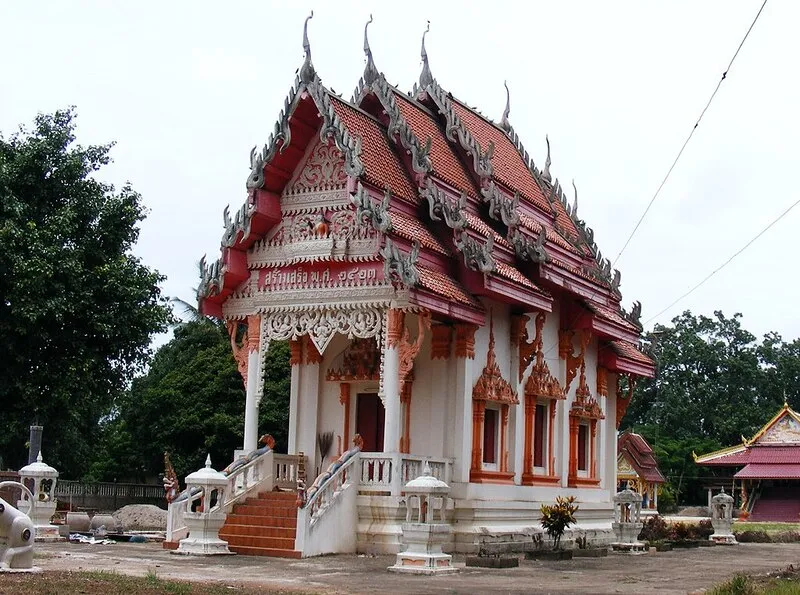
Wat Pa Sak Rerai is located in Ban Hua Hat, Village No. 5, Khung Taphao Subdistrict, Mueang Uttaradit District, Uttaradit Province. It is a Maha Nikaya community temple and an important Buddhist center for local residents. The temple was built around B.E. 2464 through the collective faith and cooperation of the people of Ban Hua Hat, who wanted a temple for religious ceremonies, merit-making, community gatherings, and Buddhist activities. The temple covers approximately 9 rai and 21 square wah and received its consecrated boundary on August 30, B.E. 2520, with a boundary area measuring 30 meters wide and 50 meters long.
Wat Pa Sak Rerai is meaningful not because of grand architecture or large-scale tourism, but because it represents the faith of a local community. It was created by villagers who wanted a spiritual center of their own. Over time, the temple grew together with the Ban Hua Hat community and became a place for Buddhist practice, merit-making, listening to Dhamma, annual ceremonies, and community activities. This gives the temple a strong sense of authenticity as a living local temple.
The temple’s atmosphere is calm, simple, and welcoming. Visitors will not find a crowded tourist attraction, but a peaceful community temple where religious life continues naturally. The shaded temple grounds, modest buildings, and local surroundings make Wat Pa Sak Rerai suitable for worship, quiet reflection, and learning about village Buddhist life in Uttaradit. It is an appropriate place for travelers who want to experience the quieter cultural side of Mueang Uttaradit District.
The name “Wat Pa Sak Rerai” is distinctive and memorable. The words “Pa Sak” may suggest an association with teak trees or an older natural landscape, while “Rerai” gives the name a gentle and poetic quality. Although no clear historical document explains the exact origin of the name in detail, the name has become part of the identity of Ban Hua Hat and Khung Taphao Subdistrict. Local people recognize it as a temple formed through community faith and maintained through generations.
Since the temple was built around B.E. 2464, Wat Pa Sak Rerai is now more than 100 years old. At the time of its founding, temples played a central role in Thai village life. A temple was not only a place for monks, but also a community center where villagers met, made merit, organized ceremonies, educated younger generations, and strengthened moral values. Wat Pa Sak Rerai reflects this traditional role clearly.
The granting of the consecrated boundary on August 30, B.E. 2520 was an important milestone in the temple’s history. A consecrated boundary defines the sacred area used for important monastic ceremonies, including ordination. With this boundary, the temple gained a more complete religious status and became better able to serve the Buddhist needs of the local community. The boundary area of 30 meters by 50 meters reflects the formal establishment of a sacred space within the temple grounds.
Inside Wat Pa Sak Rerai are spaces for worship, Buddhist activities, and community events. The temple is simple in appearance, but its simplicity is part of its charm. It is a practical temple used by villagers in daily religious life. People come here for Buddhist holy days, merit-making, Kathin ceremonies, forest robe offerings, and community activities. The temple therefore remains active and meaningful rather than being merely a historical name.
One of the temple’s most interesting natural features is the old Pho Ngoen Pho Thong tree, believed to be more than 100 years old, located at the rear of the temple. The tree is large, mature, and spiritually meaningful because bodhi trees are closely associated with the enlightenment of the Buddha. In a Thai temple context, an old bodhi tree represents peace, longevity, shade, and spiritual continuity. This tree adds natural beauty and sacred atmosphere to Wat Pa Sak Rerai.
The old bodhi tree is more than a large tree in the temple grounds. It can be seen as a living witness to the development of the temple and the Ban Hua Hat community. For more than a century, it has stood through changes in the village, temple life, and local traditions. Visitors can observe the tree respectfully and appreciate the relationship between nature, Buddhist faith, and community memory.
Wat Pa Sak Rerai continues to play an important role during major Buddhist days such as Makha Bucha Day, Visakha Bucha Day, Asalha Bucha Day, Buddhist Lent, and the end of Buddhist Lent. On these occasions, villagers gather to make merit, offer food to monks, listen to Dhamma teachings, and participate in temple activities. These events strengthen the bond between temple and community and give people of different generations a chance to meet through shared faith.
Kathin and forest robe offering ceremonies are also important activities at Wat Pa Sak Rerai. These ceremonies are not only religious duties, but also expressions of community cooperation. Villagers help prepare the temple grounds, food, offerings, and hospitality for participants. Such activities reflect the sense of shared ownership that local people have toward the temple.
The temple is also a suitable place for moral learning. Community temples like Wat Pa Sak Rerai help children and young people learn respect, generosity, gratitude, discipline, and public-mindedness through real participation. Helping at temple events, joining merit-making activities, and listening to teachings allow younger generations to absorb Buddhist values naturally.
For cultural travelers, Wat Pa Sak Rerai is suitable for those who appreciate quiet community temples rather than grand monuments. The temple may not have large ancient ruins, but it has a strong story of local cooperation, a peaceful atmosphere, an old bodhi tree, and continuing religious life. Visitors should approach the temple as a sacred local space rather than only a sightseeing stop.
A meaningful visit can begin with making merit or paying respect in the temple area, followed by a quiet walk around the grounds and a respectful visit to the old Pho Ngoen Pho Thong tree. Spending time slowly allows visitors to understand how the temple functions as the spiritual heart of Ban Hua Hat. The value of the temple is found in its atmosphere, community role, and continuity of faith.
Getting There is convenient from Uttaradit city. Travelers can head toward Khung Taphao Subdistrict and continue to Ban Hua Hat, Village No. 5. Traveling by private car, rental car, or local transport is recommended. Visitors using map navigation can search for Wat Pa Sak Rerai or Ban Hua Hat, Khung Taphao Subdistrict, to reach the temple area more easily.
Because Khung Taphao is not far from Uttaradit city, Wat Pa Sak Rerai can be included in a half-day or full-day temple route. Nearby places include Wat Khung Taphao, Wat Bo Phra, Wat Hat Suea Ten, Pha Chuk Dam, Wat Phra Fang Sawangkhaburi Muninat, and attractions in Uttaradit city. This kind of route allows travelers to see community temples, local faith, and the wider landscape of Mueang Uttaradit District.
Visitors should dress modestly, speak quietly, and respect monks and local worshippers. Special care should be taken around worship areas, the ordination hall, and the old bodhi tree. If a temple ceremony or community event is taking place, visitors should follow the guidance of temple caretakers or local residents. Respectful travel helps preserve the temple’s peaceful atmosphere and supports the community that continues to care for it.
The appeal of Wat Pa Sak Rerai lies in the connection between faith, nature, and community. The temple was founded through the devotion of local people, has a modest and peaceful setting, features an old bodhi tree, and continues to host religious events. These qualities make the temple a living cultural space rather than a static landmark.
From a conservation perspective, Wat Pa Sak Rerai should be valued as a community temple over 100 years old. Preserving it means maintaining not only buildings, but also traditions, Kathin activities, Buddhist holy day observances, the old bodhi tree, and the memory of villagers who helped establish the temple. Accurate and respectful storytelling is part of preserving this local cultural value.
Wat Pa Sak Rerai is suitable for travelers who enjoy peaceful temples, local communities, and places shaped by genuine faith. It is especially meaningful for those traveling through Khung Taphao Subdistrict or exploring temples in Mueang Uttaradit District. The temple offers a quiet and sincere experience that contrasts with more commercial tourist destinations.
In summary, Wat Pa Sak Rerai in Ban Hua Hat, Khung Taphao Subdistrict, Mueang Uttaradit District, is a Maha Nikaya community temple built around B.E. 2464 by the people of Ban Hua Hat. It received its consecrated boundary on August 30, B.E. 2520 and continues to serve as a center of Buddhist and community activities. Its highlights include a peaceful atmosphere, a strong community history, and a Pho Ngoen Pho Thong tree over 100 years old. For travelers seeking a quiet local temple in Uttaradit, Wat Pa Sak Rerai is a worthwhile place to visit.
| Name | Wat Pa Sak Rerai |
| Location | Ban Hua Hat, Village No. 5, Khung Taphao Subdistrict, Mueang Uttaradit District, Uttaradit Province |
| Address | Village No. 5, Khung Taphao Subdistrict, Mueang Uttaradit District, Uttaradit Province 53000 |
| Highlights | A community temple over 100 years old in Ban Hua Hat, known for its peaceful atmosphere, local faith, and a Pho Ngoen Pho Thong tree over 100 years old at the rear of the temple |
| History | Built around B.E. 2464 by the people of Ban Hua Hat as a place for Buddhist ceremonies and community activities |
| Temple Land Area | Approximately 9 rai and 21 square wah |
| Consecrated Boundary | Granted on August 30, B.E. 2520, with a boundary area of 30 meters wide and 50 meters long |
| Name Origin | The exact documentary origin of the name is not clearly confirmed, but Wat Pa Sak Rerai has become an important identity of the temple and Ban Hua Hat community |
| Distinctive Features | A Maha Nikaya community temple with a calm, simple atmosphere and an important role as a Buddhist center for Ban Hua Hat |
| Main Areas / Zones | Merit-making area, ordination hall, Buddhist activity space, and the area of the old Pho Ngoen Pho Thong tree at the rear of the temple |
| Important Natural Feature | Pho Ngoen Pho Thong tree over 100 years old, regarded as an auspicious tree and a distinctive feature of the temple |
| Travel Information | From Uttaradit city, travel toward Khung Taphao Subdistrict and continue to Ban Hua Hat, Village No. 5; private car, rental car, or local transport is recommended |
| Current Status | An active Maha Nikaya community temple with ongoing Buddhist and community activities, including Kathin activities listed in B.E. 2568 |
| Open Days | Daily for general merit-making and visits |
| Opening Hours | Daytime is suitable for visiting |
| Facilities | Merit-making area, ordination hall, religious activity spaces, and community activity area |
| Nearby Tourist Attractions | 1. Wat Khung Taphao, about 3 km 2. Wat Bo Phra, about 4 km 3. Wat Hat Suea Ten, about 5 km 4. Pha Chuk Dam, about 8 km 5. Wat Phra Fang Sawangkhaburi Muninat, about 12 km 6. Phraya Phichai Dap Hak Monument, about 13 km |
| Nearby Restaurants | 1. Pha Chuk Cafe at Pha Chuk Dam, about 8 km 2. Nana Field, about 8 km, Tel. 080-994-2651 3. Wimon Restaurant, about 10 km 4. The Family Café, about 10 km 5. Ton Tamrap Restaurant on Sri Uttra Road, about 11 km 6. Ban Tak Ngoen Restaurant, about 12 km |
| Nearby Accommodations | 1. Araya Terrace Resort Hotel, about 4 km, Tel. 055-448-771-3 2. DD Tara Inn, about 6 km, Tel. 095-632-6486 3. Araya Hotel, about 7 km, Tel. 065-161-6541, 086-420-6054, 055-429-555 4. K2 Living Hotel Uttaradit, about 10 km 5. Grand Wana Hotel, about 11 km, Tel. 055-403-333, 062-324-5322 6. Areena Resort Uttaradit, about 12 km |
Frequently Asked Questions (FAQ)
Q: Where is Wat Pa Sak Rerai located?
A: Wat Pa Sak Rerai is located in Ban Hua Hat, Village No. 5, Khung Taphao Subdistrict, Mueang Uttaradit District, Uttaradit Province.
Q: When was Wat Pa Sak Rerai built?
A: Wat Pa Sak Rerai was built around B.E. 2464 by the people of Ban Hua Hat as a place for Buddhist ceremonies and community activities.
Q: When did Wat Pa Sak Rerai receive its consecrated boundary?
A: The temple received its consecrated boundary on August 30, B.E. 2520, with a boundary area of 30 meters wide and 50 meters long.
Q: What is the main highlight of Wat Pa Sak Rerai?
A: The main highlight is its peaceful community temple atmosphere and a Pho Ngoen Pho Thong tree over 100 years old at the rear of the temple.
Q: What type of travel is Wat Pa Sak Rerai suitable for?
A: It is suitable for religious and community-based travel, merit-making, visiting the old bodhi tree, and learning about local Buddhist life in Ban Hua Hat.
Q: How can visitors travel to Wat Pa Sak Rerai from Uttaradit city?
A: Visitors can travel from Uttaradit city toward Khung Taphao Subdistrict and continue to Ban Hua Hat, Village No. 5. Private car, rental car, or local transport is recommended.
Q: What nearby attractions can be visited with Wat Pa Sak Rerai?
A: Nearby attractions include Wat Khung Taphao, Wat Bo Phra, Wat Hat Suea Ten, Pha Chuk Dam, Wat Phra Fang Sawangkhaburi Muninat, and the Phraya Phichai Dap Hak Monument.
 Category: ●Places of Worship
 Group: ●Temple
Last Update : 5 MonthAgo
 Last Update : 5 MonthAgo
 Click to Access the Navigation Map GPS

 Art, Culture and Heritage
 Historical Sites and Monuments(2)
 Landmarks and Memorials(8)
 Art, Craft Centres, Tradition(3)
 Museums(1)
 Historic Homes and Cities(1)
Temple(42)
 Other Sacred Sites(6)
 Suburban Living
 Village, Community(4)
 Nature and Wildlife
 National Parks and Marine Reserves(5)
 Mountain (Doi)(3)
 Dam, Reservoir, Lake(3)
 Waterfalls(11)
 Caves(3)
 River, Canal(3)
 Other natural attractions(3)
 Entertainment and Agricultural
 Farms, Parks and Ecotourism(1)
 Travel Articles, Recipes
 Travel Review, Food Review(1)


