
lovethailand home >North Travel Attractions >Uttaradit Travel Attractions >Lap Lae >Phai Lom > Wat Sawang Arom
TL;DR: Wat Sawang Arom is located at Ban Pa Daet, Moo 2, Phai Lom Subdistrict, Laplae District, Uttaradit Province, open Daily, hours Daytime.
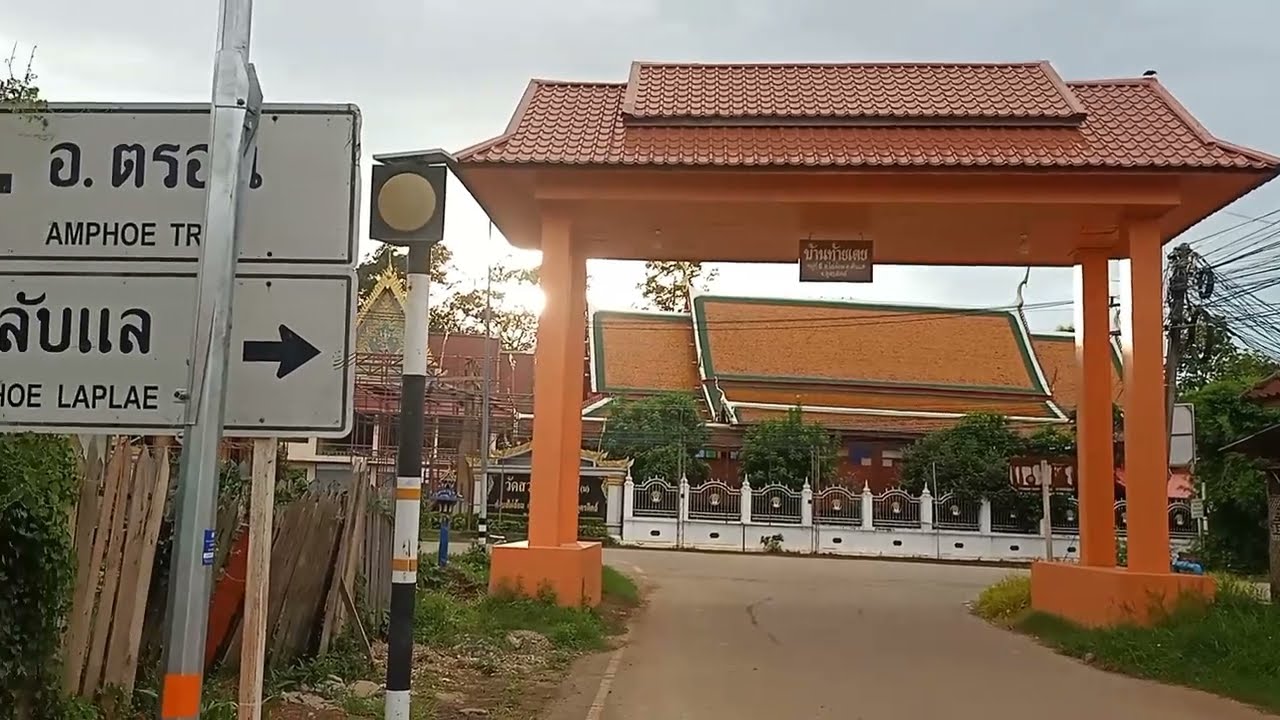
Wat Sawang Arom

Open Days: Daily
Opening Hours: Daytime
Wat Sawang Arom is located at 192 Ban Pa Daet, Moo 2, Phai Lom Subdistrict, Laplae District, Uttaradit Province. It is a local Buddhist temple under the Maha Nikaya order and an important religious center for the Ban Pa Daet community. The temple occupies 23 rai and 78 square wah of land, with an additional monastic land plot of 9 rai and 2 ngan in Wang Kaphi Subdistrict, Mueang Uttaradit District. For travelers interested in local temples, community heritage, and cultural routes around Laplae, Wat Sawang Arom offers a quiet and meaningful stop away from the more crowded landmarks.
The temple has a clear historical identity. Wat Sawang Arom was established in B.E. 2325 and received its royal monastic boundary in B.E. 2450. This makes it one of the older community temples in the Phai Lom area. Its long history reflects the development of Buddhist life in Laplae, where temples have traditionally served as centers of merit-making, monastic ceremonies, local gatherings, and shared community memory.
The name “Sawang Arom” suggests brightness, clarity, and peace of mind. This meaning fits the temple’s role as a spiritual space for the local community. In Thai village life, a temple is not only a place for formal religious ceremonies but also a place where people gather, learn Buddhist values, make merit, and maintain social bonds. Wat Sawang Arom therefore has meaning beyond its address on a map. It is part of the emotional and cultural landscape of Ban Pa Daet and Phai Lom Subdistrict.
Phai Lom Subdistrict lies within Laplae District, one of the most culturally distinctive areas of Uttaradit Province. Laplae is known for local legends, traditional food, orchards, old temples, and community identity. Many visitors know the district through Laplae City Gate, Laplae Museum, local dishes such as khao phan phak, and famous fruit varieties such as Long Laplae and Lin Laplae durian. Wat Sawang Arom adds another layer to this cultural picture by showing the religious foundation of everyday community life.
Inside the temple, important features include a large teakwood pavilion built by local craftsmen, a sermon hall, an ordination hall, a prayer hall, a funeral and merit-making hall, and two monks’ residences. These structures show that Wat Sawang Arom is a functioning community temple with spaces for different Buddhist and social activities. The temple is used for merit-making, religious ceremonies, community gatherings, and monastic life, making it an active sacred space rather than only a historical name.
The large teakwood pavilion is one of the temple’s most interesting features. Teak has long been associated with northern Thai architecture and local craftsmanship. A pavilion built by local craftsmen represents more than a building; it reflects community faith, shared labor, and practical wisdom in using materials connected to the northern landscape. For visitors who appreciate vernacular architecture, this pavilion gives Wat Sawang Arom a distinctive local character.
The ordination hall is another important part of the temple. Since Wat Sawang Arom received its royal monastic boundary in B.E. 2450, it has a consecrated area for formal monastic acts. In Thai Buddhism, this boundary is essential for important ceremonies such as ordination. This detail confirms the temple’s religious status and shows that Wat Sawang Arom has long been a proper and active Buddhist institution within the community.
The temple’s additional monastic land in Wang Kaphi Subdistrict is also significant. Monastic land is part of the religious property that supports the long-term existence and activities of a temple. The fact that Wat Sawang Arom has a separate monastic land plot shows how temple resources are connected with the wider area beyond the main temple grounds. This land is part of the temple’s religious foundation and contributes to the continuity of Buddhist activities.
The abbot of Wat Sawang Arom is Phra Khru Weerajanthophas (Surin). The abbot’s role is important in maintaining the temple’s religious life, overseeing temple property, guiding Buddhist activities, and supporting the relationship between the temple and the community. For a community temple, this leadership helps keep traditions alive and ensures that the temple continues to function as a spiritual center for local people.
Wat Sawang Arom is also convenient for cultural travel around Laplae and Uttaradit. From the temple, travelers can continue to Wat Phra Thaen Sila At, Wat Phra Borommathat Thung Yang, Laplae City Gate, Laplae Museum, and Wat Don Sak. These nearby attractions form a practical day route that combines Buddhist heritage, local history, old architecture, and community culture. This makes Wat Sawang Arom a useful starting point for visitors who want to explore Laplae in a deeper and slower way.
Wat Phra Thaen Sila At is one of the important nearby Buddhist landmarks, known for its sacred stone platform and long-standing religious significance. Wat Phra Borommathat Thung Yang is another major temple connected with the historical and spiritual identity of the area. Visiting these temples together with Wat Sawang Arom helps travelers understand how Buddhist faith is spread across the cultural landscape of Laplae and nearby districts.
Laplae City Gate and Laplae Museum add a historical and cultural dimension to the journey. If Wat Sawang Arom represents local Buddhist life, these places help explain the identity, stories, and memories of Laplae as a town. Together, they create a balanced travel route that includes religion, local history, food culture, and community life in one day.
Wat Don Sak is also a recommended stop for travelers interested in old wooden architecture and temple craftsmanship. It is known for teakwood heritage and carved wooden details. Combining Wat Sawang Arom with Wat Don Sak allows visitors to see different types of temple value in Laplae: one as a functioning community temple with a large teak pavilion and religious spaces, and the other as a historic temple with notable wooden craftsmanship.
The atmosphere at Wat Sawang Arom is calm and local. Visitors should dress respectfully, speak softly, and avoid disturbing monks or residents who come for religious activities. If there is a ceremony or community event, travelers should give space to participants and follow temple etiquette. This is a living temple, so it should be approached with respect rather than treated only as a sightseeing location.
For photography, Wat Sawang Arom is best suited to quiet temple scenes, local religious architecture, and the atmosphere of a rural northern Thai temple. The charm of the temple is not dramatic scale but authenticity. Visitors who photograph the temple should avoid interrupting worshippers or ceremonies, and should ask permission if photographing monks or religious activities closely.
The temple is also a good place to understand how rural Buddhist temples function in everyday community life. A temple like Wat Sawang Arom brings together older residents, families, monks, and local volunteers. It supports merit-making, moral learning, community events, and Buddhist ceremonies. This role makes the temple a social and spiritual anchor, not merely a historical monument.
Getting There is most convenient by private car or rental car. From Uttaradit city, travel toward Phai Lom Subdistrict in Laplae District and search for “Wat Sawang Arom Phai Lom Laplae” on an online map. Travelers can also use the coordinates 17.5731623163, 100.070400489. Having your own transport is recommended because it allows you to visit nearby temples, restaurants, and accommodations more easily.
A half-day route can begin with Wat Sawang Arom in the morning, followed by Wat Phra Thaen Sila At and Wat Phra Borommathat Thung Yang. Travelers can then continue to a local restaurant in Laplae for regional food. If time allows, add Laplae City Gate, Laplae Museum, and Wat Don Sak to create a more complete cultural route.
For a full-day itinerary, start from Uttaradit city, visit Wat Sawang Arom in Phai Lom Subdistrict, continue to the major temples around Thung Yang and Laplae, enjoy local dishes such as khao phan phak, and finish with a walk around Laplae town or an overnight stay in Uttaradit. This route is suitable for families, cultural travelers, writers, photographers, and visitors who prefer slow travel with local depth.
The best time to visit is in the morning or during the cooler part of the afternoon. Morning visits are suitable for merit-making and beginning a calm cultural trip. Afternoon visits can be combined with local restaurants or nearby attractions. During the rainy season, carrying an umbrella is recommended, while in the hot season it is best to bring drinking water and plan the route at a comfortable pace.
From a community history perspective, Wat Sawang Arom shows the relationship between land, faith, and Buddhist property management. The temple has documented land for its main grounds and additional monastic land in Wang Kaphi Subdistrict. This helps visitors understand that a temple is supported not only by buildings and ceremonies, but also by religious assets that must be preserved for the long-term benefit of Buddhism and the community.
Compared with major tourist attractions in Uttaradit, Wat Sawang Arom may appear modest, but its value lies in its role as an old community temple with clear historical information, important religious structures, a large temple area, and a location that connects well with the cultural route of Laplae. Travelers who enjoy smaller local temples will find this site meaningful, especially when combined with better-known attractions nearby.
A visit to Wat Sawang Arom helps travelers understand Uttaradit at the community level. The temple tells the story of Ban Pa Daet, Phai Lom Subdistrict, and Laplae District through religious land, teakwood architecture, an ordination hall, a sermon hall, a prayer hall, monks’ residences, and ongoing Buddhist activities. For those who want to see Laplae beyond its landmarks, Wat Sawang Arom is a worthwhile stop that adds depth, faith, and local context to the journey.
Travelers from other provinces can use Wat Sawang Arom as a starting point for exploring Phai Lom and Laplae. Restaurants nearby include cafés, noodle shops, khao phan phak restaurants, and northern-style eateries. Accommodations in the surrounding area range from small resorts to hotels in Uttaradit city. This makes the temple easy to include in a short visit, an overnight trip, or a multi-day Uttaradit itinerary.
When arriving at the temple, visitors may begin by paying respect to the Buddha images and making merit. After that, take time to observe the temple grounds, the teakwood pavilion, and the main religious buildings. A respectful visit allows travelers to experience more than the physical site. It offers a quieter understanding of how a local Buddhist temple continues to support faith, memory, and community life.
Wat Sawang Arom is therefore recommended for travelers who appreciate local detail, old temples, vernacular craftsmanship, and the relationship between temple and community. Its calm atmosphere slows the pace of travel, while its history, land records, monastic boundary, and religious structures provide meaningful context. This is the charm of a local temple that deserves a place in a cultural travel route through Uttaradit.
| Name | Wat Sawang Arom |
| Location | Ban Pa Daet, Moo 2, Phai Lom Subdistrict, Laplae District, Uttaradit Province |
| Address | 192 Moo 2, Phai Lom Subdistrict, Laplae District, Uttaradit 53210, Thailand |
| Coordinates | Latitude 17.5731623163, Longitude 100.070400489 |
| Highlights | An old Maha Nikaya community temple in Phai Lom Subdistrict with a large teakwood pavilion, ordination hall, sermon hall, prayer hall, merit-making hall, and monks’ residences |
| History | Established in B.E. 2325 and granted its royal monastic boundary in B.E. 2450 |
| Name Origin | The name suggests brightness, clarity, and peace of mind, reflecting the temple’s role as a spiritual center for the local community |
| Distinctive Features | A functioning community temple in Laplae with a large teakwood pavilion built by local craftsmen and several active religious buildings |
| Temple Area | 23 rai and 78 square wah |
| Monastic Land | 1 plot, 9 rai and 2 ngan, located in Wang Kaphi Subdistrict, Mueang Uttaradit District |
| Buddhist Order | Maha Nikaya |
| Abbot / Caretaker | Phra Khru Weerajanthophas (Surin), Abbot of Wat Sawang Arom |
| Main Contact Number | 055-414-238 |
| Travel Information | Best reached by private car or rental car from Uttaradit city. Search for “Wat Sawang Arom Phai Lom Laplae” or use coordinates 17.5731623163, 100.070400489. |
| Current Status | A functioning Buddhist temple and community religious center in Ban Pa Daet, Phai Lom Subdistrict |
| Open Days | Daily |
| Opening Hours | Daytime |
| Facilities / Main Areas | Large teakwood pavilion, sermon hall, ordination hall, prayer hall, funeral and merit-making hall, and 2 monks’ residences |
| Nearby Tourist Attractions | 1. Wat Phra Thaen Sila At, about 4 km 2. Wat Phra Borommathat Thung Yang, about 5 km 3. Laplae City Gate, about 8 km 4. Laplae Museum, about 8 km 5. Wat Don Sak, about 11 km |
| Nearby Restaurants | 1. Kafae Phai Lom, about 2 km, Tel. 098-614-6184 2. Kuai Tiao Pak Mo Thang Khong Wat Phai Lom, about 3 km 3. Phop Laplae Khao Phan Phak, about 8 km, Tel. 084-620-1518, 061-018-7878 4. Lum Lum Laplae Baan 100 Pi, about 9 km, Tel. 095-628-3125 5. Mon Laplae, about 12 km, Tel. 093-594-1465 |
| Nearby Accommodations | 1. Baan Suan Palm Resort Uttaradit, about 2 km, Tel. 081-973-1159 2. Maladee Uttaradit, about 2 km, Tel. 055-040-209, 088-291-9705 3. Thai Thana Resort Uttaradit, about 4 km, Tel. 055-443-222 4. Areena Resort Uttaradit, about 5 km, Tel. 055-414-939, 089-566-4327 5. B-Cozy Uttaradit, about 5 km |
Frequently Asked Questions (FAQ)
Q: Where is Wat Sawang Arom located?
A: Wat Sawang Arom is located at 192 Ban Pa Daet, Moo 2, Phai Lom Subdistrict, Laplae District, Uttaradit Province 53210.
Q: What is the history of Wat Sawang Arom?
A: Wat Sawang Arom is an old community temple in Phai Lom Subdistrict. It was established in B.E. 2325 and received its royal monastic boundary in B.E. 2450.
Q: What are the important features inside Wat Sawang Arom?
A: Important features include a large teakwood pavilion, sermon hall, ordination hall, prayer hall, funeral and merit-making hall, and two monks’ residences.
Q: Who is the abbot of Wat Sawang Arom?
A: The abbot of Wat Sawang Arom is Phra Khru Weerajanthophas (Surin).
Q: What type of visit is Wat Sawang Arom suitable for?
A: It is suitable for merit-making, quiet temple visits, local history, teakwood architecture, and cultural travel around Laplae District.
Q: What nearby attractions can travelers visit after Wat Sawang Arom?
A: Nearby attractions include Wat Phra Thaen Sila At, Wat Phra Borommathat Thung Yang, Laplae City Gate, Laplae Museum, and Wat Don Sak.
Q: How can travelers get to Wat Sawang Arom?
A: The easiest way is by private car or rental car from Uttaradit city. Search for “Wat Sawang Arom Phai Lom Laplae” or use coordinates 17.5731623163, 100.070400489.
Q: Does Wat Sawang Arom have a contact number?
A: The main contact number for Wat Sawang Arom is 055-414-238.
 Category: ●Places of Worship
 Group: ●Temple
Last Update : 5 MonthAgo
 Last Update : 5 MonthAgo
 Click to Access the Navigation Map GPS
Wat Sawang Arom Map
Recommend

 Art, Culture and Heritage
 Historical Sites and Monuments(2)
 Landmarks and Memorials(8)
 Art, Craft Centres, Tradition(3)
 Museums(1)
 Historic Homes and Cities(1)
Temple(42)
 Other Sacred Sites(6)
 Suburban Living
 Village, Community(4)
 Nature and Wildlife
 National Parks and Marine Reserves(5)
 Mountain (Doi)(3)
 Dam, Reservoir, Lake(3)
 Waterfalls(11)
 Caves(3)
 River, Canal(3)
 Other natural attractions(3)
 Entertainment and Agricultural
 Farms, Parks and Ecotourism(1)
 Travel Articles, Recipes
 Travel Review, Food Review(1)


