
lovethailand home >North Travel Attractions >Uttaradit Travel Attractions >Tha Pla >Pha Lueat > Wat Pha Lueat
TL;DR: Wat Pha Lueat is located at Ban Pha Lueat, Village No. 1, Pha Lueat Subdistrict, Tha Pla District, Uttaradit Province, open Daily for general merit-making and visits, hours Daytime is suitable for visiting.

Wat Pha Lueat
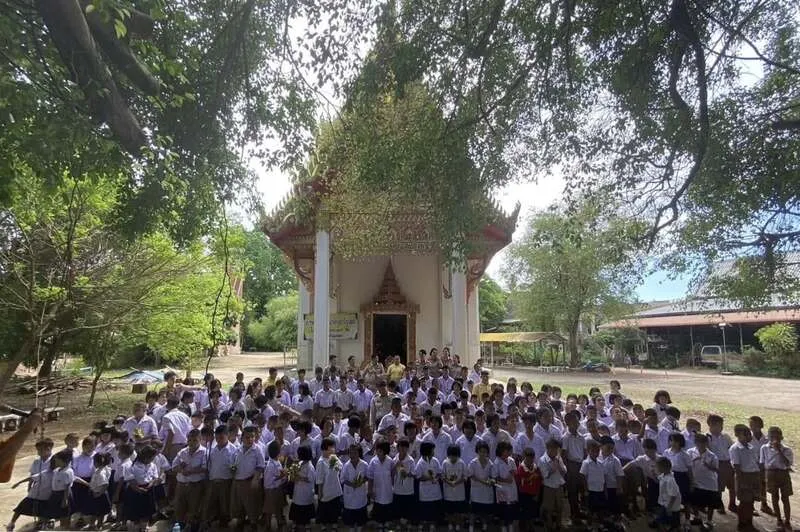
Open Days: Daily for general merit-making and visits
Opening Hours: Daytime is suitable for visiting
Wat Pha Lueat is located at No. 15, Ban Pha Lueat, Village No. 1, Pha Lueat Subdistrict, Tha Pla District, Uttaradit Province. It is a Maha Nikaya community temple and an important spiritual center for the people of Ban Pha Lueat along the Nan River. The temple is meaningful not only as a place for Buddhist ceremonies, but also as a site that preserves local history, migration memory, folklore, and cultural heritage through its old wooden preaching pulpit, which is more than 230 years old.
Wat Pha Lueat has long served as a center of religious and community life. It is connected with local stories about people who migrated after the second fall of Ayutthaya. According to community tradition, villagers from Sawangkhaburi fled forced relocation and moved into this area. At the same time, a group of soldiers responsible for guarding a large royal boat of the ruler of Nan settled around the present Ban Pha Lueat area, forming a small community of about 18 households. Over time, this settlement developed into the community known today as Ban Pha Lueat.
The temple therefore carries several layers of meaning. It reflects Buddhist faith, local settlement, the memory of post-war migration, and the relationship between communities along the Nan River. For local people, Wat Pha Lueat is not merely a religious building. It is a spiritual home, a place for merit-making, a community gathering space, and a cultural memory site that connects the present generation with the experiences of their ancestors.
The name “Pha Lueat” also has a well-known local legend. The story tells of a man named Phra Lo who heard the beautiful call of a wild jungle fowl and wanted to catch it. He brought a domestic rooster to lure the bird, but when he arrived at the place, his rooster refused to crow. In anger, Phra Lo struck the rooster against a rock, leaving marks that looked like blood on the stone near the Nan River. Nearby rocks were also compared by local people to a chicken cage and a rooster comb. This legend became part of the identity of Pha Lueat and continues to be remembered in the community.
When the legend of Pha Lueat is considered together with the migration story from Sawangkhaburi and the presence of soldiers connected with Nan, Wat Pha Lueat becomes a place where folklore and history meet. The temple allows visitors to understand local history not as a distant written record, but as something preserved in place names, riverside landscapes, sacred objects, and community memory.
Temple records identify Wat Pha Lueat as a Maha Nikaya temple with a land area of 6 rai, 3 ngan, and 85 square wah. The temple sits on elevated land near the Nan River. This setting is important because the Nan River has shaped the settlement, travel, economy, and memory of communities in this region for generations. Wat Pha Lueat therefore reflects both the spiritual and geographical life of Tha Pla District.
The temple contains important structures typical of a community temple, including an ordination hall, sermon hall, chanting hall, monks’ residences, and areas for religious activities. These buildings are modest and practical, but they carry real meaning because they continue to serve the Buddhist life of local residents. The temple is used for merit-making, sermons, ceremonies, and community gatherings, especially during important religious occasions.
One of the most valuable cultural objects preserved at Wat Pha Lueat is its wooden preaching pulpit over 230 years old. A preaching pulpit is traditionally used by monks when giving Dhamma talks. It is therefore directly associated with the transmission of Buddhist teachings. The fact that such an old wooden pulpit remains at Wat Pha Lueat shows the continuity of Buddhist faith and the community’s effort to preserve its cultural heritage.
The old wooden pulpit is more than a piece of woodwork. It is a witness to the time when temples were the main centers of learning, moral instruction, and social order in village communities. Before modern education became widespread, temples played a major role in teaching reading, morality, ritual practice, and community values. The pulpit therefore symbolizes the relationship between monks and villagers across generations.
With an age of more than 230 years, the pulpit may have been used in many ceremonies and Dhamma teachings over several eras. It carries the memory of past abbots, monks, villagers, festivals, and acts of devotion. Preserving it inside the temple is not simply about keeping an old object. It is about maintaining a living link with the spiritual life of Ban Pha Lueat.
Wat Pha Lueat continues to play an important role during major Buddhist days such as Makha Bucha Day, Visakha Bucha Day, Asalha Bucha Day, Buddhist Lent, and the end of Buddhist Lent. Villagers gather at the temple to make merit, offer food to monks, listen to Dhamma, and join community ceremonies. Kathin and forest robe offering ceremonies also show the continuing bond between temple and community.
During merit-making events, Wat Pha Lueat becomes a lively community space. Monks, villagers, elders, children, and devotees from nearby areas take part in preparing the temple, offering food, welcoming guests, and maintaining the grounds. These events are not merely religious rituals. They are social processes that strengthen unity and preserve Buddhist traditions.
Wat Pha Lueat is also suitable for learning about local history after the second fall of Ayutthaya. The story of migrants from Sawangkhaburi and soldiers connected with the ruler of Nan shows that history does not exist only in royal chronicles or battlefields. It also survives in villages, temples, river communities, and oral traditions. Wat Pha Lueat gives visitors a chance to see this local dimension of Thai history.
Pha Lueat Subdistrict has beautiful natural surroundings closely connected with the Nan River. A visit to the temple can therefore be combined with travel around Tha Pla District, including riverside areas, natural viewpoints, Sirikit Dam, and Lam Nam Nan National Park. Wat Pha Lueat is a good stop for travelers who want to combine merit-making, local history, and nature in one route.
Visitors should approach Wat Pha Lueat respectfully. A meaningful visit may begin with paying respect in the temple, learning about the old wooden pulpit, understanding the history of Ban Pha Lueat, and observing the landscape near the Nan River. Walking slowly through the temple grounds helps visitors see that every element of the place is connected with local memory and community faith.
For cultural travelers, Wat Pha Lueat is especially interesting because it is not defined by grand monuments. Its value lies in a deep story: the old preaching pulpit, the migration from Sawangkhaburi, the connection with Nan, the Pha Lueat legend, and the continuing religious life of local people. This makes the temple a meaningful destination for visitors who want to understand the cultural landscape of Tha Pla District.
Getting There is most convenient by private car, rental car, or local transport. From Uttaradit city, travel toward Tha Pla District, then continue to Pha Lueat Subdistrict and Ban Pha Lueat, Village No. 1. The route can also be connected with Sirikit Dam, Lam Nam Nan National Park, and other natural attractions in Tha Pla.
The trip from Uttaradit city to Pha Lueat is suitable for a day trip or a 2-day journey. Travelers who want a relaxed itinerary can visit the temple in the morning, then continue to riverside attractions or natural sites in Tha Pla. Daytime visits are recommended because the route is easier to navigate and the temple surroundings can be viewed clearly.
Visitors should dress modestly, speak quietly, and respect monks and local worshippers. The old wooden pulpit should be viewed carefully and should not be touched or moved without permission. As a cultural object with great age and meaning, it deserves careful preservation. Respectful behavior helps protect the temple and supports the local community that continues to care for it.
Wat Pha Lueat is suitable for travelers interested in community temples, local history, old woodwork, ancient preaching pulpits, and riverside settlements along the Nan River. Those who prefer quiet and meaningful places will find this temple different from busy tourist sites. It remains a living temple where faith is still practiced naturally.
From a conservation perspective, Wat Pha Lueat deserves attention because it combines settlement history, local legend, and a valuable wooden pulpit. Preserving the temple means maintaining not only buildings, but also community memory, the story of migration from Sawangkhaburi, the Pha Lueat legend, and the cultural object that represents Buddhist teaching across generations.
Overall, Wat Pha Lueat has value in 4 important dimensions: Buddhism, community history, local legend, and cultural heritage. Its Buddhist value is shown through its continuing role as a Maha Nikaya temple with resident monks and merit-making activities. Its historical value appears in the story of post-Ayutthaya migration. Its folkloric value is preserved in the legend of Pha Lueat. Its cultural value is embodied in the wooden preaching pulpit over 230 years old.
In summary, Wat Pha Lueat in Ban Pha Lueat, Pha Lueat Subdistrict, Tha Pla District, Uttaradit Province, is an important community temple near the Nan River. Its highlights include an old wooden preaching pulpit over 230 years old, the migration story of people from Sawangkhaburi after the second fall of Ayutthaya, the Pha Lueat legend, and its ongoing role as the spiritual center of Ban Pha Lueat. For travelers seeking Buddhist worship, local history, and cultural meaning in Tha Pla District, Wat Pha Lueat is a worthwhile place to visit.
| Name | Wat Pha Lueat |
| Location | Ban Pha Lueat, Village No. 1, Pha Lueat Subdistrict, Tha Pla District, Uttaradit Province |
| Address | No. 15, Ban Pha Lueat, Village No. 1, Pha Lueat Subdistrict, Tha Pla District, Uttaradit Province 53190 |
| Highlights | A community temple near the Nan River, known for a wooden preaching pulpit over 230 years old and stories of post-Ayutthaya migration from Sawangkhaburi |
| History | Connected with the migration of people from Sawangkhaburi after the second fall of Ayutthaya and the settlement of soldiers responsible for guarding a large royal boat of the ruler of Nan |
| Temple Land Area | 6 rai, 3 ngan, and 85 square wah |
| Name Origin | The name Pha Lueat is linked with a local legend about Phra Lo, a jungle fowl, and blood-like marks on rocks near the Nan River |
| Distinctive Features | A Maha Nikaya community temple on elevated land near the Nan River, important for local religion and the history of Ban Pha Lueat |
| Main Areas / Zones | Ordination hall, sermon hall, chanting hall, monks’ residences, Buddhist activity areas, and the area preserving the old wooden preaching pulpit |
| Important Cultural Heritage | A wooden preaching pulpit over 230 years old, representing traditional woodwork and the continuity of Buddhist teaching in the community |
| Travel Information | From Uttaradit city, travel toward Tha Pla District, then continue to Pha Lueat Subdistrict and Ban Pha Lueat, Village No. 1; private car, rental car, or local transport is recommended |
| Current Status | An active Maha Nikaya community temple with resident monks and Buddhist activities such as Kathin and community merit-making events |
| Open Days | Daily for general merit-making and visits |
| Opening Hours | Daytime is suitable for visiting |
| Facilities | Merit-making area, ordination hall, sermon hall, chanting hall, monks’ residences, and community Buddhist activity spaces |
| Abbot / Caretaker | Phra Khru Phithak Sarakhun |
| Nearby Tourist Attractions | 1. Hat Madam, Ban Pha Lueat, about 2 km 2. Wat Pha Tao Bamrung, about 5 km 3. Pha Tao Camp & Cafe, about 6 km 4. Sirikit Dam, about 18 km 5. Lam Nam Nan National Park, about 22 km 6. Scenic routes and viewpoints in Tha Pla District, about 25 km |
| Nearby Restaurants | 1. Pha Tao Camp & Cafe, about 6 km, Tel. 081-036-0724 2. Baan Nok Cafe Kru Winnie Tha Pla, about 25 km, Tel. 089-268-2428 3. Lung Kiat Coffee, about 25 km 4. Ton Fah Tour, about 26 km 5. Kesanee Phae Tour Tha Pla, about 28 km 6. PunThai Coffee Tha Pla 2, about 29 km |
| Nearby Accommodations | 1. Na Phasiri Resort Uttaradit, about 5 km, Tel. 099-440-9111 2. Pha Tao Camp & Cafe, about 6 km, Tel. 081-036-0724 3. Huai Charoen Fishing Village Homestay, about 10 km, Tel. 086-062-0517, 081-688-2474 4. Lam Nam Nan National Park Accommodation, about 22 km, Tel. 055-436-751, 085-049-4164 5. EGAT Sirikit Dam Guesthouse, about 24 km, Tel. 089-961-6573 6. Ruean Rim Nan Guesthouse, about 30 km, Tel. 055-461-140-3, 089-961-6573 |
Frequently Asked Questions (FAQ)
Q: Where is Wat Pha Lueat located?
A: Wat Pha Lueat is located at No. 15, Ban Pha Lueat, Village No. 1, Pha Lueat Subdistrict, Tha Pla District, Uttaradit Province.
Q: What is the most important cultural object at Wat Pha Lueat?
A: The temple preserves a wooden preaching pulpit over 230 years old, which is an important cultural heritage object of the community.
Q: How is Wat Pha Lueat connected with Sawangkhaburi?
A: Local stories say that after the second fall of Ayutthaya, villagers from Sawangkhaburi fled forced relocation and settled in the Pha Lueat area.
Q: What is the origin of the name Pha Lueat?
A: The name is linked with a local legend about Phra Lo, a jungle fowl, and blood-like marks on rocks near the Nan River.
Q: What type of travel is Wat Pha Lueat suitable for?
A: It is suitable for religious and cultural travel, merit-making, learning local history, and viewing an old wooden preaching pulpit.
Q: How can visitors travel to Wat Pha Lueat from Uttaradit city?
A: Visitors can travel from Uttaradit city toward Tha Pla District, then continue to Pha Lueat Subdistrict and Ban Pha Lueat, Village No. 1.
Q: What nearby attractions can be visited with Wat Pha Lueat?
A: Nearby attractions include Hat Madam, Wat Pha Tao Bamrung, Pha Tao Camp & Cafe, Sirikit Dam, and Lam Nam Nan National Park.
 Category: ●Places of Worship
 Group: ●Temple
Last Update : 5 MonthAgo
 Last Update : 5 MonthAgo
 Click to Access the Navigation Map GPS

 Art, Culture and Heritage
 Historical Sites and Monuments(2)
 Landmarks and Memorials(8)
 Art, Craft Centres, Tradition(3)
 Museums(1)
 Historic Homes and Cities(1)
Temple(42)
 Other Sacred Sites(6)
 Suburban Living
 Village, Community(4)
 Nature and Wildlife
 National Parks and Marine Reserves(5)
 Mountain (Doi)(3)
 Dam, Reservoir, Lake(3)
 Waterfalls(11)
 Caves(3)
 River, Canal(3)
 Other natural attractions(3)
 Entertainment and Agricultural
 Farms, Parks and Ecotourism(1)
 Travel Articles, Recipes
 Travel Review, Food Review(1)


