
lovethailand home >North Travel Attractions >Uttaradit Travel Attractions >Mueang Uttaradit >Pha Chuk > Wat Phra Fang Sawangkhaburi Muni Nat
TL;DR: Wat Phra Fang Sawangkhaburi Muni Nat is located at Ban Phra Fang, Village No. 3, Phajuk Subdistrict, Mueang Uttaradit District, Uttaradit Province, open Advance appointment required, hours Advance appointment required.
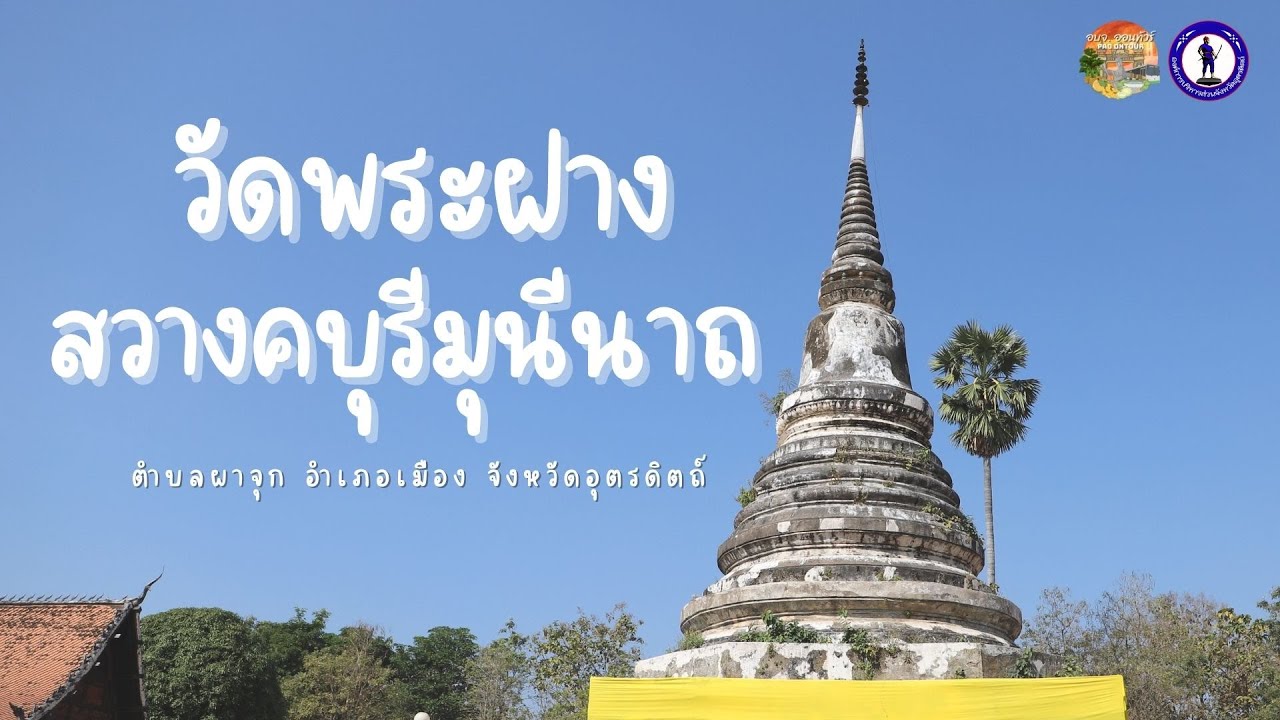
Wat Phra Fang Sawangkhaburi Muni Nat

Open Days: Advance appointment required
Opening Hours: Advance appointment required
Wat Phra Fang Sawangkhaburi Muni Nat, commonly known as Wat Phra Fang, is one of the most historically significant temple sites in Uttaradit Province. Located by the Nan River at Ban Phra Fang, Village No. 3, Phajuk Subdistrict, Mueang Uttaradit District, the temple preserves the memory of the ancient city of Fang, also known as Sawangkhaburi. It is not simply a local Buddhist temple, but an important historic and sacred site connected with old city planning, Buddhist relic worship, the Nan River basin, and the political history of the period after the second fall of Ayutthaya.
The temple is especially important because it was once the great relic temple of Sawangkhaburi. In the traditional concept of ancient Thai and Southeast Asian cities, a major relic shrine often stood at the spiritual center of the city. Wat Phra Fang reflects this pattern clearly. Its principal stupa, sacred relics, old ordination hall, great vihara, and museum together reveal how religion, political power, and community identity were closely connected in the old city of Fang.
The full name of the temple, Wat Phra Fang Sawangkhaburi Muni Nat, preserves the link between the temple and Sawangkhaburi, the ancient city associated with this area. The name Phra Fang refers to the sacred religious identity of the site, while Sawangkhaburi recalls the old city that once flourished along the Nan River. For travelers, visiting Wat Phra Fang is therefore not only an act of worship but also a journey into one of Uttaradit’s most important historical landscapes.
Wat Phra Fang has a long history dating back to the Sukhothai period and remained important through later periods, including Ayutthaya, Thonburi, and early Rattanakosin. The site is associated with the worship of sacred relics and is believed to enshrine a relic of the Buddha, especially in connection with the belief in the Buddha’s collarbone relic. This made the Phra That of Wat Phra Fang a revered pilgrimage site for people from northern towns, the Chao Phraya basin, and neighboring cultural groups.
The temple is also closely connected with Chao Phra Fang, a major figure in the turbulent period following the second fall of Ayutthaya in 1767. Chao Phra Fang remained in monastic robes yet became the leader of a power center based in Sawangkhaburi. His story reflects the complex relationship between religion, military power, and political authority during a time when local groups attempted to gather people and resources after the collapse of the old capital. This association gives Wat Phra Fang a rare historical depth that few temples can match.
The principal stupa, or Phra That Chedi, is the spiritual heart of Wat Phra Fang. It enshrines sacred relics and stands at the center of the temple’s ancient monuments. The original structure deteriorated over time and was later restored during the reign of King Rama 4. The form visible today reflects this major restoration, which transformed the damaged old stupa into a Lanka-style chedi. The restoration demonstrates that Wat Phra Fang continued to be valued at the royal and national level, not only as a local ruin but as a sacred relic site worthy of renewal.
During the restoration of the stupa, relics and precious objects were found, including a reliquary, small Buddha image, rings, and gemstones. These discoveries reinforced the temple’s status as a sacred site and confirmed the long-standing religious significance of the Phra That. The careful handling and re-enshrinement of the relics also reflect the royal tradition of Buddhist patronage and the importance of relic worship in Thai religious culture.
The ordination hall of Wat Phra Fang stands on the western side of the monument group. It is known as an ubosot maha-ut, meaning an ordination hall with only one entrance. This architectural feature is associated with special sacred and ritual meanings. The hall originally housed an important Buddha image, and its wooden door and carved pediment preserve the memory of Ayutthaya-period craftsmanship. Some elements now seen at the site are replicas, created to preserve the original artistic form while protecting valuable heritage materials.
The great vihara faces east and was once an important worship space. It formerly enshrined a Chiang Saen-style Buddha image and had beautifully carved wooden doors. The original carved doors from Wat Phra Fang are now preserved at Wat Thamma Thipatai in the city of Uttaradit. The doors are considered important Ayutthaya-period wood carvings and are among the finest examples of religious craftsmanship associated with the province. The replica doors at Wat Phra Fang help visitors imagine the original grandeur of the vihara within its historic setting.
The story of the carved doors connects Wat Phra Fang with Wat Thamma Thipatai. Because the old vihara had deteriorated and the original doors required proper conservation, they were moved to Wat Thamma Thipatai for preservation. Travelers who want to understand the full story should visit both sites: Wat Phra Fang to see the original sacred landscape, and Wat Thamma Thipatai to see the preserved carved doors. Together, the two temples provide a fuller view of Uttaradit’s heritage conservation and Ayutthaya-period art.
The Wat Phra Fang Museum is another important part of the site. It preserves religious objects, art objects, Buddha images, everyday items, and historical materials related to Wat Phra Fang and the old city of Sawangkhaburi. These objects help visitors understand the temple not only as a monument but as a living source of historical knowledge. The museum connects archaeology, local history, Buddhist belief, and community memory in one place.
Visits to the museum should be arranged in advance because the collection includes important heritage objects that require proper care. Making an appointment helps ensure that the visit is suitable for both travelers and the temple community. Visitors should avoid touching old objects, follow temple guidance, and refrain from using flash photography where it may affect sensitive materials. Responsible viewing is part of preserving the site for future generations.
Wat Phra Fang is especially rewarding for travelers interested in Thai history. The temple connects several eras: Sukhothai, Ayutthaya, the post-Ayutthaya political fragmentation, the Thonburi reunification period, and Rattanakosin restoration under King Rama 4. Through one temple, visitors can understand how sacred sites continued to matter across changing political periods. The site also shows that the history of Thailand was shaped not only in major capitals but also in regional centers such as Sawangkhaburi.
The temple’s riverside location is also important. The Nan River was a route of settlement, trade, communication, and religious movement. Wat Phra Fang’s position near the river reflects the strategic and sacred geography of old communities. The river connected the lower northern region with the Chao Phraya basin and helped shape the growth of towns, temples, and pilgrimage routes. Understanding the river setting makes the temple’s historical role much clearer.
The atmosphere of Wat Phra Fang is calm and contemplative. It is not a commercialized tourist site, but a place best explored slowly. Visitors can begin by paying respect at the Phra That Chedi, then walk to the ordination hall, the great vihara, and the museum if an appointment has been arranged. This sequence allows travelers to understand the structure of the temple as the sacred center of an old city.
Wat Phra Fang is also suitable for a wider cultural route in Uttaradit. It can be combined with Wat Phra Thaen Sila At, Wat Phra Borommathat Thung Yang, Wat Thamma Thipatai, Wat Tha Thanon, Wat Klang Thammasakorn, and the Phraya Phichai Dap Hak Museum. Travelers can begin from Uttaradit city, visit Wat Phra Fang as the main historical stop outside the city, and then return to the city to see the original carved doors at Wat Thamma Thipatai. This route gives a complete picture of the relationship between sacred sites, old cities, art, and conservation.
For those interested in Buddhist art, Wat Phra Fang offers several important points of study. The restored stupa, the maha-ut ordination hall, the great vihara, carved wood traditions, and museum collection all reflect different periods of Thai art and religious architecture. The site helps visitors understand how temple architecture can serve spiritual, political, and cultural functions at the same time.
The temple remains a living religious place for the local community. Buddhist activities, meditation-related events, and religious observances continue to connect the site with present-day faith. This living dimension is important because Wat Phra Fang should not be seen only as an archaeological site. It continues to function as a sacred space where history, worship, and community life meet.
Getting There from Uttaradit city is convenient by private car. The temple is about 25 km from the city. Travelers can follow Highway 1045, connect to Highway 11, turn toward Phitsanulok for about 2 km, then turn left toward Ban Phra Fang for about 14 km. A private vehicle is the most convenient option because it allows visitors to combine Wat Phra Fang with nearby temples and attractions in the same day.
The best time to visit is in the morning or late afternoon when the weather is more comfortable. Visitors should dress respectfully because the temple is both an active religious site and an important historical monument. They should avoid climbing on ancient structures, touching old architectural elements, or moving any objects within the temple grounds. Careful behavior helps preserve the dignity and heritage value of this important site.
Wat Phra Fang is more than a riverside temple in Uttaradit. It is the great relic temple of Sawangkhaburi, a sacred site linked with the Buddha’s relics, Chao Phra Fang, the Nan River, Ayutthaya-period craftsmanship, and Rattanakosin restoration. A visit here gives travelers a deeper understanding of Uttaradit as a province shaped by ancient cities, Buddhist devotion, regional politics, and the enduring power of sacred places.
| Name | Wat Phra Fang Sawangkhaburi Muni Nat, also known as Wat Phra Fang |
| Location | Ban Phra Fang, Village No. 3, Phajuk Subdistrict, Mueang Uttaradit District, Uttaradit Province |
| Address | Wat Phra Fang Sawangkhaburi Muni Nat, Ban Phra Fang, Phajuk Subdistrict, Mueang Uttaradit District, Uttaradit Province 53000 |
| Highlights | Phra That Chedi, maha-ut ordination hall, great vihara, Wat Phra Fang Museum, and the history of Sawangkhaburi |
| History | An ancient temple dating back to the Sukhothai period, the great relic temple of Fang or Sawangkhaburi, and a site connected with Chao Phra Fang after the second fall of Ayutthaya |
| Name Origin | The full name preserves the connection between Phra Fang and Sawangkhaburi, an important old city of the Nan River basin |
| Distinctive Features | One of the remaining monument groups of old Sawangkhaburi, with a central relic stupa, one-entrance maha-ut ordination hall, and east-facing great vihara |
| Main Areas / Zones | Phra That Chedi, maha-ut ordination hall, great vihara, Wat Phra Fang Museum, and riverside ancient monument area |
| Key Objects | Buddha images, religious art objects, local artifacts, and materials related to Wat Phra Fang and Sawangkhaburi in the temple museum |
| Traditions / Rituals | Buddhist merit-making activities, meditation-related events, and worship of the sacred relic stupa of Sawangkhaburi |
| Travel Information | From Uttaradit city, take Highway 1045 and Highway 11 toward Phitsanulok, then turn toward Ban Phra Fang; the temple is about 25 km from the city |
| Current Status | Open and operating; museum visits require advance appointment |
| Open Days | Advance appointment required |
| Opening Hours | Advance appointment required |
| Fees | No admission fee |
| Abbot / Caretaker | Phra Athikan Thongchai Dhammadharo |
| Main Contact Number | 080-507-5506, 089-839-3639, 098-069-2394 |
| Nearby Tourist Attractions | 1. Wat Phra Thaen Sila At, about 7 km 2. Wat Phra Borommathat Thung Yang, about 10 km 3. Laplae City Gate, about 18 km 4. Laplae Museum, about 19 km 5. Wat Thamma Thipatai, about 25 km 6. Wat Tha Thanon, about 26 km |
| Nearby Restaurants | 1. Nana Field Cafe and Cabin, about 5 km, Tel. 080-994-2651 2. Phajuk Wood-Fired Pizza, about 8 km, Tel. 091-566-2558 3. Ban Tak Ngoen Restaurant, about 15 km 4. The Family Café, about 15 km 5. Theview.cafe, about 16 km |
| Nearby Accommodations | 1. Nana Field Cafe and Cabin, about 5 km, Tel. 080-994-2651 2. Friday Hotel, about 25 km, Tel. 055-832-796, 081-533-5543 3. Seeharaj Hotel, about 25 km 4. Araya Hotel, about 27 km, Tel. 065-161-6541 5. Grand Vana Hotel, about 28 km, Tel. 055-403-333 |
Frequently Asked Questions (FAQ)
Q: Where is Wat Phra Fang located?
A: Wat Phra Fang is located at Ban Phra Fang, Village No. 3, Phajuk Subdistrict, Mueang Uttaradit District, Uttaradit Province, beside the Nan River and about 25 km from Uttaradit city.
Q: What is the full name of Wat Phra Fang?
A: The full name is Wat Phra Fang Sawangkhaburi Muni Nat, reflecting its connection with the ancient city of Fang or Sawangkhaburi.
Q: Why is Wat Phra Fang important?
A: It is the great relic temple of Sawangkhaburi, an important ancient city site, and is associated with Chao Phra Fang after the second fall of Ayutthaya.
Q: What can visitors see at Wat Phra Fang?
A: Visitors can see the Phra That Chedi, maha-ut ordination hall, great vihara, Wat Phra Fang Museum, and ancient monument areas connected with Sawangkhaburi.
Q: Where are the original carved doors from Wat Phra Fang now?
A: The original carved wooden doors from the great vihara are preserved at Wat Thamma Thipatai in Uttaradit city, while replica doors remain at Wat Phra Fang.
Q: How can visitors enter Wat Phra Fang Museum?
A: Visitors should make an advance appointment before visiting the museum because it preserves important heritage objects and requires proper care.
Q: Is there an admission fee?
A: No. There is no admission fee.
Q: What nearby attractions can be visited with Wat Phra Fang?
A: Nearby attractions include Wat Phra Thaen Sila At, Wat Phra Borommathat Thung Yang, Laplae City Gate, Laplae Museum, Wat Thamma Thipatai, and Wat Tha Thanon.
 Category: ●Places of Worship
 Group: ●Temple
Last Update : 5 MonthAgo
 Last Update : 5 MonthAgo
 Click to Access the Navigation Map GPS
Wat Phra Fang Sawangkhaburi Muni Nat Map
Recommend

 Art, Culture and Heritage
 Historical Sites and Monuments(2)
 Landmarks and Memorials(8)
 Art, Craft Centres, Tradition(3)
 Museums(1)
 Historic Homes and Cities(1)
Temple(42)
 Other Sacred Sites(6)
 Suburban Living
 Village, Community(4)
 Nature and Wildlife
 National Parks and Marine Reserves(5)
 Mountain (Doi)(3)
 Dam, Reservoir, Lake(3)
 Waterfalls(11)
 Caves(3)
 River, Canal(3)
 Other natural attractions(3)
 Entertainment and Agricultural
 Farms, Parks and Ecotourism(1)
 Travel Articles, Recipes
 Travel Review, Food Review(1)


