
lovethailand home >North Travel Attractions >Uttaradit Travel Attractions >Mueang Uttaradit >Tha It > Wat Thamma Thipatai
TL;DR: Wat Thamma Thipatai is located at Tha It Subdistrict, Mueang Uttaradit District, Uttaradit Province, open Daily, hours Contact the temple before visiting Thammasapha Hall.
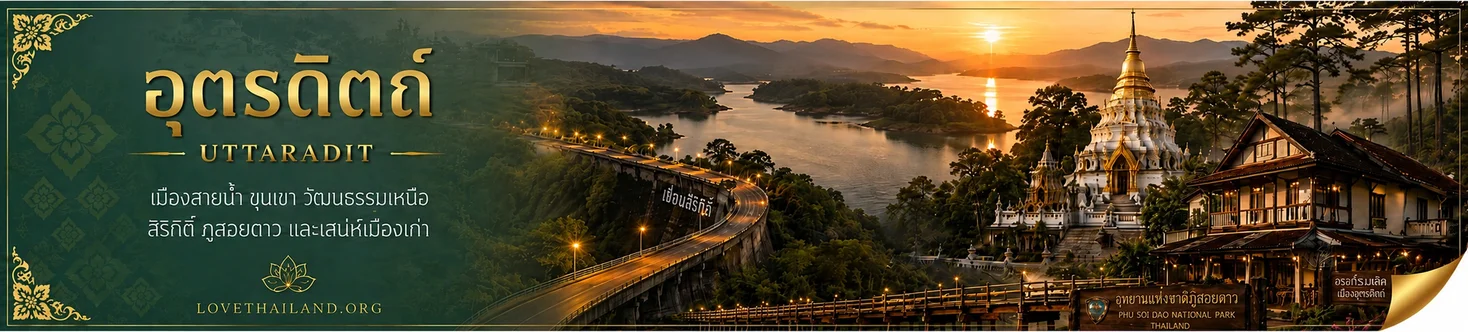
Wat Thamma Thipatai

Open Days: Daily
Opening Hours: Contact the temple before visiting Thammasapha Hall
Wat Thamma Thipatai in Uttaradit Province is an important old temple located in the heart of Mueang Uttaradit, near the intersection of Injaimee Road and Samran Ruen Road in Tha It Subdistrict. The temple is one of the most valuable cultural sites in the city because it preserves an outstanding pair of carved wooden doors from the great vihara of Wat Phra Fang Sawangkhaburi Muni Nat. These doors are among the finest examples of Ayutthaya-period wood carving associated with Uttaradit and remain the temple’s most significant artistic treasure.
The temple was formerly known as Wat Ton Makham, or the Temple of the Tamarind Trees. This old name came from the large tamarind trees that once grew throughout the temple grounds. Later, the name was changed to Wat Thamma Thipatai, meaning a place where the Dhamma is supreme. The new name reflects the Buddhist faith of the local community and the role of the temple as a center of moral, religious, and cultural life in Uttaradit.
Wat Thamma Thipatai stands in a very convenient urban location. It is close to markets, shops, public offices, the railway station, and several important city roads. Because of this location, local people have long used the temple for merit-making, Buddhist ceremonies, ordination events, and community activities. For travelers, the temple is an accessible cultural stop that connects religious life with local history and Ayutthaya-period art.
The highlight of Wat Thamma Thipatai is the carved wooden door from Wat Phra Fang. The original door is preserved inside Thammasapha Hall within the temple grounds. It is made from pradu wood, a strong and durable hardwood suitable for major religious architecture. The door measures approximately 2.2 meters wide, 5.3 meters high, and 16 centimeters thick. Its size alone is impressive, but its true value lies in the quality of its carving and the cultural history it carries.
The carved patterns on the door represent the beauty of late Ayutthaya craftsmanship. The surface is filled with flowing kanok scrollwork, while the central section contains 7 rice-offering-shaped floral motifs. Each motif is balanced with decorative leaf patterns on both sides. The composition shows remarkable control of rhythm, proportion, and movement. Although the door is made from heavy wood, the carving creates a sense of lightness and refinement that reflects the skill of master craftsmen.
This carved door is often mentioned as one of the most beautiful carved wooden doors in Thailand and is frequently compared with the famous vihara doors of Wat Suthat Thepwararam in Bangkok. Its importance is not limited to artistic beauty. It is also a historical object connected with Wat Phra Fang, Sawangkhaburi, and the broader history of the lower northern region. For this reason, Wat Thamma Thipatai serves as an important conservation site for Uttaradit’s cultural heritage.
The door originally belonged to the great vihara of Wat Phra Fang Sawangkhaburi Muni Nat, an important temple in the old town of Fang or Sawangkhaburi. This area played a major role in regional history, especially during the late Ayutthaya period and the turbulent years after the fall of Ayutthaya. The door therefore functions not only as a piece of temple architecture but also as a witness to a larger historical landscape. Its preservation at Wat Thamma Thipatai allows visitors to understand how religious art, local history, and heritage conservation are connected.
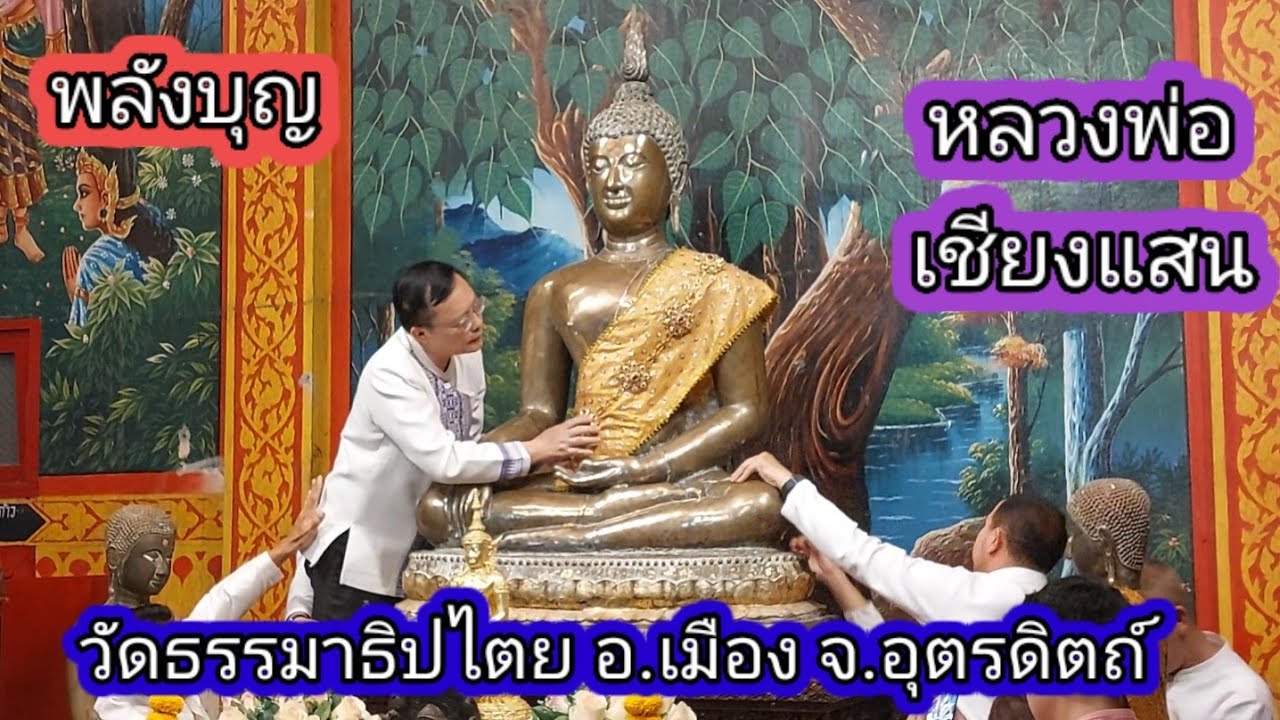
Thammasapha Hall is the key area for visitors who want to see the carved wooden door. The hall also enshrines Luang Pho Chiang Saen, a revered Buddha image respected by local worshippers. A visit to the hall combines Buddhist devotion with the appreciation of ancient craftsmanship. Because the hall contains valuable heritage objects, visitors should contact the temple before entering to ensure that the visit is properly arranged and respectful to the conservation of the site.
Visitors should not rush through Wat Thamma Thipatai. The best way to experience the temple is to begin with a quiet moment of worship, then spend time observing the carved door in detail. The kanok scrolls, rice-offering motifs, and leaf patterns reveal the precision and imagination of the craftsmen. The carving also shows how temple doors in Thai religious architecture were designed to mark the transition from the ordinary world into a sacred space.
Beyond its artistic importance, Wat Thamma Thipatai continues to function as an active Buddhist temple. Local people come here for merit-making on Buddhist holy days, candlelight processions during major Buddhist festivals, ordination ceremonies, and community religious events. The temple is therefore not only a museum-like site but also a living religious space. Its heritage value is strengthened by the fact that Buddhist practice continues around the preserved artwork.
For travelers interested in Thai art history, Wat Thamma Thipatai is particularly valuable because it demonstrates the importance of wooden architecture in old Buddhist temples. Doors, panels, gables, and other wooden elements often carried some of the finest carving in religious buildings. The door from Wat Phra Fang shows how wood carving was used not merely for decoration, but to create sacred meaning and visual dignity for a vihara.
The temple also helps connect several historical places in Uttaradit. Through the carved door, visitors can trace a link from Wat Thamma Thipatai in the city center to Wat Phra Fang and the old town of Sawangkhaburi. Through its location, the temple connects with Tha It, Samran Ruen Road, Injaimee Road, the railway station, and the old urban life of Uttaradit. In this way, one temple visit can open a broader understanding of the province’s religious, artistic, and historical identity.
Wat Thamma Thipatai is also suitable for city walking routes. It is located within the municipal area, close to food shops, cafés, hotels, and other attractions. Travelers can visit the temple in the morning, continue to Wat Tha Thanon, explore Uttaradit Walking Street, or move on to the Phraya Phichai Dap Hak Monument and museum. This makes the temple a practical and meaningful stop for travelers who want to see several cultural sites in one day without leaving the city center.
Getting There is easy from central Uttaradit. Visitors can use Injaimee Road or Samran Ruen Road, both of which are important city roads. The temple is located near their intersection and is also accessible from Borom At Road and Pracha Nimit Road. Travelers arriving by train can get off at Uttaradit Railway Station and continue by local transport or a short ride through the city. Those traveling by private car can set the destination to No. 7 Samran Ruen Road, Tha It Subdistrict, Mueang Uttaradit District.
The best time to visit is in the morning or late afternoon when the weather is more comfortable for walking around the temple. Visitors who specifically want to see the carved wooden door inside Thammasapha Hall should contact the temple in advance. This helps ensure access to the hall and supports proper care for the ancient object. Since the door is an important heritage item, careful viewing is part of responsible cultural travel.
Visitors should dress respectfully and behave calmly because Wat Thamma Thipatai is an active Buddhist temple. Inside Thammasapha Hall, the carved door and other sacred objects should not be touched without permission. Flash photography should be avoided where it may affect old materials. Respectful conduct allows travelers to appreciate the site while helping preserve its cultural value for future generations.
Overall, Wat Thamma Thipatai is more than a city temple. It is a place where the story of Wat Ton Makham, the meaning of Dhamma, Ayutthaya wood carving, Wat Phra Fang, Luang Pho Chiang Saen, and the old urban landscape of Uttaradit come together. For visitors who appreciate history, Buddhist art, and cultural heritage, this temple is one of the most rewarding stops in central Uttaradit.
| Name | Wat Thamma Thipatai |
| Location | Tha It Subdistrict, Mueang Uttaradit District, Uttaradit Province |
| Address | No. 7 Samran Ruen Road, Tha It Subdistrict, Mueang Uttaradit District, Uttaradit Province 53000 |
| Highlights | Carved wooden door from Wat Phra Fang Sawangkhaburi Muni Nat, an Ayutthaya-period masterpiece, and Luang Pho Chiang Saen inside Thammasapha Hall |
| History | Formerly known as Wat Ton Makham, the temple is an old city temple of Uttaradit and preserves the carved wooden door from Wat Phra Fang |
| Name Origin | The former name Wat Ton Makham came from the tamarind trees once found in the temple grounds; the later name Wat Thamma Thipatai means a place where the Dhamma is supreme |
| Distinctive Features | Pradu wood door measuring about 2.2 m wide, 5.3 m high, and 16 cm thick, carved with kanok scrollwork, 7 rice-offering motifs, and decorative leaf patterns |
| Main Areas / Zones | Thammasapha Hall, carved door display area, Luang Pho Chiang Saen worship area, and temple grounds for Buddhist ceremonies |
| Traditions / Rituals | Merit-making on Buddhist holy days, candlelight processions, ordination ceremonies, and Wat Thamma Thipatai Loy Krathong activities |
| Travel Information | Accessible via Injaimee Road or Samran Ruen Road in central Uttaradit; close to Uttaradit Railway Station and the old city area |
| Current Status | Open for worship and visits; contact the temple before visiting Thammasapha Hall |
| Open Days | Daily |
| Opening Hours | Contact the temple before visiting Thammasapha Hall |
| Abbot / Caretaker | Phra Maha Mongkhon Katapunyo, Pali Grade 7 |
| Main Contact Number | 055-411-050 |
| Nearby Tourist Attractions | 1. Wat Tha Thanon, about 1 km 2. Uttaradit Walking Street, about 1 km 3. Uttaradit Railway Station, about 1 km 4. Phraya Phichai Dap Hak Monument, about 2 km 5. Phraya Phichai Dap Hak Museum, about 2 km 6. Wat Klang Thammasakorn, about 4 km |
| Nearby Restaurants | 1. Roti Abang Uttaradit, about 1 km, Tel. 093-137-5177 2. PunThai Coffee Samran Ruen Road, about 1 km, Tel. 085-610-5555 3. Krua Chai Nam Rim Mae Nam Nan Uttaradit, about 2 km, Tel. 055-429-044, 096-072-1022 4. Ton Tam Rap Restaurant Uttaradit, about 2 km, Tel. 098-615-4449, 083-262-2635 5. River Camp, about 3 km, Tel. 092-278-2378 |
| Nearby Accommodations | 1. Friday Hotel, about 1 km, Tel. 055-832-775 2. Seeharaj Hotel, about 2 km, Tel. 055-832-790 3. Hobby Hotel, about 3 km, Tel. 055-040-282, 093-193-5656 4. O.U.M. Hotel, about 3 km 5. Areena Resort Uttaradit, about 5 km, Tel. 055-414-939 |
Frequently Asked Questions (FAQ)
Q: Where is Wat Thamma Thipatai located?
A: Wat Thamma Thipatai is located at No. 7 Samran Ruen Road, Tha It Subdistrict, Mueang Uttaradit District, Uttaradit Province, near the intersection of Injaimee Road and Samran Ruen Road.
Q: What was the former name of Wat Thamma Thipatai?
A: The temple was formerly known as Wat Ton Makham because large tamarind trees once grew throughout the temple grounds.
Q: What is the main highlight of Wat Thamma Thipatai?
A: The main highlight is the carved wooden door from Wat Phra Fang Sawangkhaburi Muni Nat, an important Ayutthaya-period wood carving preserved inside Thammasapha Hall.
Q: How large is the carved door from Wat Phra Fang?
A: The door is made from pradu wood and measures about 2.2 meters wide, 5.3 meters high, and 16 centimeters thick.
Q: How can visitors see the carved wooden door?
A: Visitors should contact the temple before visiting Thammasapha Hall because the hall preserves valuable heritage objects and is not always open for unrestricted access.
Q: Who should visit Wat Thamma Thipatai?
A: The temple is suitable for travelers interested in old temples, Ayutthaya art, wood carving, Uttaradit history, and cultural heritage in the city center.
Q: What nearby places can be visited with Wat Thamma Thipatai?
A: Nearby places include Wat Tha Thanon, Uttaradit Walking Street, Uttaradit Railway Station, Phraya Phichai Dap Hak Monument, Phraya Phichai Dap Hak Museum, and Wat Klang Thammasakorn.
 Category: ●Places of Worship
 Group: ●Temple
Last Update : 5 MonthAgo
 Last Update : 5 MonthAgo
 Click to Access the Navigation Map GPS
Wat Thamma Thipatai Map
Recommend

 Art, Culture and Heritage
 Historical Sites and Monuments(2)
 Landmarks and Memorials(8)
 Art, Craft Centres, Tradition(3)
 Museums(1)
 Historic Homes and Cities(1)
Temple(42)
 Other Sacred Sites(6)
 Suburban Living
 Village, Community(4)
 Nature and Wildlife
 National Parks and Marine Reserves(5)
 Mountain (Doi)(3)
 Dam, Reservoir, Lake(3)
 Waterfalls(11)
 Caves(3)
 River, Canal(3)
 Other natural attractions(3)
 Entertainment and Agricultural
 Farms, Parks and Ecotourism(1)
 Travel Articles, Recipes
 Travel Review, Food Review(1)


