
lovethailand home >North Travel Attractions >Phrae Travel Attractions >Muang Phrae >Nai Wiang > Yom River
TL;DR: Yom River is located at Flows through Phayao, Phrae, Sukhothai, Phitsanulok, Phichit, and Nakhon Sawan, open Open Daily, hours Accessible All Day. Highlights include A 700 km river with sandbanks and seasonal landscapes.

Yom River
Open Days: Open Daily
Opening Hours: Accessible All Day
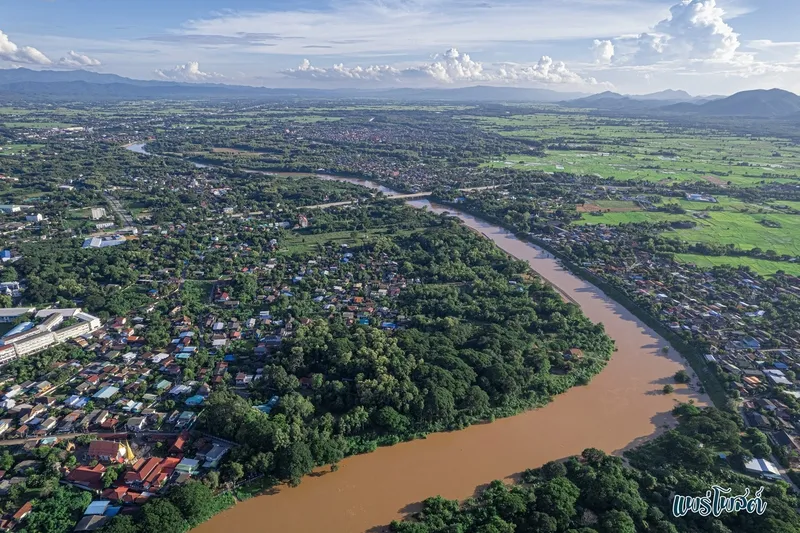
Yom River is one of the major rivers in Thailand and serves as a vital water source for communities across northern and central regions. In Phrae Province, the river plays a significant role in shaping local life, landscapes, and tourism, offering both natural beauty and cultural importance along its course.
The river originates from smaller streams flowing from the San Pan Nam mountain range and Doi Yot Phu Rang Ka in Pong District, Phayao Province. It then flows southward through multiple provinces including Phayao, Phrae, Sukhothai, Phitsanulok, Phichit, and Nakhon Sawan, before merging with the Nan and Ping rivers to form the Chao Phraya River. The total length of the Yom River is approximately 700 kilometers.
In Phrae, the Yom River passes through several districts such as Song, Rong Kwang, Mueang Phrae, Sung Men, Den Chai, Long, and Wang Chin. Each area has developed a close relationship with the river, whether for agriculture, settlement, or daily life, making the river an essential part of the province’s identity.
One of the most distinctive features of the Yom River in Phrae is its sandbanks and sandstone formations. During the dry season, the water level drops, revealing wide sandy areas and rock formations along the riverbanks. These areas become popular spots for relaxation, picnics, and outdoor activities, especially during the summer months.
Beyond its natural beauty, the Yom River also carries cultural and historical significance. It has long served as a route connecting communities, and its presence has influenced settlement patterns and local traditions. Although the exact origin of the name “Yom” remains unclear, historical references to similarly named rivers in neighboring regions suggest a broader cultural linkage.
After passing through Phrae, the river continues into Sukhothai, Phitsanulok, Phichit, and finally Nakhon Sawan, where it merges with the Nan River. It later joins the Ping River at Pak Nam Pho, forming the Chao Phraya River, which flows into the Gulf of Thailand. This connection makes the Yom River an important part of Thailand’s central river system.
Getting There is convenient, as the river can be accessed at multiple points throughout Phrae Province, particularly in Mueang Phrae District and nearby areas. Visitors can easily reach the riverbanks by road and choose various scenic spots for relaxation or sightseeing.
The Yom River is ideal for travelers who appreciate simple, nature-based experiences. It is not a heavily developed tourist destination, but its calm atmosphere and seasonal beauty provide a unique and authentic travel experience.
| Name | Yom River |
| Location | Flows through Phayao, Phrae, Sukhothai, Phitsanulok, Phichit, and Nakhon Sawan |
| Coordinates | 18.1425, 100.1417 |
| Highlights | A 700 km river with sandbanks and seasonal landscapes |
| Distinctive Features | Natural river scenery with changing landscapes depending on the season |
| Travel Information | Accessible from multiple locations in Phrae Province |
| Current Status | Open natural attraction |
| Open Days | Open Daily |
| Opening Hours | All Day |
| Nearby Tourist Attractions | 1. Wat Phra That Cho Hae (8 km) 2. Vongburi House (2 km) 3. Wat Chom Sawan (2 km) 4. Wat Phra Bat Ming Mueang (3 km) 5. Kaeng Luang (60 km) |
| Nearby Restaurants | 1. Local noodle shops (2 km) 2. Phrae local restaurants (3 km) 3. Riverside eateries (2 km) |
| Nearby Accommodations | 1. Phrae Nakara Hotel (2 km) 2. Huen Che Ta Wan (3 km) 3. Amornrak Hotel (3 km) |
Frequently Asked Questions (FAQ)
Q: Where does the Yom River originate?
A: It originates from mountain streams in Pong District, Phayao Province.
Q: How long is the Yom River?
A: It is approximately 700 kilometers long.
Q: Which provinces does it flow through?
A: Phayao, Phrae, Sukhothai, Phitsanulok, Phichit, and Nakhon Sawan.
Q: What is special about the river in Phrae?
A: Sandbanks and sandstone formations appear during the dry season.
Q: When is the best time to visit?
A: During the dry season when the riverbanks are clearly visible.
Q: Is it easy to access?
A: Yes, it can be accessed from multiple locations in Phrae.
 Category: ●Nature and Wildlife
 Group: ●River, Canal
Last Update : 6 MonthAgo
 Last Update : 6 MonthAgo
 Click to Access the Navigation Map GPS
 Art, Culture and Heritage
 Historical Sites and Monuments(4)
 Landmarks and Memorials(5)
 Art, Craft Centres, Tradition(3)
 Museums(6)
 Historic Homes and Cities(2)
 Educational Places
 Museum for Study(1)
 Educational Gardens, Farm(2)
 Places of Worship
 Temple(31)
 Other Sacred Sites(8)
 Suburban Living
 Village, Community(6)
 Local Market(1)
 National Parks and Marine Reserves(4)
 Dam, Reservoir, Lake(14)
 Waterfalls(6)
 Hot Springs(1)
 Caves(5)
River, Canal(3)
Caves(5)
River, Canal(3)
 Islands(1)
 Other natural attractions(5)
 Entertainment and Agricultural
 Farms, Parks and Ecotourism(5)
 Outdoor and Adventure Activities(1)
 Travel Articles, Recipes
 Travel Review, Food Review(2)


