
lovethailand home >Northeastern Travel Attractions >Bueng Kan Travel Attractions >Mueang Bueng Kan >Chaiya Phon > Wat Kan Samakkhitham
TL;DR: Wat Kan Samakkhitham is located at Chaiyaphon Subdistrict, Mueang Bueng Kan District, Bueng Kan Province, open Daily, hours 08.00 – 17.00.
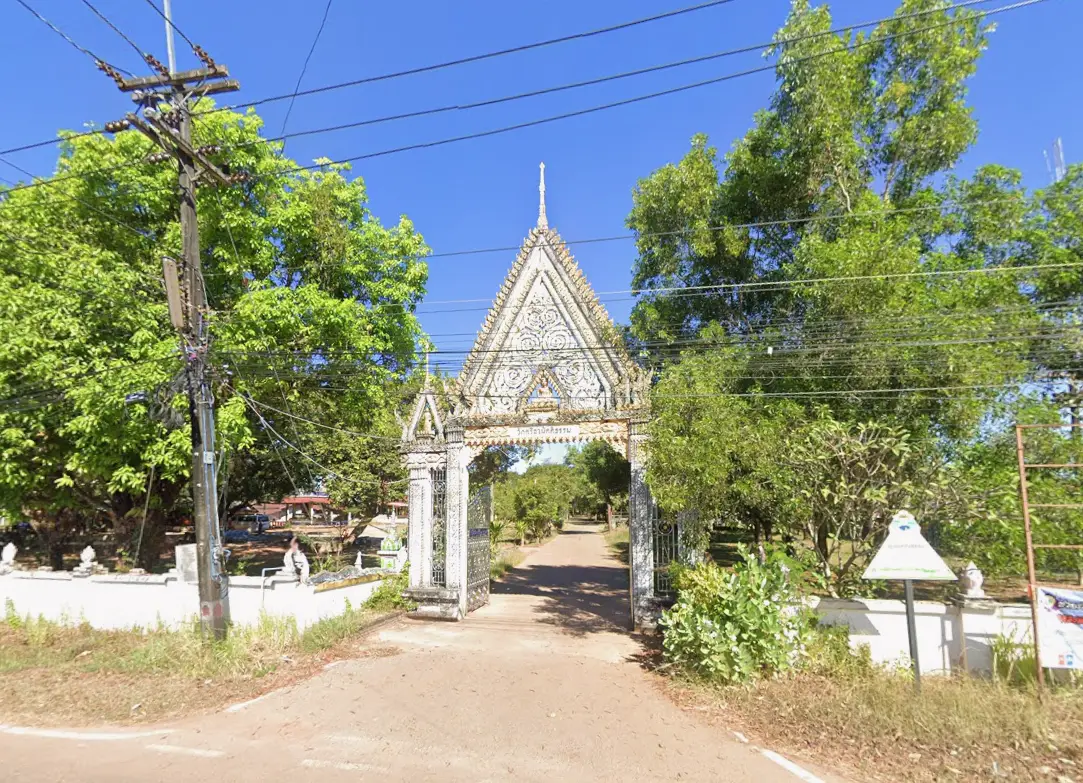
Wat Kan Samakkhitham
Open Days: Daily
Opening Hours: 08.00 – 17.00
Wat Khan Samakkhi Tham in Bueng Kan Province is a Buddhist temple and meditation site in Chaiyaphon Subdistrict, Mueang Bueng Kan District. It is known for its peaceful natural setting on a stone plateau, a large Guan Yin statue, and the distinctive Phra Samana Kodom ordination hall. The temple is suitable for worship, meditation, quiet reflection, cultural photography, and a slower travel experience connected with Bueng Kan’s natural landscape. It can be combined with nearby attractions such as Three Whale Rock, Phu Sing, Tham Fun Waterfall, Nong Kut Thing, Wat Ahong Silawat, and other nature-based destinations in Mueang Bueng Kan.
Wat Khan Samakkhi Tham is located in Chaiyaphon Subdistrict, Mueang Bueng Kan District, Bueng Kan Province. It is a temple with a distinctive character because it stands in a natural setting on a stone plateau where forested areas and rocky terrain remain part of the temple landscape. The atmosphere is quiet, spacious, and ideal for visitors who want to worship, meditate, walk slowly through the temple grounds, and take a break from busy travel routines. This temple is not only a religious site for the local community, but also a peaceful destination where visitors can experience Buddhism in close connection with the natural identity of Bueng Kan.
The most memorable image of Wat Khan Samakkhi Tham is the large Guan Yin statue within the temple grounds. The statue is graceful, serene, and visually striking, symbolizing compassion, kindness, and protection. Many visitors come to pay respect to Guan Yin and ask for blessings related to peace of mind, health, family, work, and harmony in life. The presence of this large statue makes the temple especially meaningful for travelers interested in Buddhist and Mahayana-inspired devotional art within a Thai temple context.
Another major feature of the temple is the Phra Samana Kodom ordination hall. This religious building is a central space for worship and Buddhist practice. It also gives the temple a strong architectural identity because it stands within a natural environment rather than a dense urban setting. From the outside, the hall appears calm and dignified, fitting well with the temple’s role as a place for meditation and quiet reflection. Visitors can appreciate both its religious meaning and its visual harmony with the surrounding landscape.
The name Wat Khan Samakkhi Tham reflects ideas of unity, cooperation, and commitment to the Dhamma. The word “Samakkhi Tham” suggests harmony through Buddhist practice, shared faith, merit-making, and community support. Temples of this kind often grow from the devotion of local people and supporters who help develop a sacred space for worship, practice, and mental rest. A visit to Wat Khan Samakkhi Tham is therefore not only about seeing buildings or statues. It is also about sensing the collective faith that turns a natural landscape into a spiritual place.
The temple’s terrain is one of the reasons it feels different from many town temples. The stone plateau, uneven natural ground, open areas, and patches of forest create a calm atmosphere. Visitors can walk through the grounds while noticing the relationship between rock, trees, temple structures, and sacred images. The feeling is closer to a meditation site in nature than to a crowded urban temple. This makes the temple suitable for slow travel, quiet observation, and spiritual rest.
The rocky landscape also connects the temple to the wider identity of Bueng Kan. The province is known for its stone formations, sandstone landscapes, forests, and unusual natural sites such as Three Whale Rock and Phu Sing. Wat Khan Samakkhi Tham shares this same geographical character through its stone plateau and natural setting. For travelers, this connection makes the temple a meaningful stop in a route that combines faith, nature, and the distinctive terrain of Bueng Kan.
The temple is especially suitable for visitors seeking a calm religious destination. Its strength is not noise, crowds, or large-scale activity, but the quiet space it provides. Visitors can worship, sit in silence, walk mindfully, or simply rest their minds in an environment surrounded by trees and natural stone. For those interested in meditation, the setting supports walking meditation, seated reflection, listening to Dhamma, or spending a short time away from daily distractions.
The Guan Yin statue is a major devotional focus. In Thailand, Guan Yin is widely respected as a bodhisattva of compassion, and many people visit Guan Yin images to pray for kindness, protection, and relief from suffering. At Wat Khan Samakkhi Tham, the statue’s large scale and natural surroundings make the experience especially peaceful. The combination of a sacred image, open space, stone terrain, and forest atmosphere gives worshippers a sense of calm and emotional comfort.
The Phra Samana Kodom ordination hall is another area worth spending time with. Phra Samana Kodom is one of the names associated with the Buddha, and the use of this name gives the hall a direct connection to the memory of the Enlightened One. The hall can be understood as a meeting point between Buddhist art, devotion, and Dhamma practice. Its presence in a natural setting shows how Thai Buddhism often lives in harmony with quiet landscapes, simplicity, and mindfulness.
Wat Khan Samakkhi Tham is also a good destination for respectful cultural photography. Interesting photo points include the large Guan Yin statue, the Phra Samana Kodom ordination hall, stone areas, temple walkways, forest corners, and the natural levels of the grounds. Photographs taken here often show more than architecture; they also show the relationship between Buddhist devotion and Bueng Kan’s rocky natural scenery. Visitors should take photos respectfully, avoid disturbing those who are meditating, and not enter restricted areas.
The temple is suitable for family visits as well. Children and young travelers can learn that visiting a temple is not only about sightseeing, but also about respect, quiet behavior, proper dress, and appreciation for sacred spaces. Adults can use the visit to introduce Buddhist values such as compassion, gratitude, mindfulness, and respect for nature. The Guan Yin statue also provides a simple way to explain the importance of kindness and mercy in religious culture.
For travelers planning a Bueng Kan itinerary, Wat Khan Samakkhi Tham can be combined with nature attractions in Mueang Bueng Kan. It works well with routes toward Phu Sing, Three Whale Rock, Wat Pa Mueang Hueang, Tham Fun Waterfall, and other forest or stone-based attractions. Visiting the temple before or after a nature trip creates a balanced itinerary because travelers can experience both spiritual calm and scenic landscapes in one journey.
Three Whale Rock and Phu Sing are especially suitable to combine with Wat Khan Samakkhi Tham because they share a landscape identity based on stone formations and natural viewpoints. Travelers can start the day by visiting the temple for worship and reflection, then continue to scenic stone formations in the morning or late afternoon. This route reveals two key sides of Bueng Kan: its spiritual culture and its powerful natural terrain.
Tham Fun Waterfall and Wat Pa Mueang Hueang are also suitable onward stops for travelers who enjoy nature, forest routes, and quiet places. These sites continue the same mood as Wat Khan Samakkhi Tham because they are not designed for fast-paced tourism. They offer natural surroundings, simple routes, and a calmer experience. Travelers should check the weather during the rainy season and wear comfortable footwear, especially when visiting rocky or forested areas.
Wat Khan Samakkhi Tham is also useful as a peaceful alternative when major attractions are crowded. During busy travel periods, a quiet temple stop can help slow down the rhythm of a trip. Visitors can rest, walk, worship, and enjoy the setting without rushing. This makes the temple valuable not only as a religious destination, but also as a natural pause in a Bueng Kan travel route.
The best time to visit is in the morning or late afternoon, when the weather is more comfortable and natural light is suitable for walking and photography. Midday can be hot, especially on stone surfaces, so visitors should bring drinking water, a hat, and comfortable walking shoes. Some areas may be uneven or slippery after rain, so elderly visitors and children should be careful when walking across rocky or sloped sections.
Getting There is most convenient by private car, rental car, or hired local transport from Bueng Kan town. The temple is in Chaiyaphon Subdistrict, Mueang Bueng Kan District, and connects well with routes toward Phu Sing and other nature attractions. Visitors should use a navigation map when traveling. Having a private vehicle makes it easier to continue to Three Whale Rock, Wat Pa Mueang Hueang, Tham Fun Waterfall, and restaurants in Chaiyaphon or Bueng Kan town.
Travelers from outside the province can stay in Bueng Kan town and include Wat Khan Samakkhi Tham in a half-day or full-day itinerary. A half-day trip can include the temple and a nearby restaurant or cafe in Chaiyaphon. A full-day trip can continue to Three Whale Rock, Phu Sing, Tham Fun Waterfall, or Nong Kut Thing. Planning the route this way reduces unnecessary backtracking and gives visitors more time at each stop.
Visitors should dress respectfully, speak quietly, follow temple rules, avoid climbing on religious structures, stay out of restricted monastic areas, and help keep the grounds clean. Since the temple includes natural surroundings, visitors should not litter or disturb wildlife. A temple visit in this kind of setting is best experienced with calmness and respect so that the site remains a place of faith and peace for everyone.
For foreign travelers, Wat Khan Samakkhi Tham offers a clear example of the diversity of Thai religious culture. In one place, visitors can see a Thai Buddhist temple, the Phra Samana Kodom ordination hall, a meditation environment, and a large Guan Yin statue representing compassion. The temple helps visitors understand how Buddhism in Thailand can connect with art, belief, nature, and community life in a quiet and accessible way.
Overall, Wat Khan Samakkhi Tham is a meaningful destination for travelers who want to experience Bueng Kan beyond its major natural landmarks. The temple brings together devotion, meditation, a large Guan Yin statue, the Phra Samana Kodom ordination hall, and a natural stone plateau that reflects the character of the province. A visit here connects travelers with peace, compassion, and the natural atmosphere of this Mekong-side province in a simple yet memorable way.
| Name | Wat Khan Samakkhi Tham, Bueng Kan |
| Location | Chaiyaphon Subdistrict, Mueang Bueng Kan District, Bueng Kan Province |
| Highlights | Large Guan Yin statue, Phra Samana Kodom ordination hall, meditation area, natural stone plateau, and peaceful temple atmosphere suitable for worship and reflection |
| Distinctive Features | A Buddhist temple and meditation site that combines sacred spaces with Bueng Kan’s rocky natural landscape, forested areas, and quiet atmosphere |
| Important Sacred Points | Large Guan Yin statue, Phra Samana Kodom ordination hall, meditation spaces, stone courtyard, and natural areas within the temple |
| Travel Information | Best reached by private car, rental car, or hired local transport from Bueng Kan town. Use a navigation map and follow the route toward Chaiyaphon Subdistrict and Phu Sing area attractions. |
| Current Status | Open for visitors and worshippers |
| Open Days | Daily |
| Opening Hours | 08.00 – 17.00 |
| Facilities | Worship areas, meditation areas, temple courtyard, stone grounds, photo spots, and peaceful resting areas within the temple |
| Main Areas / Zones | 1. Large Guan Yin Worship Zone 2. Phra Samana Kodom Ordination Hall Zone 3. Meditation Area 4. Stone Plateau And Natural Area 5. Temple Walking Route 6. Photo And Quiet Resting Areas |
| Caretaker | The monastic community of Wat Khan Samakkhi Tham and the local community in Chaiyaphon Subdistrict |
| Important Visitor Etiquette | Dress respectfully, speak quietly, respect meditation areas, avoid climbing on religious structures, and help keep the natural temple grounds clean. |
| Nearby Tourist Attractions | 1. Wat Pa Mueang Hueang, about 8 km 2. Wat Khao Phanom Phrai Phu Lon, about 12 km 3. Tham Fun Waterfall, about 18 km 4. Three Whale Rock, Phu Sing, about 25 km 5. Nong Kut Thing, about 30 km 6. Wat Ahong Silawat, or Kaeng Ahong, about 42 km |
| Nearby Restaurants | 1. Ma Der Na Chaiyaphon Restaurant & Drinks, about 6 km, Tel. 090-419-4323 2. The Sup-Pa Rose Cafe, about 12 km, Tel. 096-189-1919 3. Im Nam Samran & Samranjai Cafe, about 25 km, Tel. 099-470-7774 4. Krua Rim Khong Bueng Kan, about 25 km, Tel. 061-056-8964 5. Steak Rim Khong, about 25 km, Tel. 096-587-4256 6. Tam Yam Yua By Miki, Rim Khong Bueng Kan Branch, about 25 km, Tel. 082-689-1316 |
| Nearby Accommodations | 1. The One Hotel Bueng Kan, about 25 km, Tel. 042-492-234, 091-057-5159 2. BK Place Hotel Bueng Kan, about 26 km, Tel. 099-638-0988, 082-495-2125, 085-005-0589 3. VIPAT Bungkan Hotel, about 26 km, Tel. 042-492-641 4. M Grand Hotel Bueng Kan, about 27 km, Tel. 095-146-5363 5. Century Grand Hotel Bueng Kan, about 27 km, Tel. 042-492-790 6. Pen Nueng Hotel Bueng Kan, about 28 km |
Frequently Asked Questions (FAQ)
Q: Where is Wat Khan Samakkhi Tham located?
A: Wat Khan Samakkhi Tham is located in Chaiyaphon Subdistrict, Mueang Bueng Kan District, Bueng Kan Province. It is a Buddhist temple and meditation site connected with Bueng Kan’s nature-based travel route.
Q: What are the opening hours of Wat Khan Samakkhi Tham?
A: The temple is open daily from 08.00 to 17.00.
Q: What is the main highlight of Wat Khan Samakkhi Tham?
A: The highlights include the large Guan Yin statue, the Phra Samana Kodom ordination hall, meditation areas, and the peaceful natural setting on a stone plateau.
Q: Who is Wat Khan Samakkhi Tham suitable for?
A: It is suitable for visitors who want to worship, pray, meditate, rest their minds, take respectful cultural photos, and explore a quieter side of Bueng Kan.
Q: What should visitors wear to Wat Khan Samakkhi Tham?
A: Visitors should dress respectfully and wear comfortable walking shoes because some areas are rocky or uneven.
Q: How can visitors travel to Wat Khan Samakkhi Tham?
A: The most convenient way is by private car, rental car, or hired local transport from Bueng Kan town. Visitors should use a navigation map and follow the route toward Chaiyaphon Subdistrict.
Q: What attractions can be visited after Wat Khan Samakkhi Tham?
A: Travelers can continue to Wat Pa Mueang Hueang, Wat Khao Phanom Phrai Phu Lon, Tham Fun Waterfall, Three Whale Rock, Phu Sing, Nong Kut Thing, and Wat Ahong Silawat depending on their route and schedule.
Q: Is Wat Khan Samakkhi Tham suitable for foreign travelers?
A: Yes. It is suitable for foreign travelers who want to learn about a peaceful Thai Buddhist temple, see a large Guan Yin statue, and experience the natural landscape of Bueng Kan in a calm religious setting.
 Category: ●Places of Worship
 Group: ●Temple
Last Update : 2 MonthAgo
 Last Update : 2 MonthAgo
 Click to Access the Navigation Map GPS
Wat Kan Samakkhitham Map
Recommend

 Art, Culture and Heritage
 Landmarks and Memorials(1)
 Museums(1)
Temple(12)
Museums(1)
Temple(12)
 Other Sacred Sites(4)
 Suburban Living
 Local Market(1)
 Nature and Wildlife
 National Parks and Marine Reserves(1)
 Mountain (Doi)(3)
 Waterfalls(5)
 Caves(1)
 River, Canal(4)
 Bays and Beaches(1)
 Islands(1)
 Entertainment and Agricultural
 Waterpark(1)
 Shopping
 Shopping and Night Market(1)
 Travel Articles, Recipes
 Travel Review, Food Review(1)


