
lovethailand home >Northeastern Travel Attractions >Bueng Kan Travel Attractions >Mueang Bueng Kan >Khai Si > Thai-Lao Market
TL;DR: Thai-Lao Market is located at Rim Bueng Yai Road, Mueang Bueng Kan District, Bueng Kan Province, Thailand, open Tuesday and Friday, hours 06.00 – 12.00.

Thai-Lao Market
Open Days: Tuesday and Friday
Opening Hours: 06.00 – 12.00
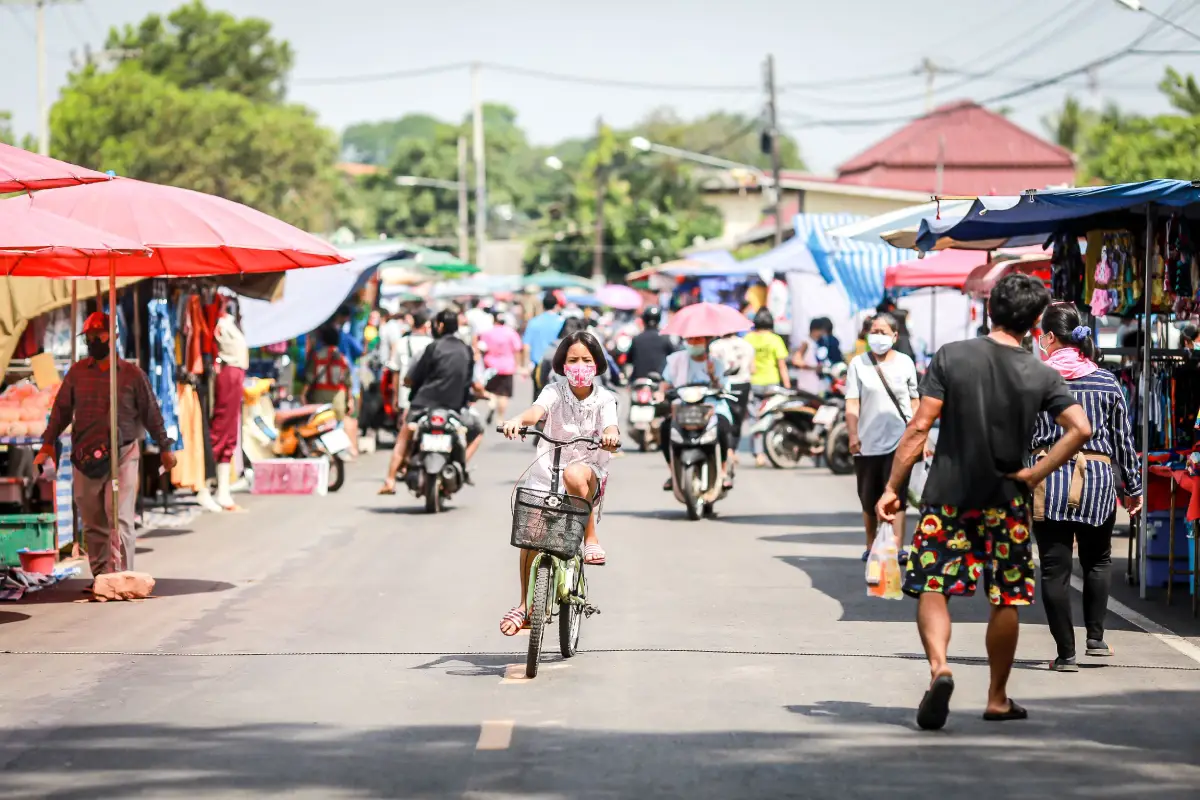
Thai-Lao Market, also widely known as the Lao Market of Bueng Kan, is a morning riverside market in Mueang Bueng Kan District, Bueng Kan Province. Located on Rim Bueng Yai Road near the Mekong River, this market is one of the best places to experience the everyday life of a Thai-Lao border town. It opens only on Tuesday and Friday mornings, when Thai and Lao vendors bring local products, fresh vegetables, dried food, fresh ingredients, Mekong River fish, herbs, household goods, clothing, and seasonal items to sell in a lively local atmosphere. For travelers who want to understand Bueng Kan beyond famous viewpoints and temples, Thai-Lao Market is a direct window into food culture, riverside trade, and the close relationship between communities on both sides of the Mekong River.
Thai-Lao Market is more than a shopping spot. It functions as a living meeting place where people, products, languages, food traditions, and borderland culture come together. Bueng Kan lies along the Mekong River opposite Pakxan in Bolikhamsai Province of Laos. Because of this geography, the town has long been shaped by movement, trade, and cultural exchange across the river. Walking through the market allows visitors to see this connection in a very practical way. Fresh produce, dried fish, fermented ingredients, herbs, forest products, and local snacks all reflect the ecology of the Mekong region and the daily needs of local households.
The best time to visit is early in the morning. The market becomes lively soon after sunrise as vendors arrange their products and local shoppers begin choosing ingredients for the day. Restaurant owners, residents, elderly locals, travelers, and visitors all share the same narrow market rhythm. This is not a staged tourist market; it is a working local market where people come to buy, sell, talk, bargain, and meet familiar faces. Travelers who arrive early will find a wider selection of goods, more active trading, cooler weather, and better light for observing the atmosphere.
The name “Lao Market” comes from the presence of many vendors from the Lao side of the river. Many of the goods are familiar to local Thai residents, while some items may be unusual for visitors from other regions. Depending on the season, travelers may find wild vegetables, bamboo shoots, mushrooms, local herbs, Mekong fish, dried fish, fermented ingredients, traditional seasonings, frogs, small freshwater products, and handmade or practical household items. For food-focused travelers, the market is a useful introduction to the ingredients behind Isan and Mekong-style dishes.
The market stretches for about 500 meters along Rim Bueng Yai Road, giving visitors enough space to walk slowly and observe different types of stalls. One part may focus on fresh vegetables and herbs, another on fish and fresh ingredients, while other sections sell ready-to-eat food, dried goods, clothing, and household products. The selection changes with season and supply. This natural variation is one reason the market remains interesting even for repeat visitors. Each visit reflects a slightly different moment in the food cycle and riverside economy of Bueng Kan.
For travelers interested in local food, Thai-Lao Market is one of the most meaningful places to begin a day in Bueng Kan. Many dishes associated with the region use ingredients that can be seen here, such as Mekong River fish, bamboo shoots, herbs, fermented fish, dried fish, and seasonal vegetables. These ingredients appear in dishes such as fish larb, Mekong fish soup, grilled fish, mok pla, bamboo shoot curry, chili dips, and local vegetable plates. Visiting the market before eating lunch or dinner in Bueng Kan helps travelers understand where the flavors of the province come from.
The market also shows the cultural closeness of Thailand and Laos through language, food, and everyday behavior. Visitors may hear northeastern Thai dialect and Lao accents mixing naturally. The way vendors call out products, explain ingredients, answer questions, and negotiate prices reflects a border culture that is practical, friendly, and deeply rooted in local life. This makes the market especially valuable for foreign travelers who want to see real community life rather than a polished attraction designed only for tourists.
Thai-Lao Market is also a good place to buy practical local souvenirs. Instead of decorative souvenirs, many items here are things local people actually use: dried food, local seasonings, herbs, vegetables, woven items, clothing, and household goods. Travelers who want to buy food products should consider freshness, storage, and transport time. Fresh fish and perishable products are best for those staying nearby, while dried food and packaged local products are easier to carry.
Timing is essential because the market opens only on Tuesday and Friday. Visitors arriving on other days will not experience the full market atmosphere. The most suitable period is from 06.00 to around 09.00, when the market is most active and goods are still plentiful. By late morning, some vendors begin selling out or packing up. Planning the visit around the correct day and time is therefore the most important part of enjoying Thai-Lao Market properly.
There is no admission fee to walk around the market. Travelers only pay for food, drinks, goods, or souvenirs they choose to buy. Bringing small cash is useful because many sellers are small local vendors. A reusable bag also makes the visit easier and reduces plastic use. Visitors who want to take photos should do so politely and ask permission before photographing vendors at close range.
Thai-Lao Market is suitable for several types of travelers. Food lovers can explore local ingredients and morning snacks. Cultural travelers can observe Thai-Lao border life. Photographers can capture natural market scenes, fresh produce, and morning riverside activity. Families and older travelers can enjoy a short and easy walk in town, close to restaurants, accommodation, and transport routes.
Getting There is convenient because the market is in Mueang Bueng Kan District. Visitors driving from other areas can use Highway 212 to enter Bueng Kan town and continue toward the Mekong riverside and Rim Bueng Yai Road. Travelers arriving by bus can continue from Bueng Kan Bus Terminal by local transport or taxi. The market is close to key town locations such as Chao Mae Song Nang Shrine, Bueng Kan Hospital, the Mekong riverside area, and several hotels.
After visiting the market, travelers can continue to nearby attractions. A simple town route may include Chao Mae Song Nang Shrine, the Mekong riverside, Bueng Kan Walking Street on operating days, Wat Photharam, and Nong Kut Thing. With more time, travelers can continue to Kaeng A Hong and Wat Ahong Silawat, or plan another day for Hin Sam Wan, Phu Sing, and Wat Phu Tok. Because Thai-Lao Market operates in the morning, it works well as the first stop of a Bueng Kan itinerary.
The value of Thai-Lao Market lies in its authenticity. It shows that Bueng Kan is not only a province of natural attractions, but also a living riverside town with a strong food culture and active border trade. Every stall tells something about the area: the vegetables reflect local farming, the fish reflect the Mekong River, the dried goods reflect traditional preservation, and the presence of Thai and Lao vendors reflects cross-border community life. For visitors who want meaningful travel, the market offers a strong sense of place.
Foreign travelers can understand Thai-Lao Market as a local cross-border morning market along the Mekong River. It is not a formal border crossing experience, but a community market shaped by the relationship between people on both sides of the river. Visiting with someone who can speak Thai is helpful, especially for identifying ingredients and learning how they are used in local cooking. Even without deep language knowledge, travelers can enjoy the colors, sounds, smells, and friendly atmosphere of the market.
Visitors should wear comfortable clothing and shoes, arrive early, and prepare small cash. The fresh food areas may be wet in some spots, so walking carefully is recommended. When buying fresh goods, consider whether they can be carried safely during the rest of the trip. Visitors should avoid blocking walkways, touching fresh food unnecessarily, or photographing people without permission. Respectful behavior helps maintain the market’s welcoming atmosphere and supports the local community.
Staying in Bueng Kan town is the most convenient option for travelers who want to visit the market early. Hotels such as The One Hotel Bueng Kan, B2 Bueng Kan Boutique and Budget Hotel, The Wisdom Residence, BK Place Hotel, and M Grand Hotel provide practical access to the town center, the Mekong riverside, and morning market routes. Those who want to explore the province further can use Bueng Kan town as a base before continuing to Kaeng A Hong, Hin Sam Wan, Phu Sing, or Wat Phu Tok.
Food planning is easy after a market visit. Travelers may have breakfast inside the market or later choose a restaurant in Bueng Kan town. Local restaurants often serve Mekong fish dishes and Isan food, making the market visit a useful introduction to what appears on the table later in the day. Seeing the ingredients first gives more meaning to dishes such as Mekong fish soup, spicy fish salad, fried river fish, bamboo shoot curry, and chili dips with fresh vegetables.
The market is also suitable for photography, but the best photographs come from respectful observation. Interesting scenes include vegetable stalls, baskets of bamboo shoots, dried fish, traditional seasonings, vendors arranging goods, shoppers selecting ingredients, and the morning light of a Mekong riverside town. Travelers should avoid obstructing trade and should always ask before taking close-up portraits of vendors.
In summary, Thai-Lao Market is one of the most important local experiences in Mueang Bueng Kan. It combines food, border trade, community life, local products, and Mekong riverside atmosphere in one accessible morning destination. For visitors who are in Bueng Kan on a Tuesday or Friday, the market is one of the best places to begin the day. It helps travelers understand the province through real people and real daily life, before continuing to temples, wetlands, viewpoints, and other attractions in the province.
| Name | Thai-Lao Market, Bueng Kan |
| Location | Rim Bueng Yai Road, Mueang Bueng Kan District, Bueng Kan Province, Thailand |
| Address | Morning riverside market area near the Mekong River in central Bueng Kan town |
| Highlights | A morning Mekong riverside market where Thai and Lao vendors sell local products, food, fresh vegetables, dried goods, Mekong fish, herbs, clothing, and household items |
| History / Importance | An important local market of Mueang Bueng Kan that reflects the trade and cultural relationship between Thai and Lao communities along the Mekong River |
| Name Origin | The market is called Thai-Lao Market because both Thai and Lao vendors trade here; it is also called Lao Market because many Lao vendors bring goods to sell |
| Distinctive Features | A morning market about 500 meters long along Rim Bueng Yai Road, offering an authentic view of Mekong riverside life |
| Travel Information | From Bueng Kan town, head toward the Mekong riverside and Rim Bueng Yai Road. From Bueng Kan Bus Terminal, continue by local transport or taxi to the market area |
| Current Status | Operating as a Tuesday and Friday morning market in Mueang Bueng Kan District |
| Open Days | Tuesday and Friday |
| Opening Hours | 06.00 – 12.00 |
| Fees | No admission fee; visitors pay only for food, goods, or souvenirs they buy |
| Facilities | Urban market area, nearby restaurants, nearby hotels, Mekong riverside road, local transport access, and connections to town attractions |
| Main Areas / Zones | Fresh food zone, local vegetable zone, dried food and seasoning zone, ready-to-eat food zone, clothing and household goods zone, and Mekong riverside market stretch along Rim Bueng Yai Road |
| Caretaker / Related Local Organization | Bueng Kan Municipality |
| Main Contact Number | Bueng Kan Municipality, Tel. 042-490-878 |
| Official Website / Official Page | Bueng Kan Municipality Website and Thailand Tourism Directory |
| Nearby Tourist Attractions | 1. Bueng Kan Mekong Walking Street, about 1 km 2. Chao Mae Song Nang Shrine, about 1 km 3. Wat Photharam or Wat Luang Pho Phra Yai, about 5 km 4. Nong Kut Thing, about 6 km 5. Kaeng A Hong and Wat Ahong Silawat, about 21 km 6. Hin Sam Wan / Phu Sing, about 43 km |
| Nearby Restaurants | 1. Riverside Restaurant & Bar Bungkan, about 1 km, Tel. 087-222-9899 2. Krua Savoey, about 2 km, Tel. 091-363-1495 3. Tam Yum Yua by Miki, Rim Khong Bueng Kan Branch, about 1 km, Tel. 082-689-1316 4. Noi Som Tum in Front of Bueng Kan Hospital, about 1 km, Tel. 081-546-7734 5. Nicha Steamed Dumplings & Buns in Front of Bueng Kan Hospital, about 1 km, Tel. 099-027-3785 |
| Nearby Accommodations | 1. The One Hotel Bueng Kan, about 1 km, Tel. 042-492-234 2. B2 Bueng Kan Boutique and Budget Hotel, about 1 km, Tel. 052-009-161, 088-263-2897 3. The Wisdom Residence, about 2 km, Tel. 042-086-977 4. BK Place Hotel, about 3 km, Tel. 099-638-0988 5. M Grand Hotel, about 7 km, Tel. 095-146-5363 |
Frequently Asked Questions (FAQ)
Q: Where is Thai-Lao Market located?
A: Thai-Lao Market is located on Rim Bueng Yai Road in Mueang Bueng Kan District, Bueng Kan Province, near the Mekong riverside in the town center.
Q: Which days is Thai-Lao Market open?
A: The market opens only on Tuesday and Friday.
Q: What time does Thai-Lao Market open?
A: The market opens from 06.00 to 12.00. The best time to visit is early morning, especially before 09.00.
Q: What can visitors buy at Thai-Lao Market?
A: Visitors can find local vegetables, fresh food, dried food, Mekong River fish, herbs, local snacks, clothing, household goods, and products sold by Thai and Lao vendors.
Q: Why is Thai-Lao Market also called Lao Market?
A: It is commonly called Lao Market because many vendors from the Lao side of the Mekong bring goods to sell there.
Q: Is there an admission fee for Thai-Lao Market?
A: No. There is no admission fee. Visitors pay only for the products or food they buy.
Q: Which nearby attractions can be visited after Thai-Lao Market?
A: Nearby attractions include Bueng Kan Mekong Walking Street, Chao Mae Song Nang Shrine, Wat Photharam, Nong Kut Thing, Kaeng A Hong, and Wat Ahong Silawat.
 Category: ●Suburban Living
 Group: ●Local Market
Last Update : 2 MonthAgo
 Last Update : 2 MonthAgo

 Click to Access the Navigation Map GPS
Thai-Lao Market Map
Recommend

 Art, Culture and Heritage
 Landmarks and Memorials(1)
 Museums(1)
 Places of Worship
 Temple(12)
 Other Sacred Sites(4)
Local Market(1)
 Nature and Wildlife
 National Parks and Marine Reserves(1)
 Mountain (Doi)(3)
 Waterfalls(5)
 Caves(1)
 River, Canal(4)
 Bays and Beaches(1)
 Islands(1)
 Entertainment and Agricultural
 Waterpark(1)
 Shopping
 Shopping and Night Market(1)
 Travel Articles, Recipes
 Travel Review, Food Review(1)


