
lovethailand home >Northeastern Travel Attractions >Bueng Kan Travel Attractions >Bueng Khong Long >Pho Mak Khaeng > Huai Hin Haep
TL;DR: Huai Hin Haep is located at Ban Non Sila, Pho Mak Khaeng Subdistrict, Bueng Khong Long District, Bueng Kan Province 38220, Thailand, open Daily, hours 8:00 AM – 5:00 PM.
Huai Hin Haep
Open Days: Daily
Opening Hours: 8:00 AM – 5:00 PM
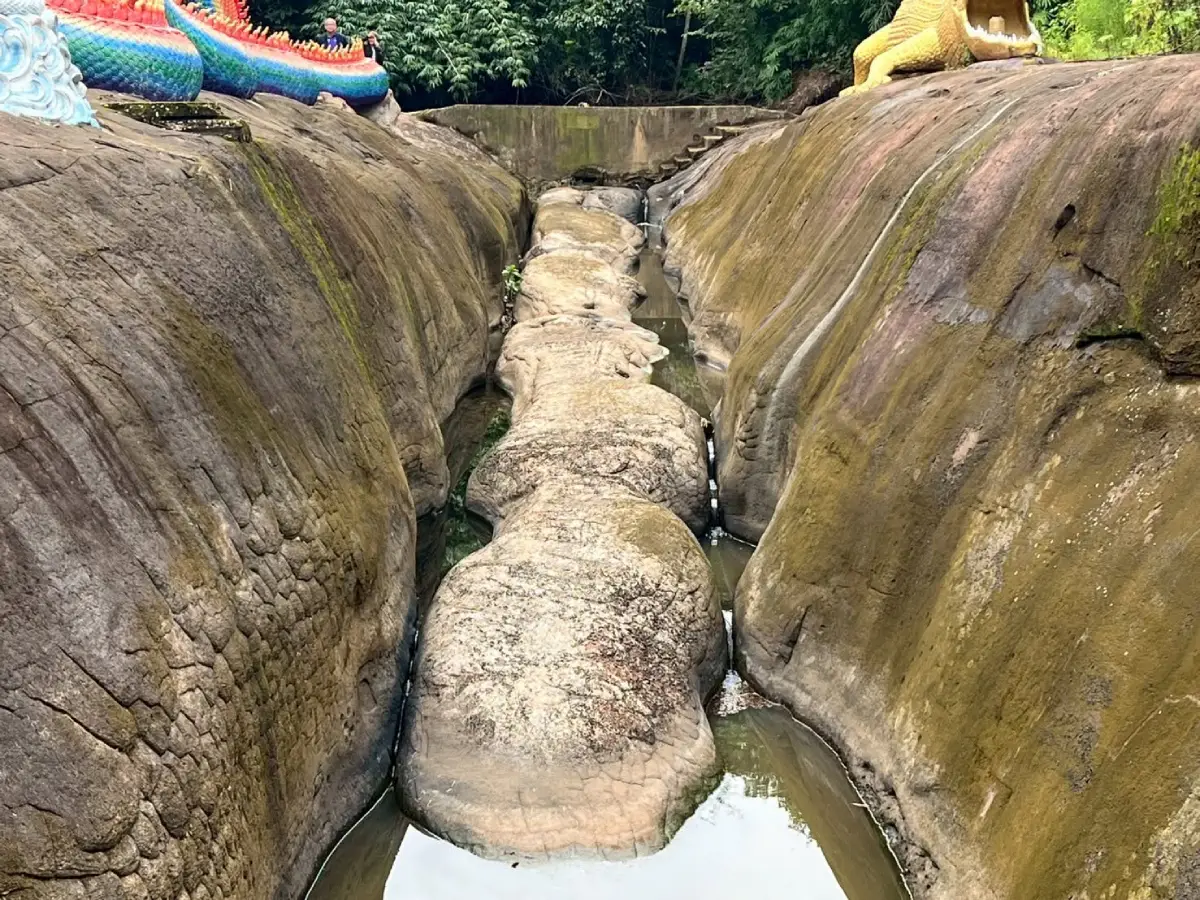
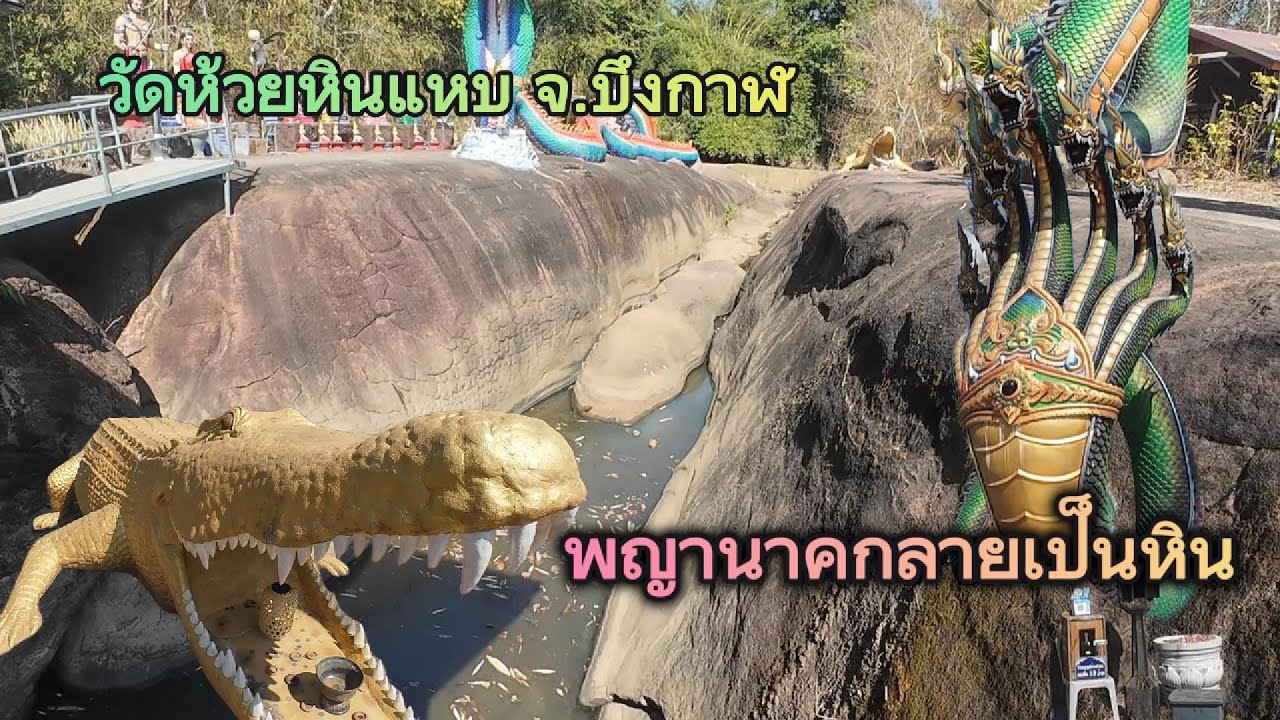
Huai Hin Haep, Bueng Kan Province, is a natural attraction and place of spiritual significance within the grounds of Huai Hin Haep Monastery, also commonly referred to as Wat Huai Hin Haep. It is situated in Ban Non Sila, Pho Mak Khaeng Subdistrict, Bueng Khong Long District, Bueng Kan Province, northeastern Thailand. The site is known for enormous natural rocks surrounding a narrow water channel. One elongated formation has a surface and shape that resemble the head and body of a large reptile, inspiring its popular description as a Naga serpent resting or playing in water. Locally, the same rock is known as Hin Khae, or Crocodile Rock. The attraction combines an unusual sandstone landscape, traditions concerning the mythical Naga, the peaceful atmosphere of a Buddhist monastery, and the spiritual culture of communities living near the forests and mountains of northeastern Thailand.
Huai Hin Haep occupies a landscape associated with the Phu Langka mountain region, an important natural area extending across parts of Bueng Kan and Nakhon Phanom provinces. The surrounding terrain includes forested hills, sandstone formations, rocky surfaces, and natural drainage channels. This environment creates an atmosphere distinctly different from that of a temple in an urban area. Visitors encounter geological features and woodland scenery alongside a functioning religious space, where the shape of the rocks and the quiet setting contribute to the site's identity.
The feature that brought Huai Hin Haep widespread attention is the unusual rock formation in its narrow water-filled gorge. Photographs and reports of the formation circulated widely in late 2021. The images showed an elongated stone lying between two much larger masses of rock, partially surrounded by water. Its shape reminded many viewers of a Naga serpent stretching its body through a pool. Interest in the site developed especially among travelers exploring Bueng Kan's other Naga-related attractions, including the increasingly popular Naka Cave in Phu Langka National Park.
Local terminology reveals another side of the formation's identity. Residents have long called the unusual stone Hin Khae, using a regional word associated with a crocodile. Its broad, textured surface and reptile-like form suggest an animal with thick scales. Other visitors interpret the same form as a large serpent or the legendary Naga. These different descriptions illustrate the ways in which people connect natural shapes to familiar animals, cultural stories, and their own experiences.
The place name Huai Hin Haep is also linked to the area's rocky water channels and narrow spaces between large stones. In Thai, huai refers to a small stream or natural drainage channel. Hin Haep is the established local name of the area. The attraction is therefore not limited to a single rock: it includes the surrounding pools, the rock-walled channel, and the monastic grounds in which these natural features are found.
The scenery derives much of its character from the relationship between several enormous rock formations. Large stones form the natural sides of a narrow channel, while the elongated reptile-shaped rock lies below, where water may accumulate or flow according to seasonal conditions. Parts of the rock surface have a network of cracks that resembles scales. Sunlight reaching the pool through gaps between the stones creates shifting contrasts of light and shadow, giving the formation a different appearance throughout the day.
Cracks on sandstone surfaces develop as part of natural weathering processes. Changes in temperature, moisture, and other physical conditions contribute to the gradual deterioration and fracture of exposed rock. When cracks form repeated patterns across a broad surface, they may resemble the scales of an animal. Similar weathering characteristics can be seen at other sandstone attractions in the Phu Langka region, where the textures and forms of rock have become a distinctive feature of the landscape.
The appearance of the rock also depends on the viewing angle. From above, visitors may notice the full arrangement of the boulders and the elongated shape of the stone running along the water channel. From another angle, the textured surface and head-like section can become more prominent. As a result, different visitors may describe the same formation as a crocodile, a snake, a Naga, or simply an extraordinary natural rock.
Water is an essential part of the scene. The formation is not merely an unusual rock resting on dry ground; it occupies a natural channel where the water level varies with the seasons. When water surrounds part of the stone, the shape can suggest an animal floating or moving through a pool. When the water level is lower, more of the surface texture and outline may be visible. These changes make seasonal conditions an important part of the experience.
During the rainy season, the surrounding woodland and rocky channels become more humid. Vegetation grows greener, and rainwater moves through the landscape toward natural depressions and drainage routes. The resulting scenery can appear particularly lush. However, wet sandstone, uneven ground, and stream channels may be slippery, especially after heavy rainfall. Visitors should exercise particular care near the water and on sloping rock.
The monastery gives Huai Hin Haep an important spiritual character. The site is not solely a scenic location developed for photography. It is also a place where people make merit, pay their respects, and spend time in quiet reflection. The presence of a religious community means that respectful behavior, modest clothing, and a calm atmosphere remain important. Visitors can experience the natural scenery and the cultural practices associated with a Buddhist monastic site during the same visit.
The monastery appears in travel listings under two common names, Huai Hin Haep Monastery and Wat Huai Hin Haep. Both refer to the same religious destination in Ban Non Sila. Recognizing these names is useful when searching maps or tourist information. Some sources emphasize the monastery, while others use Huai Hin Haep to refer primarily to the distinctive rock formation and water channel within its grounds.
The monastery grounds also include figures connected with Naga traditions, particularly Pu Sri Suttho and Ya Sri Pathumma. These are prominent names in the serpent-related spiritual traditions of northeastern Thailand. Devotees visit the figures to pay their respects and seek blessings. Their presence demonstrates the close relationship between Buddhist religious life and regional beliefs passed down within communities of the Mekong basin.
Pu Sri Suttho and Ya Sri Pathumma feature in stories and devotional practices across several parts of northeastern Thailand, especially places associated with rivers, lakes, forests, and sacred landscapes. Within these beliefs, Nagas may be regarded as protectors of particular places, guardians of water, and symbols of abundance. Such themes have appeared for generations in religious art, folklore, and ritual practices throughout the region.
The presence of a serpent-shaped stone within a religious site can therefore carry meanings beyond its unusual visual appearance. For devotees, the formation may be understood through traditional Naga narratives and their spiritual associations. From a geological perspective, the same formation can be studied through its rock structure and weathering patterns. These interpretations represent different ways of understanding one landscape: its physical character and its cultural significance.
Huai Hin Haep gained greater attention during the rise of Naga-themed travel associated with Naka Cave in Phu Langka National Park. Naka Cave became famous for sandstone patterns resembling the scales of an enormous snake. When photographs of Hin Khae were shared in 2021, they attracted people already interested in the distinctive geological formations and cultural stories of Bueng Kan.
Although Naka Cave and Huai Hin Haep share the themes of unusual rock textures and Naga traditions, they are separate attractions offering different experiences. Naka Cave is part of a national park and is reached by a regulated mountain hiking route. Huai Hin Haep is located in the grounds of a monastery, with its principal geological feature situated in a narrow natural water channel. A visit to the latter combines the atmosphere of a religious community with a close view of unusual rocks.
Bueng Khong Long District has a varied landscape. One part of the district is characterized by the large wetland of Bueng Khong Long, while other areas extend toward the forests and sandstone mountains of Phu Langka. This diversity influences settlement patterns, livelihoods, and local traditions. Stories involving Nagas are especially prominent in parts of the district and appear in the identities of several shrines and natural attractions.
Ban Non Sila is a local community within Pho Mak Khaeng Subdistrict, an area connected to several of the district's natural attractions. Traveling toward Huai Hin Haep provides a glimpse of the transition from villages and agricultural land to a more wooded and rocky landscape. Local roads connect the settlement areas with religious places and natural destinations around the Phu Langka region.
The quiet atmosphere of Huai Hin Haep makes it appealing to visitors seeking a break from busy urban environments. Trees and natural surroundings create a calm setting, while the monastery encourages a more reflective pace. The site attracts people with different interests: some come to photograph the rock formation, some want to see an unusual geological feature, and others arrive primarily to pay their respects at a place associated with Naga traditions.
From a geographical perspective, Huai Hin Haep is an example of a site whose importance comes from the shape and texture of rock rather than the height of a waterfall or the scale of a mountain. Large boulders lie close together, forming openings and channels in the landscape. Each surface differs in colour, texture, and degree of weathering. These features show that exposed rock undergoes continual physical change over long periods.
Rock fracturing may be influenced by changing temperatures, expansion and contraction, moisture entering fissures, and other weathering processes. As fractures spread and intersect, they can form distinctive patterns on the stone surface. Human observers often associate such patterns with familiar living forms. The resulting shape of an individual stone depends on the rock's original structure and the environmental conditions it has experienced.
The pool surrounding the elongated rock provides another visual element. Still water can reflect the colours of stone, vegetation, and sky, while flowing water emphasizes the narrow channels around the boulders. As water levels and lighting change, the scene develops a different character without the need for artificial decoration. This simplicity is part of the site's attraction for nature photographers and visitors interested in distinctive landscapes.
Visitors approaching the rocks should remain on designated paths or in areas permitted by the site managers. Natural stone surfaces are uneven, and some contain gaps or fractures that may be difficult to see. Wet rock can be particularly slippery, especially where algae or soil cover the surface. Keeping a safe distance from the edges of pools and narrow channels helps reduce the risk of falling.
Morning visits can offer a comfortable atmosphere, particularly on days when sunlight is not too intense. The afternoon presents different patterns of light and shadow as the sun changes position relative to the boulders. These variations influence how the texture and overall outline of the formation appear. The site is consequently interesting at different times of day, within its published visiting hours.
The cool season generally brings more comfortable temperatures to Bueng Kan than the hottest months of the year, making outdoor visits particularly pleasant. During the rainy season, surrounding vegetation can become more vibrant, but wet paths require additional caution. In the hot season, mornings and periods of gentler sunlight are more suitable for exploring outdoor areas.
A visit also offers an opportunity to understand the etiquette of entering a religious site in northeastern Thailand. Quiet and orderly behaviour is particularly important in places where monks or visitors may be meditating or carrying out religious activities. Modest clothing is appropriate, and visitors should avoid loud conversations near areas used for worship or practice. Offerings and devotional activities should follow the arrangements established by those responsible for the monastery.
Making a donation or participating in merit-making is a personal expression of faith rather than a requirement for viewing the natural rock formation. Cultural visitors can observe local devotional customs while respecting the beliefs and activities of others. The same respect applies to travelers whose primary interest is geology or photography rather than spiritual practice.
Huai Hin Haep is also valuable as an example of the interaction between Buddhism and regional spiritual traditions. Beliefs concerning Nagas have long formed part of Mekong cultural life and appear through sculptures, carvings, stories, and rituals at religious sites. The figures of Pu Sri Suttho and Ya Sri Pathumma reflect the continuing importance of these traditions to present-day devotees.
Understanding Naga traditions in Bueng Kan involves considering the local landscape alongside community beliefs. The province includes the Mekong River, Bueng Khong Long Lake, and the Phu Langka mountain region, all of which feature in stories about serpents and sacred places. Water, fertility, protection, and landscape are recurring themes in these narratives, helping explain why Naga imagery is so prominent in the region.
The media attention given to Huai Hin Haep in 2021 is also an interesting aspect of its recent history. A natural landmark known within a local community became more widely recognized after photographs and stories were shared online. The development illustrates how digital media can introduce relatively little-known rural places to a wider audience, especially when they have unusual visual features and strong cultural associations.
Photographs of the so-called Naga playing in water connected the name Huai Hin Haep with the better-known Naka Cave and other Phu Langka attractions. Nevertheless, Huai Hin Haep should be understood as a distinct destination rather than a substitute for Naka Cave. Its monastic setting, quiet environment, and close-up view of the rock channel create a different visitor experience.
For photographers, the central composition consists of the enormous boulders flanking the long, textured rock beneath them. Pictures taken from safe viewing positions can show both the shape of the stone and its relationship with the surrounding water. Some angles make the scale-like cracks more prominent than others, while reflections may accentuate the impression of the rock floating in the pool. Photography should not obstruct worshippers or disturb restricted religious areas.
Families can use a visit to introduce children to both natural landscapes and local culture. Adults may explain how rock surfaces develop cracks, why water follows particular channels, and how communities connect distinctive landforms to traditional stories. Children must nevertheless be supervised closely around natural pools and uneven rocks, where slips and falls can occur.
Older visitors and those with limited mobility may prefer to remain in the more accessible areas rather than attempting to reach every rock viewpoint. The suitability of paths depends on the actual condition of the ground and the moisture present on the day of the visit. Because the main attraction is a natural landscape, its walking surfaces should not be assumed to have the same accessibility as those of a purpose-built urban attraction.
Huai Hin Haep is suited to unhurried sightseeing. Visitors can begin at the monastery, pay their respects if they wish, and then explore the rock formations and water channel using the available paths. This approach provides time to appreciate both the natural landscape and the spiritual atmosphere without attempting to fill the visit with numerous unrelated activities.
Environmental care is especially important around the narrow gorge. Litter, discarded offerings, and packaging can become trapped between rocks or carried into lower drainage channels. Using appropriate rubbish disposal facilities and keeping objects out of the pools helps protect the natural environment and preserve the appearance of the attraction.
Visitors should not carve, paint, or mark the stones. The natural surfaces are the defining feature of Huai Hin Haep, and damage could permanently alter textures that developed through long geological processes. Removing rocks, soil, or plants as souvenirs is also inappropriate because it affects the integrity of the site.
The grounds are shared by sightseers and people engaged in religious activities. Respecting the privacy of monks and practitioners, avoiding unnecessary noise, and keeping photographic equipment clear of worship areas help preserve the monastery's atmosphere. Responsible behaviour is an essential part of enjoying a place where tourism and spiritual life occupy the same space.
Huai Hin Haep can be combined with several other attractions in Bueng Khong Long District, especially places connected with Phu Langka and Naga traditions. One of the best-known is Naka Cave in Phu Langka National Park, famous for sandstone surfaces resembling the scales of an enormous serpent. Visiting the two attractions reveals different geological features and different ways in which natural landscapes are connected to cultural stories.
Naka Cave is reached by a regulated hiking route within the national park. Its principal features include rock walls and exposed surfaces showing distinctive patterns of weathering. The experience contrasts with Huai Hin Haep, where the unusual elongated stone lies in a water channel between large boulders. Both sites are notable for their rock formations, but the walking requirements and site management are different.
Tat Kinnaree Waterfall is another natural attraction in Pho Mak Khaeng Subdistrict. It is associated with sandstone terrain, forest streams, and the wider Phu Langka landscape. Visitors interested in exploring waterfalls can discover another aspect of the area's geology, although access conditions and suitable visiting periods depend on the responsible authorities and current weather.
Tat Wimanthip Waterfall is another natural destination in Bueng Khong Long District. It features water descending over sandstone levels within the forested landscape associated with Phu Langka National Park. Its appearance varies with seasonal rainfall. Combining a waterfall visit with Huai Hin Haep allows travelers to compare flowing-water landforms with an unusual rock formation situated in a narrow pool.
Wat Tham Chai Mongkhon Phu Langka is another religious destination in the district. It is associated with Buddhist practice and the mountain environment of Phu Langka. Travelers interested in religious landscapes can include the temple and Huai Hin Haep in the same regional itinerary to appreciate different settings for worship and spiritual reflection.
The Pu U Lue Nakarat Shrine is an important devotional destination associated with the legend of Pu U Lue and Naga traditions around Bueng Khong Long. These stories form part of local cultural identity and contemporary spiritual tourism. Visiting the shrine and Huai Hin Haep offers two distinct expressions of Naga belief: a dedicated shrine featuring religious imagery and a natural stone formation interpreted through cultural narratives.
Bueng Khong Long itself is an important wetland with ecological significance and a close relationship with surrounding communities. Its broad waters, aquatic vegetation, and lakeside settlements contrast with the rocky mountain environment of Huai Hin Haep. Exploring the wetland introduces another major element of Bueng Kan's natural geography and provides further context for regional beliefs associated with water and Nagas.
Hat Kham Sombun is a lakeside recreational area popular with local residents and visitors. It offers a waterside atmosphere and food establishments serving people visiting the lake. A day that combines Huai Hin Haep with Hat Kham Sombun can therefore include geological scenery, religious traditions, and a relaxed meal beside a large wetland.
Visitors spending the night in Bueng Khong Long District can choose from several types of accommodation around Pho Mak Khaeng and the communities near the route to Naka Cave. Small homestays and resorts serve travelers visiting the area's natural attractions. Staying overnight makes it possible to divide sightseeing between a day devoted to Huai Hin Haep and the lake and another reserved for a mountain activity with more demanding access requirements.
Local food in Bueng Khong Long reflects the culinary traditions of northeastern Thailand and the surrounding wetland communities. Dishes based on sticky rice, herbs, fish, spicy salads, soups, and curries are part of the wider regional food culture. The district also has contemporary cafes and restaurants serving travelers visiting Naka Cave and nearby attractions, providing opportunities to combine sightseeing with local dining.
Using local restaurants, accommodation, and transport services creates connections between tourism and the regional economy. The benefits of a visit extend beyond the attraction itself to the businesses and communities along the journey. Such connections are particularly relevant in rural areas where tourism routes pass through villages, agricultural land, and small commercial centres.
Another appeal of Huai Hin Haep is that its identity does not depend on large-scale structures or elaborate visitor activities. The attraction lies in observing natural rock shapes, appreciating the details of the water channel, and experiencing the calm grounds of a monastery. Visitors can spend time discovering the setting without treating the location as a single photographic stop.
In a broader sense, Huai Hin Haep introduces another dimension of Bueng Kan beyond its famous Mekong scenery and Naka Cave. It draws attention to small rural religious places where distinctive natural formations have become part of local cultural identity. The unusual reptile-shaped stone, woodland environment, and Naga-related traditions give the destination a combination of geological, cultural, and spiritual interest.
Getting There Huai Hin Haep is located in Ban Non Sila, Pho Mak Khaeng Subdistrict, Bueng Khong Long District, Bueng Kan Province. Travelers can follow the main roads into Bueng Khong Long District and continue along local routes toward Pho Mak Khaeng and Ban Non Sila. Searching for Wat Huai Hin Haep or Huai Hin Haep Monastery on a navigation map provides the relevant destination. Parts of the final approach pass through rural terrain and may be uneven, particularly during the rainy season. Upon arrival, visitors can follow the monastery's designated access areas toward the devotional features and natural rock formation.
Huai Hin Haep is a distinctive destination that brings together the natural landscape and spiritual traditions of Bueng Kan Province. The elongated rock known locally as Hin Khae or Crocodile Rock resembles a Naga resting in water because of its shape and textured surface, while figures of Pu Sri Suttho and Ya Sri Pathumma reflect the beliefs of people who visit the monastery. The experience is therefore more than a search for an unusual rock. It offers a close view of the relationship between sandstone geology, Buddhist practice, community folklore, and everyday cultural life in Bueng Khong Long District.
| Place Name | Huai Hin Haep / Huai Hin Haep Monastery |
| Other Names | Wat Huai Hin Haep, Hin Khae, Crocodile Rock, Naga Playing in Water, and Wang Kaew Kumphi |
| Address | Ban Non Sila, Pho Mak Khaeng Subdistrict, Bueng Khong Long District, Bueng Kan Province 38220, Thailand |
| Map Reference | W3HV+JJV, Pho Mak Khaeng, Bueng Khong Long District |
| Attraction Type | Buddhist monastery and natural attraction associated with Naga traditions |
| Main Highlight | An elongated natural rock resembling a reptile or Naga, situated in a water channel between enormous boulders |
| Main Features And Areas | 1. Huai Hin Haep Monastery Grounds 2. Hin Khae / Crocodile Rock 3. Natural Water Channel And Pool 4. Rock Surface With Scale-Like Patterns 5. Figures of Pu Sri Suttho and Ya Sri Pathumma 6. Pathways Through The Natural Rock Area |
| Tourism History | Photographs of the Naga-like rock attracted widespread attention in November 2021. |
| Open Days | Daily, according to published tourism listings |
| Opening Hours | 8:00 AM – 5:00 PM |
| Admission Fee | Free admission; voluntary donations are welcome |
| Management | Huai Hin Haep Monastery |
| Spiritual Associations | Naga beliefs, Pu Sri Suttho, and Ya Sri Pathumma |
| Activities | Viewing unusual rock formations, photography, paying respects, merit-making, and learning about local spiritual traditions |
| Best Visiting Period | Morning or periods of gentler afternoon sunlight; additional caution is required on wet rocks during rainy weather |
| Getting There | Travel into Bueng Khong Long District and continue along local roads toward Ban Non Sila, Pho Mak Khaeng Subdistrict. Use Wat Huai Hin Haep as the map destination. |
| Facilities | Walking access areas and toilet facilities within the religious grounds |
| Safety And Etiquette | Watch for slippery rocks, pools, gaps, and uneven paths. Dress modestly and respect the monastery's peaceful environment. |
| Nearby Tourist Attractions | 1. Naka Cave, Phu Langka National Park, approximately 2.8 km according to a tourism proximity listing 2. Tat Kinnaree Waterfall, approximately 4.14 km according to a tourism proximity listing 3. Wat Tham Chai Mongkhon Phu Langka, Pho Mak Khaeng Subdistrict 4. Tat Wimanthip Waterfall, Pho Mak Khaeng Subdistrict 5. Pu U Lue Nakarat Shrine, Bueng Khong Long District 6. Bueng Khong Long Lake, Bueng Khong Long District 7. Hat Kham Sombun, Bueng Khong Long District |
| Restaurants And Cafes In Connecting Areas | 1. Me Kin Coffee, Ban Non Champa Thong, Pho Mak Khaeng, Tel. +66 94 591 8624 2. Naka View Glamping & Cafe, Pho Mak Khaeng 3. King Kong Jim Jum, Bueng Khong Long, Tel. +66 61 478 0087 4. Jok Nai Hui, Bueng Khong Long, Tel. +66 61 115 9956 5. Krua Penpitcha, Hat Kham Sombun, Tel. +66 91 686 9726 6. Nua at Naka Station, Tel. +66 92 356 5366 |
| Accommodation In Connecting Areas | 1. Phu Langka View Homestay Naka Cave, Tel. +66 89 712 3292 2. Npu Homestay Naka Cave, Tel. +66 88 970 8057 3. FIFA Homestay, Pho Mak Khaeng, Tel. +66 63 039 3945 4. Cactus Homestay, Pho Mak Khaeng, Tel. +66 95 474 5316 5. Sapphulangka Homestay, Tel. +66 80 006 9509 6. Phunaka Homestay at Naka Cave, Tel. +66 91 063 7831 7. Lake House, Bueng Khong Long, Tel. +66 62 609 6352 |
Frequently Asked Questions (FAQ)
Q: Where is Huai Hin Haep located?
A: Huai Hin Haep is located within the grounds of Huai Hin Haep Monastery in Ban Non Sila, Pho Mak Khaeng Subdistrict, Bueng Khong Long District, Bueng Kan Province, Thailand.
Q: What days and hours is Huai Hin Haep open?
A: Published tourism listings indicate daily opening from 8:00 AM to 5:00 PM. Visitor access remains subject to the monastery's arrangements and religious activities.
Q: Is there an entrance fee for Huai Hin Haep?
A: Admission is free. Visitors may make voluntary donations according to their personal beliefs.
Q: What is the Naga Playing in Water rock formation?
A: It is an elongated natural rock lying in a water channel between large boulders. Its shape and scale-like surface patterns resemble a reptile or serpent. Local residents call it Hin Khae, or Crocodile Rock, while many visitors associate it with a Naga.
Q: How is Huai Hin Haep associated with Pu Sri Suttho and Ya Sri Pathumma?
A: The monastery grounds include figures of Pu Sri Suttho and Ya Sri Pathumma, important names in regional Naga traditions. Devotees visit to pay their respects and seek blessings.
Q: Are Huai Hin Haep and Naka Cave the same place?
A: No. Huai Hin Haep is situated within a monastery at Ban Non Sila, while Naka Cave is inside Phu Langka National Park and requires access along the park's regulated mountain route.
Q: When is the best time to visit Huai Hin Haep?
A: Morning or periods of gentle afternoon sunlight are suitable for enjoying the rocks and monastery atmosphere. The rainy season may bring greener scenery, but wet stone surfaces can be slippery.
Q: What other attractions can be visited around Huai Hin Haep?
A: Related destinations in the area include Naka Cave, Tat Kinnaree Waterfall, Tat Wimanthip Waterfall, Wat Tham Chai Mongkhon Phu Langka, Pu U Lue Nakarat Shrine, Bueng Khong Long Lake, and Hat Kham Sombun.
 Category: ●Places of Worship
 Group: ●Other Sacred Sites
Last Update : 2 WeekAgo
 Last Update : 2 WeekAgo
 Click to Access the Navigation Map GPS
Huai Hin Haep Map
Recommend

 Art, Culture and Heritage
 Landmarks and Memorials(1)
 Museums(1)
 Temple(12)
Other Sacred Sites(4)
 Suburban Living
 Local Market(1)
 Nature and Wildlife
 National Parks and Marine Reserves(1)
 Mountain (Doi)(3)
 Waterfalls(5)
 Caves(1)
 River, Canal(4)
 Bays and Beaches(1)
 Islands(1)
 Entertainment and Agricultural
 Waterpark(1)
 Shopping
 Shopping and Night Market(1)
 Travel Articles, Recipes
 Travel Review, Food Review(1)


