
lovethailand home >Northeastern Travel Attractions >Bueng Kan Travel Attractions >Bueng Khong Long >Bueng Khong Long > Don Pho Island
TL;DR: Don Pho Island is located at Bueng Khong Long Lake, Bueng Khong Long District, Bueng Kan Province 38220, Thailand, open Visitor access depends on boat services and safe conditions on Bueng Khong Long.
Don Pho Island
Open Days: Visitor access depends on boat services and safe conditions on Bueng Khong Long Lake
Don Pho Island in Bueng Kan Province, Thailand, is a culturally significant island in Bueng Khong Long Lake, combining local religious devotion with the natural beauty of one of northeastern Thailand's important freshwater wetlands. Located in Bueng Khong Long District, the island is associated with the worship of Pu U Lue Naga, a legendary figure revered by local communities as a guardian connected with the lake and the ancient city of Rattaphanakhon. Its main attractions include an area of worship beneath large trees, a revered image of Pu U Lue, Naga symbolism, and the experience of traveling by boat across the lake. A visit combines wetland scenery, local customs, folklore, and an opportunity to understand the relationship between the people of Bueng Khong Long and their natural surroundings.
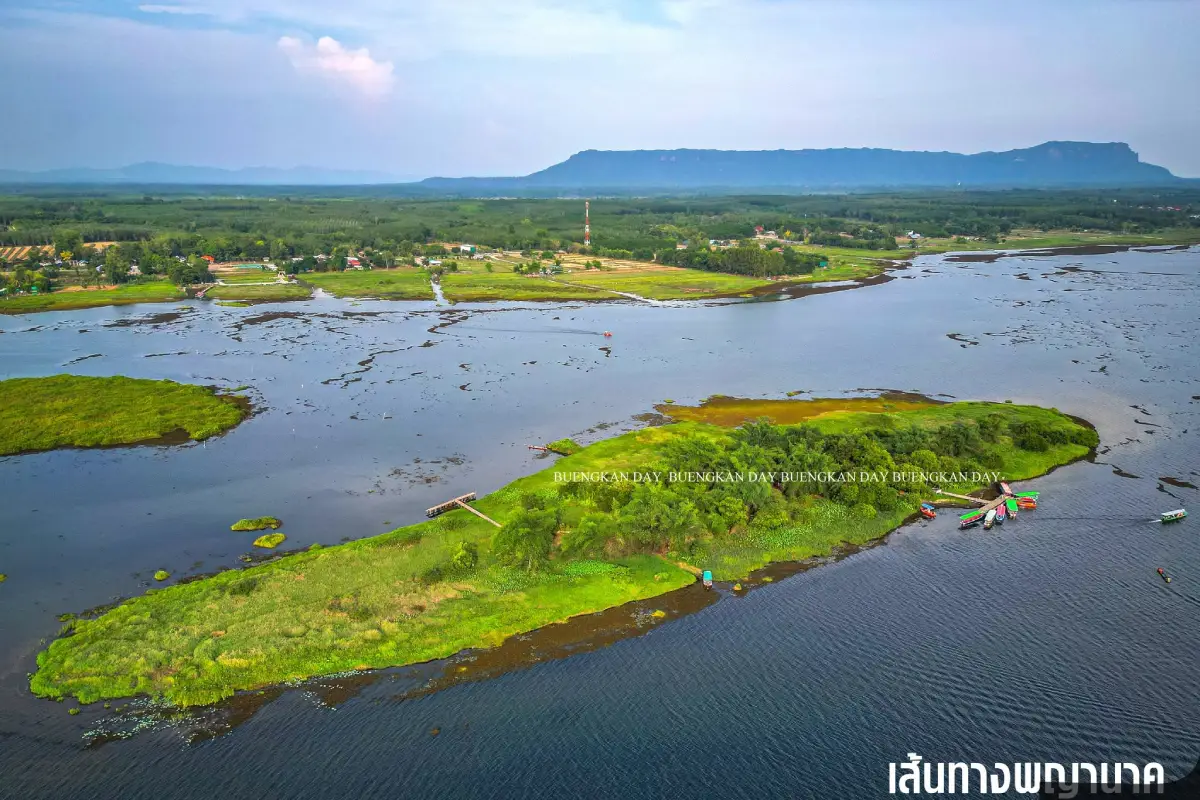
Don Pho Island differs from roadside shrines and conventional religious attractions because boats provide the principal means of access. As the vessel leaves the shore, travelers encounter the open water of Bueng Khong Long, with vegetation along the distant shoreline and mountains visible beyond the lake in suitable weather. The boat journey is an integral part of the experience, allowing visitors to appreciate the wetland landscape before entering the sacred area on the island. The destination therefore combines a spiritual visit with a form of nature-based travel that is distinctive to the lakeside communities of Bueng Khong Long.
Bueng Khong Long is an important freshwater lake in upper northeastern Thailand. It extends broadly through a landscape of villages, agricultural land, aquatic vegetation, and habitats supporting fish and waterbirds. The lake has been important to surrounding communities for generations as a water resource, a place associated with local fishing, a transportation environment, and a setting for traditional religious beliefs. The presence of islands and raised areas within the lake creates distinctive geographical features and has contributed to stories that remain part of the cultural memory of local residents.
The ecological importance of Bueng Khong Long is internationally recognized. The Bung Khong Long Non-Hunting Area was designated a Wetland of International Importance under the Ramsar Convention on July 5, 2001, with site number 1098. The designated area covers approximately 2,214 hectares, equivalent to 13,837.5 rai. This recognition reflects the lake's value as a habitat and feeding environment for fish, waterbirds, and other freshwater species. Don Pho Island therefore belongs to a landscape whose importance extends beyond religious worship to include conservation, biodiversity, and the livelihoods of surrounding communities.
The island consists of raised ground surrounded by water, with trees providing shade across parts of its surface. Large trees, particularly the sacred fig associated with the worship area, are among its most recognizable features. The shaded environment contrasts with the broad, sunlit water that visitors cross on their journey. Arriving on the island creates a transition from the open lake to a quieter place where nature and religious practice meet. This combination gives Don Pho Island a character different from shrines located beside urban roads or surrounded by large buildings.
The name Don Pho is associated with a raised area of land and the presence of a sacred fig tree. In Thai Buddhist culture, the sacred fig has special meaning because of its connection with the Buddha's enlightenment. Large trees can also become meaningful community spaces through shade, longstanding customs, and activities associated with worship. On Don Pho Island, the sacred fig and the revered image of Pu U Lue form a distinctive setting in which vegetation, landscape, and religious symbolism exist together.
The foundation of the island's religious significance is the legend of Pu U Lue Naga. Local folklore describes the ancient city of Rattaphanakhon, which was supposedly located where Bueng Khong Long now lies. The city was ruled by King U Lue and experienced events involving a human prince and a Naga princess. Their relationship ultimately led to conflict between the human kingdom and the mythical underwater realm. The tale is a traditional way of connecting places around the lake with cultural memory, rather than documentary evidence that a historical kingdom existed beneath the water.
According to versions of the story, King U Lue had a queen named Kaew Kanlaya and a daughter named Khiao Kham. The princess married King Sam Phan Ta and gave birth to Prince Fa Rung, sometimes called Prince Fa Hung. The prince grew into a respected and capable young man and met Nakharinthrani, a daughter of the Naga king who had assumed human form. Their relationship became the beginning of the story's central events because their marriage represented more than personal love: it symbolized friendship between a human kingdom and the imagined world of the Naga.
The wedding of Prince Fa Rung and Nakharinthrani is described as a grand celebration lasting seven days and seven nights. Valuable ceremonial regalia and royal gifts were exchanged, expressing goodwill and trust between the two families. These objects became especially important to later events in the legend because they represented an agreement that was expected to be honored. The marriage, originally celebrated as a happy alliance, gradually became a story about responsibility, the treatment of outsiders, and the consequences of failing to keep promises.
After several years of marriage, the couple remained without an heir. According to the legend, their sadness and Nakharinthrani's illness eventually caused her to lose the ability to maintain her human appearance. She returned to her original Naga form, revealing her true identity to the people of Rattaphanakhon. Fear and rejection followed, even though she later regained her human form. The city's rulers and inhabitants demanded that she return to the underwater kingdom, provoking the anger of her father, the Naga king.
Before taking his daughter home, the Naga king requested the return of the ceremonial regalia presented at the wedding. The rulers of Rattaphanakhon were unable to return the objects because they had already been altered or used for other purposes. The story portrays this event as a breach of trust and an important failure to honor a promise. The Naga king declared that Rattaphanakhon would be punished. A conflict that began with prejudice and rejection developed into a catastrophe affecting the entire legendary city.
The central event in the legend is the destruction of Rattaphanakhon by forces from the underwater Naga realm. The land is said to have collapsed, turning the former city into a vast lake. This traditional narrative is used to explain the origin of Bueng Khong Long in local folklore. The real formation and development of a freshwater lake, however, belong to the study of geography, water management, and natural environmental processes. The cultural significance of the legend lies in how communities use stories to interpret the landscapes they inhabit.
The Rattaphanakhon legend also mentions three important temples believed to have survived the destruction: Wat Don Kaew, Wat Don Pho, and Wat Don Sawan. These names are associated with raised areas or islands within Bueng Khong Long. Don Pho is especially meaningful because it appears directly among these places. The presence of the same name in the physical geography and traditional narrative makes the island part of a wider cultural landscape in which local people connect visible landmarks with stories about their past.
Some versions of the legend explain the name Bueng Khong Long through an expression associated with attachment to valuable possessions and the failure to return ceremonial gifts. This interpretation reflects the use of place names as vehicles for moral lessons about greed, honesty, and the consequences of broken promises. It is a traditional linguistic explanation rather than proven historical etymology. Its importance lies in the way it enables local stories to remain associated with the landscape and be passed from one generation to another.
King U Lue, according to the story, did not die during the destruction of Rattaphanakhon. Instead, the Naga king captured him and placed a curse upon him, transforming him into a Naga and ordering him to guard Bueng Khong Long until a new city arose in the region. This episode forms the basis of devotion to Pu U Lue Naga. Worshippers regard the legendary figure as connected with the protection of the lake and its surrounding communities. Visiting Don Pho Island is therefore a way of paying respect to a character whose story is deeply embedded in local cultural identity.
The legend has continued to be interpreted in modern times. After Bueng Kan was established as a separate province on March 23, 2011, some believers associated the event with the prophecy of a new city and the possible ending of Pu U Lue's curse. This connection illustrates how traditional stories acquire new meanings as circumstances change. The establishment of Bueng Kan Province is a documented administrative event, while its relationship to the curse belongs to local faith and interpretation. Understanding the distinction helps preserve the cultural significance of the story without confusing belief with historical evidence.
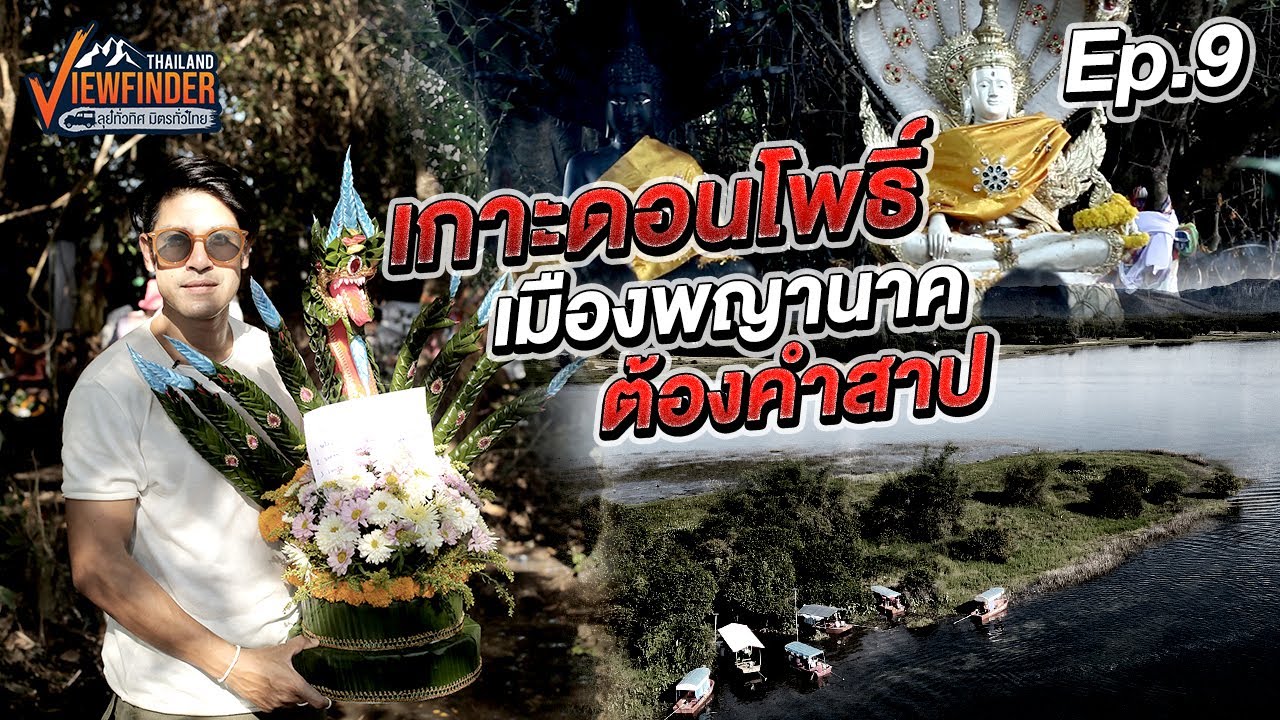
Don Pho Island is important to worshippers because it is a place of devotion located within the lake associated with Pu U Lue. The central worship area contains a revered representation of Pu U Lue, with surrounding Naga symbols and religious offerings arranged beneath large trees. Visitors may see flowers, garlands, and ceremonial objects brought by worshippers. The setting differs from larger shrines and ceremonial residences on the mainland because its religious images are closely surrounded by the island's natural environment.
The sacred fig tree and surrounding vegetation define much of the island's atmosphere. Worshippers gather beneath the trees to pay their respects and participate in ceremonies. This arrangement recalls traditional sacred spaces in which nature itself forms an important part of the place of worship, rather than a large building serving as the sole focus. Traveling across the lake before entering this shaded environment also reinforces the connection between the landscape and the beliefs associated with it.
Naga images on the island reflect the importance of serpent beings in Mekong cultural traditions. The Naga appears in northeastern Thai art, literature, and religious practice as a powerful figure associated with water, protection, and supernatural stories. Such traditions coexist with Buddhist customs, which is why Naga imagery can be found at temples as well as local shrines. Don Pho Island, however, is principally a place of folk worship rather than a Buddhist temple requiring an ordination hall or an abbot within the formal monastic administrative system.
The main activity for visitors is paying respect to Pu U Lue according to personal belief. Some worshippers pray for family well-being, stability in their work, or safety while traveling. Others participate in ceremonial offerings organized by groups or local communities. Such practices are expressions of faith and can provide spiritual comfort, although they do not guarantee the fulfillment of particular wishes. The cultural value of the practice lies in the opportunity for respectful participation in a tradition that remains meaningful to local residents.
Offerings at the island may include ceremonial flower arrangements, marigold garlands, incense, candles, and other items selected according to local customs. Some groups are accompanied by a ceremonial leader who guides prayers and rituals. Visitors can also pay their respects simply and respectfully without purchasing elaborate offerings. Because the worship area is surrounded by trees and natural materials, cleanliness and fire safety are particularly important. Removing waste after ceremonies helps protect both the religious atmosphere and the island environment.
Don Pho Island is also a place for organized cultural events. On January 20, 2026, a water-based ceremony honoring Pu U Lue was held on the island. The event was attended by the deputy governor of Bueng Kan Province, the district chief of Bueng Khong Long, government representatives, and other participants. This ceremony demonstrates that the island continues to play an active role in community traditions rather than serving only as a place visited by individuals seeking blessings.
Water-based ceremonies have a distinctive character because participants and ceremonial offerings travel across Bueng Khong Long by boat. The lake becomes part of the ritual itself, rather than merely a route to the destination. Boats crossing the water symbolize the relationship between Pu U Lue and the lake featured in the legend. These events also draw attention to the importance of respecting the wetland's natural environment, since the ceremonies take place within an internationally significant freshwater ecosystem.
On January 30, 2025, government agencies from Bueng Kan participated in another ceremony honoring Pu U Lue and the Naga through a water procession. A community pier near Bueng Khong Long Public Park was used as a departure point for the journey toward Don Pho Island. The event formed part of the third-lunar-month festival and involved cooperation among public agencies, tourism organizations, and community groups. The continuation of such activities across different years demonstrates the lasting role of Pu U Lue beliefs in the cultural calendar of the province.
The 2026 Third-Lunar-Month Pu U Lue and Naga Worship Festival took place from January 19 to 21 around the Pu U Lue ceremonial residence and Bueng Khong Long Public Park. Activities included almsgiving on the water, processions, water-based ceremonies, lotus offerings, Buddhist rites, Brahmanic rituals, and devotional dances. Together, these events show how religion, folk beliefs, performing arts, and community gatherings form part of the same cultural celebration. Don Pho Island is one of the important places associated with its water-based traditions.
Almsgiving on the water adapts Buddhist practices to a landscape in which the lake is central to community life. Participants engage in merit-making activities while experiencing the surroundings of Bueng Khong Long. Naga ceremonies, by contrast, reflect local folk devotion to Pu U Lue and other revered figures associated with the legend. The presence of these different practices within one festival illustrates the coexistence of Buddhist tradition and local religious beliefs in northeastern Thai society.
Processions and ritual dances add a distinctive artistic dimension to the festival. Participants wear clothing suited to the ceremonies, while music and coordinated movement express collective devotion. These performances help transmit cultural knowledge to younger generations and allow visitors to experience the legend as a living tradition rather than a story preserved only in books. The participation of residents and public organizations also illustrates the role of shared ceremonies in strengthening community relationships.
Travel to Don Pho Island begins at a pier around Bueng Khong Long, where several local boat operators provide services. Points associated with island visits include Mae Tim Pier near Ban Sok Pho, the community pier by Bueng Khong Long Public Park, and operators serving the Ban Kham Somboon lakeside area. The choice of pier affects both travel time and fare because different points lie at different distances from the island. Some routes may also include sightseeing or visits to other places of worship.
Mae Tim Pier near Ban Sok Pho is a recognized departure point for boats traveling to Don Pho and Don Kaew. It has been described as one of the shorter routes to the islands when compared with piers farther away. Travelers choosing this route can reach the island without necessarily undertaking a long sightseeing cruise. Actual access, however, remains dependent on water level, weather, and the services offered by the boat operators on the day of travel.
The community pier around Bueng Khong Long Public Park is another departure point linked with cultural events and water-based worship ceremonies. Government and community groups have used this pier for processions heading toward Don Pho Island. Beginning a journey here provides views of both the town's lakeside environment and the broad expanse of Bueng Khong Long. Its use in official ceremonies reflects the lake's role as a shared cultural space connecting mainland communities with sacred locations offshore.
In the Hat Kham Somboon area, restaurants and tourism businesses have also operated boat services to Don Pho and Don Kaew. Some combine transportation with sightseeing around the lake or additional worship stops. Departing from this area can be convenient for travelers combining a beach visit, lakeside dining, and island worship in a single excursion. The contrast between the lively freshwater beach and the quieter wooded island is one of the distinctive aspects of visiting these places together.
Boat fares vary according to departure point and service type. Travel accounts have described prices around 50 baht per person from piers closer to the island, while longer routes or sightseeing journeys may cost approximately 80 to 100 baht per person. Some operators offer private boat arrangements when passenger numbers are small. The boat fare is a transportation expense and is separate from any religious offerings or charges associated with individual worship services.
Some visitor accounts have mentioned additional admission charges at the island, while other tourism listings and boat operators describe different arrangements. Consequently, no single published fee can be treated as the confirmed amount for every visitor or every operator. Offerings such as flowers, garlands, and ceremonial arrangements are also separate expenses chosen according to personal preferences. Simple respectful worship does not necessarily require purchasing a large ceremonial set.
Boat journey times depend on the pier. Routes from nearby departure points can be relatively short, while more distant routes have been described as taking around 30 minutes. The crossing is an important part of the experience because passengers see open water, the lakeside communities, and distant hills. As the boat approaches Don Pho, the island's trees become increasingly visible, and the journey moves from an open-water landscape toward a shaded place of worship.
Boat travel on Bueng Khong Long is influenced by wind, water level, and weather. The open surface of the lake can develop waves when strong winds occur. Passengers should wear appropriate life jackets, remain seated safely, and follow instructions from the boat operator. Walking around or standing for photographs while the boat is moving can increase the risk of losing balance, particularly when the vessel changes direction or approaches a landing point.
Disembarking conditions may vary with water levels and the characteristics of the landing area. At certain times, visitors may step directly onto relatively dry ground, while higher water can leave nearby sections wet or require walking across shallow water. This variation is part of visiting a natural island rather than an urban waterfront with a permanently engineered platform. Care is required when boarding and leaving the boat, and passengers should follow the operator's directions.
Once ashore, visitors enter a wooded area containing the worship site and associated pathways. The main visitor spaces can be described as the landing point, the path leading toward the island's central area, and the section containing religious images and offerings. These descriptions refer to how the area is used rather than implying that the island has formally established, permanently marked tourism zones. Its character comes from the combination of faith and natural surroundings rather than large-scale buildings.
The worship area often features colorful offerings such as marigold garlands and flowers arranged near revered images. Their colors contrast with the religious statues and the greenery of the surrounding trees. These visible practices illustrate how community beliefs continue to be expressed in contemporary life. Visitors who do not share the religious tradition can still learn about the site and observe respectfully without participating in every ritual.
Don Pho is an informative destination for understanding how local culture is expressed through physical places. The image of Pu U Lue, Naga symbolism, the sacred fig, and ceremonial offerings all contribute to its meaning. Their presence on a small island demonstrates how natural landscapes become sacred through storytelling and collective practice. The value of the site should therefore not be measured solely by the size or age of its buildings, but also by its ongoing cultural role.
Historically, Don Pho belongs to a group of place names associated with the Rattaphanakhon legend, alongside Don Kaew and Don Sawan. These names connect existing locations to stories of the legendary city. For those studying regional culture, the island offers evidence of how place names and beliefs have been preserved. The physical presence of islands within the lake should not, however, be mistaken for proof that the mythical city existed exactly as the story describes.
Don Kaew is another island or raised area visited on some boat routes that include Don Pho. Its name is associated with the legendary temple believed to have survived the destruction of Rattaphanakhon. Visiting both places allows travelers to encounter several locations mentioned in local folklore during one lake journey. Each has its own access arrangements and activities, and visits must remain within the routes permitted by operators and the responsible authorities.
Don Sawan is another name associated with the Pu U Lue story. It is remembered as one of the raised areas connected with the legendary city, while islands and wetland environments in the wider lake also have important ecological roles. Understanding these places involves recognizing both their folkloric significance and their geographical reality. Cultural exploration does not require entering protected habitats that are not open to visitors.
The Pu U Lue ceremonial residence in the Bueng Khong Long community is another important place associated with the same traditions. Unlike Don Pho Island, it is on the mainland and can be reached by road. It plays a role in worship and annual cultural events held in the town area. Don Pho offers a different experience because of its boat-based access and wooded island setting. Distinguishing these locations is important, as they have separate access routes, visitor arrangements, and cultural atmospheres.
Pu U Lue worship sites around Ban Sok Pho are also associated with journeys exploring the district's Naga traditions. The community's name appears in descriptions of boat departures to Don Pho Island. The presence of mainland shrines and island worship areas gives the locality a dual role in cultural tourism and water transportation. Visitors can observe how the same religious tradition is expressed differently depending on whether the site is within a roadside community or on an island surrounded by the lake.
Hat Kham Somboon is a popular recreational beach beside Bueng Khong Long and can be combined with a visit to Don Pho. It is nicknamed the Bang Saen of Isan because of its sandy shoreline, lakeside restaurants, and holiday atmosphere, although it is a freshwater destination rather than a marine beach. Visiting Hat Kham Somboon provides a different perspective on the lake, with opportunities for dining, relaxing, and seeing the Phu Langka mountains across the water.
Bueng Khong Long Public Park is a community space associated with recreation and local cultural events. It has served as a departure area for boats used in Pu U Lue ceremonies and is linked with the district's annual festivals. Combining the island with the public park allows visitors to observe two different uses of the lake: as a sacred landscape associated with the legend and as a public space where residents gather for community activities.
Naka Cave in Phu Langka National Park is another important destination in Bueng Khong Long District, particularly among travelers interested in Naga traditions. Its sandstone formations contain patterns resembling large serpent scales. Unlike a boat journey to Don Pho, visiting the cave requires an uphill forest walk on a designated national park route. Some travelers include both destinations in the same broader itinerary, but the mountain trek and island crossing should be scheduled separately with sufficient time and attention to physical readiness.
Phu Langka National Park protects sandstone mountain landscapes, forests, and natural attractions. Naka Cave follows seasonal operating arrangements, including periods reserved for environmental recovery. These circumstances differ from the boat services used to reach Don Pho. A journey combining the two sites reveals two distinct ecosystems: sandstone uplands and an internationally significant freshwater wetland. Naga folklore provides a cultural connection between the landscapes, but their environmental and access conditions remain different.
Wat Tham Chai Mongkhon in Bueng Khong Long District is a Buddhist religious destination associated with Phu Langka and local Naga beliefs. It is a place for religious activities and an additional cultural stop for travelers interested in local traditions. The customs and responsibilities of a Buddhist temple differ from those of Don Pho Island, where worship focuses on a legendary guardian and local ceremonial practices. Understanding these differences is important when exploring multiple religious destinations in the same district.
Don Pho Island appeals to visitors interested in both cultural tourism and nature. The experience involves a boat ride, wetland scenery, and worship beneath trees on the island. Travelers who primarily enjoy natural landscapes can still learn how local communities connect visible places with traditional stories. Those visiting for prayer also experience the lake's scenery during the journey. The combination welcomes different interests, provided that visitors respect the site and one another.
Older adults and visitors with limited mobility should consider the boat transfer and the condition of the paths before traveling. Reaching the island does not involve driving directly to the shrine. Piers may have steps or uneven surfaces, while wet ground can make walking more difficult during certain seasons. Boat operators should be selected with boarding assistance and suitability in mind. A visitor does not need to enter unstable or flooded areas when personal mobility makes doing so unsafe.
Families traveling with young children should maintain close supervision throughout the boat journey and time on the island. Children need correctly sized life jackets and should never remain unattended near the edge of a boat. Once ashore, they should be kept away from slippery landing areas and deep water. Respectful behavior around people conducting worship is also important. Planning appropriate rest periods can make a visit more comfortable for families with children.
Photography opportunities begin during the boat journey and continue on the island. From the water, travelers can capture the broad lake, distant mountains, and the approach to the wooded island. At the worship site, the combination of revered images, Naga symbolism, flowers, and tree cover creates a culturally distinctive scene. Photographs should be taken without interrupting ceremonies or obstructing worshippers. Religious objects and offerings should never be moved simply to improve a composition.
Clothing should be appropriate for both boat travel and a place of worship. Comfortable garments make boarding and disembarking easier, while shoes with reliable grip are useful on damp or natural ground. Sun protection and rain protection may be needed because the journey involves exposed sections of open water. Dressing respectfully also recognizes that the island has personal and religious significance for many visitors.
Bueng Khong Long supports important freshwater habitats for fish and waterbirds. Boat travel and religious activities must not introduce waste or pollutants into the lake. Although flowers and other natural materials may be used in ceremonies, plastic packaging, foam, and non-biodegradable items can damage the ecosystem if discarded into the water. Removing waste and keeping the island clean are practical expressions of respect for both the sacred site and its natural setting.
Wetland conservation also involves protecting the habitats of waterbirds. Some species use Bueng Khong Long for feeding or resting during seasonal migration. Fast boat traffic and excessive noise can disturb wildlife in sensitive areas. Tourism routes should therefore comply with relevant conservation rules and avoid habitats closed to public access. Respectful boat operations allow cultural tourism to coexist with environmental protection.
Don Pho Island contributes to the local economy because visitors depend on community boat services and may also use restaurants, shops, accommodation, or vendors selling offerings on the mainland. Religious tourism creates connections between cultural traditions and the livelihoods of surrounding villages. Sustainable economic benefits, however, depend on keeping the lake clean and protecting its natural environment, since the water and landscape are essential to the experience.
Local boat operators play an important role through their familiarity with the lake and its routes. Their services connect visitors with landing points suitable for reaching the island. The presence of several piers provides choices for people who want a short crossing or a longer scenic journey. The different distances and service arrangements mean that choosing a departure point is a meaningful part of planning a visit to Don Pho.
Restaurants in Bueng Khong Long District serve visitors before or after an island excursion. Thai and northeastern restaurants and cafes are spread across the town and lakeside communities. Regional favorites include som tam, laab, spicy soups, grilled fish, and everyday Thai dishes. Eating in the community around the departure point connects religious tourism with local life and supports businesses associated with the lake.
Accommodation options in Bueng Khong Long include hotels, resorts, and homestays near major roads and communities around the lake. Travelers from other provinces can stay locally while visiting Don Pho Island, Hat Kham Somboon, and mainland worship sites. Those wishing to hike to Naka Cave may find it more comfortable to schedule that more demanding activity on a separate day. Staying near the routes used for the planned activities can reduce unnecessary travel time.
As a cultural destination, Don Pho Island illustrates the relationship between traditional stories and geographical places. Visitors cross the lake central to the Rattaphanakhon legend and arrive at an island whose name is part of that narrative. This offers a different form of learning from reading the legend alone. The journey gives the story a tangible geographical setting through which the scale of the lake and its connections with surrounding communities become easier to understand.
The cultural meaning of Don Pho extends beyond the belief that a sacred being is present there. It demonstrates how a community creates shared significance through stories, ceremonies, and the use of a natural landscape. The image beneath the sacred fig, the offering traditions, and the boat-based pilgrimages are visible expressions of these beliefs. They connect memories from earlier generations with the practices of people living today, while allowing visitors of different backgrounds to appreciate the island respectfully.
People interested in the history of Naga folklore can explore the Pu U Lue narrative in a connected sequence, from Rattaphanakhon and the relationship between the human prince and Naga princess to the destruction of the city, the transformation of King U Lue, and the places associated with the surviving temples. Considering the characters and locations together reveals that the legend is a complex traditional story about love, honesty, power, and responsibility rather than a simple tale about a supernatural serpent.
A visit also provides insight into the natural environment of Bueng Khong Long. During the boat crossing, travelers see the freshwater landscape and vegetation along the shore. The lake remains important to local livelihoods and fishing, while its Ramsar designation recognizes its ecological value. Don Pho is therefore not isolated from its environment. It belongs to a wider system in which communities and wildlife depend on the same freshwater resources.
Holidays and religious festivals can bring a different atmosphere to the island from ordinary days. More visitors may use the boats and gather around the worship area, especially during ceremonies honoring Pu U Lue. Orderly boarding and respectful movement within crowded spaces are important. Festival days offer opportunities to observe living traditions and community participation, while quieter days may be better suited to appreciating the details of the site and the surrounding natural landscape.
In clear weather, the boat crossing offers views of sunlight reflecting across the lake and distant mountains rising beyond the shore. Rain or strong wind can reduce visibility and affect both comfort and safety. Because Bueng Khong Long has a broad, exposed water surface, boat operators must account for changing conditions. Journeys should take place within appropriate operating periods, with sufficient arrangements for passengers to return safely to the mainland.
Don Pho Island is an important cultural tourism destination in Bueng Kan because it combines local beliefs with a distinctive natural setting. The revered image of Pu U Lue on an island within the lake allows the legend to remain associated with a place that people can visit. The boat journey adds an experience unlike that of most roadside shrines, while annual water-based ceremonies demonstrate the island's continuing role in the cultural life of Bueng Khong Long District. These qualities make Don Pho an important destination for travelers exploring Naga folklore in upper northeastern Thailand.
Getting There: Don Pho Island is reached by first traveling by private car or rental vehicle to Bueng Khong Long District in Bueng Kan Province. Visitors can then choose a boat departure point, including Mae Tim Pier near Ban Sok Pho, the community pier around Bueng Khong Long Public Park, or an operator serving the Hat Kham Somboon area. From the pier, a boat crosses the lake toward Don Pho Island. Travel time depends on the distance and route selected. Nearby departures may involve only a short crossing, while more distant routes can take around 30 minutes. Upon arrival, passengers disembark and follow the accessible path toward the worship area, with landing conditions varying according to the water level.
Don Pho Island is more than a place to worship Pu U Lue Naga. It connects the legend of Rattaphanakhon with the physical environment and freshwater ecosystem of Bueng Khong Long. From traveling across the open lake to paying respects beneath the sacred fig, visitors encounter natural scenery, local faith, and cultural practices maintained through ceremonies and oral storytelling. The island remains meaningful as a place where people express devotion to a legendary guardian, while also belonging to a wetland of international ecological importance. Protecting the environment and respecting the island's traditions will help preserve its significance for future generations.
| Place Name | Don Pho Island, Bueng Khong Long |
| Attraction Type | Freshwater island and place of worship dedicated to Pu U Lue Naga |
| Location | Bueng Khong Long Lake, Bueng Khong Long District, Bueng Kan Province 38220, Thailand |
| Landscape | Tree-covered island surrounded by a large freshwater lake |
| Significance | Place of devotion to Pu U Lue and one of the islands connected with the Rattaphanakhon legend |
| Main Features | Revered image of Pu U Lue, Naga symbols, sacred fig tree, and a ceremonial worship area |
| Relevant Management | Local worship-site caretakers and boat operators. Cultural ceremonies involve Bueng Khong Long District and participating public agencies. |
| Open Days | According to available boat services and safe lake conditions |
| Access | Drive to a pier in Bueng Khong Long District, then cross the lake by boat |
| Related Departure Points | 1. Mae Tim Pier, Ban Sok Pho 2. Community pier near Bueng Khong Long Public Park 3. Boat operators in the Hat Kham Somboon area |
| Boat Travel Time | Varies by departure point. Some longer routes take approximately 30 minutes, while closer piers offer shorter crossings. |
| Published Boat Fares | Approximately 50 – 100 baht per person, depending on the pier and route. These are previously published examples, not one confirmed standard fare. |
| Site Admission | Any applicable admission arrangements depend on the site and service provider at the time of travel. |
| Activities | Scenic boat travel, worshipping Pu U Lue, enjoying the island's natural environment, and joining ceremonial events when scheduled |
| Associated Traditions | Third-Lunar-Month Pu U Lue and Naga Worship Festival and water-based ceremonies honoring Pu U Lue |
| Major 2026 Event | Water-based Pu U Lue worship ceremony held on Don Pho Island on January 20, 2026 |
| Associated Wetland | Bung Khong Long Non-Hunting Area, Ramsar Wetland of International Importance No. 1098, designated July 5, 2001, covering approximately 2,214 hectares |
| Safety Considerations | Wind, waves, changing water levels, wet landing areas, and boarding or disembarking. Wear a life jacket while traveling by boat. |
| Mae Tim Pier Contact | +66 95 701 4830 |
| Boat And Dining Service Contact | Phen Phitcha Place, Hat Kham Somboon: +66 93 039 3988 |
| Local Municipality Contact | Bueng Khong Long Subdistrict Municipality: +66 42 416 168 |
| Nearby And Connected Attractions | 1. Don Kaew – island area within Bueng Khong Long associated with the Pu U Lue legend 2. Pu U Lue Shrine, Ban Sok Pho – Ban Sok Pho community 3. Pu U Lue Ceremonial Residence – Bueng Khong Long town area 4. Bueng Khong Long Public Park – lakeside community area and community pier 5. Hat Kham Somboon – Ban Kham Somboon, Bueng Khong Long District 6. Bung Khong Long Non-Hunting Area – protected wetland around the lake 7. Naka Cave – Phu Langka National Park 8. Wat Tham Chai Mongkhon – Pho Mak Khaeng Subdistrict, Bueng Khong Long District |
| Restaurants And Cafes In Connected Areas | 1. Phen Phitcha Place, Hat Kham Somboon – Ban Kham Somboon, Village 3, Tel. +66 93 039 3988 2. Krua Chanthamali – Village 11, Bueng Khong Long District, Tel. +66 61 237 1991 3. Lop Mum Soi 8 – Ban Don Klang, Tel. +66 62 296 2891 4. Krua King Kong Bueng Khong Long – Bueng Khong Long District, Tel. +66 61 478 0087 5. Rabiang Mai – Bueng Khong Long District, Tel. +66 91 686 9686 6. Bueng Khong Long Cafe – Bueng Khong Long Subdistrict, Tel. +66 97 318 2200 |
| Accommodation In Connected Areas | 1. HR Resort Bueng Khong Long – Bueng Khong Long District 2. Ruenthai Guesthouse – Bueng Khong Long District, Tel. +66 83 442 9560 3. Bueng Khong Long Mansion – Bueng Khong Long District, Tel. +66 81 929 7883 4. FIFA Homestay – Pho Mak Khaeng Subdistrict, Tel. +66 63 039 3945 5. Sapphulangka Homestay – Pho Mak Khaeng Subdistrict, Tel. +66 80 006 9509 6. Cactus Homestay – Pho Mak Khaeng Subdistrict, Tel. +66 95 474 5316 7. Anant Pura Resort – Bueng Khong Long District, Tel. +66 63 192 2013 |
Frequently Asked Questions (FAQ)
Q: Where is Don Pho Island located?
A: Don Pho Island lies within Bueng Khong Long Lake, Bueng Khong Long District, Bueng Kan Province, Thailand. It is a place of worship associated with Pu U Lue Naga and is reached by boat from the mainland.
Q: Is Don Pho Island still open to visitors?
A: Don Pho Island continued to host worship activities and ceremonies during 2026. Tourist access depends on boat operations and safe weather and water conditions.
Q: How do visitors get to Don Pho Island?
A: Boat services operate from departure points including Mae Tim Pier near Ban Sok Pho, the community pier by Bueng Khong Long Public Park, and operators around Hat Kham Somboon. Travel time differs according to the selected route.
Q: How much does the boat to Don Pho Island cost?
A: Previously published boat fares range from approximately 50 to 100 baht per person depending on the pier and service. Short crossings and longer sightseeing journeys can have different prices.
Q: What is there to see on Don Pho Island?
A: The island features a revered image of Pu U Lue and Naga symbolism beneath the shade of a sacred fig tree, together with a designated area where worshippers present offerings and participate in ceremonies.
Q: How is Don Pho Island connected with the legend of Pu U Lue?
A: According to the Rattaphanakhon legend, Don Pho is one of the raised areas associated with temples spared during the destruction of the mythical city. Pu U Lue is the legendary ruler who was transformed into a Naga and required to guard Bueng Khong Long.
Q: When is the Pu U Lue ceremony held on Don Pho Island?
A: A water-based ceremony honoring Pu U Lue was held on Don Pho Island on January 20, 2026, attended by government representatives and local participants. The district also organizes the Third-Lunar-Month Pu U Lue and Naga Worship Festival according to its annual schedule.
Q: Are Don Pho Island and the mainland Pu U Lue shrines the same place?
A: No. Don Pho Island lies within the lake and requires boat transportation, while several Pu U Lue shrines and ceremonial residences are located in mainland communities and can be reached by road.
 Category: ●Nature and Wildlife
 Group: ●Islands
Last Update : 2 WeekAgo
 Last Update : 2 WeekAgo
 Click to Access the Navigation Map GPS
Don Pho Island Map
Recommend

 Art, Culture and Heritage
 Landmarks and Memorials(1)
 Museums(1)
 Places of Worship
 Temple(12)
 Other Sacred Sites(4)
 Suburban Living
 Local Market(1)
 National Parks and Marine Reserves(1)
 Mountain (Doi)(3)
 Waterfalls(5)
 Caves(1)
 River, Canal(4)
 Bays and Beaches(1)
Islands(1)
 Entertainment and Agricultural
 Waterpark(1)
 Shopping
 Shopping and Night Market(1)
 Travel Articles, Recipes
 Travel Review, Food Review(1)


